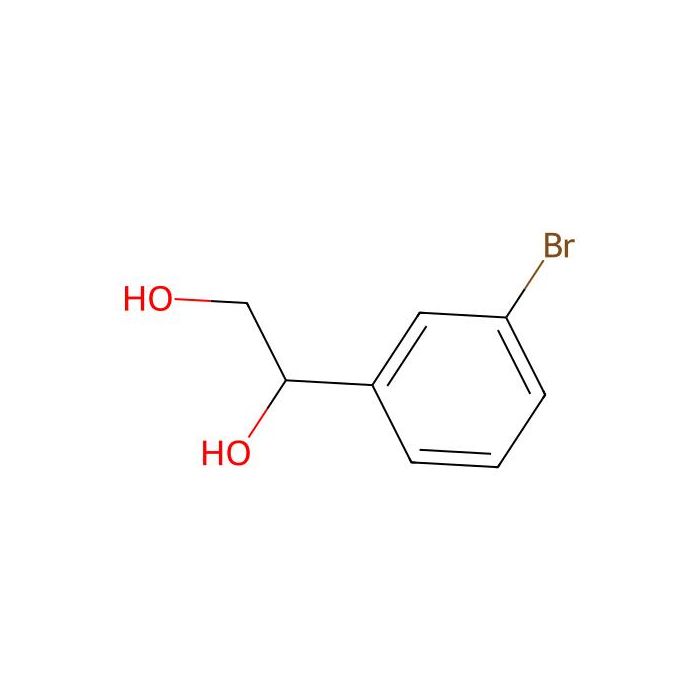
This compound belongs to the class of organic compounds known as bromobenzenes. These are organic compounds containing a bromine atom attached to a benzene ring.
External Descriptors
Not available
1. Djoumbou Feunang Y, Eisner R, Knox C, Chepelev L, Hastings J, Owen G, Fahy E, Steinbeck C, Subramanian S, Bolton E, Greiner R, and Wishart DS. ClassyFire: Automated Chemical Classification With A Comprehensive, Computable Taxonomy. Journal of Cheminformatics, 2016, 8:61.
Determine the necessary mass, volume, or concentration for preparing a solution.
Dilution Calculator
Determine the dilution needed to prepare a stock solution.
Reconstitution Calculator
Reviews
Customer Reviews
Application Protocols
Not applicable as a validated assay reagent. No tested applications (e.g., WB, IHC, IF, FC) or recommended dilutions are provided for this small-molecule building block.
Practical usage notes
For synthetic procedures, follow standard organic synthesis protocols and the Reaction Conditions tab for starting points.
For dosing into biological assays (if part of a screening workflow), prepare stock solutions in DMSO or MeOH, filter-sterilize if necessary (0.22 μm PTFE), and limit final organic content to ≤1–2% in assay media. These are general practices, not product-validated protocols.
Biological Roles
This compound is a synthetic small-molecule building block and is not known as a natural metabolite or cofactor.
General notes (literature)
Aryl-brominated benzylic diols are occasionally used as intermediates in the preparation of ligands, probes, or materials precursors, but they do not have intrinsic biological roles.
The presence of two hydroxyl groups can increase polarity and hydrogen-bonding capacity, affecting permeability and solubility if incorporated into bioactive scaffolds.
The aryl bromide is a convenient handle for diversification (e.g., installing heteroaryl groups via Suzuki coupling) during SAR exploration in medicinal chemistry programs.
Metabolic considerations (general)
In biological systems, vicinal diols may be susceptible to oxidation to carbonyl compounds or conjugation (e.g., glucuronidation/sulfation) if present in a drug-like molecule. These are general biotransformation concepts and not specific data for this item.
No biological activity or pathway involvement is specified for this catalog item. Use is restricted to research and development; not for diagnostic, therapeutic, or clinical use.
Buffer Applications
Not a buffering agent. This is an organic building block rather than a buffer component.
Practical note
If used in aqueous assays or bioconjugations, choose a compatible buffer for your reaction of interest (e.g., phosphate, acetate, Tris), but the compound itself does not define a buffering system.
Its moderate aqueous solubility may require co-solvents (DMSO, MeOH) when dosing into buffers; keep final organic content low (typically ≤1–2%) to maintain biological assay integrity, if applicable to your research workflow.
Green Alternatives
While this entry is a substrate rather than a solvent or reagent, greener choices can be made in reactions involving it.
Favor EtOAc, 2-MeTHF, MeOH, or MeCN over DMF/NMP where compatible.
For Suzuki couplings, water or water/EtOH with micellar catalysis (e.g., TPGS-750-M) can significantly reduce organic solvent usage.
Oxidation alternatives
Replace chromium(VI) oxidants with TEMPO/bleach, O2/Pd, or IBX/DMP where selectivity allows.
Use H2O2 (with appropriate catalysts) for benign byproducts when oxidizing the primary alcohol.
Protection strategies
Use acetone (bio-based) for acetonide formation with catalytic acid instead of chlorinated solvents.
Small comparison (general guidance)
| Use case | Conventional choice | Greener alternative | Trade-offs |
|---|---|---|---|
| Suzuki coupling | DMF or dioxane | Water/EtOH with micelles | Requires surfactant, catalyst optimization |
| Oxidation to aldehyde | DCM + DMP | EtOAc or MeCN + TEMPO/NaOCl | pH control critical; bleach handling |
| Diol protection | DCM + TsCl for cyclic carbonate | Acetone acetonide or dimethyl carbonate | Different protection profile/selectivity |
Always balance EHS metrics with reaction efficiency and substrate stability.
Pharmaceutical Uses
No pharmacopeial/compendial status or excipient role is provided for this item.
General R&D context (non-clinical)
Serves as a synthetic intermediate in discovery chemistry where the aryl bromide enables cross-coupling diversification and the vicinal diol allows oxidation, protection, or further elaboration.
Could be incorporated into pro-monomers for polymer/drug-delivery research after appropriate transformation, but such uses are project-specific and outside the scope of this listing.
This product is intended for research use only and is not for use in humans or for manufacturing of sterile or clinical products without additional qualification.
Physical Properties
Item-specific (Product Data)
Appearance: Not specified for this item; refer to CoA/Spec Sheet.
Grade/Purity: Not specified for this item; refer to CoA/Spec Sheet.
Computed/literature values (reference only; not specifications)
Molecular formula: C8H9BrO2 (structure-derived)
Molecular weight: ~217.16 g/mol (calculated)
Exact mass (monoisotopic, 79Br): ~216.973 g/mol (calculated)
Hydrogen bond donors/acceptors: 2 HBD, 2 HBA (counting two alcohols)
Expected physical state: low-melting solid or viscous oil (literature expectation for benzylic vic-diols of similar MW; confirm on CoA)
Solubility (general guidance):
Polar organics (MeOH, EtOH, acetone, DMSO, DMF): good to excellent miscibility expected
Water: moderate solubility likely due to vicinal diol (verify experimentally)
Nonpolar hydrocarbons (hexanes, toluene): limited to moderate, improved with warming
Partitioning: logP anticipated in low-to-moderate range owing to one aryl bromide balanced by two hydroxyls (literature rationale; quantify experimentally).
Not specified for this item; refer to CoA/Spec Sheet
Melting point, boiling point, density, refractive index, UV-Vis cutoff, water/peroxide/metal limits, and pKa are not provided in the Product Data and should be confirmed on the CoA/SDS or by in-lab measurement.
Quality and Grades
Item-specific (Product Data)
Grade/Purity: Not specified for this item; refer to CoA/Spec Sheet.
Stabilizers/Inhibitors: Not specified for this item; refer to CoA/Spec Sheet.
Guidance for interpreting grades (general)
Research/technical grade: Suitable for most synthetic and screening workflows; trace impurities may be present but are typically acceptable for reaction development.
High-purity/≥98–99% grade: Preferred for mechanistic studies, stereochemical investigations, or analytical calibration, particularly where trace aryl bromide hydrodehalogenation byproducts could confound results.
Chromatography/LCMS suitability: Low non-volatile residue and UV transparency matter if compound is used as a standard; verify UV cutoff and residual solvent profile on CoA when needed.
Impurity considerations for this scaffold (general)
Moisture sensitivity: Vicinal diols are generally stable; ensure dryness if using in moisture-sensitive couplings (e.g., organometallics).
Elemental analysis/HRMS: Useful to confirm Br isotopic pattern (M/M+2 ~1:1) and purity; request CoA details if critical.
For any specific acceptance criteria (assay by GC/HPLC, water content, metal/peroxide limits), this listing does not provide values—consult the CoA/Spec Sheet for this item.
Reaction and Applications
The combination of an aryl bromide and a benzylic vicinal 1,2-diol makes this compound a versatile bifunctional building block.
Aryl bromide manifold (literature/general)
Cross-couplings: Suzuki–Miyaura (to biaryls), Sonogashira (to aryl acetylenes), Heck (to alkenes), and Buchwald–Hartwig (to aryl amines/ethers) leveraging the para/meta-bromine. Typical Pd(0/II) catalysts with base under mild to moderate temperatures.
Metal–halogen exchange: Li–Br exchange at low temperature (−78 to −40 °C) can enable formylation or borylation, provided the benzylic diol is protected.
Benzylic diol manifold (literature/general)
Selective oxidations: TEMPO/bleach or Dess–Martin can oxidize the primary alcohol to the corresponding α-hydroxy aldehyde; further oxidation to the acid is feasible.
Periodate cleavage: Vicinal diols undergo C–C bond cleavage to give 3-bromobenzaldehyde and formaldehyde; useful for deprotecting to the aryl aldehyde.
Protection chemistry: Formation of acetonides (2,2-dimethyl-1,3-dioxolane) or cyclic carbonates to mask the diol during cross-couplings or strong-base operations.
Dehydrative transformations: Under acidic conditions, can form benzofused acetals or epoxides after appropriate activation (e.g., sulfonate leaving group formation followed by intramolecular substitution).
Strategic applications (general)
Orthogonal reactivity: Conduct cross-coupling on Ar–Br while keeping diol unmodified, then unveil/transform the diol functionality in late-stage diversification.
Divergent synthesis: From a single intermediate, access aldehydes, acids, ethers, amines (via coupling), or extended side chains (via epoxide opening chemistry).
Note: Protect the diol for strongly basic or organometallic conditions to prevent competitive deprotonation or elimination.
Reaction Conditions
Representative literature-style conditions for each reactivity manifold (guidance only; optimize per substrate and scale):
Suzuki–Miyaura coupling on Ar–Br (general)
Catalyst: Pd(PPh3)4 (1–3 mol%) or Pd-PEPPSI type; Base: K2CO3 or K3PO4 (2–3 equiv).
Solvent: 1,4-dioxane/H2O (3:1) or EtOH/H2O.
Temperature: 60–100 °C; Time: 2–16 h.
Notes: Protect diol if boronic partner or base is moisture-sensitive; micellar aqueous conditions can be effective.
Selective oxidation of primary alcohol (diol → α-hydroxy aldehyde) (general)
Reagent: TEMPO (1–5 mol%), NaOCl (1.5–2.0 equiv active chlorine), NaHCO3 buffer, 0–25 °C.
Periodate cleavage of vicinal diol (to 3-bromobenzaldehyde)
Reagent: NaIO4 (1.2–1.5 equiv), Solvent: MeOH/H2O or acetone/H2O, 0–25 °C, 0.5–2 h.
Notes: Produces formaldehyde as coproduct; efficient route to the aryl aldehyde handle.
Diol protection as acetonide (general)
Reagents: Acetone (solvent/reagent), catalytic p-TsOH or camphorsulfonic acid, 25–50 °C, Dean–Stark if needed.
Notes: Remove water to drive equilibrium; neutralize catalyst before workup.
Intramolecular epoxidation via leaving-group installation (general)
Step 1: Convert primary OH to mesylate (MsCl, Et3N, DCM, 0 °C → rt).
Step 2: Treat with base (K2CO3 in acetone or NaH in THF) to cyclize to the epoxide.
Notes: Protect benzylic OH or perform one-pot with careful base control.
Safety and Handling
Item-specific (Product Data)
Storage conditions: Room temperature
Hazard information (signal word, H-statements, GHS class, pictograms): Not specified for this item; refer to SDS.
General safety guidance for aryl-bromide benzylic diols (literature/good practice; defer to SDS)
Likely hazards: May cause skin/eye irritation; harmful if swallowed or inhaled; combustible organic solid/liquid. Avoid generating dust/aerosols. Do not heat to decomposition.
PPE: Wear lab coat, safety glasses (EN166 or ANSI Z87.1), and appropriate chemically resistant gloves (e.g., nitrile). Use in a fume hood to avoid inhalation exposure, especially during reactions or solvent removal.
First aid (overview; follow SDS/site policy):
Inhalation: Move to fresh air. Seek medical attention if symptoms persist.
Skin: Wash with soap and water; remove contaminated clothing.
Eyes: Rinse cautiously with water for several minutes; remove contact lenses if present and easy; seek medical advice if irritation continues.
Ingestion: Rinse mouth; do not induce vomiting; seek medical attention.
Incompatibilities: Strong oxidizers (may cause exotherm/oxidation); strong acids/bases (can promote dehydration or substitution); reactive metals.
Fire: Use CO2, dry chemical, or foam. Combustion may produce HBr and brominated/aromatic fumes—firefighters should wear SCBA.
Spill response: Absorb with inert material, avoid discharge to drains, ventilate area; dispose per local regulations.
Always consult the product’s SDS for authoritative hazard classification and handling procedures.
Solvent Selection
This substance is a moderately polar benzylic vicinal diol with an aryl bromide. Solvent choice is driven by reaction type (nucleophilic substitution/coupling vs. oxidation/protection) and by solubility of bases/catalysts.
Cross-coupling (Suzuki, Sonogashira): 1,4-dioxane/H2O or DMF/H2O blends balance aryl bromide reactivity and substrate solubility.
Oxidations (e.g., TEMPO/bleach, Dess–Martin to selectively oxidize primary or secondary alcohol): dichloromethane, acetonitrile, or EtOAc are common; ensure controlled temperature.
Diol protection (acetonide, cyclic carbonates): acetone (for acetonide with acid catalysis), or DCM/MeCN for carbonate formation with triphosgene/ CDI.
Periodate cleavage to aldehyde: aqueous MeOH/acetone mixtures facilitate IO4− solubility.
Small comparison (general)
DMSO/DMF: superior solvation and rate enhancement for ionic processes; harder to remove.
EtOAc/MeCN: greener and easier workup; ensure adequate substrate solubility.
Toluene/CPME: good for water-sensitive steps after diol protection; monitor temperature due to higher bp.
Always verify solubility at intended scale and dry solvents where required for moisture-sensitive chemistries.
Storage and Reconstitution
Item-specific (Product Data)
Storage conditions: Room temperature
Shipped in: Not specified for this item; refer to CoA/Spec Sheet.
General storage guidance for benzylic diols/aryl bromides
Keep container tightly closed in a dry, well-ventilated place. Use original amber bottle or protect from prolonged light exposure to minimize potential discoloration or slow oxidation.
Consider storing under inert gas (N2/Ar) and with a desiccant if long-term storage is anticipated or if frequent opening is expected.
Avoid proximity to strong oxidizers or acids/bases.
Reconstitution/handling
If a solid: Warm gently to ambient and dissolve in a compatible solvent (e.g., MeOH, EtOH, DMSO, DMF) to prepare stock solutions at convenient concentrations (e.g., 10–100 mg/mL), filter if clarity is required.
If an oil: Pipette directly and rinse vessel with a small volume of solvent to ensure quantitative transfer.
Hygroscopicity is typically low to moderate for vicinal diols, but wipe threads and recap promptly to limit moisture ingress.
Stability
No stability data are specified for this item; refer to CoA/Spec Sheet. As a general rule, avoid extended heating and store at room temperature as directed. Periodically check by NMR/LC to confirm integrity for critical applications.
Structure and Identity
A vicinal benzylic diol bearing a meta-bromophenyl ring; useful as a bifunctional aryl bromide/benzylic diol building block.
Item-specific (Product Data)
SKU: B930740
Product name: 1-(3-Bromophenyl)ethane-1,2-diol
CAS: 402937-72-8
CID: 20785310
InChIKey (as provided): 322868 (note: format appears non-standard; verify on CoA)
SMILES: Not specified for this item; refer to CoA/Spec Sheet.
Computed/literature (for reference; not item specifications)
Suggested SMILES (literature/structure-derived): OC(CO)c1cccc(Br)c1 or Brc1cccc(c1)C(CO)O
Aromatic system: monosubstituted benzene ring with meta-bromine relative to benzylic side chain
Stereochemistry: the benzylic carbon (bearing OH) is stereogenic; commercial material may be racemic unless otherwise specified (no enantiomeric information in Product Data).
2D structural description (general)
A benzene ring bearing bromine at the meta position relative to a two-carbon side chain. The benzylic carbon (attached to the ring) carries one hydroxyl group and is connected to a terminal –CH2OH, forming a vicinal 1,2-diol on an ethyl linker to the ring.
Synthetic Utility
Functional-group handles and typical transformations (literature/general)
Ar–Br: Suzuki (B(OH)2/boronates), Stille (stannanes), Negishi (organozincs), Kumada (Grignards), and Buchwald–Hartwig (amines/phenoxides). Enables rapid scaffold hopping on the aromatic core.
1,2-Diol: selective oxidation (primary vs secondary), protection as acetonide or cyclic carbonate, conversion to epoxide after activation (e.g., mesylate on the primary alcohol followed by base-induced cyclization), or acylation to diesters/monoesters.
Retrosynthetic value
Can be traced back to 3-bromobenzaldehyde or 3-bromostyrene via epoxide/diol chemistry, offering convergent entry from common halogenated aromatics.
Orthogonal reactivity allows sequential operations: (1) protect diol → (2) cross-couple Ar–Br → (3) deprotect/oxidize for diversification at the side chain.
Selectivity considerations
Benzylic oxidation can be chemoselective for the primary alcohol with TEMPO-based protocols; over-oxidation to acids is possible and should be monitored.
Under strong base, avoid elimination/dehydration; protection minimizes side reactions during metalations or Li–Br exchange (if attempted).
Analytical/monitoring tips
1H NMR: distinct signals for benzylic CH–OH and CH2–OH; OHs may exchange/broaden—acquire in dry solvent or add D2O to confirm.
MS: characteristic Br isotopic pattern (M/M+2 ≈ 1:1) aids identification.
Target Specificity
Not applicable. This product is a small-molecule building block and does not have biological target specificity, antigen/epitope information, clone/isotype, or species reactivity. For target-specific reagents (antibodies, inhibitors), refer to the relevant catalog sections.
We use cookies to ensure the website functions properly and, where permitted, to improve your experience. You can manage your preferences at any time in Settings. Learn more in our Cookie Policy.
Shall we send you a message when we have discounts available?
Remind me later
Thank you! Please check your email inbox to confirm.
Products are supplied to verified businesses, institutions, and qualified professionals for research and development use only. Not for use in humans, animals, diagnosis, or therapy.