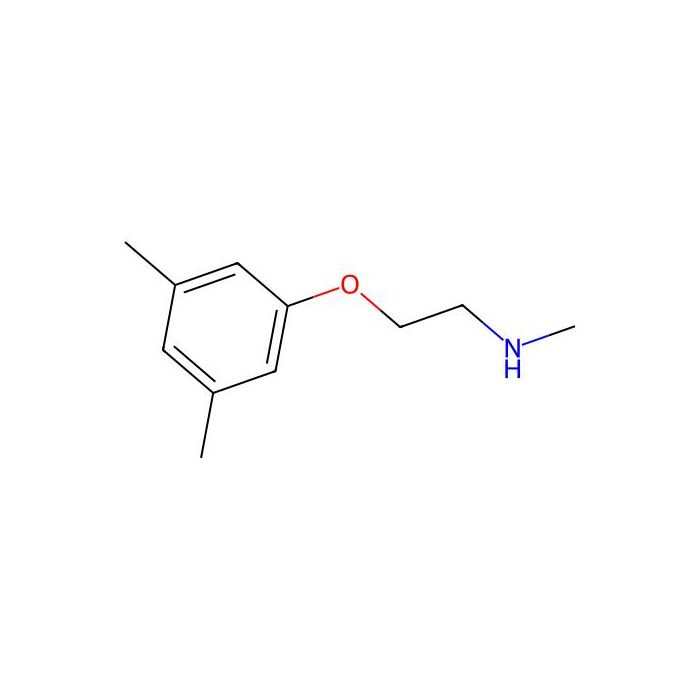
This compound belongs to the class of organic compounds known as phenol ethers. These are aromatic compounds containing an ether group substituted with a benzene ring.
External Descriptors
Not available
1. Djoumbou Feunang Y, Eisner R, Knox C, Chepelev L, Hastings J, Owen G, Fahy E, Steinbeck C, Subramanian S, Bolton E, Greiner R, and Wishart DS. ClassyFire: Automated Chemical Classification With A Comprehensive, Computable Taxonomy. Journal of Cheminformatics, 2016, 8:61.
Determine the necessary mass, volume, or concentration for preparing a solution.
Dilution Calculator
Determine the dilution needed to prepare a stock solution.
Reconstitution Calculator
Reviews
Customer Reviews
Application Protocols
No tested bioanalytical application protocols (e.g., WB, IHC, IF, FC) are defined for this small-molecule reagent. For synthetic use, see the Reaction Conditions and Synthetic Utility sections for practical guidance.
Preparation tips for stock solutions (general):
For LC/MS or bioassay stock solutions, dissolve the free base in DMSO, MeOH, or ACN (typical 10–50 mM). If aqueous stocks are needed, prepare a defined salt (e.g., HCl) and filter-sterilize through 0.22 µm where appropriate for research workflows.
Biological Roles
No specific biological role is established for 2-(3,5-dimethylphenoxy)-N-methylethanamine. It is best regarded as a synthetic, aryl-alkyl secondary amine used in chemical research.
General context (informational, not item-specific):
Structural class: phenoxyethylamines are common motifs in medicinal chemistry libraries, where the basic amine confers target-binding potential and the aryl ether modulates lipophilicity and membrane permeability.
Protonation: at physiological pH, secondary amines are largely protonated (conjugate acid pKa typically ~9–10 for this class), which affects membrane transport and salt handling in biological assay preparation.
Research use disclaimer: Per product data, this material is for research use only and not for human or animal therapeutic or diagnostic applications.
Buffer Applications
This compound is not a standard biological buffer. While secondary amines are basic and can accept a proton, 2-(3,5-dimethylphenoxy)-N-methylethanamine is not used as a defined buffering agent with a validated pKa/pH range in biochemical protocols.
Practical note:
If aqueous handling is required (e.g., stock solutions for assays), prepare a water-soluble salt (e.g., hydrochloride) and adjust pH with conventional buffers (HEPES, phosphate, Tris). Do not rely on this compound itself to maintain pH.
Green Alternatives
Greener practice for transformations involving this amine focuses on solvent and reagent choices rather than substituting the substrate itself.
Solvent choices (comparative, literature-based):
Use 2-methyltetrahydrofuran (2-MeTHF) or cyclopentyl methyl ether (CPME) instead of DCM/THF where reaction compatibility allows—both have better environmental profiles and higher boiling points for energy-efficient workups.
Ethyl acetate or isopropyl acetate are viable replacements for DCM in many acylations and extractions.
Ethanol or isopropanol can be used as benign media for salt formation and some reductive aminations.
Base/reagent considerations:
Prefer inorganic carbonates (Na2CO3, K2CO3) or aqueous NaHCO3 for acylations (Schotten–Baumann) over pyridine or DMAP when not mechanistically required.
For alkylations, choose less hazardous alkylating agents and minimize excess; explore phase-transfer catalysis to lower solvent/reagent loads.
Employ catalytic coupling strategies (e.g., enzymatic or transfer hydrogenation for reductive amination) over stoichiometric hydrides when feasible.
Workup/waste minimization:
Convert the amine to a crystalline salt to avoid chromatographic purification, reducing silica and solvent waste.
Apply solvent recovery and distillation for ethers/esters.
Tradeoffs: Ether alternatives (2-MeTHF/CPME) may alter reaction rates/selectivity; acetate solvents can slow acylations; greener bases may require longer reaction times.
Pharmaceutical Uses
No pharmacopeial excipient status or formulation role is specified for this item; refer to CoA/Spec Sheet.
General remarks for research settings (non-clinical):
This compound may serve as an intermediate in the synthesis of candidate molecules incorporating a phenoxyethyl secondary amine motif. In such cases, conversion to salts (e.g., HCl, fumarate) is often used to improve crystallinity, handling, and stability for non-clinical studies.
For analytical/reference purposes, prepare accurately weighed standards as free base or as a defined salt with documented counterion content. Validate purity by orthogonal methods (NMR, LC/MS, Karl Fischer for water if relevant).
Compliance: For research use only. Not intended for use in humans or for clinical applications.
Physical Properties
Item-specific specifications (for this catalog item):
Appearance: Not specified for this item; refer to CoA/Spec Sheet.
Molecular formula: Not specified for this item; refer to CoA/Spec Sheet.
Molecular weight: Not specified for this item; refer to CoA/Spec Sheet.
General/literature expectations for analogous 2-phenoxyethyl secondary amines (informational only):
Physical state: often low-melting solids or liquids depending on substitution; free bases are typically oils at room temperature, while crystalline salts (e.g., HCl) are solids.
Basicity: secondary aliphatic amines typically have conjugate acid pKa around 9–10 (literature, compound-class range), indicating strong basicity and efficient salt formation with mineral acids.
Solubility profile: free base is miscible with many organic solvents (alcohols, ethers, chlorinated solvents); limited water solubility that increases markedly upon protonation (e.g., hydrochloride salts are water-soluble).
LogP: aryl-alkyl secondary amines with two ring methyls commonly exhibit moderate lipophilicity (literature class estimate logP ~2–3), influencing extraction behavior and reverse-phase retention.
Odor: amine-like.
Notes:
Do not use the above general values as specifications. Always consult the CoA/SDS for definitive data on this specific SKU (D1054127).
Quality and Grades
Grade/Purity (item-specific): Not specified for this item; refer to CoA/Spec Sheet.
Interpretive guidance:
In the absence of a declared “HPLC,” “GC,” or “AR” analytical grade, users should rely on the batch CoA for assay, residual solvent profile, and chromatographic purity. For amines, GC or HPLC area% is commonly used; Karl Fischer water and residual mineral acid (if supplied as salt) may also be reported on CoA.
UV profile: If HPLC-grade were specified, that would imply low UV background; since it is not specified here, verify your analytical blank for low-wavelength UV detection.
Stabilizers: No stabilizer is listed for this item. Secondary amines are typically shipped neat without stabilizers, but if extreme air/CO2 sensitivity or discoloration is observed, storing under inert gas and in amber containers can help maintain quality.
Suitability for purpose: For synthesis, a purity of ≥95% is often acceptable; for SAR libraries/analytical standards, ≥98% with full NMR/MS may be preferred. Confirm through CoA and, if necessary, in-house QC (NMR, HRMS, HPLC, water, residual solvents).
Reaction and Applications
This compound functions as a versatile aryl-alkyl secondary amine building block. Typical research/lab applications include:
N-acylation and N-sulfonylation: Formation of amides or sulfonamides using acid chlorides/anhydrides or sulfonyl chlorides (e.g., Et3N or Na2CO3 base, DCM/THF; Schotten–Baumann conditions in biphasic media). Electron-rich aryl ether is spectator; amine is the primary locus of reactivity.
Quaternization/alkylation: Alkyl halides or methylating agents (e.g., MeI, MeOTf) afford tertiary amines or quaternary ammonium salts, modifying basicity and solubility for phase-transfer catalysis or material applications.
Carbamate/urea synthesis: Reaction with chloroformates to give carbamates; with isocyanates to give ureas—useful for protecting groups or library diversification.
Reductive transformations: If used as a nucleophile in reductive amination onto carbonyl compounds, the aryl ether can modulate lipophilicity of the product scaffolds.
Salt formation: Clean conversion to crystalline hydrochloride, mesylate, or tosylate salts can aid handling, purification, and formulation for assays.
Metalation/compatibility: The phenoxy ether typically withstands common basic conditions (e.g., carbonate, tertiary amines). Avoid strong Lewis acids or BBr3/AlCl3 that may cleave aryl–O bonds.
Practical tips:
Maintain anhydrous conditions for acylations/alkylations to minimize hydrolysis and over-alkylation.
Control stoichiometry and base strength to limit dialkylation to the tertiary amine stage (or avoid it if undesired).
Reaction Conditions
General literature-style guidance for this class of secondary amines (informational; adjust to your system):
N-acylation (Schotten–Baumann):
Reagents: acid chloride (1.0–1.2 eq), Na2CO3 or NaHCO3 (2–3 eq) in DCM or EtOAc, aqueous phase pH 8–10.
Temperature/time: 0–25 °C, 0.5–4 h. Monitor by TLC/LC.
Workup: separate layers, wash organic with brine, dry, and concentrate. Purify by silica with 0.5–2% Et3N if needed.
N-alkylation to tertiary amine:
Base/solvent: K2CO3 (2–3 eq) in MeCN, acetone, or DMF; add primary alkyl halide (1.1–1.5 eq).
Temperature/time: 25–60 °C, 2–16 h. Use inert atmosphere to limit oxidation.
Carbamate formation:
Reagents: chloroformate (1.1 eq) in DCM at 0 °C to RT with Et3N (2 eq) or NaHCO3 aqueous base (biphasic).
Quaternization:
MeI or MeOTf (1.1–1.5 eq) in MeCN or DCM at 0–25 °C, 1–4 h. Handle alkylating agents with extreme care.
Salt formation (HCl):
Dissolve free base in Et2O or MTBE, bubble dry HCl gas or add 2 M HCl in diethyl ether dropwise at 0–5 °C. Isolate precipitated solid, wash with cold ether, dry under vacuum.
Notes:
Use basic mobile phases for chromatography to prevent tailing.
If water is problematic (e.g., acylations), dry solvents and glassware thoroughly; amines readily absorb CO2/H2O.
Expected yields for these steps are commonly high (70–95%) in literature for similar substrates, contingent on stoichiometry and purity.
Safety and Handling
Item-specific hazard information: Not specified for this item; refer to SDS for authoritative classification, GHS pictograms, signal word, and H-statements.
General safety considerations for aryl-alkyl secondary amines (informational):
GHS tendencies: many secondary amines are classified as skin/eye irritants; some may cause respiratory irritation. Treat as harmful if swallowed/inhaled unless data show otherwise.
PPE: wear lab coat, safety glasses or face shield, and appropriate chemically resistant gloves (e.g., nitrile). Use in a fume hood to avoid inhalation of vapors and amine odors.
Incompatibilities: strong oxidizers (risk of exotherm/oxidation), acid chlorides/anhydrides (acylation), isocyanates (urea formation), nitrosating agents (risk of N-nitrosamine formation). Avoid contact with CO2-rich acidic conditions if free base form is required.
Special risks: secondary amines can form N-nitrosamines in the presence of nitrites under acidic conditions; rigorously avoid nitrosating conditions. Aryl ethers are generally stable; no peroxide formation tendency as with ethers like THF/diethyl ether.
First aid overview: in case of skin/eye contact, flush with water for ≥15 min and remove contaminated clothing; seek medical attention. If inhaled, move to fresh air; if swallowed, rinse mouth—do not induce vomiting; seek medical attention. Always follow institutional SOPs and SDS guidance.
Spill/cleanup: absorb with inert material, avoid breathing vapors, and dispose per local regulations.
Solvent Selection
Polarity/behavior: As a secondary aliphatic amine appended to an aryl ether, the free base is moderately lipophilic and basic. It dissolves well in polar aprotic organic solvents (acetonitrile, DMF, DMSO), alcohols (MeOH, EtOH), and many ethers and chlorinated solvents. Water solubility is limited in free-base form but high as mineral-acid salts (e.g., HCl).
Practical recommendations:
For reactions: choose dry, aprotic solvents (DCM, THF, toluene, MeCN) for acylations, sulfonylations, or alkylations. Use alcohols for salt formation or for reductive amination workflows.
For purification: free bases can tail on silica; add a small percentage of NH4OH or Et3N to eluents (e.g., 0.5–2% in hexanes/EtOAc or DCM/MeOH) or convert to a salt and back. Reverse-phase chromatography with basic modifiers (e.g., 0.1% NH4OH) reduces peak tailing.
For analytical work: dissolve in MeOH, ACN, or DMSO for LC; for GC, derivatization is usually unnecessary, but ensure the free base is used and avoid strong acids.
When to choose alternatives:
If water-based handling is required, prepare a hydrochloride or other pharmaceutically acceptable salt to enhance aqueous solubility.
If amine incompatibility is a concern for a given step (e.g., base-sensitive electrophiles), mask the amine as an amide/carbamate transiently.
Storage and Reconstitution
Storage (item-specific): Room temperature (per Product Data). Store tightly closed in a dry place. Protect from strong acids/bases and oxidizers. For long-term integrity, consider storing under inert gas to minimize oxidation and CO2 uptake by the free base.
Shipped in: Not specified for this item; refer to CoA/Spec Sheet.
Reconstitution/preparation:
Free base: If received as a neat liquid/solid, use directly or dissolve in suitable dry solvent (e.g., DCM, MeCN, MeOH, DMSO) to prepare stock solutions. For aqueous work, form a mineral-acid salt to improve solubility.
Salt formation (example): Dissolve in minimal Et2O/MTBE and add etheral HCl to precipitate the hydrochloride; isolate by filtration and dry under vacuum. Regenerate free base by basification (NaHCO3/Na2CO3) and extraction if needed.
Freeze–thaw: Not generally applicable; avoid repeated heating/cooling cycles that can introduce moisture. If preparing frozen DMSO stocks for research assays, aliquot and store at −20 °C, minimizing freeze–thaw cycles.
Stability: In the absence of item-specific stability data, monitor by LC/MS or NMR periodically. Discontinue use if significant discoloration, precipitation, or atypical odor changes occur.
Research Use Note: For research use only (per Product Data).
Structure and Identity
Short description: 2-(3,5-dimethylphenoxy)-N-methylethanamine is a secondary amine bearing a 3,5-dimethylphenoxy substituent on a two‑carbon linker to an N‑methylamino group. The molecule combines an electron-rich aryl ether with a basic aliphatic amine.
Item-specific identifiers (Product Data):
CAS: 875159-76-5
CID: 7131755
InChIKey: Not specified for this item; refer to CoA/Spec Sheet. (Note: product data lists a truncated key "319919" which is not a complete InChIKey.)
SMILES: Not specified for this item; refer to CoA/Spec Sheet.
Molecular formula: Not specified for this item; refer to CoA/Spec Sheet.
Molecular weight: Not specified for this item; refer to CoA/Spec Sheet.
Structural features (derived from the chemical name; general description):
Aromatic ring: a benzene ring substituted at the 3- and 5-positions with methyl groups (3,5-dimethylphenyl).
Ether linkage: phenoxy (Ar–O–) connection to a –CH2–CH2– chain.
Amine: terminal secondary amine (–CH2–CH2–NH–CH3), basic and nucleophilic.
No stereocenters; molecule is achiral.
2D structure in words: A 3,5-dimethyl-substituted phenyl ring bonded through oxygen (phenoxy) to an ethylene linker, which terminates in an N-methylamino group (Ar–O–CH2–CH2–NH–CH3). The ring methyls are meta to the ether oxygen and para to each other.
Synthetic Utility
Functional group synopsis:
Basic, nucleophilic secondary amine (primary locus of reactivity).
Electron-rich aryl ether (3,5-dimethylphenoxy) that is generally inert under many conditions but can be cleaved under strong Lewis/Brønsted acidic conditions (e.g., BBr3).
Typical transformations:
N-acylation/sulfonylation: access to amide/sulfonamide libraries; conditions: acid chloride/anhydride or sulfonyl chloride, base (Et3N, Na2CO3), DCM/THF or biphasic media.
N-alkylation: SN2 with primary halides/tosylates, often with K2CO3 or NaHCO3; careful control to avoid over-alkylation if tertiary amine is not desired.
Carbamate/urea formation: with chloroformates/isocyanates for protecting group strategy or scaffold modification.
Quaternary ammonium salt formation: useful for phase-transfer catalysis or materials; counterion selection (I−, Br−, BF4−, PF6−) tunes solubility.
Salt switching/crystallization: prepare mineral-acid salts to improve handling and then regenerate free base with aqueous base.
Retrosynthetic value:
Serves as a convergent point where the amine fragment can be grafted onto diverse acyl/alkyl components, while the aryl ether remains intact as a lipophilicity handle.
Compatibility notes:
Avoid nitrosating agents (NaNO2/H+). Minimize prolonged exposure to strong oxidants. Aryl ether tolerates many cross-coupling conditions provided the phenyl ring is not activated for displacement.
Target Specificity
Not applicable. This product is a small-molecule building block and is not an antibody, enzyme, or affinity reagent. No target, epitope, clone, or species reactivity is defined for this item.
We use cookies to ensure the website functions properly and, where permitted, to improve your experience. You can manage your preferences at any time in Settings. Learn more in our Cookie Policy.
Shall we send you a message when we have discounts available?
Remind me later
Thank you! Please check your email inbox to confirm.
Products are supplied to verified businesses, institutions, and qualified professionals for research and development use only. Not for use in humans, animals, diagnosis, or therapy.