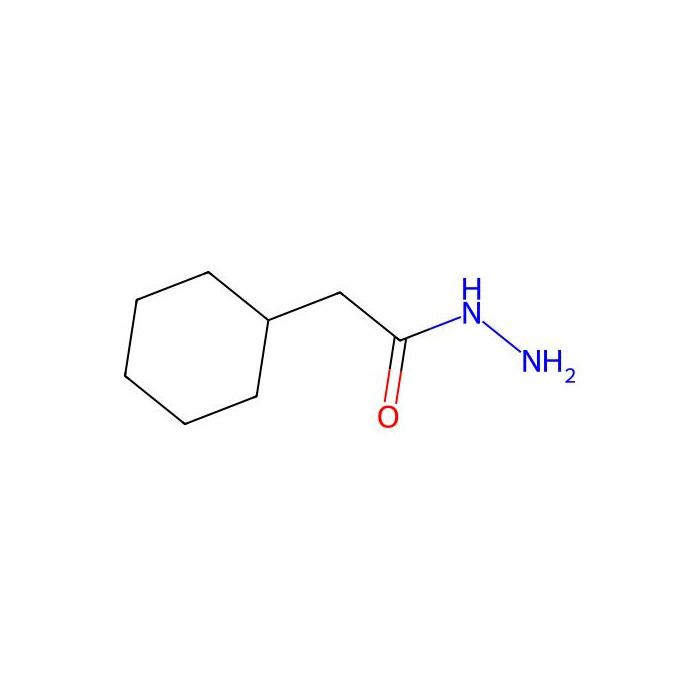
2-Cyclohexylacetohydrazide - ≥95% , CAS No.27563-60-6

CAS: 27563-60-6 Cat. No.: C735698 Formula: C8H16N2O Molecular Weight: 156.22 EC Number: 868-747-2 PubChem CID: 3818673
AVAILABLE TO ORDER
GRADE & PURITY ≥95%
Storage
Store at 2-8°C,Protected from light,Argon charged
Shipped In
Wet ice
★
Size
Germany (EU)
USA*
Price
Qty
250mg
C735698-250mg
Made to order · 8–12 wks
€43.30
1g
C735698-1g
Made to order · 8–12 wks
€99.70
Enter a quantity for the sizes you want to add.

Specifications

Specifications & Purity
≥95%
Storage
Store at 2-8°C,Protected from light,Argon charged
Shipped In
Wet ice
This product requires cold chain shipping. Ground and other economy services are not available.
Purity
≥95%
Names and Identifiers
SMILES
C1CCC(CC1)CC(=O)NN
IUPAC Name
2-cyclohexylacetohydrazide
InChIKey
JFBXNQGAIGCUKF-UHFFFAOYSA-N
InChI
1S/C8H16N2O/c9-10-8(11)6-7-4-2-1-3-5-7/h7H,1-6,9H2,(H,10,11)
Isomeric SMILES
C1CCC(CC1)CC(=O)NN
PubChem CID
3818673
Molecular Weight
156.22

Advanced Data

Taxonomic Classification

Taxonomy Tree

KingdomOrganic compounds
SuperclassOrganic acids and derivatives
ClassCarboxylic acids and derivatives
SubclassCarboxylic acid derivatives
Intermediate Tree Nodes Not available
Direct ParentCarboxylic acid hydrazides
Alternative Parents Organonitrogen compounds  Organic oxides  Hydrocarbon derivatives  Carbonyl compounds  
Molecular FrameworkAliphatic homomonocyclic compounds
Substituents Carboxylic acid hydrazide - Organic nitrogen compound - Organic oxygen compound - Organic oxide - Hydrocarbon derivative - Organooxygen compound - Organonitrogen compound - Carbonyl group - Aliphatic homomonocyclic compound
DescriptionThis compound belongs to the class of organic compounds known as carboxylic acid hydrazides. These are carboxylic acid derivatives containing a carbonyl group in which the carbon is directly linked to a hydrazide group (N-N).
External Descriptors Not available
3D Structure
Interactive Chemical Structure Model


Certificates (CoA,COO,BSE/TSE and Analysis Chart)
C of A & Other Certificates(BSE/TSE, COO):
Analytical Chart:
Chemical and Physical Properties
SensitivityLight and air sensitive
Molecular Weight156.23
XLogP31.500
Hydrogen Bond Donor Count2
Hydrogen Bond Acceptor Count2
Rotatable Bond Count2
Exact Mass156.126 Da
Monoisotopic Mass156.126 Da
Topological Polar Surface Area55.100 Ų
Heavy Atom Count11
Formal Charge0
Complexity130.000
Isotope Atom Count0
Defined Atom Stereocenter Count0
Undefined Atom Stereocenter Count0
Defined Bond Stereocenter Count0
Undefined Bond Stereocenter Count0
The total count of all stereochemical bonds0
Covalently-Bonded Unit Count1
Safety and Hazards(GHS)
x_symbol
x_signal_word
Warning
x_hazard_statements

H302:Harmful if swallowed

H315:Causes skin irritation

H319:Causes serious eye irritation

H335:May cause respiratory irritation

x_precautionary_statements

P261:Avoid breathing dust/fume/gas/mist/vapors/spray.

P264:Wash hands [and …] thoroughly after handling.

P270:Do not eat, drink or smoke when using this product.

P271:Use only outdoors or in a well-ventilated area.

P280:Wear protective gloves/protective clothing/eye protection/face protection.

P321:Specific treatment (see ... on this label).

P330:Rinse mouth.

P302+P352:IF ON SKIN: wash with plenty of water.

P304+P340:IF INHALED: Remove person to fresh air and keep comfortable for breathing.

P305+P351+P338:IF IN EYES: Rinse cautiously with water for several minutes. Remove contact lenses if present and easy to do - continue rinsing.

P362+P364:Take off contaminated clothing and wash it before reuse.

P405:Store locked up.

P403+P233:Store in a well-ventilated place. Keep container tightly closed.

P501:Dispose of contents/container to an approved waste disposal plant.

P264+P265:Wash hands [and …] thoroughly after handling. Do not touch eyes.

P301+P317:IF SWALLOWED: Get medical help.

P337+P317:If eye irritation persists: Get medical help.

P332+P317:If skin irritation occurs: Get medical help.

P319:Get medical help if you feel unwell.

Solution Calculators
Reviews

Customer Reviews

Application Protocols

No item-specific tested application protocols are provided. The following general workflow illustrates hydrazone bioconjugation to aldehyde-bearing biomolecules (literature guidance):

Hydrazone ligation to oxidized glycoproteins:

  • Oxidize glycan vicinal diols with NaIO4 (perform separately and neutralize/clean as appropriate for your system).
  • Prepare conjugation buffer: 100 mM sodium acetate, pH 5.0; add 10–20% ethanol or DMSO if needed for solubility of the hydrazide.
  • Make a fresh solution of 2-cyclohexylacetohydrazide (1–10 mM) in buffer/co-solvent.
  • Optional catalyst: Add aniline (10–50 mM) to accelerate hydrazone formation.
  • Combine with aldehyde-bearing biomolecule; incubate at RT for 2–16 h with gentle mixing.
  • Quench/cleanup: Desalt (spin columns/dialysis) to remove excess reagent and catalyst.
  • Verification: Analyze by MS, SDS-PAGE shift, or UV–Vis if a chromophore is present on the partner.

Notes:

  • Maintain pH between 4.5 and 6.0 for optimal rates while preserving biomolecule integrity.
  • Shield from strong light as a general precaution and per product storage guidance.
  • For purely synthetic carbonyls, conduct reactions in EtOH or EtOH/AcOH with molecular sieves; monitor by TLC/HPLC.

These are general suggestions; optimize for your specific system.

Biological Roles

This compound is a synthetic acyl hydrazide intended for laboratory research. It is not a natural metabolite and has no assigned physiological role.

General biochemical relevance of hydrazides (literature context):

  • Carbonyl capture: Hydrazides react selectively with aldehydes/ketones to form hydrazones, a cornerstone of bioconjugation for tagging oxidized glycans (e.g., periodate-oxidized sialic acid termini) on glycoproteins and polysaccharides.
  • Reversible ligation: Hydrazone bonds can be dynamic under mildly acidic conditions and can be driven to completion by removal of water or by aniline catalysis; they are more stable than imines but still hydrolyzable, enabling reversible assembly strategies in chemical biology.
  • Surface modification: Hydrazide-functionalized surfaces or linkers bind to carbonyl-bearing biomolecules, facilitating immobilization or affinity capture.

Caveats and best practices:

  • Maintain pH control (typically 4.5–6.0) to balance reaction rate and biomolecule stability.
  • Use biocompatible buffers (acetate/citrate) and minimize organic co-solvent content when working with proteins or cells (this product is not for clinical use).
  • Verify conjugation by orthogonal methods (SDS-PAGE shift, UV–Vis labeling, MS) because hydrazone formation can be reversible.

No medical, diagnostic, or therapeutic use is intended or implied; for research use only.

Buffer Applications

As a small organic hydrazide, this compound is not itself a buffering agent and is not used to control pH.

Practical notes where buffers are relevant (literature/general):

  • Hydrazone ligations often proceed in mildly acidic buffers:
    • Acetate buffer (50–100 mM, pH 4.5–5.5) with 10–30% ethanol or DMSO to aid solubility of hydrophobic substrates.
    • Citrate buffer (pH 5–6) as an alternative for sensitive biomolecules.
    • Aniline (10–100 mM) can be added as a nucleophilic catalyst to accelerate hydrazone formation at near-neutral pH.
  • For purely synthetic work, non-aqueous conditions are common; buffers are typically not required.

If your goal is pH control or electrophoresis, select established buffers (PBS, Tris, HEPES, acetate) instead; this product serves as a reactive ligand rather than a buffering component.

Green Alternatives

Greener choices center on solvent selection and safer activation strategies rather than changing the reagent itself.

Greener solvent options (literature guidance):

  • Ethanol or water/ethanol mixtures for hydrazone formation offer a lower-toxicity alternative to DMF/DMSO when solubility permits.
  • 2-MeTHF or CPME as organic phases for extractions or couplings can reduce environmental impact versus chlorinated solvents.
  • Carbonate or acetate buffers (pH 4.5–6) for bioconjugation, optionally with 10–30% ethanol as co-solvent.

Comparison (general):

  • DMF vs Ethanol/Water:
    • DMF: excellent solvation, but reproductive toxin and problematic EHS profile.
    • EtOH/H2O: renewable, low toxicity; may require longer reaction times or catalysts (e.g., aniline) for hydrazone formation.
  • DCM vs 2-MeTHF/CPME:
    • DCM: volatile, chlorinated; disposal and exposure considerations.
    • 2-MeTHF/CPME: lower environmental impact; good for extractions and many couplings; may alter rates/selectivity.

Process-intensification and safety:

  • Avoid in situ generation/isolation of acyl azides when possible; use safer Curtius alternatives (e.g., DPPA in flow, or carbonyldiimidazole routes to ureas/carbamates) with appropriate risk assessments.
  • Employ catalytic aniline or 4-aminobenzoic acid for hydrazone ligations at neutral pH to reduce need for harsh acidic conditions.

Trade-offs:

  • Greener solvents can reduce solubility of hydrophobic substrates (here, the cyclohexyl moiety); plan for co-solvent systems or higher temperatures (if compatible) to balance sustainability and performance.
Pharmaceutical Uses

No pharmacopeial monograph or excipient status is provided for this item. It is offered strictly for research and laboratory use.

General formulation context (literature/general):

  • Hydrazides can be used in discovery-stage conjugation workflows to derivatize carbonyl-containing small molecules or biomolecules for SAR, target identification, or immobilization—activities confined to research labs.
  • Any use in GMP manufacturing or clinical formulations would require comprehensive qualification (identity, purity, residual solvents, genotoxic impurities), which is beyond the scope of this listing.

What is specific to this item:

  • Grade/purity: Not specified for this item; refer to CoA/Spec Sheet.
  • Storage: 2–8 °C, protected from light, under argon; shipped on wet ice.

Regulatory note: This product is not intended as an API, excipient, or for diagnostic use. Do not use in humans or animals.

Physical Properties

Item-specific specifications (this lot):

  • Appearance: Not specified for this item; refer to CoA/Spec Sheet.
  • Molecular formula: Not specified for this item; refer to CoA/Spec Sheet.
  • Molecular weight: Not specified for this item; refer to CoA/Spec Sheet.
  • Melting point, boiling point, density, refractive index, water/peroxide content, metal limits, UV cutoff: Not specified for this item; refer to CoA/Spec Sheet.

Literature/computed reference data (non-binding, for context):

  • Typical molecular formula (computed): C8H16N2O
  • Typical molecular weight (computed): ~156.23 g/mol; exact mass ~156.1263
  • Physical state: small acyl hydrazides are commonly crystalline solids; hydrogen-bonding leads to moderate melting points (literature generalization; specific MP not provided for this item).
  • Solubility profile (general):
    • Generally soluble in polar protic solvents (ethanol, methanol) and polar aprotic solvents (DMF, DMSO, NMP).
    • Limited solubility expected in nonpolar hydrocarbons (hexanes, heptane) due to the polar hydrazide.
    • Aqueous solubility may be moderate; pH-dependent ionization of the hydrazide nitrogens can increase solubility in mildly acidic/basic media.
  • pKa/logP: Not located in authoritative literature for this exact compound; hydrazides typically show weakly basic behavior (general trend).

General handling implications of properties:

  • Hygroscopicity: hydrazides can hydrogen bond with moisture; argon storage in Product Data suggests minimizing moisture/oxygen/light exposure.
  • Thermal behavior: avoid extended heating; hydrazides may decompose before boiling.

Always consult the item-specific CoA/SDS for definitive physical specifications.

Quality and Grades

Item-specific grade/purity: Not specified for this item; refer to CoA/Spec Sheet.

Interpretation and context for common grades (general guidance):

  • Research/Technical grade: Suitable for most synthetic and screening workflows; may not include low UV absorbance or metal-background guarantees.
  • Purified/Assay grade: Higher assay (% area) and narrower impurity profile; preferable for structure–activity work or sensitive downstream transformations.
  • HPLC grade (solvents) / LC–MS grade: Not applicable to this solid reagent; for solutions, solvent quality impacts background and ion suppression.

Stabilizers/antioxidants:

  • None are specified for this item; if present in a specific lot, they would be listed on the CoA/SDS. Hydrazides generally do not require stabilizers but benefit from dry, inert, light-protected storage as indicated.

Analytical verification (typical, not item-specific claims):

  • Identity can be confirmed by 1H/13C NMR (amide/hydrazide NH signals, methylene next to carbonyl), IR (strong C=O near ~1650–1700 cm−1; N–H stretches), HRMS (M+H+ ~157.13), and HPLC purity profiling.

What is specific to this listing:

  • Storage requirements are defined: 2–8 °C, protected from light, argon charged; shipped on wet ice. For exact assay, residual solvents, and impurity thresholds, consult the lot-specific CoA.
Reaction and Applications

2-Cyclohexylacetohydrazide is a versatile nucleophilic acyl hydrazide used as both a coupling partner and a protected acyl unit in synthesis.

Key application families (literature/general):

  • Hydrazone formation: Condenses with aldehydes/ketones under mildly acidic conditions (pH ~4.5–6 or AcOH catalysis) to give hydrazones, enabling carbonyl capture, derivatization, or bioconjugation to oxidized glycoconjugates.
  • Acyl azide generation: Nitrosation of acyl hydrazides (e.g., NaNO2/HCl or tBuONO) affords acyl azides, which undergo Curtius rearrangement to isocyanates, enabling conversion to amines, ureas, carbamates. Exercise caution—acyl azides can be energetic; favor low-temperature, dilute conditions.
  • Coupling/activation: Transformation to activated esters (e.g., with CDI, EDC/NHS) or mixed anhydrides for subsequent amide bond formation while preserving the cyclohexylacyl unit.
  • Reductive transformations: Hydrazones derived from this hydrazide can be reduced (e.g., with NaBH3CN or catalytic hydrogenation) as part of carbonyl umpolung strategies.
  • Linker chemistry: The hydrazide handle enables attachment to aldehyde-bearing surfaces, polymers, or biomolecules for materials and chemical biology applications.

Practical tips:

  • Maintain anhydrous conditions for acyl activation steps; trace water reduces yields via hydrolysis.
  • For hydrazone ligations, use acetate buffer and remove oxygen/light as reasonable to minimize side reactions; aniline catalysts can accelerate formation (0.1–10 mol%).
  • The cyclohexyl group increases hydrophobicity; consider co-solvents to ensure homogeneous reaction mixtures.
Reaction Conditions

General conditions (literature guidance; adjust to your system):

Hydrazone formation with aldehydes/ketones:

  • Solvent: EtOH, MeOH, or EtOH/H2O; for low-solubility partners, DMF or DMSO co-solvent (10–50%).
  • Catalyst: AcOH (0.1–1 equiv) or aniline (10–100 mM) for rate enhancement at pH 5–6.
  • Temperature: RT to 50 °C; remove water (molecular sieves or Dean–Stark in toluene/EtOH blends) to drive completion.
  • Time: 1–16 h depending on substrate/catalyst.

Acyl azide generation and Curtius rearrangement:

  • Reagents: NaNO2 in aqueous mineral acid at 0–5 °C or tBuONO in organic media; keep dilute and cold; monitor by IR (acyl azide ~2120 cm−1).
  • Rearrangement: Warm to 50–80 °C to form isocyanate; capture with ROH/RNH2/H2O to give carbamate/urea/amine. Use fume hood and appropriate controls due to energetic intermediates.

Acyl activation/coupling:

  • CDI or EDC/NHS in DMF, DCM, or 2-MeTHF; 0–25 °C; 1–4 h activation then add nucleophile.
  • Bases: DIPEA or lutidine (0.5–2 equiv) to neutralize generated acids.

Workup/purification:

  • Quench with aqueous buffer; extract with suitable organic phase (EtOAc/2-MeTHF); avoid strong base or prolonged basic washes to minimize hydrolysis.
  • Purify by silica gel chromatography (eluent: EtOAc/hexanes or EtOAc/DCM gradients); monitor by TLC/HPLC; hydrazide NH spots can streak—add a drop of AcOH to eluent to sharpen.

Yields: Highly substrate- and condition-dependent; consult primary literature for closely related substrates.

Safety and Handling

Item-specific hazard information:

  • Signal word: Not specified for this item; refer to SDS.
  • H-statements / GHS classification / pictograms: Not specified for this item; refer to SDS.

General safety guidance for acyl hydrazides (literature-based; not a substitute for the SDS):

  • Hazards: Hydrazide-containing compounds may cause skin and eye irritation and can be harmful if swallowed or inhaled. Some hydrazides are sensitizers. Avoid dust generation and inhalation.
  • PPE: Use chemical-resistant gloves (e.g., nitrile), lab coat, and safety goggles. Employ a fume hood for weighing and solution prep.
  • Incompatibilities: Strong oxidizers; strong acids or bases can promote hydrolysis or decomposition; nitrosating agents can convert hydrazides to acyl azides (energetic intermediates) under certain conditions.
  • Special risks: Although this molecule is not an ether, minimize air/light exposure per Product Data to prevent degradation. Do not heat to dryness in the presence of nitrosating species. Avoid contact with carbonyl-containing reagents if unintended hydrazone formation is undesirable.
  • First aid (overview):
    • Skin/eye contact: Rinse with water for at least 15 minutes; remove contaminated clothing; seek medical advice.
    • Inhalation: Move to fresh air; monitor breathing; seek medical attention if symptoms persist.
    • Ingestion: Rinse mouth; do not induce vomiting; seek medical advice.
  • Spill/Disposal: Contain solid with inert absorbent, collect for disposal as organic waste per institutional and local regulations.

Always defer to the product SDS and institutional EHS policies for authoritative guidance.

Solvent Selection

Solvent choice for 2-cyclohexylacetohydrazide should balance its polar hydrazide functionality with the hydrophobic cyclohexyl group.

General miscibility and polarity (literature-based):

  • Polar protic: Ethanol, methanol, isopropanol typically dissolve hydrazides well and are preferred for hydrazone formations with aldehydes/ketones.
  • Polar aprotic: DMF, DMSO, NMP provide strong solvation for stock solutions and coupling chemistry; easy for preparing concentrated solutions for additions.
  • Aqueous media: Limited intrinsic solubility; solubility improves with co-solvents (10–50% EtOH/MeOH) or pH adjustment (slightly acidic for hydrazone coupling, mildly basic for deprotonation when nucleophilicity is required).
  • Nonpolar solvents (toluene, hexanes): Generally poor; may be used in biphasic or with phase-transfer additives if needed.

Selection scenarios:

  • Bioconjugation to carbonyl-containing biomolecules: Use acetate or citrate buffer (pH ~4.5–6) with 10–30% EtOH or DMSO as co-solvent.
  • Organic synthesis (acyl azide generation, coupling): Anhydrous DMF, DCM/DMF mixtures, or dioxane are common; maintain anhydrous conditions.

Small comparison (guidance):

  • Ethanol: greener, easy removal, supports hydrazone formation; slightly lower solubility ceiling than DMF/DMSO.
  • DMSO: maximal solubility; high boiling point complicates workup.
  • DMF: excellent solvating power; consider substitution with green alternatives (Cyrene, PC, or 2-MeTHF co-solvent) when feasible.

Always verify solvent compatibility with other reagents and the intended reaction conditions.

Storage and Reconstitution

Item-specific storage (from Product Data):

  • Store at 2–8 °C.
  • Protect from light.
  • Keep under argon (inert atmosphere).
  • Shipped on wet ice.

General handling and reconstitution guidance:

  • Upon receipt, allow the container to equilibrate to room temperature under inert gas before opening to minimize moisture ingress.
  • If supplied as a solid, dissolve to prepare stock solutions in dry solvents such as DMSO, DMF, ethanol, or methanol. Typical lab stocks: 50–200 mM, adjusted to your application.
  • For aqueous work, use co-solvents (10–30% EtOH or DMSO) to aid solubility; adjust pH as needed for hydrazone chemistry.
  • Aliquot solutions into dry, inert-gas-flushed vials to avoid repeated freeze–thaw; store solutions at 2–8 °C for short term or at −20 °C for longer term, protected from light.
  • Avoid prolonged exposure to moisture, oxygen, and elevated temperatures; hydrazides can slowly hydrolyze or oxidize.

Stability notes:

  • No item-specific shelf-life is provided; monitor by HPLC/LC–MS for degradation over time.
  • If precipitate forms upon cold storage, gently warm to room temperature and sonicate or add minimal co-solvent to redissolve.

For definitive instructions, consult the lot-specific CoA and SDS.

Structure and Identity

2-Cyclohexylacetohydrazide is the hydrazide derivative of cyclohexylacetic acid, featuring an aliphatic cyclohexyl group tethered via a methylene to an acyl hydrazide (–CONH–NH2).

  • SKU: C735698
  • CAS: 27563-60-6
  • PubChem CID (from product data): 3818673
  • InChIKey (as provided): 158714
  • Research Use: For research use only

Item-specific identifiers (from Product Data):

  • Storage: 2–8 °C, protected from light, argon charged; shipped on wet ice.

Computed/literature structural details (for reference; not item specifications):

  • Typical molecular formula (literature/computed): C8H16N2O
  • Typical molecular weight (literature/computed): ~156.23 g/mol; exact mass ~156.1263
  • Representative SMILES (literature/computed): O=C(NN)CH2C1CCCCC1
  • Functional groups: primary hydrazide (–CONH–NH2), secondary amide N–H, saturated cyclohexyl ring
  • 2D structure (verbal): a cyclohexane ring (chair) attached via –CH2– to a carbonyl carbon; the carbonyl is bound to –NH–NH2. No stereocenters; fully aliphatic backbone.

Notes:

  • The hydrazide motif is nucleophilic at the terminal –NH2 and can condense with carbonyl compounds to form hydrazones.
  • The cyclohexyl substituent imparts hydrophobic character relative to lower alkyl acyl hydrazides.
Synthetic Utility

Functional handles and reactivity:

  • Hydrazide nitrogen nucleophilicity enables condensation with carbonyls (hydrazone formation), acyl activation to azides or imidazolides, and participation in urea/carbamate synthesis via Curtius rearrangement of the acyl azide.
  • The cyclohexylacyl fragment delivers a saturated, lipophilic unit valued in medicinal chemistry for modulating permeability and metabolic stability.

Retrosynthetic/forward strategies (literature/general):

  • As amine equivalent: Convert to acyl azide (nitrosation) and drive Curtius rearrangement → isocyanate → trap with nucleophiles to access amines, ureas, or carbamates derived from cyclohexylacetic acid.
  • As carbonyl capture agent: Form hydrazones with aryl/alkyl aldehydes and ketones, allowing purification or subsequent transformations (e.g., Wolff–Kishner-type reductions on hydrazones formed from aldehydes/ketones; note conditions differ for acyl hydrazides vs simple hydrazine-derived hydrazones).
  • As coupling precursor: Activate the carboxamide via CDI or mixed anhydride chemistry to furnish amide linkages while retaining the cyclohexylacetyl moiety.

Practical considerations:

  • The terminal –NH2 is more nucleophilic; selective acylation at the terminal nitrogen can be achieved under controlled conditions.
  • Avoid over-activation or strong dehydrating agents that may lead to side reactions (e.g., formation of diazene species).
  • Use anhydrous, oxygen- and light-minimized conditions as indicated by the storage guidance to preserve integrity.
Target Specificity

Not applicable. This product is a small-molecule hydrazide reagent and is not an antibody, enzyme, or affinity probe with defined biological target specificity.

For conjugation uses, specificity arises from chemoselectivity toward carbonyl groups (aldehydes/ketones) rather than a biological epitope.

Frequently Asked Questions

What are the CAS number, molecular formula and molecular weight?
The CAS Number is 27563-60-6, the molecular formula is C8H16N2O, and the molecular weight is 156.22 g/mol. InChIKey JFBXNQGAIGCUKF-UHFFFAOYSA-N.

Shall we send you a message when we have discounts available?

Remind me later

Thank you! Please check your email inbox to confirm.

Oops! Notifications are disabled.