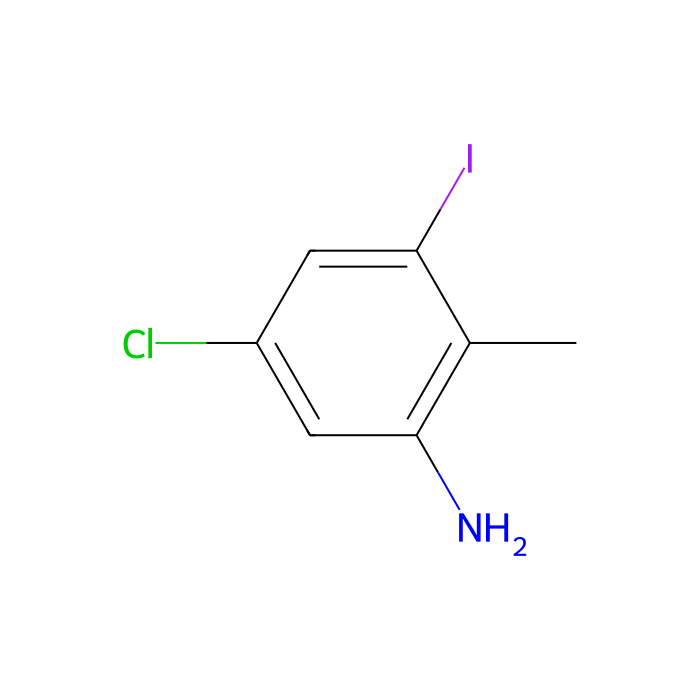
This compound belongs to the class of organic compounds known as aminotoluenes. These are organic aromatic compounds containing a benzene that carries a single methyl group and one amino group.
External Descriptors
Not available
1. Djoumbou Feunang Y, Eisner R, Knox C, Chepelev L, Hastings J, Owen G, Fahy E, Steinbeck C, Subramanian S, Bolton E, Greiner R, and Wishart DS. ClassyFire: Automated Chemical Classification With A Comprehensive, Computable Taxonomy. Journal of Cheminformatics, 2016, 8:61.
Determine the necessary mass, volume, or concentration for preparing a solution.
Dilution Calculator
Determine the dilution needed to prepare a stock solution.
Reconstitution Calculator
Reviews
Customer Reviews
Application Protocols
Not applicable. No immunoassay or bioanalytical protocols (e.g., WB, IHC, IF, FC) are associated with this small-molecule reagent. For synthetic uses, refer to the Reaction Conditions and Synthetic Utility sections for practical guidance.
Biological Roles
This product is a synthetic aromatic amine building block and is not a known endogenous metabolite or biochemical cofactor.
General context (literature/general)
Anilines can participate in metabolic N-acetylation and oxidative pathways in biological systems, but 5-chloro-3-iodo-2-methylaniline has no established physiological role.
The free amine can form salts with mineral/organic acids to modulate solubility for handling; such salts are used for purification/processing rather than for biological function.
Research relevance
Primarily used to construct more complex molecules for SAR exploration in medicinal chemistry, agrochemicals, or functional materials. Any biological evaluation pertains to derivatives synthesized from this intermediate rather than to the intermediate itself.
No medical or clinical claims are made; for laboratory research use only.
Buffer Applications
Not typically applicable. This compound is a hydrophobic aromatic amine used as a synthetic intermediate rather than a buffering agent. If aqueous handling is needed (e.g., extractions), the amine may be transiently converted to a protonated salt with mineral acids to increase water solubility, but it does not serve as a defined buffer system.
Green Alternatives
Greener choices center on solvent and catalyst selection for cross-couplings and protection steps involving this halogenated aniline.
Solvent alternatives (literature/general)
Replace DMF/DMA/dioxane with 2-MeTHF, CPME, or toluene/EtOH mixtures when feasible. Aqueous micellar media (e.g., TPGS-750-M) can enable couplings at low catalyst loadings.
For workups, minimize halogenated solvents by using EtOAc/Heptane systems.
Catalyst/base considerations
Employ ligand-enabled Pd catalysis at ppm levels or Ni catalysis to reduce precious metal usage; recover catalysts where possible.
Use inorganic bases with lower EHS concerns (K2CO3, K3PO4) over strong alkoxides when compatible.
Energy and protection minimization
Conduct reactions at ambient temperature where possible (e.g., room-temperature Suzuki of aryl iodides).
Avoid unnecessary protection by using catalyst systems tolerant of free anilines (e.g., BrettPhos/Buchwald systems) if selectivity allows.
Adopt in-process controls (IPC) to confirm conversion/selectivity when transitioning to greener conditions.
Pharmaceutical Uses
This material is not an excipient and has no pharmacopeial monograph. It is used, if at all, as a synthetic intermediate in the research-phase preparation of API candidates or advanced intermediates.
Formulation role: None as a finished dosage component. It may form transient salts (e.g., HCl) to aid purification or process handling during medicinal chemistry campaigns.
Compliance note: For any application related to regulated development, obtain and review the CoA/Spec Sheet and vendor declarations (residual solvents, elemental impurities) and qualify the lot under your quality system. No therapeutic claims are made.
Physical Properties
Item-specific values (Product Data)
Appearance: Not specified for this item; refer to CoA/Spec Sheet.
Molecular Formula: Not specified for this item; refer to CoA/Spec Sheet.
Molecular Weight: Not specified for this item; refer to CoA/Spec Sheet.
Literature/computed values and expectations (for reference; not item specifications)
Empirical formula (literature/computed): C7H7ClIN
Formula weight (computed): ~267.49 g/mol
Phase at ambient conditions: typically a crystalline solid for dihalogenated anilines of this size (qualitative, literature expectation).
Solubility (qualitative, literature): sparingly soluble in water; soluble in common organic solvents such as dichloromethane, ethyl acetate, THF, acetone, toluene, and alcohols.
Acid–base: primary aniline with a conjugate acid pKa typically ~4.5–5.5 (literature, class value; exact value not determined for this specific substitution pattern).
Lipophilicity: halogenation and aryl methyl increase hydrophobicity; expected logP >2 (literature expectation for similar aryl anilines; item-specific value not determined).
UV/Vis: aromatic chromophore; typical π→π* absorption around 200–280 nm (literature, general for anilines). Specific UV cutoff/epsilon: Not specified for this item; refer to CoA/Spec Sheet.
Melting/boiling points, density, refractive index: Not specified for this item; refer to CoA/Spec Sheet.
Note: Use the product’s CoA/SDS for authoritative physical data before process design.
Quality and Grades
Item-specific grade/purity (Product Data)
Grade/Purity: Not specified for this item; refer to CoA/Spec Sheet.
Guidance on interpreting grades (general)
Research/technical grade: Suitable for most synthetic applications. Impurities (residual halogenated isomers, residual metals, moisture) vary lot-to-lot; verify by NMR/GC/HPLC before scale-up.
High-purity or ≥98–99% assay (if specified on CoA): Recommended for medicinal chemistry SAR or when used in sequence-sensitive cross-couplings to minimize side reactions.
Metals content: Important when using as a coupling substrate followed by sensitive catalytic steps. If not specified, assess via ICP-MS when required.
Water/peroxides/UV cutoff: Not specified for this item; refer to CoA/Spec Sheet.
Practical quality notes for this scaffold (general)
Regioisomer control: Dihalogenated anilines can have positional isomers; confirm identity by 1H/13C NMR (diagnostic patterns for 1,2,3,5-substitution), HRMS, and, if needed, 2D NMR.
Residual halides: Trace iodide/chloride salts or hydrolysis byproducts can affect coupling chemistry; simple trituration or recrystallization often improves performance.
Documentation: For GMP-related research or analytical release, request full CoA including assay, impurity profile, residual solvents, and water content.
Reaction and Applications
As a densely functionalized aryl building block, 5-chloro-3-iodo-2-methylaniline provides orthogonal handles that enable stepwise diversification and late-stage functionalization.
Cross-coupling (literature/general)
Aryl iodide (C–I) is highly reactive in Pd- or Ni-catalyzed couplings: Suzuki–Miyaura, Sonogashira, Heck, and Negishi. This allows selective transformation at C–I while leaving C–Cl intact for subsequent steps.
After C–I elaboration, the aryl chloride can undergo coupling under more forcing conditions (e.g., Buchwald–Hartwig C–N or Suzuki with tailored ligands) to build biaryls, diarylamines, or aryl–heteroaryl linkages.
Aniline chemistry
Protection: –NH2 can be masked as Boc, Cbz, acetyl, or sulfonamide (e.g., Ts) to improve cross-coupling efficiency and control coordination to Pd.
Electrophilic functionalization: Diazotization (if protected or as salt) enables Sandmeyer-type substitutions at the aniline position; however, existing halides govern site selectivity on the ring.
Useful intermediate for agrochemical and materials motifs, and for medicinal chemistry SAR libraries where positional halogenation and aniline functionality are leveraged.
All conditions above are literature-style guidance; optimize per substrate.
Reaction Conditions
Literature-style guidance for typical transformations of aryl iodides/anilines; optimize for your substrate, scale, and equipment.
Suzuki–Miyaura coupling at C–I (general)
Catalyst: Pd(PPh3)4 (1–2 mol%) or Pd-PEPPSI/NHC (0.05–0.5 mol%).
Base: K3PO4, K2CO3, or Cs2CO3 (2–3 equiv).
Solvent: 1,4-dioxane/H2O, THF/H2O, 2-MeTHF/H2O, or MeCN/H2O.
Temperature/time: 30–80 C, 1–8 h. Aryl iodides often react at the lower end.
Sonogashira coupling at C–I (general)
Catalyst: PdCl2(PPh3)2 (1–2 mol%), co-catalyst CuI (2–5 mol%) or copper-free systems.
Base: Et3N, DIPEA, or K2CO3.
Solvent: THF, MeCN, or toluene/amine mixtures.
Temperature: RT–60 C.
Buchwald–Hartwig amination at C–Cl (after I transformation)
Catalyst/ligand: Pd2(dba)3 (1–2 mol% Pd) with BrettPhos or XPhos; or Pd-precatalysts (tBuXPhos Pd G3).
Base: NaOtBu, KOtBu, or Cs2CO3.
Solvent: Toluene, dioxane, or CPME.
Temperature: 90–120 C, 4–16 h.
Amide/sulfonamide formation on –NH2
Reagents: Acid chlorides/anhydrides or sulfonyl chlorides; base: Et3N/DIPEA; solvents: DCM/THF/MeCN.
Temperature: 0 C to RT, 1–3 h.
Practical tips
Protect –NH2 (e.g., Boc) if it coordinates to Pd and slows coupling; conversely, some ligand systems tolerate free anilines.
Control sequence: Exploit higher reactivity of C–I to achieve chemoselectivity before addressing C–Cl.
All parameters above are literature/general and not product specifications.
Safety and Handling
Item-specific hazard information (Product Data)
Signal Word: Not specified for this item; refer to SDS.
H-Statements: Not specified for this item; refer to SDS.
GHS Classification: Not specified for this item; refer to SDS.
Pictograms: Not specified for this item; refer to SDS.
General safety considerations for halogenated anilines (literature/general guidance)
Toxicity/irritation: Aromatic amines can be harmful if swallowed, inhaled, or absorbed through skin and may cause skin/eye irritation or sensitization. Avoid aerosol formation.
PPE: Use lab coat, safety goggles, and appropriate chemically resistant gloves (e.g., nitrile). Handle in a fume hood to minimize inhalation exposure.
Incompatibilities: Strong oxidizers, nitrosating agents, acyl halides/anhydrides (react with amines), and strong acids/bases that may lead to salt formation or exotherms.
Reactivity: Free –NH2 can react with acylating/alkylating agents; aryl iodide may undergo Pd-catalyzed cross-coupling in presence of base and catalyst.
First aid (overview; defer to SDS): If inhaled—fresh air; skin—wash with soap/water; eyes—rinse with water for several minutes; ingestion—rinse mouth, seek medical attention.
Fire safety: Likely combustible organic solid. Use CO2, dry chemical, or foam. Combustion can generate hazardous fumes (HCl, HI, NOx).
Always consult the specific SDS for this catalog item for definitive hazard, handling, and emergency response instructions.
Solvent Selection
This compound is a moderately hydrophobic, multifunctional aryl amine. Solvent choice depends on the operation (dissolution, protection, cross-coupling, or salt formation).
Polarity/miscibility (general expectations)
Water: Low solubility as free base; forms water-soluble salts with mineral acids (e.g., HCl) if needed for processing.
Organic solvents: Readily soluble in DCM, chloroform, THF, acetone, acetonitrile, toluene, EtOAc, and alcohols (MeOH/EtOH/IPA) (literature, qualitative).
Typical use scenarios
Cross-coupling on the aryl iodide: Polar aprotic solvents (dioxane, THF, DMA/DMF, MeCN) with aqueous base; toluene or CPME for greener or higher-boiling options.
Protection/acylation of –NH2: DCM or THF with base (Et3N/DIPEA) for acyl chlorides/anhydrides; MeCN for carbamates; MeOH/EtOH for sulfonylations can be useful.
Purification: Normal-phase silica using hexanes/EtOAc or toluene/EtOAc systems; addition of 0.1–1% Et3N may prevent streaking due to amine–silica interactions.
Quick comparison (literature/general)
THF/dioxane: Good for Pd-couplings; peroxidable—monitor.
MeCN: Polar, supports high catalyst activity; easy removal, but lower solubility for very hydrophobic products.
Toluene/CPME: Greener, higher-boiling; good for chemoselective couplings and thermal stability.
DCM: Excellent solubility and workup utility; not preferred for high-temperature couplings.
Storage and Reconstitution
Item-specific instructions (Product Data)
Storage Conditions: Room temperature.
Shipped In: Normal.
General handling (literature/general)
Keep container tightly closed under an inert headspace if possible, especially for long-term storage, to minimize oxidation or moisture uptake of the free base.
Store in a dry, well-ventilated area away from strong oxidizers and acids.
If forming acid salts for handling (e.g., HCl salt), note altered solubility and melting behavior; reconvert to free base as needed before coupling reactions.
Reconstitution/solution prep
Solid-to-solution: Dissolve the required amount in a suitable dry organic solvent (e.g., DCM, THF, MeCN, toluene, or EtOAc) at the desired concentration. Gentle warming (≤40 C) and sonication can assist dissolution.
For moisture-sensitive catalysis, dry solvents (molecular sieves or solvent purification systems) and maintain inert atmosphere (N2/Ar).
Refer to the product’s CoA/SDS for any lot-specific stability or storage constraints.
Structure and Identity
An ortho-toluidine derivative bearing two halogens, designed as a multifunctional aryl building block with a highly reactive C–I bond, a latent C–Cl handle, and a free aniline nitrogen.
Item-specific identifiers (Product Data)
SKU: C195445
CAS: 870606-29-4
InChIKey: Not specified for this item; refer to CoA/Spec Sheet.
SMILES: Not specified for this item; refer to CoA/Spec Sheet.
Literature/computed identifiers and composition (for reference; not item specifications)
Preferred name: 5-Chloro-3-iodo-2-methylaniline
Molecular formula: C7H7ClIN (literature/computed)
Molecular weight: ~267.49 g/mol (computed from C7H7ClIN)
Structural features (general description)
Core: monosubstituted aniline ring (–NH2 at C1).
Substituents: –CH3 at C2 (ortho), –I at C3 (meta), –Cl at C5 (para to C2, meta to –NH2).
Functional groups: primary aniline (basic/nucl), aryl iodide (highly coupling-active), aryl chloride (less reactive, orthogonal handle), and an ortho methyl group (steric/directing effects).
2D description: A benzene ring bearing four substituents—NH2 at position 1, CH3 at position 2, I at position 3, and Cl at position 5—leaving two ring hydrogens at positions 4 and 6.
Stereochemistry: None (achiral aromatic).
Synthetic Utility
Orthogonal halides
Aryl iodide (C–I) offers high reactivity, enabling selective C–C (Suzuki, Sonogashira, Heck, Negishi) or C–heteroatom couplings under mild conditions.
Aryl chloride (C–Cl) is a latent handle, addressable after the iodide is transformed; requires stronger ligands (e.g., BrettPhos, XPhos, SPhos) and/or higher temperatures.
Aniline functionality
–NH2 allows formation of amides, sulfonamides, ureas, carbamates, and imines. Protection (Boc, Cbz, acyl) can tune electronic properties and improve catalytic performance.
Directed metalation/SEAr: The aniline (or its amide/sulfonamide) can direct ortho-functionalization; however, sterics from the 2-methyl group limit additional ortho chemistry.
Retrosynthetic value
Serves as a branch point for rapid access to diverse substitution patterns: first diversify at I (chemoselective), then at Cl, and finally manipulate the amine.
Downstream transformations (literature/general)
Buchwald–Hartwig amination on C–Cl to install secondary/tertiary anilines.
Trifluoroboronation or borylation (Miura/Ishiyama) after iodide activation for subsequent Suzuki coupling.
Sandmeyer-type modifications possible after converting –NH2 to diazonium (with appropriate protection/control), though existing halides bias reactivity.
These capabilities make the compound a versatile node for constructing polyfunctional aromatics.
Target Specificity
Not applicable. This product is a small-molecule synthetic intermediate and is not an antibody, enzyme, or biologic. No antigen/epitope or species reactivity applies.
We use cookies to ensure the website functions properly and, where permitted, to improve your experience. You can manage your preferences at any time in Settings. Learn more in our Cookie Policy.
Shall we send you a message when we have discounts available?
Remind me later
Thank you! Please check your email inbox to confirm.
Products are supplied to verified businesses, institutions, and qualified professionals for research and development use only. Not for use in humans, animals, diagnosis, or therapy.