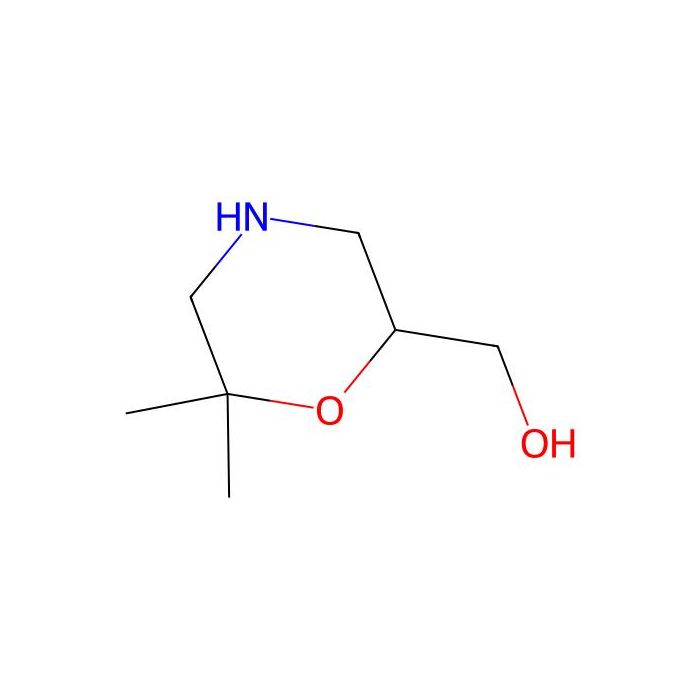
This compound belongs to the class of organic compounds known as morpholines. These are organic compounds containing a morpholine moiety, which consists of a six-member aliphatic saturated ring with the formula C4H9NO, where the oxygen and nitrogen atoms lie at positions 1 and 4, respectively.
External Descriptors
Not available
1. Djoumbou Feunang Y, Eisner R, Knox C, Chepelev L, Hastings J, Owen G, Fahy E, Steinbeck C, Subramanian S, Bolton E, Greiner R, and Wishart DS. ClassyFire: Automated Chemical Classification With A Comprehensive, Computable Taxonomy. Journal of Cheminformatics, 2016, 8:61.
Determine the necessary mass, volume, or concentration for preparing a solution.
Dilution Calculator
Determine the dilution needed to prepare a stock solution.
Reconstitution Calculator
Reviews
Customer Reviews
Application Protocols
No assay or bioanalytical application protocols are specified for this item. As a small-molecule reagent, it is typically used according to standard organic synthesis procedures.
General usage notes (informative):
For reactions requiring anhydrous conditions, dry the reagent in vacuo over P2O5 or molecular sieves if compatible, or purchase freshly for moisture-sensitive steps.
Prepare stock solutions in polar solvents (e.g., DMSO, MeOH, MeCN) at convenient molarities (0.1–1.0 M) based on solubility; filter if particulates are observed.
Document stoichiometry and quench conditions in your ELN; validate by NMR/LC–MS.
Refer to the primary literature or your internal SOPs for step-specific protocols.
Biological Roles
This product is offered for research use only and is not intended for biological administration. The following is general, literature-based context about the morpholine motif.
Morpholine in biochemistry (general):
The morpholine ring is a common solubilizing and basicity-tuning group in bioactive molecules due to its tertiary amine (protonatable) and ether oxygen (modulates pKa and polarity).
Primary alcohol side chains increase hydrogen-bonding potential and aqueous solubility, which can affect transport and binding in synthetic ligands (when this scaffold is incorporated into larger molecules).
Metabolic considerations (general):
Tertiary amines are frequently protonated at physiological pH; metabolic pathways often include N-dealkylation, N-oxidation (FMO), and oxidation of benzylic/allylic-like alcohols (ADH/ALDH analogs in vitro).
The presence of the ether oxygen typically reduces basicity relative to dialkylamines, potentially influencing distribution coefficients.
Bioconjugation utility (research context):
The primary alcohol can be derivatized to carbonate/carbamate or activated esters to tether this motif to reporters, resins, or other scaffolds for affinity studies.
No claims are made regarding pharmacology, efficacy, or in vivo roles for this specific item.
Buffer Applications
This compound is not a standard buffering agent. Although morpholine-derived sulfonic acids (e.g., MES, MOPS) are widely used biological buffers, (6,6-dimethylmorpholin-2-yl)methanol lacks the sulfonic acid functionality and does not provide a well-defined conjugate-acid/conjugate-base pair in the physiological pH range for buffering at controlled ionic strength.
Practical recommendation: if a morpholine-like buffering system is needed, select established Good’s buffers (MES, MOPS, HEPES) with defined pKa and buffering ranges.
Potential niche use (research): can be protonated to form salts for phase-behavior studies or ionic strength modulation, but this is not a substitute for true buffers and is not typically recommended for analytical or biological buffering.
Green Alternatives
While this product is a reagent (not primarily a solvent), greener choices arise in the solvents and reagents you select around it.
Greener solvent choices (general guidance):
Prefer 2-MeTHF or CPME over THF/diethyl ether for extractions and some reactions (better safety, lower peroxide tendency, often bio-based).
Use EtOAc or methyl tert-butyl ether (MTBE) instead of dichloromethane where feasible; for polar workups, IPA or MeOH/water can replace acetonitrile in some cases.
For amide couplings on the morpholine nitrogen, consider green solvent matrices (2-MeTHF/EtOAc) and coupling reagents with improved EHS profiles (e.g., COMU, T3P) rather than HATU/DMF.
Oxidation step alternatives:
Replace chromium(VI) or Swern with TEMPO/bleach (NaOCl, aqueous), or oxygen-mediated catalytic oxidations (e.g., TEMPO/NaClO2 systems) to convert –CH2OH to –CHO/–CO2H with reduced waste.
Energy and workup:
Room-temperature catalysis and aqueous micellar conditions (TPGS-750-M) may enable N-acylations or SN2 reactions with lower solvent volumes.
Tradeoffs (balanced view):
Bio-based ethers (2-MeTHF, CPME) have distinct polarity and water miscibility vs THF; reaction rates or selectivity may differ.
Replacing DCM with EtOAc can impact solubility of coupling reagents and bases; minor re-optimization of equivalents and temperatures may be required.
Pharmaceutical Uses
Item-specific pharmacopeial status/excipient role: Not specified for this item; refer to CoA/Spec Sheet.
General, non-clinical context:
Morpholine-containing building blocks are frequently used in medicinal chemistry to adjust basicity, solubility, and target engagement in lead optimization.
The primary alcohol enables prodrug or linker strategies (e.g., carbonate/carbamate formation) during intermediate synthesis.
As an isolated reagent, (6,6-dimethylmorpholin-2-yl)methanol would most commonly serve as an intermediate in API process development rather than as a finished excipient.
Amine salts (e.g., HCl, sulfate) may be formed to enhance crystallinity/handling during intermediate isolation.
Residual solvent and impurity control are critical if used upstream in GMP settings; ensure traceability via CoA and adherence to ICH Q3A/Q3C guidance when applicable.
No therapeutic or clinical claims are made for this product; it is supplied strictly for research and laboratory synthesis.
Physical Properties
Item-specific specs (this product):
Boiling point: Not specified for this item; refer to CoA/Spec Sheet.
Melting point: Not specified for this item; refer to CoA/Spec Sheet.
Density: Not specified for this item; refer to CoA/Spec Sheet.
Refractive index: Not specified for this item; refer to CoA/Spec Sheet.
Water/Peroxide/Metal content, UV cutoff: Not specified for this item; refer to CoA/Spec Sheet.
Literature/computed expectations (for contextual planning; not product specifications):
Acid–base: tertiary amine (conjugate-acid pKa often ~8–9 for morpholines); the primary alcohol is non-ionizing (pKa of ROH typically ~16; not deprotonated under neutral conditions). Exact values depend on substitution.
Polarity: high hydrogen-bonding capacity (one donor from –OH; two acceptors from N and O); expected high polarity and hydrophilicity relative to simple amines.
Solubility (qualitative): expected to be miscible with polar protic solvents (water, MeOH, EtOH) and very soluble in polar aprotics (DMSO, DMF, acetonitrile); limited solubility anticipated in nonpolar hydrocarbons (hexanes, toluene).
Volatility: presence of –CH2OH and ring oxygen decreases volatility vs. unsubstituted tertiary amines; anticipate low vapor pressure at ambient conditions.
Practical implications (general):
Strongly hygroscopic behavior is not expected for all morpholine derivatives, but water uptake can occur; weigh quickly if precise stoichiometry is required.
Viscosity: primary alcohol functionalization can increase viscosity; gentle warming (≤40 °C) may aid transfers if material is semisolid.
Quality and Grades
Item-specific grade/purity: Not specified for this item; refer to CoA/Spec Sheet.
How to interpret grades (general guidance):
Research/technical grade: suitable for most synthetic and screening applications; may contain trace impurities not suitable for trace-analytical work.
Purified/assay-specified grade: tighter assay limits (e.g., ≥98–99%); better suited for medicinal chemistry and materials research where impurities impact outcomes.
HPLC/LC–MS grade (when applicable to solvents): low UV absorbance and low metal/ionic content; preferred for analytical sample prep. For solid/liquid reagents, LC–MS suitability may instead be given as purity by LC–MS.
Stabilizers/inhibitors: None specified for this item. If present, stabilizers would be disclosed on the CoA; these can influence certain reactions (e.g., base-sensitive acylations). Verify before use in sensitive transformations.
Verification and traceability:
Request the lot-specific CoA for assay method (e.g., GC, HPLC, qNMR), residual solvent profile, and water content method (KF vs. LOD).
For metal-sensitive catalysis, inquire about trace metal analysis. If unspecified, consider a pre-treatment (e.g., passage through basic alumina or aqueous wash) based on your application.
Reaction and Applications
Role in synthesis (general chemistry):
Bifunctional building block: tertiary amine (in morpholine) and primary alcohol (–CH2OH) enable orthogonal transformations.
Nucleophilic partner: the ring nitrogen undergoes N-acylation (amides/carbamates/ureas), N-alkylation (quaternary ammonium salts), and sulfonylation.
Alcohol handle: O-derivatization to mesylates/tosylates enables further SN2 chemistry; oxidation to aldehyde/acid expands scaffold diversification.
Oxidation: –CH2OH → –CHO via TEMPO/bleach, Dess–Martin, or Swern; further to –CO2H via Pinnick or Jones (where compatible with the amine, often after N-protection as Boc).
N-Protection: Boc- or Cbz-protection to tune basicity/reactivity before harsh conditions; subsequent deprotection under acidic (Boc) or hydrogenolysis (Cbz).
Cross-coupling auxiliaries: converting –CH2OH to –CH2–Br/–OTs allows installation of aryl/alkyl groups (via SN2) that can feed into Pd-catalyzed couplings once tethered to halides/triflates elsewhere.
Reductive alkylation: condense the morpholine nitrogen with aldehydes/ketones followed by reduction (NaBH3CN/BT, or catalytic hydrogenation) to access N-alkylated analogs while retaining the C-2 substituent.
Application domains (non-clinical):
Scaffold in medicinal and agrochemical intermediate synthesis where morpholine imparts water solubility and basicity.
Ligand/organocatalyst precursor: tertiary amine–alcohols can be elaborated to chiral or achiral Lewis bases or phase-transfer motifs (after appropriate derivatization).
Reaction Conditions
General, literature-style guidance for typical transformations of tertiary amine–primary alcohol scaffolds. These are not item-specific specifications.
N-Acylation (amide/carbamate):
Conditions: acyl chloride (1.1–1.5 eq) or activated ester with base (DIPEA, NaHCO3); solvents DCM, MeCN, or 2-MeTHF; 0–25 °C; 0.5–4 h.
Notes: if competitive O-acylation occurs, protect the alcohol or employ selective reagents (e.g., carbonyldiimidazole for carbonate then transposition strategies).
Alcohol activation and substitution:
MsCl or TsCl (1.2–1.5 eq), Et3N or pyridine, 0 °C to rt, DCM/MeCN; subsequent SN2 with nucleophile (1.5–3 eq) in DMF/MeCN, 25–80 °C.
Halogenation: PBr3 (1.1 eq), ether solvent, 0–25 °C; SOCl2 (1.5 eq) with DMF cat., DCM, 0–25 °C.
Oxidation of –CH2OH:
TEMPO (5–10 mol%), NaOCl (1.5–2.0 eq), pH 8.5–9.5 buffer, 0–10 °C to control overoxidation; or Dess–Martin periodinane (1.3 eq) in DCM, 0–25 °C to aldehyde. For acid: Pinnick oxidation (NaClO2, NaH2PO4, 2-methyl-2-butene), aq t-BuOH/H2O.
Tip: protect the amine (Boc) to avoid side reactions and improve chemoselectivity.
Reductive amination (N-alkylation):
Carbonyl (1.1–1.5 eq), NaBH3CN or NaBH(OAc)3 (1.5–2 eq), MeOH/MeCN or DCE/AcOH; 0–25 °C, 1–16 h.
Salt formation/crystallization:
HCl in IPA/ether or H2SO4 in acetone/Et2O, 0–25 °C, to precipitate crystalline ammonium salts aiding purification.
Yields and times vary with substrate and scale; monitor by TLC/LC–MS/NMR and optimize equivalents and temperature as needed.
Safety and Handling
Item-specific hazard data:
GHS classification, pictograms, signal word, H-statements: Not specified for this item; refer to the product SDS.
General safety guidance for tertiary amine–alcohols (informative):
Potential hazards: may cause skin/eye irritation and respiratory irritation; amine odor possible. Avoid inhalation of vapors/aerosols. Primary alcohols can be combustible.
PPE: lab coat, safety goggles, and appropriate chemical-resistant gloves (e.g., nitrile). Handle in a fume hood to avoid inhalation and to control odors.
Incompatibilities: strong oxidizers (risk of exothermic reaction/oxidation of alcohol/amine), strong acids (forms ammonium salts; heat may evolve), acid chlorides/anhydrides (acylation), isocyanates (urethane/urea formation). Store away from oxidizers and acids.
First-aid overview: in case of skin contact, wash with soap and water; eye contact, rinse cautiously with water for several minutes and seek medical attention; inhalation, move to fresh air; ingestion, rinse mouth—do not induce vomiting—seek medical advice. Follow site SOPs.
Fire safety: use CO2, dry chemical, or alcohol-resistant foam. Combustion may produce CO, CO2, and nitrogen oxides.
Peroxide formation: not typical for this class (unlike ethers such as THF); routine peroxide testing not necessary unless solvent blends dictate otherwise.
Always consult the Aladdin Scientific SDS for authoritative safety, exposure limits, and spill/cleanup procedures.
Solvent Selection
This item is a polar, multifunctional reagent (tertiary amine + primary alcohol), not a bulk solvent. The guidance below helps choose media to dissolve or react it effectively.
Polarity class (general): strongly polar, hydrogen-bond donor/acceptor capable.
Expected miscibility/solubility: high in water, methanol, ethanol, isopropanol, acetonitrile, DMSO, DMF; poor in alkanes and limited in aromatic hydrocarbons without a polar co-solvent.
Recommended media by task:
N-acylations/carbamate formation: dichloromethane, THF, MeCN, or EtOAc with a base (e.g., DIPEA) if the reagent acts as nucleophile; use aqueous workup to remove ammonium salts.
O-derivatizations (esterifications, sulfonates): polar aprotics (DMF, MeCN) aid SN2 on activated derivatives; alcohol-free conditions minimize transesterification.
Salt formation (for isolation): IPA/Et2O or IPA/MTBE mixtures can crystallize ammonium salts with mineral or organic acids.
Comparison (general):
Water vs. MeCN: water best for bioconjugation-like conditions and ion-exchange workups; MeCN/DMF give faster nucleophilic substitutions but may require careful base choice to avoid over-alkylation.
Alcoholic solvents: facilitate hydrogen bonding but can compete in acylations; use aprotic options when selectivity matters.
Note: choose solvent based on downstream purification (e.g., partitioning in EtOAc/brine vs. complete water miscibility). Verify actual solubility empirically for your lot.
Storage and Reconstitution
Storage (item-specific): Room temperature (per Product Data).
Shipping: Not specified for this item; refer to CoA/Spec Sheet.
General storage guidance (supplementary):
Keep tightly closed in the original container, protected from excessive moisture and direct sunlight. Store away from strong oxidizers and acids.
If long-term storage is planned, consider storing under inert gas to minimize oxidative discoloration, particularly after opening.
Reconstitution/Preparation for use (general):
Use as supplied. If solid or viscous, gently warm (≤40 °C) to facilitate transfer.
For solution preparation, typical solvents include water, methanol, ethanol, acetonitrile, DMSO, or DMF. Start with small test aliquots to confirm solubility at target concentrations.
For water-sensitive operations, dry by co-evaporation with toluene or by brief vacuum drying if compatible; confirm integrity by NMR prior to critical steps.
Stability notes (general):
Primary alcohols are generally stable at ambient conditions; avoid prolonged exposure to air at elevated temperatures to prevent slow oxidation.
Forming an amine salt (e.g., HCl) can enhance stability and crystallinity for storage; verify needs relative to your planned chemistry.
Research use note: For research use only.
Structure and Identity
Concise overview of the ring-substituted morpholine bearing a primary alcohol side chain.
Product Data (item-specific):
CAS: 1416499-56-3
PubChem CID: 71742815
InChIKey: 360688 (as provided)
SMILES: Not specified for this item; refer to CoA/Spec Sheet.
Synonyms: (6,6-Dimethylmorpholin-2-yl)methanol
Structural description (general chemistry):
Core scaffold: a six-membered morpholine ring (one O, one tertiary amine N, and four ring carbons).
Substitution pattern: geminal dimethyl at C-6 (6,6-dimethyl) and a methanol substituent at C-2, giving a primary alcohol (–CH2OH) attached to C-2 of the ring.
Functional groups: tertiary amine (in a saturated heterocycle), ether (ring oxygen), and primary alcohol.
Stereochemistry: as named, no stereocenters are implied; the molecule is achiral.
Literature/computed identity (informative, not item-specific specifications):
Expected molecular formula: C7H15NO2 (literature/computed from name).
Approximate molecular weight: ~145.20 g/mol (literature/computed from formula).
2D structure in words (general): The morpholine ring presents alternating heteroatoms (N and O) with four sp3 carbons; the C-2 carbon bears a –CH2OH substituent, while the C-6 carbon is quaternary with two methyl groups attached, creating a sterically hindered face near the ring nitrogen.
Synthetic Utility
Functional handles and reactivity (general):
Tertiary amine (morpholine N): nucleophilic and basic; readily acylated (amides/carbamates), alkylated (quaternary ammonium salts), or captured as salts for purification.
Primary alcohol (–CH2OH): convertible to halides (PBr3, SOCl2), sulfonates (MsCl/TsCl), or oxidized (TEMPO/DMP/Swern) to aldehyde/acid; suitable for carbonate/carbamate coupling to introduce linkers.
Ring oxygen: influences basicity and solvation; inert under many conditions but can participate in hydrogen bonding and coordination.
Divergent synthesis strategies:
Protect–modify–deprotect: Protect N as Boc to conduct oxidation or acidic conditions on the alcohol; remove under TFA after transformations.
Late-stage diversification: Install –OTs at the alcohol and engage in SN2 with heteroatom/alkyl nucleophiles to access libraries of C-2-substituted morpholines.
Quaternization pathway: N-alkylate to QA salts for phase-transfer catalysis exploration or ionic liquid precursors.
Retrosynthetic value:
Serves as a morpholine-bearing synthon that can be traced back to 2-substituted morpholine frameworks; the –CH2OH acts as a masked –CHO/–CO2H, enabling homologation or coupling tactics after oxidation.
Applications space (non-exhaustive): fragment-to-lead elaboration, linker engineering in ADC-like model systems (chemistry only), and scaffold hopping where 6,6-dimethyl substitution modulates sterics/basicity.
Target Specificity
Not applicable. This product is a small-molecule chemical reagent and does not possess biological target specificity like an antibody, enzyme, or inhibitor. No antigen/epitope, clone, isotype, or species reactivity data apply.
Frequently Asked Questions
What is the purity of this product?
This product is supplied at ≥95% purity (chemical assay). Lot-specific values are stated on the Certificate of Analysis.
How should this product be stored?
Store at room temperature.
What are the CAS number, molecular formula and molecular weight?
The CAS Number is 1416499-56-3, the molecular formula is C7H15NO2, and the molecular weight is 145.200 g/mol. InChIKey UIJHJZKEAMDADZ-UHFFFAOYSA-N.
What documentation is provided?
Available product documentation, including Certificates of Analysis (COA), Safety Data Sheets (SDS), and specification sheets, is shown in the product document area. Document availability and access follow the current site policy.
We use cookies to ensure the website functions properly and, where permitted, to improve your experience. You can manage your preferences at any time in Settings. Learn more in our Cookie Policy.
Shall we send you a message when we have discounts available?
Remind me later
Thank you! Please check your email inbox to confirm.
Products are supplied to verified businesses, institutions, and qualified professionals for research and development use only. Not for use in humans, animals, diagnosis, or therapy.