GRADE & PURITYMoligand™?Moligand™ — Aladdin's line of ligands and bioactive small molecules. Use for receptor, pathway, and binding studies needing defined small-molecule tools.≥98%
Moligand™, ≥98% Moligand™ for sensitive chromatographic and analytical workflows requiring minimal baseline interference.
🌡
Storage & shipping
Store at -20°C,Desiccated Ships Ice chest + Ice pads Check lot-specific COA for exact specifications.
📋
Quality documents
SDS, COA, datasheet, and spec sheet available for download. Lot-specific COA accessible via lot number lookup.
📚
Literature proof
Cited in 0 peer-reviewed publications across chromatography, organic synthesis, and cross-coupling reactions.
Overview
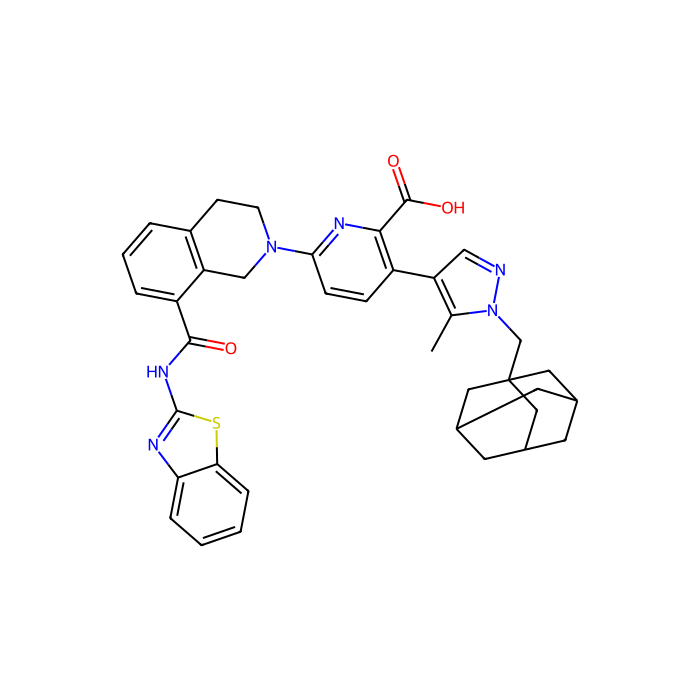
A‑1331852 is a potent and selective BCL‑XL inhibitor, with a Ki value of less than 0.01 nM against Bcl‑xL, and Ki values of 6 nM, 4 nM and 142 nM for Bcl‑2, Bcl‑W and MCL‑1, respectively. It may have potential utility in the treatment of cancer, immune‑related disorders and autoimmune diseases.
Potent, selective\xa0BCL-X L inhibitor (K i L-BIM complexes and induces the hallmarks of apoptosis in BCL-X L -dependent Molt-4 cells.
Storage
Store at -20°C,Desiccated
Shipped In
Ice chest + Ice pads
This product requires cold chain shipping. Ground and other economy services are not available.
Grade
Moligand™
Action Type
INHIBITOR
Mechanism of action
Inhibitor of Bcl-2-like 1
Note
Wherever possible, you should prepare and use solutions on the same day. However, if you need to make up stock solutions in advance, we recommend that you store the solution as aliquots in tightly sealed vials at -20°C. Generally, these will be useable for up to one month. Before use, and prior to opening the vial we recommend that you allow your product to equilibrate to room temperature for at least 1 hour. Need more advice on solubility, usage and handling? Please visit our frequently asked questions (FAQ) page for more details.
This compound belongs to the class of organic compounds known as 2-benzylaminopyridines. These are aromatic compounds containing pyridine ring substituted at the 2-position by a benzylamine group.
External Descriptors
Not available
1. Djoumbou Feunang Y, Eisner R, Knox C, Chepelev L, Hastings J, Owen G, Fahy E, Steinbeck C, Subramanian S, Bolton E, Greiner R, and Wishart DS. ClassyFire: Automated Chemical Classification With A Comprehensive, Computable Taxonomy. Journal of Cheminformatics, 2016, 8:61.
Determine the necessary mass, volume, or concentration for preparing a solution.
Dilution Calculator
Determine the dilution needed to prepare a stock solution.
Reconstitution Calculator
Reviews
Customer Reviews
Application Protocols
Only product-data-derived protocols can be listed in this section.
Tested applications, recommended concentrations/dilutions, positive controls, or procedural steps: Not specified for this item in the Product Data.
General advice (outside the scope of this section) can be found in other tabs (e.g., Solvent Selection, Reaction & Applications), but any formal protocol should be established and validated by the end user for their specific system.
Apoptosis regulation: The BCL-2 protein family governs mitochondrial outer membrane permeabilization via pro- and anti-apoptotic members. BCL-XL (BCL2L1) is an anti-apoptotic protein that sequesters pro-apoptotic BH3-only proteins, preventing cytochrome c release.
BH3 mimetics: Small molecules designed to mimic BH3-domain interactions can competitively displace pro-apoptotic factors from BCL-2 family proteins, restoring apoptosis in systems dependent on these anti-apoptotic proteins.
A-1331852 is reported in the literature as a selective chemical probe for BCL-XL, commonly used to interrogate BCL-XL dependency in cellular models and to delineate pathway crosstalk with other anti-apoptotic family members.
Use cases in basic research (general):
Target engagement: thermal shift (CETSA), fluorescence polarization, and isothermal titration calorimetry to quantify binding.
Pathway mapping: combining with orthogonal BH3 mimetics or genetic perturbations (CRISPR/siRNA) to define apoptotic dependencies.
Mechanistic biochemistry: assessing mitochondrial priming, caspase activation cascades, and cytochrome c release upon displacement of BH3-only proteins.
Caveats:
Off-targets and context dependence should be assessed experimentally; incorporate negative controls and rescue experiments.
Handle strictly as a research chemical; no clinical/diagnostic use is implied or supported by this listing.
Buffer Applications
This product is a hydrophobic small-molecule research ligand and is not itself a buffering agent. Therefore, classic buffer system formulation (e.g., phosphate, HEPES, Tris) is not typically applicable.
Practical notes (general):
When dosing into buffered systems for assays, introduce via small volumes of DMSO or another biocompatible co-solvent; keep final organic content low (commonly ≤0.1–0.5% v/v) to preserve buffer capacity and biological function.
If precipitation occurs upon dilution into buffer, consider gradual serial dilution, modest temperature elevation during mixing, or inclusion of permissible solubilizing excipients. Validate that any additives do not interfere with the assay.
Green Alternatives
Because A-1331852 is a target-specific research ligand (not a process solvent or bulk reagent), "green alternatives" primarily concern solvent handling during stock preparation and assay workflows rather than substitution of the molecule itself.
Greener solvent considerations (general):
Prefer DMSO over DMF/NMP when feasible due to lower reproductive toxicity concerns and better biodegradability profile relative to DMF/NMP (still handle DMSO responsibly).
Where appropriate, use ethanol or water/co-solvent systems at minimal percentages to reduce reliance on dipolar aprotic solvents; verify protein/bioassay compatibility.
DMF/NMP: strong solvency but with more stringent hazard classifications; reserve for cases where DMSO solubility is insufficient.
PEG 400/propylene glycol (co-solvents): can aid aqueous delivery with lower volatility; may affect assay readouts—validate controls.
Operational green tips:
Prepare higher-concentration master stocks to reduce solvent waste and container use; aliquot to minimize repeated thaw cycles.
Use microvolumetric additions to maintain ≤0.1–0.5% final organic content in assays.
Implement solvent recovery and segregated waste streams per institutional green-chemistry policies.
Note: No greener “substitute compound” is relevant here, as A-1331852 is selected for its specific binding profile (literature) rather than for a generic chemical function.
Pharmaceutical Uses
No excipient or pharmacopeial roles are provided for this item. This listing is for research use only.
Context (general, non-clinical):
A-1331852 is referenced in the scientific literature as a targeted small-molecule probe for anti-apoptotic BCL-2 family proteins. In the laboratory, it may be used to study pharmacology, target engagement, and mechanism-of-action in preclinical systems.
Important limitations:
Not a drug product, not GMP, and not intended for human or veterinary use.
No claims are made regarding therapeutic utility, dosing, or clinical performance.
For any formulation-like studies (e.g., in vitro stability, permeability assays), researchers should establish their own specifications and controls; none are provided for this catalog item.
Physical Properties
Item-specific physicochemical specifications were not provided.
Appearance (item-specific): Not specified for this item; refer to CoA/Spec Sheet.
Melting point, boiling point, density, refractive index: Not specified for this item; refer to CoA/Spec Sheet.
Molecular weight/formula (item-specific): Not specified for this item; refer to CoA/Spec Sheet.
UV/Vis cutoff or chrom purity metrics: Not specified for this item; refer to CoA/Spec Sheet.
General/literature expectations for this class of probe (informational only; not specifications):
Aggregated class behavior: hydrophobic/heteroatom-containing inhibitor scaffolds typically exhibit high solubility in polar aprotic organic solvents (DMSO, DMF, NMP) and low intrinsic aqueous solubility at neutral pH; aqueous solubility may be improved with co-solvents, surfactants, or pH adjustment where ionizable centers exist.
Solid state: many such probes are isolated as crystalline or amorphous solids; glass transition or melt can be broad.
Partitioning: logP/logD values for related BH3-mimetic chemotypes are often moderate-to-high (literature), consistent with membrane permeability; verify exact values from primary references for A-1331852 if critical.
Practical notes (general):
Prepare concentrated DMSO stock (e.g., 10–50 mM) then dilute into assay buffer keeping final DMSO typically ≤0.1–0.5% v/v to minimize solvent effects (general practice). Confirm solubility/compatibility empirically for your system.
Quality and Grades
Item-specific grade: Moligand™
What Moligand™ implies (general for this catalog line):
Research-grade small-molecule ligand suitable for screening, target validation, chem-biology assays, and SAR work.
Emphasis on identity verification (e.g., NMR/LC–MS) and impurity control consistent with discovery workflows. Exact acceptance criteria, impurity profiles, and assay data are lot-dependent.
Item-specific clarifications from Product Data:
Purity/assay method: Not specified for this item; refer to CoA/Spec Sheet.
Stabilizers/additives: Not specified for this item; refer to CoA/Spec Sheet.
Water/peroxide/metal limits, UV cutoff: Not specified for this item; refer to CoA/Spec Sheet.
How to use this grade effectively:
For biochemical/biophysical assays, document exact lot purity and residual solvents from the CoA; adjust stock concentrations accordingly.
For cell-based work, confirm endotoxin is not a requirement (this is a research chemical, not cell-therapy grade). Filter stocks (0.22 µm) if particulate is observed.
Track freeze–thaw cycles; small molecules can slowly degrade in solution—aliquoting is recommended.
Comparison to other grades (general):
Analytical or reference standard grade may include certified purity and quantitative assay traceability; Moligand focuses on discovery utility rather than metrological certification.
HPLC/LC–MS suitability generally high, but UV baselines and adducting behavior should be verified for your instrument method.
Reaction and Applications
This product is supplied as a finished small-molecule research ligand rather than a synthetic reagent or building block. Consequently, it is not typically employed as a substrate, reagent, or catalyst in organic synthesis.
Research applications (general/literature context; not item-specific performance claims):
Chemical biology probe for apoptosis pathway studies, especially involving anti-apoptotic BCL-2 family proteins. Utilized in target engagement assays (e.g., CETSA, pull-downs with tagged analogs), biochemical binding measurements, and cell-based pathway interrogation.
Tool compound in structure–activity relationship (SAR) comparisons with related BH3-mimetic chemotypes for dissecting protein–protein interaction dependencies.
Useful in combination studies with other pathway modulators to map synthetic lethality or dependency networks (preclinical research setting).
Practical tips for use in assays (general):
Prepare concentrated DMSO stocks, protect from moisture/light, and minimize freeze–thaw cycles by aliquoting.
Include solvent controls at matched DMSO concentration and perform serial dilutions to avoid supersaturation.
Verify compound identity and purity (e.g., LC–MS/HPLC) prior to critical experiments; impurities can confound biological readouts.
If you intend to derivatize or immobilize this scaffold for chemoproteomics, consult primary literature for functionalizable positions; this catalog item does not specify synthetic handles or linker-ready variants.
Reaction Conditions
Not typically applicable: A-1331852 is provided as a finished small-molecule probe and is not intended for use as a reagent or substrate in synthetic transformations. Consequently, there are no standard “reaction conditions” associated with this item.
If using in biological/biochemical assays (general guidance; not item-specific specs):
Stock solutions: Often prepared in DMSO at millimolar concentrations; protect from moisture and light.
Working solutions: Dilute into assay buffer with vigorous mixing to prevent precipitation; include vehicle controls.
Stability checks: Verify integrity by LC–MS/HPLC at relevant timepoints/temperatures where assay outcomes are sensitive to degradation.
For any actual chemical modification or immobilization, consult the primary literature for scaffold-appropriate coupling conditions after confirming the exact structure and functional groups from the CoA.
Safety and Handling
Authoritative safety data reside in the product SDS; consult it before use.
Product Data (item-specific):
GHS Classification: Not specified for this item; refer to SDS.
Pictograms: Not specified for this item; refer to SDS.
Signal word / H-statements: Not specified for this item; refer to SDS.
Storage Conditions: Store at −20 °C, desiccated.
Shipping: Ice chest + ice pads (kept cold in transit).
General laboratory precautions (for small-molecule research ligands):
PPE: lab coat, safety glasses, and suitable chemically resistant gloves (e.g., nitrile). Handle powders in a fume hood to avoid inhalation/airborne dust.
Avoid: ingestion, inhalation of dust, skin/eye contact. Wash thoroughly after handling.
Incompatibilities (general): strong oxidizers and strong acids/bases may degrade organic ligands; avoid prolonged exposure to light, heat, and moisture.
Hygroscopicity/photosensitivity: store tightly sealed under dry, inert atmosphere if possible; minimize light exposure until exact sensitivity is known.
Peroxide formation: not typically a concern for this solid; however, solutions in ethers should be monitored on general principle.
First aid (overview; defer to SDS):
Skin/eye contact: rinse with water for ≥15 minutes; remove contaminated clothing; seek medical attention if irritation persists.
Inhalation: move to fresh air; seek medical attention for symptoms.
Ingestion: rinse mouth; do not induce vomiting; obtain medical attention.
Solvent Selection
A-1331852 is a hydrophobic research ligand; item-specific solubility data are not provided. Guidance below is general for this compound class and should be verified empirically.
Primary stock solvent (general): DMSO is typically preferred due to strong solvating power and biocompatibility at low final percentages.
Alternative solvents (general): DMF, NMP for concentrated stocks; ethanol or isopropanol for intermediate solubility. For aqueous assays, introduce via co-solvent (e.g., 0.1–0.5% DMSO) or use solubilizing excipients (e.g., 0.01–0.05% nonionic surfactant) where compatible.
Aqueous buffers: Direct dissolution is often limited; pH adjustment may help if the molecule has ionizable groups (confirm pKa from literature/CoA before attempting).
Polarity/miscibility context (general):
DMSO, DMF, and NMP are polar aprotic and fully miscible with water, facilitating subsequent dilution into physiological buffers while minimizing precipitation.
Alcohols are protic and may influence protein stability in bioassays; keep final alcohol content low and validate controls.
Selection tips:
Start with a 10 mM DMSO stock; inspect clarity after dilution into buffer at working concentration. If precipitation occurs, increase dilution steps, add surfactant, or raise temperature briefly (then cool).
Avoid nonpolar solvents (hexanes, toluene) for bioassays due to immiscibility and toxicity.
Note: These are general recommendations; obtain lot-specific solubility notes from the CoA if available.
Storage and Reconstitution
Item-specific storage/shipping:
Storage Conditions (Product Data): Store at −20 °C, desiccated.
Shipped In (Product Data): Ice chest + ice pads.
Reconstitution notes:
Specific reconstitution instructions are not provided for this item; refer to CoA/Spec Sheet.
General practice for hydrophobic research ligands: prepare concentrated stocks in dry DMSO, aliquot, and minimize freeze–thaw cycles. Verify solubility and stability in your chosen solvent system before critical assays.
Handling/stability tips (general):
Allow vial to equilibrate to room temperature in a desiccator before opening to prevent moisture condensation.
Reseal tightly under dry atmosphere; consider inert gas backfill if available.
For long-term storage, keep solid material dry, protected from light, and at the specified temperature. Solutions are typically less stable than solids; prepare fresh as needed.
Note: Any quantitative stability limits, shelf life, or re-test dates are not specified for this item and should be obtained from the lot-specific CoA.
Structure and Identity
Brief overview: A-1331852 is a cataloged small-molecule research ligand (Moligand grade) frequently used as a chemical biology probe in apoptosis pathway studies (literature). Item-specific structure descriptors are largely not provided in the Product Data.
SKU: A275493
Product Name: A-1331852
CAS: 1430844-80-6
PubChem CID (Product Data): 71565985
InChIKey (Product Data): 293438
SMILES: Not specified for this item; refer to CoA/Spec Sheet.
Molecular formula (item-specific): Not specified for this item; refer to CoA/Spec Sheet.
Molecular weight (item-specific): Not specified for this item; refer to CoA/Spec Sheet.
Structural features (general/literature description):
A-1331852 is reported in the literature as a heteroatom-rich, polycyclic small molecule designed to mimic BH3-domain interactions. Typical features include multiple aromatic/heteroaromatic rings, amide/urea-like hydrogen-bonding motifs, and tertiary/secondary amines to engage protein pockets. Exact atom connectivity and stereochemistry should be confirmed from the certificate of analysis or primary literature for the specific lot.
2D structure (verbal, general):
The scaffold can be thought of as fused/aromatic ring systems linked by heteroatom-containing linkers (e.g., amide/urea/ether motifs, literature), presenting donor–acceptor functionality for protein binding. Without an item-specific SMILES/InChI, please consult the CoA/SDS for definitive structure rendering and stereochemical assignment.
Synthetic Utility
This catalog item is supplied as a final research ligand and is not typically used as a synthetic intermediate or reagent.
General notes (if derivatization is contemplated):
Literature reports sometimes disclose analogs or tagged derivatives (e.g., biotinylated, photoaffinity) for chemoproteomics/target ID. Such modifications require knowledge of tolerated positions on the scaffold and access to a functional handle—neither is specified for this product.
If custom conjugation is desired, consult primary literature for structure–activity relationships to avoid perturbing binding interactions. Consider designing a linker at a solvent-exposed region identified in co-crystal structures (if available in literature).
Operational guidance:
Without item-specific SMILES/connectivity, do not assume the presence of modifiable groups (amines, carboxyls, phenols). Obtain structural confirmation (CoA or original publications) before any synthetic planning.
This product’s value lies in its utility as a probe compound rather than as a building block for further synthesis.
Target Specificity
Only product-data-derived details may be listed here.
Target, selectivity profile, clone/epitope (if antibody), species cross-reactivity: Not specified for this item in the Product Data.
Note: While the literature discusses A-1331852 in the context of anti-apoptotic BCL-2 family proteins, those details are not included here because Target Specificity content is restricted to product-provided information. Please refer to the Biological Roles section for general literature context.
Need help choosing the grade?
Our grade selection guide covers purity, stabilizer status, and application suitability for all variants in our catalog.
We use cookies to ensure the website functions properly and, where permitted, to improve your experience. You can manage your preferences at any time in Settings. Learn more in our Cookie Policy.
Shall we send you a message when we have discounts available?
Remind me later
Thank you! Please check your email inbox to confirm.
Products are supplied to verified businesses, institutions, and qualified professionals for research and development use only. Not for use in humans, animals, diagnosis, or therapy.

 I2620186