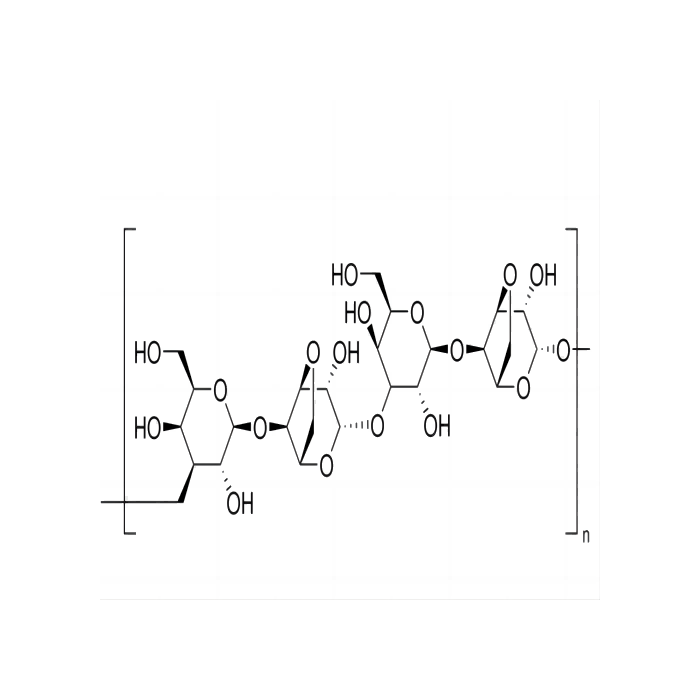
Agarose - Suitable for molecular biology, Ultra-low Gelling Temperature , CAS No.9012-36-6

CAS: 9012-36-6 Cat. No.: A434532 EC Number: 232-731-8 PubChem CID: 11966311
AVAILABLE TO ORDER
GRADE & PURITY Suitable for molecular biology ? Molecular-biology grade — free of nucleases and contaminants that degrade DNA/RNA. Use in cloning, PCR, and nucleic-acid work needing clean reagents. Ultra-low Gelling Temperature
Synonyms
AKOS015916622 | MJQHZNBUODTQTK-WKGBVCLCSA-N | CHEBI:2511 | [4)-3,6-An-alpha-L-Galp-(1->3)-beta-D-Galp-(1->]n | SCHEMBL1413225 | (1->4)-3,6-anhydro-alpha-L-galactopyranosyl-(1->3)-beta-D-galactopyranan | 2-[[3-[2-[(3,4-dihydroxy-2,6-dioxabicyclo[3.2.1]octa
Storage
Room temperature
★
Size
Germany (EU)
USA*
Price
Qty
1g
A434532-1g
Made to order · 8–12 wks
€76.27
Enter a quantity for the sizes you want to add.
🧪
Why this grade

Suitable for molecular biology, Ultra-low Gelling Temperature Suitable for molecular biology for sensitive chromatographic and analytical workflows requiring minimal baseline interference.

🌡

Storage & shipping

Room temperature Ships Check lot-specific COA for exact specifications.

📋

Quality documents

SDS, COA, datasheet, and spec sheet available for download. Lot-specific COA accessible via lot number lookup.

📚

Literature proof

Cited in 264 peer-reviewed publications across chromatography, organic synthesis, and cross-coupling reactions.

Overview

Agarose is a polymer extracted from agar or agar-bearing marine algae. This purified linear galactan hydrocolloid comprises alternating co-polymers D-galactose and 3,6-anhydro-L-galactose units connected by α-(1→3) and β-(1→4) glycosidic bonds. Agarose is highly biocompatible and possesses variable mechanical and diffusion properties. Agarose can be used as a gelling agent, to separate nucleic acids electrophoretically.


Application

Agarose has been used: in thaumatin and elastase protein crystallization in microcasting using a polydimethylsiloxane (PDMS) mold with micro-channel in agarose micro-confinement array Yields unusually strong gels for an ultra-low gelling agarose. Ideal for electrophoresis of heat-labile samples and for growth of hybridomas or other cell lines.

Specifications

Synonyms
AKOS015916622 | MJQHZNBUODTQTK-WKGBVCLCSA-N | CHEBI:2511 | [4)-3,6-An-alpha-L-Galp-(1->3)-beta-D-Galp-(1->]n | SCHEMBL1413225 | (1->4)-3,6-anhydro-alpha-L-galactopyranosyl-(1->3)-beta-D-galactopyranan | 2-[[3-[2-[(3,4-dihydroxy-2,6-dioxabicyclo[3.2.1]octa
Specifications & Purity
Suitable for molecular biology, Ultra-low Gelling Temperature
Storage
Room temperature
Grade
Suitable for molecular biology
Names and Identifiers
Canonical Smiles
C1[C@H]2[C@H]([C@@H](O1)[C@@H]([C@@H](O2)O)O)O[C@H]3[C@@H]([C@H]([C@H]([C@H](O3)CO)O)O[C@H]4[C@H]([C@H]5[C@@H]([C@@H](O4)CO5)O[C@H]6[C@@H]([C@H]([C@H]([C@H](O6)CO)O)O)O)O)O
IUPAC Name
(2S,3R,4S,5R,6R)-2-[[(1S,3S,4S,5S,8R)-3-[(2S,3R,4S,5S,6R)-2-[[(1S,3R,4S,5S,8R)-3,4-dihydroxy-2,6-dioxabicyclo[3.2.1]octan-8-yl]oxy]-3,5-dihydroxy-6-(hydroxymethyl)oxan-4-yl]oxy-4-hydroxy-2,6-dioxabicyclo[3.2.1]octan-8-yl]oxy]-6-(hydroxymethyl)oxane-3,4,5-triol
InChIKey
MJQHZNBUODTQTK-WKGBVCLCSA-N
INCHI
1S/C24H38O19/c25-1-5-9(27)11(29)12(30)22(38-5)41-17-8-4-36-20(17)15(33)24(40-8)43-18-10(28)6(2-26)39-23(14(18)32)42-16-7-3-35-19(16)13(31)21(34)37-7/h5-34H,1-4H2/t5-,6-,7+,8+,9+,10+,11+,12-,13+,14-,15+,16-,17-,18+,19+,20+,21-,22+,23+,24+/m1/s1
Isomeric SMILES
C1[C@H]2[C@H]([C@@H](O1)[C@@H]([C@@H](O2)O)O)O[C@H]3[C@@H]([C@H]([C@H]([C@H](O3)CO)O)O[C@H]4[C@H]([C@H]5[C@@H]([C@@H](O4)CO5)O[C@H]6[C@@H]([C@H]([C@H]([C@H](O6)CO)O)O)O)O)O
Alternate CAS
39346-81-1
PubChem CID
11966311

Documentation

📋 Safety Data Sheet (SDS)

Comprehensive hazard, handling, storage, and regulatory compliance document.

Download SDS →

✅ Certificate of Analysis (COA)

Lot-specific quality data. Enter your lot number to retrieve the exact COA.

Look up COA →

📊 Datasheet

Quick-reference summary of product specifications and applications.

View datasheet →

🔬 Specification Sheet

Full quality attributes and acceptance criteria for this grade.

View spec sheet →

Advanced Data

Taxonomic Classification

Taxonomy Tree

KingdomOrganic compounds
SuperclassOrganic oxygen compounds
ClassOrganooxygen compounds
SubclassCarbohydrates and carbohydrate conjugates
Intermediate Tree Nodes Not available
Direct ParentOligosaccharides
Alternative Parents O-glycosyl compounds  1,4-dioxepanes  Oxanes  Oxolanes  Secondary alcohols  Hemiacetals  Polyols  Oxacyclic compounds  Dialkyl ethers  Acetals  Primary alcohols  Hydrocarbon derivatives  
Molecular FrameworkAliphatic heteropolycyclic compounds
Substituents Oligosaccharide - Glycosyl compound - O-glycosyl compound - 1,4-dioxepane - Dioxepane - Oxane - Oxolane - Secondary alcohol - Hemiacetal - Acetal - Dialkyl ether - Oxacycle - Ether - Polyol - Organoheterocyclic compound - Hydrocarbon derivative - Primary alcohol - Alcohol - Aliphatic heteropolycyclic compound
DescriptionThis compound belongs to the class of organic compounds known as oligosaccharides. These are carbohydrates made up of 3 to 10 monosaccharide units linked to each other through glycosidic bonds.
External Descriptors Not available
3D Structure
Interactive Chemical Structure Model


Certificates(CoA,COO,BSE/TSE and Analysis Chart)
C of A & Other Certificates(BSE/TSE, COO):
Analytical Chart:
Chemical and Physical Properties
x_melt_point_char62-68℃
Molecular Weight630.500 g/mol
XLogP3-6.500
Hydrogen Bond Donor Count10
Hydrogen Bond Acceptor Count19
Rotatable Bond Count8
Exact Mass630.201 Da
Monoisotopic Mass630.201 Da
Topological Polar Surface Area285.000 Ų
Heavy Atom Count43
Formal Charge0
Complexity946.000
Isotope Atom Count0
Defined Atom Stereocenter Count20
Undefined Atom Stereocenter Count0
Defined Bond Stereocenter Count0
Undefined Bond Stereocenter Count0
The total count of all stereochemical bonds0
Covalently-Bonded Unit Count1
FAQs and Articles
Differences between Ni IDA and Ni NTA agarose gels
Molecular Biology Grade
Five Key Strategies to Optimize Agarose Gel Electrophoresis with GelRed
Five Key Structural Features of Plasmids
Immobilized Enzyme Technology and Its Applications in Biocatalysis
An Introduction to Research-Grade Carbohydrates: Decoding the “Glycan Language” and a Product-Selection Guide (with Tables 1–3)
A Review of Ten Commonly Used Techniques for Detection, Quantification, and Interaction Analysis in Nucleic Acid Research
Understanding Hydrophilic Polymers in Aqueous Systems: Hydration Mechanisms, Structural Knobs, and Task-Oriented Selection Guide (Including Tables 1–3)
16 Frequently Asked Questions About Nourseothricin
GelRed Nucleic Acid Stain: Frequently Asked Questions
Deoxyribonuclease (DNase): DNA Hydrolytic Cleavage Properties, Methodological Value, and Multi-Context Applications
Micrococcal Nuclease (MNase): A Technical Review of Enzymatic Properties, Reaction Control, and Research and Biomanufacturing Applications
dsDNase-Mediated Hydrolysis of Double-Stranded DNA: Enzymatic Characteristics, Methodological Strategies, and Bioanalytical Applications
Key Judgments in Medical Hydrogel R&D: From Polymer Source and Crosslinking Strategy to Sterilization Planning, Scale-Up Feasibility, and Quality Control
Applications of Enzymatic Protein Crosslinking Systems in Gel Construction and Functional Evaluation
What Is Synthetic Biology? The Industrialization Pathway from Upstream Reagent Toolchains to Biomanufacturing Applications
Molecular Cloning Screening and Identification Technologies: Positive Clone Confirmation, Restriction Mapping, and Sequencing Validation
Citations of This Product
Solution Calculators
Reviews

Customer Reviews

Need help choosing the grade?

Our grade selection guide covers purity, stabilizer status, and application suitability for all variants in our catalog.

View Suitable for molecular biology grade guide →

Related Products

Agarose - low melting point ,for seperation of small nucleic fragment , CAS No.9012-36-6
Agarose - Biochemical , CAS No.9012-36-6
Agarose - High resolution, DNase, RNase, NICKase, none detected , CAS No.9012-36-6
Agarose - low EEO , CAS No.9012-36-6
Agarose - Wide range(multipurpose) , CAS No.9012-36-6
Agarose , CAS No.9012-36-6
Synthetic agarose - High EEO , CAS No.9012-36-6
Synthetic agarose - Ultra-low Gelling Temperature , CAS No.9012-36-6
OmniPur® Agarose Super-Fine Resolution , CAS No.9012-36-6
OmniPur® Agarose - Agarose suitable for a wide range of nucleic acid and protein gel applications,including resolution of PCR products and small DNA fragments of less than 1000 bp. , CAS No.9012-36-6
OmniPur® Agarose PCR Plus - Agarose suitable for a wide range of nucleic acid and protein gel applications,including resolution of PCR products and small DNA fragments of less than 1000 bp. , CAS No.9012-36-6
InstantAgarose™ Tablet , CAS No.9012-36-6
Synthetic agarose - Low Melting Point , CAS No.9012-36-6
Synthetic agarose - Low EEO , CAS No.9012-36-6
Synthetic agarose - High Resolution,PCR Grade , CAS No.9012-36-6
Synthetic agarose - Low EEO,High Gel Strength , CAS No.9012-36-6
Agarose - Type II-A, Medium EEO , CAS No.9012-36-6
Agarose - Type IV, Special High EEO , CAS No.9012-36-6
Agarose - Low EEO, for Immunoelectrophoresis , CAS No.9012-36-6
Agarose - High EEO , CAS No.9012-36-6
Agarose - Suitable for molecular biology, High EEO , CAS No.9012-36-6
Agarose - High Gelling Temperature , CAS No.9012-36-6
Agarose - For pulsed field electrophoresis running gel , CAS No.9012-36-6
Agarose, Type C - Highly purified non-ionic fraction of agar. Forms gel with superior mechanical qualities at very low concentrations. , CAS No.9012-36-6
Agarose - BioReagent, Suitable for molecular biology, low EEO , CAS No.9012-36-6
Agarose - Special High EEO , CAS No.9012-36-6
Agarose - Suitable for molecular biology, Medium EEO , CAS No.9012-36-6

Shall we send you a message when we have discounts available?

Remind me later

Thank you! Please check your email inbox to confirm.

Oops! Notifications are disabled.