10mM in DMSO for sensitive chromatographic and analytical workflows requiring minimal baseline interference.
🌡
Storage & shipping
Store at -80°C Ships Dry ice packs + Cold packs Check lot-specific COA for exact specifications.
📋
Quality documents
SDS, COA, datasheet, and spec sheet available for download. Lot-specific COA accessible via lot number lookup.
📚
Literature proof
Cited in 0 peer-reviewed publications across chromatography, organic synthesis, and cross-coupling reactions.
Overview
Information
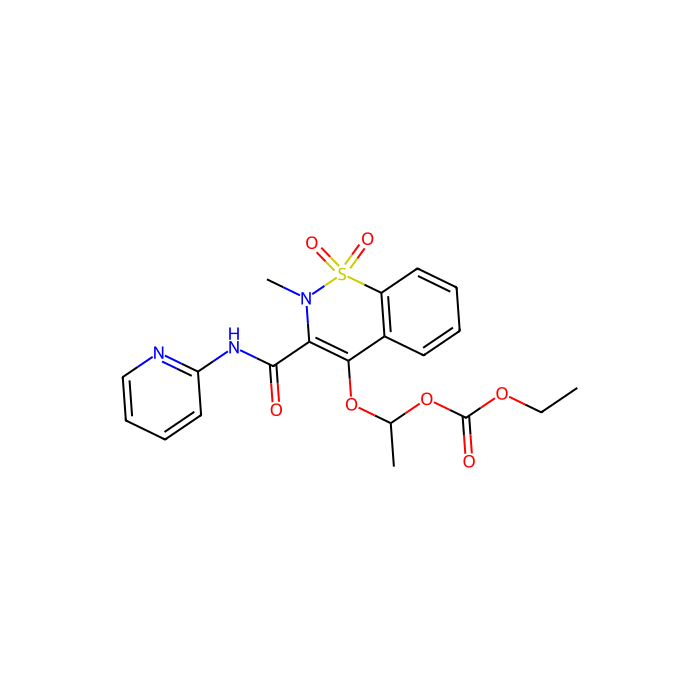
Ampiroxicam Ampiroxicam (CP 65703) is a nonselective cyclooxygenase inhibitor uesd as anti-inflammatory drug. In vitro
Ampiroxicam (<150 μM) dose-dependently decreases the proliferation of Panc-1 cells. Ampiroxicam (50 μM) results in decreased expression of Sp1, Sp3, Sp4, and VEGFR1 proteins in Panc-1 cells and L3.6pl cells as determined by Western blot analysis. Ampiroxicam (50 μM) results in increased phosphorylation of MAPK1/2 in Panc-1 cells and L3.6pl cells.
In vivo
Ampiroxicam inhibits the stretching response in mice induced by phenylbenzoquinone (PBQ) with maximum protective effect (MPE) of 2 mg/kg. Ampiroxicam inhibits swelling in a dose-responsive manner in the rat foot edema (RFE) assay with ED50 of 28 mg/kg at single oral dose and 7.8 mg/kg at 5 daily oral dose. Ampiroxicam blocks primary and secondary lesion development in rat adjuvant arthritis with ED50 of 2.2 mg/kg and 0.5 mg/kg, respectively. Ampiroxicam (3.2 mg/kg) leads to a plasma concentration of 12 μg/mL at a Tmax of 2 hours for piroxicam derived from ampiroxicam in rats. Ultraviolet-A (UVA)-irradiated 1% Ampiroxicam sensitized in guinea pigs shows positive reaction in the patch testing to UVA-irradiated 1% Ampiroxicam and 1% thiosalicylate (TOS). Concentration of Ampiroxicam is easily reduced by the increase in UVA irradiation doses, as compared with that of piroxicam. Cell Data
Determine the necessary mass, volume, or concentration for preparing a solution.
Dilution Calculator
Determine the dilution needed to prepare a stock solution.
Reconstitution Calculator
Reviews
Customer Reviews
Application Protocols
Item-specific, tested protocols and assay conditions: Not specified for this item; refer to CoA/Spec Sheet.
General usage examples (research context; validate locally)
Preparation of stock solutions: Dissolve Ampiroxicam in dry DMSO to 10–50 mg/mL. Vortex/sonicate and, if needed, warm gently (≤40 °C). Store aliquots at −20 to −80 °C. Thaw immediately before use.
Enzyme inhibition assays (COX pathway research): Prepare serial dilutions in assay buffer ensuring final DMSO ≤1% v/v. Include vehicle controls. Incubate with enzyme source per kit or in-house protocol and quantify prostaglandin formation by LC–MS/MS or colorimetric/fluorometric readouts. This is an illustrative framework; no activity is implied or guaranteed for this SKU.
LC–MS system suitability: Inject 0.1–1.0 µg/mL solutions in 50:50 ACN/H2O with 0.1% formic acid. Evaluate retention, peak shape, and MS response in ESI± to benchmark method robustness.
Documentation
Record lot number, preparation date, and storage history for traceability. Confirm concentration by UV or quantitative NMR where accuracy is critical.
Disclaimer
Protocols are provided as generic guidance only. Optimize conditions for your specific instruments and biological systems.
Biological Roles
Scope and intent
The following relates to general, literature-level biological roles of oxicam-class small molecules and prodrug analogues. It does not constitute medical or clinical advice and is provided purely to support laboratory research planning.
General role (literature)
Oxicam derivatives, including analogues of piroxicam, are widely used as research tools to interrogate cyclooxygenase (COX) pathways that regulate prostaglandin biosynthesis from arachidonic acid. These studies encompass enzymology (COX-1/COX-2), regulation of inflammatory signaling cascades, and lipid mediator profiling.
Prodrug forms can modulate physicochemical properties (permeability, solubility, metabolic lability) and are investigated to understand absorption/distribution trends in in vitro models (e.g., Caco-2 transport, microsomal stability) and to delineate bioconversion routes (esterases/amidases) to active oxicam cores.
Biochemical interactions (research context)
Binding to the COX active site typically involves interactions with the Arg120/Tyr355 region in COX isoforms, where heteroaryl amide/sulfonamide functionalities contribute to anchoring and orientation (mechanistic understanding from oxicam-class literature, not specific to this item).
High protein binding is common for oxicams; researchers should consider serum protein content when interpreting effective free concentrations in cell-based assays.
Analytical use
Serves as a standard or spike-in for LC–MS/MS method development in lipid mediator research to monitor potential analytical interferences and to benchmark recovery/ion suppression.
Note: For definitive target binding data or kinetic parameters for Ampiroxicam, consult peer-reviewed sources; item-specific values are not provided here.
Buffer Applications
Applicability
Ampiroxicam is not a buffering agent and is not typically used to prepare pH buffer systems.
Practical notes for assay buffers (general handling)
When used in biochemical/cellular assays, dissolve first in a miscible organic solvent (commonly DMSO or ethanol) and then dilute into the desired aqueous buffer (e.g., PBS, HEPES, Tris) to the target final concentration, keeping organic cosolvent low (≤0.5–1% v/v unless otherwise validated).
Adjusting buffer pH and adding solubilizers (small amounts of surfactant or cyclodextrin) may improve apparent solubility; confirm that these additives do not perturb your assay readout.
For buffer recipes and pH ranges, refer to standard buffering agents (HEPES, phosphate, Tris, MOPS). This product does not replace those reagents.
Green Alternatives
Context
Ampiroxicam itself is a target compound rather than a process solvent or reagent; “green alternative” considerations primarily concern solvent and workflow choices during its handling, analysis, and derivatization.
Greener solvent choices for handling (general recommendations)
Prefer ethanol or isopropanol over DMF/NMP when feasible, recognizing potential solubility limitations.
Use water or aqueous buffer at adjusted pH (e.g., mild basification) to enhance solubility where compatible with the experiment, minimizing organic solvent content.
For chromatography, favor ACN over CH2Cl2 or chloroform; consider supercritical CO2 for preparative purification if infrastructure is available.
Mini-comparison (general)
DMSO: Excellent solubilizer; high boiling point complicates removal; moderate environmental burden.
Ethanol: Renewable, lower toxicity; limited solubilization for hydrophobic analogues.
2-MeTHF/CPME (for synthetic steps): Greener ethers relative to THF/Et2O; applicability depends on reactivity and solubility of the oxicam scaffold.
Operational efficiency
Implement microscale assays and miniaturized chromatography to cut solvent consumption.
Recycle ACN/MeOH via solvent recovery where purity allows.
Waste
Segregate halogenated from non-halogenated waste; avoid chlorinated solvents unless necessary for a specific transformation.
Note: Selection must balance EHS considerations with data quality and compound integrity; verify stability of Ampiroxicam in any “green” medium prior to broad adoption.
Pharmaceutical Uses
Scope
No therapeutic or clinical claims are made. The following discusses non-clinical, laboratory formulation and analytical contexts for a small-molecule oxicam analogue.
Reference and analytical roles
Can be used as a reference compound in development/validation of analytical methods (HPLC/UPLC/LC–MS) for oxicam-class substances, including system suitability, calibration curves, and stability-indicating methods under ICH-like stress conditions (acid/base hydrolysis, oxidation, photolysis).
Pre-formulation research (general)
Useful in screening solubilization strategies (co-solvents, pH adjustment, complexation) and solid-state characterization (polymorph/solvate screening) to inform formulation research for oxicam analogues.
Compatibility studies with common excipients (lactose, MCC, PVP, HPMC) may be conducted in vitro to understand stability risks (e.g., amide hydrolysis or Maillard-type interactions if reducing sugars are present). These are general considerations and not specifications for this item.
Regulatory status
Pharmacopeial monographs typically exist for parent oxicam drugs rather than for individual prodrug analogues; users should consult the relevant compendia if a compendial method is needed. This item’s pharmacopeial status is Not specified for this item; refer to CoA/Spec Sheet.
Note
Any use in manufacturing or clinical development requires appropriate licensing and regulatory due diligence. This product is sold strictly for research use only.
Physical Properties
Item-specific specifications
Appearance: Not specified for this item; refer to CoA/Spec Sheet.
Grade/Purity: Not specified for this item; refer to CoA/Spec Sheet.
Molecular weight: Not specified for this item; refer to CoA/Spec Sheet.
Molecular formula: Not specified for this item; refer to CoA/Spec Sheet.
Thermophysical data (literature/general for oxicam-class compounds; not specific to this SKU)
Many oxicam analogues are crystalline solids with moderate lipophilicity and low aqueous solubility at neutral pH, improving in basic media via enolate formation.
Typical melting points for oxicam derivatives span roughly 190–210 °C, though prodrug modifications can shift this substantially. Do not use as specification.
Partitioning: oxicams generally show logP in the ~2–3+ range; actual value for Ampiroxicam must be determined experimentally or sourced from a validated database.
Solubility guidance (general handling insight)
Stock solution preparation for oxicam analogues is commonly achieved in high-purity DMSO, DMF, or ethanol; aqueous solubility may be enhanced with co-solvents or pH adjustment (basic buffers). Verify compatibility with your assay system.
Hygroscopicity/peroxide formation: not characteristic for this class; standard dry handling is usually adequate unless otherwise specified.
Optical properties
UV absorption in the near-UV is common for heteroaryl oxicams, but exact UV cutoff/extinction for Ampiroxicam is Not specified for this item; refer to CoA/Spec Sheet.
Always rely on the product’s CoA/SDS for authoritative numerical properties relevant to your method validation.
Quality and Grades
Item-specific quality information
Grade/Purity: Not specified for this item; refer to CoA/Spec Sheet.
Stabilizers/additives: Not specified for this item; refer to CoA/Spec Sheet.
How to interpret typical grades (general guidance)
Research grade indicates suitability for exploratory R&D, screening, and method development. Analytical grades (e.g., HPLC grade solvents or certified reference materials) emphasize low background and trace impurity control; these designations are product-specific and will be stated on the CoA when applicable.
For small-molecule library members, batch-specific characterization often includes 1H/13C NMR, LC–MS (purity), and HRMS/elemental analysis as appropriate. Chromatographic purity cutoffs (e.g., ≥95% by HPLC/UPLC) are common but must be verified on the CoA for this lot.
Impurity considerations (general)
Potential process-related impurities in oxicam analogues may include regioisomers, residual starting heteroaryl amines/alcohols, or sulfonyl-containing byproducts. LC–MS profiling at multiple wavelengths (210–360 nm) can provide a more complete impurity picture given chromophoric diversity.
Water content (Karl Fischer), residual solvents (GC), and inorganic residues (ICP) are often reported for solid APIs/analogs; values for this item are Not specified for this item; refer to CoA/Spec Sheet.
Recommendations
Request the current CoA before critical use (e.g., quantitative analytical standards).
If low-UV-absorbing matrices or pharmacokinetic assay standards are required, confirm UV profile and purity form (free base vs. salt, solvate) with the lot-specific documentation.
Reaction and Applications
Research applications (non-clinical, general for Ampiroxicam/oxicam analogues)
Employed as a reference compound or probe in biochemical studies of cyclooxygenase (COX) pathways and eicosanoid biosynthesis, including target engagement, binding thermodynamics, and competitive displacement assays. No medical or therapeutic claims are made; for research use only.
Useful as a system-suitability analyte in LC–UV/LC–MS method development for oxicam-class compounds (retention behavior, ionization patterns, fragmentation pathways).
Chemical transformation context (general)
Prodrug-like oxicam derivatives may undergo hydrolysis, tautomerization, or transamidation under forcing conditions; such pathways can be exploited to access related analogues for SAR studies. Exercise caution to avoid unintended degradation during sample prep.
Solid-state form (polymorph/solvate) can influence dissolution rate; PXRD and DSC/TGA are recommended during pre-formulation research.
Practical tips
Prepare fresh DMSO stocks and store aliquots at low temperature to limit degradation. Avoid repeated freeze–thaw cycles.
For binding/biophysical assays (DSF, ITC, SPR), confirm compound purity and monomeric state by LC–MS immediately prior to use; filter or centrifuge to remove aggregates.
When comparing to other oxicams, normalize free concentration across media, accounting for protein binding in serum-containing buffers.
Documentation
Manufacturer Applications: Not specified in the product data for this item. Users should design applications consistent with their research aims and validate conditions empirically.
Reaction Conditions
Item-specific proven reaction conditions: Not specified for this item; refer to CoA/Spec Sheet or published procedures where Ampiroxicam is explicitly studied.
General guidance from oxicam-class chemistry (literature; not specific to this SKU)
Hydrolysis/deprotection: Ester/prodrug linkages in oxicam analogues may hydrolyze under basic aqueous conditions (e.g., NaOH, pH > 10, ambient to 50 °C), or under enzymatic conditions (esterases) in biochemical studies. Monitor by LC–MS; avoid prolonged exposure if intact prodrug is desired.
Stability: Typically stable in neutral, anhydrous organic solvents at room temperature for short periods. Sensitive to strong acids/bases or prolonged heating which can induce ring or amide cleavage.
Analytical sample prep: Dissolve in dry DMSO or ACN; for LC–MS, mobile phases of water/ACN with 0.1% formic acid or ammonium formate (pH ~3–6) often yield robust peak shape and ionization. Evaluate both ESI+ and ESI−; many oxicams respond well in negative mode due to acidic functionalities.
Expected outcomes (illustrative)
Hydrolysis or transamidation yields depend strongly on substituent patterns and conditions; yields and rates should be established experimentally for Ampiroxicam. No specific yields are provided for this product.
Always validate reaction parameters on small scale and confirm identity/purity by orthogonal methods (NMR, LC–MS, HRMS).
Safety and Handling
Regulatory and GHS information (item-specific)
Signal word: Not specified for this item; refer to SDS.
Hazard statements (H-Statements): Not specified for this item; refer to SDS.
GHS classification/pictograms: Not specified for this item; refer to SDS.
General laboratory precautions (good practice)
Handle in a chemical fume hood to avoid inhalation of dust or aerosols. Avoid skin and eye contact. Use standard PPE: lab coat, safety glasses, and appropriate chemically resistant gloves (e.g., nitrile). Wash thoroughly after handling.
Avoid generating dust; use antistatic measures if weighing fine powders. For solutions, cap tightly to limit solvent evaporation and moisture uptake.
First-aid overview (consult SDS for details)
Inhalation: Move to fresh air; seek medical attention if symptoms occur.
Skin/eye contact: Rinse with plenty of water for at least 15 minutes; remove contaminated clothing. Obtain medical advice if irritation persists.
Ingestion: Rinse mouth; do not induce vomiting unless directed by medical personnel.
Incompatibilities and stability (general guidance for heteroaryl amides/sulfonamides)
Store away from strong oxidizers and strong acids/bases that may promote hydrolysis or degradation. Protect from moisture and prolonged light exposure.
No special peroxide-formation risk is expected for this structural class; routine monitoring is typically unnecessary.
Waste disposal
Dispose of contents/container in accordance with local/regional regulations for organic chemical waste. Contaminated packaging should be treated as hazardous waste.
Always defer to the official Aladdin Scientific SDS accompanying this SKU for definitive hazard and response instructions.
Solvent Selection
Applicability
Ampiroxicam is a small-molecule solid (class: oxicam derivative). Solvent selection is relevant for preparing analytical standards, assay stocks, and reaction solutions.
Polarity and miscibility (general behavior for oxicam analogues)
Typically sparingly soluble in water at neutral pH; solubility increases in basic aqueous media and in polar aprotic organic solvents.
Common solvents for stock solutions: DMSO (anhydrous, ≥99.9%), DMF, NMP, and ethanol. For biological assays, DMSO stocks diluted into aqueous buffers are routine; maintain final DMSO ≤0.5–1% v/v unless the assay tolerates more.
Practical guidance
Start with 10–50 mg/mL in dry DMSO; warm gently (≤40 °C) and vortex/sonicate. Filter through 0.22 µm PTFE/NYLON if particulate remains.
For HPLC/UPLC, employ ACN/water or MeOH/water with 0.1% formic acid or ammonium formate for MS compatibility; adjust pH only if necessary to control peak shape.
Avoid strong acids/bases for prolonged periods to minimize hydrolysis of sensitive linkages present in prodrug-like oxicam derivatives.
Comparison with alternatives (general)
DMSO offers maximal solubilization but has higher viscosity and potential assay interference; ethanol provides better biological tolerance but lower solubility; DMF/NMP enhance solubility but have higher toxicological burdens and should be limited in bioassays.
Always verify solvent effects on your assay targets and materials; consult the CoA for any item-specific solvent cautions.
Storage and Reconstitution
Item-specific storage and shipping
Storage conditions: Store at −80 °C (per product data). Keep container tightly closed and protected from moisture and light.
Shipping: Shipped on dry ice packs + cold packs to maintain low temperature during transit.
Stability guidance (general for small-molecule solids)
For long-term storage, maintain at −80 °C in original, sealed packaging. Upon first opening, allow vial to equilibrate to room temperature in a desiccator before unsealing to minimize moisture condensation.
If subdividing, aliquot under dry inert atmosphere (e.g., nitrogen) into amber vials. Avoid repeated freeze–thaw cycles.
Reconstitution
Preferred solvents: anhydrous DMSO or ethanol. Begin with 10–50 mg/mL and adjust as needed. Employ mild warming and sonication to aid dissolution; avoid strong acids/bases.
For aqueous applications, dilute DMSO or ethanol stock into buffer with vigorous mixing to avoid precipitation. Filter (0.22 µm) if particulate persists and compatible with downstream use.
Working solutions
Store working aliquots at −20 to −80 °C, protected from light. Many oxicam analogues show better stability as frozen stocks than in aqueous media at ambient temperature; verify by LC–MS.
Shelf life
Item-specific expiry/retest periods and any stabilizers are Not specified for this item; refer to CoA/Spec Sheet.
Research Use Note
For research use only. Not for human or veterinary use.
Structure and Identity
Item-specific identifiers
CAS: 99464-64-9 (Ampiroxicam)
SMILES: Not specified for this item; refer to CoA/Spec Sheet.
InChIKey: Not specified for this item; refer to CoA/Spec Sheet.
Molecular formula: Not specified for this item; refer to CoA/Spec Sheet.
Molecular weight: Not specified for this item; refer to CoA/Spec Sheet.
Synonymy and compound class (general knowledge)
Ampiroxicam is an oxicam-class small molecule and a known prodrug analogue within the piroxicam chemical family (heteroaryl-substituted 1,2-benzothiazine-1,1-dioxide scaffold).
Typical structural motifs in oxicam derivatives (literature, general):
A 1,2-benzothiazine ring bearing a sulfonamide (–SO2–) function.
A 4-hydroxy(eno)-amide/amide-like enolizable motif capable of tautomerism.
A heteroaryl amide or related linkage (often pyridyl in piroxicam), modulating polarity and basicity.
2D structural description (general for oxicams; not item-specific):
A bicyclic benzothiazine core fused to a benzene ring, with an exocyclic carbonyl and sulfonyl group on the thiazine; a heteroaryl amide/ureide-type substituent extends from the 3-carboxamide position. Tautomeric forms (keto–enol) contribute to hydrogen-bonding patterns and solid-state packing.
Note: Exact atom connectivity, stereochemistry (if any), and isotopic composition for this SKU should be confirmed from the Certificate of Analysis (CoA) or structure file supplied by Aladdin Scientific.
Synthetic Utility
General assessment
Ampiroxicam is primarily a target compound and reference standard rather than a versatile synthetic building block. Nevertheless, understanding its functional group chemistry can guide limited derivatization or analytical degradation studies.
Functional group considerations (general for oxicam derivatives)
Heteroaryl amide/sulfonamide motifs allow for potential salt formation (if basic centers present) and, under forcing conditions, hydrolytic cleavage for bioconversion or impurity profiling.
The benzothiazine-1,1-dioxide ring is typically robust but can undergo electrophilic substitution on the aromatic portion; however, late-stage functionalization is challenging and may compromise integrity.
Tautomerism (keto–enol) can influence reactivity and NMR interpretation; careful control of solvent and temperature is advised during characterization.
Use in synthetic workflows
Serves as a comparator or spike-in in reaction screening to test selectivity of oxidation/reduction protocols that should spare sulfonamide and amide functionalities.
Limited prodrug interconversions (e.g., deprotection/hydrolysis) may be explored for SAR, but these are specialized and require empirical optimization.
Recommendation
If your goal is to prepare libraries around the oxicam scaffold, consider starting from earlier-stage intermediates (e.g., benzothiazine cores or heteroaryl amines) where chemoselective diversification is more accessible. Use Ampiroxicam primarily as a benchmark compound or analytical control.
Target Specificity
Item-specific target data (antigen/epitope/clone/species): Not applicable and not specified for this item; refer to CoA/Spec Sheet.
Note: This product is a small-molecule compound, not an antibody or affinity reagent. Any discussion of “target specificity” in this context would rely on external literature about biochemical targets (e.g., COX isoforms) and is not provided as a specification for this SKU.
We use cookies to ensure the website functions properly and, where permitted, to improve your experience. You can manage your preferences at any time in Settings. Learn more in our Cookie Policy.
Shall we send you a message when we have discounts available?
Remind me later
Thank you! Please check your email inbox to confirm.
Products are supplied to verified businesses, institutions, and qualified professionals for research and development use only. Not for use in humans, animals, diagnosis, or therapy.