Determine the necessary mass, volume, or concentration for preparing a solution.
Dilution Calculator
Determine the dilution needed to prepare a stock solution.
Reconstitution Calculator
Reviews
Customer Reviews
Application Protocols
No validated application protocols are provided for this specific item. The following are general, non-clinical starting points for small-molecule screening.
Stock preparation: Dissolve in anhydrous DMSO to 10 mM (or maximum soluble concentration). Vortex and, if needed, sonicate briefly. Record exact concentration.
Biochemical assay dosing: Prepare serial 1:3 or 1:10 dilutions to span a broad range (e.g., 0.1 nM to 50–100 μM final). Keep final DMSO constant across wells (typically 0.1–0.5% v/v).
Cell-based assays: Start at 10–20 μM top concentration, with 8–12-point half-log dilutions. Monitor cytotoxicity in parallel (e.g., viability dyes), as mechanism is unknown.
Controls: Include vehicle-only, assay-positive, and unrelated-compound controls. Where aggregation is suspected, add non-ionic detergent (e.g., 0.01–0.02% Triton X-100) and assess shifts in potency (general).
Stability checks: Re-inject working solutions by LC–MS after typical assay duration to confirm chemical stability and rule out degradation-driven artifacts.
Data reporting: Document lot number, storage temperature, thaw count, solvent, and final vehicle percentage in methods sections.
Any item-specific dilutions, extinction coefficients, or assay-validated conditions: Not specified for this item; refer to CoA/Spec Sheet.
Biological Roles
Item-specific biological role, target, or pathway information is not provided in the product data.
General context for small-molecule tool compounds:
Such compounds are used to probe protein function, signaling pathways, metabolic nodes, or phenotypic outcomes in cells and biochemical systems. They may act as inhibitors, activators, ligands, or allosteric modulators, but the specific mechanism for this item is not disclosed here.
In discovery workflows, compounds are tested across dose–response ranges, time courses, and orthogonal readouts (enzymatic activity, reporter assays, target occupancy) to characterize potency, efficacy, and reversibility (general).
Off-target liabilities, aggregation, or redox activity can confound results. Implement controls such as detergent supplementation for aggregation-prone chemotypes, counter-screens, and orthogonal assays to confirm mechanism (general best practices).
Data integrity recommendations:
Record and report the exact lot number, solvent composition, final DMSO percentage, and storage history with biological data.
Verify chemical identity and purity before critical experiments; impurities can bias potency or cytotoxicity measurements.
Note: No medical or therapeutic claims are made. This product is supplied strictly for research use only as stated in the item listing.
Buffer Applications
This item is not a buffering agent. However, buffers are central to its use in biochemical or cellular assays.
Practical guidance (general):
Prepare compound stocks in DMSO (e.g., 10 mM), then dilute into assay buffers ensuring the final DMSO content is typically ≤0.1–0.5% v/v (validate tolerance for your system).
Common assay buffers: HEPES (pH 7.2–7.5), PBS (pH 7.2–7.4), Tris (pH 7.4–8.0), or MOPS for enzyme assays; add 0.01–0.05% Tween-20 only if compatible with the assay readout.
For sparingly soluble compounds, include 0.1–1% solubilizers (e.g., BSA, Pluronic F-127, or low levels of cyclodextrin) after confirming no assay interference.
Maintain consistent vehicle controls matched to the highest DMSO/solubilizer content used in test wells.
Quality controls:
Inspect dilutions visually for precipitation. Where feasible, verify by quick UV–vis scan or microplate nephelometry.
Pre-equilibrate buffers to assay temperature; pH drifts with temperature can affect activity measurements (general).
Item-specific buffer properties (pKa, ionic strength compatibility, chelation): Not specified for this item; refer to CoA/Spec Sheet if relevant.
Green Alternatives
Green chemistry considerations mainly relate to solvent and workflow choices for handling this small-molecule tool compound, since intrinsic structural hazards/benignity are not disclosed.
Greener handling strategies (general):
Prefer ethanol or water-containing cosolvent systems (e.g., ethanol/water, acetonitrile/water) over high-boiling dipolar aprotics when assay compatibility allows.
Use miniaturized assays (low microliter volumes) and high-throughput liquid handling to reduce solvent consumption and waste.
Evaluate 2-MeTHF or cyclopentyl methyl ether (CPME) for synthetic operations or preps involving this compound, if relevant; these ethers often offer improved safety and life-cycle profiles vs THF/diethyl ether (literature, general), though they are typically not used for biological stock solutions.
For difficult solubility, consider cyclodextrin inclusion (e.g., HP-β-CD in aqueous media) to reduce reliance on DMSO/DMF, validating assay interference beforehand.
Trade-offs (general):
Ethanol and aqueous cosolvents can be more biocompatible but may not dissolve highly lipophilic compounds; DMSO offers superior solvency but is less preferred from a green perspective and can affect membrane permeability.
Volatile organic solvents (acetonitrile) simplify waste minimization but may require specialized ventilation and flammability controls.
Implement waste minimization:
Segregate halogenated vs non-halogenated waste streams.
Adopt on-demand stock preparation and aliquoting to limit disposal of expired solutions.
Pharmaceutical Uses
No pharmaceutical excipient role, dosage form usage, or pharmacopeial status is provided for this item. It is supplied strictly for research use only and is not intended for human or veterinary use.
General considerations where research compounds interface with pharmaceutical workflows (non-clinical):
Can serve as an analytical reference or system suitability material during early method development once identity/purity are confirmed for the specific lot.
May be used in pre-formulation research (e.g., solubility screens, pH–solubility profiles, cosolvent tolerance) to explore delivery hypotheses, without implying suitability for clinical development.
If stability-indicating methods are required, perform stress testing (acid/base, oxidative, thermal, photolytic) under ICH Q1A(R2) principles to map degradation pathways (general guidance). Results are compound-specific and must not be generalized without data.
Item-specific statements such as USP/EP compliance, residual solvent limits, elemental impurities, or excipient acceptance criteria: Not specified for this item; refer to CoA/Spec Sheet.
Physical Properties
Item-specific physicochemical data are not disclosed in this listing.
Appearance: Not specified for this item; refer to CoA/Spec Sheet.
Molecular Weight: Not specified for this item; refer to CoA/Spec Sheet.
Melting/Boiling Point: Not specified for this item; refer to CoA/Spec Sheet.
Density/Refractive Index: Not specified for this item; refer to CoA/Spec Sheet.
LogP/pKa: Not specified for this item; refer to CoA/Spec Sheet.
Aqueous/Oganic Solubility: Not specified for this item; refer to CoA/Spec Sheet.
Practical guidance (general laboratory approach for unknown small molecules):
Begin solubility screening with DMSO at 10–50 mg/mL; if insoluble, warm (≤40 °C) and sonicate briefly. Avoid prolonged heating that may induce degradation (general).
If DMSO is insufficient, evaluate DMF, acetonitrile, ethanol, or isopropanol; then prepare aqueous assay media by spiking concentrated organic stocks (≤0.5–1% organic in final assay unless otherwise validated) (general).
Assess stability by setting small test aliquots at ambient, 4 °C, and −20 °C and monitoring by LC/UV or LC–MS over 24–72 h (general).
For hygroscopic or amorphous materials (unknown here), quickly weigh in a low-humidity environment and store under desiccation to maintain mass accuracy (general).
Note: Where precise constants are critical (e.g., partitioning, ionization), derive values experimentally for the delivered batch or consult the CoA/Spec Sheet. All numeric specifications must be taken from the item’s official documents for compliance.
Quality and Grades
Grade and purity details are not disclosed in the item data.
Grade/Purity: Not specified for this item; refer to CoA/Spec Sheet.
Interpretation and expectations (general guidance for small-molecule screening compounds):
Screening or library-grade materials are typically supplied with identity verification (e.g., LC–MS and/or 1H NMR) and a purity threshold suitable for biochemical/cell-based assays. The exact assay suitability (e.g., low UV background, salt form, residual solvents) must be confirmed against the batch CoA.
If HPLC or LC–MS purity is given on the CoA, note the detection wavelength/method (e.g., 220/254 nm, ELSD, CAD). Apparent purity can vary with wavelength and method (general).
Trace specifications (water content, residual solvent, metal content, stabilizers, UV cutoff) are item-specific; when not disclosed, do not assume values. Request the Spec Sheet if these parameters are critical to your workflow.
For analytical applications (reference standard use), confirm lot-specific retention time, mass spectrum, and any counterions/solvates to ensure comparability across studies (general).
Documentation to retain with the batch:
CoA, Spec Sheet, SDS, and shipping record; instrument chromatograms/spectra if supplied. Record storage history (temperature excursions) from receipt to first use for data integrity.
Reaction and Applications
This product is cataloged within a small-molecule/compound library and is primarily intended as a research tool compound rather than a synthetic reagent.
Typical research applications (general, non-clinical):
Biochemical assays: Enzyme or receptor modulation screens; determine IC50/EC50 values using serial dilutions from DMSO stocks.
Analytical reference: Use as a reference signal in LC–MS method feasibility or as a spike-in standard for system suitability once identity and purity are confirmed.
Not typically applicable for this item:
Named organic reactions or stoichiometric use as a reagent (e.g., coupling agents, bases, reductants) are not indicated without structural details or reactivity data.
Practical considerations:
Confirm batch identity and purity by LC–MS or NMR before quantitative biology.
Evaluate solubility ceilings in the actual assay matrix; precipitation can confound readouts.
Assess time-dependent stability (e.g., hydrolysis, oxidation) by re-injecting working solutions after typical assay durations.
Note: No manufacturer-provided application notes are included in this listing; adapt protocols from internal SOPs, and record lot numbers and storage history for reproducibility.
Reaction Conditions
Not typically applicable. This listing does not present AQX-016A as a reagent or substrate for named organic reactions, and essential structural/reactivity information is not provided.
General notes (if chemical modification is attempted after obtaining structure):
Select solvents based on functional groups (e.g., polar aprotics for SNAr/SN2; alcoholic or aqueous media for substitutions/hydrolyses) and begin with mild temperatures, scaling conditions as needed.
Employ inert atmosphere (N2/Ar) for air- or moisture-sensitive motifs; validate stability by TLC/LC–MS before extended heating.
Typical catalyst loadings, temperatures, and times are transformation-specific and must be adapted from literature once the compound’s functional groups are known.
For most users, relevant “conditions” are biological handling parameters; see Application Protocols and Storage & Reconstitution for practical setup of assay solutions.
Safety and Handling
Safety information is limited in the product data and should be confirmed in the SDS prior to use.
GHS Classification / Pictograms / H-Statements / Signal Word: Not specified for this item; refer to SDS.
General PPE: Laboratory coat, nitrile gloves, and splash-resistant safety eyewear. Handle powders/solutions in a fume hood to avoid inhalation or aerosol exposure (general).
Primary risks (general for bioactive small molecules): Potential for skin/eye irritation and unknown systemic toxicity. Avoid ingestion, inhalation, and skin contact. Treat as potentially harmful if swallowed or absorbed.
Engineering controls: Work in a certified chemical fume hood; employ closed microtubes/vials when sonicating or vortexing (general).
Incompatibilities: Unknown for this item; as a precaution, avoid strong oxidizers, strong acids/bases, and reactive metals until compatibility is confirmed (general).
First aid (overview; follow SDS):
Skin/eye contact: Rinse with water for ≥15 minutes; remove contaminated clothing; seek medical advice.
Inhalation: Move to fresh air; monitor breathing; seek medical attention if symptoms persist.
Ingestion: Rinse mouth; do not induce vomiting; seek medical attention.
Good practices: Use dedicated spatulas, minimize dust, and aliquot stock solutions to avoid repeated freeze–thaw cycles. Label with concentration, solvent, date, and operator initials.
Always defer to the official SDS for authoritative hazard classification, exposure limits, spill response, and waste disposal guidance.
Solvent Selection
With structure and solubility not specified, adopt a tiered solvent-screening strategy suitable for bioactive small molecules.
Primary stock solvent (general): DMSO is recommended due to broad solvency and assay compatibility at ≤0.5–1% v/v in most biological tests.
Secondary options: DMF (high solvency; similar handling to DMSO), acetonitrile (volatile, water-miscible), ethanol or isopropanol (biocompatible at low %), and PEG400 or 2-hydroxypropyl-β-cyclodextrin for poorly soluble, lipophilic compounds.
Water/buffer: Only after preparing a concentrated organic stock; avoid direct weighing to aqueous media to prevent partial dissolution or adsorption losses.
Comparison (general characteristics):
| Solvent | Polarity class | Water miscibility | Pros | Considerations |
| --- | --- | --- | --- | --- |
| DMSO | Highly polar aprotic | Complete | Excellent solvency; assay-standard | Hygroscopic; can carry compounds into cells |
| DMF | Polar aprotic | Complete | Strong solvency | Toxicity/handling; remove before biology when possible |
| Acetonitrile | Polar aprotic | Complete | Volatile; LC-friendly | Lower solvency for very lipophilic analytes |
| Ethanol | Polar protic | Complete | Biocompatible at low % | Can affect membrane integrity |
| PEG400 | Polar, high bp | Miscible | Solubilizes hydrophobes | Viscous; may alter assay readouts |
Practical tips:
Prepare 10 mM DMSO master stocks when feasible; verify clarity after dilution into assay media.
Filter sterile stocks (0.22 μm PTFE/RC for organic; PVDF/nylon for mixed) if particulate persists and compound stability permits.
Storage and Reconstitution
Item-specific conditions provided:
Storage Conditions: Store at −20 °C (item-specific).
Shipped In: Ice chest + ice pads (item-specific).
Research Use: For research use only (item-specific).
General best practices for small-molecule tool compounds:
Upon receipt, allow the sealed container to equilibrate to room temperature before opening to avoid condensation. If solid, store dry and protected from light as a precaution unless otherwise specified.
If supplied as a powder: Quickly weigh in a low-humidity environment; immediately aliquot and return the bulk to −20 °C with desiccant. If supplied in solution, confirm solvent, concentration, and presence of any stabilizers on the label/CoA.
Reconstitution: Prepare a concentrated stock in anhydrous DMSO (e.g., 10 mM), vortex to dissolve, and, if needed, warm gently (≤40 °C) and sonicate briefly. Filter through 0.22 μm PTFE if particulates persist and compound stability allows.
Working solutions: Prepare fresh on the day of use. Store short-term (hours to a day) at 2–8 °C shielded from light; verify stability by LC–MS for longer holds.
Any item-specific stability limits (light sensitivity, hygroscopicity, solution half-life): Not specified for this item; refer to CoA/Spec Sheet and SDS.
Structure and Identity
Concise identity summary for a screening-grade small molecule entry with limited disclosed structure.
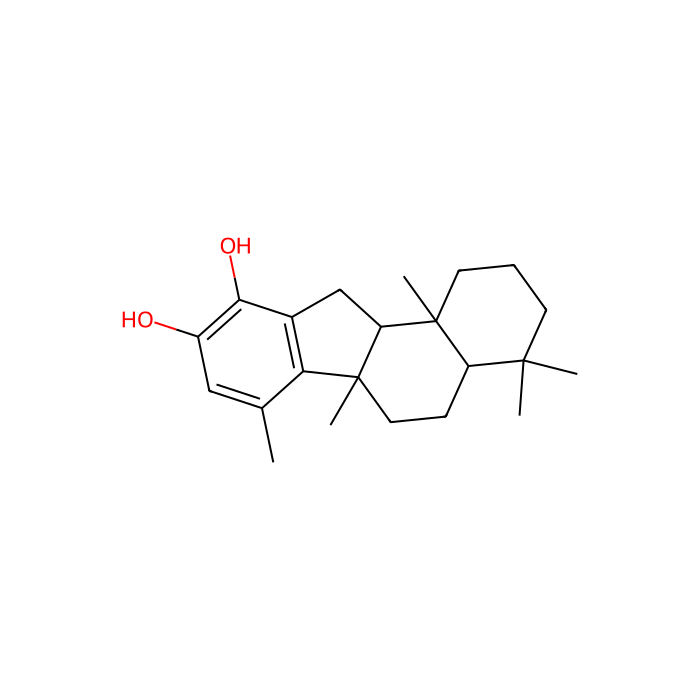
Product Name (Catalog): AQX-016A (SKU: A412976)
CAS: 849669-54-1 (item-specific)
PubChem CID: 45028212 (item-specific; useful literature cross-reference)
InChIKey: 72256 (item-specific, truncated as provided)
SMILES: Not specified for this item; refer to CoA/Spec Sheet.
Molecular Formula: Not specified for this item; refer to CoA/Spec Sheet.
Molecular Weight: Not specified for this item; refer to CoA/Spec Sheet.
Structural description (general notes):
No 2D/3D structural depiction is provided in the item data. Without a SMILES or full InChIKey, definitive assignment of ring systems, functional groups, or stereochemistry is not possible from the current listing.
Researchers who require cheminformatics handling (e.g., docking, in silico ADMET) should obtain the exact structure from the batch CoA or authoritative databases keyed by the CAS (literature), then verify against the supplied batch documentation.
Best practices when structure is undisclosed in the catalog entry:
Cross-validate identifiers (CAS, CID, InChIKey) for consistency and confirm the structure against the delivered batch paperwork.
Record the batch/lot number alongside any derived structural file (SDF/MOL), as salt forms, solvation, or stereochemical variants may exist across lots (general guidance).
Synthetic Utility
This product is positioned as a small-molecule tool compound rather than a synthetic building block or reagent.
Without disclosed structure or functional groups, it is not possible to outline selective transformations, protecting-group strategies, or named-reaction participation that would be relevant to synthetic planning for this specific item.
If custom derivatization or SAR exploration is intended, obtain the full structure and assess available handles (e.g., aryl halides, amines, acids, alcohols) for diversification using standard cross-couplings, amide couplings, or nucleophilic substitutions (general planning guidance).
For analytical/synthetic traceability, maintain a reference sample of the original lot to compare against any semi-synthetic derivatives by LC–MS and NMR (general).
Conclusion: No item-specific synthetic reactivity or retrosynthetic value can be asserted from the provided data. Treat this material primarily as a reference/test compound in screening workflows.
Target Specificity
Item-specific biological target, binding site, or selectivity panel data are not provided in the product data.
Target name/class: Not specified for this item; refer to CoA/Spec Sheet or primary literature associated with CAS 849669-54-1 (literature search recommended).
Species reactivity, off-target profile, and biochemical selectivity metrics (e.g., Ki, IC50, EC50): Not specified for this item; refer to CoA/Spec Sheet.
Guidance (general):
If this compound is used as a putative modulator, conduct orthogonal confirmation (e.g., biochemical vs cellular assays) and include selectivity counterscreens to de-risk artifactual activity.
Report concentration–response with full curve fits and goodness-of-fit statistics; include vehicle and positive/negative controls.
No antibody-like attributes (clone, isotype, epitope) apply to this small-molecule listing.
Frequently Asked Questions
How should this product be stored?
Store at ?20 °C. Freezer storage is required to maintain the specified shelf life.
What is the purity of this product?
This product is supplied at ≥98% purity (chemical assay). Lot-specific values are stated on the Certificate of Analysis.
How is this product shipped?
This product ships in an insulated container with ice pads. Unpack on arrival and transfer it to the storage condition stated above.
We use cookies to ensure the website functions properly and, where permitted, to improve your experience. You can manage your preferences at any time in Settings. Learn more in our Cookie Policy.
Shall we send you a message when we have discounts available?
Remind me later
Thank you! Please check your email inbox to confirm.
Products are supplied to verified businesses, institutions, and qualified professionals for research and development use only. Not for use in humans, animals, diagnosis, or therapy.