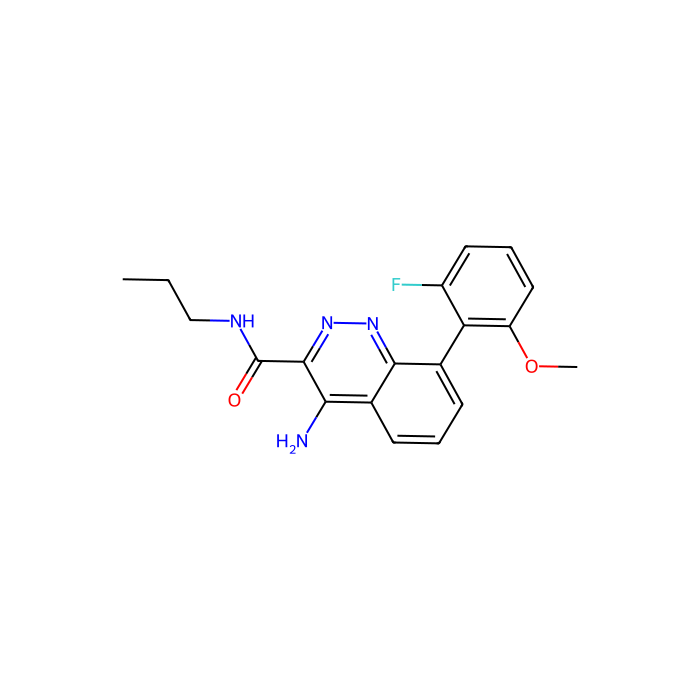
AZD-7325 - Moligand™, ≥98% , Allosteric modulator of GABA A receptor α2 subunit;Allosteric modulator of GABA A receptor α3 subunit;Antagonist of MT 1 receptor, CAS No.942437-37-8, Allosteric modulator of GABA A receptor α2 subunit;Allosteric modulator of GABA A receptor α3 subunit;Antagonist of MT 1 receptor
AZD-7325 - Moligand™, ≥98% , Allosteric modulator of GABA A receptor α2 subunit;Allosteric modulator of GABA A receptor α3 subunit;Antagonist of MT 1 receptor, CAS No.942437-37-8, Allosteric modulator of GABA A receptor α2 subunit;Allosteric modulator of GABA A receptor α3 subunit;Antagonist of MT 1 receptor
GRADE & PURITYMoligand™?Moligand™ — Aladdin's line of ligands and bioactive small molecules. Use for receptor, pathway, and binding studies needing defined small-molecule tools.≥98%
Moligand™, ≥98% Moligand™ for sensitive chromatographic and analytical workflows requiring minimal baseline interference.
🌡
Storage & shipping
Store at -20°C Ships Ice chest + Ice pads Check lot-specific COA for exact specifications.
📋
Quality documents
SDS, COA, datasheet, and spec sheet available for download. Lot-specific COA accessible via lot number lookup.
📚
Literature proof
Cited in 0 peer-reviewed publications across chromatography, organic synthesis, and cross-coupling reactions.
Overview
Information
AZD7325 is a positive allosteric modulator (PAM) of α2,3 subtype-selective GABA receptor with pKi of 9.51 and has less efficacy at the α1 and α5 receptor subtypes. AZD7325 is a moderate CYP1A2 and a potent CYP3A4 inducer in vitro.
AZD7325 is a\xa0positive allosteric modulator (PAM) of α2,3\xa0subtype-selective\xa0GABA receptor with pKi of 9.51 and has less efficacy at the α1\xa0and α5\xa0receptor subtypes. AZD7325 is a moderate\xa0CYP1A2\xa0and a potent\xa0CYP3A4\xa0inducer
Storage
Store at -20°C
Shipped In
Ice chest + Ice pads
This product requires cold chain shipping. Ground and other economy services are not available.
Grade
Moligand™
Action Type
ALLOSTERIC MODULATOR, ANTAGONIST
Mechanism of action
Allosteric modulator of GABA A receptor α2 subunit;Allosteric modulator of GABA A receptor α3 subunit;Antagonist of MT 1 receptor
This compound belongs to the class of organic compounds known as cinnolines. These are organic aromatic compounds containing a benzene fused to a pyridazine ring.
External Descriptors
Not available
1. Djoumbou Feunang Y, Eisner R, Knox C, Chepelev L, Hastings J, Owen G, Fahy E, Steinbeck C, Subramanian S, Bolton E, Greiner R, and Wishart DS. ClassyFire: Automated Chemical Classification With A Comprehensive, Computable Taxonomy. Journal of Cheminformatics, 2016, 8:61.
AZD-7325 is reported as a small-molecule positive allosteric modulator (PAM) at the GABAA receptor complex with preference for α2/α3-containing receptor subtypes and reduced activity at α1-containing receptors. Such selectivity is commonly explored to dissect GABAergic circuitry associated with anxiolytic-like effects without strong sedative signals in preclinical models.
Mechanistic note: PAMs at the benzodiazepine site increase GABA’s efficacy and/or potency without directly activating the channel in the absence of GABA. Subtype selectivity is governed by α-subunit residues that define binding-site microenvironments.
Research utility:
Electrophysiology (patch clamp) to quantify changes in current amplitude/kinetics on recombinant receptors (e.g., α2β3γ2 vs α1β3γ2) and native neurons.
Binding/competition assays using benzodiazepine-site radioligands to assess affinity and subtype preference.
Pathway interrogation in neuronal networks to separate α2/α3-mediated inhibitory tone from α1-associated sedation markers.
ADME considerations (general): Ligands in this class often show high lipophilicity and plasma protein binding, necessitating careful free-concentration control in vitro and in ex vivo tissues.
Important: All uses are for research only. No medical, diagnostic, or therapeutic uses are implied. Verify target selectivity and potency for your specific expression system and assay configuration.
Buffer Applications
This product is not a buffering agent. However, buffer choice strongly affects small-molecule bioassays involving AZD-7325.
Practical guidance (general):
Assay buffers: Use HEPES- or PBS-based buffers (pH 7.2–7.4) with 0.1% BSA to reduce nonspecific binding, or add 0.01–0.05% non-ionic surfactant to minimize aggregation if assay-compatible.
Calcium/Magnesium: For electrophysiology on GABAA receptors, maintain physiological ionic strength; typical external solutions contain NaCl/KCl/CaCl2/MgCl2 with HEPES or bicarbonate buffering; internal pipette solutions are often CsCl- or KCl-based with EGTA and HEPES.
DMSO control: Match final DMSO concentration across all wells/tubes (commonly ≤0.1–0.5% v/v) to avoid solvent-related effects.
pH stability: Confirm compound stability at assay pH by LC-MS over the experiment window; avoid prolonged exposure to high pH that can degrade certain heteroaromatic ethers/carbamates (general caution).
Item-specific buffer compatibility and solubility: Not specified for this item; refer to CoA/Spec Sheet.
Green Alternatives
As AZD-7325 is a specialized research ligand rather than a reaction solvent or commodity reagent, the concept of a direct “green substitute” is generally not applicable.
Green chemistry considerations for its use (general):
Solvent choice: Prefer greener solvent systems in analytics and workups where feasible.
Replace dichloromethane with ethyl acetate or 2-MeTHF when chromatographic performance allows.
Favor acetonitrile over more hazardous chlorinated solvents for LC, and optimize gradients to minimize solvent consumption.
Miniaturization: Use microplate-based assays and microscale reactions to reduce solvent and compound usage.
Waste management: Segregate halogenated from non-halogenated waste; neutralize acidic/basic aqueous streams prior to disposal per local regulations.
Energy: Store only the quantity needed at −20°C to limit cold-chain energy burden; consolidate freezer space and use high-efficiency appliances.
Comparison snapshot (general):
DMSO (assay stock) vs DMF: DMSO offers lower toxicity and better biodegradability profile; maintain low final concentrations to reduce environmental load.
MeCN vs MeOH (LC): MeOH is bio-derived in some supply chains and less resource-intensive but can increase backpressure; MeCN gives performance advantages at the cost of petrochemical origin.
Conclusion: Optimize surrounding processes (solvents, scale, energy) rather than the molecule itself to improve the overall green profile.
Pharmaceutical Uses
No clinical or therapeutic claims are made for this product. It is supplied strictly for research use.
Research/formulation-related contexts (general):
Reference standard: May be used as a reference material in analytical method development (e.g., LC-MS/MS) for GABAA ligand panels.
Preformulation screening: Solubility profiling in biorelevant media (FaSSIF/FeSSIF, pH 1–7.4 buffers) to support discovery-stage DMPK method development; ensure appropriate permits and internal governance.
Excipient interactions (general): For highly lipophilic ligands, solubilization using cyclodextrins (e.g., HP-β-CD), lipid-based vehicles, or co-solvents is often evaluated during discovery research. These activities remain strictly nonclinical within the lab.
Regulatory status: No pharmacopeial monograph or GMP status is implied for this SKU. For regulated uses, source qualified GMP-grade materials through appropriate channels.
Any claims of dosage, efficacy, or safety in humans/animals are outside scope and are not supported by this listing.
Physical Properties
Item-specific specifications:
Appearance: Not specified for this item; refer to CoA/Spec Sheet.
Molecular Weight: Not specified for this item; refer to CoA/Spec Sheet.
Molecular Formula: Not specified for this item; refer to CoA/Spec Sheet.
Melting Point / Boiling Point: Not specified for this item; refer to CoA/Spec Sheet.
Density / Refractive Index / LogP / pKa: Not specified for this item; refer to CoA/Spec Sheet.
UV–Vis cutoff/ε: Not specified for this item; refer to CoA/Spec Sheet.
Small, lipophilic GABAA ligands are often solids at ambient temperature, with limited aqueous solubility and good solubility in polar aprotic solvents (e.g., DMSO, DMF) and many organic solvents (e.g., MeCN, EtOAc, dichloromethane). Actual solubility for this item is not specified.
For bioassays, stock solutions are typically prepared at 10–50 mM in dry, anhydrous DMSO, then diluted into aqueous buffers containing serum/albumin or non-ionic surfactant to minimize precipitation and nonspecific binding (practice guidance; not item-specific).
If UV detection is planned (e.g., HPLC method development), assume an aromatic chromophore is present; perform a quick scan (200–400 nm) to determine λmax and extinction. Do not assume a particular cutoff without measurement.
Note: Always consult the item’s CoA/Spec Sheet and SDS for definitive physical property information and handling limits.
Quality and Grades
Supplied Grade: Moligand™ (Aladdin). This designation indicates the material is intended for research screening, target validation, SAR exploration, and chemical biology workflows.
What Moligand™ typically implies:
Emphasis on identity confirmation (e.g., NMR/HRMS/LC) suitable for screening libraries.
Packaging and logistics aligned to preserve integrity for small-molecule assays.
Not produced to pharmacopeial monographs; not for human or veterinary use.
Item-specific quality notes:
Purity/assay, water content, residual solvents, metal content, stabilizers, and chromatographic parameters: Not specified for this item; refer to CoA/Spec Sheet.
Practical considerations for users:
For HTS/chemical biology: verify purity and identity in-house before critical decision points (e.g., orthogonal LC methods, qNMR) if your workflow requires.
For analytical development: document retention time and UV profile under your LC method; archive a reference chromatogram for consistency tracking across lots.
If you require particular impurity limits (e.g., low peroxide, elemental impurities), contact Technical Support with your specifications prior to ordering.
Note: When using in biophysical assays (SPR, DSF, MST), low-UV or low-fluorescence solvent backgrounds and verified absence of colloidal aggregation are recommended controls.
Reaction and Applications
This product is supplied as a research ligand for biochemical/pharmacological studies rather than as a general-purpose synthetic reagent. Accordingly, classic reagent-driven transformations (e.g., Grignard, cross-coupling) are not typical use cases for the SKU itself.
Research application contexts (literature/general):
Target engagement studies with GABAA receptor subtypes (binding assays, electrophysiology) to probe α-subunit selectivity.
Chemical biology screening in neuronal models to differentiate α2/α3 vs α1/α5 mediated responses.
Assay development and validation, including radioligand displacement, fluorescence or luminescence readouts, and automated patch-clamp platforms.
Practical tips for assay use (general):
Prepare fresh DMSO stocks; verify concentration by UV or qNMR if critical. Serially dilute into assay buffer to keep final DMSO ≤0.1–0.5% v/v.
Include controls for potential colloidal aggregation (e.g., 0.01–0.05% Triton X-100 control, dynamic light scattering) and for intrinsic fluorescence/absorbance interference.
Assess compound stability in the chosen buffer (time-course LC-MS) and adsorption to plastics (recovery experiments) when working at low nM–µM concentrations.
Note: If your goal is synthetic derivatization or SAR expansion, treat this material as a reference standard; procure building blocks or custom synthesis routes tailored to the scaffold instead.
Reaction Conditions
Not typically applicable. AZD-7325 is supplied as a research-grade ligand for biological assays, not as a transformation reagent or catalyst.
For users engaging in analog synthesis or analytical method setup (general, literature-based guidance):
Cross-couplings: Pd-catalyzed Suzuki–Miyaura in toluene/EtOH/H2O or dioxane/H2O at 60–100°C with bases such as K2CO3 or K3PO4 (12–24 h) are common for heteroaryl assembly. Verify conditions for your specific substrates.
SNAr etherifications: Polar aprotic solvents (DMF/DMSO), 60–120°C, with alkoxides or phenoxides; carefully control to avoid overreaction on polyfluorinated rings.
Purification: Reverse-phase prep HPLC with water/MeCN + 0.1% formic acid, or normal-phase flash with hexanes/EtOAc/MeOH, monitoring by UV and MS.
These conditions are general to heteroaromatic medicinal chemistry and do not describe processing of this SKU specifically. For compound handling in assays, see Application Protocols and Storage tabs.
Safety and Handling
Item-specific safety data:
GHS Classification / Pictograms / H-statements / Signal word: Not specified for this item; refer to SDS.
General laboratory precautions (good practice for small-molecule research ligands):
Handle in a chemical fume hood, avoiding inhalation of dust/aerosols. Prevent skin/eye contact.
Recommended PPE: lab coat, safety glasses, and appropriate chemical-resistant gloves (e.g., nitrile). For weighing fine powders, consider a particulate mask or use a balance enclosure.
Avoid release to the environment. Collect waste in a clearly labeled container per institutional and local regulations.
First aid (overview; defer to SDS):
Inhalation: move to fresh air; seek medical attention if symptoms occur.
Skin/eye contact: rinse with water for at least 15 minutes; remove contaminated clothing; seek medical advice if irritation persists.
Ingestion: rinse mouth; do not induce vomiting; seek medical attention.
Incompatibilities and stability (general): store away from strong oxidizers and strong acids/bases that could degrade heteroaromatic scaffolds. Protect solid and solutions from light if chromophoric groups are present.
Spill response: avoid dust generation, absorb solutions with inert material, and dispose per hazardous waste procedures.
Authoritative safety information for this SKU must be taken from the SDS accompanying the product shipment.
Solvent Selection
AZD-7325 is a lipophilic, heteroaromatic small molecule; while item-specific solubility is not provided, the following general guidance applies to this compound class:
Primary stock solvent:
DMSO (anhydrous) — typically chosen for 10–50 mM stocks due to broad solvency and assay compatibility at ≤0.1–0.5% v/v final concentration.
Secondary solvents for method development and purification:
Acetonitrile, methanol (HPLC/UPLC mobile phases with aqueous buffers, 0.05–0.1% acid or 5–20 mM ammonium salts as needed).
Ethyl acetate, dichloromethane, toluene, MTBE for workups and flash chromatography (choose by polarity and safety profile).
Aqueous compatibility:
Expect poor intrinsic water solubility. Use co-solvent strategies (DMSO→buffer), cyclodextrins, or minimal non-ionic surfactant if necessary. Validate absence of precipitation at working concentrations.
Comparison (general):
DMSO vs DMF: DMSO offers better biocompatibility and lower toxicity in cell-based assays; DMF sometimes increases solubility but is less preferred biologically.
MeCN vs MeOH in LC: MeCN often yields sharper peaks and lower backpressure; MeOH may improve selectivity for aromatic heterocycles.
Practical tips:
Filter stock solutions (0.22 µm PTFE) to remove particulates for patch-clamp/biophysical assays.
Minimize adsorption by using low-binding plasticware or pre-conditioning glassware with dilute stock.
Item-specific solubility and UV cutoff: Not specified for this item; refer to CoA/Spec Sheet.
Storage and Reconstitution
Item-specific instructions:
Storage Conditions: Store at −20°C (as provided in Product Data). Protect from moisture and light. Keep container tightly closed.
Shipped In: Ice chest + ice pads.
Appearance: Not specified for this item; refer to CoA/Spec Sheet.
Reconstitution and handling (general best practices for small-molecule ligands):
Allow the vial to equilibrate to room temperature before opening to minimize condensation.
Prepare concentrated stocks (e.g., 10–50 mM) in anhydrous DMSO. Mix thoroughly and, if needed, gently warm to 25–37°C to aid dissolution. Do not overheat.
Aliquot stocks into low-binding microtubes to avoid repeated freeze–thaw. Store aliquots at −20°C to −80°C.
Limit freeze–thaw cycles to a maximum of 3–5. Discard aliquots showing precipitation, discoloration, or degradation by LC-MS/UPLC.
For aqueous working solutions, dilute DMSO stocks directly into buffer with vigorous mixing; confirm absence of precipitation visually and by light scattering if critical.
Recommended storage duration: Not specified for this item; refer to CoA/Spec Sheet. For best practice, prepare only what is needed for near-term experiments and monitor by analytical LC.
Note: Always consult the SDS and CoA/Spec Sheet shipped with the product for authoritative guidance.
Structure and Identity
Brief overview: AZD-7325 is a research-grade, small-molecule ligand supplied under Aladdin’s Moligand™ line for screening and chemical biology.
Product identifiers (item-specific):
SKU: A412213
Product Name: AZD-7325
CAS: 942437-37-8
CID (PubChem): 23581869
InChIKey: 192773 (as provided; format atypical)
Structure descriptors for this item:
Molecular Formula: Not specified for this item; refer to CoA/Spec Sheet.
Molecular Weight: Not specified for this item; refer to CoA/Spec Sheet.
SMILES: Not specified for this item; refer to CoA/Spec Sheet.
Literature/General notes (not item-specific):
AZD-7325 is reported in the literature as a non-benzodiazepine site ligand that positively modulates GABAA receptors with α2/α3 subunit selectivity. Typical scaffolds in this class are heteroaromatic, lipophilic, and designed for CNS-relevant properties.
2D structural features typically include one or more heteroaromatic rings, ether/aryl-ether linkages, and halogen or trifluoromethyl-containing motifs to tune lipophilicity and metabolic stability. Exact atom connectivity should be confirmed from primary references or the CoA.
Synthetic Utility
This SKU is a finished research ligand, not a general synthetic building block. Consequently, it is not commonly employed as a reagent or intermediate in multistep synthesis.
If synthetic work is planned (general guidance):
Treat this compound as a reference comparator in SAR programs. Prepare analogs from simpler, commercially available building blocks mapped to the known scaffold motifs of GABAA α2/α3-selective PAMs (e.g., heteroaryl cores, aryl-ether linkages, and fluorinated substituents, per literature precedents).
For method development, expect typical transformations: aryl/heteroaryl coupling (Suzuki–Miyaura/Negishi), nucleophilic aromatic substitution for ether installation, and late-stage functionalization to vary lipophilicity and electronics. These remarks are general to the class, not specific to this SKU’s undisclosed structure.
Protecting-group strategy and chemoselectivity should be optimized to tolerate multiple heteroatoms and halogens often present in such scaffolds.
Bottom line: Use AZD-7325 as a benchmark ligand in assays; for synthesis, plan routes to analogs rather than modifying the supplied material.
Subtype preference: Reported selectivity toward α2- and α3-containing GABAA receptor subtypes, with reduced potentiation at α1-containing receptors in recombinant systems. Activity at α5 may be context-dependent and should be empirically determined in your assay.
Functional profile: Positive allosteric modulation (PAM) — enhances GABA-evoked currents without direct agonism in the absence of GABA.
Selectivity caveats: Apparent subtype selectivity can vary with subunit composition (β/γ variants), expression level, recording temperature, and assay format (electrophysiology vs fluorescence-based assays). Always benchmark against internal standards under matched conditions.
Item-specific target validation data (Ki/EC50/efficacy, tested systems, assay formats): Not specified for this item; refer to CoA/Spec Sheet or generate in-lab characterization.
Need help choosing the grade?
Our grade selection guide covers purity, stabilizer status, and application suitability for all variants in our catalog.
We use cookies to ensure the website functions properly and, where permitted, to improve your experience. You can manage your preferences at any time in Settings. Learn more in our Cookie Policy.
Shall we send you a message when we have discounts available?
Remind me later
Thank you! Please check your email inbox to confirm.
Products are supplied to verified businesses, institutions, and qualified professionals for research and development use only. Not for use in humans, animals, diagnosis, or therapy.

 C2321175