GRADE & PURITYMoligand™?Moligand™ — Aladdin's line of ligands and bioactive small molecules. Use for receptor, pathway, and binding studies needing defined small-molecule tools.10 mM in DMSO
Moligand™, 10 mM in DMSO Moligand™ for sensitive chromatographic and analytical workflows requiring minimal baseline interference.
🌡
Storage & shipping
Store at -80°C Ships Dry ice packs + Cold packs Check lot-specific COA for exact specifications.
📋
Quality documents
SDS, COA, datasheet, and spec sheet available for download. Lot-specific COA accessible via lot number lookup.
📚
Literature proof
Cited in 0 peer-reviewed publications across chromatography, organic synthesis, and cross-coupling reactions.
Overview
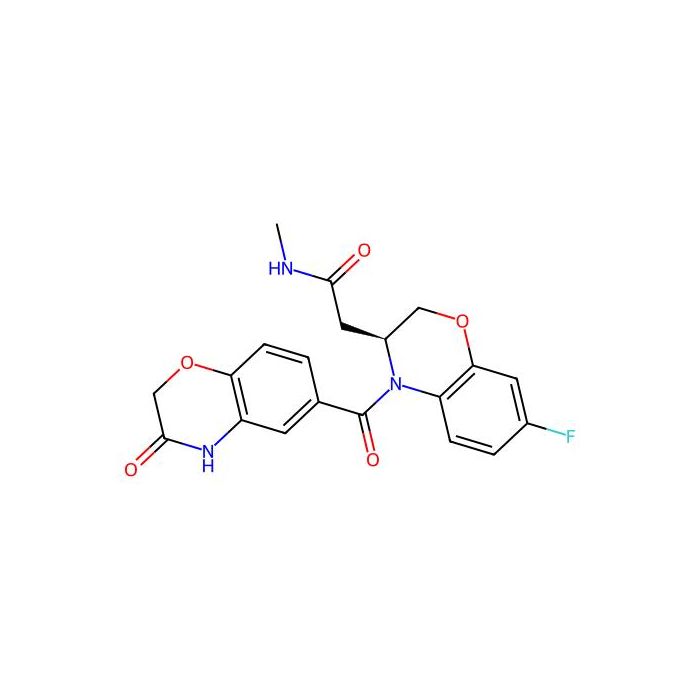
Balcinrenone (AZD9977) is a potent, selective, and orally active mineralocorticoid receptor (MR) modulator. Balcinrenone is used for heart failure, and chronic kidney disease research.
Specifications
Specifications & Purity
Moligand™, 10 mM in DMSO
Storage
Store at -80°C
Shipped In
Dry ice packs + Cold packs
This product requires cold chain shipping. Ground and other economy services are not available.
Determine the necessary mass, volume, or concentration for preparing a solution.
Dilution Calculator
Determine the dilution needed to prepare a stock solution.
Reconstitution Calculator
Reviews
Customer Reviews
Application Protocols
No vendor-tested application protocols are provided for this item. The following are generalized, assay-agnostic suggestions for small-molecule screening compounds.
Stock solution preparation:
Dissolve in anhydrous DMSO to 10–20 mM. Vortex/sonicate; warm gently (≤40°C) if needed. Filter (0.22 µm PTFE) for clarity.
Aliquot into amber vials or plate wells to minimize freeze–thaw.
Plate-based assays (general):
Prepare serial dilutions in DMSO, then back-dilute into assay buffer to desired final concentrations with ≤0.5–1% DMSO.
Include vehicle controls and, if available, reference ligands. Run in technical triplicates and biological replicates.
Biophysical assays:
For SPR, ensure low DMSO mismatch (<0.1% v/v) between sample and running buffer; correct for RI effects.
For DSF, confirm compound does not strongly absorb/fluoresce at dye wavelengths; adjust dye or use label-free methods if needed.
Data quality controls:
Check for precipitation visually or by light scattering. Monitor compound stability by LC at t=0 and post-incubation.
Record full concentration–response curves with appropriate top/bottom constraints and report confidence intervals for fitted parameters.
These are general guidelines; adapt to your specific assay format and institutional SOPs.
Biological Roles
Item-specific biological target, mechanism, or pathway information is not provided in the Product Data for this SKU.
General considerations for small-molecule ligands (research use only):
Putative modes of action: Small molecules may act as agonists/antagonists, allosteric modulators, enzyme inhibitors, ion channel blockers/openers, or protein–protein interaction modulators. Determining the role requires empirical assays.
Assay selection: Choose primary assays that directly report on hypothesized mechanism (e.g., receptor-binding or enzymatic turnover) and orthogonal assays (e.g., biophysical target engagement) to confirm specificity.
Off-target assessment: Panel screening (broad receptor/enzyme panels) and counterscreens for nuisance mechanisms (e.g., redox cycling, aggregation, fluorescence interference) are prudent for hit validation.
Physicochemical influence: Solubility, lipophilicity, and ionization state strongly affect permeability, nonspecific binding, and intracellular target access. Characterize these properties experimentally if not provided.
Caution:
Avoid inferring a biological role without primary data relevant to this exact lot. If you consult external databases via the provided CAS/CID, ensure concordance with the product’s identity and assess study quality before extrapolating.
Buffer Applications
This product is a discrete small-molecule ligand, not a buffering agent. Therefore, it is not typically used to set or maintain pH in biochemical systems.
Practical notes for buffer use with small molecules:
Ensure the chosen assay buffer supports compound solubility and stability (e.g., PBS, HEPES, or Tris with ≤0.5–1% DMSO). Verify compatibility empirically.
Avoid buffers that strongly absorb at analytical wavelengths used to track the compound, or adjust the detection strategy accordingly.
If precipitation occurs upon dilution into buffer, increase the organic cosolvent fraction within assay constraints or reduce the compound concentration.
For dedicated buffer recipes and pH ranges, refer to conventional buffers (HEPES pH 6.8–8.2, MOPS pH 6.5–7.9, Tris pH 7–9), noting these are general options and not specific to this item.
Green Alternatives
As a discrete small-molecule ligand (not a reaction solvent or bulk reagent), “green alternatives” relate chiefly to greener handling of stock solutions and analytical workflows rather than substituting the compound itself.
Greener handling strategies (general):
Minimize DMSO use by preparing higher-concentration master stocks and performing serial dilutions immediately before assays to reduce total solvent volume.
Aqueous-forward assays: Where compatible, increase the aqueous fraction during dilution to lower organic solvent content while maintaining solubility.
Analytical greener choices: Prefer water/ACN gradients over water/MeOH when feasible for LC-MS (often lower viscosity and better ESI performance). Consider shorter columns and UHPLC to reduce solvent consumption.
Waste reduction: Aliquot compounds to prevent repeated thawing and disposal of degraded material. Plan plate layouts to avoid excess dead volume.
DMSO: broadly effective, more widely accepted in biology labs.
DMF: similar solvency but typically less favored for cell work; use only if DMSO fails.
Trade-offs:
Raising organic cosolvent improves solubility but may compromise biological readouts or protein stability; titrate to the minimal effective percentage.
Lower temperatures may enhance stability but reduce solubility; balance with brief warming/sonication as needed.
Pharmaceutical Uses
No pharmacopeial status, excipient role, or formulation details are provided for this item. It is supplied strictly for research use only.
Context for discovery-stage work (non-clinical):
Pre-formulation screening: Solubility, stability (solid-state and in relevant vehicles), and polymorph assessment (if applicable) can be informative for discovery programs.
Compatibility testing: Assess adsorption to plastics/glass, and stability in common vehicles (e.g., DMSO, PEG 400/water, Captisol) if in vivo exploratory studies are contemplated by qualified labs under appropriate approvals.
No therapeutic claims: This product is not approved for diagnostic, therapeutic, or human/animal consumption uses.
Documentation:
Any statements about dosage forms, clinical indications, or regulatory status would be speculative and are outside the scope of the provided Product Data. For all formulation-like activities in research settings, rely on original literature and internal SOPs.
Physical Properties
Item-specific physicochemical parameters are not provided in the Product Data for this SKU.
Appearance: Not specified for this item; refer to CoA/Spec Sheet.
Molecular formula / weight: Not specified for this item; refer to CoA/Spec Sheet.
Melting point / boiling point: Not specified for this item; refer to CoA/Spec Sheet.
Density / refractive index: Not specified for this item; refer to CoA/Spec Sheet.
Solubility profile: Not specified for this item; refer to CoA/Spec Sheet.
LogP / pKa: Not specified for this item; refer to CoA/Spec Sheet.
Practical guidance (general chemistry):
For library ligands with unknown solubility, start with DMSO stock solutions (e.g., 10–20 mM), then dilute into assay buffer keeping final DMSO ≤0.5–1% v/v to limit assay interference.
If precipitation occurs upon aqueous dilution, add co-solvent (e.g., 10–30% v/v acetonitrile or methanol) or use surfactant (0.01–0.05% Tween-20) as assay-compatible.
Conduct a small solubility screen: DMSO, DMF, MeOH, ACN, EtOH, PBS (pH 7.4) with 1–5% DMSO. Vortex/sonicate and visually inspect; quantify by UV or LC if needed.
If UV characterization is planned, perform a scan (200–400 nm) to determine absorbance maxima; avoid over-absorbance (>1 AU) in plate-based assays.
Important: Treat any numerical values obtained from databases as literature guidance only. For lot-release specifications and acceptance criteria, rely on the CoA/Spec Sheet for this item.
Quality and Grades
Grade/Purity: Moligand™ (as provided). This designation indicates inclusion in a small-molecule/ligand library intended for discovery workflows such as primary/secondary screening, target engagement studies, and SAR exploration.
What Moligand™ generally implies (context, not item-specific specs):
Curated small-molecule entities suitable for biochemical and cell-based assays (research use only).
Typically supplied to facilitate reproducible stock preparation (e.g., DMSO solutions) and compatibility with common screening formats (96–1536 well), though exact purity/identity criteria are defined on the item’s CoA.
Emphasis on identity confirmation and impurity control appropriate for screening; however, analytical thresholds (HPLC area%, NMR, residual solvents, water, metals, peroxides, UV cutoff) are item/lot-specific and must be verified on the CoA/Spec Sheet.
What is NOT specified for this item:
Exact purity percentage, stabilizers, counter-ions/salt form, residual solvent limits, metal content, or water content. For all such details: Not specified for this item; refer to CoA/Spec Sheet.
Practical quality guidance:
For quantitative biology/biophysics, verify identity/purity via orthogonal methods (e.g., LC-MS and 1H NMR) when necessary.
If the compound is hygroscopic or photosensitive (unknown here), minimize exposure to air/light and consider amber vials/inert gas.
Reaction and Applications
This product is supplied as a screening/ligand library small molecule rather than a synthetic reagent or bulk solvent.
Applicable laboratory applications (research use only):
Biochemical and cell-based screening: Evaluate as a test article in receptor/enzymatic assays, reporter gene systems, or phenotypic screens.
Target engagement/biophysics: Use in thermal shift assays (DSF), microscale thermophoresis (MST), SPR, or ITC, provided adequate solubility and optical compatibility.
SAR and profiling: Benchmark against structural analogs or reference ligands; develop preliminary SAR through concentration–response curves.
ADME profiling (discovery-stage): Solubility, permeability, microsomal stability, and protein binding can be profiled to inform follow-up experiments.
Not typical/limited relevance:
It is not commonly used as a reagent for named organic reactions, catalysts, or stoichiometric transformations.
Practical tips:
Confirm identity and purity against the lot’s CoA prior to critical studies.
Establish a robust stock solution SOP (aliquoting, freeze–thaw minimization, light protection if needed).
Include vehicle controls matching DMSO percentage; consider detergent controls if colloidal aggregation is a concern.
If UV/fluorescence readouts are used, record the compound’s intrinsic spectra to assess assay interference and choose compatible filters/wavelengths.
Reaction Conditions
Not typically applicable. This item is a discrete small-molecule ligand for screening and is not intended as a reagent or catalyst.
General laboratory conditions for handling and analysis (non-reaction):
Stock preparation: Dissolve in dry DMSO to 10–20 mM, sonicate if needed, filter through 0.22 µm PTFE for analytical cleanliness.
Assay dilution: Into buffer with controlled organic cosolvent (≤0.5–1% DMSO common), monitor for precipitation.
Analytical methods: LC-MS with water/ACN + 0.1% formic acid gradients; verify single major peak and correct mass.
Stability checks: Conduct time-course LC at bench-top and 37°C in assay-relevant media to confirm integrity over experimental durations.
For genuine synthetic transformations (e.g., cross-couplings, condensations), select dedicated reagents/solvents with known condition windows rather than using this product.
Safety and Handling
Safety data specific to this item were not provided in the Product Data. Handle as a laboratory research chemical of unknown acute toxicity profile.
GHS classification / pictograms / H-statements: Not specified for this item; refer to SDS.
Signal word: Not specified for this item; refer to SDS.
General PPE: Laboratory coat, safety glasses, and appropriate chemically resistant gloves (e.g., nitrile). Use in a certified chemical fume hood to avoid inhalation exposure to dust/aerosols.
Avoid: Skin/eye contact, inhalation of dust or aerosols, and ingestion. Prevent environmental release.
Storage incompatibilities: In absence of structure-specific data, segregate from strong oxidizers and acids/bases until compatibility is known. Keep container tightly closed under inert atmosphere if feasible.
First aid (overview): If inhaled—move to fresh air; seek medical advice. Skin contact—wash with soap/water. Eye contact—rinse cautiously with water for several minutes; remove contact lenses if present. If ingested—rinse mouth; seek medical attention. Always follow SDS instructions.
Spill response: Avoid dust; absorb small spills with inert material; collect in sealed container for disposal per institutional and local regulations.
Waste disposal: Dispose of as organic laboratory chemical waste in accordance with local regulations and institutional policies.
Authoritative safety information is found in the product’s SDS. Always consult the SDS and your institution’s EHS guidance before use.
Solvent Selection
Because item-specific solubility and ionization data are not provided, begin with a conservative, screening-oriented solvent strategy.
Primary stock solvent (general best practice): DMSO.
Prepare 10–20 mM stocks; filter-sterilize if needed (0.22 µm PTFE for organic solutions).
Maintain final assay DMSO at ≤0.5–1% v/v unless your assay tolerates more.
Secondary solvents for troubleshooting: DMF, methanol, acetonitrile, ethanol. For aqueous use, consider cosolvent systems (e.g., PBS + 2–10% DMSO or 10–30% ACN/MeOH) as assay-allowed.
Polarity class: Not specified for this item. Evaluate practically via small-scale solubility tests.
pH effects: If the compound is ionizable (unknown), solubility may improve at pH extremes; use buffers compatible with assay and compound stability.
Quick comparison (general):
DMSO: strongest solvating power for diverse chemotypes; can affect some assays at >1–2%.
DMF: similar solvency to DMSO; consider cytotoxicity and material compatibility.
Methanol/ACN: good for HPLC and co-solvent dilution; monitor for protein denaturation in biochemical assays.
Tips:
Warm (≤40°C) and sonicate to aid dissolution; avoid prolonged heating.
Check for precipitation after dilution; if observed, increase organic fraction or reduce concentration.
For long incubations, verify compound stability in chosen solvent by LC at relevant timepoints.
Storage and Reconstitution
Storage conditions (per Product Data): Store at −80°C. Shipments are made on dry ice packs + cold packs.
Research use only.
Best practices for this item type:
Long-term storage: Keep material tightly sealed at −80°C in a dry, inert atmosphere if possible. Minimize exposure to ambient humidity and temperature.
Aliquoting: Upon first opening, subdivide into single-use aliquots (vials or plate wells) to avoid repeated freeze–thaw cycles.
Light sensitivity: Unknown for this item; as a precaution, store in amber containers or protected from light.
Reconstitution:
Preferred solvent: DMSO (typical for screening ligands). Start at 10–20 mM.
Mix by gentle vortexing/brief sonication; avoid prolonged heating. If insoluble, trial DMF, then alcohols (MeOH/EtOH) or ACN. Record final solvent used.
After preparation, store aliquoted stocks at −80°C. Avoid frost/condensation ingress; allow vials to equilibrate to room temperature in a desiccator before opening.
Stability monitoring: Periodically verify integrity by LC-MS or HPLC, especially after >6 months storage or multiple thaws.
Item-specific values such as exact solubility, stability in various media, or presence of stabilizers are not specified for this item; refer to the CoA/Spec Sheet and SDS for authoritative guidance.
Structure and Identity
Brief overview: Balcinrenone is supplied as a small-molecule screening/ligand item in Aladdin’s Moligand™ collection. Detailed structural identifiers are not provided in the Product Data for this specific SKU.
Product name: Balcinrenone (SKU: B1495267)
CAS: 1850385-64-6
PubChem CID: 118599727
Molecular formula: Not specified for this item; refer to CoA/Spec Sheet.
Molecular weight: Not specified for this item; refer to CoA/Spec Sheet.
SMILES: Not specified for this item; refer to CoA/Spec Sheet.
InChIKey: Not specified for this item; refer to CoA/Spec Sheet.
Category: Small Molecules & Compound Libraries (小分子和化合物库)
Structural description (general guidance):
When structure is available (via CoA or PubChem), note functional groups (e.g., carbonyls, heteroaromatics), ring systems (aliphatic vs. aromatic), H-bond donors/acceptors, and stereocenters to guide solubility and handling.
Without a provided structure, treat as an organic small molecule of unknown ionization state and polarity. Perform a micro-scale solubility screen (e.g., DMSO, DMF, MeOH, PBS with co-solvent) before use.
Notes on identifiers:
The provided CAS and CID can be used to retrieve peer-reviewed or database structural information if required for assay design. Always reconcile any database structure with the item’s CoA to ensure the correct tautomer/salt form (if applicable).
Synthetic Utility
Balcinrenone is provided as a finished small molecule for screening rather than as a synthetic building block or reagent.
Not typically used as: A coupling partner, protecting group reagent, catalyst, or stoichiometric reagent in organic synthesis.
Limited relevance to retrosynthesis: Unless used as a reference standard or comparator, it is not commonly incorporated into multistep synthetic routes as an intermediate.
Practical uses in synthesis labs (ancillary):
Analytical reference: May serve as a reference standard for LC/LC-MS method development and retention time matching when working on analog series (ensure identity/purity verification vs. CoA).
Stability benchmarking: Evaluate chemical stability under stress conditions (acid/base, redox, heat, light) to inform analogue design and purification strategies, if conducting SAR programs.
If you require a reagent or building block role, consider obtaining appropriately functionalized analogues (with known handle(s) such as halides, boronates, acids, or amines) designed for cross-coupling or amide formation.
Target Specificity
Target, pathway, or binding specificity for this item is not provided in the Product Data.
Confirmed target(s): Not specified for this item; refer to CoA/Spec Sheet or primary literature via the provided CAS/CID.
Assay guidance (general):
Start with a primary binding or functional assay aligned to your hypothesized target class.
Incorporate orthogonal counterscreens to rule out assay interference (fluorescence quenching/emission, redox cycling, colloidal aggregation).
Use concentration–response curves to estimate potency and Hill slope; corroborate with biophysics (SPR/MST/DSF) where feasible.
Note: Any external assertions about molecular targets should be verified against authenticated reference material and high-quality studies before being attributed to this specific lot.
Need help choosing the grade?
Our grade selection guide covers purity, stabilizer status, and application suitability for all variants in our catalog.
We use cookies to ensure the website functions properly and, where permitted, to improve your experience. You can manage your preferences at any time in Settings. Learn more in our Cookie Policy.
Shall we send you a message when we have discounts available?
Remind me later
Thank you! Please check your email inbox to confirm.
Products are supplied to verified businesses, institutions, and qualified professionals for research and development use only. Not for use in humans, animals, diagnosis, or therapy.