GRADE & PURITYMoligand™?Moligand™ — Aladdin's line of ligands and bioactive small molecules. Use for receptor, pathway, and binding studies needing defined small-molecule tools.10 mM in DMSO
Moligand™, 10 mM in DMSO Moligand™ for sensitive chromatographic and analytical workflows requiring minimal baseline interference.
🌡
Storage & shipping
Store at -80°C Ships Dry ice packs + Cold packs Check lot-specific COA for exact specifications.
📋
Quality documents
SDS, COA, datasheet, and spec sheet available for download. Lot-specific COA accessible via lot number lookup.
📚
Literature proof
Cited in 0 peer-reviewed publications across chromatography, organic synthesis, and cross-coupling reactions.
Overview
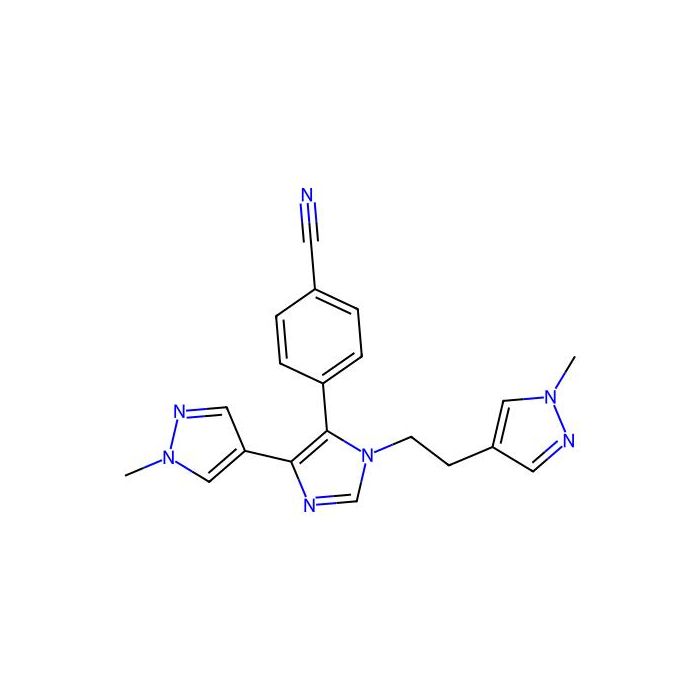
BAZ2-ICR is a potent, selective, cell active and orally active BAZ2A/B bromodomains inhibitor with IC 50 s of 130 nM and 180 nM, and K d s of 109 nM and 170 nM, respectively. BAZ2-ICR shows 10-15-fold selectivity for binding BAZ2A/B over CECR2 and >100-fold selectivity over all other bromodomains. BAZ2-ICR is an epigenetic chemical probe.
Specifications
Specifications & Purity
Moligand™, 10 mM in DMSO
Storage
Store at -80°C
Shipped In
Dry ice packs + Cold packs
This product requires cold chain shipping. Ground and other economy services are not available.
Determine the necessary mass, volume, or concentration for preparing a solution.
Dilution Calculator
Determine the dilution needed to prepare a stock solution.
Reconstitution Calculator
Reviews
Customer Reviews
Application Protocols
No manufacturer-tested application protocols are provided for this SKU. The following are general, non-item-specific guidelines for using small-molecule bromodomain ligands in assays.
Example workflow (general):
Stock preparation: Dissolve compound in anhydrous DMSO to prepare a concentrated master stock (e.g., 10 mM). Filter through 0.2 µm PTFE if particulate is observed. Record exact concentration by UV or quantitative NMR if needed.
Assay setup: Prepare serial dilutions (e.g., 10-point 3-fold) in DMSO. Transfer to assay buffer to achieve final assay concentrations while maintaining constant DMSO across all wells (commonly 0.1–1% v/v).
Incubation: Combine with protein/peptide tracer per platform (AlphaScreen/HTRF/FP) and incubate to equilibrium.
Readout: Measure signal and fit concentration–response using appropriate models; include vehicle and positive control wells.
Orthogonal confirmation: Validate hits with alternative readouts (ITC, DSF, BLI) and test selectivity against related bromodomains.
Notes:
Optimize buffer composition for protein stability and minimize aggregation (include low % detergent).
Avoid repeated freeze–thaw cycles of DMSO stocks; prepare aliquots for single use.
Adapt conditions to your specific assay platform and protein construct.
Biological Roles
Context (general, literature-based):
BAZ2A and BAZ2B are bromodomain-containing proteins that recognize acetyl-lysine marks on histones, contributing to chromatin remodeling and transcriptional regulation. Their bromodomains are “reader” modules that bind acetylated lysine motifs, often modulating nucleosome organization and gene accessibility.
Small-molecule ligands such as BAZ2-ICR are used to interrogate the functional consequences of bromodomain engagement, enabling studies of epigenetic signaling pathways and the roles of BAZ2 complexes in chromatin dynamics.
Typical research uses (non-clinical):
Probe the dependency of specific transcriptional programs on BAZ2 reader function.
Evaluate redundancy/selectivity between BAZ2A and BAZ2B using panel assays across bromodomains.
Combine with omics readouts (ChIP-seq for histone marks, RNA-seq for expression changes) to map downstream consequences of bromodomain occupancy.
Caveats:
Cellular phenotypes can reflect on-target and off-target activities; employ orthogonal validation (genetic knockdown/knockout, rescue constructs, or chemically distinct ligands).
Binding thermodynamics and kinetics can influence observed biology; corroborate with biophysical assays when possible.
Item-specific biological role data (target, potency, selectivity) are not provided for this SKU. Users should consult the primary literature and the item’s CoA/Spec Sheet for any available characterization details.
Buffer Applications
This product is a small-molecule ligand and is not a buffer component. However, buffers are integral to its use in biochemical assays. No item-specific buffer system is provided.
General buffer guidance for bromodomain binding assays:
Composition: HEPES or Tris (e.g., 10–50 mM), 100–150 mM NaCl, 0.01–0.05% non-ionic detergent (e.g., Tween-20) to reduce nonspecific adsorption/aggregation.
Additives: 1–2 mM DTT or TCEP if protein requires a reducing environment; confirm protein stability.
DMSO: maintain a constant final percentage across all wells (commonly 0.1–1% v/v) to match compound vehicle.
pH: near neutral (pH 7.4–7.5) is typical for bromodomain assays; verify protein stability range.
For fluorescence readouts, minimize buffer components that cause background fluorescence or inner-filter effects.
Preparation notes:
Filter (0.22 µm) and degas buffers to improve assay reproducibility.
Validate buffer composition by testing signal-to-background and protein stability over the assay window.
Refer to your assay platform’s recommended buffer recipes and adjust empirically for optimal performance.
Green Alternatives
As a screening ligand rather than a process solvent or reagent, green chemistry considerations center on solvent choices and assay design rather than replacing the molecule itself.
Greener handling strategies (general):
Prefer aqueous-buffered systems with minimal DMSO (≤0.5–1% v/v) while maintaining solubility and target engagement.
Miniaturize assays (384/1536-well formats) to reduce solvent consumption and waste.
Use solvent-efficient analytics (UPLC with short gradients) to minimize acetonitrile usage.
Solvent comparison (general guidance):
DMSO vs. alternatives for stock solutions:
DMSO: high solvency, widely accepted in bioassays; primary choice.
Ethanol: greener than DMF, but can disrupt proteins at modest levels; use sparingly.
Aqueous cosolvents (buffer + small % DMSO): often optimal compromise.
Waste reduction:
Pool replicate plates for single freeze–thaw of master stocks to extend shelf life and reduce discarded material.
Implement plate-sealing films to limit evaporation and VOC emissions.
Note: No item-specific alternative formulations are specified. Consult internal sustainability guidelines to select the lowest-impact solvent system compatible with your assay performance.
Pharmaceutical Uses
No pharmaceutical or clinical uses are claimed or supported for this product. It is supplied strictly for research use.
Context (general):
Small-molecule bromodomain ligands like BAZ2-ICR function as research tools in target validation and mechanism studies. In pharmaceutical R&D, such compounds may be used internally as reference ligands or positive controls in screening and SAR campaigns.
Formulation insights for research use: temporary laboratory formulations typically employ DMSO stocks that are diluted into assay media. These are not suitable for human or veterinary administration and are not produced under GMP.
Regulatory status:
No pharmacopeial monograph or excipient designation is provided for this item.
Not intended for any therapeutic, diagnostic, or in vivo clinical application.
If your workflow requires GMP-grade materials or reference standards, please source appropriate materials and specifications; this Moligand™ product is intended for discovery research only.
Physical Properties
Item-specific physicochemical data have not been provided for this catalog entry.
Appearance: Not specified for this item; refer to CoA/Spec Sheet.
Molecular Weight: Not specified for this item; refer to CoA/Spec Sheet.
Molecular Formula: Not specified for this item; refer to CoA/Spec Sheet.
Melting point, boiling point, density, refractive index: Not specified for this item; refer to CoA/Spec Sheet.
Partition coefficient (logP), pKa, aqueous solubility: Not specified for this item; refer to CoA/Spec Sheet.
Practical guidance (general, literature-based for small-molecule screening ligands):
Many bromodomain ligands are moderately lipophilic and are commonly handled as DMSO stock solutions (e.g., 10 mM) and subsequently diluted into assay buffers (with final DMSO ≤0.5–1% v/v to minimize assay interference). Verify this item’s solubility and stability experimentally.
If solid at room temperature, weigh quickly at ambient conditions and minimize exposure to moisture and light until dissolved. If supplied in solution, keep sealed and cold to limit freeze–thaw and oxidation.
Solubility optimization strategies (general): warm gentle sonication, serial dilution, or cosolvent blends (DMSO:H2O or DMSO:buffer). Avoid strong bases/acids unless stability is confirmed.
Always consult the item’s CoA/Spec Sheet and SDS for definitive, item-specific physical property data and handling limits.
Quality and Grades
Grade/Purity: Moligand™
What this indicates (general): Moligand™ denotes an in-house designation for research-grade, screening-quality small molecules suitable for biochemical or cell-based assay development and chemical biology. It emphasizes fitness for ligand discovery workflows rather than analytical reference standard certification.
Typical expectations for Moligand™ items (general guidance):
Supplied with identity confirmation (e.g., LC/MS, HRMS, or NMR) and purity supportive of screening assays. Exact test methods and purity thresholds are item-specific.
Low-level attributes such as residual solvents, water content, metal impurities, and UV cutoff are not specified here; consult the CoA/Spec Sheet for this item if such parameters are critical to your application.
For HTS/chemical probe work, users commonly prepare DMSO stocks and verify purity by in-house LC–UV/MS prior to screening cascades.
If required for quantitative bioanalysis or as an internal standard, consider performing orthogonal identity and purity checks (1H NMR, LC/MS, and qNMR) under your method conditions.
For authoritative item-specific specifications (e.g., purity %, analytical methods), please refer to the CoA/Spec Sheet associated with SKU B1498847.
Reaction and Applications
This item is a research ligand used predominantly in target engagement and screening assays rather than as a synthetic reagent. No manufacturer reaction applications are specified for this SKU.
Research applications (general for BAZ2-targeted ligands):
Biochemical assays: displacement or competition assays against acetyl-lysine peptide tracers in bromodomain binding platforms (e.g., AlphaScreen, HTRF, fluorescence polarization).
Cellular assays: assessment of chromatin engagement, transcriptional readouts, or CETSA/thermal profiling where permitted by solubility and permeability characteristics.
Target validation: chemical genetics approaches combining ligand exposure with genetic perturbation (siRNA/CRISPR) to probe BAZ2A/B function.
Assay development tips (general):
Titrate compound in serial dilutions from DMSO stocks, maintaining constant DMSO across wells.
Include counter-screens (unrelated bromodomains or off-targets) to assess selectivity profile.
Monitor aggregation artifacts: incorporate low non-ionic detergent and pre-filter stocks when feasible.
Validate activity by orthogonal methods (e.g., ITC, BLI, or DSF) if resources permit.
Note: For synthetic chemistry transformations, this item is not typically used as a reagent or building block. For chemical synthesis guidance, see the Synthetic Utility and Reaction Conditions sections (limited applicability here).
Reaction Conditions
Not typically applicable. BAZ2-ICR is supplied as a screening ligand rather than a reagent for chemical transformations, and no manufacturer reaction conditions are provided for this item.
If conducting biochemical or biophysical binding experiments (general guidance):
Temperature: ambient for many assay platforms; verify protein stability (some assays benefit from 20–25 °C).
Incubation time: allow sufficient equilibration (e.g., 15–60 min) for binding assays; optimize per readout.
Solvent: dilute from DMSO stocks into assay buffer with constant vehicle percentage across all samples.
Controls: include vehicle controls, positive control ligand (if available), and non-binding analogs for specificity assessment.
For chemical synthesis-oriented reaction conditions, this product is not intended for such use.
Safety and Handling
This product is intended for research use only. No clinical or diagnostic use.
Item-specific hazard data provided:
Signal Word: Not specified for this item; refer to SDS.
H-Statements: Not specified for this item; refer to SDS.
GHS Classification: Not specified for this item; refer to SDS.
Pictograms: Not specified for this item; refer to SDS.
General laboratory safety guidance for small-molecule screening ligands:
Personal protective equipment: lab coat, safety glasses, and suitable chemical-resistant gloves (e.g., nitrile). Handle powders or concentrated DMSO stocks in a fume hood to avoid inhalation and dermal exposure.
Avoid ingestion, inhalation of dust/aerosols, and contact with skin/eyes. Wash thoroughly after handling.
Storage incompatibilities: keep away from strong oxidizers and strong acids/bases unless compatibility is confirmed. Protect from light if the compound contains chromophores prone to photodegradation (typical for many heteroaromatics).
First aid (overview; consult SDS for details):
Inhalation: move to fresh air; seek medical attention if symptoms occur.
Skin contact: wash with soap and water; remove contaminated clothing.
Eye contact: rinse cautiously with water for several minutes; seek medical attention if irritation persists.
Ingestion: rinse mouth; do not induce vomiting unless directed by medical personnel.
Waste: dispose in accordance with institutional and local regulations for organic laboratory chemicals.
Always defer to the product’s SDS for authoritative hazard identification and protective measures.
Solvent Selection
Item-specific solubility data are not provided. The following guidance is general for small-molecule bromodomain ligands:
Primary stock solvent: DMSO is typically preferred due to broad solvating power and assay compatibility at low percentages.
Aqueous use: dilute DMSO stocks into buffered saline systems (e.g., HEPES or PBS) to a final DMSO fraction ≤0.5–1% v/v to minimize biological assay artifacts. Include matched vehicle controls.
Alternative solvents (if DMSO is restricted):
Water-miscible: DMF or ethanol (less common in biological assays; evaluate cytotoxicity/assay interference).
For chemical manipulations (if any): acetonitrile or methanol may be suitable for analytical sample prep.
Solubility troubleshooting:
Warm gently (≤37 °C) and sonicate to aid dissolution.
Use serial dilution from a higher-concentration DMSO master stock to avoid precipitation upon buffer addition.
Consider adding non-ionic surfactants (e.g., 0.01–0.05% Tween-20) in biochemical assays if permissible.
Comparison (general):
DMSO: highest likelihood of achieving mM stocks; best-in-class for screening workflows.
DMF: similar solvency but greater toxicity and hygroscopicity; less favored in bioassays.
Ethanol: acceptable for some targets but can perturb protein stability at higher percentages.
Always confirm this item’s solubility and stability empirically under your assay or analytical conditions.
Storage and Reconstitution
Item-specific conditions:
Storage Conditions: Store at −80 °C (as provided in Product Data).
General recommendations for small-molecule screening ligands:
Upon receipt: Keep frozen until use. Allow containers to equilibrate to room temperature in a desiccated environment before opening to minimize moisture condensation.
Aliquoting: If supplied as a solid, aliquot promptly and store in inert, moisture-tight vials. If supplied as a DMSO solution, aliquot into low-bind tubes to avoid repeated freeze–thaw.
Reconstitution: Dissolve in anhydrous DMSO to prepare a concentrated master stock. If aqueous stocks are required, confirm stability and solubility empirically.
Freeze–thaw: Minimize cycles; multiple small aliquots are preferred. Avoid frost-free freezers due to temperature cycling.
Light and air: Protect from light if the compound contains chromophores susceptible to photolysis; limit headspace oxygen for solutions by purging with inert gas if long-term storage is planned.
Stability checks: Periodically assess by LC–MS/LC–UV to confirm integrity during storage.
For exact solubility limits, stability windows, and any stabilizers/preservatives, refer to the item’s CoA/Spec Sheet and SDS.
Structure and Identity
Overview
BAZ2-ICR is a small-molecule tool compound widely referenced as a bromodomain ligand for the BAZ2 family in chemical biology screening collections.
Product identifiers (item-specific):
SKU: B1498847
Product Name: BAZ2-ICR
CAS: 1665195-94-7
PubChem CID: 91654625
Category: Small molecules and compound libraries (screening set)
Grade: Moligand™
Structural descriptors for this item:
Molecular Formula: Not specified for this item; refer to CoA/Spec Sheet.
Molecular Weight: Not specified for this item; refer to CoA/Spec Sheet.
SMILES: Not specified for this item; refer to CoA/Spec Sheet.
InChIKey: Not specified for this item; refer to CoA/Spec Sheet.
Structural features (general, literature context):
BAZ2-ICR is cited in the literature as a selective ligand for BAZ2A/B bromodomains (epigenetic readers of acetyl-lysine). Exact ring systems and substituent patterns should be confirmed from primary literature or the provided CoA/structure file for this catalog item.
2D structure (descriptive):
A heteroaromatic, drug-like small molecule typical of bromodomain ligands; often features H-bond acceptors/donors positioned to engage the conserved Asn in the acetyl-lysine pocket, plus hydrophobic/aromatic elements. For this item, consult the official structural file associated with the SKU for definitive depiction.
Synthetic Utility
This item is a finished small-molecule ligand intended for biological screening and is not typically used as a synthetic reagent or building block.
General considerations (if derivatization is contemplated by advanced users):
Without item-specific structure disclosed here, no guidance can be provided on functional group handles or diversification vectors. Consult the structural file/CoA for reactive moieties before planning semisynthesis or tagging (e.g., biotinylation, photoaffinity probes, or click handles).
If modifying the scaffold, assess impacts on bromodomain binding by maintaining key H-bonding motifs known to engage the conserved acetyl-lysine binding residues and hydrophobic shelf.
For routine organic synthesis applications, select reagents and building blocks purpose-built for those transformations; this SKU is not positioned for that role.
Target Specificity
Item-specific target data are not provided in the Product Data for SKU B1498847.
General context (informational):
The name BAZ2-ICR is commonly associated in the literature with ligands intended to engage BAZ2 family bromodomains (BAZ2A/BAZ2B). However, no binding constants, selectivity panels, or cellular target engagement data are specified for this catalog item.
For this item, please refer to the CoA/Spec Sheet for any available target profiling data. Users should independently confirm target specificity in their own assay systems via orthogonal methods (e.g., counter-screens against other bromodomains, biophysical binding measurements, and genetic controls).
Frequently Asked Questions
What is Moligand??
Moligand? is one of Aladdin Scientific's premium product lines, formulated for high-purity applications across multiple workflows. Compared to standard grades in the same workflow, Moligand? products typically offer tighter specifications, more rigorous QC, and stronger lot-to-lot consistency.
How should this product be stored?
Store at ?80 °C. Ultra-low temperature storage is required to maintain the specified shelf life.
How is this product shipped?
This product ships frozen with dry ice and cold packs. Unpack on arrival and transfer it to the storage condition stated above; handle dry ice with insulated gloves in a ventilated area.
What are the CAS number, molecular formula and molecular weight?
The CAS Number is 1665195-94-7, the molecular formula is C20H19N7, and the molecular weight is 357.41 g/mol.
What documentation is provided?
Available product documentation, including Certificates of Analysis (COA), Safety Data Sheets (SDS), and specification sheets, is shown in the product document area. Document availability and access follow the current site policy.
Need help choosing the grade?
Our grade selection guide covers purity, stabilizer status, and application suitability for all variants in our catalog.
We use cookies to ensure the website functions properly and, where permitted, to improve your experience. You can manage your preferences at any time in Settings. Learn more in our Cookie Policy.
Shall we send you a message when we have discounts available?
Remind me later
Thank you! Please check your email inbox to confirm.
Products are supplied to verified businesses, institutions, and qualified professionals for research and development use only. Not for use in humans, animals, diagnosis, or therapy.