GRADE & PURITYMoligand™?Moligand™ — Aladdin's line of ligands and bioactive small molecules. Use for receptor, pathway, and binding studies needing defined small-molecule tools.10 mM in DMSO
Moligand™, 10 mM in DMSO Moligand™ for sensitive chromatographic and analytical workflows requiring minimal baseline interference.
🌡
Storage & shipping
Store at -80°C Ships Dry ice packs + Cold packs Check lot-specific COA for exact specifications.
📋
Quality documents
SDS, COA, datasheet, and spec sheet available for download. Lot-specific COA accessible via lot number lookup.
📚
Literature proof
Cited in 0 peer-reviewed publications across chromatography, organic synthesis, and cross-coupling reactions.
Overview
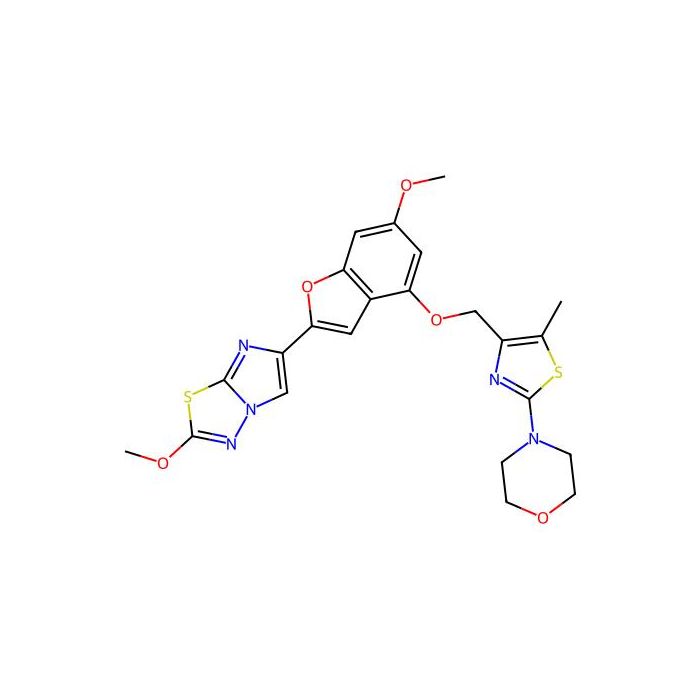
BMS-986120 is a first-in-class oral and reversible protease-activated receptor 4 ( PAR4 ) antagonist, with IC 50 s of 9.5 nM and 2.1 nM in human and monkey blood, respectively. BMS-986120 has potent and selective antiplatelet effects .
Specifications
Specifications & Purity
Moligand™, 10 mM in DMSO
Storage
Store at -80°C
Shipped In
Dry ice packs + Cold packs
This product requires cold chain shipping. Ground and other economy services are not available.
Determine the necessary mass, volume, or concentration for preparing a solution.
Dilution Calculator
Determine the dilution needed to prepare a stock solution.
Reconstitution Calculator
Reviews
Customer Reviews
Application Protocols
No item-specific, validated application protocols are supplied with this listing. The following high-level outlines are provided as general guidance only and must be optimized by the end user.
Example protocol outlines (general; research use only):
Platelet aggregation (ex vivo):
Prepare 10 mM DMSO stock; dilute into platelet-rich plasma to desired test concentrations, matching DMSO in vehicle control.
Pre-incubate 5–10 min at 37°C with stirring.
Stimulate with PAR4-activating peptide or low thrombin; measure light transmission over time.
Calcium mobilization (recombinant cells):
Load cells expressing human PAR4 with a Ca2+ indicator dye.
Pre-incubate with compound; challenge with PAR4 agonist; record fluorescence.
Flow cytometry activation markers:
Treat platelets or cells with compound, stimulate via PAR4, stain activation markers (e.g., P-selectin), and analyze.
Controls and QC:
Include vehicle controls, positive/negative pathway controls, and, where possible, orthogonal readouts.
Verify final DMSO concentration and absence of precipitate. Confirm compound integrity by LC–MS if exposure to ambient conditions was prolonged.
Users should consult primary literature for detailed conditions and adapt parameters to their instrumentation and biological system.
Biological Roles
General, literature-based overview (not item-specific claims):
Target: Protease-activated receptor 4 (PAR4; F2RL3), a thrombin-activated G-protein-coupled receptor implicated in platelet activation, vascular biology, and certain inflammatory pathways.
Mechanistic context: Thrombin cleaves the N-terminus of PARs to reveal a tethered ligand that activates the receptor. PAR4 couples to Gq/11 pathways, leading to PLC activation, IP3-mediated Ca2+ release, integrin activation, and platelet shape change/aggregation.
Role of antagonists: PAR4 antagonists such as BMS-986120 are used to dissect PAR4-specific contributions relative to PAR1, to study platelet reactivity, and to explore hemostasis biology in vitro and in ex vivo human samples.
Selectivity considerations: Literature reports emphasize selectivity versus PAR1 and minimal off-target effects within common GPCR panels, though selectivity should always be verified for the specific lot and under the exact assay conditions employed.
Experimental implications:
In platelets, PAR4 blockade diminishes thrombin- or PAR4-activating peptide-induced aggregation, providing a tool to parse signaling nodes downstream of Gq.
In non-platelet systems expressing PAR4, antagonists can help map receptor localization, trafficking, desensitization, and biased signaling.
Important: All statements above summarize general scientific literature. For this catalog item, no potency, selectivity, or activity specifications are provided; consult the CoA and primary references for quantitative parameters.
Buffer Applications
This product is a bioactive small-molecule ligand rather than a buffering agent. It is not used to establish or maintain pH.
Practical notes for assay buffers (general guidance):
When preparing working solutions, add concentrated DMSO stocks of the ligand to pre-warmed buffer or media with rapid mixing to reduce precipitation.
Common assay matrices include HEPES- or phosphate-buffered saline for biochemical assays and serum-containing media for cell-based or platelet assays. Confirm that the final DMSO concentration is tolerated by the system under study.
For pH control, choose conventional biological buffers (e.g., HEPES pH 7.2–7.6, phosphate pH 7.0–7.4, or bicarbonate/CO2 systems) as appropriate for your assay. This product does not provide buffering capacity.
Green Alternatives
Because BMS-986120 is a specific bioactive ligand rather than a commodity reagent or solvent, “green alternative” selection focuses on greener handling and formulation strategies rather than substituting the active itself.
Greener handling strategies (general):
Solvent minimization: Use the highest practicable stock concentration in DMSO to reduce total solvent volumes in assays, keeping final v/v within tolerated limits.
Safer solvents for cleaning: Prefer aqueous detergents or ethanol over chlorinated solvents for bench cleanup where feasible.
Waste reduction: Plan experiments to minimize excess thawed aliquots; prepare single-use aliquots to avoid repeated freeze–thaw cycles and disposal of partially degraded material.
Energy efficiency: Consolidate weighing and aliquoting sessions to limit freezer door-open times and maintain -80°C efficiency.
Comparison table (general, for dissolution workflows):
DMSO: High solvency, low volatility, broadly accepted in bioassays; moderate environmental burden—use minimal volumes.
Ethanol: Renewable feedstock, lower toxicity but lower solvency for many heteroaromatic ligands; may perturb cells at comparable v/v.
Aqueous buffers with cosolvent: Environmentally preferable but require compatibility testing to prevent precipitation.
Note: There is no direct “green substitute” for the ligand without altering biological activity. Sustainability gains are best achieved by optimizing solvent usage, aliquoting strategy, and cold-chain logistics.
Pharmaceutical Uses
Formulation/analytical context (general; research only, no medical claims):
BMS-986120 is commonly used as a reference ligand/standard in discovery biology to benchmark PAR4 pathway modulation. In research settings, it may be formulated into DMSO stocks for in vitro assays or transient vehicle-based dosing for preclinical studies conducted under institutional approvals.
As a small-molecule tool compound, it can support method development for LC–MS bioanalysis (e.g., calibration standards, recovery and stability assessments) when authentic standards and validated methods are available.
Excipients: For in vivo exploratory work, co-solvent systems (e.g., PEG400/EtOH/saline) are sometimes used in the literature for similar molecules; however, no item-specific vehicle recommendations or stability data are provided here. Verify compatibility and stability empirically.
Regulatory status: This catalog item is supplied strictly for research use only and is not intended for human or veterinary use, diagnostic procedures, or as an active pharmaceutical ingredient.
Important: No pharmacopeial monograph, dosage form, or GMP status is provided for this item. Any formulation or analytical method must be developed and validated by the end user according to institutional and regulatory requirements.
Physical Properties
Item-specific physico-chemical data are not provided in this listing.
Appearance: Not specified for this item; refer to CoA/Spec Sheet.
Molecular weight: Not specified for this item; refer to CoA/Spec Sheet.
Molecular formula: Not specified for this item; refer to CoA/Spec Sheet.
Melting point: Not specified for this item; refer to CoA/Spec Sheet.
Boiling point: Not applicable/unknown for a complex bioactive small molecule; refer to CoA/Spec Sheet if provided.
Density: Not specified for this item; refer to CoA/Spec Sheet.
LogP, pKa, refractive index: Not specified for this item; refer to CoA/Spec Sheet.
Solubility: Not specified for this item; refer to CoA/Spec Sheet.
General laboratory guidance (literature/practice; not item-specific):
Bioactive, lipophilic ligands of class A GPCRs are commonly soluble in DMSO at 10–50 mM for stock solutions; aqueous solubility varies widely and may require co-solvent or surfactant systems for cell assays.
If the compound is provided as a free base or neutral form, aqueous solubility may be limited; salt formation can sometimes improve dissolution. Confirm identity and counterion form from the CoA.
Hygroscopicity/polymorphism can influence handling and assay reproducibility; check the CoA for any relevant notes.
Important: Do not treat the general guidance above as specifications. For quantitative work (e.g., dosing solutions, in vitro potency curves), confirm all numerical values directly from the item’s CoA/Spec Sheet or by in-house measurement.
Quality and Grades
Grade/Purity: Moligand™
What Moligand™ indicates (general program description):
Moligand™ designates bioactive small-molecule ligands curated for target engagement studies, chemical biology, and screening. Products in this grade prioritize identity confirmation and suitability for mechanism-of-action work. Exact acceptance criteria (e.g., NMR/LC–MS purity thresholds, residual solvent limits) are defined per item and lot; consult the CoA/Spec Sheet.
Item-specific notes:
For BMS-986120 (SKU B1498942), item-specific purity, residual solvents, salt/counterion form, and water/peroxide/metal content are Not specified for this item; refer to CoA/Spec Sheet.
UV cutoff, HPLC trace, and chromatographic method parameters are Not specified for this item; refer to CoA/Spec Sheet.
Implications for use:
Moligand™ materials are intended for research use only, including target validation, pathway interrogation, and in vitro/in vivo exploratory pharmacology under institutional oversight.
If low-UV background or LC–MS compatibility is critical, verify the actual chromatographic profile from the CoA before use in analytical workflows.
Documentation and traceability:
Each lot should be accompanied by a CoA detailing identity confirmation (e.g., LC–MS, NMR) and purity assessment. Retain lot numbers in ELNs to ensure data traceability across experiments.
Reaction and Applications
This product is supplied as a bioactive small-molecule ligand and is not primarily intended as a synthetic reagent. Consequently, classical synthetic reaction applications (e.g., cross-couplings, Grignard, oxidations) are typically not relevant.
Research applications (literature/general; not item-specific claims):
BMS-986120 is described in the scientific literature as a potent, selective antagonist of protease-activated receptor 4 (PAR4), a thrombin-activated GPCR expressed on human platelets and other cell types. It has been used to probe PAR4-mediated platelet activation, calcium signaling, and integrin inside-out signaling in vitro.
Typical laboratory uses include: establishing concentration–response curves in platelet-rich plasma, assessing pathway selectivity versus PAR1, and evaluating synergy/orthogonality with P2Y12 inhibitors in ex vivo assays. Use conditions, potency, and selectivity should be verified against primary publications and the item’s CoA.
Practical tips (general):
Prepare fresh DMSO stocks and minimize freeze–thaw cycles. During dilutions into aqueous buffers or plasma, add compound last with vigorous mixing to avoid localized supersaturation.
Include vehicle controls matched for DMSO content. Confirm target engagement by orthogonal readouts (aggregation, flow cytometry activation markers, or intracellular Ca2+ imaging) as appropriate.
Note: All usage is for research purposes only. This product is not intended for diagnostic, therapeutic, or clinical use.
Reaction Conditions
Not typically applicable. BMS-986120 is provided as a bioactive ligand for biological assays, not as a reagent for chemical transformations.
General handling conditions for assay preparation (literature/practice; not item-specific):
Stock solutions: Commonly prepared at 10–50 mM in anhydrous DMSO. Filter sterilize (0.22 µm) if required by the assay format and if compatible with the compound.
Working concentrations: Determined empirically from potency curves; maintain consistent vehicle (e.g., 0.1% DMSO) across controls and treated groups.
Temperature and light: Prepare and handle at ambient temperature; protect from excessive light and moisture if degradation is suspected. Return aliquots quickly to -80°C after use.
Stability checks: Confirm concentration and integrity by LC–UV/LC–MS as needed, especially after multiple thaw events.
For classical chemical reactions (e.g., couplings, reductions), no recommended conditions are provided for this product.
Safety and Handling
Hazard classification for this specific item is not supplied in the listing.
Signal word (GHS): Not specified for this item; refer to SDS.
H-statements: Not specified for this item; refer to SDS.
GHS classification/pictograms: Not specified for this item; refer to SDS.
General laboratory precautions (good practice; not item-specific):
Handle in a fume hood or well-ventilated area to avoid inhalation of dust or aerosols. Avoid skin/eye contact.
Recommended PPE: lab coat, safety glasses, and appropriate chemical-resistant gloves. Use a particulate mask when weighing fine powders.
Avoid incompatible materials typical for organic small molecules: strong oxidizers, strong acids/bases (if functional groups are base/acid sensitive), and reactive acylating/alkylating agents. Consult SDS once available.
First aid overview: In case of contact, rinse affected area with water for at least 15 minutes and remove contaminated clothing; seek medical attention if irritation persists. If inhaled, move to fresh air. If ingested, rinse mouth and seek medical attention. Do not induce vomiting unless directed by medical personnel.
Environmental/housekeeping: Prevent release to drains; collect spills with inert absorbent and dispose per institutional chemical waste procedures.
Authoritative safety information is provided solely by the Safety Data Sheet (SDS). Always review the SDS for this specific lot prior to first use.
Solvent Selection
Item-specific solubility data are not provided in this listing; confirm with the CoA or by pilot dissolution tests.
General guidance for bioactive small molecules (literature/practice):
Primary solvent: DMSO is typically preferred for preparing concentrated stocks (e.g., 10 mM) owing to broad solubilizing power and compatibility with biochemical and cell-based assays at ≤0.1–0.5% v/v final.
Alternative co-solvents: DMF or ethanol can be used for intermediate stocks; water-miscible cosolvent systems (DMSO/water or ethanol/water) may aid dilution to assay media. Use surfactants (e.g., 0.01–0.1% Tween-80) cautiously if precipitation occurs.
Buffer considerations: Maintain final DMSO below the assay’s tolerated threshold (commonly ≤0.1–0.5% for sensitive cells; verify per assay). Warm gently and vortex/sonicate to assist dissolution; filter through 0.22 µm if particulates persist.
Comparison (general):
DMSO vs ethanol: DMSO offers higher solvency for polar and nonpolar features, with lower volatility; ethanol is more volatile and may affect membrane integrity at similar v/v.
DMSO vs DMF: Both are strong solvents; DMSO is generally preferred for bioassays due to lower cytotoxicity at matched concentrations.
Cautions:
Avoid adsorption losses by minimizing plastic contact time; use glass vials for concentrated stocks.
Protect solutions from moisture and light as applicable; verify stability and concentration periodically by LC–UV/LC–MS.
Storage and Reconstitution
Item-specific conditions:
Storage: Store at -80°C (per product listing).
Shipping: Shipped on dry ice packs + cold packs.
Appearance: Not specified for this item; refer to CoA/Spec Sheet.
General reconstitution guidance (not item-specific specifications):
Upon receipt, allow the sealed container to equilibrate to room temperature in a desiccator before opening to avoid moisture condensation on the solid.
Prepare a concentrated stock in anhydrous DMSO (e.g., 10–50 mM) unless the CoA provides alternative instructions. Vortex and, if necessary, sonicate briefly to aid dissolution. Filter through 0.22 µm only if compatible.
Aliquot into low-bind, airtight microvials to create single-use portions; flush headspace with dry inert gas if available. Label with concentration, solvent, and date.
Storage of solutions: For maximal stability, keep aliquots at -80°C, protected from light and moisture. Avoid repeated freeze–thaw cycles; thaw on ice and return unused portions promptly.
Stability: No item-specific shelf-life or solution stability data are provided; verify integrity periodically by LC–MS or analytical HPLC.
Disposal: Dispose of unused solutions and materials as organic chemical waste according to institutional and local regulations.
Research Use Only: This material is intended solely for laboratory research.
Structure and Identity
Short description: BMS-986120 is a research-grade small molecule (Moligand™ grade) supplied for target- and pathway-focused biology. Item-specific identifiers included below.
Product name: BMS-986120 (SKU: B1498942)
CAS: 1478712-37-6
PubChem CID: 72190270
Molecular formula: Not specified for this item; refer to CoA/Spec Sheet.
Molecular weight: Not specified for this item; refer to CoA/Spec Sheet.
SMILES: Not specified for this item; refer to CoA/Spec Sheet.
InChIKey: Not specified for this item; refer to CoA/Spec Sheet.
Structural features (general, literature):
BMS-986120 is reported in the literature as a selective, small-molecule antagonist of a thrombin-activated GPCR (PAR4). It is typically a heteroaromatic, drug-like scaffold with polar functionality to balance lipophilicity and enable high-affinity receptor binding. Exact stereochemistry and substitution pattern should be confirmed against the Certificate of Analysis (CoA) for this lot.
2D structure description (general):
The scaffold is described in the medicinal chemistry literature as a compact, multi-ring structure with heteroatoms enabling hydrogen-bonding interactions within the GPCR binding pocket. Without an item-specific structure record in this listing, users should consult primary literature or the CoA for definitive atom connectivity and stereochemical annotations.
Notes:
Where structure identifiers are absent above, they are intentionally left unspecified for this catalog item and should be verified from the CoA/Spec Sheet prior to use in informatics pipelines or quantitative modeling.
Synthetic Utility
This product is a finished bioactive small molecule and is not typically employed as a synthetic building block.
Context (general):
Complex ligands optimized for GPCR activity generally possess multiple functional groups and stereochemical features that make them poor “handles” for downstream transformations without loss of activity or significant synthetic effort.
If analog generation is desired, de novo synthesis following medicinal chemistry routes from the literature is the standard approach rather than derivatization of the final tool compound.
When might limited derivatization be considered? (general)
Biotinylation/fluorophore tagging for target engagement assays may be explored via known exit vectors if structure–activity relationships identify peripheral positions tolerant to substitution. Such modifications require bespoke synthesis; this catalog item is not supplied with reactive handles or click-ready tags unless explicitly stated in the CoA/specs (not specified here).
Bottom line:
Use this item as a reference ligand or control in biological assays. For synthetic campaigns, consult primary medicinal chemistry literature for routes to the core scaffold and analogs rather than attempting to repurpose this product as a reagent.
Target Specificity
Item-specific target annotations are not provided in this listing.
Literature context (for user orientation; not item-specific claims):
Selectivity: Publications describe high selectivity versus PAR1 and limited off-target activity across selected receptor panels, but quantitative Ki/IC50 values and counterscreening panels vary by study and conditions.
Species: Activity has been studied in human-derived platelets and recombinant systems; cross-species pharmacology should be confirmed experimentally.
Verification:
Users should confirm target engagement, functional antagonism, and off-target profiles for their specific lot and assay via primary literature and in-house validation. No target, potency, or selectivity specifications are asserted for this catalog item.
Frequently Asked Questions
How should this product be stored?
Store at ?80 °C. Ultra-low temperature storage is required to maintain the specified shelf life.
What is Moligand??
Moligand? is one of Aladdin Scientific's premium product lines, formulated for high-purity applications across multiple workflows. Compared to standard grades in the same workflow, Moligand? products typically offer tighter specifications, more rigorous QC, and stronger lot-to-lot consistency.
How is this product shipped?
This product ships frozen with dry ice and cold packs. Unpack on arrival and transfer it to the storage condition stated above; handle dry ice with insulated gloves in a ventilated area.
What are the CAS number, molecular formula and molecular weight?
The CAS Number is 1478712-37-6, the molecular formula is C23H23N5O5S2, and the molecular weight is 513.59 g/mol.
What documentation is provided?
Available product documentation, including Certificates of Analysis (COA), Safety Data Sheets (SDS), and specification sheets, is shown in the product document area. Document availability and access follow the current site policy.
Need help choosing the grade?
Our grade selection guide covers purity, stabilizer status, and application suitability for all variants in our catalog.
We use cookies to ensure the website functions properly and, where permitted, to improve your experience. You can manage your preferences at any time in Settings. Learn more in our Cookie Policy.
Shall we send you a message when we have discounts available?
Remind me later
Thank you! Please check your email inbox to confirm.
Products are supplied to verified businesses, institutions, and qualified professionals for research and development use only. Not for use in humans, animals, diagnosis, or therapy.