Caveolin-1 Mouse mAb - Primary antibody, specific to Caveolin-1, Mouse IgG1

Cat. No.: Ab192266
AVAILABLE TO ORDER
GRADE & PURITY Carrier Free ? Carrier-free — supplied without added carrier protein/stabilizer. Use when carriers (e.g. BSA) would interfere with conjugation or sensitive assays. ExactAb™ ? ExactAb™ — Aladdin's antibody line emphasizing precision and validated quality. Use for reliable, specificity-validated antibody applications. Azide Free ? Azide-free — without sodium azide preservative. Use in conjugations, cell work, or assays where azide is toxic or inhibitory. Validated ? Validated grade — performance confirmed in defined applications before release. Use when you want documented assurance the reagent works as stated. High Performance ? High-performance grade with optimized purity and performance characteristics. Use for sensitive analyses where ordinary grades fall short. PBS Only ? PBS-only formulation — supplied in phosphate-buffered saline with no other additives. Use when you need a clean PBS buffer free of stabilizers/carriers. ≥95%(SDS-PAGE) 1.0 mg/mL
Application
Flow Cytometry, WB
Host species
Mouse
Reactive species
Human, Rat
Isotype
Mouse IgG1
Clone Number
CD02/2C9
Conjugation
Unconjugated
★
Size
Germany (EU)
USA*
Price
Qty
10μl
Ab192266-10μl
—
2 In stock
€86.69
50μl
Ab192266-50μl
—
2 In stock
€225.53
100μl
Ab192266-100μl
Made to order · 8–12 wks
€364.36
1ml
Ab192266-1ml
Made to order · 8–12 wks
€2,950.23
Enter a quantity for the sizes you want to add.
🧪
Why this grade

Carrier Free,ExactAb™,Azide Free,Validated,High Performance,PBS Only,≥95%(SDS-PAGE),1.0 mg/mL Azide Free,Carrier Free,ExactAb™,High Performance,PBS Only,Validated for sensitive chromatographic and analytical workflows requiring minimal baseline interference.

🌡

Storage & shipping

Store at -20°C,Avoid repeated freezing and thawing Ships Ice chest + Ice pads Check lot-specific COA for exact specifications.

📋

Quality documents

SDS, COA, datasheet, and spec sheet available for download. Lot-specific COA accessible via lot number lookup.

📚

Literature proof

Cited in 0 peer-reviewed publications across chromatography, organic synthesis, and cross-coupling reactions.

Overview

Mouse anti Human Caveolin-1 Antibody, clone CD02/2C9, could be used for WB, Flow cytometry, ELISA and so on.

Specifications

Product Name
Caveolin-1 Mouse mAb - Primary antibody, specific to Caveolin-1, Mouse IgG1
Synonyms
BSCL3 antibody | CAV antibody | CAV1 antibody | CAV1_HUMAN antibody | caveolae protein, 22 kD antibody | caveolin 1 alpha isoform antibody | caveolin 1 beta isoform antibody | Caveolin 1 caveolae protein 22kDa antibody | Caveolin-1 antibody | Caveolin1 an
Specifications & Purity
Carrier Free,ExactAb™,Azide Free,Validated,High Performance,PBS Only,≥95%(SDS-PAGE),1.0 mg/mL
Biochemical and Physiological Mechanisms
May act as a scaffolding protein within caveolar membranes. Interacts directly with G-protein alpha subunits and can functionally regulate their activity (By similarity). Involved in the costimulatory signal essential for T-cell receptor (TCR)-mediated T-
Host species
Mouse
Specificity
Caveolin-1
Immunogen
Recombinant protein corresponding to Human Caveolin-1
Positive Control
WB: HUVEC, C6 and NIH/3T3 whole cell lysates Flow: HeLa cells
Conjugation
Unconjugated
Grade
Azide Free, Carrier Free, ExactAb™, High Performance, PBS Only, Validated
Isotype
Mouse IgG1
Light Chain Type
kappa
SDS-PAGE
150.0 KDa
Purification Method
Protein A purified
Concentration
1.0 mg/mL
Product Line
biological_products
Storage and Shipping
Storage
Store at -20°C,Avoid repeated freezing and thawing
Shipped In
Ice chest + Ice pads
Stability And Storage
Store at 4°C short term (1-2 weeks). Store at -20°C or -80°C. Avoid freeze / thaw cycle.
Images

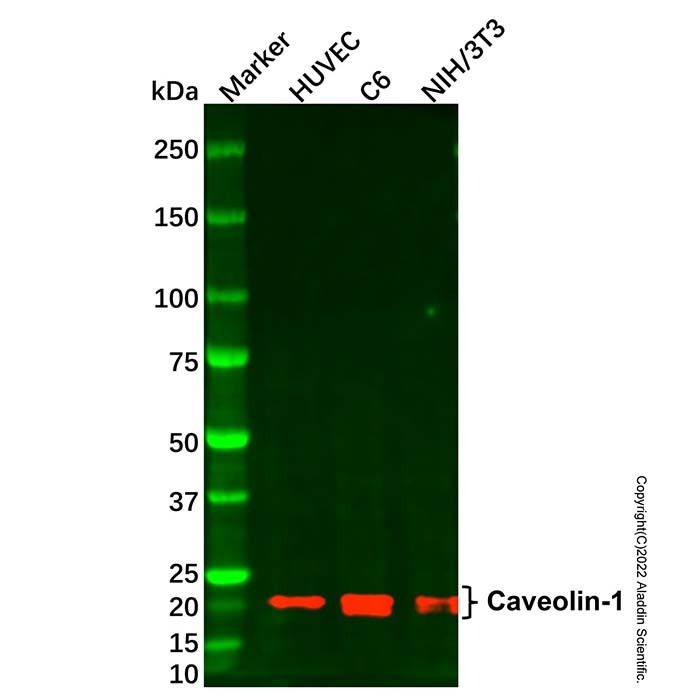
Caveolin-1 Mouse mAb (Ab192266) - Western Blot
All lanes: Caveolin-1 Mouse Antibody (Ab192266) at 1/10000 dilution
Samples: Lysates at 20 µg per lane
Secondary: Goat Anti-Mouse IgG H&L (HRP) (Ab179001) at 1/20000 dilution

Predicted band size: 20 kDa
Observed band size: 19, 21 kDa
Exposure time: 30.0 s 

Caveolin-1 Mouse mAb (Ab192266) - Flow Cytometry
Flow Cytometry analysis of HeLa cells stained with Caveolin-1 Mouse mAb (Ab192266) (Red) at 5 μg/mL for 1 hour at 4°C. Cells were fixed and permeabilized with 100% methanol. The Goat Anti-Mouse IgG H&L (PE) (Ab179006) was used as the secondary antibody. Unlabeled sample (Black) was used as a negative control. The mouse IgG1 was used as an isotype control (Blue).

Application
Application
Dilution info
Flow Cytometry

1/200 - 1/3,000

WB

1/2,000 – 1/100,000; Predicted molecular weight: 20.5 KDa

Documentation

📋 Safety Data Sheet (SDS)

Comprehensive hazard, handling, storage, and regulatory compliance document.

Download SDS →

✅ Certificate of Analysis (COA)

Lot-specific quality data. Enter your lot number to retrieve the exact COA.

Look up COA →

📊 Datasheet

Quick-reference summary of product specifications and applications.

View datasheet →

🔬 Specification Sheet

Full quality attributes and acceptance criteria for this grade.

View spec sheet →

Advanced Data

Associated Targets(Human)
CAV1 Tbio Caveolin-1 (0 Activities)
Activity TypeActivity Value -log(M)Mechanism of ActionActivity ReferencePublications (PubMed IDs)
Mechanisms of Action
Certificates(CoA,COO,BSE/TSE and Analysis Chart)
C of A & Other Certificates(BSE/TSE, COO):
Analytical Chart:

Find and download the COA for your product by matching the lot number on the packaging.

3 results found

Lot NumberCertificate TypeDateItem
ZJ24F0911448Certificate of AnalysisJul 14, 2026 Ab192266
ZJ24F0911449Certificate of AnalysisJul 14, 2026 Ab192266
ZJ24F0911450Certificate of AnalysisJul 14, 2026 Ab192266
FAQs and Articles
Solution Calculators
Reviews

Customer Reviews

Application Protocols

Tested applications, recommended dilutions, incubation conditions, antigen retrieval, and positive controls are not specified for this item; refer to CoA/Spec Sheet.

General guidance (literature; not validated for this item)

  • Western blot: Load 10–30 µg total protein/lane; transfer to PVDF; block 5% milk/BSA; primary incubation 1–16 h at 4–25°C; HRP-conjugated secondary with chemiluminescent detection. Optimize detergent and loading for membrane proteins.
  • Immunofluorescence/IHC: Fix with 4% paraformaldehyde; permeabilize (e.g., 0.1–0.3% Triton X-100 or saponin); block with serum/BSA; primary 1–16 h; appropriate fluorophore-labeled secondary. For IHC, consider heat-induced epitope retrieval depending on fixation.
  • Immunoprecipitation: Lyse with mild nonionic detergents; incubate antibody with lysate 1–2 h at 4°C; capture with Protein A/G beads; wash and elute under denaturing or low-pH conditions.
  • Flow cytometry (permeabilized): Fix/permeabilize cells; stain with primary followed by fluorophore secondary; include isotype controls.

Because this item is carrier-free and azide-free in PBS, users may add their preferred blocking/stabilizing agents. Always perform pilot titrations to determine optimal conditions for your samples.

Biological Roles

Caveolin-1 (CAV1) is a key structural component of caveolae—flask-shaped invaginations in the plasma membrane found in many cell types, especially endothelial cells, adipocytes, and fibroblasts.

  • Core functions (literature)

    • Scaffolding protein: CAV1’s caveolin scaffolding domain (CSD) binds and organizes signaling molecules, modulating pathways including Src family kinases, G-protein signaling, and eNOS activity.
    • Membrane organization: Interacts with cholesterol and sphingolipids to establish caveolar microdomains, influencing membrane curvature and endocytic processes (caveolae-mediated endocytosis and mechanotransduction).
    • Trafficking and lipid homeostasis: Involved in cholesterol transport and lipid droplet interactions.
    • Mechanobiology: Caveolae buffer membrane tension; CAV1 levels affect cellular response to mechanical stress.
  • Research significance (literature)

    • Marker for caveolae abundance and plasma membrane microdomain composition.
    • Used to study endothelial signaling, nitric oxide regulation, TGF-β signaling modulation, and integrin-mediated adhesion.
    • Dysregulated expression has been reported in various model systems of fibrosis, metabolic regulation, and tumor biology; researchers use anti-CAV1 antibodies to profile expression and to dissect signaling topology in cells and tissues.

Note: The above describes the biology of the target protein, not properties or performance of this specific item.

Buffer Applications

This product is an antibody reagent supplied in PBS only; it is not itself a buffering agent. Accordingly, buffer formulation discussions are limited to practical use with immunoassays.

  • Practical notes (general)
    • Working buffer: Sterile PBS or TBS with 0.05% Tween-20 can reduce nonspecific binding in wash steps for WB/ELISA/IHC.
    • Blocking buffers: 1–5% BSA, milk, or serum can be selected based on assay and secondary antibody. Because this item is carrier-free, you can choose the blocker without interference from formulation proteins.
    • pH range: Most IgG-based assays operate near pH 7.2–7.6. Avoid extreme pH during handling.

Item-specific buffer composition (pH, salt, surfactant) is not specified for this item; refer to CoA/Spec Sheet.

Green Alternatives

Antibody use is largely aqueous and low-solvent intensity. Sustainability considerations focus on buffer selection, preservative strategy, and cold-chain efficiency.

  • Greener choices and tradeoffs (general)

    • Preservatives: This item is azide-free, which is favorable for downstream enzymatic assays and eliminates azide disposal concerns; however, azide-free requires stricter aseptic handling to prevent microbial growth.
    • Buffer systems: PBS is widely available and benign; using ready-to-use sterile PBS minimizes chemical waste versus custom buffer blending.
    • Cold storage: Consolidate shipments and maintain stable −20°C storage to reduce product loss and reorders.
  • Comparison (general guidance)

    • PBS (this item): Physiologic, broad assay compatibility, minimal environmental impact; requires asepsis without azide.
    • TBS: Similar profile; avoids phosphates in processes where phosphate interferes.
    • Glycerol additions: Enable −20°C storage without freezing, reducing freeze–thaw; glycerol is low-toxicity but increases wastewater COD—use minimal effective amounts.
  • Packaging and handling tips

    • Aliquot to reduce waste from freeze–thaw damage.
    • Use sterile, reusable cold packs for short transports within facility.
    • Plan experiments to minimize antibody overuse; titrate to the lowest effective working dilution.
Pharmaceutical Uses

This product is for research use only and is not intended for diagnostic or therapeutic applications.

  • Relevant roles in a pharma R&D context (general)
    • Reference reagent: Anti–Caveolin-1 antibodies are used as controls in process development, characterization of cell lines (e.g., endothelial or fibroblast lines), and in mechanism-of-action studies for modulators of membrane signaling.
    • Assay development: Utilized in biomarker method development for nonclinical models (e.g., WB/IHC/IF assays). Any clinical use would require separate validation and regulatory compliance not covered by this product.
    • Conjugation starting material: Carrier-free, azide-free format is suitable for preparing custom conjugates (e.g., HRP, AP, fluorophores, or biotin) for preclinical assay workflows.

No pharmacopeial monograph or clinical-grade specification is provided for this item. For GMP or diagnostic use, obtain appropriate grade and documentation; this catalog item is research-grade.

Physical Properties
  • Item-specific specifications

    • Appearance: Not specified for this item; refer to CoA/Spec Sheet.
    • Concentration: Not specified for this item; refer to CoA/Spec Sheet.
    • Buffer: PBS only (per Product Data). No carrier proteins; azide-free.
    • Molecular weight: Not specified for this item; refer to CoA/Spec Sheet.
  • General/literature values for monoclonal IgG (for planning only; not product specifications)

    • Approximate MW: ~150 kDa for full-length IgG; can vary with glycosylation and isotype.
    • Isoelectric point (pI): Typically ~6–9 depending on sequence/glycoform.
    • Solubility: Readily soluble in common physiological buffers (PBS, TBS) at pH ~7.2–7.6.
    • Stability: Sensitive to repeated freeze–thaw; improved by aliquoting and storage at ≤−20°C.
    • UV absorbance: A280 ~1.35–1.6 AU for 1 mg/mL IgG (extinction coefficient varies by sequence/glycosylation).
  • Practical notes

    • Because this item is carrier-free and azide-free in PBS, microbial control relies on aseptic handling and cold storage. Users may add sterile glycerol (e.g., 40–50% v/v) to working aliquots for −20°C storage to reduce freeze–thaw, if compatible with downstream use.
    • For quantitation, determine concentration by A280 using the item-specific extinction coefficient if provided; otherwise, use an empirically determined value for your lot.
Quality and Grades
  • Item-specific quality designations (from Product Data) and implications

    • Carrier Free: Formulated without protein carriers (e.g., BSA, gelatin). Advantages: clean background for downstream conjugation (NHS/maleimide), cell-based assays, mass spec. Consider adding your own stabilizer to aliquots if needed.
    • Azide Free: No sodium azide preservative. Advantages: compatible with live cells, enzyme-based detection systems, and conjugation chemistries. Consider sterile technique and cold storage to minimize bioburden.
    • PBS Only: The antibody is in phosphate-buffered saline without other excipients. Buffer composition details (pH, ionic strength) are not specified for this item; refer to CoA/Spec Sheet.
    • ExactAb™: Denotes high-accuracy recombinant or well-characterized monoclonal production and/or standardization (general meaning); consult CoA for lot-specific performance metrics.
    • Validated; High Performance: Indicates in-house verification of performance metrics. Specific validated applications, species reactivity, clone, and titers are not specified for this item; refer to CoA/Spec Sheet.
  • What this means practically

    • Ideal for custom labeling (fluorophores, enzymes, biotin) and functional assays that are sensitive to carriers or azide.
    • Because stabilizers are absent, handle gently, avoid surfactant-free foaming, and aliquot to minimize freeze–thaw.
  • Documentation

    • For item-specific purity, isotype, concentration, residual host cell proteins/DNA (if applicable), endotoxin levels, and validated applications: Not specified for this item; refer to CoA/Spec Sheet.
Reaction and Applications

As an antibody reagent, this product is used in bioanalytical binding applications rather than chemical synthesis reactions.

  • Typical applications for anti–Caveolin-1 antibodies (literature; not item-specific validation)

    • Western blotting to detect CAV1 in membrane fractions or whole-cell lysates.
    • Immunofluorescence/confocal microscopy to visualize caveolae-rich plasma membrane domains.
    • Immunohistochemistry on fixed tissues to assess stromal and epithelial expression patterns.
    • Flow cytometry (permeabilized cells) for intracellular CAV1 quantification.
    • Immunoprecipitation/co-IP to study CAV1-associated complexes (e.g., Src family kinases, eNOS, G-proteins) under defined lysis conditions.
  • Practical tips (general)

    • Caveolin-1 is a membrane/scaffolding protein; efficient solubilization often benefits from mild nonionic detergents (e.g., 0.5–1% Triton X-100 or NP-40) for WB/IP; harsher detergents may disrupt complexes.
    • For microscopy, fixation with paraformaldehyde and permeabilization with saponin or Triton X-100 can improve intracellular epitope access; optimize to preserve caveolae structure.
    • Block with protein (serum/BSA) matched to secondary antibody host to minimize background; this item’s carrier-free status allows you to choose the blocker without interference.
  • Important note

    • Specific tested applications, recommended dilutions, clone, isotype, and species cross-reactivity are not specified for this item; consult the CoA/Spec Sheet and perform in-house optimization.
Reaction Conditions

For this antibody, “reaction conditions” pertain to common bioconjugation and assay setup parameters. The following are general literature guidelines and not item-specific specifications.

  • NHS-ester labeling (amines)

    • Buffer: Amine-free (e.g., 50 mM sodium bicarbonate, pH 8.3) to deprotonate lysines; avoid Tris/glycine.
    • Conditions: 4–20°C, 15–60 min, molar excess of dye 3–10×; quench with Tris or ethanolamine; desalting or SEC for cleanup.
  • Maleimide labeling (thiols)

    • Generate free thiols with mild reduction (e.g., TCEP 0.1–1 mM, pH 7.0) while preserving disulfides as required; or use engineered cysteines.
    • Buffer: Degassed PBS or phosphate buffer, pH 6.5–7.0 for selectivity; 4–20°C, 30–120 min.
  • Glycan-directed oxime ligation

    • Oxidize Fc glycans with NaIO4 (substoichiometric; 0–4°C, dark), then react with aminooxy labels in acetate buffer pH ~4.5–5.5 with aniline catalyst; purify by SEC.
  • Immobilization for IP/affinity

    • Protein A/G resin in PBS or binding buffer; gentle mixing 1–2 h at 4°C; elute with low-pH buffer (e.g., glycine pH 2.7), immediate neutralization.
  • Assay setup considerations

    • Titrate antibody to the lowest effective concentration; include appropriate controls (isotype, secondary-only). Validate on your sample type. This item’s specific validated applications and recommended dilutions are not specified; refer to CoA/Spec Sheet.
Safety and Handling
  • GHS/SDS

    • Signal word, hazard statements, pictograms, and classification: Not specified for this item; refer to the product SDS for authoritative safety information.
    • Research Use: For research use only (per Product Data).
  • General laboratory precautions for protein antibodies (guidance)

    • PPE: Laboratory coat, gloves, and safety glasses are recommended during handling to prevent accidental exposure and contamination of the material.
    • Avoid ingestion/inhalation and contact with skin/eyes. Work with good microbiological practices to minimize bioburden (azide-free formulation).
    • Spill response: Absorb with inert material, wash area with suitable detergent and water. Decontaminate surfaces to prevent microbial growth.
  • Storage incompatibilities and special risks

    • Do not repeatedly freeze and thaw; protein denaturation/aggregation may result. Aliquot upon receipt.
    • Store at −20°C as specified; avoid elevated temperatures. Keep away from microbial sources; azide-free formulation does not inhibit microbial growth.
    • Avoid strong oxidizers and proteases; do not expose to extreme pH (<5 or >9) unless intentionally performing conjugation under controlled conditions.
  • First-aid overview (general)

    • Skin/eye contact: Rinse with water for several minutes; remove contaminated clothing; seek medical attention if irritation persists.
    • Ingestion/inhalation: Rinse mouth, move to fresh air; obtain medical advice if unwell.

Always consult the SDS and institutional biosafety policies for definitive guidance.

Solvent Selection

This product is a protein antibody supplied in PBS only (carrier-free, azide-free). Organic solvent selection is generally not applicable. Focus on aqueous buffer compatibility and downstream assay needs.

  • Buffer compatibility (general guidance)

    • Supplied buffer: PBS (pH and ionic strength not specified for this item; refer to CoA/Spec Sheet). PBS is widely compatible with immunoassays and cell culture applications.
    • Diluents: Sterile PBS or TBS are typical; adding 0.01–0.05% nonionic surfactant (e.g., Tween-20) can reduce nonspecific binding in certain assays (not added in this item).
    • Stabilizers: For storage aliquots, users may add glycerol (e.g., 40–50% v/v) and/or BSA (0.1–1%) if compatible with assays; this item is carrier-free to enable user-defined formulation.
  • When to choose PBS vs alternatives (general)

    • PBS: Preferred for physiologic ionic strength and compatibility with most immunoassays and live-cell work (no azide in this item).
    • TBS: Can reduce phosphate-mediated interactions in phosphoprotein detection or when phosphate interferes with conjugation chemistry.
    • HEPES-buffered saline: Useful for CO2-independent live-cell work; ensure compatibility with intended assay.
  • Incompatibilities

    • Avoid high concentrations of organic solvents, strong oxidants, or extremes of pH that can denature IgG. For conjugations requiring organic cosolvent, keep final organic content low and exposure brief.
Storage and Reconstitution
  • Item-specific storage and shipping

    • Storage conditions: Store at −20°C; avoid repeated freezing and thawing (per Product Data). Aliquot upon first use to minimize freeze–thaw cycles.
    • Shipped in: Ice chest + ice pads (per Product Data) to maintain cold chain.
  • Formulation information

    • Buffer: PBS only (carrier-free, azide-free). Exact pH and ionic strength: Not specified for this item; refer to CoA/Spec Sheet.
    • Appearance and concentration: Not specified for this item; refer to CoA/Spec Sheet.
  • Handling recommendations (general)

    • Upon receipt: Briefly centrifuge to collect contents, inspect for particulate matter. Work aseptically due to azide-free formulation.
    • Aliquoting: Prepare single-use aliquots in sterile low-protein-binding tubes; consider adding sterile glycerol (e.g., 40–50% v/v) to storage aliquots to allow −20°C storage without freezing, if compatible with intended applications.
    • Mixing: Gently invert—avoid vigorous vortexing to minimize aggregation.
    • Freeze–thaw: Minimize to preserve activity; avoid >2–3 cycles.
  • Reconstitution

    • If supplied lyophilized (status not specified), reconstitute with sterile PBS or water to the desired concentration; allow to dissolve gently on ice; avoid foaming. Exact reconstitution volume and target concentration: Not specified for this item; refer to CoA/Spec Sheet.

For long-term storage beyond the stated conditions or for additional stabilizer guidance, consult the CoA/Spec Sheet and your institutional best practices.

Structure and Identity

Caveolin-1 Mouse mAb is a mouse-derived monoclonal antibody directed against the Caveolin-1 (CAV1) protein.

  • Item-specific facts (from Product Data)

    • SKU: Ab192266
    • Name: Caveolin-1 Mouse mAb
    • Grade/Attributes: Carrier Free; ExactAb™; Azide Free; Validated; High Performance; PBS Only
    • Molecular formula: Not specified for this item; refer to CoA/Spec Sheet.
    • Molecular weight (antibody): Not specified for this item; refer to CoA/Spec Sheet.
    • SMILES / InChIKey: Not applicable to antibodies; not specified.
  • General structural description (literature)

    • Host/species: Mouse monoclonal antibody (mAb), typically an IgG isotype (exact isotype not specified for this item).
    • Quaternary architecture: Two identical heavy chains and two identical light chains arranged in a Y-shaped immunoglobulin fold; variable regions confer specificity for an epitope on Caveolin-1; constant regions drive Fc interactions (isotype-dependent).
    • Functional domains: Variable (VH/VL) domains with complementarity-determining regions (CDRs) form the paratope; Fc domain mediates effector functions and allows Protein A/G capture (binding profile isotype-dependent; not specified).
    • Target: Caveolin-1 (CAV1), a membrane scaffolding protein integral to caveolae of the plasma membrane.
  • 2D/sequence-level depiction in words

    • Heavy chains: VH–CH1–hinge–CH2–CH3; Light chains: VL–CL. Inter- and intrachain disulfides stabilize the fold. Antigen-binding site formed at the VH/VL interface recognizes an epitope on CAV1. Exact clone/epitope/isotype are not specified for this item.
Synthetic Utility

While not a synthetic building block, this carrier-free, azide-free antibody is well-suited as a substrate for bioconjugation and assay assembly.

  • Conjugation chemistries (general)

    • Amine-targeted: NHS ester labeling of lysines for fluorophores, biotin, or enzymes; control dye:protein ratios to preserve binding.
    • Thiol-targeted: Maleimide chemistry using reduced hinge disulfides or engineered cysteines for site-selective conjugation.
    • Carbohydrate-directed: Periodate oxidation of Fc glycans followed by oxime/hydrazone formation enables Fc-specific labeling with minimal impact on antigen binding.
    • Click strategies: Azide–alkyne cycloaddition (requires prior introduction of azide/alkyne groups, e.g., via NHS-azide); SPAAC for copper-free conditions.
  • Capture and assembly

    • Fc-binding media (Protein A/G/L) enable oriented immobilization in immunoaffinity columns and biosensors; exact binding depends on isotype (not specified for this item).
    • Crosslinkers (e.g., BS3, DSS, EDC/NHS) can form antibody–antibody or antibody–protein complexes for IP or proximity assays.
  • Practical notes

    • Use carrier-free format to avoid competition during conjugation and to simplify purification.
    • Maintain near-neutral pH and avoid high organic content to preserve structure. Validate retained affinity post-labeling by ELISA or antigen-binding assay.
Target Specificity
  • Item-specific facts (from Product Data)

    • Target antigen: Caveolin-1 (CAV1).
    • Antibody type: Mouse monoclonal antibody.
  • Not specified for this item; refer to CoA/Spec Sheet

    • Clone designation
    • Isotype and light chain type
    • Epitope/peptide mapping
    • Species reactivity and cross-reactivity
    • Affinity/avidity metrics and KD
    • Validated applications and positive control samples

Frequently Asked Questions

What is the purity of this product, and how is it determined?
This product is supplied at ≥95% purity, determined by SDS-PAGE. Lot-specific values are stated on the Certificate of Analysis.
What does ExactAb? mean?
ExactAb? indicates the product has been validated for use in rigorous antibody validation workflows. Validation may include positive/negative control samples, signal-to-noise testing, and protocol-specific QC. Lot-specific test data is published on the Certificate of Analysis where available.
What does Carrier Free mean?
Carrier Free indicates that the material has been processed and tested for specialty industrial processing. Specifications focus on the impurities that affect performance in that application — for example, metal content for electronics, particle size for batteries, refractive index for optics, or moisture content for moisture-sensitive processes.
How should this product be stored?
Store at ?20 °C. Avoid repeated freeze–thaw cycles. Aliquot into single-use volumes before freezing.
How is this product shipped?
This product ships in an insulated container with ice pads. Unpack on arrival and transfer it to the storage condition stated above.
What documentation is provided?
Available product documentation, including Certificates of Analysis (COA), Safety Data Sheets (SDS), and specification sheets, is shown in the product document area. Document availability and access follow the current site policy.
Which species reactivity has this antibody been validated against?
Validated reactivity is listed on the PDP and on each lot's datasheet. We validate against the most commonly tested species for the target (Caveolin-1 Mouse mAb); cross-reactivity in untested species may exist but is not guaranteed. Contact technical support for specific species inquiries.

Need help choosing the grade?

Our grade selection guide covers purity, stabilizer status, and application suitability for all variants in our catalog.

View Carrier Free grade guide → View Validated grade guide → View ExactAb™ grade guide → View Azide Free grade guide → View High Performance grade guide → View PBS Only grade guide →

Related Products

Goat Anti-Mouse IgG H&L Antibody - Secondary antibody, for ELISA,LF,GICA various applications, from Mouse, generated in Goat
Goat Anti-Mouse IgG H&L (HRP) - Secondary antibody, for WB,ELISA,IHC-P various applications, from Mouse, generated in Goat, IgG
Mouse IgG - Isotype Control Antibody, generated in Rat, >95%, IgG
Rabbit Anti-Mouse IgG H&L (HRP) - Secondary antibody, IgG
BALB/c Mouse IgG - Isotype Control Antibody, IgG
Rabbit Anti-Mouse IgG antibody - Secondary antibody
Caveolin-1 Antibody - Primary antibody, specific to Caveolin-1, Rabbit IgG
Goat Anti-Mouse IgG H&L (FITC) - Secondary antibody
Goat Anti-Mouse IgG H&L (TRITC) - Secondary antibody
Goat Anti-Mouse IgG H&L Antibody - Secondary antibody, Goat IgG
Goat Anti-Mouse IgG H&L (Cy5) - Secondary antibody
Goat Anti-Mouse IgG H&L (HRP) - Secondary antibody
Goat Anti-Mouse IgG H&L (Biotin) - Secondary antibody
Rabbit Anti-Mouse IgG (HRP) - Secondary antibody
Rabbit Anti-Mouse IgG (Biotin) - Secondary antibody
Goat Anti-Mouse IgG H&L (HRP) - Secondary antibody, Goat IgG
Goat Anti-Mouse IgG H&L (TRITC) - Secondary antibody, Goat IgG
Goat Anti-Mouse IgG H&L (Biotin) - Secondary antibody, Goat IgG
Goat Anti-Mouse IgG H&L (FITC) - Secondary antibody, Goat IgG
Goat Anti-Mouse IgG H&L (Cy5) - Secondary antibody, Goat IgG
Goat Anti-Mouse IgG H&L (PE) - Secondary antibody, Goat IgG
Goat Anti-Mouse IgG H&L (APC) - Secondary antibody, Goat IgG
Mouse IgG (Biotin) - Isotype Control Antibody, Mouse IgG
Mouse IgG (PE) - Isotype Control Antibody, Mouse IgG
Mouse IgG (APC) - Isotype Control Antibody, Mouse IgG
Mouse IgG (FITC) - Isotype Control Antibody, Mouse IgG
Mouse IgG2a-Fc - Isotype Control Antibody, Mouse IgG2a
Goat Anti-Mouse IgG H&L (Alkaline Phosphatase) - Secondary antibody, Goat IgG
Goat Anti-Mouse IgG H&L (AF405) - Secondary antibody, Goat IgG
Goat Anti-Mouse IgG H&L (AF647) - Secondary antibody, Goat IgG
Mouse IgG2b-kappa, anti-Spike RBD - Isotype Control Antibody, specific to Spike RBD, Mouse IgG2b
Mouse IgG2a-kappa, anti-Spike RBD - Isotype Control Antibody, specific to Spike RBD, Mouse IgG2a
Mouse IgG3-kappa, anti-HEL - Isotype Control Antibody, specific to HEL, Mouse IgG3
Mouse IgG2c-kappa, anti-HEL - Isotype Control Antibody, specific to HEL, Mouse IgG2c
Mouse lgG2A(D265A)-kappa, anti-HEL - Isotype Control Antibody, specific to HEL, Mouse IgG2a(D265A)
Mouse IgG1(D265A)-kappa, anti-HEL - Isotype Control Antibody, specific to HEL, Mouse IgG1(D265A)
Mouse IgG (AF488) - Isotype Control Antibody, IgG
Mouse IgG (PerCP) - Isotype Control Antibody, IgG
Mouse IgG (AF405) - Isotype Control Antibody, IgG
Mouse IgG (AF647) - Isotype Control Antibody, IgG
Goat Anti-Mouse IgG H&L (AF555) - Secondary antibody, specific to Mouse IgG, Goat IgG
Caveolin-1 Mouse mAb - Primary antibody, specific to Caveolin-1, Mouse IgG1
Mouse IgG (AF700) - Isotype Control Antibody, IgG
Goat Anti-Mouse IgG H&L (AF700) - Secondary antibody, specific to Mouse IgG, Goat IgG
Mouse IgG (PE-Cy5) - Isotype Control Antibody
Mouse IgG (PE-Cy7) - Isotype Control Antibody
Mouse IgG2b-kappa, anti-E8L - Isotype Control Antibody, specific to E8L
Mouse IgG2a-kappa, anti-A29L - Isotype Control Antibody, specific to A29L
Mouse IgG2c-kappa (AF647), anti-HEL - Isotype Control Antibody, specific to HEL
Mouse IgG2c-kappa (AF700), anti-HEL - Isotype Control Antibody, specific to HEL
Mouse IgG2c-kappa (AF405), anti-HEL - Isotype Control Antibody, specific to HEL
Mouse IgG2c-kappa (Biotin), anti-HEL - Isotype Control Antibody, specific to HEL
Mouse IgG2a-kappa (APC), anti-Spike RBD - Isotype Control Antibody, specific to Spike RBD
Mouse IgG2a-kappa (FITC), anti-Spike RBD - Isotype Control Antibody, specific to Spike RBD
Mouse IgG2a-kappa (AF700), anti-Spike RBD - Isotype Control Antibody, specific to Spike RBD
Mouse IgG2a-kappa (AF647), anti-Spike RBD - Isotype Control Antibody, specific to Spike RBD
Mouse IgG2a-kappa (AF555), anti-Spike RBD - Isotype Control Antibody, specific to Spike RBD
Mouse IgG2a-kappa (AF405), anti-Spike RBD - Isotype Control Antibody, specific to Spike RBD
Mouse IgG2c-kappa (FITC), anti-HEL - Isotype Control Antibody, specific to HEL
Mouse IgG2c-kappa (AF555), anti-HEL - Isotype Control Antibody, specific to HEL
Mouse IgG2c-kappa (APC), anti-HEL - Isotype Control Antibody, specific to HEL
Mouse IgG2c-kappa (PE), anti-HEL - Isotype Control Antibody, specific to HEL
Mouse IgG2a-kappa (Biotin), anti-Spike RBD - Isotype Control Antibody, specific to Spike RBD
Mouse IgG2a-Fc (Biotin) - Isotype Control Antibody
Mouse IgG2a-Fc (FITC) - Isotype Control Antibody
Mouse IgG (AF555) - Isotype Control Antibody
Mouse IgG2b-kappa (Biotin), anti-Spike RBD - Isotype Control Antibody, specific to Spike RBD
Mouse IgG2b-kappa (FITC), anti-Spike RBD - Isotype Control Antibody, specific to Spike RBD
Mouse IgG2b-kappa (APC), anti-Spike RBD - Isotype Control Antibody, specific to Spike RBD
Mouse IgG2b-kappa (APC-Cy7), anti-Spike RBD - Isotype Control Antibody, specific to Spike RBD
Goat Anti-Mouse IgG H&L (PE-Cy5) - Secondary antibody, specific to Mouse IgG
Centrose patent anti-dysadherin (anti-Dysadherin) - Primary antibody, specific to FXYD5
Mouse IgG2a-kappa (AF405), anti-A29L - Isotype Control Antibody, specific to A29L
Mouse IgG2a-kappa (AF488), anti-A29L - Isotype Control Antibody, specific to A29L
Mouse IgG2a-kappa (AF647), anti-A29L - Isotype Control Antibody, specific to A29L
Mouse IgG2a-kappa (AF700), anti-A29L - Isotype Control Antibody, specific to A29L
Mouse IgG2a-kappa (Biotin), anti-A29L - Isotype Control Antibody, specific to A29L
Mouse IgG2a-kappa (FITC), anti-A29L - Isotype Control Antibody, specific to A29L
Mouse IgG3-kappa (Biotin), anti-HEL - Isotype Control Antibody, specific to HEL
Mouse IgG3-kappa (FITC), anti-HEL - Isotype Control Antibody, specific to HEL
Mouse IgG3-kappa (PE), anti-HEL - Isotype Control Antibody, specific to HEL
Mouse IgG3-kappa (AF488), anti-HEL - Isotype Control Antibody, specific to HEL
Mouse IgG3-kappa (APC), anti-HEL - Isotype Control Antibody, specific to HEL
Mouse IgG3-kappa (AF647), anti-HEL - Isotype Control Antibody, specific to HEL
Mouse IgG2b-kappa (AF555), anti-Spike RBD - Isotype Control Antibody, specific to Spike RBD
Goat Anti-Mouse IgG H&L (AF488) - Secondary antibody
Goat Anti-Mouse IgG H&L (PE-Cy7) - Secondary antibody
Mouse IgG (PE-Cy5.5) - Isotype Control Antibody
Goat Anti-Mouse IgG H&L (AF750) - Secondary antibody
Mouse IgG2a-kappa (AF555), anti-A29L - Isotype Control Antibody, specific to A29L
Mouse IgG2a-kappa (PE-Cy5.5), anti-A29L - Isotype Control Antibody, specific to A29L
Goat Anti-Mouse IgG H&L (AF546) - Secondary antibody
Goat Anti-Mouse IgG H&L (Oregon Green 488) - Secondary antibody
Goat Anti-Mouse IgG H&L (Cy3) - Secondary antibody
Mouse IgG2a-kappa (APC), anti-A29L - Isotype Control Antibody, specific to A29L
Mouse IgG3-kappa (AF555), anti-HEL - Isotype Control Antibody, specific to HEL
Mouse IgG (PE-AF647) - Isotype Control Antibody

Shall we send you a message when we have discounts available?

Remind me later

Thank you! Please check your email inbox to confirm.

Oops! Notifications are disabled.