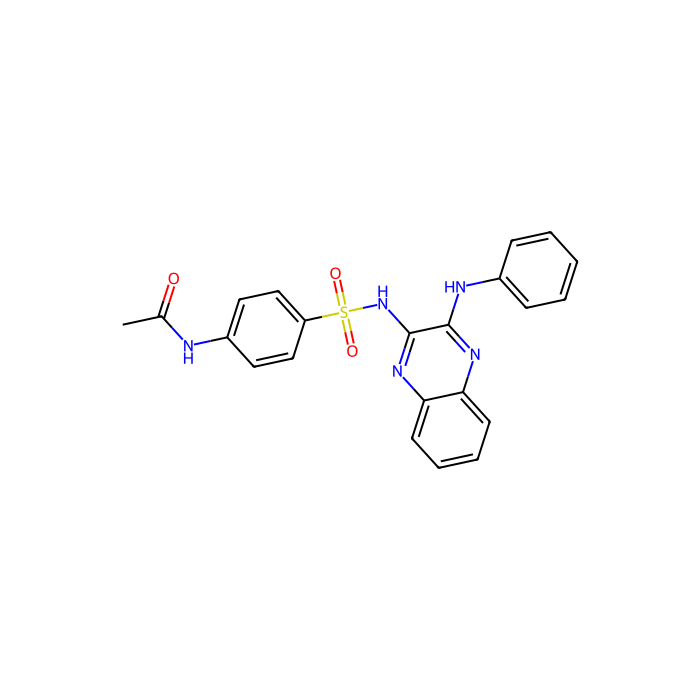
GI-570261 - 10mM in DMSO , CAS No.301357-76-6

CAS: 301357-76-6 Cat. No.: G423110 Formula: C22H19N5O3S Molecular Weight: 433.48296
AVAILABLE TO ORDER
GRADE & PURITY 10mM in DMSO
Storage
Store at -80°C
Shipped In
Dry ice packs + Cold packs
★
Size
Germany (EU)
USA*
Price
Qty
1ml
G423110-1ml
Made to order · 8–12 wks

€178.67

€209.91
Save €31.24 (14.88%)
Enter a quantity for the sizes you want to add.
🧪
Why this grade

10mM in DMSO for sensitive chromatographic and analytical workflows requiring minimal baseline interference.

🌡

Storage & shipping

Store at -80°C Ships Dry ice packs + Cold packs Check lot-specific COA for exact specifications.

📋

Quality documents

SDS, COA, datasheet, and spec sheet available for download. Lot-specific COA accessible via lot number lookup.

📚

Literature proof

Cited in 0 peer-reviewed publications across chromatography, organic synthesis, and cross-coupling reactions.

Overview

LRP5/6-sclerostin interaction inhibitors; phosphatidylinositol 3-kinase inhibitors; JAK-2 inhibitors;

Specifications

Specifications & Purity
10mM in DMSO
Storage
Store at -80°C
Shipped In
Dry ice packs + Cold packs
This product requires cold chain shipping. Ground and other economy services are not available.
Action Type
MODULATOR
Product Properties
alogp
3.53
hba_count
5
hbd_count
3
rotatable_bond
6
Names and Identifiers
Canonical Smiles
CC(=O)NC1=CC=C(C=C1)S(=O)(=O)NC2=NC3=CC=CC=C3N=C2NC4=CC=CC=C4
IUPAC Name
N-[4-[(3-anilinoquinoxalin-2-yl)sulfamoyl]phenyl]acetamide
InChIKey
NKBUJKMUIIBTSH-UHFFFAOYSA-N
INCHI
1S/C22H19N5O3S/c1-15(28)23-17-11-13-18(14-12-17)31(29,30)27-22-21(24-16-7-3-2-4-8-16)25-19-9-5-6-10-20(19)26-22/h2-14H,1H3,(H,23,28)(H,24,25)(H,26,27)
Isomeric SMILES
CC(=O)NC1=CC=C(C=C1)S(=O)(=O)NC2=NC3=CC=CC=C3N=C2NC4=CC=CC=C4
Molecular Weight
433.48296
Reaxy-Rn
25040717
Reaxys-RN_link_address
https://www.reaxys.com/reaxys/secured/hopinto.do?context=S&query=IDE.XRN=25040717&ln=

Documentation

📋 Safety Data Sheet (SDS)

Comprehensive hazard, handling, storage, and regulatory compliance document.

<<<<<<< HEAD Download SDS → ======= Download SDS → >>>>>>> release248-p3

✅ Certificate of Analysis (COA)

Lot-specific quality data. Enter your lot number to retrieve the exact COA.

Look up COA →

📊 Datasheet

Quick-reference summary of product specifications and applications.

View datasheet →

🔬 Specification Sheet

Full quality attributes and acceptance criteria for this grade.

View spec sheet →

Advanced Data

Taxonomic Classification

Taxonomy Tree

KingdomOrganic compounds
SuperclassOrganoheterocyclic compounds
ClassDiazanaphthalenes
SubclassBenzodiazines
Intermediate Tree Nodes Not available
Direct ParentQuinoxalines
Alternative Parents Acetanilides  Benzenesulfonamides  N-acetylarylamines  Benzenesulfonyl compounds  Aniline and substituted anilines  Aminopyrazines  Organosulfonamides  Imidolactams  Acetamides  Aminosulfonyl compounds  Heteroaromatic compounds  Secondary carboxylic acid amides  Amino acids and derivatives  Azacyclic compounds  Secondary amines  Organic oxides  Organopnictogen compounds  Hydrocarbon derivatives  Carbonyl compounds  
Molecular FrameworkAromatic heteropolycyclic compounds
Substituents Acetanilide - Benzenesulfonamide - Quinoxaline - N-acetylarylamine - Benzenesulfonyl group - Anilide - Aniline or substituted anilines - N-arylamide - Aminopyrazine - Monocyclic benzene moiety - Pyrazine - Organosulfonic acid amide - Imidolactam - Benzenoid - Heteroaromatic compound - Organic sulfonic acid or derivatives - Organosulfonic acid or derivatives - Sulfonyl - Aminosulfonyl compound - Acetamide - Secondary carboxylic acid amide - Amino acid or derivatives - Carboxamide group - Secondary amine - Azacycle - Carboxylic acid derivative - Organopnictogen compound - Organonitrogen compound - Organooxygen compound - Organosulfur compound - Carbonyl group - Organic oxide - Hydrocarbon derivative - Organic nitrogen compound - Amine - Organic oxygen compound - Aromatic heteropolycyclic compound
DescriptionThis compound belongs to the class of organic compounds known as quinoxalines. These are compounds containing a quinoxaline moiety, a bicyclic heterocycle made up of a benzene ring fused to a pyrazine ring.
External Descriptors Not available
3D Structure
Interactive Chemical Structure Model


Associated Targets(Human)
SMPD1 Tchem Sphingomyelin phosphodiesterase (13561 Activities)
Activity TypeRelationActivity valueUnitsAction TypeJournalPubMed IddoiAssay Aladdin ID
EHMT2 Tchem Histone-lysine N-methyltransferase, H3 lysine-9 specific 3 (93046 Activities)
Activity TypeRelationActivity valueUnitsAction TypeJournalPubMed IddoiAssay Aladdin ID
KDM4E Tchem Lysine-specific demethylase 4D-like (40243 Activities)
Activity TypeRelationActivity valueUnitsAction TypeJournalPubMed IddoiAssay Aladdin ID
CBX1 Tbio Chromobox protein homolog 1 (92434 Activities)
Activity TypeRelationActivity valueUnitsAction TypeJournalPubMed IddoiAssay Aladdin ID
ATAD5 Tbio ATPase family AAA domain-containing protein 5 (122566 Activities)
Activity TypeRelationActivity valueUnitsAction TypeJournalPubMed IddoiAssay Aladdin ID
MEN1 Tchem Menin/Histone-lysine N-methyltransferase MLL (48157 Activities)
Activity TypeRelationActivity valueUnitsAction TypeJournalPubMed IddoiAssay Aladdin ID
LRP6 Tbio Low-density lipoprotein receptor-related protein 6 (38 Activities)
Activity TypeRelationActivity valueUnitsAction TypeJournalPubMed IddoiAssay Aladdin ID
Associated Targets(non-human)
Cruzipain (33337 Activities)
Activity TypeRelationActivity valueUnitsAction TypeJournalPubMed IddoiAssay Aladdin ID
M1AAP Zinc aminopeptidase (902 Activities)
Activity TypeRelationActivity valueUnitsAction TypeJournalPubMed IddoiAssay Aladdin ID
Luciferin 4-monooxygenase (66902 Activities)
Activity TypeRelationActivity valueUnitsAction TypeJournalPubMed IddoiAssay Aladdin ID
Txnrd1 Thioredoxin reductase 1, cytoplasmic (45279 Activities)
Activity TypeRelationActivity valueUnitsAction TypeJournalPubMed IddoiAssay Aladdin ID
Mapt Microtubule-associated protein tau (6 Activities)
Activity TypeRelationActivity valueUnitsAction TypeJournalPubMed IddoiAssay Aladdin ID
Mechanisms of Action
Certificates (CoA,COO,BSE/TSE and Analysis Chart)
C of A & Other Certificates(BSE/TSE, COO):
Analytical Chart:
Chemical and Physical Properties
dmso_mM_max_solubility10
Molecular Weight433.500 g/mol
XLogP33.100
Hydrogen Bond Donor Count3
Hydrogen Bond Acceptor Count7
Rotatable Bond Count6
Exact Mass433.121 Da
Monoisotopic Mass433.121 Da
Topological Polar Surface Area121.000 Ų
Heavy Atom Count31
Formal Charge0
Complexity698.000
Isotope Atom Count0
Defined Atom Stereocenter Count0
Undefined Atom Stereocenter Count0
Defined Bond Stereocenter Count0
Undefined Bond Stereocenter Count0
The total count of all stereochemical bonds0
Covalently-Bonded Unit Count1
Solution Calculators
Reviews

Customer Reviews

Application Protocols
  • Item-specific (from Product Data)

    • No validated application protocols are provided.
  • General assay handling (suggested starting points; not item specifications)

    • Stock preparation: Dissolve at 10 mM in DMSO; vortex and, if necessary, sonicate briefly. Filter through 0.22 µm PTFE if particulate remains.
    • Aliquoting: Dispense single-use aliquots (10–50 µL) into low-bind tubes/plates; store at −80°C.
    • Plate handling: For HTS, pre-dilute in DMSO and pin-transfer or acoustic dispense to minimize DMSO volume. Include edge-well controls.
    • Interference controls: Incorporate fluorescence/luminescence interference checks, detergent controls (e.g., 0.01% Tween-20), and redox interference assays where relevant.
    • Stability check: Compare fresh vs 1–2 week stored aliquots in the same assay to assess freeze–thaw and storage robustness.

Please adapt these general steps to your specific assay modality and consult the CoA/SDS for any compound-specific handling nuances.

Biological Roles
  • Item-specific (from Product Data)

    • No biological target, pathway, or mode-of-action information is provided for GI-570261.
  • General context for library molecules

    • Such compounds are typically evaluated as putative modulators of enzymes, receptors, transporters, or protein–protein interactions during assay screening. Without defined annotations, GI-570261 should be treated as a chemical matter of unknown biological activity.
  • Practical recommendations

    • Run primary screens with stringent controls (positive/negative references) and include counterscreens for assay interference (e.g., redox cycling, aggregation, fluorescence quenching/enhancement).
    • Determine basic physicochemical parameters (pKa, cLogP, solubility) once the structure is confirmed to anticipate permeability and nonspecific binding.
    • If activity is observed, validate with orthogonal assays and confirm purity/identity of the active batch to exclude impurity-driven effects.
  • Cautionary notes

    • No clinical or diagnostic use is intended or implied. This product is for research use only, and no claims regarding therapeutic efficacy or safety are made.

For target annotations or pathway mapping, consult cheminformatics databases after verifying the structure via CoA or PubChem CID 1069150.

Buffer Applications

GI-570261 is a small-molecule library member, not a buffering agent. Therefore, classical buffer system guidance (pH ranges, buffer capacities, recipes) does not apply directly.

  • Practical handling in buffers (general guidance)
    • Prepare concentrated stocks in DMSO, then dilute into assay buffers (PBS, HEPES, Tris) to a final DMSO concentration typically ≤0.5–1% v/v.
    • If precipitation occurs on dilution, add the DMSO stock slowly with vigorous mixing, adjust temperature slightly (room temperature to 37°C), or include acceptable co-solvent (e.g., 0.1–0.5% ethanol) if assay-compatible.
    • Avoid extreme pH unless the compound’s stability has been verified; many neutral organics hydrolyze in strongly basic or acidic media.

For buffer formulation specifics, refer to your assay requirements rather than to the compound itself.

Green Alternatives

This section is typically geared toward solvent or reagent substitution. For GI-570261—a discovery-library small molecule rather than a process solvent or common reagent—“green alternative” considerations pertain to handling and formulation rather than replacement of the compound itself.

  • Minimize solvent footprint (general guidance)

    • Prefer DMSO over DMF/NMP where feasible due to lower reproductive-toxicity concerns and better biocompatibility in assays.
    • Use aqueous buffers with minimal organic co-solvent (≤1% DMSO) when assay sensitivity allows.
    • Implement microscale workflows (384/1536-well) to reduce chemical usage and waste.
  • Procurement and lifecycle

    • Consolidate shipments on dry ice to reduce packaging and cold-chain emissions; coordinate with other −80°C items.
    • Store in long-term aliquots to avoid waste from repeated freeze–thaw degradation.
  • Waste management

    • Segregate halogenated vs non-halogenated solvent waste. If the compound is later determined to contain halogens or heavy metals, adjust waste stream accordingly.
  • Comparative note (not item-specific)

    • If downstream chemistry requires using GI-570261 as a starting point, consider greener solvents for any transformations (e.g., 2-MeTHF, CPME, water/ethanol systems) where compatible with the molecule’s stability profile.
Pharmaceutical Uses

No pharmaceutical excipient or manufacturing roles are specified for GI-570261. As a research-library small molecule, it is not supplied under pharmacopeial monographs (e.g., USP/EP) and is not intended for use in humans or in clinical applications.

  • Research-only context

    • Use is limited to in vitro and exploratory in vivo research as permitted by institutional guidelines. Any formulation steps (e.g., vehicle selection for animal studies) should be informed by the compound’s confirmed structure, purity, and stability, and must undergo appropriate IACUC/ETHICS review.
  • If progressing toward developability assessment (general guidance)

    • Establish definitive identity (NMR, HRMS), purity, and salt form.
    • Determine key properties: solubility across pH 1–8, pKa, logD, permeability (PAMPA/MDCK), plasma protein binding, and metabolic stability (microsomes/hepatocytes).
    • Select vehicles consistent with research-only use (e.g., 10% solutol + 10% ethanol + 80% saline; or 20% Captisol), pending compatibility with the compound’s chemistry.

No therapeutic claims are made. For any regulated use, a different supply chain and quality regime would be required.

Physical Properties
  • Item-specific (from Product Data)

    • Appearance: Not specified for this item; refer to CoA/Spec Sheet.
    • Molecular Weight (exact): Not specified for this item; refer to CoA/Spec Sheet.
  • Literature/computed values (general guidance only; not item specifications)

    • Boiling point, melting point, density, pKa, logP/logD, refractive index, UV-Vis λmax, and solubility parameters: Not available here for GI-570261. Consult PubChem (CID 1069150), supplier CoA, or prediction tools (e.g., ACD/Percepta, ChemAxon) once a structure is confirmed.
  • Practical laboratory guidance (general)

    • Solubility screening: Start with DMSO (analytical grade) at 10–50 mM stock, then dilute into aqueous buffers with ≤0.5–1% final DMSO. If precipitation occurs, explore co-solvents (DMF, ethanol) or surfactant-assisted vehicles (0.01–0.1% Tween-80) compatible with your assay.
    • Hygroscopicity/volatility: Unknown; handle in a low-humidity environment until characteristics are known. Weigh rapidly in closed containers.
    • Thermal behavior: Store at −80°C as specified. Avoid repeated thawing; many discovery compounds exhibit reduced stability at ambient temperatures.
    • Photolability: Unknown; as a precaution, minimize light exposure during handling (use amber vials/foil wrap) until spectral data are established.

Note: Do not treat the above as specifications; they are generic best practices pending review of the item’s CoA/Spec Sheet.

Quality and Grades
  • Item-specific (from Product Data)

    • Grade/Purity: Not specified for this item; refer to CoA/Spec Sheet.
  • Context and expectations

    • Discovery-library compounds are typically supplied with identity confirmation (1H NMR/LC–MS) and an assay-ready purity metric (commonly LC–UV or LC–MS area %). In absence of a stated grade, users should verify:
      • Analytical purity method and detection wavelength(s)
      • Water/volatile content (Karl Fischer/TGA), if relevant to formulation
      • Salt form and counter-ions, if applicable
      • Residual solvents and assay by orthogonal methods when needed
    • AR/ACS/HPLC/Pharm grades are not generally assigned to screening compounds; instead, vendor CoA defines fit-for-purpose quality.
  • Stabilizers/additives

    • None specified for this item. If stabilizers are present (e.g., antioxidants, acid scavengers), they will be indicated on the CoA. Stabilizers can affect bioassays and chromatographic baselines; account for their presence in controls.
  • Release documentation

    • For regulated workflows or method development, request: CoA with chromatogram, MS spectrum, and NMR; batch-specific water/residual solvent results; salt/form information; and, if available, enantiomeric/diastereomeric purity.
  • Practical tip

    • On receipt, record batch/lot, verify identity by LC–MS against the provided mass, and check purity under your assay detection conditions (some impurities are UV-invisible).
Reaction and Applications
  • Item-specific (from Product Data)

    • Category: Small molecules and compound libraries (screening collection). No specific synthetic or biological target claims are provided.
  • Typical applications for library compounds (general guidance)

    • High-throughput screening (HTS) and pilot screening to identify primary hits against biochemical or cell-based targets.
    • Secondary assays and counterscreens to assess selectivity, mechanism-of-action hypotheses, and off-target risks.
    • Structure–activity relationship (SAR) exploration when analog series are available; GI-570261 may serve as a singleton probe candidate until structural neighbors are identified.
    • Analytical method development: retention assessment on LC–MS, stability-indicating methods, and forced-degradation profiling to understand assay storage stability.
  • Practical considerations

    • Prepare 10 mM DMSO stocks; aliquot to avoid freeze–thaw and concentration drift.
    • Confirm identity by LC–MS against theoretical [M+H]+ or [M−H]− once the exact mass is known (from CoA or database).
    • Assess redox and photostability empirically (light, peroxide challenge) before prolonged assay campaigns.
    • Include vehicle controls and, when possible, orthogonal readouts to deconvolute fluorescence/absorbance interference common to aromatic or conjugated molecules.

Note: No named-reaction or reagent applications can be assigned without structural information; GI-570261 is supplied for research screening rather than as a synthetic reagent.

Reaction Conditions

Specific reaction conditions are not applicable because GI-570261 is provided as a screening compound, not as a reagent, and its functional groups are not disclosed in the provided data.

  • If chemical transformations are later attempted (general guidance)
    • Solvent: Choose according to functional groups (e.g., polar aprotic for SNAr/couplings; alcohols or hydrocarbons where appropriate). Start with dry, oxygen-free conditions when sensitive motifs are suspected.
    • Temperature: Screen mild conditions first; many complex small molecules degrade above 80–120°C.
    • Catalysts/bases/acids: Select based on the identified reactive handles (e.g., Pd catalysts for cross-coupling; carbodiimides for amide formations). Avoid strong bases if acidic heterocycles are present.
    • Monitoring: Use LC–MS for quick conversion/impurity profiling; include UV and MS channels suitable for the chromophores and ionization properties once known.
    • Yields: No literature yields can be cited for GI-570261 without structure; plan for small-scale scouting with DoE where feasible.

Until the structural identity is verified (refer to CoA/Spec Sheet or PubChem CID 1069150), refrain from assuming compatibility with specific reaction families.

Safety and Handling
  • Item-specific (from Product Data)

    • GHS Classification: Not specified for this item; refer to the SDS.
    • Signal Word: Not specified for this item; refer to the SDS.
    • Hazard (H-) Statements: Not specified for this item; refer to the SDS.
    • Pictograms: Not specified for this item; refer to the SDS.
    • Storage Conditions: Store at −80°C.
    • Shipped In: Dry ice packs + Cold packs.
    • Research Use: For research use only.
  • General laboratory precautions (for unknown/novel small molecules)

    • PPE: Wear lab coat, safety glasses, and appropriate chemical-resistant gloves (e.g., nitrile). Consider double-gloving for concentrated DMSO solutions.
    • Engineering controls: Handle powders/solids in a fume hood or ventilated enclosure; avoid aerosol generation. For solutions, prevent inhalation and skin contact.
    • Incompatibilities: Unknown; separate from oxidizers, strong acids/bases until compatibility is confirmed. Avoid contact with reactive metals if the compound contains halogens/acidic groups (verify via structure/SDS).
    • First aid (overview; defer to SDS): Skin/eye contact—rinse with water for at least 15 minutes. Inhalation—move to fresh air. Ingestion—seek medical attention; do not induce vomiting unless directed by medical personnel.
    • Spill response: Absorb with inert material (silica/vermiculite), collect in sealed container, and decontaminate surface. For powders, gently dampen to minimize dust before cleanup.
    • Waste: Dispose in accordance with institutional hazardous waste procedures; classify based on SDS once available.

Always consult the official SDS for authoritative hazard and response information.

Solvent Selection
  • Item-specific (from Product Data)

    • No solubility or polarity data are specified for GI-570261.
  • General strategy for small-molecule library members

    • Primary stock solvent: DMSO (anhydrous, ≥99.9%) is the default for assay stocks due to broad solubilizing power and biological compatibility at ≤0.5–1% v/v final.
    • Secondary solvents for challenging solutes: DMF, NMP, ethanol, isopropanol, acetonitrile. Ensure assay compatibility and cytotoxicity thresholds are respected.
    • Aqueous vehicles: Use buffered saline (e.g., PBS, HEPES) with co-solvent; consider pH adjustments only if the compound’s pKa is known.
    • Solubility screening workflow:
      1. Attempt 10 mM in DMSO; sonicate/gently warm (≤40°C) if needed.
      2. If insoluble, reduce to 1–5 mM or switch to DMF/NMP for intermediate concentrate, then back-dilute into DMSO.
      3. For working solutions, dilute into buffer slowly while vortexing to prevent local supersaturation.
    • Filtration: Use 0.22 µm PTFE/nylon filters for organic solutions; for aqueous DMSO mixtures, PVDF is often suitable.
  • Comparison (general, not item-specific)

    • DMSO vs DMF: DMSO preferred for biocompatibility; DMF can enhance solubility but is less desirable in biological assays.
    • MeOH/EtOH vs ACN: Alcohols can hydrogen-bond and sometimes improve dissolution of polar compounds; ACN better for non-protic environments and LC compatibility.
Storage and Reconstitution
  • Item-specific (from Product Data)

    • Storage Conditions: Store at −80°C.
    • Shipped In: Dry ice packs + Cold packs.
    • Appearance: Not specified for this item; refer to CoA/Spec Sheet.
  • Reconstitution (general best practices for small molecules)

    • Solvent: Use anhydrous DMSO for initial stock preparation. Target 10 mM; adjust concentration based on solubility after confirming structure.
    • Technique: Allow container to equilibrate to room temperature in a desiccator before opening to prevent condensation. Weigh quickly, cap promptly, and purge headspace with inert gas if long-term storage is planned.
    • Filtration: If particulates are visible, filter through 0.22 µm PTFE into an amber vial.
  • Aliquoting and storage

    • Prepare single-use aliquots to avoid freeze–thaw cycles; store at −80°C in tightly sealed, inert-gas–flushed vials when feasible.
    • Protect from light until photostability is known (use amber vials/foil wrap).
    • Record lot number, preparation date, solvent, and concentration on each aliquot.
  • Stability notes

    • Exact shelf-life and solution stability are not specified for this item; refer to CoA/Spec Sheet. As a conservative approach, limit DMSO stock storage to weeks at −80°C and days at −20°C, with integrity checked by LC–MS/LC–UV prior to critical experiments.
Structure and Identity

Brief overview: GI-570261 is listed as a small-molecule library member suitable for research screening and discovery workflows.

  • Item-specific (from Product Data)

    • SKU: G423110
    • Product Name: GI-570261
    • CAS: 301357-76-6
    • PubChem CID: 1069150
    • InChIKey: 240605 (as provided)
    • SMILES: Not specified for this item; refer to CoA/Spec Sheet.
    • Molecular Formula: Not specified for this item; refer to CoA/Spec Sheet.
    • Molecular Weight: Not specified for this item; refer to CoA/Spec Sheet.
  • Structural features

    • Item-specific structural descriptors (ring systems, functional groups, stereochemistry): Not specified for this item; refer to CoA/Spec Sheet.
  • 2D structure description (general)

    • Without the SMILES/InChI and structure drawing, a definitive 2D description cannot be provided. Please consult the CoA/SDS or authoritative databases (e.g., PubChem CID 1069150) for bond connectivity, heteroatom content, and stereochemical annotations.
  • Identity notes

    • Cross-referencing the CAS (301357-76-6) and CID (1069150) in external databases is recommended to confirm synonyms, registry consistency, and structure prior to method development or bioassay deployment.
Synthetic Utility

GI-570261 is offered as a screening compound rather than a synthetic building block. Without structural information (functional groups, ring systems, stereochemistry), specific reactivity patterns, named-reaction participation, or derivatization routes cannot be responsibly outlined.

  • General considerations (if structure becomes available)

    • Identify reactive handles (e.g., aryl halides for cross-coupling, anilines/phenols for acylation/sulfonylation, nitriles/aldehydes for condensations).
    • Map protecting-group strategy and stability under acidic/basic conditions.
    • Evaluate late-stage diversification possibilities (C–H activation, Minisci, photoredox) if scaffold productivity for SAR is desired.
  • Practical tip

    • Prior to any synthetic manipulation, confirm salt/free-base state and residual solvent content. Even trace acids/bases can bias outcomes in coupling or cyclization chemistry.

In summary, treat GI-570261 primarily as a bioassay screening entity unless and until the exact structure is confirmed and a derivatization campaign is planned.

Target Specificity
  • Item-specific (from Product Data)

    • No target, pathway, or selectivity data are provided for GI-570261.
  • General guidance for determining specificity in screening

    • Employ broad counterscreens (e.g., cytotoxicity, reporter interference, aggregation assays such as detergent-sensitive activity or DLS) to flag non-specific mechanisms.
    • If a putative target emerges, measure on- vs off-target activity panels and orthogonal biophysical confirmation (SPR, ITC, DSF, NMR binding) to validate specificity.
    • Evaluate concentration–response curves with proper curve-fitting and outlier handling; inspect Hill slopes for aggregation or multi-site effects.

No claims of target engagement or selectivity are made for this product. All biological interpretations should be generated de novo within the user’s laboratory and supported by appropriate controls.

Frequently Asked Questions

How should this product be stored?
Store at ?80 °C. Ultra-low temperature storage is required to maintain the specified shelf life.
How is this product shipped?
This product ships frozen with dry ice and cold packs. Unpack on arrival and transfer it to the storage condition stated above; handle dry ice with insulated gloves in a ventilated area.
What are the CAS number, molecular formula and molecular weight?
The CAS Number is 301357-76-6, the molecular formula is C22H19N5O3S, and the molecular weight is 433.48296 g/mol. InChIKey NKBUJKMUIIBTSH-UHFFFAOYSA-N.
What documentation is provided?
Available product documentation, including Certificates of Analysis (COA), Safety Data Sheets (SDS), and specification sheets, is shown in the product document area. Document availability and access follow the current site policy.

Shall we send you a message when we have discounts available?

Remind me later

Thank you! Please check your email inbox to confirm.

Oops! Notifications are disabled.