GRADE & PURITYSterile-filtered?Sterile-filtered — passed through a 0.2µm filter to remove microorganisms. Use as a ready aseptic solution for culture and sensitive applications.BioReagent?BioReagent grade — tested suitable for life-science and molecular-biology use. Use for cell culture, assays, and biochemical work needing biological compatibility.Endotoxin tested?Endotoxin-tested — each lot assayed and labeled with its endotoxin level. Use when you need a documented endotoxin value for risk assessment.for Cell culture?Cell-culture grade — low endotoxin and contaminants to support viable cell growth. Use in mammalian/other cell culture media and supplements.Sterile?Sterile grade — processed and verified free of viable microorganisms. Use directly in aseptic procedures and cell culture without further sterilization.50×
Determine the necessary mass, volume, or concentration for preparing a solution.
Dilution Calculator
Determine the dilution needed to prepare a stock solution.
Reconstitution Calculator
Reviews
Customer Reviews
Application Protocols
General workflow for hybridoma selection with HAT (literature guidance; not item-specific):
Prepare media
Combine sterile basal medium (e.g., DMEM + 15% FBS) with HAT Supplement (50×) to achieve 1× final strength. Optionally add HT medium (1×) for recovery steps after selection.
Post-fusion seeding
Following PEG-mediated fusion of splenocytes with HGPRT− myeloma partners, distribute cells into 96-well plates with feeder cells (e.g., irradiated splenocytes) or conditioned medium to enhance survival. Typical seeding: 1–2 × 10⁵ total cells/well (literature; optimize per system).
Selection phase (Days 1–14)
Incubate at 37 °C, 5% CO₂. Replace half the medium every 2–4 days with fresh 1× HAT medium to maintain selection pressure and nutrient levels. Monitor for colony formation microscopically.
Outgrowth and screening
When colonies are visible (7–14 days), assay supernatants for antibody production (ELISA/flow/cell-based). Expand positive wells into 24-well plates using HT medium (no aminopterin) to reduce cytotoxic stress while maintaining salvage dependence.
Cloning and stabilization
Single-cell clone by limiting dilution or semi-solid media. Confirm monoclonality and productivity. Gradually wean to standard growth medium as appropriate.
Notes:
Include control cultures (myeloma only; splenocytes only) to validate HAT stringency.
Adjust schedules/volumes for primary cells or sensitive lines. Always maintain light protection for solutions containing antifolates.
Biological Roles
Mechanistic basis in mammalian cells (literature; not item-specific):
Pathways targeted:
De novo purine and thymidylate synthesis are blocked by aminopterin via inhibition of dihydrofolate reductase (DHFR), preventing regeneration of tetrahydrofolate cofactors required for nucleotide biosynthesis.
Salvage pathways become essential: hypoxanthine is converted to IMP by hypoxanthine-guanine phosphoribosyltransferase (HGPRT); thymidine is phosphorylated by thymidine kinase (TK) to dTMP and further to dTTP.
Selection logic in hybridoma technology:
Myeloma fusion partners are engineered/selected to be HGPRT− (and often TK−). In HAT medium, these unfused cells cannot synthesize nucleotides de novo (due to aminopterin) nor via salvage (due to HGPRT/TK deficiency) and thus die.
Normal splenocytes (short-lived) possess HGPRT/TK but have limited lifespan in vitro; only fused hybrids (hybridomas) inherit immortality from myeloma cells and salvage capability from B cells, enabling survival and expansion.
Broader cell biology implications:
HAT sensitivity can reveal functionality of folate metabolism and nucleotide salvage pathways; resistance often arises from DHFR alterations or pathway bypasses.
Timing and dosing influence selection stringency and viability; excessive aminopterin exposure can suppress even desired hybrids.
Downstream use:
After colonies appear, cells are often cultured in HT medium to support growth while maintaining dependence on salvage (minus aminopterin cytotoxicity).
These roles pertain to the classical use of HAT in in vitro research and bioproduction R&D. No clinical or in vivo uses are implied.
Buffer Applications
Not typically applicable. HAT Supplement (50×) is a biological additive for cell culture media rather than a buffering reagent. It does not constitute a defined buffer system and is not used for electrophoresis or pH control.
For practical use, refer instead to the Solvent Selection (media compatibility) and Application Protocols (cell culture workflows) sections.
Green Alternatives
Environmental/green chemistry framing has limited applicability because this is a biological culture supplement rather than a process solvent or synthetic reagent. Nevertheless, prudent practices can reduce hazard and waste (general guidance):
Hazard minimization:
Aminopterin is a potent antifolate; minimize volume and duration of use by transitioning to HT medium (without aminopterin) once selection is complete (literature best practice).
Consider small-scale pilot selections to right-size batch volumes and reduce unused HAT-containing waste.
Waste reduction:
Aliquot concentrate to avoid repeated freeze–thaw and premature spoilage.
Segregate aminopterin-containing waste for appropriate hazardous disposal; avoid mixing with bleach if not compatible per SDS.
Alternatives and trade-offs (literature, not item-specific):
HT-only supplementation for maintenance phases lowers cytotoxic hazard but does not provide selection pressure.
Alternative selection systems (e.g., HPRT/6-thioguanine counterselection or selectable markers such as neomycin/G418, puromycin, hygromycin) may reduce reliance on antifolates, but each has distinct biosafety and environmental profiles.
Summary comparison (general):
HAT (with aminopterin): Strong selection, higher hazard.
HT (no aminopterin): Lower hazard, maintenance only.
This product is intended strictly for research use only (item-specific). It is not manufactured to GMP standards and is not an excipient or active ingredient for therapeutic administration.
R&D and bioprocess development context (literature/general):
Cell line development: HAT selection is widely used during research-phase creation of monoclonal antibody–producing hybridomas. Surviving clones are screened and subcloned to ensure monoclonality before transitioning to production media.
Platform/process characterization: During upstream process development, HAT/HT supplementation may be used as a diagnostic tool to confirm salvage pathway functionality or to maintain selection pressure during early expansion.
Formulation/manufacturing notes:
Not for clinical manufacturing or human/animal use. Any use in regulated biomanufacturing would require validated, GMP-grade materials and thorough comparability assessments.
Documentation:
Pharmacopeial status, residuals, and excipient listings: Not specified for this item; refer to CoA/Spec Sheet if applicable.
Important: No therapeutic claims are made or implied. Users are responsible for determining suitability for their specific research application.
Physical Properties
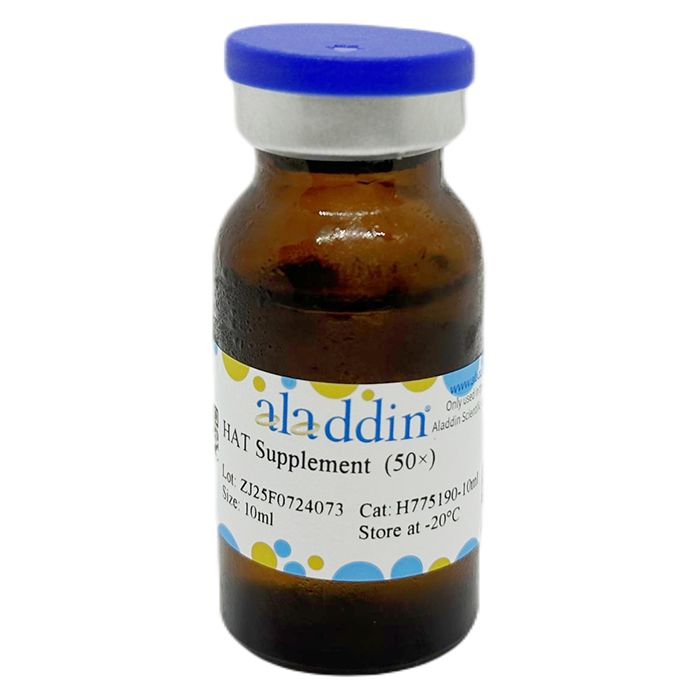
This product is a sterile-filtered 50× supplement intended for dilution into cell culture media.
Appearance (item-specific): Not specified for this item; refer to CoA/Spec Sheet.
Concentration/assay (item-specific): Not specified for this item; refer to CoA/Spec Sheet.
pH/osmolality (item-specific): Not specified for this item; refer to CoA/Spec Sheet.
Density/Refractive index (item-specific): Not specified for this item; refer to CoA/Spec Sheet.
Boiling point/Melting point (item-specific): Not applicable (aqueous solution mixture).
Solubility (general): Fully miscible with aqueous cell culture media (literature/general for HAT supplements).
Light sensitivity: Store protected from light (item-specific).
Physical state: Typically supplied as a sterile aqueous solution; 50× indicates a concentrate meant to be diluted to 1× for use (general practice; verify on CoA for this lot).
Notes on individual actives (literature, not item-specific):
Hypoxanthine: sparingly soluble in water at neutral pH; solubility increases in basic media.
Aminopterin: light-sensitive folate analog; solutions are typically protected from light.
Thymidine: readily water-soluble.
Because this is a formulated mixture and not a single compound, classical parameters like logP, pKa, or vapor pressure are not meaningful for the product as a whole. Always consult the CoA/SDS for lot-specific physicochemical and handling details.
Quality and Grades
Item-specific quality attributes provided:
Grade/Purity: Sterile-filtered; BioReagent; Endotoxin tested; for Cell culture; Sterile.
Storage: Store at −20 °C; protect from light (item-specific).
Shipment: Ice chest + ice pads (item-specific).
What these designations mean for practical use:
Sterile-filtered / Sterile: Product has been membrane-filtered (typically 0.2 μm or finer) to remove bioburden and is suitable for aseptic addition to culture media. Maintain sterility during handling to avoid contamination.
BioReagent: Meets suitability criteria for biological research workflows. This typically relates to impurity profiles and performance in culture but is not equivalent to clinical-grade or GMP material.
Endotoxin tested: Each lot is tested for bacterial endotoxin; the acceptance criterion and method are not specified here. For processes sensitive to pyrogens (e.g., certain primary cells), verify the lot-specific endotoxin level on the CoA.
For cell culture: Indicates fitness for in vitro applications (e.g., hybridoma selection). Not for human or animal therapeutic use.
Lot-to-lot documentation:
Exact composition and assay tolerances are Not specified for this item; refer to CoA/Spec Sheet.
UV cutoff, heavy metal limits, and residual solvent data: Not specified for this item; refer to CoA/Spec Sheet.
Practical tip: Aliquot upon receipt to minimize freeze–thaw cycles and maintain sterile technique when opening. Validate performance in your specific cell line, as sensitivity to antifolates varies.
Reaction and Applications
Synthetic/chemical reaction applications are not applicable for this product, as it is a biological supplement, not a reagent for organic synthesis or catalysis.
Instead, the relevant applications are in mammalian cell culture (literature, not item-specific):
Hybridoma selection: HAT medium selects for successful B-cell–myeloma fusions by inhibiting de novo nucleotide synthesis (via aminopterin) and forcing reliance on salvage pathways (requiring HGPRT and TK). Unfused myeloma cells lacking HGPRT/TK die, while properly fused hybrids survive using hypoxanthine and thymidine.
Gene amplification/selection systems: HAT/HT can be used diagnostically to assess functionality of HGPRT/TK pathways in engineered lines and to confirm aminopterin sensitivity.
Post-selection maintenance: After colonies establish (typically 10–14 days), cells are often transitioned to HT (minus aminopterin) to support expansion while maintaining selection pressure against de novo synthesis–defective cells (literature).
Practical tips (general):
Use freshly prepared feeder layers or conditioned media to improve post-fusion viability.
Seed multiple cloning densities and consider semi-solid medium for easier colony isolation.
Monitor for aminopterin sensitivity of the parental myeloma line; titer HAT strength if necessary to balance selection stringency and viability.
Reaction Conditions
Chemical reaction conditions are not applicable. The following provides general, literature-based culture conditions for using HAT Supplement (50×) in cell selection (not item-specific; verify with your institutional protocol):
Working strength: Dilute the 50× concentrate 1:50 into sterile basal medium to achieve a 1× HAT working solution (literature/common practice). Do not warm above room temperature during dilution. Mix gently under aseptic conditions.
Basal medium: DMEM, RPMI 1640, IMDM, or α-MEM supplemented with 10–20% FBS or defined substitutes (literature). Include antibiotics/antimycotics per site policy if desired.
Temperature/atmosphere: Incubate cultures at 37 °C, 5% CO₂, ≥95% relative humidity (standard mammalian conditions).
Timeline: Selection commonly proceeds over 7–14 days post-fusion, with medium changes every 2–4 days to maintain active aminopterin exposure and replenish hypoxanthine/thymidine (literature).
Transition: After visible colony formation, switch to HT medium (same hypoxanthine/thymidine levels, no aminopterin) for 1–2 weeks before moving to standard medium (literature).
Performance checks: Include control wells (parental myeloma alone; splenocytes alone; fusion mix) to confirm selection specificity. Assess viability (e.g., trypan blue) and antibody secretion (e.g., ELISA) during outgrowth.
Note: Exact concentrations of the actives and any stabilizers in this item are Not specified for this item; refer to CoA/Spec Sheet. Adjust schedules based on cell line sensitivity.
Safety and Handling
Safety overview: No GHS hazard classification is specified in the product data for this item; consult the SDS for authoritative information.
GHS/labeling (item-specific):
Signal word: Not specified for this item; refer to SDS.
Hazard statements (H-codes): Not specified for this item; refer to SDS.
Pictograms: Not specified for this item; refer to SDS.
General hazards (literature/context, not item-specific):
HAT supplements typically contain aminopterin, a potent antifolate and cytotoxic agent; handle as a hazardous drug/antimetabolite using appropriate engineering controls (biological safety cabinet where applicable) and PPE.
Components may be harmful if swallowed, inhaled, or absorbed through skin; avoid aerosol generation and skin/eye contact.
PPE and controls (good laboratory practice):
Laboratory coat, nitrile gloves (double-gloving recommended when handling concentrates), and splash-resistant eye protection.
Work in a certified chemical fume hood or Class II biosafety cabinet when preparing media.
Incompatibilities and stability (general):
Protect from light (item-specific) due to potential photosensitivity of folate analogs.
Avoid mixing with strong oxidizers or reducing agents outside normal culture media contexts.
First-aid (general guidance; defer to SDS):
Skin/eyes: Rinse with water for ≥15 min; remove contaminated clothing; seek medical advice.
Inhalation: Move to fresh air; seek medical attention if symptoms occur.
Ingestion: Rinse mouth; do not induce vomiting; seek medical attention.
Dispose of unused solutions and contaminated consumables as hazardous chemical waste per institutional policy.
Solvent Selection
Relevance: This is an aqueous, sterile supplement for cell culture use; organic solvent selection is not applicable. Instead, consider compatibility with basal media and serum.
Medium compatibility (general literature guidance):
Commonly used with DMEM, RPMI 1640, IMDM, or α-MEM, supplemented with 10–20% FBS or defined alternatives. Verify that your basal medium supports robust growth of the parental fusion partner and myeloma line.
HAT components are water-soluble and fully miscible with buffered salt solutions. Avoid high-temperature exposure during mixing; add to cooled/room-temperature sterile media.
Dilution and use:
A 50× concentrate is typically diluted to 1× final strength directly into sterile culture medium (literature/general practice). Confirm the intended working strength from your protocol.
Filtration:
If combining with in-house sterile media, perform terminal filtration (0.2 μm PES) under aseptic conditions. This product itself is sterile-filtered (item-specific), so additional filtration of the supplement alone is generally unnecessary if handled aseptically.
Stability considerations:
Protect from light (item-specific). Minimize time at ambient temperature during media preparation. Some users prepare weekly HAT-containing media and store at 2–8 °C, protected from light (literature practice); verify stability for your application.
Alternatives/adjuncts:
HT Supplement (hypoxanthine + thymidine, no aminopterin) is often used after initial selection for outgrowth/maintenance (literature).
Storage and Reconstitution
Item-specific storage and shipping:
Storage conditions: Store at −20 °C; protect from light (item-specific).
Shipment: Ice chest + ice pads (item-specific).
Reconstitution/handling:
Physical form: Not specified for this item; refer to CoA/Spec Sheet. HAT Supplement (50×) is commonly supplied as a ready-to-use sterile aqueous solution; if provided frozen, thaw on ice or at 2–8 °C.
Reconstitution: Not applicable if supplied as a liquid concentrate. If provided as frozen aliquots, gently mix by inversion after thaw; avoid vigorous vortexing to limit foaming. Do not heat to accelerate thawing.
Aliquoting: Upon first thaw, aseptically aliquot into single-use tubes to minimize freeze–thaw cycles.
Stability (general guidance):
Avoid repeated freeze–thaw; store unopened aliquots at −20 °C, protected from light. Short-term storage of working 1× HAT medium at 2–8 °C for up to one week is common practice (literature); verify with internal QC for sensitive lines.
Compatibility:
Add to sterile, cooled basal media. Maintain aseptic technique to preserve sterility (item-specific quality: sterile-filtered).
Unspecified parameters:
Exact concentrations, pH, osmolality, and stabilizers: Not specified for this item; refer to CoA/Spec Sheet.
Research use only: Not for therapeutic or diagnostic use in humans or animals.
Structure and Identity
Brief overview: This product is a premade cell-culture supplement mixture commonly referred to as HAT Supplement (50×). It is not a single chemically defined molecule but a formulated blend intended to be diluted into basal media.
Item-specific identifiers
Molecular formula: Not applicable (mixture)
Molecular weight: Not applicable (mixture)
SMILES / InChI / InChIKey: Not applicable (mixture)
CAS: Not specified for this item; refer to CoA/Spec Sheet.
CID: Not specified for this item; refer to CoA/Spec Sheet.
Composition notes (literature, not item-specific)
HAT formulations classically contain three actives: hypoxanthine (a purine base), aminopterin (a folate antagonist), and thymidine (a pyrimidine nucleoside).
In typical 50× concentrates, these are present at 50× their intended 1× working concentrations; the exact concentrations vary by manufacturer (literature).
Structural/functional features (general)
Hypoxanthine participates in the purine salvage pathway via HGPRT.
Aminopterin inhibits dihydrofolate reductase (DHFR), blocking de novo purine/thymidylate synthesis.
Thymidine feeds into the thymidylate salvage pathway via thymidine kinase (TK).
2D description in words (general)
The blend combines a purine base (hypoxanthine; fused imidazole–pyrimidinone ring), an antifolate analog (aminopterin; pteridine ring with p-aminobenzoate and glutamate), and a nucleoside (thymidine; thymine base glycosidically linked to deoxyribose). These are supplied in an aqueous sterile-filtered solution suitable for dilution into cell culture media (general).
Synthetic Utility
Not applicable. HAT Supplement (50×) is not a building block, catalyst, or reagent for chemical synthesis. It is a biological culture supplement used to modulate nucleotide biosynthetic pathways in live cells for selection purposes.
For relevant content, see Biological Roles and Application Protocols for in vitro usage.
Target Specificity
Not applicable. This product is a cell culture supplement and does not have antigen/epitope targets, clones, isotypes, or species reactivity. No target specificity data are provided in the Product Data.
Frequently Asked Questions
What does sterile-filtered mean?
sterile-filtered indicates that the material has been processed and tested for specialty industrial processing. Specifications focus on the impurities that affect performance in that application — for example, metal content for electronics, particle size for batteries, refractive index for optics, or moisture content for moisture-sensitive processes.
What does BioReagent mean?
BioReagent indicates that the product has been processed and tested for biological and biochemical applications. Specifications may include endotoxin limits, microbial controls, sterility, low DNase/RNase/protease activity, and verified biological activity where relevant.
How should this product be stored?
Store at ?20 °C, protected from light. The material is light-sensitive — keep it in its original opaque or amber container.
How is this product shipped?
This product ships in an insulated container with ice pads. Unpack on arrival and transfer it to the storage condition stated above.
What documentation is provided?
Available product documentation, including Certificates of Analysis (COA), Safety Data Sheets (SDS), and specification sheets, is shown in the product document area. Document availability and access follow the current site policy.
Need help choosing the grade?
Our grade selection guide covers purity, stabilizer status, and application suitability for all variants in our catalog.
We use cookies to ensure the website functions properly and, where permitted, to improve your experience. You can manage your preferences at any time in Settings. Learn more in our Cookie Policy.
Shall we send you a message when we have discounts available?
Remind me later
Thank you! Please check your email inbox to confirm.
Products are supplied to verified businesses, institutions, and qualified professionals for research and development use only. Not for use in humans, animals, diagnosis, or therapy.

 ZJ25F0724073