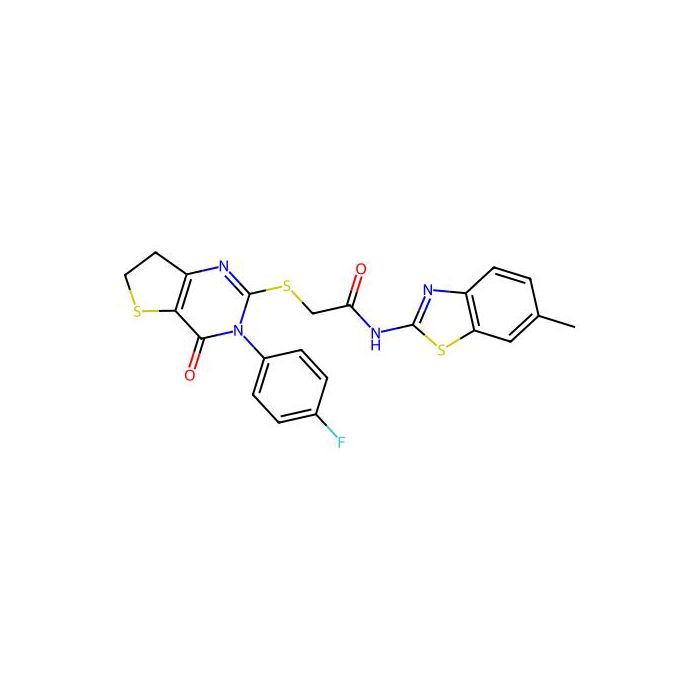
IWP-3 is an potent inhibitor of Wnt production with an IC 50 of 40 nM. IWP-3 inhibits Porcupine (Porcn) function thereby blocking palmitoylation of Wnt proteins. IWP-3 inhibits CK1γ3 and CK1ε only moderately and does not inhibit CK1α.
Specifications
Specifications & Purity
10mM in DMSO
Biochemical and Physiological Mechanisms
IWP-3 is an potent inhibitor of Wnt production with an IC 50 of 40 nM. IWP-3 inhibits Porcupine (Porcn) function thereby blocking palmitoylation of Wnt proteins. IWP-3 inhibits CK1γ3 and CK1ε only moderately and does not inhibit CK1α.
Storage
Store at -80°C
Shipped In
Dry ice packs + Cold packs
This product requires cold chain shipping. Ground and other economy services are not available.
Determine the necessary mass, volume, or concentration for preparing a solution.
Dilution Calculator
Determine the dilution needed to prepare a stock solution.
Reconstitution Calculator
Reviews
Customer Reviews
Application Protocols
No tested application protocols are provided in the product data for this item. Because performance can vary across cell lines, assay formats, and readouts, users should establish and document their own SOPs.
General starting points (non-specific guidance):
Prepare a concentrated DMSO stock; perform a 10-point half-log dilution series to map dose–response in your system.
Keep final DMSO constant across wells/conditions (e.g., 0.1–0.2% v/v) and include vehicle controls.
Validate effects with at least two independent assays (e.g., reporter plus qPCR or imaging) to reduce false positives.
These suggestions are literature-informed best practices for small-molecule tools and are not validated protocols for this specific item.
Biological Roles
Context for researchers (literature/general):
Functional role: IWP-3 is widely used as a small-molecule tool to modulate the Wnt signaling pathway in vitro. In many studies, IWP-class compounds are employed to reduce Wnt ligand activity upstream, enabling investigation of pathway dependence in developmental and stem-cell biology.
Use cases:
Mechanistic studies of Wnt-responsive transcription (e.g., TCF/LEF reporter assays) by providing a chemical perturbation arm.
Phenotypic assays examining cell fate decisions where Wnt tone is a critical variable, used alongside growth factors/cytokines.
Temporal control experiments to delineate windows of Wnt dependence during differentiation protocols.
Selectivity context: While the IWP series is commonly associated with targeting an upstream enzymatic step of Wnt ligand maturation (literature), exact target specificity for this catalog item is not specified here and should not be assumed for purchase decisions.
Experimental caveats:
Validate effects with orthogonal methods (e.g., RNAi/CRISPR, alternate chemotypes) to exclude off-target interpretations.
Include vehicle controls matched for solvent percentage; assess cytotoxicity independently from pathway readouts.
Confirm stability and potency under your assay conditions; some small molecules can degrade in aqueous media or adhere to plastics.
All uses are for research and laboratory investigations only. No medical, diagnostic, or clinical applications are intended or supported.
Buffer Applications
This item is not a buffering agent and is not used to set or maintain pH. Consequently, conventional buffer recipes (e.g., phosphate, HEPES, Tris) do not apply.
Practical note for assay buffers (general guidance):
When dosing this small molecule into biological buffers, maintain a consistent vehicle (e.g., DMSO) across all conditions. Pre-dilute into buffer or media with thorough mixing to avoid local supersaturation. If precipitation occurs, reduce concentration, adjust co-solvent percentage within assay tolerance, or consider gentle warming/sonication.
For biochemical assays, include a small amount of non-ionic detergent (e.g., 0.01–0.05% Tween-20) only if validated not to interfere with the readout.
Green Alternatives
For small-molecule tool compounds, the main environmental levers are solvent selection, scale minimization, and waste segregation rather than substitution of the active compound itself.
Solvent choices (general):
Prefer DMSO for stock solutions due to high solvency and low volatility; it reduces emissions vs more volatile solvents. Dispose of DMSO waste according to local regulations.
If extraction/cleanup is required, consider ethyl acetate or methyl tert-butyl ether (MTBE) over chlorinated solvents, provided the compound’s stability permits. Validate recovery and stability.
Process minimization:
Use microvolumes and high-density plates for screening to reduce solvent use and waste generation.
Adopt sealed-plate workflows to limit evaporative losses and VOC exposure.
Energy footprint:
Consolidate freezer access and plan batching of experiments to reduce door-open time for -80°C units.
Safer handling:
Aliquot once upon receipt to minimize repeated freeze–thaw cycling and accidental spills, thereby reducing rework and waste.
Trade-offs:
Greener co-solvents (e.g., ethanol) may have lower solvency for certain scaffolds, requiring higher percentages that can compromise biological assays. Always balance greener choices with assay integrity and data quality.
Note: No greener “substitute compound” is proposed because the research objective (specific pathway modulation) typically requires maintaining the same molecular target engagement.
Pharmaceutical Uses
Regulatory/excipients: This product is not offered as a pharmacopeial-grade excipient and has no stated compendial status. It is provided strictly for research use.
Research and development context (general):
Discovery tool: Commonly used in preclinical research as a chemical probe/control for Wnt-pathway-related biology. In this role it may be incorporated into in vitro assays, screening cascades, or mechanistic studies to benchmark pathway modulation.
Analytical reference: May serve as a system-suitability or spike standard in exploratory bioanalytical methods during in vitro ADME or target engagement studies, subject to internal qualification.
Formulation screening (in vitro only): When preparing assay stocks, small-scale solvent screening (DMSO, DMF, ethanol; co-solvent systems) can identify stable, non-reactive vehicles compatible with the test system.
No claims are made or implied for therapeutic application, dosing, safety, or efficacy in humans or animals. Any work beyond basic laboratory research would require separate sourcing, evaluation, and regulatory compliance.
Physical Properties
Item-specific physical constants are not provided in the product data. Where needed for method development, consult the CoA/SDS and validate experimentally.
Appearance: Not specified for this item; refer to CoA/Spec Sheet.
Melting point (mp): Not specified for this item; refer to CoA/Spec Sheet. (Literature values vary by source and form; confirm with your own DSC/TGA where critical.)
Boiling point (bp): Not applicable/rarely used for characterization of this class; typically characterized as a solid with thermal decomposition prior to boiling (literature, general).
Density: Not specified for this item; refer to CoA/Spec Sheet.
Solubility: Not specified for this item; refer to CoA/Spec Sheet. (In practice, many researchers prepare concentrated DMSO stocks for small-molecule screening; verify solubility and stability in your assay matrix.)
LogP/logD, pKa, refractive index: Not specified for this item; refer to CoA/Spec Sheet. Literature/computed values may be available via PubChem CID 2155389 but should not be treated as item specifications.
Practical guidance (general):
If preparing concentrated solutions (e.g., for screening), ensure complete dissolution and filter through a low-binding 0.22 µm membrane if particulate is observed. Record exact solvent composition and lot to ensure reproducibility across assays.
Assess light and temperature sensitivity experimentally (brief accelerated stability in intended solvent) before long studies.
Quality and Grades
Grade/Purity: Not specified for this item; refer to CoA/Spec Sheet.
Research Use Note: For research use only.
Interpretation and best practices:
Research-grade small-molecule tools are typically QC’d by identity (e.g., 1H NMR and/or LC–MS) and by purity (e.g., HPLC/UPLC area%). Exact specifications (e.g., peak purity threshold, residual solvent limits, water/LOD) are batch-dependent; verify on the CoA for your lot.
If low-UV-absorbance or specific impurity ceilings are required (e.g., for quantitative bioassay), request or record HPLC chromatograms and detection wavelengths used. UV cutoff, metal content, and trace peroxide levels are not generally specified for this class unless noted.
Stabilizers: None indicated for this item. If your application is sensitive to oxidation or hydrolysis, assess stability in your assay solvent and consider inert-atmosphere aliquoting.
Fit-for-purpose verification: Before deployment in screening or cell work, confirm identity by LC–MS against a trusted reference where feasible, especially when building SAR or dose–response series.
Documentation: Maintain linkage between internal inventory ID and Aladdin SKU I654995 to ensure traceability across experiments and publications.
Reaction and Applications
This product is not typically used as a synthetic reagent; its primary value is as a research tool compound in chemical biology and assay development. Accordingly, classical organic “reaction families” are not directly applicable. Instead, consider the following application-focused guidance (general/literature context):
Pathway modulation studies: Widely used in vitro to perturb Wnt signaling in cell lines and organoids for target-validation, reporter assays (e.g., TCF/LEF luciferase readouts), and temporal control experiments in developmental biology models. Optimize dose and exposure to minimize off-target and solvent effects.
Chemical genetics and SAR: Serves as a reference chemotype in structure–activity relationship comparisons against related Wnt pathway modulators. Pair with orthogonal tools (e.g., inhibitors targeting different nodes) to deconvolute phenotypes.
Assay development: Useful for positive/negative control arms in high-content imaging, Beta-catenin localization assays, and qPCR endpoints of Wnt-responsive genes. Establish minimal effective concentration via titration and replicate across lots.
Combinatorial perturbations: In multi-factor studies (e.g., growth factors + small molecules), stagger additions to account for compound uptake kinetics and stability in media.
Practical tips (general):
Prepare fresh working dilutions immediately before use; limit ambient exposure. Validate lot-to-lot performance in your assay and document solvent percentage, cell density, and exposure time to ensure reproducibility.
Reaction Conditions
Classical reaction conditions (solvents, catalysts, temperatures) are not applicable because this product is not intended as a reagent in chemical synthesis.
Assay handling conditions (general guidance for small-molecule tools):
Stock solutions: Often prepared in anhydrous DMSO at 10–50 mM, stored as single-use aliquots at low temperature to minimize freeze–thaw.
Working solutions: Freshly dilute into assay buffer or cell culture media to the desired final concentration, keeping vehicle consistent across controls and treatments.
Temperature and light: Conduct handling at ambient temperature and shield from strong light if the compound shows photolability; verify empirically.
Time-course: Define exposure times based on assay kinetics and cell viability constraints; pilot titrations help establish EC50 ranges and minimal effective doses.
Note: The above parameters are general literature practices for small-molecule pathway modulators and are not item-specific specifications. Always optimize for your system and consult the SDS/CoA for any constraints.
Safety and Handling
GHS Classification: Not specified for this item; refer to SDS.
Signal Word / H-Statements / Pictograms: Not specified for this item; refer to SDS.
General laboratory safety (good practice):
Handle in a chemical fume hood with appropriate PPE: lab coat, safety glasses, and suitable gloves (e.g., nitrile). Avoid inhalation of dust/aerosols and contact with skin/eyes.
Prevent environmental release; collect waste as halogenated or non-halogenated organic waste according to your local classification for the diluent used (often DMSO or other organic media in screening labs).
Incompatibilities: Until specific data are confirmed, avoid strong oxidizers and strong acids/bases. Do not heat to dryness; many small molecules can decompose, generating unknown byproducts.
First aid (overview; defer to SDS): In case of skin/eye contact, rinse with water for ≥15 minutes. If inhaled, move to fresh air. If ingested, rinse mouth; do not induce vomiting; seek medical attention.
Hygiene measures: Wash hands after handling; avoid eating/drinking in the laboratory; dedicate tools (weigh boats/spatulas) to avoid cross-contamination with other screening compounds.
Notes:
Always consult the official SDS for authoritative hazard, exposure limits, and spill/accident response procedures. Establish handling SOPs consistent with your institution’s EHS policies, especially for -80°C storage materials shipped on dry ice.
Solvent Selection
IWP-3 is used predominantly as a small-molecule tool in chemical biology. Solvent choice is driven by assay design and compound polarity; item-specific solubility is not provided here.
Typical practice (literature/general): Researchers often prepare concentrated stock solutions in anhydrous DMSO (e.g., 10–50 mM) and perform serial dilutions into aqueous assay buffers or culture media, keeping final DMSO ≤0.1–0.5% v/v to limit solvent effects on cells/enzymes.
Alternative solvents: If DMSO is unsuitable, consider DMF or ethanol for primary dissolution, verifying solubility and assay tolerance. Co-solvent systems (DMSO + aqueous buffer, or DMSO + PEG400 + buffer) can improve delivery at low final organic content.
Aqueous compatibility: Surfactants (e.g., 0.01–0.05% Tween-20) or serum proteins may improve apparent solubility/dispersibility in cell culture; validate that such additives do not perturb the readout.
Stability considerations: Assess freeze–thaw stability of DMSO stocks at working concentration; light shielding (amber vials) and inert atmosphere aliquoting can reduce degradation for sensitive chemotypes (general guidance).
Comparison (general guidance):
DMSO: Highest solvating power for diverse heteroaromatics; widely tolerated in biochemical/cell assays at ≤0.5% v/v.
DMF: Good solvency; may be less tolerated biologically; use at very low final percentages.
Ethanol: Biocompatible at low levels; may be insufficient for more lipophilic scaffolds. Always confirm complete dissolution before dosing.
Storage and Reconstitution
Storage Conditions (as provided): Store at -80°C.
Shipping: Shipped on dry ice packs + cold packs to maintain low temperature during transit.
Item-specific notes:
Appearance: Not specified for this item; refer to CoA/Spec Sheet.
Reconstitution solvent and concentration: Not specified for this item; refer to CoA/Spec Sheet. (General practice for small-molecule tools is to prepare concentrated DMSO stocks; verify solubility and stability before scale-up.)
Best practices (general guidance):
Upon receipt: Allow the sealed container to equilibrate to room temperature before opening to prevent condensation. Minimize time at ambient conditions.
Aliquoting: Prepare single-use aliquots in low-bind tubes to avoid repeated freeze–thaw. Label with concentration, solvent, lot number, and date.
Handling: Protect from moisture and strong light. Avoid extended exposure at room temperature; return unused material promptly to -80°C.
Stability: Conduct a small stability study under your intended storage conditions (e.g., -80°C DMSO stock with defined freeze–thaw cycles) and monitor by LC–MS/HPLC.
For authoritative guidance on stability, incompatibilities, and shelf life, consult the product’s CoA and SDS.
Structure and Identity
This item is a small-molecule tool compound supplied for research use, cataloged as IWP-3.
SKU: I654995
Product Name: IWP-3 (Inhibitor of Wnt Production-3; common research name)
CAS: 687561-60-0
PubChem CID: 2155389 (literature identifier)
Molecular Formula: Not specified for this item; refer to CoA/Spec Sheet.
Molecular Weight: Not specified for this item; refer to CoA/Spec Sheet.
SMILES: Not specified for this item; refer to CoA/Spec Sheet. (Literature identifiers can be obtained via PubChem CID 2155389.)
InChIKey: Not specified for this item; refer to CoA/Spec Sheet.
Structural features (general/literature context):
IWP-3 is widely reported as a small-molecule inhibitor used to modulate Wnt signaling in cell-based studies. Detailed 2D structure descriptors (ring systems, heteroatoms, stereochemistry) should be taken from an authoritative database entry (e.g., PubChem CID 2155389) to avoid discrepancies with batch-specific documentation.
Notes for professional users:
When structural identifiers are critical (e.g., for cheminformatics, LC–MS method setup, or registration), cross-verify with the Certificate of Analysis (CoA) or an internal reference standard. Avoid relying solely on secondary web sources when setting up QC methods.
Synthetic Utility
This catalog item is supplied as a finished small-molecule tool compound and is not typically employed as a reagent, catalyst, monomer, or protecting group in synthetic chemistry.
Not a common building block: There are no widely adopted named reactions that use IWP-3 as a substrate or reagent.
If derivatization is desired (e.g., for probe development), researchers generally start from known intermediates or scaffolds disclosed in the primary literature/patents rather than modifying the final tool compound directly.
Analytical considerations for method development (general):
Establish LC–MS conditions using a neutral to slightly acidic mobile phase (e.g., water/acetonitrile with 0.1% formic acid) and a C18 or phenyl-hexyl column; confirm ionization mode (ESI+/ESI−) experimentally.
Monitor for potential isomeric or oxidative degradants during stress testing to ensure the analytical method appropriately resolves the parent from impurities.
If your intent is synthetic use, please contact technical support to discuss whether precursor scaffolds or related building blocks are available, as this finished probe is not optimized for preparative transformations.
Target Specificity
This section is primarily applicable to biologics (e.g., antibodies) and is not typically defined for small-molecule tool compounds in our catalog. No target-binding specification is provided in the product data for this item.
Target details: Not specified for this item; refer to primary literature and your internal validation data if target engagement is critical to your study design.
Recommendation: Use orthogonal assays and, where possible, alternative chemotypes to confirm that observed phenotypes reflect on-target pathway modulation.
We use cookies to ensure the website functions properly and, where permitted, to improve your experience. You can manage your preferences at any time in Settings. Learn more in our Cookie Policy.
Shall we send you a message when we have discounts available?
Remind me later
Thank you! Please check your email inbox to confirm.
Products are supplied to verified businesses, institutions, and qualified professionals for research and development use only. Not for use in humans, animals, diagnosis, or therapy.