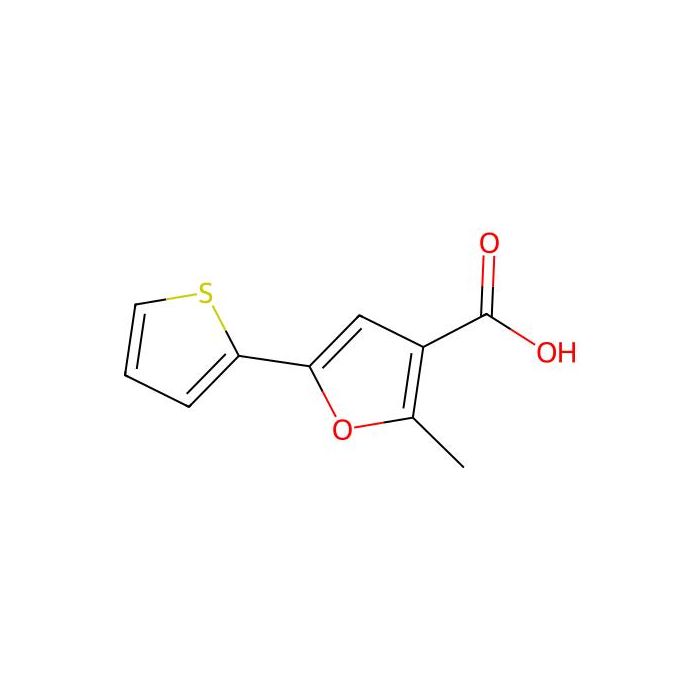
GRADE & PURITYMoligand™?Moligand™ — Aladdin's line of ligands and bioactive small molecules. Use for receptor, pathway, and binding studies needing defined small-molecule tools.10 mM in DMSO
Determine the necessary mass, volume, or concentration for preparing a solution.
Dilution Calculator
Determine the dilution needed to prepare a stock solution.
Reconstitution Calculator
Reviews
Customer Reviews
Application Protocols
No vendor-tested application protocols are provided for this item. The following general guidance may help in implementing Jedi2 in screening workflows.
Stock preparation: Dissolve in anhydrous DMSO to 10–50 mM as a starting point. Sonication or gentle heating (≤40°C) may assist dissolution if compatible with stability. Filter (0.2 µm PTFE) or centrifuge to clarify.
Aliquoting: Prepare single-use aliquots (10–50 µL) in low-bind tubes/plates. Record exact concentrations and dates. Avoid repeated freeze–thaw cycles.
Dosing: For 384/1536-well assays, use acoustic or pin tools to minimize DMSO carryover. Maintain matched vehicle controls at identical DMSO percentages.
Stability checks: Analyze pre- and post-assay plates by LC–MS/UPLC to confirm compound integrity and absence of precipitation.
Interference controls: Include detergent (e.g., 0.01% Triton X-100 or Pluronic F-127 if compatible) to reduce aggregation artifacts, and incorporate redox/fluorescence interference controls when relevant.
All parameters should be optimized for your specific assay and instrumentation. For authoritative safety and handling, consult the SDS.
Biological Roles
No biological function, pathway involvement, or target specificity is provided for Jedi2 in the product data. This item is supplied as a research-use small molecule within a screening library.
Known biological roles: Not specified for this item; refer to primary literature if associated with CAS 651005-90-2 or CID 2796026 in your databases.
Mechanism of action: Not specified for this item; must be determined empirically by the user via biochemical/cellular assays.
Metabolism/ADME: Not specified. If progressing to in vitro DMPK characterization, evaluate solubility, stability (microsomes/hepatocytes), and protein binding independently.
General guidance for exploratory studies (non-clinical, research only):
Establish preliminary cytotoxicity windows (e.g., CellTiter-Glo or resazurin) in relevant cell lines to define non-toxic assay ranges.
Use orthogonal readouts to guard against fluorescence/absorbance interference or redox cycling artifacts.
If photophysical properties are suspected (fluorescence/absorbance), record spectra to set instrument parameters and avoid false positives.
All uses are strictly for research; no diagnostic or therapeutic applications are implied.
Buffer Applications
Jedi2 is a small-molecule screening ligand and is not a buffering agent. Therefore, buffer preparation guidance is generally not applicable.
Buffer capacity/recipes: Not applicable.
Practical note: When dosing into biochemical buffers, maintain constant vehicle (e.g., 0.2–1% DMSO) across controls and treatments. Verify that the compound is stable in the selected buffer over the assay timeframe and does not precipitate upon dilution.
If compound ionization is relevant (unknown here), select buffers whose pH makes the compound sufficiently soluble without compromising target activity (typical assay range pH 6.5–7.5).
Green Alternatives
While structural details are not provided for Jedi2, greener choices can be made around dissolution and processing solvents in screening and analytical workflows.
Greener solvent options (general guidance):
Replace DMF or NMP with DMSO or ethanol when feasible for stock preparation, given comparable solvating power and better EHS profiles.
Consider ethanol or isopropanol for intermediate dilutions if assay tolerance allows, reducing reliance on high-boiling dipolar aprotics.
Favor acetonitrile over dichloromethane for normal-phase prep steps; for reversed-phase sample prep, aqueous acetonitrile is standard and relatively low in toxicity.
Comparison (general, trade-offs):
DMSO: Good EHS profile relative to DMF/NMP; miscible with water; may affect biological assays at >1%.
Ethanol: Renewable, low toxicity; limited solubility for highly lipophilic compounds; volatility can complicate precise dosing.
2-Propanol: Greener than many aprotics; may extract plastics; moderate solvency.
CPME/2-MeTHF: Greener ethers for workups/extractions (if needed), but rarely required for simple stock preparation.
Practical steps:
Minimize solvent volumes and prepare concentrated master stocks to reduce waste.
Use sealed, low-dead-volume reservoirs and cold storage to extend solvent life and decrease evaporative losses.
Implement microplate-based miniaturization to lower per-assay solvent consumption.
Always confirm compound stability/solubility in any greener alternative before broad adoption.
Pharmaceutical Uses
This product is supplied strictly for research use and is not intended for human or veterinary use, diagnostic procedures, or as a drug substance/excipient.
Pharmacopeial status: Not specified for this item; no pharmacopeial monograph is indicated.
Formulation role: Not applicable. Jedi2 is provided as a research ligand rather than an excipient or process aid.
For preclinical method-development contexts (general guidance, non-clinical):
If used as an analytical reference standard, document purity and identity versus the supplied CoA. Establish validated HPLC/UPLC methods for quantitation.
If used in in vitro pharmacology screens, maintain detailed records of lot number, stock solvent, concentration verification, and storage history to support reproducibility.
No therapeutic or clinical claims are made or should be inferred from this listing.
Physical Properties
Item-specific physicochemical properties have not been provided in the current listing. Do not assume values for critical parameters.
Appearance: Not specified for this item; refer to CoA/Spec Sheet.
Melting point (literature/computed): Not specified for this item; refer to CoA/Spec Sheet.
Boiling point (literature): Not specified for this item; refer to CoA/Spec Sheet.
Density (literature): Not specified for this item; refer to CoA/Spec Sheet.
Refractive index (literature): Not applicable to solids; if liquid, not specified for this item; refer to CoA/Spec Sheet.
LogP/logD (literature/computed): Not specified for this item; refer to CoA/Spec Sheet.
pKa(s) (literature/computed): Not specified for this item; refer to CoA/Spec Sheet.
Solubility profile: Not specified for this item; refer to CoA/Spec Sheet.
General guidance for small-molecule ligands (literature/general knowledge):
Primary dissolution vehicles commonly include anhydrous DMSO (analytical or cell-culture grade), DMF, ethanol, or aqueous buffers with co-solvent. Begin with DMSO at 10–50 mM stock where compatible.
If the compound is lipophilic (typical for many screening ligands), expect limited aqueous solubility; employ serial dilution into assay buffer containing 0.1–1% DMSO.
If ionizable functional groups are present (unknown here), solubility may improve under appropriate pH. Avoid extreme pH unless stability is verified by LC.
Always confirm experimental solubility and stability by LC/UV (and MS if available) under your assay conditions. Defer to the lot-specific CoA for any available numeric specifications.
Quality and Grades
Grade: Moligand™ (as listed). Moligand products are intended as small-molecule ligands for research screening, target validation, and chemical biology workflows. They are for research use only and not for diagnostic or therapeutic use.
What the grade generally implies (general knowledge):
Focus on suitability for biochemical/cellular assays rather than synthetic reagent specifications. Materials are typically provided to support reproducible screening, with attention to identity and purity supporting structure–activity work. Item-specific numeric specs (e.g., purity %, residual solvents, water content) are not listed here.
Item-specific quality details:
Purity: Not specified for this item; refer to CoA/Spec Sheet.
Stabilizers/additives: Not specified for this item; refer to CoA/Spec Sheet.
Salt form/solvation state: Not specified for this item; refer to CoA/Spec Sheet.
Recommendations for QC on receipt (practical guidance):
Verify identity by LC–MS. Record retention time and exact mass for your method. If structural data are retrieved from CAS/CID, confirm consistency.
Assess purity by UPLC/UV at multiple wavelengths (e.g., 210, 254, 280 nm) and, if available, ELSD to detect nonchromophoric impurities.
Document any polymorph or solvate behavior if relevant to your assay conditions.
For any regulatory or publication needs, attach the lot-specific CoA/SDS to your records and report the SKU and lot number alongside CAS 651005-90-2.
Reaction and Applications
This product is positioned as a research ligand in a small-molecule library (Moligand™). It is not primarily marketed as a synthetic reagent, but rather as a screening/chemical biology tool compound.
Research applications (general, non-clinical):
Primary/secondary screening: Use in high-throughput or focused screens against biochemical targets or cellular phenotypes. Establish robust assay windows with matched vehicle controls.
Target deconvolution: If activity is observed, pursue chemoproteomics/affinity capture (when functional handles are feasible) or structure–activity relationship (SAR) studies using analogs.
Reference standard: Employ as a comparator in analytical methods development, retention time indexing, or to benchmark physicochemical filters (e.g., chromatographic hydrophobicity).
Assay best practices:
Prepare fresh DMSO stocks, verify concentration spectroscopically or by quantitative NMR if the extinction coefficient is unknown.
Track carryover and adsorption on plastics; pre-rinse tips/plates with solvent containing the compound for low-nM to µM assays.
Monitor stability over assay time (e.g., 0–24 h) by LC to detect hydrolysis, oxidation, or isomerization.
Notes:
No specific biochemical mechanism, target class, or pathway is provided in the product data for Jedi2. Any mechanistic claims must be established independently by the user with appropriate controls and orthogonal assays.
All use is for research only; no clinical or diagnostic applications.
Reaction Conditions
Not applicable in the typical sense: Jedi2 is supplied as a research ligand for screening, not as a reagent or catalyst for chemical reactions.
No standard reaction conditions (solvent, temperature, catalysts) are specified or implied for this item.
If using Jedi2 as a substrate or probe in enzymatic or chemical transformation studies, establish conditions empirically and verify compound integrity by LC–MS across the time course.
Refer to other sections (Solvent Selection, Storage & Reconstitution) for practical advice on preparing and handling solutions.
Safety and Handling
Safety information specific to this item is not provided in the listing; consult the SDS for authoritative guidance.
GHS classification: Not specified for this item; refer to SDS.
Signal word / pictograms: Not specified for this item; refer to SDS.
H-Statements: Not specified for this item; refer to SDS.
General laboratory precautions for small-molecule screening ligands (general knowledge):
PPE: Wear lab coat, safety glasses, and appropriate chemically resistant gloves (e.g., nitrile). Use in a chemical fume hood to avoid inhalation of dusts/aerosols or solvent vapors.
Handling: Minimize freeze–thaw. Warm only briefly on ice or at room temperature prior to aliquoting. Open vials after temperature equilibration to avoid moisture condensation.
Incompatibilities: Unknown for this item. As a precaution, segregate from strong oxidizers, strong acids/bases, and reducing agents until stability is known.
Hygroscopicity/photolability: Not specified. Store protected from light and moisture as a conservative measure.
First aid (overview): In case of contact, rinse affected area with water for 15 minutes and remove contaminated clothing. If inhaled, move to fresh air. Seek medical attention per institutional SOPs and SDS guidance.
Spill/accidental release: Absorb with inert material, collect in a sealed container, and dispose according to local regulations. Avoid dust formation.
Always rely on the shipped SDS and institutional EHS procedures for risk assessment and controls.
Solvent Selection
Because compound-specific solubility is not provided, choose solvents empirically while following best practices for small-molecule ligands.
Polarity class: Not specified for this item; refer to CoA/Spec Sheet. Begin with polar aprotic screening solvents.
Recommended primary vehicle (general): Anhydrous DMSO. Prepare a concentrated stock (e.g., 10–50 mM) and dilute into assay buffer, keeping final DMSO at ≤0.5–1% v/v unless the system tolerates higher.
Secondary options: DMF, ethanol, isopropanol, or acetonitrile. For aqueous use, employ co-solvent strategies (0.1–10% DMSO/EtOH) and surfactant if validated (e.g., 0.01–0.05% Pluronic F-127 in cellular assays).
pH adjustment: If the molecule is ionizable (unknown here), pH can strongly impact solubility. Explore buffers spanning pH 5.5–8.0, checking chemical stability by LC.
Avoid: Neat water without co-solvent for hydrophobic ligands; strong acids/bases unless stability is demonstrated; reactive solvents for sensitive functionalities.
Comparison (general guidance):
DMSO: Highest solvating power; widely compatible with biochemical screens; watch for DMSO-induced assay artifacts above ~1–2%.
Ethanol: Good for moderately lipophilic compounds; more volatile; biological systems typically tolerate ≤0.5%.
Acetonitrile: Excellent for analytical prep and LC; limited biological tolerance.
Practical tips:
Filter or centrifuge stocks to remove undissolved particulates prior to serial dilution.
Confirm absence of aggregation by including a mild detergent control or DLS where relevant.
Storage and Reconstitution
Storage conditions (from Product Data): Store at -80°C. Shipments are made on dry ice packs + cold packs. Maintain cold chain on receipt.
Best practices on receipt:
Immediately transfer to a -80°C freezer. If the material arrives lyophilized or as a film, allow to equilibrate to room temperature in a desiccator before opening to prevent moisture condensation.
Protect from light and moisture as a conservative measure, especially if structure is unknown.
Reconstitution (general guidance for small molecules):
Solvent: Use anhydrous DMSO as the default solvent. Start with 10–50 mM stocks. If aqueous use is required, dilute into buffer with 0.1–1% DMSO while monitoring for precipitation.
Aliquoting: Prepare single-use aliquots to avoid freeze–thaw. Store aliquots at -80°C in tightly sealed, chemically compatible vials or plates.
Stability: Lot-specific stability data are not provided. Periodically verify concentration and integrity by LC–UV/MS after storage; avoid repeated warming cycles.
Disposal:
Dispose of unused material and solvent waste according to institutional chemical waste procedures and local regulations.
Notes:
Appearance, exact solubility, and any stabilizers are not specified for this item; refer to the lot-specific CoA/Spec Sheet and SDS for authoritative instructions.
Structure and Identity
Brief summary: Jedi2 (SKU J1496071) is listed in our small-molecule/compound library (Moligand series) for research screening and ligand discovery. Item-specific structural identifiers are limited in the current listing.
CAS: 651005-90-2 (provided)
PubChem CID: 2796026 (provided)
InChIKey: Not specified for this item; refer to CoA/Spec Sheet.
SMILES: Not specified for this item; refer to CoA/Spec Sheet.
Molecular formula: Not specified for this item; refer to CoA/Spec Sheet.
Molecular weight: Not specified for this item; refer to CoA/Spec Sheet.
Structural features (general notes):
Specific ring systems, heteroatoms, and functional groups are not disclosed in the product data. Any structural interpretation should be taken from the CoA/SDS or the referenced databases (CAS/CID) maintained by the customer’s institution.
Stereochemistry: Not specified for this item; refer to CoA/Spec Sheet.
2D structure (descriptive):
A 2D depiction is not included in this listing. Please consult your institutional cheminformatics resources using CAS 651005-90-2 or CID 2796026 to visualize the molecular scaffold, substituent pattern, and potential ionizable centers.
Identity best practices:
When building assays, verify identity by orthogonal means (e.g., HRMS, 1H/13C NMR, comparative HPLC/UPLC retention vs. reference) using material from the shipped lot.
Reference all reporting to the lot-specific CoA for unambiguous linkage between structure and experimental data.
Synthetic Utility
Jedi2 is offered as a finished small-molecule ligand for screening rather than as a synthetic building block. No reactive handle or functional group information is provided in the current listing.
Building-block use: Not typically applicable without knowledge of functional groups (halogens, boronates, amines, acids) that would enable cross-coupling or derivatization.
Reference material: The compound may serve as a reference standard for analytical method development or for benchmarking chromatographic behavior in ADME or QC labs.
SAR and probe development: If structure becomes available (via CAS/CID lookup), medicinal chemistry teams may consider scaffold hopping, vector exploration, or introduction of linkers for affinity capture, but such work requires structural confirmation and IP due diligence.
If synthetic transformations are planned, first obtain full structural information and confirm the compound’s form (free base/acid, salt, solvate) and stability profile from the CoA and independent analyses (NMR, LC–MS).
Target Specificity
No target, class, or selectivity profile is provided for Jedi2 in the product data.
Target(s): Not specified for this item; refer to your screening results or literature sources linked to CAS 651005-90-2 / CID 2796026.
Species selectivity: Not specified for this item; refer to CoA/Spec Sheet.
Assay-validated activity: Not specified for this item; refer to internal data.
Any claims of specificity must be established by the end user using validated primary and orthogonal assays, counter-screens to rule out assay interference, and appropriate statistical analysis.
Need help choosing the grade?
Our grade selection guide covers purity, stabilizer status, and application suitability for all variants in our catalog.
We use cookies to ensure the website functions properly and, where permitted, to improve your experience. You can manage your preferences at any time in Settings. Learn more in our Cookie Policy.
Shall we send you a message when we have discounts available?
Remind me later
Thank you! Please check your email inbox to confirm.
Products are supplied to verified businesses, institutions, and qualified professionals for research and development use only. Not for use in humans, animals, diagnosis, or therapy.