
Determine the necessary mass, volume, or concentration for preparing a solution.
| Activity Type | Activity Value -log(M) | Mechanism of Action | Activity Reference | Publications (PubMed IDs) |
|---|
Moligand™, 10mM in DMSO Moligand™ for sensitive chromatographic and analytical workflows requiring minimal baseline interference.
Store at -80°C Ships Dry ice packs + Cold packs Check lot-specific COA for exact specifications.
SDS, COA, datasheet, and spec sheet available for download. Lot-specific COA accessible via lot number lookup.
Cited in 32 peer-reviewed publications across chromatography, organic synthesis, and cross-coupling reactions.
Information
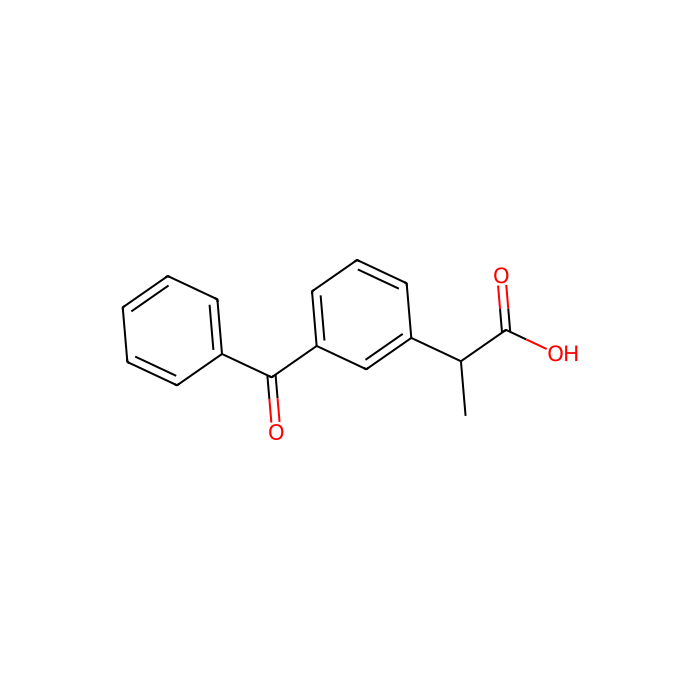
Ketoprofen (RP-19583) is a dualCOX1/2inhibitor, used as a nonsteroidal anti-inflammatory drug to treat arthritis-related inflammatory pains.
In vitro
Ketoprofen combined with UVB irradiation induces the cytotoxicity and suppresses DNA synthesis in HaCaT cells in a concentration-dependent manner. Ketoprofen combined with UVB irradiation inhibits the cell growth and induces G2/M cell cycle arrest by modulating the levels of cdc2, cyclin B1, Chk1, Tyr15-phosphorylated cdc2 and p21. Ketoprofen combined with UVB irradiation also provokes a striking accumulation of cyclin B1-cdc2-p21 complexes, concomitantly with an increase in the levels of Tyr15-phosphorylated cdc2 and p21 protein. Ketoprofen combined with UVB irradiation accentuates the apoptotic response to UVB radiation in HaCaT cells as evidenced by DAPI staining.
In vivo
Ketoprofen at 1% level in suitable topical vehicles can effectively inhibit GCF-LTB4 and GCF-PGE2 and positively alter alveolar bone activity in the ligature-induced model of periodontitis in the monkey. Ketoprofen (3.63 mg/kg bwt) reduces hoof pain andlameness to a greater extent than the 2.2 mg/kg dose and phenylbutazone. Ketoprofen is more effective than local anesthesia (LA), or caudal epidural anesthesia (EPI) in decreasing cortisol and partially reverses the reduction in average daily gain (ADG) following castration. Ketoprofen (40 and 80 mg/kg diet) reduces the incidence of transitional cell carcinoma of the urinary bladder by >70% from that seen in dietary mice.
Cell Data
cell lines:SKBr3, MDA-MB-453, BT-474, ZR-75-1, MDA-MB-231, MDA-MB-468, T47D, MCF 7, Hs578T, MDA-MB-361, UACC-812, et al.
Concentrations:
Incubation Time:
Powder Purity:≥100%
Comprehensive hazard, handling, storage, and regulatory compliance document.
<<<<<<< HEAD Download SDS → ======= Download SDS → >>>>>>> release248-p3Lot-specific quality data. Enter your lot number to retrieve the exact COA.
Look up COA →Full quality attributes and acceptance criteria for this grade.
View spec sheet →| Activity Type | Activity Value -log(M) | Mechanism of Action | Activity Reference | Publications (PubMed IDs) |
|---|
| Activity Type | Activity Value -log(M) | Mechanism of Action | Activity Reference | Publications (PubMed IDs) |
|---|
| Activity Type | Activity Value -log(M) | Mechanism of Action | Activity Reference | Publications (PubMed IDs) |
|---|
| Solubility | Solubility (25°C) In vitro DMSO: 38 mg/mL (181.71 mM); Water: 38 mg/mL (181.71 mM); Ethanol: 38 mg/mL (181.71 mM); |
|---|---|
| x_melt_point_char | 92-97° |
Our grade selection guide covers purity, stabilizer status, and application suitability for all variants in our catalog.
View Moligand™ grade guide →