≥99% for sensitive chromatographic and analytical workflows requiring minimal baseline interference.
🌡
Storage & shipping
Store at -20°C Ships Ice chest + Ice pads Check lot-specific COA for exact specifications.
📋
Quality documents
SDS, COA, datasheet, and spec sheet available for download. Lot-specific COA accessible via lot number lookup.
📚
Literature proof
Cited in 0 peer-reviewed publications across chromatography, organic synthesis, and cross-coupling reactions.
Overview
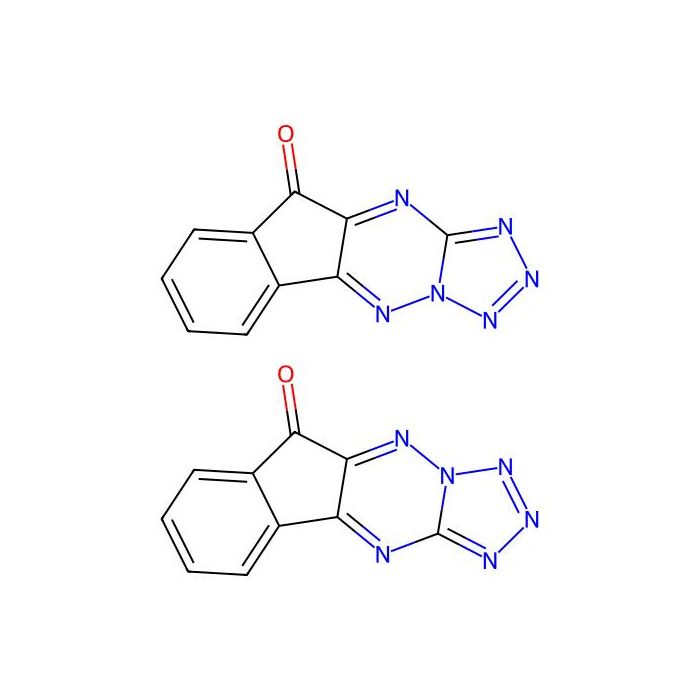
KP372-1 is an Akt inhibitor that inhibits proliferation and induces apoptosis and anoikis. KP372-1 is also an NQO1 redox cycling agent that causes DNA damage (including DNA breakage) by generating ROS. KP372-1 can be used in cancer research (such as head and neck squamous cell carcinoma (HNSCC) and pancreatic cancer) .
In Vitro
KP372-1 (0.0625, 0.125, 0.25, 0.5, 1.0 µM; 48 h) inhibits growth of JMARc42 and Tu167c2 cells with IC 50 s of 200 and 100 nM, respectively. KP372-1 (125 nM; 24 h) induces Tu167c2 cells apoptosis and induces anoikis in the JMARc42 cells. KP372-1 (125 nM; 30 min) blocks Akt, thereby decreasing the phosphorylation of the S6 ribosomal protein in both Tu167 and JMAR cells. KP372-1 (0.250, 0.5, 1.0 µM; 30 min) inhibits Akt kinase activity with an IC 50 of 250 nM in JMAR cells. MCE has not independently confirmed the accuracy of these methods. They are for reference only. Cell Proliferation AssayCell Line: JMARc42 and Tu167c2 cells Concentration: 0.0625, 0.125, 0.25, 0.5, 1.0 µM Incubation Time: 48 h Result: Showed antiproliferative activity. Apoptosis AnalysisCell Line: Tu167c2 and JMARc42 cells Concentration: 125 nM Incubation Time: 24 h Result: Induced approximately 90% of cells apoptosis. Western Blot AnalysisCell Line: Tu167 and JMAR cells Concentration: 125 nM Incubation Time: 30 min Result: Induced a small but consistent decrease in Akt phosphorylation with a concomitant marked decrease in S6 phosphorylation. Inhibited the EGF induced phosphorylation of Aktser473 in Tu167 and AktThr308 in JMAR. Western Blot AnalysisCell Line: JMAR cells Concentration: 0.250, 0.5, 1.0 µM Incubation Time: 30 min Result: Significantly blocked Akt kinase activity in a dose-dependent fashion, with an IC 50 of 250 nM.
In Vivo
KP372-1(10, 20 mg/kg; i.v.; single daily for 33 days) induces NADH oxidation and impairs tumor growth in vivo without apparent toxicity. MCE has not independently confirmed the accuracy of these methods. They are for reference only. Animal Model: Nude mice (H1299 xenografts model). Dosage: 10, 20 mg/kg Administration: Tailvein injection; single daily for 33 days Result: Affected tumor metabolism and suppressed tumor growth.
KP372-1 is an Akt inhibitor that inhibits proliferation and induces apoptosis and anoikis. KP372-1 is also an NQO1 redox cycling agent that causes DNA damage (including DNA breakage) by generating ROS. KP372-1 can be used in cancer research (such as head
Storage
Store at -20°C
Shipped In
Ice chest + Ice pads
This product requires cold chain shipping. Ground and other economy services are not available.
This compound belongs to the class of organic compounds known as aryl ketones. These are organic aromatic compounds that contain a ketone group substituted at one C-atom with an aryl group. They have the generic structure RC(=O)R', where R = aryl group and R'=organyl group.
External Descriptors
Not available
1. Djoumbou Feunang Y, Eisner R, Knox C, Chepelev L, Hastings J, Owen G, Fahy E, Steinbeck C, Subramanian S, Bolton E, Greiner R, and Wishart DS. ClassyFire: Automated Chemical Classification With A Comprehensive, Computable Taxonomy. Journal of Cheminformatics, 2016, 8:61.
Determine the necessary mass, volume, or concentration for preparing a solution.
Dilution Calculator
Determine the dilution needed to prepare a stock solution.
Reconstitution Calculator
Reviews
Customer Reviews
Application Protocols
Vendor-tested application details are not provided for this product. The following are general, non-item-specific protocols for small-molecule screening compounds.
DMSO stock preparation:
Warm vial to ambient in a desiccator, then briefly centrifuge to collect material.
Add dry DMSO to prepare a 10 mM stock (adjust to desired concentration based on molecular weight—if unknown, determine from CoA before calculating molarity). Vortex and, if needed, sonicate. Record clarity.
Plate-based assay dosing:
Perform serial dilutions in DMSO (e.g., 1:3 or 1:2). Back-dilute into assay buffer/media to achieve final DMSO ≤0.1–0.5% v/v.
Include vehicle controls and, if available, a reference compound.
Stability checks:
Store working stocks at −20°C, desiccated, protected from light. Avoid repeated freeze–thaw; aliquot upon first dissolution.
Verify integrity by UPLC/HRMS after assay completion to detect degradation or adsorption losses.
Analytics:
Establish LC–MS method (e.g., C18, water/MeOH or water/ACN with 0.1% formic acid). Optimize gradient to baseline-resolve any impurities.
Item-specific recommended dilutions, positive controls, or assay types: Not specified for this item; refer to CoA/Spec Sheet.
Biological Roles
Item-specific target(s) or mode of action are not provided in the Product Data. Therefore, no specific biological role or pathway assignment is made here.
General context for small-molecule library members:
Compounds in discovery libraries are commonly used to probe protein function, signaling pathways, and phenotype modulation in cellular or biochemical assays.
Potential roles (literature, not item-specific) can include enzyme inhibition/activation, receptor modulation, or interference with protein–protein interactions. Definitive classification requires disclosed structure, assay data, or a validated reference.
Best practices for biological evaluation:
Establish baseline cytotoxicity (e.g., CellTiter or resazurin assays) to define a non-toxic concentration range before mechanistic studies.
Implement orthogonal assays (biochemical vs. cell-based) to confirm on-target effects and rule out assay artifacts (e.g., redox cycling, aggregation). Consider using counter-screens such as detergent-supplemented assays to detect colloidal aggregation.
Control for DMSO vehicle concentration and lot-to-lot variability of biological matrices (serum, media supplements).
If you require target attribution or curated literature for KP372-1 (CAS 1374996-60-7, CID 49835991), please consult the SDS/CoA or contact Aladdin Scientific support with your application details to obtain any available references or technical notes.
Buffer Applications
This product is a discrete small-molecule library member and is not a buffering agent. Classic buffer system details (pKa, pH ranges, recipes) are not applicable.
Practical notes relevant to buffers in assay contexts:
When diluting DMSO stocks into aqueous buffers, add the compound stock slowly with vigorous mixing to minimize local supersaturation and precipitation.
Verify compatibility with your buffer components (e.g., avoid strong nucleophiles or oxidants if the compound contains labile motifs; structural details are not provided here).
For stability evaluations, test in multiple buffers (e.g., phosphate, HEPES, Tris) across relevant pH values and temperatures to identify optimal assay conditions.
Item-specific buffer data: Not specified for this item; refer to CoA/Spec Sheet.
Green Alternatives
Because KP372-1 is a discrete screening compound rather than a process solvent or bulk reagent, the concept of “green alternative chemicals” applies mainly to solvent choices during handling and analytics.
Prefer aqueous-compatible vehicles to minimize DMSO content in assays (e.g., employ hydroxypropyl-β-cyclodextrin or low levels of ethanol), subject to biological compatibility.
Use microscale operations and high-throughput liquid handling to reduce solvent consumption and waste.
For chromatography, consider water-rich UPLC methods with methanol as organic modifier where suitable, noting that acetonitrile has a higher EHS burden.
Illustrative comparison (solvent for stock preparation; general):
DMSO: Gold standard for solubility; higher EHS footprint; typically needed.
Ethanol: Greener than many aprotic solvents; lower solvency breadth; assay-compatible at low %.
2-MeTHF/CPME: Greener ethers used in synthesis; generally not required for dissolution of screening stocks and may be incompatible with bioassays.
Waste minimization:
Consolidate DMSO waste streams and segregate halogenated from non-halogenated organics.
Use LC–MS with short gradients and sub-2 μm columns to reduce solvent volumes while maintaining resolution.
Note: No item-specific green certification or solvent restrictions are provided for this product.
Pharmaceutical Uses
No pharmacopeial status, excipient role, or GMP suitability is provided for this product. It is supplied strictly for research use only (per Product Data) and is not intended for human or veterinary use, clinical diagnostics, or as an API/excipient.
In preclinical discovery, small molecules are sometimes formulated for in vitro or exploratory in vivo studies using vehicles such as DMSO/saline, DMSO/PEG400, or cyclodextrin complexes. Any such work should be accompanied by stability and compatibility testing.
If PK/PD enabling studies are envisioned, develop analytical methods (LC–MS/MS) and forced-degradation panels to understand stability and potential metabolite profiles.
Regulatory note:
No claims of compliance with USP/EP/JP, ICH Q7/Q11, or GLP/GMP are made for this item. For regulated applications, a different grade and full CMC documentation would be required.
Item-specific pharmaceutical information: Not specified for this item; refer to CoA/Spec Sheet.
Physical Properties
Item-specific physicochemical data have not been provided for this lot. For method development and handling, use the following guidance.
Item-specific values (as supplied):
Appearance: Not specified for this item; refer to CoA/Spec Sheet.
Molecular Weight: Not specified for this item; refer to CoA/Spec Sheet.
Melting point, boiling point, density, refractive index, UV cutoff: Not specified for this item; refer to CoA/Spec Sheet.
Solubility: Not specified for this item; refer to CoA/Spec Sheet.
General/literature-based considerations for small-molecule screening compounds (not item-specific):
Many discovery compounds are moderately lipophilic (typical cLogP 2–5, literature) and dissolve well in anhydrous DMSO (10–50 mM stock solutions common).
Aqueous solubility is frequently limited; cosolvent systems (DMSO→water titration, or DMSO:PEG400:saline blends) are typical for biological assays.
If the structure contains basic amines, solubility may increase in acidic buffers (e.g., 10–50 mM citrate/phosphate, pH 3–6). Acid/base microdosing can reveal pH–solubility profiles.
Practical recommendations:
Prepare an initial 10 mM stock in dry DMSO; visually inspect for clarity and absence of particulates. If insoluble, warm gently (25–37°C) and sonicate briefly.
Record exact solvent, concentration, and any pH adjustment used; maintain consistency across experiments.
For UV detection method development, acquire a scan (200–400 nm) on first use; do not assume a generic UV cutoff.
Quality and Grades
Grade/Purity: Not specified for this item; refer to CoA/Spec Sheet.
What this means in practice:
Without an explicit grade (e.g., ≥98%, HPLC grade, screening grade), default to verifying identity and purity via your in-house QC prior to critical studies. Typical checks include HPLC/UPLC purity, HRMS, and, where feasible, 1H NMR.
If UV transparency or low non-volatile residue (NVR) is critical (e.g., for LC–MS bioassay compatibility), confirm via the CoA.
Purity: Gradient UPLC with diode-array detection (200–400 nm); assess single-peak purity and check for late-eluting impurities.
Water/peroxide/metal content: Not specified for this item; refer to CoA/Spec Sheet. If moisture sensitivity is suspected, perform Karl Fischer on receipt.
Stabilizers/inhibitors:
Stabilizer presence: Not specified for this item; refer to CoA/Spec Sheet.
If any stabilizer is present, document its concentration and account for it in molarity calculations.
Lot-to-lot and documentation:
Request and archive the Certificate of Analysis and, if available, Structure/Spec Sheet for the exact lot shipped. Match CAS and any synonym names during ELN registration.
Reaction and Applications
Manufacturer Applications: Not specified in the Product Data beyond categorization as a small molecule in a compound library. Accordingly, KP372-1 is primarily intended for research screening, target validation, and mechanistic chemical biology, not as a general-purpose synthetic reagent.
Practical applications in discovery workflows (general guidance):
Probe development: Use in cell-based or biochemical assays to explore pathway modulation; maintain rigorous controls for vehicle (DMSO) and off-target evaluation.
SAR context: If analog series are available, pair with matched inactive controls to discern target-related phenotypes.
Analytical characterization: Establish retention time and MS fragmentation to enable downstream bioanalytical quantification if needed.
Synthetic/reaction chemistry note:
Without disclosed functional groups, this item is not recommended as a building block for further synthesis. If derivatization is intended, request structural disclosure and assess protective group and coupling strategies.
Assay implementation tips:
Start with a serial dilution from 10 mM DMSO stocks to build a concentration–response curve (e.g., 10-point, half-log spacing). Keep final DMSO constant across wells.
Confirm solubility at highest assay concentration; check for precipitation or turbidity post-dilution, especially in protein-rich media.
Validate stability over assay duration (e.g., 4–48 h) by re-injecting samples via LC–MS to detect degradation or adsorption losses.
Reaction Conditions
Not typically applicable. KP372-1 is supplied as a discrete bioactive screening compound, not a reagent or catalyst. No synthetic reaction conditions are recommended or required for its intended use.
If you intend to modify the molecule (derivatization; not the standard use-case):
Establish solvent compatibility first (DMSO, DMF, MeCN often suitable for polar substrates; toluene/2-MeTHF for less polar systems), and perform micro-scale trials.
Typical coupling conditions (general literature guidance, not item-specific):
Amide formation: HATU/DIPEA or EDCI/HOBt at 0–25°C, 1–12 h.
Suzuki coupling: Pd(dppf)Cl2 (1–3 mol%), base (K2CO3), dioxane/H2O, 60–100°C.
Always verify that the functional groups present in KP372-1 (not disclosed here) are compatible before attempting any reaction.
For routine research use (screening/assays), no reaction conditions are needed; focus on dissolution, dosing, and stability in the chosen biological matrix.
Safety and Handling
Safety status for this specific item is not provided; handle as a potentially hazardous organic research chemical.
Item-specific safety data:
GHS Classification: Not specified for this item; refer to SDS.
Signal Word / H-Statements / Pictograms: Not specified for this item; refer to SDS.
General precautions (best practice for small organic compounds):
Engineering controls: Work in a certified chemical fume hood. Avoid aerosol generation when weighing powders.
PPE: Lab coat, safety glasses, and suitable disposable nitrile gloves. Upgrade to splash goggles and double-glove when handling concentrated DMSO solutions.
Avoid ingestion, inhalation, and skin contact. Prevent environmental release.
Storage/incompatibilities:
Storage temperature (item-specific): Store at −20°C (per Product Data). Keep container tightly closed, desiccated, and protected from light if possible.
Incompatibilities (general): Strong oxidizers, strong acids/bases (depending on functional groups), and reactive metals. Avoid prolonged exposure to moisture and air for hydrolytically or oxidatively sensitive motifs.
First-aid (overview; defer to SDS):
Skin/eye contact: Rinse with water for ≥15 min; remove contaminated clothing. Seek medical attention if irritation persists.
Inhalation: Move to fresh air; seek medical attention if symptoms occur.
Ingestion: Rinse mouth; do not induce vomiting; seek medical attention.
Disposal: Collect as hazardous organic waste per institutional and local regulations.
Solvent Selection
Objective: Achieve reliable dissolution for stock solutions and assay dosing while maintaining biological compatibility.
Item-specific solubility: Not specified for this item; refer to CoA/Spec Sheet.
General guidance for small-molecule screening compounds:
Primary solvent: Anhydrous DMSO is the default for 10–50 mM stocks due to broad solvency and assay compatibility at ≤0.1–0.5% v/v.
Secondary solvents: Ethanol, methanol, acetonitrile can be used for analytics; for biological systems, EtOH is typically preferred over MeOH/ACN at low percentages.
Aqueous work: Use cosolvent dilution (e.g., 100% DMSO stock → gradual addition into buffer with vigorous mixing). Avoid direct addition to cold buffers to prevent precipitation.
Buffer selection: If the compound is basic, acidic buffers (pH 3–6) may improve solubility; if acidic, basic buffers (pH 8–10) may help—verify stability.
Comparison (general):
DMSO: Highest solvency; potential to enhance membrane permeability but can affect cells above 0.5–1%.
PEG400: Useful for in vivo enabling studies; viscous; can complicate LC–MS.
Cyclodextrins: Improve apparent solubility without high organic content; require compatibility testing.
Practical tips:
Filter 0.2 μm only if chemically stable and not prone to adsorption; otherwise, centrifuge to clarify. Record final visible clarity and any precipitate upon dilution.
Storage and Reconstitution
Item-specific conditions:
Storage Conditions: Store at −20°C (per Product Data). Maintain in a tightly sealed container, ideally under inert atmosphere or with desiccant to limit moisture uptake.
Shipped In: Ice chest + ice pads (per Product Data) to preserve stability during transit.
Appearance: Not specified for this item; refer to CoA/Spec Sheet.
Reconstitution guidance (general for small molecules):
Allow the sealed container to equilibrate to room temperature before opening to prevent condensation.
For initial use, prepare a concentrated stock in anhydrous DMSO (e.g., 10 mM). If the molecular weight is not on the label, obtain it from the CoA before calculating molarity.
Mix thoroughly by vortexing; gentle warming (25–37°C) and brief sonication can assist dissolution. Do not overheat.
Aliquot the stock into single-use vials to avoid freeze–thaw cycles. Store aliquots at −20°C, protected from light.
Stability notes:
Long-term stability, hygroscopicity, and light sensitivity: Not specified for this item; refer to CoA/Spec Sheet. As a precaution, minimize air/light exposure and use desiccants.
Inspect solutions prior to use for precipitation or discoloration; discard if significant changes are observed.
Research Use: For research use only (per Product Data). Register lot details in your ELN and retain CoA/SDS for compliance.
Structure and Identity
Brief overview: KP372-1 is supplied as an individual small-molecule screening compound for research use in chemical biology/drug discovery workflows.
SKU: K648893
Product Name: KP372-1
CAS: 1374996-60-7 (identifier; verify against your project’s registry)
PubChem CID: 49835991 (identifier)
InChIKey: 55343 (as provided; note that typical InChIKeys are 27 characters—consult CoA/SDS for confirmation)
SMILES: Not specified for this item; refer to CoA/Spec Sheet.
Molecular Formula: Not specified for this item; refer to CoA/Spec Sheet.
Molecular Weight: Not specified for this item; refer to CoA/Spec Sheet.
Structural features (general guidance):
Specific functional groups, heterocycles, and stereochemistry for KP372-1 are not disclosed in the Product Data. If structure is required for modeling or LC–MS method development, request the current CoA/Structure Sheet.
2D description: Not specified for this item; refer to CoA/Spec Sheet.
Notes on identifiers:
Use CAS and CID for literature look-up; ensure the supplier lot matches the literature structure if your work requires structural definitiveness (e.g., docking, SAR). Any derived properties below that would depend on structure are intentionally not asserted here without the supplier spec.
Synthetic Utility
KP372-1 is offered as a finished small-molecule screening compound rather than a synthetic intermediate. Without disclosed structure and functional groups, it is not positioned as a building block or reagent.
General considerations (if derivatization is contemplated):
Obtain the full structural disclosure and functional group map from the supplier before planning couplings, protections, or late-stage diversification.
Evaluate heteroatom content, basicity/acidity, and potential reactive handles (e.g., aryl halides, boronates, amines, acids) to select compatible cross-coupling or amide-bond-forming conditions.
Assess stability toward bases, acids, oxidants, and reductants by small-scale screenings prior to any synthetic modification.
Analytical support:
Develop orthogonal purity and identity checks (UPLC, HRMS, 1H/13C NMR) before and after any modification to ensure the parent scaffold remains intact.
Conclusion:
In the absence of item-specific structural information, treat KP372-1 as a terminal research probe rather than a general synthetic synthon. Engage with Aladdin Scientific technical support if a building-block variant or functionalized analog is required.
Target Specificity
Target, pathway, or selectivity profile: Not specified for this item; refer to CoA/Spec Sheet or request technical notes.
Guidance for users planning target engagement studies (general):
Implement both biochemical potency measurements (e.g., enzyme IC50) and cellular readouts to confirm on-target effects.
Use counter-screens against related targets to assess selectivity and potential off-target activity.
Consider CETSA/thermal shift or SPR/BLI assays for direct binding assessment if the protein target is purified.
Documentation:
Cite the exact catalog SKU (K648893), CAS (1374996-60-7), and lot number in reports. Attach the CoA or any vendor-supplied target notes as supplemental material when publishing.
We use cookies to ensure the website functions properly and, where permitted, to improve your experience. You can manage your preferences at any time in Settings. Learn more in our Cookie Policy.
Shall we send you a message when we have discounts available?
Remind me later
Thank you! Please check your email inbox to confirm.
Products are supplied to verified businesses, institutions, and qualified professionals for research and development use only. Not for use in humans, animals, diagnosis, or therapy.