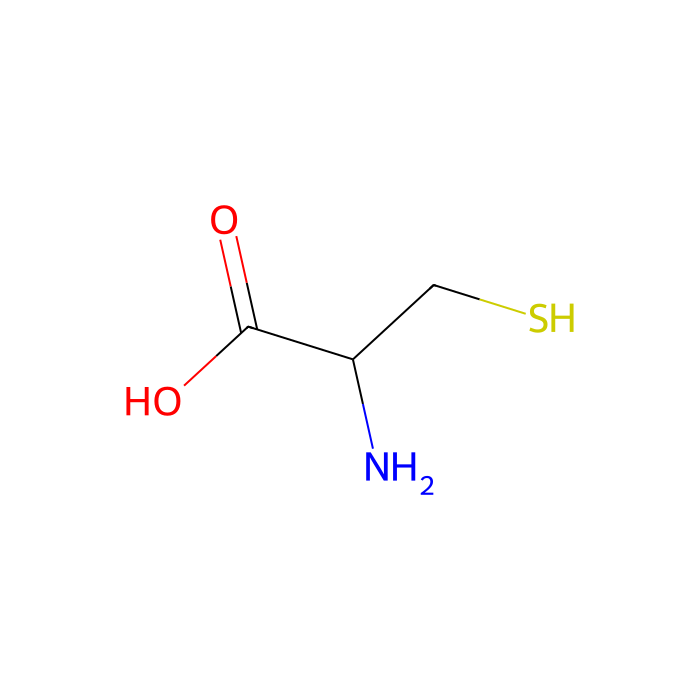
L-Cysteine - Moligand™, Animal Free, for cell culture, ≥98% , CAS No.52-90-4

CAS: 52-90-4 Cat. No.: C108238 Formula: C3H7NO2S Molecular Weight: 121.16 Beilstein Registry Number: 4506 EC Number: 200-158-2
AVAILABLE TO ORDER
GRADE & PURITY Animal Free ? Animal-free — produced without animal-derived components to reduce contamination risk. Use in biomanufacturing and culture avoiding animal-origin material. Moligand™ ? Moligand™ — Aladdin's line of ligands and bioactive small molecules. Use for receptor, pathway, and binding studies needing defined small-molecule tools. for Cell culture ? Cell-culture grade — low endotoxin and contaminants to support viable cell growth. Use in mammalian/other cell culture media and supplements. ≥98%
Synonyms
H-Cys-OH | (R)-2-Amino-3-mercaptopropionic acid | (R)-(+)-Cysteine
Storage
Store at 2-8°C,Argon charged
Shipped In
Wet ice
★
Size
Germany (EU)
USA*
Price
Qty
25g
C108238-25g
—
7 In stock
€51.98
100g
C108238-100g
—
4 In stock
€121.40
500g
C108238-500g
—
1 In stock
€425.11
Enter a quantity for the sizes you want to add.
🧪
Why this grade

Animal Free, Moligand™, for cell culture, ≥98% Animal Free,for Cell culture,Moligand™ for sensitive chromatographic and analytical workflows requiring minimal baseline interference.

🌡

Storage & shipping

Store at 2-8°C,Argon charged Ships Wet ice Check lot-specific COA for exact specifications.

📋

Quality documents

SDS, COA, datasheet, and spec sheet available for download. Lot-specific COA accessible via lot number lookup.

📚

Literature proof

Cited in 1655 peer-reviewed publications across chromatography, organic synthesis, and cross-coupling reactions.

Overview

L-Cysteine is a naturally-occurring non-essential amino acid. L-Cysteine is an activator of NMDA.
A non-essential amino acid.

Specifications

Synonyms
H-Cys-OH | (R)-2-Amino-3-mercaptopropionic acid | (R)-(+)-Cysteine
Specifications & Purity
Animal Free, Moligand™, for cell culture, ≥98%
Biochemical and Physiological Mechanisms
NMDA glutamate receptor
Storage
Store at 2-8°C,Argon charged
Shipped In
Wet ice
This product requires cold chain shipping. Ground and other economy services are not available.
Grade
Animal Free, for Cell culture, Moligand™
Purity
≥98%
Names and Identifiers
Pubchem Sid
Pubchem Sid Url
https://pubchem.ncbi.nlm.nih.gov/substance/488179950
Canonical Smiles
C(C(C(=O)O)N)S
IUPAC Name
(2R)-2-amino-3-sulfanylpropanoic acid
InChIKey
XUJNEKJLAYXESH-REOHCLBHSA-N
INCHI
1S/C3H7NO2S/c4-2(1-7)3(5)6/h2,7H,1,4H2,(H,5,6)/t2-/m0/s1
Isomeric SMILES
C([C@@H](C(=O)O)N)S
Molecular Weight
121.16
Beilstein
4506
Reaxy-Rn
1721406
Reaxys-RN_link_address
https://www.reaxys.com/reaxys/secured/hopinto.do?context=S&query=IDE.XRN=1721406&ln=

Documentation

📋 Safety Data Sheet (SDS)

Comprehensive hazard, handling, storage, and regulatory compliance document.

<<<<<<< HEAD Download SDS → ======= Download SDS → >>>>>>> release248-p3

✅ Certificate of Analysis (COA)

Lot-specific quality data. Enter your lot number to retrieve the exact COA.

Look up COA →

📊 Datasheet

Quick-reference summary of product specifications and applications.

View datasheet →

🔬 Specification Sheet

Full quality attributes and acceptance criteria for this grade.

View spec sheet →

Advanced Data

Taxonomic Classification

Taxonomy Tree

KingdomOrganic compounds
SuperclassOrganic acids and derivatives
ClassCarboxylic acids and derivatives
SubclassAmino acids, peptides, and analogues
Intermediate Tree Nodes Amino acids and derivatives - Alpha amino acids and derivatives
Direct ParentCysteine and derivatives
Alternative Parents L-alpha-amino acids  Amino acids  Monocarboxylic acids and derivatives  Carboxylic acids  Alkylthiols  Organopnictogen compounds  Organic oxides  Monoalkylamines  Hydrocarbon derivatives  Carbonyl compounds  
Molecular FrameworkAliphatic acyclic compounds
Substituents Cysteine or derivatives - Alpha-amino acid - L-alpha-amino acid - Amino acid - Alkylthiol - Carboxylic acid - Monocarboxylic acid or derivatives - Organic oxygen compound - Primary amine - Organosulfur compound - Organooxygen compound - Organonitrogen compound - Organic nitrogen compound - Primary aliphatic amine - Carbonyl group - Amine - Hydrocarbon derivative - Organopnictogen compound - Organic oxide - Aliphatic acyclic compound
DescriptionThis compound belongs to the class of organic compounds known as cysteine and derivatives. These are compounds containing cysteine or a derivative thereof resulting from reaction of cysteine at the amino group or the carboxy group, or from the replacement of any hydrogen of glycine by a heteroatom.
External Descriptors Common amino acids
3D Structure
Interactive Chemical Structure Model


Associated Targets(Human)
F2 Tclin Thrombin (11687 Activities)
Activity TypeRelationActivity valueUnitsAction TypeJournalPubMed IddoiAssay Aladdin ID
ESR1 Tclin Estrogen receptor alpha (17718 Activities)
Activity TypeRelationActivity valueUnitsAction TypeJournalPubMed IddoiAssay Aladdin ID
PGR Tclin Progesterone receptor (8562 Activities)
Activity TypeRelationActivity valueUnitsAction TypeJournalPubMed IddoiAssay Aladdin ID
CHRM2 Tclin Muscarinic acetylcholine receptor M2 (10671 Activities)
Activity TypeRelationActivity valueUnitsAction TypeJournalPubMed IddoiAssay Aladdin ID
HTR1A Tclin Serotonin 1a (5-HT1a) receptor (14969 Activities)
Activity TypeRelationActivity valueUnitsAction TypeJournalPubMed IddoiAssay Aladdin ID
ADRA2A Tclin Alpha-2a adrenergic receptor (9450 Activities)
Activity TypeRelationActivity valueUnitsAction TypeJournalPubMed IddoiAssay Aladdin ID
AR Tclin Androgen Receptor (11781 Activities)
Activity TypeRelationActivity valueUnitsAction TypeJournalPubMed IddoiAssay Aladdin ID
CHRM1 Tclin Muscarinic acetylcholine receptor M1 (12690 Activities)
Activity TypeRelationActivity valueUnitsAction TypeJournalPubMed IddoiAssay Aladdin ID
MAOA Tclin Monoamine oxidase A (11911 Activities)
Activity TypeRelationActivity valueUnitsAction TypeJournalPubMed IddoiAssay Aladdin ID
DRD1 Tclin Dopamine D1 receptor (9720 Activities)
Activity TypeRelationActivity valueUnitsAction TypeJournalPubMed IddoiAssay Aladdin ID
ACHE Tclin Acetylcholinesterase (18204 Activities)
Activity TypeRelationActivity valueUnitsAction TypeJournalPubMed IddoiAssay Aladdin ID
PTGS1 Tclin Cyclooxygenase-1 (9233 Activities)
Activity TypeRelationActivity valueUnitsAction TypeJournalPubMed IddoiAssay Aladdin ID
SLC6A2 Tclin Norepinephrine transporter (10102 Activities)
Activity TypeRelationActivity valueUnitsAction TypeJournalPubMed IddoiAssay Aladdin ID
SLC6A4 Tclin Serotonin transporter (12625 Activities)
Activity TypeRelationActivity valueUnitsAction TypeJournalPubMed IddoiAssay Aladdin ID
ADRA1A Tclin Alpha-1a adrenergic receptor (8359 Activities)
Activity TypeRelationActivity valueUnitsAction TypeJournalPubMed IddoiAssay Aladdin ID
OPRM1 Tclin Mu opioid receptor (19785 Activities)
Activity TypeRelationActivity valueUnitsAction TypeJournalPubMed IddoiAssay Aladdin ID
DRD3 Tclin Dopamine D3 receptor (14368 Activities)
Activity TypeRelationActivity valueUnitsAction TypeJournalPubMed IddoiAssay Aladdin ID
SLC6A3 Tclin Dopamine transporter (10535 Activities)
Activity TypeRelationActivity valueUnitsAction TypeJournalPubMed IddoiAssay Aladdin ID
PDE3A Tclin Phosphodiesterase 3A (3309 Activities)
Activity TypeRelationActivity valueUnitsAction TypeJournalPubMed IddoiAssay Aladdin ID
HTR2B Tclin Serotonin 2b (5-HT2b) receptor (10323 Activities)
Activity TypeRelationActivity valueUnitsAction TypeJournalPubMed IddoiAssay Aladdin ID
TBXA2R Tclin Thromboxane A2 receptor (5717 Activities)
Activity TypeRelationActivity valueUnitsAction TypeJournalPubMed IddoiAssay Aladdin ID
PDE4A Tclin Phosphodiesterase 4A (1943 Activities)
Activity TypeRelationActivity valueUnitsAction TypeJournalPubMed IddoiAssay Aladdin ID
ADORA3 Tchem Adenosine A3 receptor (15931 Activities)
Activity TypeRelationActivity valueUnitsAction TypeJournalPubMed IddoiAssay Aladdin ID
GSTM1 Tbio Glutathione S-transferase Mu 1 (61 Activities)
Activity TypeRelationActivity valueUnitsAction TypeJournalPubMed IddoiAssay Aladdin ID
HRH3 Tclin Histamine H3 receptor (10389 Activities)
Activity TypeRelationActivity valueUnitsAction TypeJournalPubMed IddoiAssay Aladdin ID
CPA1 Tchem Carboxypeptidase A1 (146 Activities)
Activity TypeRelationActivity valueUnitsAction TypeJournalPubMed IddoiAssay Aladdin ID
KDR Tclin Vascular endothelial growth factor receptor 2 (20924 Activities)
Activity TypeRelationActivity valueUnitsAction TypeJournalPubMed IddoiAssay Aladdin ID
SLC1A1 Tchem Excitatory amino acid transporter 3 (527 Activities)
Activity TypeRelationActivity valueUnitsAction TypeJournalPubMed IddoiAssay Aladdin ID
SLC1A3 Tchem Excitatory amino acid transporter 1 (586 Activities)
Activity TypeRelationActivity valueUnitsAction TypeJournalPubMed IddoiAssay Aladdin ID
GSTK1 Tchem Glutathione S-transferase kappa 1 (56 Activities)
Activity TypeRelationActivity valueUnitsAction TypeJournalPubMed IddoiAssay Aladdin ID
Homo sapiens (32628 Activities)
Activity TypeRelationActivity valueUnitsAction TypeJournalPubMed IddoiAssay Aladdin ID
HeLa (62764 Activities)
Activity TypeRelationActivity valueUnitsAction TypeJournalPubMed IddoiAssay Aladdin ID
KIF11 Tchem Kinesin-like protein 1 (1720 Activities)
Activity TypeRelationActivity valueUnitsAction TypeJournalPubMed IddoiAssay Aladdin ID
SLC7A11 Tchem Cystine/glutamate transporter (150 Activities)
Activity TypeRelationActivity valueUnitsAction TypeJournalPubMed IddoiAssay Aladdin ID
SLC36A1 Tchem Proton-coupled amino acid transporter 1 (102 Activities)
Activity TypeRelationActivity valueUnitsAction TypeJournalPubMed IddoiAssay Aladdin ID
Associated Targets(non-human)
Hdac6 Histone deacetylase 6 (222 Activities)
Activity TypeRelationActivity valueUnitsAction TypeJournalPubMed IddoiAssay Aladdin ID
Pkm Pyruvate kinase isozymes M1/M2 (66 Activities)
Activity TypeRelationActivity valueUnitsAction TypeJournalPubMed IddoiAssay Aladdin ID
Mus musculus (284745 Activities)
Activity TypeRelationActivity valueUnitsAction TypeJournalPubMed IddoiAssay Aladdin ID
Rattus norvegicus (775804 Activities)
Activity TypeRelationActivity valueUnitsAction TypeJournalPubMed IddoiAssay Aladdin ID
H9c2 (3506 Activities)
Activity TypeRelationActivity valueUnitsAction TypeJournalPubMed IddoiAssay Aladdin ID
rep Replicase polyprotein 1ab (378 Activities)
Activity TypeRelationActivity valueUnitsAction TypeJournalPubMed IddoiAssay Aladdin ID
Slc16a10 Monocarboxylate transporter 10 (73 Activities)
Activity TypeRelationActivity valueUnitsAction TypeJournalPubMed IddoiAssay Aladdin ID
cAMP-specific 3',5'-cyclic phosphodiesterase 4B (18 Activities)
Activity TypeRelationActivity valueUnitsAction TypeJournalPubMed IddoiAssay Aladdin ID
spt Serine palmitoyltransferase (15 Activities)
Activity TypeRelationActivity valueUnitsAction TypeJournalPubMed IddoiAssay Aladdin ID
Slc1a5 Amino acid transporter (271 Activities)
Activity TypeRelationActivity valueUnitsAction TypeJournalPubMed IddoiAssay Aladdin ID
SARS-CoV-2 (38078 Activities)
Activity TypeRelationActivity valueUnitsAction TypeJournalPubMed IddoiAssay Aladdin ID
Mechanisms of Action
Certificates (CoA,COO,BSE/TSE and Analysis Chart)
C of A & Other Certificates(BSE/TSE, COO):
Analytical Chart:

Find and download the COA for your product by matching the lot number on the packaging.

41 results found

Lot NumberCertificate TypeDateItem
F2604402F2604402Certificate of AnalysisMay 25, 2026 C108238
F2604306F2604306Certificate of AnalysisMay 25, 2026 C108238
F2604303F2604303Certificate of AnalysisMay 25, 2026 C108238
K2511252K2511252Certificate of AnalysisNov 03, 2025 C108238
K2511251K2511251Certificate of AnalysisNov 03, 2025 C108238
K2511250K2511250Certificate of AnalysisNov 03, 2025 C108238
F2526240F2526240Certificate of AnalysisJun 14, 2025 C108238
F2526241F2526241Certificate of AnalysisJun 14, 2025 C108238
F2526242F2526242Certificate of AnalysisJun 14, 2025 C108238
A2515139A2515139Certificate of AnalysisDec 16, 2024 C108238
A2515140A2515140Certificate of AnalysisDec 16, 2024 C108238
A2515141A2515141Certificate of AnalysisDec 16, 2024 C108238
K2404101K2404101Certificate of AnalysisOct 28, 2024 C108238
K2404100K2404100Certificate of AnalysisOct 28, 2024 C108238
K2404099K2404099Certificate of AnalysisOct 28, 2024 C108238
I2413476I2413476Certificate of AnalysisSep 02, 2024 C108238
I2413467I2413467Certificate of AnalysisSep 02, 2024 C108238
I2413466I2413466Certificate of AnalysisSep 02, 2024 C108238
G2411590G2411590Certificate of AnalysisJun 21, 2024 C108238
G2411596G2411596Certificate of AnalysisJun 21, 2024 C108238
G2411589G2411589Certificate of AnalysisJun 21, 2024 C108238
D2409105D2409105Certificate of AnalysisMar 29, 2024 C108238
D2409106D2409106Certificate of AnalysisMar 29, 2024 C108238
D2409107D2409107Certificate of AnalysisMar 29, 2024 C108238
K2307441K2307441Certificate of AnalysisOct 26, 2023 C108238
K2307439K2307439Certificate of AnalysisOct 26, 2023 C108238
K2307438K2307438Certificate of AnalysisOct 26, 2023 C108238
E2326821E2326821Certificate of AnalysisMay 20, 2023 C108238
E2326832E2326832Certificate of AnalysisMay 20, 2023 C108238
E2326831E2326831Certificate of AnalysisMay 20, 2023 C108238
E2326826E2326826Certificate of AnalysisMay 20, 2023 C108238
B2317798B2317798Certificate of AnalysisJan 14, 2023 C108238
B2317544B2317544Certificate of AnalysisJan 14, 2023 C108238
B2317735B2317735Certificate of AnalysisJan 14, 2023 C108238
B2317744B2317744Certificate of AnalysisJan 14, 2023 C108238
B2317547B2317547Certificate of AnalysisJan 14, 2023 C108238
I2217278I2217278Certificate of AnalysisSep 12, 2022 C108238
I2217197I2217197Certificate of AnalysisSep 12, 2022 C108238
I2217196I2217196Certificate of AnalysisSep 12, 2022 C108238
I2217195I2217195Certificate of AnalysisSep 12, 2022 C108238
D2310222D2310222Certificate of AnalysisSep 12, 2022 C108238
Chemical and Physical Properties
SolubilityH2O: 25 mg/mL;Soluble in water, alcohol, acetic acid and aqueous ammonia. Insoluble in ether, acetone, ethyl acetate, benzene, carbon disulfide and carbon tetrachloride
SensitivityLight & Air sensitive
x_specific_rotation8.8 ° (C=8, 1mol/L HCl)
x_melt_point_char220°C
Molecular Weight121.160 g/mol
XLogP3-2.500
Hydrogen Bond Donor Count3
Hydrogen Bond Acceptor Count4
Rotatable Bond Count2
Exact Mass121.02 Da
Monoisotopic Mass121.02 Da
Topological Polar Surface Area64.300 Ų
Heavy Atom Count7
Formal Charge0
Complexity75.300
Isotope Atom Count0
Defined Atom Stereocenter Count1
Undefined Atom Stereocenter Count0
Defined Bond Stereocenter Count0
Undefined Bond Stereocenter Count0
The total count of all stereochemical bonds0
Covalently-Bonded Unit Count1
FAQs and Articles
Chelating Agents
Sodium Polyanethol Sulfonate (SPS) ——A Multifunctional Agent for Anticoagulation, Complement Inhibition, and Signal Stabilization
For Cell Culture
Professional Guide to Streptavidin-Modified Proteins
List of Natural Amino Acids
Bio-based Chemicals: From Platform Molecules to Application Scenarios — Trend Insights and Aladdin’s Product Portfolio
Small-Molecule Inhibitors: A Practical Guide for Research Selection — A Minimal Evidence Chain and Scenario-Based Validation Framework (Including a Selection Matrix, Case Cards, and Product Tables 1–4)
A Practical Guide to Small-Molecule Chemical Probes: Concept Clarification, Causal Validation, and Experimental Selection (with Product Navigation and Tables A–D)
Methionine: Biological Roles and Key Points for Research Application
Glutaraldehyde-mediated Microbial Inactivation: Chemical Mechanisms, Determinants, and Key Validation Considerations
Clostridial Proteases: Classification, Molecular Mechanisms, and Research Applications
Invertebrate Oxygen Carrier Proteins in Immunology and Vaccine Research
β-Acyloxy Alkenyl Amides (AAAs): A New Approach to Amide Bond and Peptide Bond Construction Worth Attention
Silicon Reagent-Assisted Peptide Synthesis: Research Progress and Methodological Value of Peptide Bond Formation from Unprotected Substrates
From Analytical Instrument to Synthetic Platform: A New Strategy for Reconstructing Automated Flow Solid-Phase Peptide Synthesis with Standard Analytical HPLC
Roles of One-Carbon Metabolism Enzymes in Oxidative Stress and Epigenetic Regulation in Cardiovascular Diseases
Antioxidant Enzyme Networks in Skin Cells and Their Applications in Skincare and Cosmetics
Progress in Research on the S-Adenosylmethionine Cycle and Regulatory Mechanisms of Methyltransfer Reactions
Low-Racemization Control in Peptide Synthesis: An Inverse N→C Peptide Synthesis Strategy via Activated α-Aminoesters
Coupling Mechanisms Between Terminal Reducing-Power Allocation in Photosynthetic Electron Transport and Metabolic Demand
Methods and Applications for the Determination of Amino Acid Content and Composition
Thiol and Disulfide Status in Biological Samples: Detection Methods and Applications
Experimental Selection of Burgess Reagent: A Decision Framework for Alcohol Dehydration, Primary Amide/Aldoxime Dehydration, and Oxazoline/Thiazoline Cyclization
Designing Hydrogel Scaffolds as Programmable Cell Microenvironments: From Click-Chemistry Functionalization to 3D Cell Culture Experimental Design
Mechanistic Analysis of Topical Glutathione in Skincare: Cellular Redox Regulation, Skin Delivery Challenges, and SLN-Based Delivery Strategies
Mechanism of Kojic Acid in Reducing Hyperpigmentation: From Tyrosinase Inhibition to Melanin Production Regulation
Aladdin® Plant Research Related Products
Reactions and Applications of 3,3-Difluoroallyl Sulfonium Salts (DFASs): Small-Molecule gem-Difluoroallylation, Selective Peptide Modification, and Subsequent Functionalization
The Logic of Biomimetic Peptide Action in Skin: Sequence and Conformation, Skin Delivery, Stability, and Target Matching
How Arbutin Regulates Melanin Production: α/β Anomeric Configuration and Tyrosinase Action
Structural Characteristics of Ergothioneine, OCTN1-Mediated Uptake by Skin Cells, and Antioxidant Mechanisms
Why Proximity to Cysteine Does Not Necessarily Lead to Covalent Bond Formation: Warhead Reactivity, Reaction Geometry, and Target-Site Microenvironment
Electron Transfer and Nucleophilic Reactions of Benzoquinones: Effects of the Conjugated Dicarbonyl Structure, Substituents, and Medium
Structure–Reactivity Relationships of Naphthoquinone Compounds: Structural Control of Electron Transfer and Nucleophilic Addition
Citations of This Product
Solution Calculators
Reviews

Customer Reviews

Application Protocols

Note: The following are general research protocols commonly used with L-cysteine. They are not item-specific validated procedures.

  1. Cell-culture stock solution (research use)
  • Prepare 100× stock (e.g., 100 mM): Dissolve 1.21 g L-cysteine in water to 100 mL.
  • Adjust pH to 7.0–7.4 with NaOH/HCl as needed.
  • Optional: Add 0.5 mM EDTA.
  • Sterile filter (0.22 µm), aliquot, flush headspace with argon, and store at 2–8 °C. Use within 1–2 weeks; prepare fresh if discoloration/precipitation occurs.
  1. Reducing buffer for protein work
  • 50 mM phosphate, 150 mM NaCl, 1–5 mM L-cysteine, pH 7.4.
  • Degas buffer; prepare fresh before use. Monitor free thiol with Ellman’s reagent if required.
  1. S-alkylation labeling (e.g., with N-ethylmaleimide)
  • Dissolve protein/peptide in 50 mM HEPES, pH 7.5; add L-cysteine to pre-reduce disulfides if needed, then remove excess (desalting).
  • Add maleimide reagent (1.2–2 equiv per cysteine), react 15–60 min at RT, quench with excess cysteine or other thiol scavenger.
  1. Refolding with redox couple
  • 50 mM Tris, 2 mM reduced L-cysteine and 0.2 mM cystine, pH 8.0; adjust ratios to tune redox potential.

Always verify compatibility with your system. For cell-based work, ensure sterility and consider oxygen control to limit cysteine oxidation.

Biological Roles

General biochemical context (literature)

  • Proteinogenic amino acid: L-Cysteine is incorporated into proteins and contributes to structural stability via disulfide bridges (cystine) and to catalytic function at enzyme active sites (nucleophilic thiolate).
  • Redox homeostasis: Serves as a precursor to glutathione (GSH), a central cellular antioxidant; cysteine availability can influence redox buffering capacity in cells.
  • Metal homeostasis: The thiol coordinates soft metals (e.g., Zn2+, Cu+), contributing to metalloprotein structure and metal trafficking.
  • Post-translational modifications: Subject to S-nitrosylation, S-palmitoylation, and disulfide exchange, modulating protein activity and localization.
  • Metabolic pathways: Intersects with sulfur metabolism (cystathionine β-synthase/β-lyase pathways), taurine synthesis, and cofactor biogenesis (e.g., iron–sulfur clusters).

Relevance to lab use (aligned with Product Data: for cell culture)

  • Media component: Used to formulate defined/serum-free media; often requires careful control of oxidation state and concentration.
  • Reducing environment: Helps maintain thiol-dependent enzyme activity in vitro; can mitigate oxidative stress in certain cell-culture workflows (research use only).

Notes

  • No medical or clinical claims are made. The above describes basic biochemical roles and common research contexts.
  • Exact biological performance characteristics for this item (e.g., endotoxin/bioburden limits) are Not specified for this item; refer to CoA/Spec Sheet.
Buffer Applications

Scope: L-Cysteine is not itself a buffering agent in the classical sense (limited buffering capacity near its pKa values and narrow practical ranges). However, it is frequently used as a functional additive to buffers.

Typical uses in buffers (literature/practice)

  • Reducing additive: 0.1–10 mM L-cysteine is added to phosphate, HEPES, or Tris buffers to maintain a reducing environment, protect protein thiols, or facilitate enzymatic assays.
  • Disulfide chemistry: Inclusion of cysteine/cystine pairs can set defined redox potentials for protein refolding. For example, 1–5 mM cysteine with 0.1–0.5 mM cystine in 50 mM Tris, pH 7.5–8.5 (optimize per protein).
  • Ligation chemistry: In native chemical ligation buffers (e.g., 6 M guanidine·HCl, 100 mM phosphate, pH ~7), cysteine residues participate directly in the ligation mechanism.

Practical tips

  • Degas buffers and maintain inert headspace (argon) to limit oxidation (consistent with Product Data storage guidance).
  • Add 0.1–1 mM EDTA to chelate trace metals that catalyze oxidation.
  • Prepare fresh; store aliquots at 2–8 °C and protect from air; discard if turbidity (cystine precipitation) or significant pH drift occurs.

Item-specific note

  • No item-specific buffer recipes, pH ranges, or validated concentrations are provided in the Product Data; consult the CoA/Spec Sheet and adapt to your application.
Green Alternatives

Perspective: L-Cysteine is a naturally occurring, biodegradable amino acid. As a reducing agent or thiol source, it can be a greener alternative to stronger, more odorous, or less biocompatible reagents.

Comparison of reductants (literature-based, general)

  • L-Cysteine
    • Pros: Biogenic, readily biodegradable; compatible with cells/enzymes; aqueous systems; low odor.
    • Cons: Oxidation-prone; weaker reducing power than DTT/TCEP; stability challenges in air.
  • DTT (dithiothreitol)
    • Pros: Strong reductant; predictable behavior; works at neutral pH.
    • Cons: Derived from petrochemicals; odor; less biocompatible at higher concentrations; more hazardous classifications.
  • TCEP (tris(2-carboxyethyl)phosphine)
    • Pros: Strong, air-stable, odorless; effective across pH range; does not contain sulfur.
    • Cons: Synthetic phosphine; potential aquatic toxicity; less biodegradable; may interfere with downstream chemistries.
  • β-Mercaptoethanol (BME)
    • Pros: Effective reductant; inexpensive.
    • Cons: Strong odor; volatility; occupational exposure concerns; less suitable for open handling.

Greener handling strategies for L-cysteine

  • Use argon-charged containers (as per Product Data) and prepare minimal, fresh solutions to reduce waste from oxidation.
  • Employ catalytic regeneration (e.g., small amounts of DTT/TCEP only where necessary) and recover/neutralize leftover thiols responsibly.
  • Favor aqueous media and avoid unnecessary organic co-solvents; optimize pH to reduce excess usage.
Pharmaceutical Uses

Context (general, non-clinical; no therapeutic claims)

  • Excipient/processing aid: L-Cysteine is used industrially as a processing aid and as an antioxidant/reducing component in certain bioprocess media and formulations (e.g., to control disulfide formation, adjust redox state, or aid protein folding during manufacturing research).
  • Component of chemically defined media: Common in upstream bioprocess development for mammalian and microbial systems where precise amino acid control is required (research use only).
  • Complexation/chelation roles: Its thiol and amine groups can chelate trace metals, influencing stability of actives sensitive to metal-catalyzed oxidation.

Formulation considerations (literature)

  • Stability: Susceptible to air oxidation (cystine formation), especially at neutral–alkaline pH; inert headspace and metal chelators mitigate degradation.
  • pH and ionic strength: Solubility and ionization state vary with pH; buffers around pH 6–7 often balance stability with compatibility.
  • Compatibility: Can react with electrophiles (e.g., aldehydes via thiazolidines, maleimides via Michael addition); evaluate excipient interactions.

Item-specific limitations

  • This product is designated “Animal Free, Moligand™, for Cell culture.” Specific pharmacopeial status (e.g., USP/EP), assay limits, or residual solvent/metal specifications are Not specified for this item; refer to CoA/Spec Sheet.
  • For research use only (per Product Data); not for human or veterinary use.
Physical Properties

Note: Values below are literature/typical references for L-cysteine; they are not item-specific specifications.

  • Appearance: Not specified for this item; refer to CoA/Spec Sheet.
  • Molecular formula and mass: C3H7NO2S; 121.16 g/mol (literature)
  • Acid–base properties (literature):
    • pKa1 (–CO2H) ≈ 1.9–2.0
    • pKa2 (–SH) ≈ 8.3–8.5
    • pKa3 (–NH3+) ≈ 10.2–10.3
    • Isoelectric point (pI) ≈ 5.0–5.1
  • Solubility (literature):
    • Water (25 °C): high (on the order of 25–30 g/100 mL depending on ionic strength and pH)
    • Practically insoluble in nonpolar solvents (e.g., diethyl ether); sparingly soluble in ethanol/methanol.
  • Melting point (literature): ~240–250 °C (decomposition; varies by hydration/crystal form)
  • Optical rotation (literature, example): [α]D typically negative for L-form in water; exact value depends on concentration/temperature.
  • Partitioning (literature): Highly polar, logP << 0; exists as zwitterion near neutral pH.
  • Hygroscopicity/oxidation: The thiol can oxidize to cystine in air/solution (literature observation).

For authoritative, lot-specific data (e.g., water content, residual metals, UV cutoff), consult the CoA/Spec Sheet. No item-specific physical constants were provided in the Product Data.

Quality and Grades

Item-specific (from Product Data)

  • Grade/Purity: Animal Free, Moligand™, for Cell culture

What this typically implies (general guidance; not a guarantee for this specific lot)

  • Animal Free: Manufactured without animal-derived materials, reducing risk of adventitious agents and aligning with regulatory and ethical expectations for cell culture and bioproduction workflows.
  • For Cell culture: Indicates suitability for use as a media component or supplement in research cell culture applications. Usually entails tighter controls on bioburden, endotoxin, and trace contaminants compared with commodity grades. Exact limits are Not specified for this item; refer to CoA/Spec Sheet.
  • Moligand™: Branded designation suggesting ligand/metal-binding relevance or specialized use in complex biological media. Practically, L-cysteine is a known soft ligand (thiol) for transition metals; the brand may highlight consistency in ligand functionality. Specific program attributes are Not specified for this item; refer to CoA/Spec Sheet.

What is not included unless stated on CoA/Spec Sheet

  • Specific assay purity %, metals profile, bioburden/endotoxin limits, water/peroxide content, optical rotation range, and UV profile are Not specified for this item; refer to CoA/Spec Sheet.

Why grade matters in practice

  • In chemically defined or serum-free media, trace metals and peroxides can impact cell performance and cysteine stability. Selecting a cell-culture grade helps minimize variability, while inert-atmosphere packaging (argon charged; Product Data) helps preserve thiol integrity by limiting oxidation.
Reaction and Applications

Highlights (general chemistry; expand-on applications)

  • Redox chemistry: The thiol undergoes reversible oxidation to cystine (disulfide). Employed as a mild, biologically compatible reductant (e.g., maintaining reducing environments in cell culture/media or refolding buffers).
  • Nucleophilic thiol reactions: Participates in S-alkylation (with haloacetamides, maleimides), thiol–ene/thiol–yne additions (radical or Michael-type to electron-deficient alkenes), and disulfide exchange.
  • Peptide/bioconjugation: Serves as a handle for site-selective conjugation via the cysteine residue; used in native chemical ligation (NCL) where N-terminal cysteine reacts with thioesters to form native amide bonds.
  • Ligand/chelation chemistry: The thiol and amine act as soft/hard donor sites for transition-metal coordination (e.g., Cu, Zn, Pd), relevant to catalytic systems and to controlling trace metal speciation in media.
  • Chiral building block: L-Cysteine’s stereocenter and thiol enable access to a variety of chiral auxiliaries, thiazolidines, and sulfur-containing pharmaceuticals/intermediates (general literature utility; no therapeutic claims).

Practical tips

  • Maintain reducing conditions (e.g., argon headspace, degassed solvents, EDTA 0.1–1 mM) to suppress oxidative dimerization.
  • Control pH: Thiolate formation (pH > pKa,SH ~8.3) dramatically increases nucleophilicity but also risks side reactions (air oxidation, over-alkylation). Work quickly or at lower temperatures when high reactivity is not desired.
  • For NCL: Use buffered aqueous/organic media (e.g., 6 M guanidine·HCl, phosphate, pH ~7) with thiol catalysts as needed; monitor by LC-MS.
Reaction Conditions

General guidance (literature; adapt to your system)

  1. S-Alkylation (e.g., iodoacetamide labeling)
  • Solvent: Aqueous buffer (50–100 mM phosphate or HEPES), pH 7.5–8.5
  • Temperature: 0–25 °C
  • Stoichiometry: Electrophile 1.1–2.0 equiv vs thiol
  • Time: 10–60 min (monitor by LC/MS)
  • Notes: Maintain inert atmosphere; add 0.5–2 mM EDTA; avoid excess base to limit over-alkylation.
  1. Disulfide formation/exchange
  • Solvent: Aqueous buffer, pH 7–8
  • Oxidants: Air/O2 (slow), mild oxidants (e.g., diamide) if needed
  • Temperature: 4–25 °C
  • Time: 0.5–24 h depending on conditions
  • Notes: Control redox by adding defined cysteine/cystine ratios; monitor by Ellman’s assay or HPLC.
  1. Native Chemical Ligation (NCL)
  • Solvent: 6 M guanidine·HCl in 100 mM phosphate or acetate buffer
  • pH: ~7.0–7.5
  • Additives: Thiol catalysts (e.g., MPAA 20–50 mM)
  • Temperature: 20–37 °C
  • Time: 2–24 h
  • Notes: Degas thoroughly; maintain reducing environment to keep cysteine in thiol state.
  1. Thiol–Michael addition (to maleimides/acrylates)
  • Solvent: Aqueous or mixed aqueous/organic (e.g., 50 mM phosphate with 10–30% acetonitrile)
  • pH: 7–8.5 (thiolate formation; balance with selectivity)
  • Temperature: 0–25 °C
  • Time: 5–120 min
  • Notes: Avoid excess base; quench/neutralize upon completion.

These are literature-style ranges for planning; optimize empirically. No item-specific validated conditions are provided in the Product Data.

Safety and Handling

GHS/SDS

  • GHS classification, signal word, H-statements, pictograms: Not specified for this item; consult the product SDS for authoritative safety information.

General laboratory safety (literature/good practice)

  • L-Cysteine is generally of low acute toxicity but may cause irritation to eyes, skin, and respiratory tract as a dust. Avoid inhalation and contact.
  • PPE: Wear lab coat, safety glasses, and appropriate gloves (e.g., nitrile). Use in a fume hood when weighing powders or preparing solutions.
  • Incompatibilities: Strong oxidizers (thiol oxidation); nitrosating agents (S-nitrosothiol formation); metals/metal salts may catalyze oxidation. Avoid prolonged exposure to air; argon/nitrogen headspace is beneficial (aligned with Product Data: argon charged).
  • Special risks: Thiol groups can oxidize to cystine; solutions may change over time, especially at neutral–alkaline pH and in the presence of dissolved oxygen or trace metals.

First-aid overview (consult SDS for details)

  • Inhalation: Move to fresh air; seek medical advice if symptoms persist.
  • Skin/eye contact: Rinse with water for several minutes; remove contaminated clothing; seek medical attention if irritation develops.
  • Ingestion: Rinse mouth; do not induce vomiting; seek medical advice.

Waste/Spill

  • Small spills: Avoid dust formation; sweep with minimal agitation and dispose per institutional and local regulations.
  • Disposal: Aqueous solutions can be collected and disposed of as nonhalogenated aqueous organic waste unless local rules require otherwise.
Solvent Selection

Context: L-Cysteine is a zwitterionic, highly polar amino acid. Solvent choices are driven by intended use (e.g., media supplementation, bioconjugation, protein chemistry) and desired protonation state.

General solubility/miscibility profile (literature)

  • Highly soluble in water; solubility increases in the presence of counter-ions and at extremes of pH where net charge increases.
  • Sparingly soluble in lower alcohols; essentially insoluble in nonpolar organics (e.g., ethers, hydrocarbons).

Practical selection guidance

  • Aqueous buffers: Most applications use purified water or defined buffers (e.g., phosphate, HEPES) at pH 6–8. Include metal chelators (e.g., 0.1–1 mM EDTA) if oxidation is problematic.
  • Alkaline dissolution: Briefly adjusting to pH 8–9 (with NaOH) increases solubility and provides thiolate for nucleophilic chemistry; immediately neutralize if required to limit side reactions.
  • Mixed aqueous-organic: For peptide ligation or thiol-ene chemistry, 10–50% v/v water-miscible organic co-solvent (e.g., acetonitrile, DMF) can be used; keep water content sufficient to maintain cysteine solubility.
  • Degassing/inerting: Deoxygenate solutions (argon/N2 sparge) and use argon headspace to minimize oxidation to cystine (aligns with Product Data: argon charged storage).

Comparison (use-case driven)

  • L-Cysteine vs DTT/BME (reducing agents): Cysteine is less odorous than BME and more biocompatible in media, but weaker/more oxidation-prone than DTT; choose based on required reducing strength and downstream compatibility.
Storage and Reconstitution

Item-specific (from Product Data)

  • Storage conditions: Store at 2–8 °C, Argon charged.
  • Shipping: Wet ice.

General best practices (literature/good laboratory practice)

  • Protect from air and moisture: The thiol can oxidize to cystine; keep containers tightly sealed with inert (argon) headspace (aligns with Product Data).
  • Light/temperature: Store refrigerated (2–8 °C). Avoid freeze–thaw cycling of solutions unless aliquoted.
  • Hygroscopic/oxidation: Minimize time at ambient conditions when weighing; promptly recap and purge with argon.

Reconstitution guidance (aqueous use)

  • Water quality: Use freshly degassed, deionized water (or buffer). Optionally include 0.1–1 mM EDTA to suppress metal-catalyzed oxidation.
  • Concentration: Common stocks are 10–500 mM depending on application. Adjust pH to 6.5–7.5 for general media use, or to 8–9 to increase thiolate for specific chemistries.
  • Sterilization: 0.22 µm filter sterilize for cell-culture applications; avoid autoclaving solutions (promotes oxidation/degradation).
  • Aliquoting: Dispense into inert-gassed, amber vials; minimize headspace; store at 2–8 °C. For longer storage, freeze aliquots at −20 °C under inert gas if compatible with your workflow.

Shelf-life and specifications

  • No item-specific shelf-life, assay, or stability specifications are provided; Not specified for this item—refer to CoA/Spec Sheet.
  • Inspect solutions for turbidity or yellowing (indicative of oxidation/byproducts); prepare fresh if changes are observed.

Research Use Only: Per Product Data, this product is for research use only.

Structure and Identity

Brief overview: L-Cysteine is the L-enantiomer of the sulfur-containing α-amino acid cysteine, featuring a thiol side chain (–CH2–SH), a primary amine, and a carboxylic acid on the α-carbon.

Item-specific (from Product Data)

  • SKU: C108238
  • Product name: L-Cysteine
  • CAS: 52-90-4
  • PubChem CID: 5862
  • Grade/Purity: Animal Free, Moligand™, for Cell culture
  • Storage: Store at 2–8°C, Argon charged; shipped on wet ice
  • Category: 生命科学 (Life Science)
  • InChIKey (as provided): 427557

Literature identity (general reference; not item-specific)

  • IUPAC name: 2-amino-3-sulfanylpropanoic acid (L-configuration)
  • Molecular formula: C3H7NO2S (literature)
  • Molecular weight: 121.16 g/mol (literature)
  • Canonical SMILES: NC@@HC(=O)O (literature; L-stereochemistry)
  • Key functional groups: α-amino (–NH2/–NH3+), carboxyl (–CO2H/–CO2−), thiol (–SH)
  • Stereochemistry: One stereocenter at the α-carbon (S-configuration for L isomer)

2D structural description (general)

  • Backbone: A three-carbon chain with the α-carbon bearing an amino and carboxylate group; the β-carbon bears a thiomethyl (–CH2–SH) substituent.
  • Zwitterionic at neutral pH: –NH3+ and –CO2− predominating; thiol protonation depends on pH (pKa,SH ~8–9, literature).
  • Capable of intramolecular and intermolecular hydrogen bonding; thiol group participates in redox chemistry (disulfide formation).
Synthetic Utility

Functional group portfolio

  • Thiol (–SH): Enables S-alkylation/arylation, thiol–ene and thiol–Michael additions, and reversible disulfide formation. Useful handle for site-selective modification and protecting-group strategies (e.g., formation of thiazolidines with aldehydes/ketones).
  • α-Amino acid motif: Allows peptide coupling (amide bond formation) and chiral induction; L-configuration provides stereocontrol in auxiliary-based syntheses.

Named/representative transformations (literature)

  • Native chemical ligation (NCL): N-terminal cysteine reacts with thioesters to form native amide bonds under aqueous conditions.
  • Disulfide stapling/exchange: Access to cystine or mixed disulfides for protein crosslinking or dynamic covalent chemistry.
  • S-alkylation with haloacetamides/maleimides: Selective conjugation to install probes, PEG chains, or handles for further diversification.
  • Thiazolidine formation: Protection of cysteine’s amine/thiol by condensation with aldehydes; reversible under mild acid.

Retrosynthetic value

  • Acts as a chiral synthonic unit to introduce sulfur-containing stereocenters; conversion to derivatives (e.g., sulfoxides, sulfones) expands polarity/reactivity space.

Practical notes

  • Control pH to favor thiolate for S-alkylation (pH 8–9) while minimizing undesired oxidation; include EDTA and work under inert atmosphere.
  • For peptide couplings, protect thiol (e.g., Acm, Trt, tBu) to avoid side reactions; deprotect under conditions compatible with the sequence.
Target Specificity

Not applicable. This product is a small-molecule amino acid, not an antibody, protein, or targeted biological. No antigen/epitope, clone, isotype, or species reactivity applies. For functional selectivity in chemistry (e.g., thiol-selective conjugation), refer to “Reaction & Applications” and “Synthetic Utility.”

Frequently Asked Questions

What is the purity of this product?
This product is supplied at ≥98% purity (chemical assay). Lot-specific values are stated on the Certificate of Analysis.
What is Moligand??
Moligand? is one of Aladdin Scientific's premium product lines, formulated for high-purity applications across multiple workflows. Compared to standard grades in the same workflow, Moligand? products typically offer tighter specifications, more rigorous QC, and stronger lot-to-lot consistency.
What does Animal Free mean?
Animal Free indicates that the material has been processed and tested for specialty industrial processing. Specifications focus on the impurities that affect performance in that application — for example, metal content for electronics, particle size for batteries, refractive index for optics, or moisture content for moisture-sensitive processes.
How should this product be stored?
Store at 2–8 °C under argon. It is supplied under an argon blanket; reseal under inert gas after each use.
How is this product shipped?
This product ships chilled on wet ice. Unpack on arrival and transfer it to the storage condition stated above.
What are the CAS number, molecular formula and molecular weight?
The CAS Number is 52-90-4, the molecular formula is C3H7NO2S, and the molecular weight is 121.16 g/mol. InChIKey XUJNEKJLAYXESH-REOHCLBHSA-N.
What documentation is provided?
Available product documentation, including Certificates of Analysis (COA), Safety Data Sheets (SDS), and specification sheets, is shown in the product document area. Document availability and access follow the current site policy.

Need help choosing the grade?

Our grade selection guide covers purity, stabilizer status, and application suitability for all variants in our catalog.

View Animal Free grade guide → View Moligand™ grade guide → View for Cell culture grade guide →

Shall we send you a message when we have discounts available?

Remind me later

Thank you! Please check your email inbox to confirm.

Oops! Notifications are disabled.