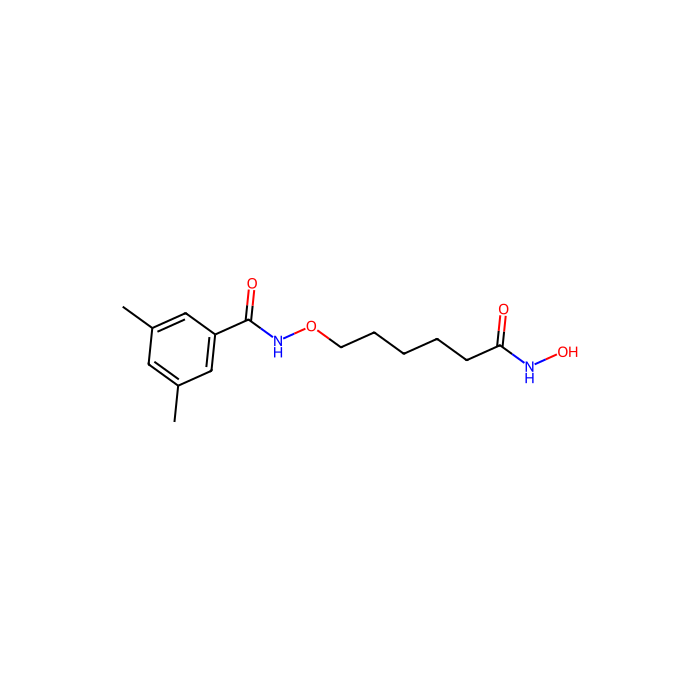
LMK 235 - ≥96% , CAS No.1418033-25-6

CAS: 1418033-25-6 Cat. No.: L275949 Formula: C15H22N2O4 Molecular Weight: 294.35 EC Number: 808-770-7
AVAILABLE TO ORDER
GRADE & PURITY ≥96%
Synonyms
EX-A1115 | LMK 235 | MFCD26522892 | N-[6-(hydroxyamino)-6-oxo-hexoxy]-3,5-dimethyl-benzamide | N-[6-(hydroxyamino)-6-oxohexoxy]-3,5-dimethylbenzamide | AKOS024458368 | CCG-267411 | HY-18998 | N-((6-(hydroxyamino)-6-oxohexyl)oxy)-3,5-dimethylbenzamide | FT
Storage
Protected from light,Store at -20°C
Shipped In
Ice chest + Ice pads
★
Size
Germany (EU)
USA*
Price
Qty
5mg
L275949-5mg
—
2 In stock
€51.11
10mg
L275949-10mg
—
2 In stock
€82.35
25mg
L275949-25mg
—
2 In stock
€185.61
50mg
L275949-50mg
—
1 In stock
€287.13
100mg
L275949-100mg
—
2 In stock
€463.29
200mg
L275949-200mg
Made to order · 8–12 wks
€824.27
Enter a quantity for the sizes you want to add.
🧪
Why this grade

≥96% for sensitive chromatographic and analytical workflows requiring minimal baseline interference.

🌡

Storage & shipping

Protected from light,Store at -20°C Ships Ice chest + Ice pads Check lot-specific COA for exact specifications.

📋

Quality documents

SDS, COA, datasheet, and spec sheet available for download. Lot-specific COA accessible via lot number lookup.

📚

Literature proof

Cited in 0 peer-reviewed publications across chromatography, organic synthesis, and cross-coupling reactions.

Specifications

Synonyms
EX-A1115 | LMK 235 | MFCD26522892 | N-[6-(hydroxyamino)-6-oxo-hexoxy]-3,5-dimethyl-benzamide | N-[6-(hydroxyamino)-6-oxohexoxy]-3,5-dimethylbenzamide | AKOS024458368 | CCG-267411 | HY-18998 | N-((6-(hydroxyamino)-6-oxohexyl)oxy)-3,5-dimethylbenzamide | FT
Specifications & Purity
≥96%
Biochemical and Physiological Mechanisms
Highly potent\xa0and selective HDAC inhibitor.LMK-235 induces the differentiation of odontoblasts in dental pulp cells. It plays an important role in the regeneration of dental tissue. LMK235 is a histone deacetylase (HDAC) inhibitor with greater potency
Storage
Protected from light,Store at -20°C
Shipped In
Ice chest + Ice pads
This product requires cold chain shipping. Ground and other economy services are not available.
Note
Refer to SDS for further information. Need more advice on solubility, usage and handling? Please visit our frequently asked questions (FAQ) page for more details.
Purity
≥96%
Names and Identifiers
Pubchem Sid
Pubchem Sid Url
https://pubchem.ncbi.nlm.nih.gov/substance/504772148
Canonical Smiles
CC1=CC(=CC(=C1)C(=O)NOCCCCCC(=O)NO)C
IUPAC Name
N-[6-(hydroxyamino)-6-oxohexoxy]-3,5-dimethylbenzamide
InChIKey
VRYZCEONIWEUAV-UHFFFAOYSA-N
INCHI
1S/C15H22N2O4/c1-11-8-12(2)10-13(9-11)15(19)17-21-7-5-3-4-6-14(18)16-20/h8-10,20H,3-7H2,1-2H3,(H,16,18)(H,17,19)
Isomeric SMILES
CC1=CC(=CC(=C1)C(=O)NOCCCCCC(=O)NO)C
WGK Germany
3
Molecular Weight
294.35
Reaxy-Rn
23452621
Reaxys-RN_link_address
https://www.reaxys.com/reaxys/secured/hopinto.do?context=S&query=IDE.XRN=23452621&ln=

Documentation

📋 Safety Data Sheet (SDS)

Comprehensive hazard, handling, storage, and regulatory compliance document.

Download SDS →

✅ Certificate of Analysis (COA)

Lot-specific quality data. Enter your lot number to retrieve the exact COA.

Look up COA →

📊 Datasheet

Quick-reference summary of product specifications and applications.

View datasheet →

🔬 Specification Sheet

Full quality attributes and acceptance criteria for this grade.

View spec sheet →

Advanced Data

Taxonomic Classification

Taxonomy Tree

KingdomOrganic compounds
SuperclassBenzenoids
ClassBenzene and substituted derivatives
SubclassBenzoic acids and derivatives
Intermediate Tree Nodes Not available
Direct ParentBenzoic acids and derivatives
Alternative Parents m-Xylenes  Benzoyl derivatives  Hydroxamic acids  Organonitrogen compounds  Organic oxides  Hydrocarbon derivatives  Carbonyl compounds  
Molecular FrameworkAromatic homomonocyclic compounds
Substituents Benzoic acid or derivatives - M-xylene - Xylene - Benzoyl - Hydroxamic acid - Carboxylic acid derivative - Organic nitrogen compound - Organic oxygen compound - Organic oxide - Hydrocarbon derivative - Organooxygen compound - Organonitrogen compound - Carbonyl group - Aromatic homomonocyclic compound
DescriptionThis compound belongs to the class of organic compounds known as benzoic acids and derivatives. These are organic compounds containing a carboxylic acid substituent attached to a benzene ring.
External Descriptors Not available
3D Structure
Interactive Chemical Structure Model


Associated Targets(Human)
HDAC4 Tclin Histone deacetylase 4 (1 Activities)
Activity TypeActivity Value -log(M)Mechanism of ActionActivity ReferencePublications (PubMed IDs)
HDAC6 Tclin Histone deacetylase 6 (3 Activities)
Activity TypeActivity Value -log(M)Mechanism of ActionActivity ReferencePublications (PubMed IDs)
HDAC1 Tclin Histone deacetylase 1 (2 Activities)
Activity TypeActivity Value -log(M)Mechanism of ActionActivity ReferencePublications (PubMed IDs)
HDAC11 Tclin Histone deacetylase 11 (1 Activities)
Activity TypeActivity Value -log(M)Mechanism of ActionActivity ReferencePublications (PubMed IDs)
HDAC2 Tclin Histone deacetylase 2 (2 Activities)
Activity TypeActivity Value -log(M)Mechanism of ActionActivity ReferencePublications (PubMed IDs)
HDAC5 Tclin Histone deacetylase 5 (1 Activities)
Activity TypeActivity Value -log(M)Mechanism of ActionActivity ReferencePublications (PubMed IDs)
ABL1 Tclin Tyrosine-protein kinase ABL (18331 Activities)
Activity TypeRelationActivity valueUnitsAction TypeJournalPubMed IddoiAssay Aladdin ID
GSK3B Tclin Glycogen synthase kinase-3 beta (11785 Activities)
Activity TypeRelationActivity valueUnitsAction TypeJournalPubMed IddoiAssay Aladdin ID
CSNK1D Tchem Casein kinase I delta (4546 Activities)
Activity TypeRelationActivity valueUnitsAction TypeJournalPubMed IddoiAssay Aladdin ID
HDAC8 Tclin Histone deacetylase 8 (4516 Activities)
Activity TypeRelationActivity valueUnitsAction TypeJournalPubMed IddoiAssay Aladdin ID
HDAC2 Tclin Histone deacetylase 2 (3971 Activities)
Activity TypeRelationActivity valueUnitsAction TypeJournalPubMed IddoiAssay Aladdin ID
HDAC4 Tclin Histone deacetylase 4 (2328 Activities)
Activity TypeRelationActivity valueUnitsAction TypeJournalPubMed IddoiAssay Aladdin ID
CDK2 Tchem Cyclin-dependent kinase 2 (9050 Activities)
Activity TypeRelationActivity valueUnitsAction TypeJournalPubMed IddoiAssay Aladdin ID
HDAC11 Tclin Histone deacetylase 11 (967 Activities)
Activity TypeRelationActivity valueUnitsAction TypeJournalPubMed IddoiAssay Aladdin ID
AURKA Tchem Serine/threonine-protein kinase Aurora-A (10240 Activities)
Activity TypeRelationActivity valueUnitsAction TypeJournalPubMed IddoiAssay Aladdin ID
U2OS (164939 Activities)
Activity TypeRelationActivity valueUnitsAction TypeJournalPubMed IddoiAssay Aladdin ID
HepG2 (196354 Activities)
Activity TypeRelationActivity valueUnitsAction TypeJournalPubMed IddoiAssay Aladdin ID
A2780 (11979 Activities)
Activity TypeRelationActivity valueUnitsAction TypeJournalPubMed IddoiAssay Aladdin ID
KYSE-510 (286 Activities)
Activity TypeRelationActivity valueUnitsAction TypeJournalPubMed IddoiAssay Aladdin ID
MDA-MB-231 (73002 Activities)
Activity TypeRelationActivity valueUnitsAction TypeJournalPubMed IddoiAssay Aladdin ID
CAL-27 (814 Activities)
Activity TypeRelationActivity valueUnitsAction TypeJournalPubMed IddoiAssay Aladdin ID
BRD4 Tchem Bromodomain-containing protein 4 (13122 Activities)
Activity TypeRelationActivity valueUnitsAction TypeJournalPubMed IddoiAssay Aladdin ID
TRIM24 Tchem Transcription intermediary factor 1-alpha (2087 Activities)
Activity TypeRelationActivity valueUnitsAction TypeJournalPubMed IddoiAssay Aladdin ID
BRPF1 Tchem Peregrin (2217 Activities)
Activity TypeRelationActivity valueUnitsAction TypeJournalPubMed IddoiAssay Aladdin ID
HEK-293T (167025 Activities)
Activity TypeRelationActivity valueUnitsAction TypeJournalPubMed IddoiAssay Aladdin ID
Associated Targets(non-human)
Mapk1 MAP kinase ERK2 (650 Activities)
Activity TypeRelationActivity valueUnitsAction TypeJournalPubMed IddoiAssay Aladdin ID
Hdac1 Histone deacetylase 1 (93 Activities)
Activity TypeRelationActivity valueUnitsAction TypeJournalPubMed IddoiAssay Aladdin ID
Hdac5 Histone deacetylase 5 (5 Activities)
Activity TypeRelationActivity valueUnitsAction TypeJournalPubMed IddoiAssay Aladdin ID
Hdac6 Histone deacetylase 6 (222 Activities)
Activity TypeRelationActivity valueUnitsAction TypeJournalPubMed IddoiAssay Aladdin ID
Fgfr3 Fibroblast growth factor receptor 3 (21 Activities)
Activity TypeRelationActivity valueUnitsAction TypeJournalPubMed IddoiAssay Aladdin ID
HD1 Histone deacetylase (38 Activities)
Activity TypeRelationActivity valueUnitsAction TypeJournalPubMed IddoiAssay Aladdin ID
Plasmodium falciparum (966862 Activities)
Activity TypeRelationActivity valueUnitsAction TypeJournalPubMed IddoiAssay Aladdin ID
Plasmodium berghei (192651 Activities)
Activity TypeRelationActivity valueUnitsAction TypeJournalPubMed IddoiAssay Aladdin ID
rep Replicase polyprotein 1ab (378 Activities)
Activity TypeRelationActivity valueUnitsAction TypeJournalPubMed IddoiAssay Aladdin ID
SARS-CoV-2 (38078 Activities)
Activity TypeRelationActivity valueUnitsAction TypeJournalPubMed IddoiAssay Aladdin ID
Mechanisms of Action
Certificates(CoA,COO,BSE/TSE and Analysis Chart)
C of A & Other Certificates(BSE/TSE, COO):
Analytical Chart:

Find and download the COA for your product by matching the lot number on the packaging.

6 results found

Lot NumberCertificate TypeDateItem
K2228495Certificate of AnalysisSep 07, 2026 L275949
K2228567Certificate of AnalysisSep 07, 2026 L275949
K2228568Certificate of AnalysisSep 07, 2026 L275949
K2228575Certificate of AnalysisSep 07, 2026 L275949
K2228577Certificate of AnalysisSep 07, 2026 L275949
K2228644Certificate of AnalysisSep 07, 2026 L275949
Chemical and Physical Properties
SolubilitySoluble in DMSO
Molecular Weight294.350 g/mol
XLogP31.800
Hydrogen Bond Donor Count3
Hydrogen Bond Acceptor Count4
Rotatable Bond Count8
Exact Mass294.158 Da
Monoisotopic Mass294.158 Da
Topological Polar Surface Area87.700 Ų
Heavy Atom Count21
Formal Charge0
Complexity326.000
Isotope Atom Count0
Defined Atom Stereocenter Count0
Undefined Atom Stereocenter Count0
Defined Bond Stereocenter Count0
Undefined Bond Stereocenter Count0
The total count of all stereochemical bonds0
Covalently-Bonded Unit Count1
Solution Calculators
Reviews

Customer Reviews

Application Protocols

No tested applications, protocols, or recommended dilutions are provided in the Product Data for this item.

General guidance for preparing working solutions (not item-specific):

  • Stock preparation: dissolve LMK 235 in anhydrous DMSO to 10–50 mM. Vortex and, if needed, gently warm (<40°C) briefly to assist dissolution. Filter through 0.22 µm PTFE if particulate persists.
  • Aliquoting: dispense single-use aliquots (e.g., 10–50 µL) in amber vials/tubes to avoid repeated freeze–thaw; store at −20°C protected from light.
  • Working concentrations: prepare serial dilutions in assay buffer to the desired range (commonly nM–µM for enzyme assays) ensuring final DMSO content is matched across controls.
  • Plate handling: use low-bind tips/plates; pre-wet tips for sub-µM transfers; mix thoroughly after each dilution step to minimize adsorption artifacts.

For cell-based work, confirm media compatibility, serum binding, and cytotoxicity in pilot runs and adhere to institutional biosafety protocols. Refer to your assay kit or method SOPs for detailed steps.

Biological Roles

General/literature context (no medical/clinical claims; not item-specific):

  • LMK 235 is described in the literature as a selective inhibitor of class IIa histone deacetylases (notably HDAC4/HDAC5), enzymes that remove acetyl groups from lysine residues on histones and certain non-histone proteins.
  • HDACs modulate chromatin structure and gene transcription. Inhibition of class IIa HDACs can lead to increased acetylation of specific substrates and altered transcriptional programs in developmental and signaling pathways.
  • Mechanism: hydroxamic acid motif coordinates the catalytic Zn2+ in HDAC active sites, forming bidentate chelation that stabilizes an inactive enzyme–inhibitor complex (established for hydroxamate HDAC inhibitors in general).
  • Research applications:
    • Dissecting roles of HDAC4/5 in epigenetic regulation, neuronal signaling, cardiac biology, and skeletal muscle differentiation at the biochemical level.
    • Chemical biology studies to map acetyl-lysine proteomes using immuno-enrichment and mass spectrometry after inhibitor treatment in cell-free or cell-based systems.
  • Selectivity considerations: class IIa enzymes have lower deacetylase catalytic rates and distinct active-site features compared to class I HDACs; LMK 235 is often chosen to probe these differences. Confirm selectivity with parallel profiling against other HDAC isoforms when your application requires precise target attribution.

For specific potency values (IC50/Ki), isoform selectivity, and cell-permeability parameters, consult primary literature and verify against your experimental platform; these are assay-condition dependent.

Buffer Applications

This product is a bioactive small molecule rather than a buffering agent. Classical buffer systems (e.g., phosphate, HEPES, Tris) are used to formulate assay media in which LMK 235 is tested.

General guidance for preparing assay buffers (not item-specific):

  • Choose a buffer compatible with HDAC enzyme assays, commonly:
    • Tris-HCl or HEPES, pH 7.4–8.0, with salt (e.g., 100–150 mM NaCl) and divalent cations only if required by the assay format.
    • Include BSA (0.05–0.1%) or a mild detergent (0.01–0.05% Tween-20) to reduce nonspecific adsorption of hydrophobic inhibitors.
  • Maintain consistent DMSO percentage across control and test wells (often 0.1–1% v/v).
  • Filter and degas buffers for high-sensitivity fluorescence or LC-based readouts.

Because LMK 235 is not itself a buffer component, refer instead to the Reaction & Applications and Biological Roles sections for practical assay use considerations.

Green Alternatives

As LMK 235 is a specific bioactive small molecule (not a process solvent or reagent), “green alternative” discussions typically relate to handling media and formulation vehicles rather than replacing the compound itself.

Greener handling choices (general):

  • Stock solvents:
    • Prefer high-purity DMSO with responsible waste management over DMF for routine bioassay stocks.
    • For chromatographic methods, choose water/acetonitrile systems over water/methanol when acetonitrile recovery and recycling are available; otherwise compare total solvent usage and waste treatment capacity.
  • Assay buffers:
    • Use aqueous buffers at neutral pH and minimize organic cosolvent percentage (≤0.5–1% DMSO) where assay performance allows.
  • Waste minimization:
    • Microplate-based assays with miniaturized volumes (≤10–50 µL/well) reduce solvent and compound use.
    • Implement solvent recycling for HPLC where feasible and segregate halogenated vs non-halogenated waste.

Comparison (general; not item-specific):

  • DMF vs DMSO as stock solvent: DMSO is generally preferred from both safety and environmental perspectives due to lower volatility and more favorable handling profile.
  • Plasticware: adopt low-bind, recyclable plastics when compatible, or glass vials to reduce adsorption and single-use waste.

Note: There is no direct “green substitute” for LMK 235’s biochemical activity; changes to the probe alter target engagement. Focus sustainability efforts on solvent choice, scale, and waste management.

Pharmaceutical Uses

No pharmacopoeial status or excipient role is provided for this item.

Context (general; no therapeutic claims):

  • LMK 235 is supplied for research use only (Product Data). It is commonly used as a chemical biology probe and reference inhibitor in discovery-stage studies of epigenetic enzymes (e.g., enzyme assays, target-validation experiments, and mechanism-of-action investigations).
  • Not intended for human or veterinary use, diagnostic use, or as an active pharmaceutical ingredient. There is no information provided indicating compliance with GMP, ICH, or pharmacopeial monographs.

If you require material for regulated development (GLP/GMP) or with specific impurity limits, stability studies, or formal specifications, contact technical support to discuss feasibility. Otherwise, use this material strictly for non-clinical laboratory research.

Physical Properties

Item-specific specs (this catalog entry):

  • Molecular weight: Not specified for this item; refer to CoA/Spec Sheet.
  • Molecular formula: Not specified for this item; refer to CoA/Spec Sheet.
  • Appearance: Not specified for this item; refer to CoA/Spec Sheet.
  • Melting point, boiling point, density, refractive index, pKa, logP/logD, UV-Vis cutoff: Not specified for this item; refer to CoA/Spec Sheet.

General/literature context for LMK 235-type HDAC inhibitors (for planning only; not item specifications):

  • Physical state: typically a solid at ambient temperature.
  • Solubility profile: often sparingly soluble in water; readily soluble in DMSO and DMF; variable in ethanol/methanol depending on salt form and substituents.
  • UV absorbance: aromatic cap groups generally give strong UV absorbance in the 200–300 nm range, useful for HPLC-UV quantitation.
  • Ionization: hydroxamic acids can exhibit weak acidity; overall ionization and logD will depend strongly on substitution pattern and pH.

Practical notes (general):

  • Prepare concentrated DMSO stocks (e.g., 10–50 mM) and dilute into aqueous buffers with surfactant or protein carriers if needed to minimize precipitation for biochemical assays.
  • Filter sterilization of working solutions (0.22 µm) can help in cell-free assay contexts; avoid extended room-temperature exposure to light if photosensitivity is suspected.
  • Always verify item-specific constants and handling parameters on the CoA/SDS for your lot.
Quality and Grades
  • Grade/purity: Not specified for this item; refer to CoA/Spec Sheet.
  • Appearance: Not specified for this item; refer to CoA/Spec Sheet.

Interpretation and guidance:

  • In the absence of a stated “grade,” LMK 235 in screening libraries is generally supplied at research grade suitable for discovery biology, enzymology, and analytical method development. Exact assay suitability (e.g., cell-based vs. biochemical) should be verified by purity and impurity profile on the CoA.
  • Typical documentation to consult:
    • Purity determination method (e.g., HPLC-UV/ELSD, qNMR), chromatogram, and purity percent.
    • Identity confirmation (MS, NMR) and, where relevant, counterion/salt form.
    • Residual solvents and water content (KF) if available.
    • Stability notes (light sensitivity; freeze–thaw tolerance).
  • UV-absorbing impurities can affect bioassays and analytics. If using for quantitative enzymology, consider secondary verification of purity by orthogonal methods (e.g., qNMR or HRMS) if CoA shows borderline purity or multiple minor peaks.
  • Stabilizers: Not specified for this item; refer to CoA/Spec Sheet. If no stabilizer is present, minimize exposure to light and moisture and keep frozen as directed to preserve potency.
Reaction and Applications

This product is primarily a bioactive screening compound rather than a synthetic reagent. No manufacturer reaction applications are provided for this SKU.

Research applications (general/literature context for LMK 235):

  • Widely used as a chemical probe of histone deacetylase biology, especially class IIa HDACs (e.g., HDAC4/5) in epigenetic and transcriptional regulation studies. Suitable for:
    • Enzyme inhibition assays with recombinant HDACs.
    • Cell-free chromatin remodeling assays and acetyl-lysine readouts.
    • Mechanistic studies of zinc-dependent deacetylase catalysis using hydroxamate ligands.
  • Analytical applications:
    • Reference standard for LC/LC–MS method development in inhibitor profiling.
    • Positive control compound in screening panels focused on epigenetic targets.

Practical tips (general):

  • Prepare fresh DMSO stocks and store aliquots at −20°C protected from light. Avoid repeated freeze–thaw cycles to prevent potency loss.
  • Validate concentration by UV or qNMR if quantitative enzymology is planned; adsorption to plastics can occur at low µM or nM concentrations—use low-bind labware.
  • Include vehicle controls (matching DMSO percentage) and consider time-dependent inhibition controls if relevant to the assay design.

For synthetic reactions or named-reaction roles: not typically applicable; LMK 235 is not employed as a reagent or catalyst in preparative organic synthesis.

Reaction Conditions

Not typically applicable: LMK 235 is a finished bioactive probe, not a reagent or catalyst for synthetic transformations.

Assay conditions (general/literature guidance only; not item-specific):

  • Enzymatic HDAC assays:
    • Buffer: Tris-HCl or HEPES, pH 7.4–8.0; ionic strength 100–150 mM NaCl; additives such as BSA (0.05–0.1%) and 0.01–0.05% Tween-20 to reduce nonspecific binding.
    • Substrate: fluorogenic acetyl-lysine peptides or histone fragments; incubation 15–60 minutes at 25–37°C.
    • Inhibitor: serial dilutions from DMSO stock to final 0.1–1% DMSO; preincubation 5–15 minutes with enzyme may improve reproducibility for tight binders.
    • Detection: developer/enzyme-coupled readout or LC–MS quantitation of deacetylated product.
  • Cell-based contexts (if used): validate solubility in complete media; limit DMSO ≤0.1–0.5% where possible; include vehicle controls.

Expected potencies, selectivity ratios, and precise incubation parameters are assay- and isoform-dependent and should be optimized empirically. Always confirm with primary literature and pilot experiments.

Safety and Handling

Product Data safety fields:

  • GHS classification: Not specified for this item; refer to SDS.
  • Signal word: Not specified for this item; refer to SDS.
  • Hazard (H-) statements: Not specified for this item; refer to SDS.
  • Pictograms: Not specified for this item; refer to SDS.

General safety guidance for small-molecule HDAC inhibitors (literature/practice; not a substitute for SDS):

  • Potential hazards: organic bioactive molecules may cause skin/eye irritation and may be harmful if swallowed or inhaled. Treat as a compound of unknown toxicity.
  • PPE: wear lab coat, safety glasses, and appropriate gloves (e.g., nitrile). Handle powders in a fume hood to avoid inhalation.
  • Incompatibilities: avoid strong oxidizers and strong acids/bases that could hydrolyze amide/carbamate or hydroxamate functions. Protect from light (Product Data) and moisture to minimize degradation.
  • First aid overview:
    • Skin/eye contact: rinse with water for ≥15 minutes; remove contaminated clothing; seek medical attention if irritation persists.
    • Inhalation: move to fresh air; seek medical attention if symptoms occur.
    • Ingestion: rinse mouth; do not induce vomiting; seek medical attention.
  • Spill/cleanup: avoid dust formation; absorb solutions with inert material; dispose of waste in accordance with institutional and local regulations.
  • Transport/storage risks: Product Data indicates shipment on ice and storage at −20°C protected from light to preserve integrity. Always consult the item’s SDS for authoritative hazard and handling instructions.
Solvent Selection

Item-specific solubility is not provided. The following is general guidance for small-molecule HDAC inhibitors like LMK 235 (literature/practice):

  • Primary stock solvent:
    • DMSO is preferred due to high solvating power for aromatic hydroxamates; prepare 10–50 mM stocks.
  • Secondary solvents:
    • DMF can be used similarly to DMSO for method development.
    • Alcohols (MeOH/EtOH) may dissolve limited amounts; check stability.
  • Aqueous handling:
    • Direct aqueous solubility is often limited. Dilute DMSO stocks into buffer while vortexing; final DMSO 0.1–1% v/v is typical for biochemical assays. Use nonionic surfactants (e.g., 0.01–0.05% Tween-20) or proteins (0.1% BSA) to reduce adsorption/precipitation if compatible with the assay.
  • Compatibility:
    • Avoid strong acids/bases that can hydrolyze hydroxamate/carbamate functionalities.
    • For LC method development, water/acetonitrile with 0.1% formic acid or ammonium formate buffers provide robust peak shape for aromatic HDAC inhibitors.

Small comparison (general):

  • DMSO: highest solubility; most common for stocks; may affect some biological readouts at >1%.
  • DMF: similar solvency; higher toxicity/odor; less preferred in bioassays.
  • Acetonitrile: good for HPLC sample prep; limited solubility for some hydroxamates.
  • Aqueous buffer: typically requires a cosolvent; consider pH near neutrality to limit hydrolysis.

Always confirm item-specific solubility and stability with small-scale tests and refer to the CoA.

Storage and Reconstitution

From Product Data (item-specific):

  • Storage conditions: store at −20°C and protect from light.
  • Shipping conditions: shipped in ice chest with ice pads.

General best practices (not item-specific):

  • Keep container tightly closed in a dry environment. If supplied as a solid, allow vial to equilibrate to room temperature in a desiccator before opening to prevent moisture condensation.
  • If supplied in solution, verify solvent system on label/CoA and maintain the recommended temperature. Avoid repeated freeze–thaw cycles; prepare single-use aliquots.
  • Reconstitution: for solids, dissolve in anhydrous DMSO to prepare a concentrated stock (e.g., 10–50 mM). Mix thoroughly. If long-term storage of solution stocks is required, aliquot into amber vials/tubes and refreeze promptly.
  • Stability monitoring: track preparation date, number of freeze–thaw events, and any observed changes (color, precipitation). For critical assays, confirm concentration/purity by analytical HPLC or qNMR before use.

Always consult the item’s CoA/SDS for any additional storage or stability notes specific to the supplied lot. Research use only.

Structure and Identity
  • Product name: LMK 235 (SKU: L275949)
  • CAS: 1418033-25-6 (Product Data)
  • CID: 71520717 (Product Data)
  • InChIKey: 386856 (Product Data as provided; note this is not a standard-length InChIKey string)
  • Molecular formula: Not specified for this item; refer to CoA/Spec Sheet.
  • Molecular weight: Not specified for this item; refer to CoA/Spec Sheet.
  • SMILES: Not specified for this item; refer to CoA/Spec Sheet.

Structural features (general/literature context):

  • LMK 235 is widely cited in the literature as a small-molecule histone deacetylase (HDAC) inhibitor bearing a hydroxamic acid zinc-binding group and an amide/carbamate cap-linker motif typical of class IIa-selective HDAC ligands. This implies:
    • One hydroxamic acid functionality (–CONHOH) able to chelate Zn2+ in HDAC catalytic sites (literature).
    • An aromatic cap group connected by a short aliphatic linker and one or more amide/carbamate connections (literature).
  • 2D description (literature): an aromatic ring “cap,” a linker chain terminating in a hydroxamate “warhead,” and at least one additional carbonyl (amide/carbamate) in the linker/cap region. No defined stereocenters are typically reported (literature).

Identity notes:

  • This product is listed under the category 小分子和化合物库 (small molecules/compound library), consistent with a bioactive screening compound.
  • For exact structural identifiers specific to this lot (SMILES, formula, precise MW, canonical InChIKey), consult the product CoA/SDS or contact technical support.
Synthetic Utility

LMK 235 is a target-specific bioactive compound and is not typically used as a synthetic building block or reagent. Nevertheless, understanding its functional groups can aid in impurity analysis, derivatization for SAR, or analytical standard preparation.

General functional group considerations (literature context):

  • Hydroxamic acid: susceptible to hydrolysis under strong acidic/basic conditions; can chelate metal ions (notably Zn2+). Often converted to O-acyl or O-alkyl derivatives for prodrug/sar studies.
  • Amide/carbamate linkers: stable under neutral conditions; hydrolyze under forcing conditions; can engage in H-bonding that affects chromatographic behavior.
  • Aromatic cap group: enables UV detection and potential late retention on RP-HPLC.

Potential laboratory uses (non-preparative):

  • Analytical reference standard for HDAC inhibitor panels in LC/LC–MS.
  • Derivatization studies: isotopic labeling or tag attachment for mechanistic/target-engagement assays (e.g., photoaffinity probes), performed on closely related scaffolds in literature.

For retrosynthesis or as a coupling partner in named reactions: not commonly applicable. If modifications are desired (e.g., SAR exploration), standard amide-coupling, hydroxamate formation, and carbamate-protection strategies are typically employed on the parent scaffold in medicinal chemistry programs.

Target Specificity

Item-specific target data are not provided in the Product Data for this SKU.

General/literature context (for planning only):

  • LMK 235 is described in the literature as a selective inhibitor for class IIa histone deacetylases, notably HDAC4 and HDAC5, with reduced activity on class I HDACs compared to pan-HDAC inhibitors. Selectivity values (IC50/Ki) vary with substrate, assay format, and enzyme construct.
  • When experimental target specificity is critical, perform side-by-side profiling across HDAC isoforms under your exact assay conditions and report activity as concentration–response curves with matched vehicle and timing.

Because no manufacturer-verified specificity data are supplied here, treat any literature claims as provisional and verify with your in-house assays.

Shall we send you a message when we have discounts available?

Remind me later

Thank you! Please check your email inbox to confirm.

Oops! Notifications are disabled.