GRADE & PURITYMoligand™?Moligand™ — Aladdin's line of ligands and bioactive small molecules. Use for receptor, pathway, and binding studies needing defined small-molecule tools.≥98%
Moligand™, ≥98% Moligand™ for sensitive chromatographic and analytical workflows requiring minimal baseline interference.
🌡
Storage & shipping
Store at -20°C Ships Ice chest + Ice pads Check lot-specific COA for exact specifications.
📋
Quality documents
SDS, COA, datasheet, and spec sheet available for download. Lot-specific COA accessible via lot number lookup.
📚
Literature proof
Cited in 0 peer-reviewed publications across chromatography, organic synthesis, and cross-coupling reactions.
Overview
Information
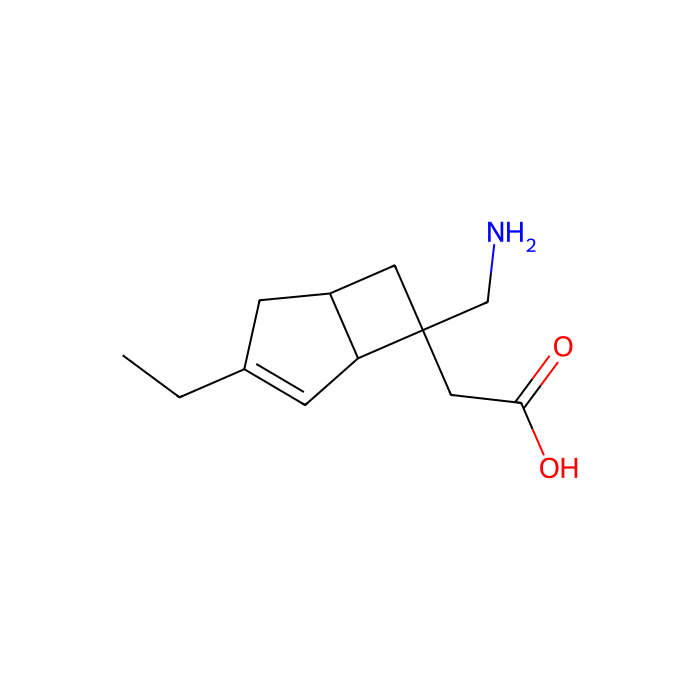
Mirogabalin (DS-5565) is a novel, preferentially selectiveα2δ-1ligand that has been used in trials studying the treatment of Post-herpetic Neuralgia, Pain Associated With Fibromyalgia, and Diabetic peripheral neuropathic pain.
This compound belongs to the class of organic compounds known as gamma amino acids and derivatives. These are amino acids having a (-NH2) group attached to the gamma carbon atom.
External Descriptors
Not available
1. Djoumbou Feunang Y, Eisner R, Knox C, Chepelev L, Hastings J, Owen G, Fahy E, Steinbeck C, Subramanian S, Bolton E, Greiner R, and Wishart DS. ClassyFire: Automated Chemical Classification With A Comprehensive, Computable Taxonomy. Journal of Cheminformatics, 2016, 8:61.
Determine the necessary mass, volume, or concentration for preparing a solution.
Dilution Calculator
Determine the dilution needed to prepare a stock solution.
Reconstitution Calculator
Reviews
Customer Reviews
Application Protocols
Validated, item-specific application protocols are not provided for this product.
Tested applications and recommended conditions: Not specified for this item; refer to CoA/Spec Sheet.
General notes (non-validated, for orientation only)
Stock preparation: dissolve in water with slight acid/base adjustment or in DMSO; sterile-filter (0.22 µm) if required by your assay. Record final pH and solvent percentage.
Handling for biochemical assays: prepare fresh working solutions on the day of use. Keep DMSO ≤1–2% v/v in the final assay mixture where applicable.
Documentation: for quantitative work, verify concentration by qNMR or LC–MS against a calibration curve using independently prepared standards.
Users should establish and validate their own protocols under their specific laboratory conditions.
Biological Roles
General, literature-based information (no clinical claims)
Target class: gabapentinoid-type ligand. Binds with high affinity to the α2δ auxiliary subunits of voltage-gated calcium channels (VGCCs), particularly α2δ‑1 and α2δ‑2, modulating channel trafficking and function. The interaction occurs at a site associated with RRR-configuration amino acid–like ligands in related compounds.
Molecular determinants: primary amine and carboxylate separated by a conformationally constrained aliphatic scaffold; stereochemistry is crucial for subunit affinity and selectivity (literature).
Physicochemical behavior in biology: amphoteric/zwitterionic species with pH-dependent ionization; typically exhibits low passive membrane permeability and relies on transporters for cellular uptake in some systems (as known for the class; specific transport for mirogabalin should be confirmed from primary literature).
Experimental use-cases
Biochemical binding assays to α2δ protein constructs (membrane preparations, purified domains, or cell-based target engagement readouts).
Functional assays monitoring Ca2+ currents indirectly via downstream signaling changes upon α2δ modulation.
Chemical biology probes after derivatization (e.g., fluorophore/biotin conjugates) for pull-down or imaging, provided binding is retained after modification.
Item-specific biophysical/biological data (Kd, Ki, EC50, selectivity ratios, transport kinetics) are Not specified for this item; consult primary literature and the item’s CoA if available. This product is supplied strictly for research use only.
Buffer Applications
This compound is not a conventional buffering agent; it lacks a dedicated buffering range and is not used to control solution pH.
Practical notes for preparing solutions (general guidance)
Dissolution strategy: leverage amphoteric character. To dissolve quickly, adjust solvent pH slightly acidic (to protonate the amine) or slightly basic (to deprotonate the acid). Typical approaches include:
Add minimal 0.01–0.1 M HCl to water to achieve clear dissolution, then back-titrate to the desired pH with a compatible base.
Alternatively, dissolve in a small volume of DMSO and dilute into the target buffer, keeping final DMSO ≤1–2% v/v for bioassays.
Compatible buffers for assays: MES (pH 5.5–6.5), phosphate (pH 6.0–7.5), HEPES (pH 7.0–8.0), and ammonium formate/acetate (pH 3–6) for LC–MS methods. Select buffer ionic strength and pH according to assay needs.
Filtration: after dissolution, 0.22 µm filtration can improve solution clarity and reproducibility in cell-free assays.
Item-specific buffer recipes, pKa values, and validated buffer use-cases are Not specified for this item; refer to CoA/Spec Sheet and optimize empirically for your assay.
Green Alternatives
As a solid small molecule (ligand/standard), “green” considerations center on solvent selection and process minimization during dissolution, purification, and analysis rather than on replacing the compound itself.
Greener solvent choices (general guidance)
Prefer water or aqueous buffers whenever feasible; adjust pH to enhance solubility rather than defaulting to high percentages of organic solvents.
If an organic co-solvent is required, consider
Ethanol over methanol where assay compatibility allows (lower toxicity; renewable sourcing possible).
2‑Propanol (isopropanol) for certain extractions as a less toxic alternative to acetonitrile, acknowledging different elution strength.
For chromatographic methods, reduce acetonitrile usage by switching to water-rich HILIC or using methanol with extended gradients, balancing sensitivity and resolution.
DMSO use should be minimized to the lowest effective concentration in biological assays (≤1–2% v/v) due to potential cell/assay effects.
Waste and process efficiency
Prepare concentrated stocks to reduce container count and shipping volume; aliquot to avoid freeze–thaw waste.
Employ miniaturized assay formats (96–384 well) to reduce solvent consumption.
Utilize aqueous EDC/NHS coupling for conjugations (avoids chlorinated solvents), maintaining pH ~4.5–6 with MES buffer.
Trade-offs
Water-rich systems may require pH adjustment and can impact analyte retention in RP-HPLC.
Methanol and ethanol have higher viscosity than acetonitrile, potentially increasing backpressure and run time in LC.
Item-specific environmental metrics (e.g., solvent intensity, EHS ratings) are Not specified for this item; refer to institutional green-chemistry guidelines.
Pharmaceutical Uses
No therapeutic or clinical claims are made for this research product.
Formulation and analytical roles (general, non-clinical)
Reference standard: can serve as a system suitability or calibration standard for analytical methods (e.g., LC–MS, HPLC, qNMR) developed around gabapentinoid chemotypes in discovery and preformulation laboratories.
Impurity profiling: use as a marker compound to assess method selectivity, retention behavior, and response factors for structurally related impurities.
Excipients: not applicable; this is an active small molecule, not an excipient.
Salt/solid-form screening: if supplied as free base/acid, researchers may generate experimental salts to study solubility, stability, or crystallinity in preformulation research (lab-scale only). Any such work should be clearly segregated from GMP activities unless appropriately qualified.
Dissolution testing (research): useful as a model polar compound to challenge dissolution apparatus and media in formulation research.
Regulatory status and compendia
No pharmacopeial monograph information is provided for this item. Compendial status, if any, is Not specified for this item; refer to internal regulatory resources.
All uses are restricted to research and development contexts. This material is not for human or veterinary use.
Physical Properties
Item-specific specifications (this lot)
Appearance: Not specified for this item; refer to CoA/Spec Sheet.
Molecular formula: Not specified for this item; refer to CoA/Spec Sheet.
Molecular weight: Not specified for this item; refer to CoA/Spec Sheet.
Melting point, boiling point, density, refractive index, UV cut-off, water/peroxide/metal content: Not specified for this item; refer to CoA/Spec Sheet.
Literature/general properties for the free base (for planning only; verify experimentally)
Physical state: typically an off-white to white crystalline solid for many gabapentinoids; actual appearance may vary (confirm on CoA).
Ionization behavior: amphoteric; expected to be zwitterionic near physiological pH with a basic primary amine (pKa of analogous gabapentinoids ~9–10) and a carboxylic acid (pKa ~3–4). Exact pKa for mirogabalin should be confirmed from primary sources.
Solubility profile: high solubility in water under acidic (amine protonated) or basic (carboxylate deprotonated) conditions; limited solubility in nonpolar solvents. Miscible with polar aprotic solvents (e.g., DMSO) at stock-solution concentrations. Quantitative solubilities should be determined empirically.
Partitioning: gabapentinoids generally exhibit low logP in neutral water and higher apparent distribution coefficients dependent on pH. Use pH-adjusted buffers to control extraction/partitioning.
Practical implications
Prepare aqueous stocks by slight acidification (e.g., dilute HCl) or basification (e.g., NaOH) to assist dissolution, then adjust pH as needed for assays.
For chromatographic method development (HPLC/UPLC), mixed aqueous-organic mobile phases with ion-pairing or HILIC may be favorable, given polarity and limited UV chromophores. Determine detection wavelength empirically or employ MS/ELSD.
Always defer to the item’s CoA/SDS for authoritative property data and handling.
Quality and Grades
Grade/Purity (item-specific): Moligand™
What Moligand™ signifies (general description)
Intended use: a research-grade small-molecule ligand suitable for screening, target engagement studies, and reference standard applications in medicinal and chemical biology research.
Typical expectations: high chemical purity appropriate for biochemical assays and SAR work; identity confirmed by standard spectroscopic/analytical methods (e.g., NMR, MS, HPLC). Exact acceptance criteria, residual solvents, and impurity thresholds are defined on the item’s CoA/Specification Sheet.
UV suitability: If HPLC assay use is intended, verify UV absorbance characteristics (cutoff, λmax) on the CoA; not all gabapentinoids provide strong UV signals.
Salt form/solvate: Some catalogues supply mirogabalin as the free base/acid or as a pharmaceutically used salt in other contexts. The supplied form for this item must be confirmed on the CoA, as it governs molecular weight calculations, solubility, and assay setup.
Quality controls recommended in-use (general best practices)
Identity check upon receipt: quick LC–MS and/or 1H NMR.
Purity tracking: analytical HPLC/UPLC with orthogonal detection (UV at low nm, ELSD, or MS) due to weak chromophores.
Water content: assess by Karl Fischer if hygroscopicity is suspected; item-specific limits are not provided here.
Disclaimers
Do not treat these notes as item-specific specifications. Where a specific numeric limit or attribute is required, it is Not specified for this item; refer to CoA/Spec Sheet.
Reaction and Applications
This product is primarily used as a research ligand/standard rather than as a reaction solvent or reagent. That said, its functional groups enable useful derivatizations and applications in chemical biology.
Research applications (literature/general)
Target engagement studies with voltage-gated calcium channel α2δ subunits (binding assays, displacement studies). No clinical claims implied.
Reference standard for analytical method development (LC–MS, HPLC, qNMR) in discovery programs involving gabapentinoid chemotypes.
Internal/External control in ADME/PK method development (e.g., permeability assays) as a polar, zwitterionic comparator.
Derivatization chemistry enabled by functionality
Carboxylic acid: activation via carbodiimides (EDC/NHS) to form amide linkages for biotin/fluorophore tagging or surface immobilization.
Primary amine: acylation or NHS-ester coupling to generate amides; urea formation with isocyanates; carbamate formation with chloroformates.
Salt formation: formation of defined acid/base salts to tune solubility or crystallinity for physical characterization.
Practical tips
Maintain stereochemical integrity: avoid strong racemization conditions; use mild coupling reagents and pH control (pH 4.5–6 for EDC/NHS).
For binding assays, prepare fresh aqueous/DMSO stocks and filter (0.22 µm) to remove particulates; verify concentration by quantitative NMR or UV (if adequate absorbance) or LC–MS.
Limit exposure to strong dehydrating agents or elevated temperatures that could promote lactamization or other side reactions common to amino-acid-like scaffolds (general caution).
Note: No item-specific application testing is provided; users should establish assay conditions empirically.
Reaction Conditions
Because this compound is supplied for use as a ligand/standard, there are no item-specific reaction conditions. However, common derivatization conditions for amino acid–like small molecules can be applied when preparing conjugates or analytical derivatives.
General conditions (literature/good practice)
Amide coupling via carboxyl group
Reagents: EDC·HCl (1.1–1.5 eq) with NHS (1.1–1.5 eq) in MES buffer (0.05–0.1 M, pH 4.7–6.0) or DMF/water mixtures.
Temperature: 0–25 °C.
Time: 0.5–4 h activation; add amine partner and react 2–16 h.
Notes: maintain mildly acidic pH to minimize amine self-acylation and racemization; quench with hydroxylamine if needed.
Amide formation via amine group
Reagents: NHS-esters or acid chlorides of tagging reagents in DMF/DMSO with a tertiary amine base (DIPEA, 1–3 eq).
Temperature: 0–25 °C.
Time: 0.5–4 h.
Notes: protect carboxyl (e.g., as methyl ester) if chemoselectivity is a concern; remove protecting groups under mild conditions.
Reductive amination (amine functionalization)
Reagents: aldehyde (1.0–2.0 eq), NaBH3CN or picoline borane in MeOH/AcOH or DMF.
Temperature: 0–25 °C.
Time: 2–16 h.
Notes: control pH (5–6) for efficient imine formation without over-reduction.
Analytical method development (general)
HPLC: HILIC or ion-pair RP with volatile buffers (ammonium formate/acetate, pH 3–6) for MS compatibility.
Derivatization for UV: if stronger chromophores are needed, consider tagging with dansyl/chloroformate reagents (validate that derivatization doesn’t alter the assay’s intent).
Item-specific optimized conditions or yields are Not specified for this item; confirm experimentally.
Safety and Handling
Authoritative safety data must be taken from the product’s SDS.
GHS classification (item-specific): Not specified for this item; refer to SDS.
Signal word/H-statements/Pictograms: Not specified for this item; refer to SDS.
General laboratory safety guidance for small polar amine–carboxylate compounds (literature-based)
PPE: wear lab coat, safety glasses, and appropriate chemical-resistant gloves (e.g., nitrile). Handle powders in a fume hood to minimize inhalation of dust or aerosols.
Incompatibilities: avoid strong oxidizers. Amines can react with acylating agents; carboxylic acids can form salts with strong bases—store separately from reactive acyl halides/anhydrides.
Dust control: weigh using a balance enclosure when possible. For solutions, cap containers promptly; avoid aerosol generation.
First aid (general): in case of skin/eye contact, rinse with water for at least 15 minutes; remove contaminated clothing. If inhaled, move to fresh air. If ingested, rinse mouth with water. Seek medical attention as per SDS.
Hygiene: wash hands thoroughly after handling. Do not eat, drink, or smoke in work areas.
Waste: dispose according to institutional and local regulations. Polar organics are typically collected as organic waste unless neutralized and permitted for aqueous disposal per EHS guidance.
Stability and transport
Storage: Store at −20 °C as specified; protect from moisture. Allow container to equilibrate to room temperature before opening to minimize condensation.
Shipping: provided in an ice chest with ice pads to maintain low temperature during transit.
Note: No medical or clinical handling guidance is implied; this product is for research use only.
Solvent Selection
Context: Mirogabalin is a polar, amino acid–like small molecule. Solvent choice affects dissolution, assay compatibility, and stability.
Polarity class (general): high polarity; amphoteric. Behaves as a zwitterion near neutral pH; cationic in acidic media; anionic in basic media.
Primary solvents for stock solutions (practical guidance)
Water/buffers: often readily soluble when slightly acidified (e.g., 0.01–0.1 M HCl) or basified (e.g., minimal NaOH). Adjust final pH for the assay.
DMSO: useful for concentrated stocks (e.g., 10–100 mM) when aqueous solubility is limiting; dilute into aqueous media to working concentrations while avoiding precipitation.
Alcohols (MeOH, EtOH): variable solubility; typically less effective than water/DMSO for gabapentinoids; verify experimentally.
Nonpolar solvents (EtOAc, hexanes, toluene): generally poor solubility.
Assay considerations
For biochemical assays, minimize final DMSO to ≤1–2% v/v to avoid assay interference.
Use HILIC or ion-pair RP-HPLC mobile phases for analytical work; buffers such as ammonium formate/acetate (pH 3–6) pair well with MS detection.
pH tuning strategy
To dissolve as cation: add acid to protonate the amine.
To dissolve as anion: add base to deprotonate the carboxyl.
Small comparison (general)
Water (acidified/basic): highest solubility; most biocompatible; may require pH adjustment post-dissolution.
DMSO: excellent solvency; easy to prepare concentrated stocks; may affect biological assays at higher percentages.
Item-specific solubility values are Not specified for this item; refer to CoA/Spec Sheet.
Storage and Reconstitution
Item-specific storage/shipping
Storage conditions: Store at −20 °C (from Product Data).
Shipping: Shipped in an ice chest with ice pads to maintain a cold chain (from Product Data).
General handling
Protect from moisture. Before opening, allow the sealed container to warm to room temperature to avoid condensation.
After opening, promptly re-cap. If frequent access is anticipated, consider preparing single-use aliquots.
Reconstitution guidance (general; not item-specific specifications)
Solvents: water or buffer with slight pH adjustment; DMSO for concentrated stocks. Alcohols may offer limited solubility—verify empirically.
Concentration: choose based on assay needs (e.g., 10–100 mM in DMSO; lower in water depending on pH). Confirm solubility before scaling.
Filtration: 0.22 µm sterile filtration recommended for cell-free biological assays if sterility/clarity is required.
Storage of solutions: aliquot and store at −20 °C for short-to-medium term. Avoid repeated freeze–thaw cycles; discard if precipitation, discoloration, or degradation is observed.
Stability notes
Item-specific stability data (solution/shelf-life, light sensitivity) are Not specified for this item; refer to CoA/SDS. As a precaution, minimize exposure to heat and strong light, and maintain neutral pH unless protocol dictates otherwise.
For research use only.
Structure and Identity
Brief overview: Mirogabalin (DS‑5565) is a small-molecule gabapentinoid-class ligand supplied as a research-use chemical for screening and chemical biology.
Item-specific (from Product Data)
SKU: M413559
Product name: Mirogabalin (DS‑5565)
CAS: 1138245-13-2
PubChem CID: 59509752
InChIKey: Not specified for this item; refer to CoA/Spec Sheet.
SMILES: Not specified for this item; refer to CoA/Spec Sheet.
Grade/Purity: Moligand™ (see Quality & Grades)
Storage: Store at −20 °C; shipped on cold packs
Literature identity (for reference; not item-specific specs)
Molecular formula: commonly reported for the free base in literature; verify on CoA for this lot.
Molecular weight: commonly reported in literature for the free base; verify on CoA for this lot.
SMILES/InChIKey: available in public databases (e.g., PubChem for CID 59509752); verify prior to computational use.
Structural features (literature)
Functional groups: primary amine and carboxylic acid (amino acid–like scaffold), enabling zwitterionic character depending on pH.
Stereochemistry: contains defined stereocenters; commercial materials are typically single-enantiomer for biological selectivity. Confirm absolute configuration on CoA.
2D description: a saturated, constrained aliphatic framework bearing a pendant aminomethyl moiety and a terminal carboxylate/acid, akin to other gabapentinoids.
Notes
Where precise identifiers (SMILES, InChIKey, exact formula/MW) are needed for modeling or analytical methods, consult the CoA/Spec Sheet for this item. Any literature values provided are for general reference only.
Synthetic Utility
Although supplied as a completed small-molecule ligand, mirogabalin’s functional groups make it a versatile handle for conjugation and derivatization schemes in chemical biology and materials interfaces.
Key reactive motifs (general)
Primary amine: nucleophile for acylation (acid chlorides/anhydrides), coupling with activated esters (NHS), urea formation (isocyanates), reductive alkylation (aldehydes/ketones), and carbamate formation (chloroformates).
Carboxylic acid: electrophile after in situ activation with EDC/HOBt or EDC/NHS to form amide linkages to amines on probes, peptides, or surfaces; can also form esters under Fischer or Steglich conditions (note stereochemical integrity).
Salt formation: formation of crystalline salts (e.g., HCl, besylate in other contexts) to tune properties for separation or storage during research.
Retrosynthetic perspective (class-level)
The scaffold is a constrained, aliphatic amino acid analogue; stereocontrolled assembly typically involves chiral pool or asymmetric synthesis, followed by side-chain introduction and late-stage deprotection. While not necessary for using this product, these insights guide the selection of mild conditions to avoid racemization.
Applications enabled by derivatization
Affinity probes: biotin or fluorophore tagging through amide linkages for target pull-down or imaging (confirm retention of binding activity).
Surface immobilization: EDC/NHS coupling onto COOH-terminated SAMs or carboxylated polymers to create ligand-presenting surfaces for biosensing.
Prodrugs (research only): transient masking of acid/amine to explore permeability; ensure appropriate containment and documentation.
Item-specific synthetic routes, impurity profiles, and chirality specs are Not specified for this item; consult CoA/Spec Sheet.
Target Specificity
This section is typically applicable to biological affinity reagents (e.g., antibodies). For this small-molecule product, no item-specific target-binding data are provided.
Item-specific target data: Not specified for this item; refer to CoA/Spec Sheet and primary literature for binding constants or selectivity profiles if needed for your study.
General literature context (not item-specific specifications)
Class-level target: α2δ subunits (e.g., α2δ‑1/α2δ‑2) of voltage-gated calcium channels have been reported as binding partners for gabapentinoid ligands. Exact affinity/selectivity metrics for this lot are not provided here.
Need help choosing the grade?
Our grade selection guide covers purity, stabilizer status, and application suitability for all variants in our catalog.
We use cookies to ensure the website functions properly and, where permitted, to improve your experience. You can manage your preferences at any time in Settings. Learn more in our Cookie Policy.
Shall we send you a message when we have discounts available?
Remind me later
Thank you! Please check your email inbox to confirm.
Products are supplied to verified businesses, institutions, and qualified professionals for research and development use only. Not for use in humans, animals, diagnosis, or therapy.

 C2304766