N1-Methylpseudouridine - ≥98% , CAS No.13860-38-3

CAS: 13860-38-3 Cat. No.: N276158 Formula: C10H14N2O6 Molecular Weight: 258.229 EC Number: 974-126-8
AVAILABLE TO ORDER
GRADE & PURITY ≥98%
Synonyms
(R)-2-[[2-(4-aminophenyl)ethyl]amino]-1-phenylethanol monohydrochloride | NSC 240023 | 1-Methylpseudouridine | 1-methyl-pseudouridine | CHEBI:19068 | m1psi | 5-[(2S,3R,4S,5R)-5-(hydroxymethyl)-3,4-bis(oxidanyl)oxolan-2-yl]-1-methyl-pyrimidine-2,4-dione |
Storage
Store at -20°C,Desiccated
Shipped In
Ice chest + Ice pads
★
Size
Germany (EU)
USA*
Price
Qty
5mg
N276158-5mg
—
2 In stock
€8.59
25mg
N276158-25mg
—
1 In stock
€9.46
50mg
N276158-50mg
Made to order · 8–12 wks
€10.33
100mg
N276158-100mg
—
1 In stock

€12.93

€19.87
Save €6.94 (34.93%)
Enter a quantity for the sizes you want to add.
🧪
Why this grade

≥98% for sensitive chromatographic and analytical workflows requiring minimal baseline interference.

🌡

Storage & shipping

Store at -20°C,Desiccated Ships Ice chest + Ice pads Check lot-specific COA for exact specifications.

📋

Quality documents

SDS, COA, datasheet, and spec sheet available for download. Lot-specific COA accessible via lot number lookup.

📚

Literature proof

Cited in 1 peer-reviewed publications across chromatography, organic synthesis, and cross-coupling reactions.

Specifications

Synonyms
(R)-2-[[2-(4-aminophenyl)ethyl]amino]-1-phenylethanol monohydrochloride | NSC 240023 | 1-Methylpseudouridine | 1-methyl-pseudouridine | CHEBI:19068 | m1psi | 5-[(2S,3R,4S,5R)-5-(hydroxymethyl)-3,4-bis(oxidanyl)oxolan-2-yl]-1-methyl-pyrimidine-2,4-dione |
Specifications & Purity
≥98%
Biochemical and Physiological Mechanisms
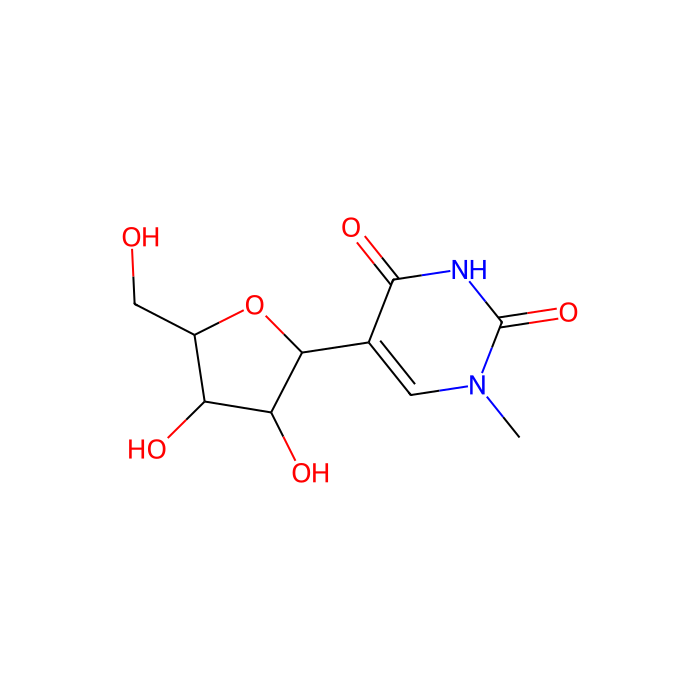
Methylpseudouridine in which the methyl group is located at position N-1 on the uracil ring.
Storage
Store at -20°C,Desiccated
Shipped In
Ice chest + Ice pads
This product requires cold chain shipping. Ground and other economy services are not available.
Note
Wherever possible, you should prepare and use solutions on the same day. However, if you need to make up stock solutions in advance, we recommend that you store the solution as aliquots in tightly sealed vials at -20°C. Generally, these will be useable for up to one month. Before use, and prior to opening the vial we recommend that you allow your product to equilibrate to room temperature for at least 1 hour. Need more advice on solubility, usage and handling? Please visit our frequently asked questions (FAQ) page for more details.
Purity
≥98%
Names and Identifiers
Pubchem Sid
Pubchem Sid Url
https://pubchem.ncbi.nlm.nih.gov/substance/504756442
Canonical Smiles
CN1C=C(C(=O)NC1=O)C2C(C(C(O2)CO)O)O
IUPAC Name
5-[(2S,3R,4S,5R)-3,4-dihydroxy-5-(hydroxymethyl)oxolan-2-yl]-1-methylpyrimidine-2,4-dione
InChIKey
UVBYMVOUBXYSFV-XUTVFYLZSA-N
INCHI
1S/C10H14N2O6/c1-12-2-4(9(16)11-10(12)17)8-7(15)6(14)5(3-13)18-8/h2,5-8,13-15H,3H2,1H3,(H,11,16,17)/t5-,6-,7-,8+/m1/s1
Isomeric SMILES
CN1C=C(C(=O)NC1=O)[C@H]2[C@@H]([C@@H]([C@H](O2)CO)O)O
Molecular Weight
258.229
Reaxy-Rn
1084464
Reaxys-RN_link_address
https://www.reaxys.com/reaxys/secured/hopinto.do?context=S&query=IDE.XRN=1084464&ln=

Documentation

📋 Safety Data Sheet (SDS)

Comprehensive hazard, handling, storage, and regulatory compliance document.

Download SDS →

✅ Certificate of Analysis (COA)

Lot-specific quality data. Enter your lot number to retrieve the exact COA.

Look up COA →

📊 Datasheet

Quick-reference summary of product specifications and applications.

View datasheet →

🔬 Specification Sheet

Full quality attributes and acceptance criteria for this grade.

View spec sheet →

Advanced Data

Taxonomic Classification

Taxonomy Tree

KingdomOrganic compounds
SuperclassNucleosides, nucleotides, and analogues
ClassNucleoside and nucleotide analogues
SubclassNot available
Intermediate Tree Nodes Not available
Direct ParentNucleoside and nucleotide analogues
Alternative Parents C-glycosyl compounds  Pentoses  Pyrimidones  Hydroxypyrimidines  Hydropyrimidines  Tetrahydrofurans  Heteroaromatic compounds  Secondary alcohols  Azacyclic compounds  Oxacyclic compounds  Dialkyl ethers  Hydrocarbon derivatives  Organic oxides  Organonitrogen compounds  Organopnictogen compounds  Primary alcohols  
Molecular FrameworkAromatic heteromonocyclic compounds
Substituents C-glycosyl compound - Glycosyl compound - Pentose monosaccharide - Pyrimidone - Hydroxypyrimidine - Hydropyrimidine - Monosaccharide - Pyrimidine - Tetrahydrofuran - Heteroaromatic compound - Secondary alcohol - Azacycle - Organoheterocyclic compound - Oxacycle - Dialkyl ether - Ether - Hydrocarbon derivative - Organooxygen compound - Organonitrogen compound - Alcohol - Organic oxygen compound - Organopnictogen compound - Primary alcohol - Organic nitrogen compound - Organic oxide - Aromatic heteromonocyclic compound
DescriptionThis compound belongs to the class of organic compounds known as nucleoside and nucleotide analogues. These are analogues of nucleosides and nucleotides. These include phosphonated nucleosides, C-glycosylated nucleoside bases, analogues where the sugar unit is a pyranose, and carbocyclic nucleosides, among others.
External Descriptors methylpseudouridine
3D Structure
Interactive Chemical Structure Model


Certificates(CoA,COO,BSE/TSE and Analysis Chart)
C of A & Other Certificates(BSE/TSE, COO):
Analytical Chart:

Find and download the COA for your product by matching the lot number on the packaging.

3 results found

Lot NumberCertificate TypeDateItem
H2130290Certificate of AnalysisMar 20, 2026 N276158
H2130291Certificate of AnalysisMar 13, 2026 N276158
H2130292Certificate of AnalysisMar 13, 2026 N276158
Chemical and Physical Properties
SolubilitySoluble in water to 100 mM
Molecular Weight258.230 g/mol
XLogP3-2.600
Hydrogen Bond Donor Count4
Hydrogen Bond Acceptor Count6
Rotatable Bond Count2
Exact Mass258.085 Da
Monoisotopic Mass258.085 Da
Topological Polar Surface Area119.000 Ų
Heavy Atom Count18
Formal Charge0
Complexity409.000
Isotope Atom Count0
Defined Atom Stereocenter Count4
Undefined Atom Stereocenter Count0
Defined Bond Stereocenter Count0
Undefined Bond Stereocenter Count0
The total count of all stereochemical bonds0
Covalently-Bonded Unit Count1
FAQs and Articles
Citations of This Product
Solution Calculators
Reviews

Customer Reviews

Application Protocols

No tested application protocols are provided in the Product Data for this item.

General note: For guidance on preparing analytical standards or on derivatization to nucleotides/phosphoramidites, consult the primary literature and method-specific protocols. Validate any procedure in your laboratory before routine use.

Biological Roles

General biochemical context (literature; not product-specific claims):

  • Natural occurrence: Pseudouridine (Ψ) is the most abundant modified nucleoside in cellular RNA. N1-methylpseudouridine (m1Ψ) is a further modification found in certain tRNA/rRNA species across organisms, introduced by site-specific methyltransferases.
  • Structural features: The C-glycosidic linkage of pseudouridine reorients the uracil base relative to ribose, altering hydrogen-bonding potential via the additional N1–H in Ψ. Methylation at N1 replaces that proton with a methyl group, modulating H-bond donor/acceptor pattern and stacking interactions.
  • Biophysical impact: Incorporation of m1Ψ into RNA can influence thermodynamic stability of duplexes and local conformations. Literature reports altered base-pairing preferences and nuanced effects on nearest-neighbor interactions compared with uridine or pseudouridine.
  • Enzymology: m1Ψ formation is catalyzed post-transcriptionally by methyltransferases using S-adenosylmethionine (SAM) as the methyl donor. Turnover and salvage of free m1Ψ may proceed via nucleoside phosphorylases and transporters with specificity distinct from uridine/Ψ.
  • Immunochemical recognition (in vitro): Modified nucleosides in RNA, including m1Ψ, are studied for their influence on innate RNA-sensor engagement and translation efficiency in cell-free and cell-based assays; effects are context-dependent and sequence/structure specific.

Note: The above summarizes established literature on RNA modification biochemistry. No medical or clinical claims are made, and suitability must be evaluated within each experimental system.

Buffer Applications

This product is not a buffering agent. However, its dissolution and stability are influenced by buffer choice in biochemical workflows.

General practical guidance (literature; not item-specific specs):

  • Stock preparation: Dissolve in nuclease-free water or low-ionic-strength buffer (e.g., 1–10 mM ammonium acetate or ammonium formate, pH ~5.5–6.8) for LC–MS standards and enzymatic assays.
  • pH considerations: Maintain near-neutral to mildly acidic pH (≈5–7) to limit base-catalyzed degradation of the ribose moiety. Avoid strong base for prolonged periods.
  • Additives: For long-term aqueous stocks, consider sterile filtration (0.22 µm) and aliquoting; avoid chelators or salts that complicate MS unless required.
  • Compatibility: Volatile buffers (ammonium salts) are preferred for LC–MS. Phosphate buffers provide strong pH control but are nonvolatile and may suppress MS signals.

Item-specific buffer capacity, pKa, and buffering ranges are not applicable. For applications requiring nucleotide forms (mono-/tri-phosphates), select buffers compatible with the intended enzymes (e.g., Tris–HCl, HEPES, Mg2+-containing systems), prepared fresh to minimize hydrolysis.

Green Alternatives

Context: N1-Methylpseudouridine itself is a target molecule; “green alternatives” focuses on greener solvents and routes for its derivatization to nucleotides or phosphoramidites.

Greener options (literature/general; not item-specific):

  • Solvents: Replace dichloromethane and DMF, where feasible, with 2-methyltetrahydrofuran (2-MeTHF), cyclopentyl methyl ether (CPME), or ethyl acetate in protection and coupling steps. Use water/ethanol for workups.
  • Phosphorylation: Enzymatic or chemoenzymatic 5′-phosphorylation (e.g., kinase cascades, polyphosphate kinases) can avoid POCl3/trimethyl phosphate and reduce halogenated waste.
  • Bases: Use organic superbases judiciously; DIPEA or DBU in greener ethers/esters can replace pyridine/CH2Cl2 in some DMT protections.
  • Purification: Favor crystallization or aqueous workups over silica chromatography; for RP-HPLC, use volatile buffers (ammonium acetate/formate) and minimize acetonitrile by employing water-rich gradients.

Illustrative comparison (general):

  • Traditional: DMT protection in CH2Cl2/pyridine; phosphitylation in CH2Cl2 with 2-cyanoethyl N,N-diisopropylchlorophosphoramidite; POCl3 phosphorylation in trimethyl phosphate.
  • Greener: DMT protection in 2-MeTHF or EtOAc with catalytic DMAP and DIPEA; phosphitylation in CPME or 2-MeTHF; enzymatic phosphorylation in aqueous buffer using ATP regeneration systems.

Trade-offs:

  • Greener ethers (2-MeTHF/CPME) may affect solubility and reaction rates; careful optimization is required.
  • Enzymatic routes can reduce hazardous reagents but may require enzyme sourcing/cost and buffer disposal considerations.
Pharmaceutical Uses

No therapeutic claims are made. This product is designated For research use only.

General formulation/manufacturing context (literature; not item-specific claims):

  • Analytical reference standard: Used in bioanalytical labs for method development and calibration when quantifying modified nucleosides in complex matrices (e.g., RNA hydrolysates) by LC–MS.
  • Process intermediate/starting material: Can serve as a chemical starting point to prepare protected nucleoside intermediates, nucleotides (mono-/tri-phosphates), or phosphoramidites used in the research-scale manufacture of modified RNA or oligonucleotide materials.
  • Excipient status: Not recognized as a common excipient in major pharmacopeias for formulation purposes; no compendial monograph is implied for this item.
  • Quality considerations: For development or manufacturing contexts, tighter controls on purity, residual solvents, bioburden, and trace metals may be required than for standard research grades. Such specifications are not provided for this item; consult CoA/Spec Sheet or inquire about custom specifications.

Any application in regulated processes would require appropriate qualification and supply chain documentation beyond this research listing.

Physical Properties

Item-specific specifications:

  • Melting point, boiling point, density, refractive index, water content, and UV cutoff: Not specified for this item; refer to CoA/Spec Sheet.

Literature/general values and expectations (for context; not item specifications):

  • Molecular weight (nucleoside): ~258.23 g/mol (literature, based on C10H14N2O6).
  • Physical state: typically a white to off-white crystalline solid (nucleoside class; appearance for this item not specified).
  • Solubility: nucleosides with multiple hydroxyls and ureide functionality are generally freely soluble in water and polar protic solvents (e.g., water, methanol). High aqueous solubility is expected; exact value not specified.
  • Partitioning: very low logP expected (hydrophilic), substantial hydrogen-bonding capacity (multiple donors/acceptors); precise logP not specified.
  • pKa: uracil N3 acidity in related systems is weakly acidic (literature pKa near 9–10 for uracil N3), but pseudouridine connectivity and N1-methylation perturb microenvironment; item-specific pKa not specified.
  • Hygroscopicity: nucleosides can be mildly hygroscopic; this product is specified to be stored desiccated.

Practical notes (general):

  • Dissolves readily in water; gentle heating (≤40 °C) and sonication can aid dissolution. Avoid strong base and high temperatures that may promote ribose degradation or base-catalyzed reactions.
  • For analytical work (HPLC/LC–MS), aqueous buffers (pH ~4–7) with low-organic content are commonly used to retain polar nucleosides; verify with your own method development.
Quality and Grades

Item-specific quality information:

  • Grade/Purity: Not specified for this item; refer to CoA/Spec Sheet.
  • Appearance: Not specified for this item; refer to CoA/Spec Sheet.

General guidance on quality attributes for nucleoside reagents:

  • Purity metrics: For synthetic or analytical applications, HPLC purity and residual solvent levels are commonly specified. For biopolymer synthesis precursors, additional tests may include water content (Karl Fischer), ash/metals, and identity by NMR and MS. If you require a specific purity threshold (e.g., ≥98% by HPLC), verify on the CoA.
  • Related substances: Isomeric nucleosides (e.g., uridine, pseudouridine) and partially protected derivatives are typical impurities in some syntheses. Detailed impurity profiles are batch-dependent; consult the CoA.
  • Stabilizers/additives: None specified for this item. If present in other offerings, stabilizers can affect downstream reactions or analytics; absence is often preferred for biochemical applications.
  • Chromatography compatibility: For LC-UV and LC–MS, low-UV-absorbing counterions and minimal inorganic residues are advantageous. HPLC-grade specifications, when applicable, denote low background absorbance and tight control of trace contaminants.
  • Documentation: Request CoA, NMR, and LC traces if your application is sensitive (e.g., quantitative LC–MS calibration or derivatization to phosphoramidites).

Note: This product is designated for research use only. If GMP or multi-compendial grades are required for process development, contact us to discuss custom manufacturing or higher documentation levels.

Reaction and Applications

Manufacturer Applications: Not specified beyond “For research use only.”

General research applications for N1-methylpseudouridine (literature; not item-specific claims):

  • Reference standard: Quantitation of modified nucleosides in biological samples by LC–MS/MS (metabolomics, RNA modification mapping after hydrolysis).
  • Precursor to nucleotides: Chemical phosphorylation (e.g., Yoshikawa or POCl3/trimethyl phosphate methods) to 5′-monophosphate, followed by further conversion to 5′-triphosphate (m1ΨTP) for in vitro transcription studies.
  • Protect–activate routes for solid-phase RNA chemistry: Conversion to protected nucleoside (e.g., 5′-O-DMT; 2′-O-TBDMS or TOM), then phosphitylation to give the corresponding phosphoramidite for RNA strand assembly incorporating m1Ψ.
  • Enzymology: Substrate or inhibitor studies in nucleoside salvage pathways and nucleoside phosphorylases (recognition differences due to C-glycosidic linkage and N1-methylation).
  • Biophysical studies: Base-pairing and stacking effects in RNA oligos containing m1Ψ versus Ψ/uridine; impact on thermal stability and hydrogen-bonding patterns.

Practical tips (general):

  • Drying: For moisture-sensitive derivatizations (DMT protection, phosphitylation), azeotropically dry from anhydrous MeOH/THF and store under inert atmosphere with desiccant.
  • Protection strategy: 5′-O first (DMTCl, Py/DMAP), then 2′-O (TBDMS/TOM), leaving 3′-OH free for subsequent phosphitylation as needed.
  • Analytics: Monitor reactions by RP-HPLC (C18, aqueous buffer/MeCN) and confirm structures by HRMS and 1H/13C NMR; 2D NMR is helpful due to ribose/base signal overlap.

Note: Select reagents and conditions according to your target derivative (nucleotide vs phosphoramidite), and validate on small scale.

Reaction Conditions

General literature conditions for common transformations of N1-methylpseudouridine (not item specifications):

  1. 5′-O-DMT protection
  • Typical: DMTCl (1.1–1.5 equiv), pyridine (or DCM/pyridine), catalytic DMAP, 0–25 °C, 1–4 h; monitor by TLC/HPLC. Work up with aqueous NaHCO3. Yields often 70–90% for nucleosides after optimization.
  1. 2′-O silyl protection (e.g., TBDMS)
  • Reagents: TBDMSCl (1.5–2.5 equiv), imidazole (3–5 equiv), DMF or 2-MeTHF, 0–25 °C, 2–16 h. Regioselectivity (2′ vs 3′) may require control via solvent/temperature or subsequent isomerization. Alternatively, TOM or ACE protections can be employed in acetonitrile/DMF.
  1. Phosphitylation to phosphoramidite
  • Reagents: 2-cyanoethyl N,N-diisopropylchlorophosphoramidite (1.2–1.5 equiv), DIPEA (2–4 equiv), anhydrous DCM or 2-MeTHF, 0–25 °C, 0.5–2 h, under inert atmosphere. Exclude moisture; quench with MeOH. Typical isolated yields 60–85%.
  1. Yoshikawa phosphorylation (to 5′-monophosphate)
  • Conditions: POCl3 (1.0–1.5 equiv) in trimethyl phosphate at 0 °C to rt, 0.5–2 h; quench into ice/cold buffer, neutralize, and purify by ion-exchange. Alternative reagent sets (e.g., phosphoryl chloride with base) exist; handle with appropriate safety controls.
  1. Triphosphorylation (general)
  • Ludwig–Eckstein or one-pot procedures from the 5′-monophosphate; or activation with salicyl chlorophosphite followed by pyrophosphate. Conditions are moisture/temperature sensitive; rigorous anhydrous technique required.

Always verify compatibility with the m1Ψ base and C-glycosidic linkage, and perform small-scale pilots before scale-up.

Safety and Handling

Item-specific hazard information:

  • GHS Classification: Not specified for this item; consult SDS.
  • Signal word / H-statements / Pictograms: Not specified for this item; consult SDS.

General laboratory safety guidance (not a substitute for SDS):

  • Expected hazard profile: Nucleosides are typically of low acute toxicity; nonetheless, handle as a laboratory chemical of unknown hazards. For research use only (per Product Data).
  • PPE: Wear lab coat, safety glasses, and appropriate disposable gloves (e.g., nitrile). Use in a well-ventilated area or fume hood when weighing powders to minimize dust inhalation.
  • Handling: Avoid generating dust/aerosols. Prevent moisture uptake; the product should be handled quickly outside of a desiccator.
  • Incompatibilities (general): Strong oxidizers, strong bases, and strong mineral acids may degrade the ribose moiety and/or the nucleobase. Avoid prolonged exposure to elevated temperatures and alkaline conditions.
  • First aid (general): Inhalation—move to fresh air; Skin—wash with soap and water; Eye—rinse cautiously with water for several minutes; Ingestion—rinse mouth and seek medical attention if unwell. Always follow institutional protocols.
  • Spills: Avoid dust formation; collect by gentle sweeping or HEPA-filter vacuum; wipe residue with damp disposable towels; dispose according to local regulations.
  • Fire: Organic solid; use water spray, CO2, dry chemical, or foam. Combustion may produce CO/CO2 and nitrogen oxides.

Always consult the official SDS for authoritative safety, toxicological, and regulatory information before use.

Solvent Selection

Applicability: This product is a polar, hydrophilic solid (nucleoside). The “solvent selection” question is about dissolving/processing it, not choosing it as a reaction solvent.

General solubility/miscibility considerations (literature-based):

  • Primary solvents: Water and aqueous buffers (pH ~4–7) generally give rapid dissolution due to multiple H-bond donors/acceptors.
  • Organic cosolvents: Methanol and ethanol commonly dissolve nucleosides; mixtures with water (e.g., 50–80% MeOH/H2O) are useful for stock solutions and HPLC sample prep. DMSO can be used for highly concentrated stocks; dilute promptly into aqueous media to avoid precipitation.
  • Avoid: Strongly basic solutions (may induce degradation or isomerization). Very nonpolar solvents (hexanes, toluene) will not dissolve the compound.

When to choose each medium:

  • Aqueous stocks (e.g., 10–100 mM): for biochemical assays, enzymology, or as analytical standards in LC–MS (volatile buffers like ammonium formate/acetate recommended).
  • Alcoholic media: for preparative operations or when water content must be limited prior to protection/derivatization steps.
  • Aprotic polar (DMSO): for small-volume, high-concentration reference solutions, with subsequent dilution into water or buffered saline.

Comparison (general):

  • Water: highest biocompatibility; rapid dissolution; minimal matrix effects for ESI–MS.
  • Methanol: good solubility; volatile; compatible with reversed-phase LC.
  • DMSO: maximizes solubility but can influence enzyme assays; keep final DMSO ≤1–2% where relevant.

Item-specific solubility numbers are not provided; confirm experimentally for your system.

Storage and Reconstitution

Item-specific storage/shipping (from Product Data):

  • Storage conditions: Store at -20 °C, desiccated.
  • Shipped in: Ice chest + ice pads.
  • Research use note: For research use only.

General handling and reconstitution guidance (not item specifications):

  • Equilibration: Allow the sealed container to warm to room temperature in a desiccator before opening to avoid moisture condensation.
  • Reconstitution: Prepare aqueous stocks in nuclease-free water or appropriate buffer (pH ~5–7). Typical working concentrations for analytical standards are 0.1–10 mM; for biochemical assays, adjust per protocol. If needed, dissolve first in a small volume of MeOH or DMSO, then dilute with water.
  • Sterilization: For biological assays, sterile-filter (0.22 µm) into low-binding tubes.
  • Aliquoting: Divide into single-use aliquots to minimize freeze–thaw cycles. Store aliquots at -20 °C or colder (e.g., -80 °C for extended periods). Avoid repeated thawing; thaw on ice and use promptly.
  • Stability: Protect from moisture, heat, and strong light. Aqueous solutions are best prepared fresh; if storage is required, freeze at -20 to -80 °C and verify stability by HPLC before critical experiments.

For definitive stability data, impurity limits, and shelf-life, consult the product’s CoA/Spec Sheet and SDS.

Structure and Identity

Overview: N1-Methylpseudouridine (m1Ψ) is a ribonucleoside in which the uracil base is connected to ribose via a C–C (C5) glycosidic bond (pseudouridine scaffold) and bears an N1-methyl substituent on the uracil ring.

Item-specific (from Product Data):

  • CAS: 13860-38-3
  • PubChem CID: 99543
  • InChIKey: 369991 (as provided)
  • SMILES: Not specified for this item; refer to CoA/Spec Sheet.

Literature/computed identity (for reference only; not item specifications):

  • Molecular formula (literature): C10H14N2O6
  • Molecular weight (literature): ~258.23 g/mol
  • Common abbreviations: N1-methyl-Ψ, m1Ψ, m1Ψrd

Structural features (general chemistry):

  • Heterocycle: 1,3-diazine-2,4-dione (uracil) ring bearing an N1-methyl group.
  • Glycosidic connectivity: C-glycosidic bond between C5 of uracil and C1′ of β-D-ribofuranose (characteristic of pseudouridine vs uridine’s N1–C1′ bond).
  • Functional groups: two amide carbonyls on the base (ureide), multiple ribose hydroxyls at 2′, 3′, and 5′; one secondary ring nitrogen methylated (N1–CH3).
  • Stereochemistry: β-D-ribofuranose with typical ribonucleoside stereocenters at C1′, C2′, C3′, and C4′ (D-configuration at C4′); the base–sugar bond is C-linked at C1′.
  • 2D description: a five-membered ribofuranose ring (with three hydroxyl substituents) attached via its anomeric carbon C1′ to the C5 position of a substituted pyrimidine-2,4-dione; the ring nitrogen at position 1 carries a methyl substituent.

Note: Structural diagrams, exact string identifiers (canonical SMILES/InChI), and stereochemical annotations for this specific lot should be confirmed on the CoA/Spec Sheet.

Synthetic Utility

Functional elements and reactivity (general):

  • Polyol core: Ribose 2′/3′/5′-OH groups enable orthogonal protection strategies (5′-O-DMT; 2′-O-TBDMS/TOM/ACE), foundational for solid-phase RNA synthesis.
  • Nucleobase modifications: The uracil ring bears an N1-methyl substituent; remaining positions can engage in electrophilic substitution or protection where needed. The C-glycosidic bond of pseudouridine provides enhanced stability versus N-glycosides under some conditions.

Key transformations (literature):

  • Phosphitylation: Formation of 3′- or 5′-O-(2-cyanoethyl-N,N-diisopropyl)phosphoramidites for RNA assembly incorporating m1Ψ.
  • Phosphorylation: Yoshikawa phosphorylation (POCl3 in trimethyl phosphate) to 5′-monophosphate; further activation to triphosphate for IVT studies.
  • Protection/deprotection: DMT protection of 5′-OH; 2′-O silyl or acetal protections; selective acylations using steric and neighboring-group effects.
  • Glycosyl remodeling (advanced): Though already C-linked, derivatization of the ribose (e.g., 2′-O-methylation) or base (e.g., halogenation at C5 for cross-couplings in uridine analogs—applicability is limited by C5 being the glycosidic site in pseudouridine) can yield diverse analogs.

Retrosynthetic value:

  • Access to a family of m1Ψ-containing building blocks (phosphoramidites, phosphates) from a common nucleoside facilitates parallel synthesis of modified RNAs for SAR in biochemical systems.

Analytical support:

  • Characterize intermediates by multinuclear NMR (1H, 13C, 31P) and HRMS; chiral HPLC or RP-HPLC for purity; use 2D NMR (HSQC/HMBC) to confirm C-glycosidic connectivity.
Target Specificity

Not applicable. This product is a small-molecule nucleoside, not an antibody or biological affinity reagent. No antigen/epitope, species reactivity, clone, or isotype information applies.

Shall we send you a message when we have discounts available?

Remind me later

Thank you! Please check your email inbox to confirm.

Oops! Notifications are disabled.