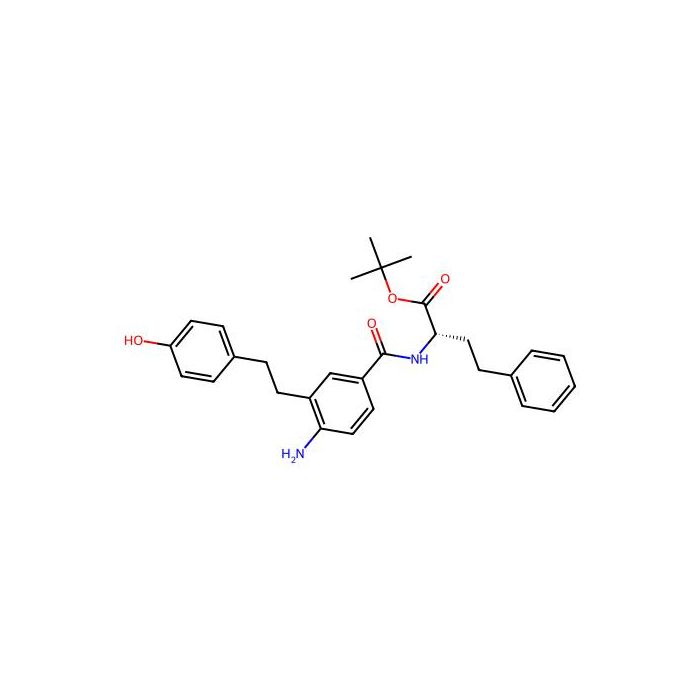
Neoseptin 3 - ≥99% , CAS No.1622863-21-1

CAS: 1622863-21-1 Cat. No.: N649322 Formula: C29H34N2O4 Molecular Weight: 474.59 EC Number: 110-749-6 PubChem CID: 77461013
AVAILABLE TO ORDER
GRADE & PURITY ≥99%
Storage
Store at -20°C
Shipped In
Ice chest + Ice pads
★
Size
Germany (EU)
USA*
Price
Qty
5mg
N649322-5mg
Made to order · 8–12 wks
€240.28
10mg
N649322-10mg
Made to order · 8–12 wks
€384.32
25mg
N649322-25mg
Made to order · 8–12 wks
€767.86
50mg
N649322-50mg
Made to order · 8–12 wks
€1,227.76
100mg
N649322-100mg
Made to order · 8–12 wks
€1,961.87
Enter a quantity for the sizes you want to add.

Overview

Neoseptin 3 is a Toll-like receptor 4/myeloid differentiation factor 2 ( mTLR4/MD-2 ) agonist with an EC 50 of 18.5 μM.

In Vitro

Neoseptin 3 is a Toll-like receptor 4/myeloid differentiation factor 2 (mTLR4/MD-2) agonist with an EC 50 of 18.5 μM. Neoseptin-3 induces TNFα production by macrophages in a concentration-dependent manner. Neoseptin-3 induces phosphorylation of IκB kinases α (IKKα), IKKβ, p38, c-Jun N-terminal kinase (JNK), and ERK, and degradation of IκBα, consistent with activation of MAPK and canonical NF-κB signaling. TANK-binding kinase 1 (TBK1) and IRF3 phosphorylation also increase in response to Neoseptin-3. MCE has not independently confirmed the accuracy of these methods. They are for reference only.

Form:Solid

IC50& Target:TLR4 18.5 μM (EC 50 )

Specifications

Specifications & Purity
≥99%
Biochemical and Physiological Mechanisms
Neoseptin 3 is a Toll-like receptor 4/myeloid differentiation factor 2 ( mTLR4/MD-2 ) agonist with an EC 50 of 18.5 μM.
Storage
Store at -20°C
Shipped In
Ice chest + Ice pads
This product requires cold chain shipping. Ground and other economy services are not available.
Action Type
AGONIST
Purity
≥99%
Names and Identifiers
SMILES
CC(C)(C)OC(=O)C(CCC1=CC=CC=C1)NC(=O)C2=CC(=C(C=C2)N)CCC3=CC=C(C=C3)O
IUPAC Name
tert-butyl (2S)-2-[[4-amino-3-[2-(4-hydroxyphenyl)ethyl]benzoyl]amino]-4-phenylbutanoate
InChIKey
OACODUCFPHHCIH-SANMLTNESA-N
InChI
1S/C29H34N2O4/c1-29(2,3)35-28(34)26(18-12-20-7-5-4-6-8-20)31-27(33)23-14-17-25(30)22(19-23)13-9-21-10-15-24(32)16-11-21/h4-8,10-11,14-17,19,26,32H,9,12-13,18,30H2,1-3H3,(H,31,33)/t26-/m0/s1
Isomeric SMILES
CC(C)(C)OC(=O)[C@H](CCC1=CC=CC=C1)NC(=O)C2=CC(=C(C=C2)N)CCC3=CC=C(C=C3)O
PubChem CID
77461013
Molecular Weight
474.59

Advanced Data

Taxonomic Classification

Taxonomy Tree

KingdomOrganic compounds
SuperclassPhenylpropanoids and polyketides
ClassStilbenes
SubclassNot available
Intermediate Tree Nodes Not available
Direct ParentStilbenes
Alternative Parents N-acyl-alpha amino acids and derivatives  Hippuric acids and derivatives  Alpha amino acid esters  Aminobenzamides  Benzoyl derivatives  Aniline and substituted anilines  Fatty acid esters  1-hydroxy-2-unsubstituted benzenoids  Secondary carboxylic acid amides  Carboxylic acid esters  Monocarboxylic acids and derivatives  Primary amines  Organic oxides  Hydrocarbon derivatives  Carbonyl compounds  
Molecular FrameworkAromatic homomonocyclic compounds
Substituents Stilbene - Alpha-amino acid ester - Hippuric acid or derivatives - N-acyl-alpha amino acid or derivatives - Aminobenzamide - Aminobenzoic acid or derivatives - Alpha-amino acid or derivatives - Benzamide - Benzoic acid or derivatives - Aniline or substituted anilines - Benzoyl - 1-hydroxy-2-unsubstituted benzenoid - Fatty acid ester - Phenol - Fatty acyl - Benzenoid - Monocyclic benzene moiety - Amino acid or derivatives - Carboxylic acid ester - Carboxamide group - Secondary carboxylic acid amide - Monocarboxylic acid or derivatives - Carboxylic acid derivative - Organic oxide - Organic nitrogen compound - Carbonyl group - Organic oxygen compound - Primary amine - Hydrocarbon derivative - Amine - Organonitrogen compound - Organooxygen compound - Aromatic homomonocyclic compound
DescriptionThis compound belongs to the class of organic compounds known as stilbenes. These are organic compounds containing a 1,2-diphenylethylene moiety. Stilbenes (C6-C2-C6 ) are derived from the common phenylpropene (C6-C3) skeleton building block. The introduction of one or more hydroxyl groups to a phenyl ring lead to stilbenoids.
External Descriptors Not available
3D Structure
Interactive Chemical Structure Model


Associated Targets(Human)
TLR4 Tchem Toll-like receptor 4 (970 Activities)
Activity TypeRelationActivity valueUnitsAction TypeJournalPubMed IddoiAssay Aladdin ID
Associated Targets(non-human)
Mus musculus (284745 Activities)
Activity TypeRelationActivity valueUnitsAction TypeJournalPubMed IddoiAssay Aladdin ID
Mechanisms of Action
Certificates (CoA,COO,BSE/TSE and Analysis Chart)
C of A & Other Certificates(BSE/TSE, COO):
Analytical Chart:
Chemical and Physical Properties
SolubilityDMSO : ≥ 100 mg/mL (210.71 mM)
Molecular Weight474.6
XLogP35.600
Hydrogen Bond Donor Count3
Hydrogen Bond Acceptor Count5
Rotatable Bond Count11
Exact Mass474.252 Da
Monoisotopic Mass474.252 Da
Topological Polar Surface Area102.000 Ų
Heavy Atom Count35
Formal Charge0
Complexity662.000
Isotope Atom Count0
Defined Atom Stereocenter Count1
Undefined Atom Stereocenter Count0
Defined Bond Stereocenter Count0
Undefined Bond Stereocenter Count0
The total count of all stereochemical bonds0
Covalently-Bonded Unit Count1
Safety and Hazards(GHS)
x_hazard_statements

H413:May cause long lasting harmful effects to aquatic life

x_ridadr
NONHforallmodesoftransport
Solution Calculators
Reviews

Customer Reviews

Application Protocols

No manufacturer-validated protocols are provided for this item. The following general workflow is commonly used for small-molecule screening compounds (not item-specific):

  • Stock preparation:
    • Equilibrate vial to room temperature in a desiccator to minimize moisture condensation.
    • Weigh quickly; prepare a concentrated DMSO stock (e.g., 10–50 mM) as solubility permits.
    • Vortex to dissolve fully; if needed, warm gently (≤40°C) briefly and sonicate. Filter through 0.22 µm PTFE if particulates persist.
  • Aliquoting and storage:
    • Dispense single-use aliquots (e.g., 10–50 µL) in amber, low-bind tubes. Store at −20°C.
    • Avoid repeated freeze–thaw cycles; record opening dates and freeze–thaw count.
  • Working solution preparation:
    • Add stock to assay buffer/media to reach the desired final concentration, maintaining solvent within assay limits (commonly ≤0.1–1% v/v DMSO).
    • Include vehicle controls matched to the highest solvent content.
  • QC checks:
    • Verify concentration by UV (if chromophore known) or quantitative LC when available. Periodically confirm integrity by LC–MS.

For item-specific parameters (solubility limits, extinction coefficients, stability), consult the CoA/Spec Sheet.

Biological Roles

Target, pathway, and mechanism information for this specific item are not provided in the product data. Accordingly, no biological role or mode-of-action can be ascribed here.

General considerations for small-molecule library members (not item-specific):

  • Use in hypothesis generation: Library compounds can serve as starting points for phenotypic screening or target-based assays to uncover modulators of enzymes, receptors, transporters, or signaling nodes.
  • Follow-up studies: Hits should undergo re-purchasing/re-isolation, re-characterization (LC–MS, NMR), and orthogonal validation to exclude assay artifacts (e.g., fluorescence interference, aggregation, redox cycling).
  • ADME/PK flags: Early checks such as solubility, lipophilicity (cLogP), and stability in buffer/serum can help triage compounds before committing to extensive studies. All such parameters must be determined experimentally for this item.
  • Biology-facing controls: Maintain vehicle controls (matching final solvent %), use concentration–response testing, and include positive/negative reference standards relevant to the assay.

No medical or clinical claims are made. This product is supplied strictly for research use only, as stated by the manufacturer.

Buffer Applications

This item is not a buffering reagent, and no buffer-related specifications are provided. Therefore, classical buffer-system guidance (pKa, pH range, ionic strength) is not applicable.

General handling in buffered systems (not item-specific):

  • Dosing into buffers: Pre-dissolve the compound in a miscible organic solvent (commonly DMSO), then add to the aqueous buffer under vigorous mixing to a final co-solvent level the assay tolerates (often ≤0.1–1% v/v).
  • Prevent precipitation: Add the organic stock slowly while vortexing; consider using 0.01–0.05% nonionic surfactant or cyclodextrin if permitted by the assay, and verify that these excipients do not interfere.
  • Filtration: If particulate forms, pass the preparation through a 0.22 µm PES or PTFE filter compatible with the solvent system.

For any buffer compatibility, solubility limits, or pH stability that are specific to this item, refer to the CoA/Spec Sheet or evaluate empirically.

Green Alternatives

Because item-specific solvent and process requirements are not defined, the green profile is best improved through solvent and workflow choices. The following guidance is general (not item-specific):

  • Prefer greener dissolution media when compatible with your assay: aqueous buffer with minimal DMSO (≤0.1–0.5% v/v) is preferable to larger percentages of dipolar aprotic solvents.
  • When organic solvents are required, consider these tradeoffs:

Greener choice (relative) | Typical use | Tradeoffs

  • Water + minimal DMSO | Aqueous assays | Limited by compound solubility; potential precipitation

  • Ethanol | Cell/tissue compatibility | Narrow solvency; may perturb membranes/enzymes

  • 2-MeTHF or CPME (workup) | Synthetic/analytical prep steps | Not usually suitable for bioassay dosing; check extractables

  • Ethyl acetate | Workup/extraction | Limited for polar compounds; volatility aids removal

  • Minimize solvent volumes via concentrated stocks and accurate low-volume dispensing.

  • Use closed systems and microplates to reduce VOC emissions.

  • Implement solvent recycling for MeCN/MeOH in analytical workflows when feasible.

Note: Select solvents based on verified solubility and assay tolerance for this specific compound. For item-specific guidance, consult the CoA/Spec Sheet.

Pharmaceutical Uses

No pharmacopeial status, excipient role, or formulation use is specified for this product. It is supplied strictly for research use only and is not intended for human or veterinary applications, clinical diagnosis, or therapeutic use.

General R&D formulation notes (not item-specific):

  • Preclinical tool compounds are commonly formulated for in vitro assays as DMSO stocks and for in vivo exploratory studies using vehicles such as PEG400/saline, Captisol, or Tween-80/corn oil. Such uses require exhaustive compound-specific qualification and institutional approvals; none are implied for this item.
  • If analytical method development is planned (e.g., LC–MS quantitation), select mobile phases and columns after confirming the compound’s ionization behavior and stability. Avoid assuming UV maxima or ionization states without data.

For any regulated or translational work, obtain comprehensive, lot-specific documentation (identity, purity, residual solvents, elemental impurities) and conduct formal risk assessments. No claims are made regarding compliance with pharmacopeial monographs or GMP.

Physical Properties

Item-specific physicochemical data have not been provided in the current listing. Where exact values are needed for method development or formulation, please request the CoA/Spec Sheet.

  • Appearance: Not specified for this item; refer to CoA/Spec Sheet.
  • Melting/Boiling point: Not specified for this item; refer to CoA/Spec Sheet.
  • Density/Refractive index: Not specified for this item; refer to CoA/Spec Sheet.
  • Solubility: Not specified for this item; refer to CoA/Spec Sheet.
  • LogP, pKa: Not specified for this item; refer to CoA/Spec Sheet.

General laboratory guidance (literature/practice; not item-specific):

  • Many screening library compounds are supplied as crystalline or amorphous solids and are commonly dissolved in anhydrous DMSO to prepare 10–50 mM master stocks for biochemical or cell-based assays. Adjust concentration to stay below solubility limits and to meet assay solvent tolerances (e.g., ≤0.1–1% v/v DMSO final).
  • If DMSO is unsuitable, typical alternatives include DMF, acetonitrile, ethanol, or aqueous buffers with co-solvent/surfactant (e.g., 0.5–2% DMSO or 0.01–0.05% nonionic surfactant). Always verify stability and solubility empirically.
  • Hygroscopicity, polymorphism, or light sensitivity may affect handling; protect from moisture and light until item-specific guidance is confirmed from the CoA/SDS.

Note: Do not treat the above as specifications. For quantitative properties and acceptance criteria, defer to the item’s Certificate of Analysis.

Quality and Grades
  • Grade/Purity: Not specified for this item; refer to CoA/Spec Sheet.

Context and expectations (general; not item-specific):

  • Library-grade small molecules are typically released with identity confirmation (e.g., 1H NMR and/or HRMS/LC–MS) and a chromatographic purity criterion (often area% by HPLC/UPLC). Actual methods and thresholds are defined in the item’s CoA.
  • If UV transparency or residual solvent limits are critical (e.g., for spectroscopic assays), confirm by requesting the analytical report. Do not assume specific impurity or residual solvent limits in the absence of a CoA.
  • Batch-specific documentation: The CoA should define acceptance criteria, test methods, and results. Request the lot-specific CoA prior to regulated use.

Stabilizers/inhibitors:

  • Presence/absence of stabilizers is not specified for this item; refer to CoA/Spec Sheet. If present, stabilizers may influence bioassay readouts or LC–MS baselines and should be accounted for in controls.

Recommendation:

  • For screening campaigns, qualify the received lot in your workflow (identity, purity, and solubility check). For quantitative mechanistic studies, consider orthogonal purity confirmation (e.g., qNMR) and verify water content if relevant to your application.
Reaction and Applications

This product is listed as a member of a small-molecule/compound library and is generally intended for discovery research rather than as a synthetic reagent. No manufacturer application notes are provided for this item beyond “For research use only.”

Research-use context (general; not item-specific):

  • Screening and profiling: Typical uses include high-throughput screening (HTS), target deconvolution workflows, phenotypic assays, or structure–activity relationship (SAR) exploration when analog series are available.
  • Stock preparation: Prepare concentrated DMSO stocks (e.g., 10–50 mM) after confirming solubility. Filter (0.22 µm PTFE) if particulate is present. Avoid repeated freeze–thaw by aliquoting.
  • Assay considerations: Validate compound interference (fluorescence, absorbance, redox activity) before interpreting biochemical readouts. Employ counter-screens and orthogonal assays to exclude assay artifacts.
  • Stability checks: Evaluate short-term stability in assay media (pH, temperature, light) and in storage solvent (DMSO, DMF) by LC–MS/UPLC to ensure accurate dose–response.

Synthetic chemistry usage:

  • No specific synthetic transformations are indicated for this item. If derivatization is intended (e.g., to prepare analogs or tagged probes), obtain the exact structure and functional-group map from the CoA/SDS before planning routes.

Note: Do not ascribe a biological target or mechanism to this item without primary data. For detailed application guidance, consult the CoA or contact Aladdin Scientific.

Reaction Conditions

There are no item-specific reaction conditions, catalysts, or transformation guidance provided for this product, and it is not primarily offered as a synthetic reagent.

General handling conditions for solution preparation and stability (not item-specific):

  • Stock solutions: Prepare in anhydrous DMSO at a concentration compatible with solubility (often 10–50 mM). Mix thoroughly and inspect for clarity; filter through 0.22 µm PTFE if needed.
  • Aqueous dilution: Add DMSO stock slowly to vigorously mixed buffer or media to avoid precipitation; maintain final DMSO within assay-tolerated limits (commonly ≤0.1–1% v/v).
  • Stability checks: Monitor by UPLC/LC–MS after storage (e.g., 1–7 days at room temperature vs refrigerated) and after exposure to light or different pH conditions, as appropriate.
  • Container compatibility: Use amber vials when light sensitivity is suspected; verify adsorption losses for very lipophilic compounds (consider silanized glass or low-bind plastics).

If chemical reactions involving this compound are planned (e.g., derivatization or conjugation), first obtain the exact structure and functional-group profile from the CoA/SDS to define suitable catalysts, temperatures, and solvents. Do not extrapolate from unrelated scaffolds.

Safety and Handling

Safety classification details are not provided in the current product data and may be finalized in the Safety Data Sheet (SDS).

  • GHS/CLP classification: Not specified for this item; refer to SDS.
  • Signal word / H-statements / Pictograms: Not specified for this item; refer to SDS.

General laboratory precautions (good practice; not item-specific):

  • Use in a fume hood, wearing appropriate PPE: lab coat, safety glasses, and nitrile gloves. Avoid inhalation of dust/aerosols and skin/eye contact.
  • Prevent cross-contamination by working with clean tools and dedicated weighing paper; re-cap promptly after opening to limit moisture uptake.
  • If dissolved in organic solvents (e.g., DMSO, DMF, MeCN), observe the solvent’s flammability and toxicity controls.

First-aid overview (consult SDS for authoritative guidance):

  • Inhalation: move to fresh air; seek medical advice if symptoms occur.
  • Skin/eye contact: rinse with water for several minutes; remove contaminated clothing; seek medical attention if irritation persists.
  • Ingestion: rinse mouth; seek medical attention.

Storage incompatibilities and stability (general):

  • Store at −20°C as specified. Keep container tightly closed, dry, and protected from light. Avoid strong oxidizers and reactive acids/bases unless compatibility is documented.

Always consult the SDS for definitive hazard, handling, spill response, and disposal instructions.

Solvent Selection

Item-specific polarity and solubility parameters are not provided; select solvents empirically. The following is general guidance for small-molecule library members (not item-specific):

  • Primary solvent for stocks: DMSO (anhydrous) is typically preferred due to broad solvency and assay compatibility at low final percentages (≤0.1–1% v/v in many systems). Prepare 10–50 mM stocks as solubility allows.
  • Co-solvent strategies: If aqueous delivery is required, pre-dissolve in DMSO, then dilute into buffer with vigorous mixing. Keep below the compound’s precipitation threshold; use 0.5–2% DMSO final if assay tolerates it.
  • Alternative organic solvents: DMF and acetonitrile provide high solvency; ethanol or methanol may be suitable when biological compatibility is prioritized. Verify stability (hydrolysis, transesterification, or oxidation) as relevant.
  • Surfactants and complexation: For hydrophobic entities, small amounts of nonionic surfactant (e.g., 0.01–0.05% Tween-20) or cyclodextrins can aid dispersion; confirm no assay interference.

Comparison (general considerations):

  • DMSO vs MeCN: DMSO offers broader solvency and better biological tolerance at low levels; MeCN is volatile and useful for LC applications but less tolerated in cells.
  • EtOH/MeOH: more bio-compatible at modest levels, but narrower solvency and potential to perturb membranes/enzymes.

Always confirm solubility and stability experimentally. For item-specific solvent recommendations, consult the CoA/Spec Sheet.

Storage and Reconstitution

Storage conditions (as provided by product data):

  • Store at −20°C.
  • Shipped in an ice chest with ice pads.

Additional good-practice guidance (not item-specific):

  • Keep container tightly closed in a dry, inert environment (e.g., with desiccant). Minimize headspace and temperature cycling. Protect from light until stability is verified.
  • Upon first opening, allow the vial to warm to room temperature in a desiccator before unsealing to prevent moisture condensation.

Reconstitution guidance (not item-specific):

  • Solvent selection: DMSO is a common first-choice solvent for small-molecule library members. If DMSO is unsuitable, evaluate DMF, acetonitrile, ethanol, or buffered aqueous systems with minimal co-solvent.
  • Concentration: Prepare concentrated stocks (e.g., 10–50 mM) within solubility limits. Record exact concentration and solvent composition on the label.
  • Aliquoting: Prepare single-use aliquots in amber vials or low-bind tubes to avoid repeated freeze–thaw. Store aliquots at −20°C.
  • Stability: Absent item-specific data, perform a small stability check (e.g., LC–MS after 1–2 weeks at −20°C and after one freeze–thaw) before committing critical experiments.

Specifications not provided for this item (refer to CoA/Spec Sheet): appearance, purity/grade, presence of stabilizers, hygroscopicity, and any special storage notes (e.g., under inert gas). Research use only.

Structure and Identity

Neoseptin 3 (SKU N649322) is offered as a research-use small molecule in our compound library collection. Item-specific structural identifiers are limited in the current listing.

  • CAS: 1622863-21-1 (as provided)
  • PubChem CID: 77461013 (as provided)
  • InChIKey: 252509 (as provided; full standardized InChIKeys are typically 27 characters — refer to CoA/Spec Sheet for confirmation)
  • SMILES: Not specified for this item; refer to CoA/Spec Sheet.
  • Molecular formula: Not specified for this item; refer to CoA/Spec Sheet.
  • Molecular weight: Not specified for this item; refer to CoA/Spec Sheet.

Structural features (general note):

  • Detailed functional groups, ring systems, and stereochemistry are not supplied in the product data. Please consult the CoA/SDS or contact Aladdin Scientific for the definitive structure drawing and identifiers.
  • Category context: listed under “小分子和化合物库” (small molecules and compound libraries), consistent with use as a screening or probe candidate rather than a bulk reagent.

2D description (general):

  • Without SMILES/InChI or a structure depiction, a precise 2D description cannot be provided for this item. When available, the SMILES/InChI enables identification of heteroatoms, aromatic systems, and stereogenic centers. Request the CoA/Spec Sheet for the authoritative structure and associated descriptors.
Synthetic Utility

This product is offered as a screening/compound-library small molecule rather than a building block or reagent. Without structural information (functional groups, protecting groups, or handles), specific synthetic roles cannot be assigned.

General considerations if derivatization is contemplated (not item-specific):

  • Secure the definitive structure (SMILES/InChI, functional-group map) from the CoA/SDS before planning any transformations.
  • Common late-stage modification tactics (if chemically feasible for the structure) include: selective halogenation, C–H activation, amide coupling, Suzuki–Miyaura cross-coupling, or heteroatom alkylation/acylation. Feasibility depends entirely on the actual scaffold and substitution pattern.
  • For probe development, consider introducing reporter handles (alkyne/azide for click chemistry, biotin tags, or photoaffinity groups) only after confirming that modifications preserve activity.
  • Establish analytical tracking (UPLC, 1H/13C NMR, HRMS) and purity assessment (area% by LC with orthogonal detection) for any synthetic campaign.

In summary, no item-specific synthetic transformations are recommended or implied. Treat this material primarily as a research-use small molecule pending detailed structural disclosure.

Target Specificity

Only product-data-derived target details may be listed here. For this item, no target, pathway, or binding information has been provided.

  • Target/epitope: Not specified for this item; refer to CoA/Spec Sheet.
  • Species reactivity/assay context: Not specified for this item; refer to CoA/Spec Sheet.

Note: If you intend to use this compound as a probe, perform target deconvolution and specificity profiling using orthogonal assays (biochemical, biophysical, and cellular). No claims of selectivity or potency are made for this product.

Frequently Asked Questions

What is the purity of this product?
This product is supplied at ≥99% purity (chemical assay). Lot-specific values are stated on the Certificate of Analysis.
How should this product be stored?
Store at ?20 °C. Freezer storage is required to maintain the specified shelf life.
How is this product shipped?
This product ships in an insulated container with ice pads. Unpack on arrival and transfer it to the storage condition stated above.
What are the CAS number, molecular formula and molecular weight?
The CAS Number is 1622863-21-1, the molecular formula is C29H34N2O4, and the molecular weight is 474.59 g/mol. InChIKey OACODUCFPHHCIH-SANMLTNESA-N.
What documentation is provided?
Available product documentation, including Certificates of Analysis (COA), Safety Data Sheets (SDS), and specification sheets, is shown in the product document area. Document availability and access follow the current site policy.

Shall we send you a message when we have discounts available?

Remind me later

Thank you! Please check your email inbox to confirm.

Oops! Notifications are disabled.