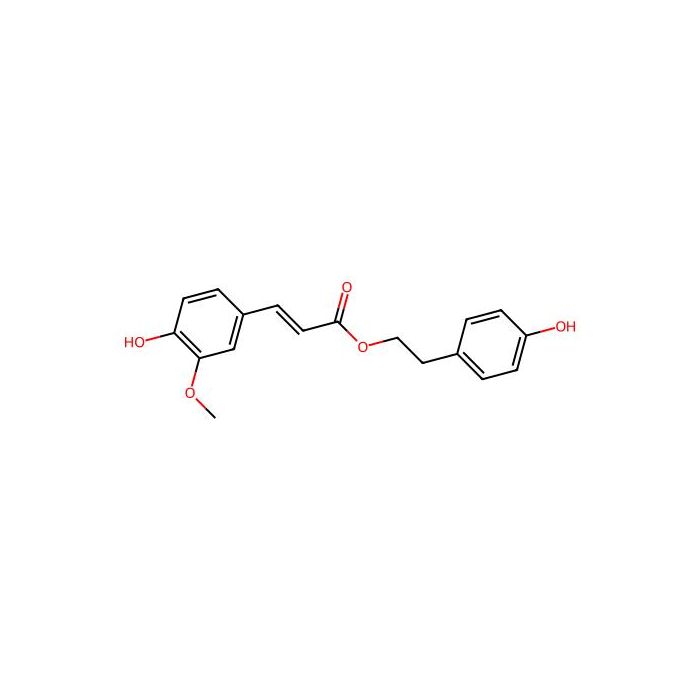
This compound belongs to the class of organic compounds known as coumaric acids and derivatives. These are aromatic compounds containing Aromatic compounds containing a cinnamic acid moiety (or a derivative thereof) hydroxylated at the C2 (ortho-), C3 (meta-), or C4 (para-) carbon atom of the benzene ring.
External Descriptors
Not available
1. Djoumbou Feunang Y, Eisner R, Knox C, Chepelev L, Hastings J, Owen G, Fahy E, Steinbeck C, Subramanian S, Bolton E, Greiner R, and Wishart DS. ClassyFire: Automated Chemical Classification With A Comprehensive, Computable Taxonomy. Journal of Cheminformatics, 2016, 8:61.
Determine the necessary mass, volume, or concentration for preparing a solution.
Dilution Calculator
Determine the dilution needed to prepare a stock solution.
Reconstitution Calculator
Reviews
Customer Reviews
Application Protocols
No application protocols are specified for this item in the Product Data. The following general/literature practices are provided for research context only:
Preparation of stock solutions:
Dissolve the compound in anhydrous DMSO or ethanol to 10–100 mM. Vortex and, if needed, sonicate briefly. Filter through 0.22 µm PTFE for sterile applications.
Store small aliquots protected from light to minimize freeze–thaw and photodegradation.
Substrate: 10–100 µM final; start reaction by adding enzyme (e.g., porcine liver esterase) at defined units/mL.
Monitor formation of ferulic acid by HPLC/UV (320 nm) or by LC–MS; include controls without enzyme and heat-inactivated enzyme.
Antioxidant capacity (spectrophotometric models):
DPPH or ABTS radical assays conducted in ethanol or acetate buffer with defined DMSO content; measure decrease in absorbance at 517 or 734 nm, respectively; compare to Trolox standards.
These are generic starting points; optimize conditions for your system. Always adhere to your institution’s safety and waste protocols.
Biological Roles
Scope note: This section summarizes general/literature information about related structures in biology; it does not imply suitability for clinical or diagnostic use. This product is for research use only (per Product Data).
Literature context:
Phenolic cinnamate esters, including ferulate esters, occur widely in plants where they contribute to cell-wall architecture (lignin crosslinking via radical coupling) and to defense chemistry due to their antioxidant properties.
The p-hydroxyphenethyl (tyrosol) moiety is a common phenolic alcohol in certain plant extracts. When esterified to ferulic acid, the conjugate retains phenolic functions on both aromatic rings, supporting radical stabilization through resonance.
Hydrolytic lability: In biological matrices, esterases can cleave the aryl ester to release ferulic acid and p-hydroxyphenethyl alcohol. Hydrolysis rate depends on enzyme complement, pH, and microenvironment.
Redox behavior: The conjugated trans-cinnamate system provides a UV-absorbing chromophore and facilitates electron/atom transfer processes. Phenolic O–H groups can engage in H-bonding and radical quenching; oxidation can yield quinone-like species under strong oxidants (literature observations).
Research applications:
Model substrate in esterase kinetics and transport studies (uptake/efflux of lipophilic esters in cell-free systems or artificial membranes).
Probe for non-covalent interactions (π–π stacking, H-bonding) with proteins/polymers via spectroscopic readouts.
No medical, diagnostic, or therapeutic claims are made for this material.
Buffer Applications
This compound is a neutral, sparsely water-soluble aromatic ester and is not itself a buffering agent. Accordingly:
It is not typically used to prepare aqueous buffer systems, nor does it provide meaningful pH buffering capacity in physiological ranges.
For aqueous work, prepare concentrated stocks in DMSO or ethanol and dilute into buffered media with vigorous mixing to avoid precipitation; maintain final organic cosolvent at minimal percentages compatible with your assay.
For buffer selection relevant to experiments involving this compound, prioritize buffers that are compatible with organic cosolvents (e.g., phosphate, HEPES, MOPS) and avoid high-pH conditions that may accelerate ester hydrolysis.
Green Alternatives
When working with p-Hydroxyphenethyl trans-ferulate, solvent and process choices drive most environmental impact. Below are literature-based suggestions; select alternatives that maintain solubility and stability while reducing hazard.
Replace dichloromethane/chloroform with ethyl acetate or 2-MeTHF for extractions and chromatography; these offer lower toxicity and are derived from bio-based feedstocks (2-MeTHF).
Use ethanol or isopropanol instead of methanol where reaction or solubility permits (reduced toxicity, renewable sourcing for EtOH).
For polar aprotic needs, consider Cyrene or dimethyl carbonate as process solvents when compatible; for analytical stocks, DMSO remains common but minimize volumes.
Process considerations:
Conduct reactions at ambient pressure/temperature when feasible to reduce energy input; leverage catalysts (e.g., enzymatic esterifications) to form or modify the ester under milder, greener conditions.
Recycle eluents in prep chromatography; choose normal-phase systems with heptane/EtOAc gradients rather than halogenated solvents when possible.
Example comparison (qualitative):
DCM vs EtOAc: EtOAc has lower environmental persistence and comparable ability to dissolve cinnamate esters; however, EtOAc can participate in transesterification under strongly basic conditions—control pH and time.
THF vs 2-MeTHF: 2-MeTHF has reduced peroxide concerns and better hydrophobicity; drying efficiency may differ, and baseline UV absorbance can be higher—evaluate for trace analysis.
These substitutions are general guidance; verify solubility, stability, and performance for your specific application.
Pharmaceutical Uses
Scope: Research/lab-use only. No clinical or therapeutic uses are claimed or supported. The following points reflect general formulation-science context for related chemotypes.
Excipient/formulation research context (literature/general):
Phenolic cinnamate esters are sometimes explored as antioxidant pro-moieties or UV-absorbing auxiliaries within experimental formulations. Their conjugated chromophore can provide UV screening and their phenolic groups can scavenge radicals; however, stability to hydrolysis must be evaluated.
Lipophilicity and limited aqueous solubility make such esters candidates for encapsulation studies (liposomes, polymeric nanoparticles) as model payloads to investigate release by esterases.
Not a recognized compendial excipient to our knowledge; compendial status and specific impurity thresholds are Not specified for this item; refer to CoA/Spec Sheet.
Manufacturing considerations (general):
Control light and moisture exposure to mitigate degradation during blending and granulation.
Use non-basic processing aids to limit saponification; monitor for ferulic acid formation by HPLC.
For solid-dosage research, consider antioxidants or oxygen scavengers in packaging if oxidative color change is observed.
Any use in pharmaceutical product development requires independent suitability assessment and compliance review; this listing is for research use only.
Appearance: Not specified for this item; refer to CoA/Spec Sheet.
Grade/Purity: Not specified for this item; refer to CoA/Spec Sheet.
Molecular formula: Not specified for this item; refer to CoA/Spec Sheet.
Molecular weight: Not specified for this item; refer to CoA/Spec Sheet.
Literature/typical values for p-Hydroxyphenethyl trans-ferulate (reference only; not product specifications):
Molecular formula (literature): C18H20O6
Molecular weight (literature): ~332.35 g/mol
Physical state: typically a pale solid; phenolic cinnamate esters often form amorphous powders or low-melting solids
Solubility: sparingly soluble in water; soluble in polar organic solvents (DMSO, DMF, alcohols), moderately soluble in ethyl acetate, acetone; lower solubility in alkanes (literature, qualitative)
Polarity/logP: moderate lipophilicity expected due to aromatic rings and ester; multiple H-bond donors/acceptors confer limited aqueous solubility (literature, qualitative)
UV/Vis: strong π→π* absorption in near-UV due to conjugated cinnamate chromophore; phenolic contributions around 270–330 nm typical for ferulate esters (literature, qualitative)
Stability: sensitive to strong base (saponification of ester), prolonged strong acid (hydrolysis), and photodegradation/oxidation of phenolics—store protected from light and moisture (general literature guidance)
Practical notes:
Prepare analytical stocks in dry DMSO or ethanol for spectroscopic or biochemical assays.
Avoid prolonged heating or high-pH conditions that promote ester cleavage or E/Z isomerization.
Always consult the product’s CoA/SDS for definitive, lot-specific physical data.
Quality and Grades
Item-specific quality information:
Grade/Purity: Not specified for this item; refer to CoA/Spec Sheet.
How to interpret common grades (general guidance; not specific to this lot):
Research grade: suitable for exploratory synthesis, screening, and method development; impurity thresholds are typically defined on the CoA.
≥95–98% purity (if specified): often adequate for most synthetic and screening workflows; minor residual solvents or positional isomers may be present and should be considered for sensitive applications.
HPLC grade (if offered): emphasizes low UV background and low non-volatile residues; useful when UV quantitation is critical.
Analytical verification (recommended practices):
Identity: confirm by 1H/13C NMR (diagnostic trans-cinnamate coupling J ~15–16 Hz), HRMS (M+H+ ~333, literature), and IR (ester C=O ~1715–1735 cm−1; phenolic O–H stretch).
Purity: HPLC/UPLC with UV at ~320 nm (ferulate chromophore) and secondary wavelength ~280 nm (phenolics); evaluate for E/Z isomer ratio and hydrolysis products (ferulic acid, p-hydroxyphenethyl alcohol).
Residual solvents/metals/peroxides: Not specified for this item; refer to CoA/Spec Sheet.
Stabilizers/additives:
Not specified for this item; refer to CoA/Spec Sheet. In general, phenolic esters are shipped neat without stabilizers; protect from light and moisture to limit degradation.
For regulated or quantitative applications, rely on the item’s CoA and, if necessary, additional in-house QC.
Reaction and Applications
Research-use context: For research use only (per Product Data). This phenolic cinnamate ester serves as a conjugated, phenolic-containing scaffold valuable in synthetic, analytical, and materials contexts.
Representative application areas (literature/general):
Antioxidant scaffold studies: Ferulate esters are common models for radical-scavenging and chain-breaking antioxidant mechanisms. The para-phenolic groups provide H-atom donation, while the trans-cinnamate backbone delocalizes radicals.
Enzymology and metabolism: Useful as a substrate or probe for esterases and acyltransferases, enabling studies of hydrolysis kinetics to ferulic acid and p-hydroxyphenethyl alcohol.
Pro-moiety design: Phenethyl ferulates are used in pro-fragrance, pro-antioxidant, and delivery studies where controlled hydrolysis releases active phenols (non-clinical research context).
Photophysics/analytics: Strong UV chromophore enables quantitation and photostability/isomerization studies under UVA exposure.
Materials/food chemistry models: Ferulate esters mimic plant cell-wall crosslinks and can be incorporated into polymer or lignin-mimetic systems to probe oxidative coupling and radical grafting.
Practical tips:
Maintain trans-selectivity: minimize light and heat to avoid E→Z isomerization; check E/Z ratio by HPLC/UV or NMR (Jtrans ~15–16 Hz).
Control hydrolysis: use anhydrous, neutral to mildly acidic conditions for handling; add acid scavengers only when necessary and compatible.
Characterization: monitor by HPLC at 320 nm and confirm identity by MS (M+H+ ~333, literature) and diagnostic NMR signals (phenolic OH often broad; ester methylene triplets around 4.2–4.4 and 2.7–2.9 ppm depending on solvent).
Reaction Conditions
Literature-general guidance for preparing and manipulating p-Hydroxyphenethyl trans-ferulate and related esters (not item-specific):
Ester formation:
Steglich esterification: ferulic acid + p-hydroxyphenethyl alcohol, EDCI (1.1–1.5 eq) or DCC (1.1 eq), catalytic DMAP (0.05–0.2 eq), CH2Cl2 or EtOAc, 0–25°C, 2–16 h. Protect the phenolic OH on the alcohol (e.g., TBS or benzyl) if selectivity is problematic; mildly acidic workup to quench DMAP salts.
Acid chloride route: feruloyl chloride (formed in situ with oxalyl chloride/DMF cat.) + alcohol, pyridine or Et3N, 0–5°C to RT, 1–4 h. Minimize base excess to reduce transesterification and E/Z isomerization.
Enzymatic esterification: CALB (Novozym 435), solvent-free or in 2-MeTHF/tert-amyl alcohol, 40–60°C, azeotropic removal or molecular sieves to shift equilibrium; high selectivity for primary alcohols.
Purification:
Silica gel chromatography using hexane/EtOAc or toluene/EtOAc gradients; include 0.1% acetic acid to suppress tailing if needed. Monitor at 320 nm.
Transformations:
Hydrogenation: Pd/C (5–10%), EtOAc/EtOH, H2 (1–3 atm), RT–40°C, 2–8 h; track by HPLC. Phenolic protection may be required to avoid over-reduction or hydrogenolysis of benzyl protections if present.
Hydrolysis: Na2CO3 or NaOH (0.05–0.5 M) in MeOH/H2O, 0–25°C, minutes to hours; quenched to pH ~3–4 to isolate ferulic acid. Enzymatic hydrolysis via esterases affords milder, selective cleavage.
Analysis:
HPLC: C18, 30–60% acetonitrile in water (0.1% formic acid), 1 mL/min, λ = 320 nm; retention increases with E content.
Yields and times depend on protection strategy, reagent quality, and sterics; verify and optimize for your system.
Safety and Handling
Item-specific hazard information (from Product Data):
GHS classification: Not specified for this item; refer to SDS.
Signal word / H-statements / pictograms: Not specified for this item; refer to SDS.
General safety information for phenolic cinnamate esters (literature; not product-specific):
Hazard profile: May cause skin/eye irritation; dust may irritate respiratory tract. Phenolic compounds can cause sensitization in susceptible individuals. Handle as a combustible organic solid; avoid dust accumulation and ignition sources.
Personal protective equipment (PPE): laboratory coat, safety glasses or chemical splash goggles, and appropriate chemically resistant gloves (e.g., nitrile). Use in a fume hood to control dust/vapor exposure.
First aid (general guidance; defer to SDS):
Inhalation: move to fresh air; seek medical attention if symptoms persist.
Skin: wash with soap and water; remove contaminated clothing.
Eyes: rinse cautiously with water for several minutes; remove contact lenses if present and easy to do; seek medical attention for persistent irritation.
Ingestion: rinse mouth; do not induce vomiting; seek medical advice.
Incompatibilities and reactivity: Avoid strong bases (risk of saponification), strong acids (hydrolysis), strong oxidizers (phenolic oxidation), and prolonged UV exposure (photoisomerization/oxidation). Avoid contact with acyltransferase/esterase-rich biological matrices if intact ester is required.
Storage and handling from Product Data:
Store at 2–8°C, protected from light, desiccated.
Shipped on wet ice.
Always consult the SDS for authoritative hazard classification and emergency procedures.
Solvent Selection
This compound is a moderately lipophilic, polyfunctional aromatic ester with limited aqueous solubility. Solvent choice should balance solubility, stability (avoid hydrolysis), and experimental compatibility.
Literature solubility/miscibility profile (qualitative):
Analytical standards and plate-based assays: DMSO stocks (10–100 mM) diluted into assay media; include cosolvent ≤1–2% to minimize precipitation. For aqueous assays, pre-dissolve in DMSO or ethanol, then titrate into buffer with vigorous mixing.
Preparative chromatography: dissolve in ethyl acetate, acetone, or acetonitrile; use acid-free eluents to reduce on-column hydrolysis; avoid high-pH mobile phases.
Synthetic manipulations (e.g., hydrogenation, transesterification): use alcohols or aprotic polar solvents per catalyst/condition requirements; exclude water to suppress hydrolysis.
Stability considerations:
Avoid prolonged residence in strong base or aqueous alcohols at elevated temperature (saponification risk).
Protect solutions from light to prevent E/Z isomerization and oxidative discoloration.
Green solvent perspective (see Green Alternatives tab for details): 2-MeTHF or ethyl acetate can often replace DCM/THF; ethanol can replace methanol where feasible.
General handling recommendations (literature/practice):
Upon receipt, allow container to equilibrate to room temperature in a desiccator before opening to prevent moisture condensation.
Minimize headspace oxygen and light exposure; reseal promptly after use. Amber vials are recommended.
Reconstitution guidance (for laboratory use; not a product specification):
Solubility: readily dissolves in DMSO and ethanol; prepare concentrated stocks (e.g., 10–100 mM) and store as single-use aliquots.
For aqueous applications, dilute organic stock into buffer with vigorous mixing; maintain final organic cosolvent at minimal levels to prevent precipitation.
Solution stability (general):
Keep solutions protected from light; avoid basic pH which accelerates ester hydrolysis. Short-term storage of solutions at 2–8°C is typically acceptable; for longer-term storage, frozen aliquots at ≤−20°C protected from light may be used, subject to your internal validation.
Do not refreeze/thaw repeatedly. Inspect for discoloration or precipitation before use; analyze by HPLC if critical.
Refer to the item’s CoA/SDS for definitive storage specifications and any lot-specific recommendations.
Structure and Identity
A phenolic cinnamate ester linking a p-hydroxyphenethyl (tyrosol) moiety to trans-ferulic acid, forming a conjugated aryl ester with two phenolic functions and one methoxy group.
Item-specific identifiers (from Product Data):
SKU: P649809
Product name: p-Hydroxyphenethyl trans-ferulate
CAS: 84873-15-4
InChIKey: Not specified for this item; refer to CoA/Spec Sheet. (Product Data lists “164549,” which is not a standard InChIKey format.)
SMILES: Not specified for this item; refer to CoA/Spec Sheet.
Literature/computed identity (for reference; not item specifications):
Structural features: trans-cinnamate ester (E-alkene), aryl methoxy (3-OMe) and phenolic (4-OH) substituents on the ferulate ring; additional para-phenolic group on the phenethyl fragment
A substituted anisole ring (3-methoxy-4-hydroxyphenyl) bearing a trans-cinnamoyl chain (–CH=CH–C(=O)–) esterified to an oxygen linking a two-carbon spacer (–O–CH2–CH2–) terminating in a para-hydroxyphenyl ring. The alkene is E-configured, extending conjugation from the ferulate ring through the carbonyl; the molecule contains three phenolic/alkoxy oxygens plus one ester carbonyl oxygen pair.
Note: Use the item’s CoA/SDS for authoritative identifiers (SMILES/InChI) for this specific lot.
Synthetic Utility
From a synthetic perspective, p-Hydroxyphenethyl trans-ferulate is a multifunctional aryl ester combining:
A trans-cinnamate ester (E-alkene) amenable to:
Selective hydrogenation (alkene to alkane) or partial reduction (to dihydroferulate) under Pd/C, PtO2, or transfer-hydrogenation conditions.
Conjugate additions or cycloadditions in more forcing conditions (less common due to aryl substitution).
An aryl ester linkage:
Hydrolysable under basic or enzymatic conditions to access ferulic acid and p-hydroxyphenethyl alcohol (a convergent handle for deprotection in protecting-group strategies).
Transesterification with alternative alcohols (acid or base catalyzed, or via enzymes such as CALB) to diversify the alcohol fragment.
Phenolic and methoxy aryl substitution:
Phenolic OH groups allow etherification, acylation, carbonate/urethane formation, or directed metalation after protection.
The anisole (3-OMe) directs electrophilic aromatic substitutions ortho/para; demethylation (e.g., BBr3) converts it to catechol-like motifs for further elaboration (if compatible with the ester).
Retrosynthetic value:
Disconnect at the ester: assemble via coupling of trans-ferulic acid (or its activated derivative: acid chloride, mixed anhydride, or DCC/EDCI-activated) with p-hydroxyphenethyl alcohol under phenol-selective protection (e.g., silyl carbonate) when needed.
Alternatively, build the cinnamate via Wittig/HWE or Pd-catalyzed Heck on a vanillin-derived aldehyde, then esterify.
This scaffold is thus a versatile intermediate for libraries exploring phenolic density, linker length, and conjugation.
Target Specificity
This listing is a small-molecule chemical and not a biological affinity reagent. There are no antigen/epitope targets, isotypes, or species reactivity parameters. Accordingly, “target specificity” is not typically applicable.
Item-specific data: Not specified for this item; refer to CoA/Spec Sheet if any biochemical binding data are provided.
For studies involving enzyme substrates (e.g., esterases), specificity must be determined empirically under the chosen assay conditions.
Frequently Asked Questions
What is the purity of this product?
This product is supplied at ≥99% purity (chemical assay). Lot-specific values are stated on the Certificate of Analysis.
How should this product be stored?
Store at 2–8 °C, protected from light, desiccated. Keep the container tightly closed with desiccant — the material is moisture-sensitive.
How is this product shipped?
This product ships chilled on wet ice. Unpack on arrival and transfer it to the storage condition stated above.
What are the CAS number, molecular formula and molecular weight?
The CAS Number is 84873-15-4, the molecular formula is C18H18O5, and the molecular weight is 314.33 g/mol. InChIKey JMSFLLZUCIXALN-WEVVVXLNSA-N.
What documentation is provided?
Available product documentation, including Certificates of Analysis (COA), Safety Data Sheets (SDS), and specification sheets, is shown in the product document area. Document availability and access follow the current site policy.
We use cookies to ensure the website functions properly and, where permitted, to improve your experience. You can manage your preferences at any time in Settings. Learn more in our Cookie Policy.
Shall we send you a message when we have discounts available?
Remind me later
Thank you! Please check your email inbox to confirm.
Products are supplied to verified businesses, institutions, and qualified professionals for research and development use only. Not for use in humans, animals, diagnosis, or therapy.