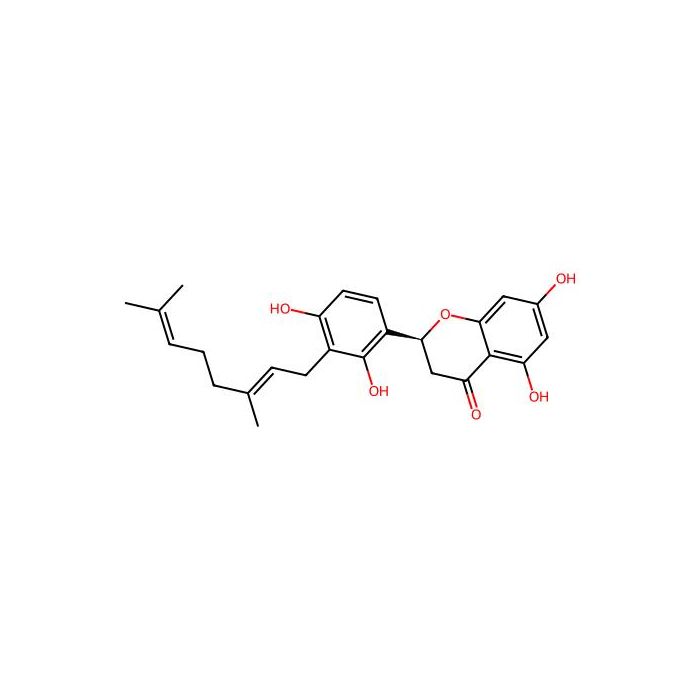
This compound belongs to the class of organic compounds known as 3'-prenylated flavanones. These are flavanones that features a C5-isoprenoid substituent at the 3'-position.
External Descriptors
Flavanones
1. Djoumbou Feunang Y, Eisner R, Knox C, Chepelev L, Hastings J, Owen G, Fahy E, Steinbeck C, Subramanian S, Bolton E, Greiner R, and Wishart DS. ClassyFire: Automated Chemical Classification With A Comprehensive, Computable Taxonomy. Journal of Cheminformatics, 2016, 8:61.
Determine the necessary mass, volume, or concentration for preparing a solution.
Dilution Calculator
Determine the dilution needed to prepare a stock solution.
Reconstitution Calculator
Reviews
Customer Reviews
Application Protocols
The Product Data do not list validated application protocols for this item. General guidance for common research uses is provided below as non-binding starting points:
Preparation of stock solutions (analytical):
Dissolve Sanggenol A in anhydrous DMSO at 10–50 mM. Vortex/sonicate and filter (0.2 μm PTFE). Store aliquots at −20 °C, protected from light.
LC–MS quantitation (example framework):
Column: C18, 2.1 × 100 mm, 1.7–3 μm. Mobile A: H2O + 0.1% formic acid; Mobile B: ACN + 0.1% formic acid. Gradient: 10%→90% B over 10–15 min. Detect by ESI(±) with SIM/PRM tuned to the compound’s m/z (determine from CoA or calibration standard).
In vitro biochemical assay dosing:
Prepare working dilutions from DMSO stocks into assay buffer to final [compound] spanning 0.1–100 μM with DMSO ≤1% v/v. Include vehicle controls. Confirm absence of precipitation by visual inspection or light scattering.
These are illustrative only; adapt to your instrumentation and consult the batch CoA for identity/purity details.
Biological Roles
Scope: Research-use-only information on natural occurrence and general biochemical themes; no medical or clinical claims.
Natural occurrence (literature/general):
Sanggenol A is reported as a Morus (mulberry) metabolite within the broader family of prenylated flavonoid/chalcone Diels–Alder–type adducts.
Biochemical features (literature/general):
Polyphenolic scaffolds commonly display redox activity, metal chelation (via catechol-like motifs), and non-covalent binding to proteins (π–π stacking, H-bonding). Such properties underlie many observed in vitro interactions in enzymology and chemical-biology studies.
Prenyl substituents can enhance membrane interactions and modulate target engagement compared with non-prenylated analogs.
Research contexts:
Used to probe structure–activity relationships among mulberry-derived polyphenols in enzyme inhibition or binding studies (e.g., carbohydrate-processing enzymes, oxidases; literature diverse and method-dependent).
Serves as a reference compound for metabolomics annotation and for validating extraction/isolation workflows from plant material.
Caution:
Exact molecular targets and potencies depend on assay conditions and source; batch-to-batch identity should be verified by LC–MS/NMR before drawing mechanistic conclusions.
For any biological experimentation, maintain DMSO ≤1–2% v/v in final assay media and include matching vehicle controls to decouple solvent effects.
Buffer Applications
Sanggenol A is not a buffering reagent and is not used to prepare pH buffer systems. For experiments requiring Sanggenol A in aqueous media, prepare concentrated stocks in DMSO or ethanol and dilute into the desired buffer (e.g., PBS, HEPES) with vigorous mixing. Include solvent controls and confirm solubility to avoid precipitation.
Green Alternatives
While Sanggenol A itself is the target analyte/standard, greener choices pertain to solvent systems for extraction, synthesis, and analysis.
Greener solvent considerations (general):
Prefer ethanol or 2-propanol over methanol where feasible for preparative extraction and fractionation.
Replace chlorinated solvents with ethyl acetate or methyl tert-butyl ether (MTBE) for liquid–liquid partitioning.
For LC, aqueous ethanol or ethanol–water gradients may be possible for semi-prep, though acetonitrile remains common for analytical LC–MS.
Comparison (general guidance):
Ethanol vs Methanol: lower toxicity, similar proticity; may require slightly higher volumes for dissolution but often acceptable.
Ethyl acetate vs Dichloromethane: biodegradable, lower halogenated waste; may change partition coefficients and drying time.
2-MeTHF vs THF: biorenewable origin and lower peroxide concerns; solubility of highly polar polyphenols may be inferior.
Operational best practices:
Minimize solvent volumes; use microscale SPE cleanup instead of large-volume LLE when developing analytical methods.
Recover and recycle high-purity acetonitrile where infrastructure permits.
Trade-offs should be balanced with analytical performance requirements (e.g., sensitivity, peak shape, and matrix effects).
Pharmaceutical Uses
No pharmacopeial/excipient status is specified for this item; Sanggenol A is provided strictly for research use only.
Potential roles in a pharmaceutical R&D context (general, non-clinical):
Analytical reference standard for QC of botanical materials or complex mixtures containing mulberry polyphenols.
Tool compound in early discovery assays to benchmark assay responsiveness to polyphenolic scaffolds.
Structural starting point for medicinal chemistry exploration (SAR) via semisynthetic modification of phenolic and prenyl functionalities.
Regulatory note:
This product is not intended for human or veterinary use, not for diagnostic or therapeutic applications. Any formulation or preclinical use would require independent sourcing of GMP-grade material and full qualification.
Documentation:
For any regulated laboratory workflow, obtain and rely on the batch-specific CoA and SDS for identity, purity, and handling instructions.
Physical Properties
Item-specific (from Product Data):
Appearance: Not specified for this item; refer to CoA/Spec Sheet.
Molecular weight: Not specified for this item; refer to CoA/Spec Sheet.
Literature/general expectations for Sanggenol-type polyphenolics:
Physical state: typically a yellow to brown amorphous solid or crystalline powder (literature, general for prenylated polyphenols; confirm by CoA for this lot).
Solubility: poor in water; soluble in DMSO, DMF, methanol, ethanol, and acetone; limited solubility in nonpolar hydrocarbons (literature).
LogP: moderate to high due to prenylation; accompanied by multiple phenolic –OH groups that can hydrogen-bond (literature; value depends on exact substitution pattern).
UV–Vis: strong absorbance in near-UV due to extended conjugation (typical phenyl–enone/flavonoid chromophores; literature). Suitable for HPLC-UV monitoring around 254–280 nm; exact λmax should be confirmed experimentally for this batch.
Melting point, boiling point, density, refractive index, pKa values: Not reliably established for this specific item; consult CoA/SDS or primary literature.
Important:
Do not treat literature expectations as specifications. For regulated or quantitative work, determine solubility and extinction coefficients empirically in your exact solvent system and reference the batch-specific CoA.
Quality and Grades
Item-specific (from Product Data):
Grade/Purity: Not specified for this item; refer to CoA/Spec Sheet.
Guidance on interpreting grade/purity (general):
Natural product reference standards are typically characterized by a combination of HPLC purity, NMR (1H/13C), HRMS, and sometimes optical rotation.
If labeled “HPLC grade/purity ≥x%,” this indicates chromatographic purity by a specified method and wavelength; minor congeners or isomers may co-elute unless orthogonal analyses are provided.
Residual solvent and water content (e.g., KF) may be reported on the CoA. For moisture- or oxygen-sensitive polyphenols, freshly open under inert atmosphere when feasible.
Stabilizers: none indicated for this item. If added in a specific lot, stabilizer identity and level will be stated on the CoA and may affect UV/quant methods.
Recommended verification (best practice):
Upon receipt, confirm identity by LC–MS and purity by HPLC-UV/PDA. Record UV spectrum and retention time in your method to track stability.
For quantitative work, prepare a gravimetrically calibrated stock and, if necessary, correct for purity on an assay basis using the CoA.
Reaction and Applications
This item is principally used as a research reference standard and probe in chemical biology, phytochemistry, and analytical method development.
Analytical/assay applications (general):
Calibration standard for quantitative LC–UV/LC–MS profiling of Morus spp. extracts and prenylated flavonoid Diels–Alder adducts.
Positive control in in vitro biochemical assays exploring polyphenol–protein interactions or redox/antioxidant behavior (no clinical/medical claims).
Chemical reactivity/derivatization (literature/general):
Phenolic –OH groups undergo O-acylation/O-alkylation (e.g., acetylation with Ac2O/pyridine; methylation with MeI/K2CO3) to modulate solubility/lipophilicity.
Prenyl side chains can undergo oxidative transformations (epoxidation with mCPBA; dihydroxylation with OsO4/NMO) or cyclization under acidic conditions, enabling SAR libraries.
Electrophilic aromatic substitution on activated rings may afford halogenated/benzylated congeners under mild conditions.
Purification/analysis tips:
Reverse-phase HPLC (C18) with water–acetonitrile or water–methanol gradients; add 0.05–0.1% formic acid to enhance peak shape.
Monitor by PDA (254–330 nm) and HRMS; consider antioxidant mobile phase modifiers (e.g., ascorbate) only if compatible with detection.
Note: There are no manufacturer-specified “applications” in the Product Data for this catalog entry; the above represent common literature practices for polyphenolic standards like Sanggenol A.
Reaction Conditions
General, literature-style conditions for typical transformations on polyphenolic, prenylated natural products like Sanggenol A (not item-specific specifications):
O-Acetylation (for per-acetates):
Reagents: acetic anhydride (Ac2O), pyridine or DMAP catalysis.
Solvent: pyridine or DCM.
Conditions: 0 °C to rt, 1–12 h. Workup with aqueous NaHCO3. Yields often high (70–95%) depending on substitution.
O-Methylation:
Reagents: MeI, K2CO3 (or Me2SO4 with caution), acetone/DMF.
Conditions: rt to 50 °C, 2–24 h. Monitor by TLC/HPLC. Quench with aqueous NH4Cl. Purify by RP-HPLC.
Prenyl epoxidation:
Reagent: mCPBA (1.1–1.5 equiv) in DCM, 0 °C to rt, 1–3 h; quench with Na2SO3.
Alternative: in situ peracetic acid formation. Potential for phenolic oxidation—protect sensitive OH groups first.
Hydrogenation (C=C reduction of prenyl unit):
Catalyst: Pd/C (5–10 wt%).
Solvent: EtOH/EtOAc.
Conditions: 1–3 atm H2, rt, 2–12 h. Beware over-reduction of aromatic rings; monitor closely.
Analytical monitoring:
LC–MS compatible eluents: H2O/ACN or H2O/MeOH with 0.05–0.1% formic acid; detect 254–330 nm.
Note: Reaction outcomes are scaffold- and substitution-dependent. Optimize stoichiometry and protective group strategy. Always confirm by NMR (1H, 13C, HSQC/HMBC) and HRMS.
Safety and Handling
Item-specific (from Product Data):
GHS Classification: Not specified for this item; refer to SDS.
Signal word / H-statements / Pictograms: Not specified for this item; refer to SDS.
General laboratory safety guidance (non-specific; consult SDS for authoritative instructions):
Handle as a research-use-only polyphenolic solid. Avoid inhalation of dust and contact with skin/eyes. Use appropriate PPE: lab coat, safety glasses, nitrile gloves.
Work in a fume hood when weighing or preparing solutions to minimize dust/aerosol exposure.
Incompatibilities: strong oxidizers; strong bases/acylating agents may cause undesired O-acylation/O-alkylation; strong reducing agents may alter conjugation.
Hygroscopicity/oxidation: polyphenols can slowly oxidize or darken upon exposure to air/light. Minimize headspace oxygen; protect from light; store cold as directed.
Spill/first aid (general): avoid dust generation; collect solids with disposable towel/HEPA vacuum; wash area with ethanol/water. If eye or skin contact occurs, rinse with water for 15 minutes and seek medical attention. If inhaled, move to fresh air. If ingested, rinse mouth and seek medical advice.
Waste: dispose according to institutional and local regulations for organic chemical waste.
Always defer to the product’s Safety Data Sheet (SDS) for definitive hazard classification, exposure controls, and emergency measures.
Solvent Selection
Sanggenol A is a non-ionic, polyphenolic natural product with limited aqueous solubility. Solvent choice primarily targets dissolution for analytical or biological assays.
Practical solvent choices (literature/general):
DMSO: excellent solvent for stock solutions up to 10–50 mM depending on batch and temperature. Common for cell-free biochemical assays; dilute into buffers just before use to a final DMSO ≤1–2% v/v.
Methanol, ethanol: good solubility; compatible with HPLC and many biochemical assays at low percentages.
Acetonitrile: moderate solubility; ideal for LC–MS sample preparation and gradient HPLC.
Acetone, ethyl acetate: useful for extractions and workups; less favored for long-term stocks due to volatility.
Water, PBS: very low intrinsic solubility; employ co-solvent (DMSO/MeOH) or cyclodextrin formulations if aqueous delivery is required.
Polarity/miscibility profile (general):
Moderately lipophilic due to prenylation, yet capable of H-bonding via phenolic OH groups. Expect better solubility in polar aprotic and polar protic organic solvents than in alkanes.
Tips:
Warm gently (≤40 °C) and sonicate to aid dissolution. Filter through 0.2 μm PTFE if particulates persist.
For LC methods, use MeOH/ACN + aqueous acid (e.g., 0.1% formic acid) to improve peak shape; avoid high-pH eluents that may cause phenolate formation and tailing.
Storage and Reconstitution
Item-specific (from Product Data):
Storage Conditions: Store at −20 °C.
Shipped In: Ice chest + Ice pads.
General best practices for polyphenolic natural products:
Protect from light and moisture. Store in tightly sealed amber vials under inert gas (N2/Ar) when feasible to limit oxidation.
Allow container to equilibrate to room temperature before opening to avoid condensation.
After opening, promptly prepare small, single-use aliquots of concentrated stock solutions (e.g., 10–50 mM in dry DMSO or MeOH). Freeze aliquots at −20 °C or below. Avoid repeated freeze–thaw cycles.
For reconstitution: add calculated volume of solvent, vortex, and sonicate gently. Verify complete dissolution visually; if needed, warm to 30–40 °C briefly. Filter through 0.2 μm PTFE for analytical uses.
Stability: Polyphenols may gradually degrade upon exposure to air/light or at higher temperatures. Track integrity by periodic HPLC and LC–MS checks. Discard solutions showing significant degradation, precipitation, or color change.
Documentation:
Record preparation date, concentration, solvent, and any purity correction factors from the CoA on the container label and in your ELN.
Note: If the CoA specifies additional stabilizers or alternative storage conditions for a given lot, those directions supersede the general guidance above.
Structure and Identity
Brief overview: Sanggenol A is a polyphenolic natural product (prenylated flavonoid–type, Diels–Alder–type adduct; literature) isolated from Morus spp. Used primarily as an analytical reference and for mechanistic/chemical-biology studies.
Item-specific (from Product Data):
CAS: 174423-30-4
CID: 15233693
InChIKey: 301662 (as provided)
Molecular formula: Not specified for this item; refer to CoA/Spec Sheet.
Molecular weight: Not specified for this item; refer to CoA/Spec Sheet.
SMILES: Not specified for this item; refer to CoA/Spec Sheet.
Structural features (literature/general):
Belongs to the class of prenylated, Diels–Alder–type adducts derived from flavonoid/chalcone precursors (Morus metabolites).
Polyphenolic framework with multiple phenolic –OH groups; typically bears one or more prenyl/isopentenyl-derived substituents.
Conjugated aromatic rings; potential for intramolecular H-bonding and moderate planarity interrupted by a cyclohexene-type junction (typical for Diels–Alder adducts).
2D structural description (literature/general):
Two aryl rings connected through a cyclohexene/heterocyclic bridge characteristic of Diels–Alder adducts, with phenolic hydroxyls positioned ortho/para to enable chelation and radical-scavenging chemistry; one or more prenyl chains may be present on the aromatic or bridgehead positions.
Notes:
Exact regiochemistry, stereochemistry, and authoritative identifiers (full InChIKey, canonical SMILES, elemental formula, and exact mass) should be taken from the Certificate of Analysis (CoA) or primary databases for the specific batch supplied.
Synthetic Utility
Although supplied as a natural product standard rather than a reagent, Sanggenol A provides a richly functionalized scaffold for semisynthetic derivatization and methodological studies.
Prenyl/isoprenyl units: epoxidation (mCPBA), hydroboration–oxidation, radical additions, or cyclizations under Brønsted/Lewis acid catalysis.
Conjugated aromatic system: electrophilic halogenation/nitration under carefully controlled conditions; Suzuki-type cross-coupling only if halogen handles are first introduced.
Retrosynthetic value:
Serves as a benchmark Diels–Alder–type adduct for evaluating biomimetic cycloaddition strategies of chalcones/flavonoids with prenyl dienes, enabling method development and mechanistic probes.
Practical use-cases:
Generate per-O-acetyl or per-O-methyl derivatives to improve chromatographic behavior and facilitate structure elucidation by NMR/MS.
Prepare isotopically labeled analogs (e.g., 13C/2H) for internal standardization in LC–MS quantitation.
Cautions:
Phenolic oxidation and rearrangements can occur under basic/oxidative conditions; use inert atmosphere, low light, and antioxidants where compatible. Confirm structures of derivatives by 2D NMR and HRMS.
Target Specificity
No target specificity data are provided for this catalog item. Sanggenol A is supplied as a research-use chemical standard without a defined biological target profile in the Product Data. Any enzyme or receptor interactions reported in literature are context- and assay-dependent and should not be considered product specifications.
We use cookies to ensure the website functions properly and, where permitted, to improve your experience. You can manage your preferences at any time in Settings. Learn more in our Cookie Policy.
Shall we send you a message when we have discounts available?
Remind me later
Thank you! Please check your email inbox to confirm.
Products are supplied to verified businesses, institutions, and qualified professionals for research and development use only. Not for use in humans, animals, diagnosis, or therapy.