GRADE & PURITYMoligand™?Moligand™ — Aladdin's line of ligands and bioactive small molecules. Use for receptor, pathway, and binding studies needing defined small-molecule tools.10 mM in DMSO
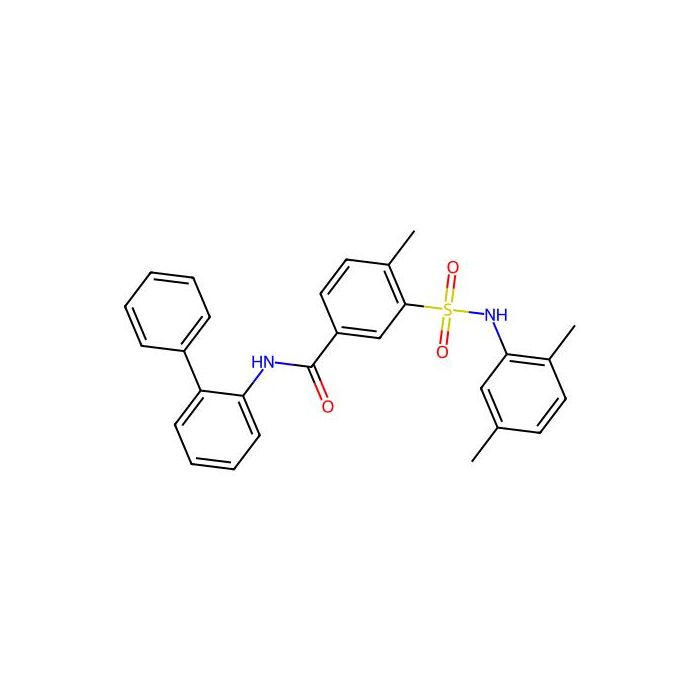
SF-22 is a potent and brain-penetrant antagonist of neuropeptide Y receptor (Y2R), with the IC 50 value of 750 nM. SF-22 plays an important role in neurological disease.
Specifications
Specifications & Purity
Moligand™, 10 mM in DMSO
Storage
Store at -80°C
Shipped In
Dry ice packs + Cold packs
This product requires cold chain shipping. Ground and other economy services are not available.
P264+P265:Wash hands [and …] thoroughly after handling. Do not touch eyes.
P337+P317:If eye irritation persists: Get medical help.
x_wgk_germany
3
x_ridadr
NONHforallmodesoftransport
Solution Calculators
Molarity Calculator
Determine the necessary mass, volume, or concentration for preparing a solution.
Dilution Calculator
Determine the dilution needed to prepare a stock solution.
Reconstitution Calculator
Reviews
Customer Reviews
Application Protocols
Tested applications, recommended dilutions, and assay-specific protocols are not provided for SF-22 in the current product data.
Item-specific application guidance:
Not specified for this item; refer to CoA/Spec Sheet and your laboratory’s validated SOPs.
General considerations for small-molecule ligands (for planning only):
Prepare concentrated DMSO stocks (e.g., 10–20 mM) using analytical balance and volumetric techniques; verify by LC–MS or quantitative NMR where critical.
For dose–response experiments, perform serial dilutions to cover at least 5–7 points per log unit across the anticipated potency range.
Maintain consistent final solvent (e.g., 0.1–1% DMSO) across all wells, including controls.
Include vehicle controls, and if relevant, positive controls (benchmark ligands) for assay validation.
Because section requirements stipulate item-specific data only, please consult the product documents for any available validated protocols for SF-22.
Biological Roles
SF-22 is provided as a research small-molecule ligand. No endogenous biological role or pathway assignment is provided in the product data.
General context for screening ligands:
Such compounds are used to probe protein–ligand interactions, modulate biochemical activity, and inform structure–activity relationships (SAR). They may serve as starting points for medicinal chemistry optimization, tool compound validation, or target deconvolution studies.
Absent a disclosed structure or annotated target, SF-22 should be considered functionally unassigned. Biological properties (permeability, efflux susceptibility, metabolic stability, off-target profile) must be determined empirically in your models.
Recommended practices:
Establish basic developability assays: solubility at assay pH, chemical stability (light, temperature, oxidative), and nonspecific binding to plastic/protein.
If cellular work is planned, evaluate cytotoxicity windows (e.g., resazurin/CellTiter-Glo) across relevant concentrations to define safe exposure ranges.
Use orthogonal binding confirmation (e.g., DSF and SPR) to validate apparent activity from biochemical screens.
Caveats:
Do not infer therapeutic use or biological function from catalog inclusion. All use is strictly for laboratory research, and outcomes are context-dependent.
Not specified for this item; refer to project documentation or generate de novo data.
Buffer Applications
This listing is a small-molecule ligand rather than a buffering reagent; it does not serve as a buffer component. However, buffer choice can critically impact ligand behavior in assays.
Assay buffer considerations (general):
Biochemical enzymes: Use target-appropriate buffers (e.g., HEPES, Tris, PBS) with controlled ionic strength; include 0.01–0.05% non-ionic detergent to mitigate aggregation if compatible.
Metal-dependent targets: Control metal content with chelators (e.g., 0.1–1 mM EDTA) only when appropriate. Verify with and without chelator if the target requires metal ions.
pH stability: Select buffers that maintain pH within ±0.1 units over the assay window; test compound stability across pH 6.5–8.0 if structure allows ionization.
DMSO tolerance: Validate assay performance across 0–1% v/v DMSO to match delivery vehicle for SF-22 stocks.
Practical tips:
Filter buffers (0.22 µm) and degas for sensitive readouts (SPR, ITC).
Add ligand stocks last to minimize precipitation and avoid extended pre-incubation in non-ideal media.
Item-specific buffer recipes or compatibility data:
Not specified for this item; refer to your target assay SOPs.
Green Alternatives
For SF-22 as a screening ligand, “green alternatives” chiefly concern solvent and handling choices rather than substitution of the molecule itself.
Greener handling strategies (general):
Minimize DMSO volume while maintaining solubility; standardize to the lowest assay-compatible final percentage (often 0.1–0.5% v/v).
Right-size stocks (e.g., 10–20 mM in DMSO) to reduce freeze–thaw cycles and waste. Use single-use aliquots.
Use aqueous-compatible formulations when possible (buffered saline with minimal co-solvent), provided compound stability and solubility allow.
Plate management: Opt for sealed low-dead-volume plates to limit evaporation and VOC emissions. Employ acoustic dispensing to reduce carrier solvent volumes.
Comparison of common vehicles (general):
DMSO: High solvency; environmental and health considerations favor limited use and closed systems.
Acetonitrile: Effective and volatile; manage emissions via ventilated enclosures and caps.
Waste minimization:
Consolidate and segregate organic solvent waste; deploy micro-scale assays to cut solvent consumption.
Item-specific note:
No SF-22-specific green substitution is defined in the product data. Optimize your assay solvent system for the smallest effective environmental footprint compatible with compound performance and data quality.
Pharmaceutical Uses
SF-22 is supplied strictly for research use and is not approved for human or veterinary applications. No pharmacopeial monograph or excipient role is provided in the product data.
Context for discovery workflows (general):
Screening ligands like SF-22 may be employed in early discovery to explore target engagement, enable structure–activity relationship (SAR) studies, and guide hit-to-lead optimization. They are not manufactured to GMP and are not intended for clinical formulation.
Manufacturing/formulation relevance:
If used in preclinical tool compound studies (in vitro/in vivo research), ensure that any formulation steps (e.g., DMSO/PEG400/saline vehicles) comply with institutional research policies and are fully documented. These activities remain within non-clinical research settings.
Item-specific pharmacopeial status, impurity limits, or excipient applications:
Not specified for this item; refer to CoA/Spec Sheet.
Compliance note:
For research use only. Not for diagnostic or therapeutic use. Do not include in products intended for human consumption or administration.
Physical Properties
The product data for SF-22 do not include item-specific physicochemical specifications. The following fields are therefore not reported here.
Item-specific properties (specification status):
Molecular weight: Not specified for this item; refer to CoA/Spec Sheet.
Molecular formula: Not specified for this item; refer to CoA/Spec Sheet.
Melting point / Boiling point: Not specified for this item; refer to CoA/Spec Sheet.
Density / Refractive index: Not specified for this item; refer to CoA/Spec Sheet.
pKa / logP (or logD): Not specified for this item; refer to CoA/Spec Sheet.
UV–Vis characteristics (ε, λmax): Not specified for this item; refer to CoA/Spec Sheet.
Solubility profile: Not specified for this item; refer to CoA/Spec Sheet.
General guidance for small-molecule screening compounds (literature/general):
Many drug-like ligands are supplied as solids or DMSO concentrates and are typically soluble in DMSO (100%), with subsequent dilution into assay buffers (final DMSO 0.1–1% v/v) as tolerated by the biology. Aqueous solubility is highly structure-dependent.
If the compound contains ionizable groups, solubility may improve in buffered media within ±1–2 pH units of the pKa (literature, general principle).
For plate-based screening, confirm absence of aggregation or precipitation at working concentrations by visual inspection or light scattering where relevant.
Action items:
Consult the CoA/Spec Sheet for the definitive property set for SF-22 prior to method development, and perform a small-scale solubility check in your intended vehicle (e.g., DMSO, buffer) before committing to large assays.
Quality and Grades
Grade/Purity: Moligand™
What Moligand™ implies (general program description):
Moligand-grade compounds are curated for use as small-molecule ligands in discovery workflows (e.g., primary/secondary screening, biophysical assays). Emphasis is typically placed on identity confirmation and suitability for assay deployment rather than commodity reagent metrics.
Batches are commonly supported by identity verification (e.g., LC–MS, 1H NMR) and purity data appropriate for screening use; the exact datasets, threshold, and acceptance criteria are batch-dependent.
Item-specific clarifications:
Exact purity value, analytical method(s), residual solvents, and impurity limits: Not specified for this item; refer to CoA/Spec Sheet.
Stabilizers / additives: Not specified for this item; refer to CoA/Spec Sheet.
How to leverage grade information:
For HTS/fragment/lead-like campaigns, integrate the Moligand compound into your compound management system with appropriate barcoding and metadata capture. Verify plate maps and stock concentrations against the CoA.
If performing quantitative SAR, confirm analytical purity and potency-relevant counter-screens (e.g., PAINS/REOS filters, redox activity, fluorescence interference) as needed for your assay endpoints.
Documentation:
Request the latest Certificate of Analysis (CoA) for SF-22 for batch-specific confirmation of identity, purity, chromatographic profile, and recommended handling. Align your internal acceptance criteria with your screening cascade.
Reaction and Applications
This product is supplied as a research ligand within a small-molecule/compound library context rather than as a classical synthetic reagent. Accordingly, its primary applications are in discovery biology and biophysics, not stoichiometric/transformative chemistry.
Discovery and screening applications (general best practices):
Biochemical assays: Evaluate modulation of purified target activity across concentration ranges spanning at least 5–7 half-log dilutions. Include detergent and counter-screens to control for aggregation or redox cycling, where applicable.
Biophysical binding: Use thermal shift (DSF/DSC), surface plasmon resonance (SPR), microscale thermophoresis (MST), or ligand-observed NMR (waterLOGSY, STD-NMR) to confirm direct binding and estimate KD.
Cellular assays: If cell-permeant, test target engagement with CETSA or NanoBRET target engagement, ensuring DMSO ≤0.5–1%.
Orthogonal liability checks: Assess autofluorescence, light absorption in assay windows, and PAINS substructures bioinformatically when structure is available.
Not typically applicable:
Named organic reactions (e.g., cross-coupling, reductions) are not the intended use for SF-22 without a defined synthetic context.
Documentation and data hygiene:
Register SF-22 in ELN/LIMS with CAS 824981-55-7 and batch identifiers.
Retain CoA, stock preparation logs, and plate maps to support reproducibility.
Note: Item-specific mechanistic or target engagement data are not provided for SF-22 in the current listing; generate lab-specific data as part of your screening cascade.
Reaction Conditions
This section is typically applicable to reagents used to transform substrates. SF-22 is supplied as a screening ligand rather than a synthetic reagent; no reaction condition guidance specific to this item is available.
General notes for users considering derivatization (only if structure is known):
Establish the scaffold’s functional group map (acid/base sites, redox-sensitive moieties) before attempting modifications.
Run micro-scale pilots to test stability under planned conditions (e.g., strong base, oxidative coupling, hydrogenation), guided by the known chemistry of the scaffold.
Use anhydrous, oxygen-controlled conditions if the motif is air/moisture-sensitive; otherwise, standard bench-top handling may suffice. Validate empirically.
Item-specific conditions, catalysts, or yields:
Not specified for this item; refer to CoA/Spec Sheet and primary literature if the scaffold is known.
For discovery applications (recommended for SF-22):
Focus on assay-compatible preparation conditions (solvent, temperature, dilution) rather than synthetic reaction parameters. Validate compound integrity pre-/post-assay by LC–MS where feasible.
Safety and Handling
Safety summary for SF-22 is limited in the product data. Always consult the official SDS for authoritative hazard classifications and response measures.
Item-specific hazard fields:
Signal word (GHS): Not specified for this item; refer to SDS.
H-statements: Not specified for this item; refer to SDS.
Pictograms / GHS classification: Not specified for this item; refer to SDS.
General laboratory precautions (good practice):
PPE: Wear lab coat, safety glasses, and appropriate chemical-resistant gloves. Handle powders/aliquots in a fume hood to minimize inhalation and exposure.
Avoid exposure routes: Prevent inhalation of dust/aerosols and contact with skin/eyes. Use closed containers and calibrated pipettes for DMSO stock handling.
Incompatibilities: Absent structure-specific data, avoid strong oxidizers and strong acids/bases until compatibility is known. Do not mix with unknown reagents.
First aid (overview): In case of skin/eye contact, rinse with water for ≥15 minutes. If inhaled, move to fresh air. If ingested or if adverse effects occur, seek medical attention. Provide SDS to responders.
Spill response: Absorb liquids with inert material; for solids, avoid dust formation, collect mechanically while wearing PPE, and dispose of according to institutional hazardous waste procedures.
Waste: Dispose in accordance with local regulations for organic research chemicals; segregate halogenated vs non-halogenated solvents if used.
Special notes:
As a screening ligand, SF-22 is for research use only. Do not use in humans or for diagnostic purposes.
Maintain cold-chain integrity per storage guidance to limit degradation and unknown byproduct formation.
Solvent Selection
Item-specific solubility data are not provided. The following guidance reflects common practice for small-molecule screening ligands.
Primary stock solvent (typical): DMSO is preferred due to broad solubilizing power and assay compatibility at ≤1% v/v final (general practice). Confirm SF-22 compatibility empirically.
Aqueous dilution: Prepare serial dilutions into assay buffer immediately prior to use to minimize precipitation or adsorption. Consider using carrier protein (e.g., 0.01–0.1% BSA) or non-ionic surfactant (e.g., 0.01% Tween-20) only if compatible with your readout.
Alternative vehicles: If DMSO is unsuitable, evaluate acetonitrile or ethanol for intermediate stocks, ensuring final solvent remains within assay tolerance. Co-solvent strategies (e.g., DMSO + buffer at 1:9) can improve delivery.
Adsorption mitigation: Use low-binding plastics or glass vials, particularly at sub-micromolar working concentrations.
Comparison (general):
DMSO: highest success rate for diverse chemotypes; may affect cell membranes at >0.5–1%.
Acetonitrile: volatile, miscible with water, often acceptable up to ~1% v/v; may impact enzyme activity.
Ethanol: biologically active; typically restrict to ≤0.5% v/v in cell assays.
Action items for SF-22:
Perform a mini solubility screen at target assay concentrations in your intended buffer matrix.
Record turbidity/precipitation and, if needed, adjust solvent ratio, temperature, or concentration.
Consult the SF-22 CoA for any solvent-specific recommendations if available.
Storage and Reconstitution
Item-specific conditions (from product data):
Storage: Store at −80°C
Shipped in: Dry ice packs + Cold packs
Additional item-specific details:
Appearance: Not specified for this item; refer to CoA/Spec Sheet.
Stability / Retest date: Not specified for this item; refer to CoA/Spec Sheet.
General best practices for small-molecule screening compounds (complementary to item data):
Long-term storage: Keep at −80°C in tightly sealed, moisture-protected containers. Protect from light if the scaffold is aromatic or otherwise photosensitive.
Aliquoting: Prepare single-use DMSO stocks (e.g., 10–20 mM) in low-binding tubes to avoid repeated freeze–thaw cycles. Store aliquots at −80°C; minimize time at ambient temperature.
Freeze–thaw: Limit to a single thaw where possible. If multiple thaws are unavoidable, track cycles and discard aliquots after 2–3 thaws as a conservative practice unless stability data support more.
Reconstitution vehicle: Not specified for this item; DMSO is commonly used for screening compounds (general). Verify solubility and integrity by LC–MS.
Handling: Equilibrate containers to room temperature before opening to prevent condensation ingress. Work quickly on cold blocks for DMSO stocks.
Quality check:
Confirm concentration after reconstitution when potency quantitation matters (e.g., by UV if chromophore is known, or quantitative NMR/LC–MS).
Note: For definitive, lot-specific instructions (including any special stabilizers or light sensitivity), consult the CoA/Spec Sheet for SF-22.
Structure and Identity
Brief overview: SF-22 (SKU S1496167) is listed as a Moligand-grade small molecule screening ligand. Specific structural identifiers are not disclosed in the current product data.
Product Name: SF-22
SKU: S1496167
CAS: 824981-55-7
PubChem CID: 2223246
Category: Small molecules and compound libraries (小分子和化合物库)
Intended use: For research use only
Item-specific identifiers (as provided vs. not provided):
Molecular Formula: Not specified for this item; refer to CoA/Spec Sheet.
Molecular Weight: Not specified for this item; refer to CoA/Spec Sheet.
SMILES: Not specified for this item; refer to CoA/Spec Sheet.
InChIKey: Not specified for this item; refer to CoA/Spec Sheet.
Appearance: Not specified for this item; refer to CoA/Spec Sheet.
Structural description (general note):
Without an explicit SMILES/InChI or structural diagram, detailed functional groups, ring systems, or stereochemical features cannot be summarized for this listing. If you require a structure file (SDF/MOL/SMI) for computational studies, please request the current CoA/Spec Sheet or structure disclosure under your screening agreement.
Data integrity:
All identity-critical parameters should be confirmed against the latest Certificate of Analysis (CoA) prior to use in screening campaigns, HTS plating, or informatics registration.
Synthetic Utility
SF-22 is offered as a screening ligand and is not primarily positioned as a synthetic building block in the catalog entry. Without a disclosed structure or functional group specification, no reliable synthetic reactivity guidance can be provided.
Non-applicability to general synthesis:
Typical discussions of electrophile/nucleophile behavior, named-reaction participation (e.g., Suzuki, Mitsunobu), or protection/deprotection strategies require knowledge of functional groups and are therefore not provided here.
When synthetic use is contemplated by the end-user:
Obtain the structural information and CoA, then assess functional group compatibility and plan transformations based on established reactivity of those motifs.
Confirm chemical stability under planned conditions (temperature, base/acid, oxidants/reductants) on milligram scale before scale-up.
Monitor reactions with orthogonal analytics (LC–MS, NMR) to rule out decomposition or rearrangement unique to the scaffold.
Item-specific reactivity data, impurity profiles, or residual metal limits:
Not specified for this item; refer to CoA/Spec Sheet.
Bottom line:
Treat SF-22 as a research ligand for screening purposes. Any synthetic repurposing requires prior acquisition of structure-specific information and validation experiments.
Target Specificity
Item-specific target and selectivity data are not provided in the product listing for SF-22.
Provided identifiers:
CAS: 824981-55-7
CID: 2223246
Target-related information:
Primary target / pathway: Not specified for this item; refer to CoA/Spec Sheet or internal screening results.
Selectivity panel outcomes: Not specified for this item; refer to your pharmacology profiling.
Binding mode (orthosteric/allosteric/covalent): Not specified for this item.
Recommendations for establishing specificity (general):
Use orthogonal assays (biochemical vs biophysical) to confirm on-target activity.
Run counter-screens against related family members or decoy targets to quantify selectivity.
Evaluate assay interference liabilities (fluorescence, redox, aggregation) and rule them out early.
For cellular studies, complement activity with genetic controls (knockdown/knockout, overexpression) and chemical probes with known MoA.
Note:
Any inferred specificity should be documented with rigorous controls and dose–response data. Update your internal database with SF-22 result sets to inform future procurement and triage.
Need help choosing the grade?
Our grade selection guide covers purity, stabilizer status, and application suitability for all variants in our catalog.
We use cookies to ensure the website functions properly and, where permitted, to improve your experience. You can manage your preferences at any time in Settings. Learn more in our Cookie Policy.
Shall we send you a message when we have discounts available?
Remind me later
Thank you! Please check your email inbox to confirm.
Products are supplied to verified businesses, institutions, and qualified professionals for research and development use only. Not for use in humans, animals, diagnosis, or therapy.