GRADE & PURITYMoligand™?Moligand™ — Aladdin's line of ligands and bioactive small molecules. Use for receptor, pathway, and binding studies needing defined small-molecule tools.10 mM in DMSO
Moligand™, 10 mM in DMSO Moligand™ for sensitive chromatographic and analytical workflows requiring minimal baseline interference.
🌡
Storage & shipping
Store at -80°C Ships Dry ice packs + Cold packs Check lot-specific COA for exact specifications.
📋
Quality documents
SDS, COA, datasheet, and spec sheet available for download. Lot-specific COA accessible via lot number lookup.
📚
Literature proof
Cited in 0 peer-reviewed publications across chromatography, organic synthesis, and cross-coupling reactions.
Overview
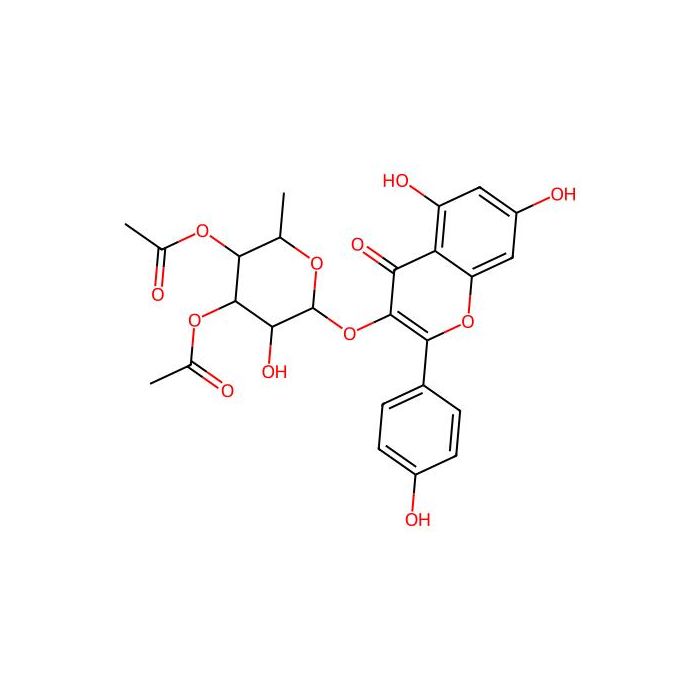
SL 0101-1 (SL0101), a kaempferol glycoside, isolated from the tropical plant F. refracta , is a cell-permeable, selective, reversible, ATP-competitive p90 Ribosomal S6 Kinase (RSK) inhibitor, with an IC 50 of 89 nM. SL 0101-1 (SL0101) is a selective RSK1/2 inhibitor, with a K i of 1 μM.
Specifications
Specifications & Purity
Moligand™, 10 mM in DMSO
Storage
Store at -80°C
Shipped In
Dry ice packs + Cold packs
This product requires cold chain shipping. Ground and other economy services are not available.
Determine the necessary mass, volume, or concentration for preparing a solution.
Dilution Calculator
Determine the dilution needed to prepare a stock solution.
Reconstitution Calculator
Reviews
Customer Reviews
Application Protocols
No validated, item-specific application protocols are provided for SL 0101-1. The following outlines common steps for screening ligands; adapt to your target and assay format.
General small-molecule screening workflow (guidance)
Thaw a single-use aliquot on ice; minimize time at room temperature.
Prepare a concentrated stock in anhydrous DMSO (e.g., 10–50 mM). Confirm clarity; sonicate if needed.
Create a serial dilution series (e.g., 10-point, 3-fold) in assay-compatible solvent.
Transfer to assay plate using low-retention tips; include vehicle controls and positive/negative controls.
Incubate per target requirements; read using the appropriate modality (fluorescence, luminescence, absorbance, MS).
Assess compound interference (inner-filter effects, fluorescence quench/enhancement) by counter-assays.
Confirm hits via orthogonal methods (SPR/ITC, DSF, NMR) and replicate on a separate day with fresh aliquots.
Documentation
Record lot number/SKU, stock concentration, solvent percentage in-well, plate maps, and instrument settings for traceability.
Biological Roles
Item-specific biological targets, pathways, or mechanisms are not disclosed in the Product Data for SL 0101-1. As such, no definitive biological role can be ascribed here.
What is known from this listing
Category: Small-molecule/compound library entry intended for research use in discovery assays.
Target specificity: Not specified for this item; refer to CoA/Spec Sheet or associated datasheet.
General considerations for screening ligands (literature/general)
Potential modalities: May act as enzyme inhibitor/activator, receptor ligand, or pathway modulator; actual behavior is structure-dependent and must be empirically determined.
Off-target evaluation: Use counterscreens, thermal proteome profiling, or chemoproteomics to define selectivity and reduce artifacts.
ADME flags: If proceeding to lead optimization, assess solubility, permeability (PAMPA/Caco-2), and metabolic stability; none of these parameters are specified for this item and require de novo measurement.
Buffer Applications
This item is a small-molecule screening ligand, not a buffer component. Therefore, it is not typically used to prepare or maintain buffer pH.
Practical note
When formulating assay buffers that will contain this compound, ensure compatibility with the chosen co-solvent (e.g., ≤1% DMSO) and include low levels of nonionic detergent if aggregation is suspected.
Buffer recipes and pH ranges should be chosen based on the biological target; no buffer-specific roles are provided for this item.
Green Alternatives
While SL 0101-1 is a discrete small molecule rather than a solvent or bulk reagent, greener choices can be made in its handling, dissolution, and assay workflows.
Solvent considerations (general)
Prefer bio-based or lower-toxicity solvents for cleaning and work-up where compatible: ethanol or isopropanol instead of chlorinated solvents.
For chromatographic analysis, consider acetonitrile–water or ethanol–water gradients; avoid halogenated eluents.
Process and waste minimization
Use microvolume assay formats and miniaturized LC–MS injections to reduce solvent consumption.
Implement plate-based serial dilution to limit over-preparation of concentrated stocks; aliquot to reduce discard due to freeze–thaw degradation.
Comparative view (general guidance)
DMSO vs. alternatives: DMSO is effective but persistent; where feasible, evaluate propylene carbonate or PEG-400 co-solvent systems for reduced volatility/toxicity, ensuring assay compatibility.
Packaging and storage
Maintain cold-chain efficiency (as shipped on dry ice + cold packs) to avoid loss and repeat shipments. Reuse dry ice shippers when programs allow.
Pharmaceutical Uses
No pharmacopeial status, excipient role, or formulation use is provided for SL 0101-1. The product is designated for research use only.
Research-use context
Suitable for discovery screening, target validation experiments, and preliminary SAR exploration in a laboratory setting.
If transitioning to development (general guidance)
Any use beyond basic research would require comprehensive characterization (identity, purity profile, residual solvents), safety assessment, and compliance with applicable regulations. None of these aspects are specified for this item and must not be inferred from this listing.
Disclaimer
Not for human or veterinary use. No therapeutic or clinical claims are made or implied.
Physical Properties
Item-specific physical constants are not provided in the current listing. For experimental planning, please refer to the CoA/Spec Sheet for this lot.
Item-specific values
Appearance: Not specified for this item; refer to CoA/Spec Sheet.
Molecular Weight: Not specified for this item; refer to CoA/Spec Sheet.
Molecular Formula: Not specified for this item; refer to CoA/Spec Sheet.
Melting point (MP): Not specified for this item; refer to CoA/Spec Sheet.
Boiling point (BP): Not specified for this item; refer to CoA/Spec Sheet.
Density: Not specified for this item; refer to CoA/Spec Sheet.
Refractive index: Not specified for this item; refer to CoA/Spec Sheet.
LogP, pKa, solubility: Not specified for this item; refer to CoA/Spec Sheet.
General guidance for library compounds (literature/general)
Solubility: Many screening ligands are supplied as solids and form 10–50 mM stocks in anhydrous DMSO; aqueous solubility varies widely and should be determined empirically by serial dilution with surfactant (0.01–0.05% v/v Tween-20) or co-solvent (≤1% DMSO) if compatible with your assay.
Hygroscopicity: Some small molecules are moisture-sensitive or hydrate-forming; minimize exposure to ambient humidity during weighing and dissolution.
Polymorphism: Multiple solid forms may exhibit different melting behavior and solubility; verify by DSC or PXRD if formulation is critical.
Quality and Grades
Item-specific grade
Grade: Moligand™ (from Product Data). This designation indicates the material is intended for small-molecule screening and ligand-discovery workflows. Typical expectations for such grade include identity confirmation and purity consistent with hit-finding assays; consult the CoA for exact criteria applied to this lot.
What Moligand™ generally implies (general guidance)
Fit-for-purpose purity: Sufficient for biochemical or cell-based screening. LC–MS purity thresholds of ≥90–95% are common in screening libraries (literature/general). The exact purity for this item is Not specified for this item; refer to CoA/Spec Sheet.
Identity testing: Usually confirmed by LC–MS and/or NMR. Specific methods and acceptance criteria are batch-dependent; verify in the CoA.
Counter-ion/solvate content: Library compounds may be supplied as free base/acid or a defined salt; salt form and residual solvents are Not specified for this item; refer to CoA/Spec Sheet.
UV/fluorescence considerations
If using optical readouts, verify intrinsic absorbance/fluorescence of the compound to assess assay interference. Low-UV or “HPLC-grade” solvent requirements apply to mobile phases rather than this solid.
Practical guidance
Request CoA prior to use in regulated environments or for orthogonal confirmation (SPR/ITC, NMR binding). If your workflow requires metal limits, water content, or stabilizer information, these are Not specified for this item; refer to CoA/Spec Sheet.
Reaction and Applications
This product is offered as a screening ligand (Moligand™) for discovery and assay development rather than as a synthetic reagent. No reaction-specific applications are provided in the Product Data.
Item-specific applications
Manufacturer applications: Not specified beyond its categorization in a small-molecule/compound library.
Typical uses for screening ligands (general guidance)
Cell-based assays: Phenotypic screening and pathway modulation studies, subject to solubility and cytotoxicity profiling.
Probe development: Seed for SAR exploration and hit-to-lead campaigns once structure and activity are validated.
Practical notes
Prepare accurately quantified DMSO stocks using analytical balance and volumetric tools; verify concentration by UV if chromophore is known, or by quantitative NMR when feasible.
Track freeze–thaw cycles to maintain data reproducibility; distribute into single-use aliquots.
Confirm absence of assay interference (aggregators, redox cyclers, PAINS) with orthogonal counterscreens and detergent tests (literature/general best practice).
Reaction Conditions
No reaction conditions are applicable to SL 0101-1 as a supplied screening ligand. It is not provided for use as a reagent or catalyst.
General handling for solution preparation (literature/general)
Dissolve in dry DMSO to prepare a primary stock (e.g., 10–50 mM), vortex and sonicate briefly if needed, and allow to fully dissolve before sterile filtration (0.22 µm) if sterility is required.
For biological assays, limit final DMSO to ≤0.5–1% v/v unless your system tolerates higher levels; include vehicle controls.
Evaluate stability by storing a small aliquot at working temperature and monitoring by LC–MS over your assay timeframe.
Safety and Handling
Safety data specific to SL 0101-1 are not provided in the current listing. Always consult the SDS for authoritative hazard classification and response measures.
Item-specific safety fields
Signal Word: Not specified for this item; refer to SDS.
H-Statements: Not specified for this item; refer to SDS.
GHS Classification/Pictograms: Not specified for this item; refer to SDS.
General laboratory precautions (good practice for small-molecule ligands)
PPE: Wear lab coat, nitrile gloves, and safety glasses; use additional protection (face shield, double gloving) for weighing powders in open air.
Engineering controls: Handle powders and DMSO solutions in a fume hood or ventilated enclosure to avoid inhalation or aerosol exposure.
Incompatibilities: Avoid strong oxidizers and strong acids/bases unless compatibility is confirmed for your specific structure (general guidance).
First aid (general): In case of skin/eye contact, rinse with water for at least 15 minutes; if inhaled, move to fresh air; if ingested, seek medical attention. Provide SDS to responders.
Spills: For small spills, absorb with inert material (vermiculite) and dispose as organic chemical waste; prevent discharge to drains.
Waste: Collect solutions and contaminated disposables as hazardous organic waste per institutional and regulatory requirements.
Transport/temperature sensitivity
Shipped on dry ice + cold packs per Product Data; keep frozen on receipt and limit thaw cycles.
Solvent Selection
Item-specific solubility and polarity parameters are not provided. The following guidelines reflect common practice for small-molecule screening ligands and should be validated experimentally for SL 0101-1.
Primary stock solutions (general practice)
DMSO (anhydrous) is the default for 10–50 mM stocks owing to broad solubilizing power and assay compatibility at ≤0.5–1% v/v.
Alternative organic solvents for initial dissolution: DMF, ethanol, or acetonitrile, followed by dilution into assay buffer with careful control of final solvent percentage.
Aqueous work
If aqueous solubility is required, consider cosolvent systems (e.g., 5–20% DMSO or ACN in buffer), cyclodextrin inclusion, or pH adjustment if the compound bears ionizable groups (not specified here; confirm via structure when available).
Practical tips
Perform a small-scale solubility screen (serial dilution) and check for precipitation after dilution into assay media.
Filter 0.22 µm when possible to remove particulates; avoid adsorption losses by pre-wetting filters with solvent.
Quick comparison (general)
DMSO: Highest solvating power; can affect some enzymes/receptors above 1% v/v.
Ethanol: Good general solvent; higher volatility and different biological tolerance.
DMF/ACN: Effective for dissolution; verify biological compatibility before use.
Inspect packaging integrity and verify that contents remained frozen. If partially thawed, re-freeze promptly and contact support if you require stability guidance for temperature excursions (not specified for this item; refer to CoA/Spec Sheet).
Aliquoting and reconstitution (general guidance for screening ligands)
Work quickly on a cold surface. Equilibrate the container briefly to avoid condensation, then open in a dry environment.
Prepare single-use aliquots to avoid repeated freeze–thaw. Dissolve in anhydrous DMSO to desired stock concentration (e.g., 10–50 mM), mix to homogeneity, and, if required, sterile-filter (0.22 µm PTFE).
Label aliquots with compound ID, concentration, solvent, date, and operator initials.
Short- and long-term storage (general)
Store solid and frozen DMSO stocks at -80°C in sealed, moisture-resistant containers. Protect from light if the structure is chromophoric (not specified here).
Avoid frost-free freezers that undergo warm cycles. Use desiccant and inert-gas backfill when practical.
Stability
Item-specific shelf life, freeze–thaw tolerance, and solution stability are Not specified for this item; refer to CoA/Spec Sheet.
Structure and Identity
Brief overview: SL 0101-1 (SKU S1497843) is listed in our small-molecule/compound library as a Moligand-grade screening ligand. Structural identifiers beyond CAS are not disclosed in the current product data.
Item-specific identifiers (from Product Data)
SKU: S1497843
Product Name: SL 0101-1
CAS: 77307-50-7
Grade: Moligand™ (screening ligand grade)
InChIKey: Not specified for this item; refer to CoA/Spec Sheet.
SMILES: Not specified for this item; refer to CoA/Spec Sheet.
Molecular Formula: Not specified for this item; refer to CoA/Spec Sheet.
Molecular Weight: Not specified for this item; refer to CoA/Spec Sheet.
Structural features
2D/3D structure, functional groups, and stereochemistry: Not specified for this item; refer to CoA/Spec Sheet.
Notes on identity control (general guidance)
For small-molecule screening ligands, identity is typically verified by LC–MS and 1H NMR prior to library release (literature/general practice). Consult the item’s CoA for the exact tests performed on this lot.
If you require structure-based assay design (e.g., docking, SAR alignment), request the full structure package (SMILES, InChI, and SDF) from the CoA/Spec Sheet or contact technical support with the SKU and CAS.
Synthetic Utility
SL 0101-1 is supplied as a screening ligand for biological assays rather than as a synthetic building block. Because detailed structure and functional groups are not provided, synthetic transformations and reactivity specific to this compound cannot be described.
When structure is available (general guidance)
Functional group mapping enables planning of derivatization (e.g., bioisosteres, linker installation for pull-downs) and assessment of liabilities (hydrolysis, redox activity).
If used as a SAR starting point, standard medicinal chemistry tactics (heteroatom scans, ring substitutions, conformational constraint) apply once the chemotype is disclosed.
Practical recommendation
Consult the CoA/Spec Sheet for structure, then design synthetic routes or analog programs accordingly. Absent that information, treat the material as a terminal screening entity.
Target Specificity
Target, pathway, or binding specificity is not provided for SL 0101-1 in the current Product Data.
Item-specific information
Target name/class: Not specified for this item; refer to CoA/Spec Sheet.
Tested species/cellular systems: Not specified for this item; refer to CoA/Spec Sheet.
Guidance
Determine specificity experimentally via orthogonal assays (e.g., enzymatic activity vs. biophysical binding), panels against related targets, and off-target profiling. Document assay conditions to ensure reproducibility.
Frequently Asked Questions
What is Moligand??
Moligand? is one of Aladdin Scientific's premium product lines, formulated for high-purity applications across multiple workflows. Compared to standard grades in the same workflow, Moligand? products typically offer tighter specifications, more rigorous QC, and stronger lot-to-lot consistency.
How should this product be stored?
Store at ?80 °C. Ultra-low temperature storage is required to maintain the specified shelf life.
What are the CAS number, molecular formula and molecular weight?
The CAS Number is 77307-50-7, the molecular formula is C??H??O??, and the molecular weight is 516.46 g/mol.
How is this product shipped?
This product ships frozen with dry ice and cold packs. Unpack on arrival and transfer it to the storage condition stated above; handle dry ice with insulated gloves in a ventilated area.
What documentation is provided?
Available product documentation, including Certificates of Analysis (COA), Safety Data Sheets (SDS), and specification sheets, is shown in the product document area. Document availability and access follow the current site policy.
Need help choosing the grade?
Our grade selection guide covers purity, stabilizer status, and application suitability for all variants in our catalog.
We use cookies to ensure the website functions properly and, where permitted, to improve your experience. You can manage your preferences at any time in Settings. Learn more in our Cookie Policy.
Shall we send you a message when we have discounts available?
Remind me later
Thank you! Please check your email inbox to confirm.
Products are supplied to verified businesses, institutions, and qualified professionals for research and development use only. Not for use in humans, animals, diagnosis, or therapy.