10mM in DMSO for sensitive chromatographic and analytical workflows requiring minimal baseline interference.
🌡
Storage & shipping
Store at -80°C Ships Dry ice packs + Cold packs Check lot-specific COA for exact specifications.
📋
Quality documents
SDS, COA, datasheet, and spec sheet available for download. Lot-specific COA accessible via lot number lookup.
📚
Literature proof
Cited in 0 peer-reviewed publications across chromatography, organic synthesis, and cross-coupling reactions.
Overview
Information
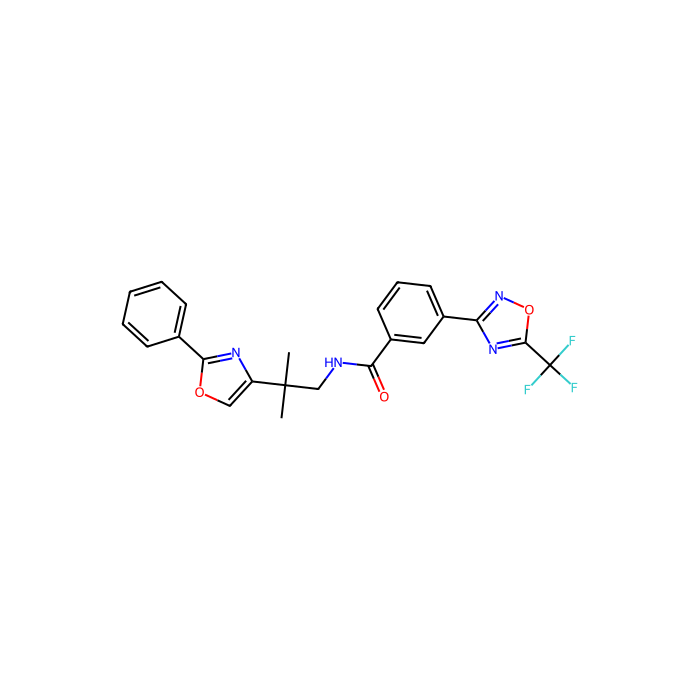
TMP195 TMP195 (TFMO 2) is a selective, first-in-class, class IIa HDAC inhibitor with IC50 of 300 nM in cell-based class IIa HDAC assays. In vitro
TMP195 has low potency in recombinant class I and IIb HDAC assays, enabling full inhibition of class IIa HDAC activity without inhibition of other HDACs. TMP195 blocks the accumulation of CCL2 protein in the supernatants of monocyte-derived macrophage differentiation cultures and significantly increases the amount of CCL1 protein secreted by the monocytes compared to vehicle (DMSO)-treated M-CSF plus GM-CSF cultures. TMP195 influences human monocyte responses to the colony-stimulating factors CSF-1 and CSF-2 in vitro.
In vivo
In vivo TMP195 treatment alters the tumour microenvironment and reduces tumour burden and pulmonary metastases by modulating macrophage phenotypes. TMP195 induces the recruitment and differentiation of highly phagocytic and stimulatory macrophages within tumours. TMP195 treatment significantly decreases proliferating tumour cells, most notably at the leading edge of the tumour. The anti-tumour macrophage phenotype induced by TMP195 treatment thus enhances the efficacy and durability of both standard chemotherapeutic regimens and checkpoint blockade immunotherapy in this mouse model of breast cancer. Cell Data
Solubility (25°C) In vitro Water: 24 mg/mL (9.17 mM);
dmso_mg_max_solubility
91
dmso_mM_max_solubility
199.3777661
water_mg_max_solubility
<1
Solution Calculators
Molarity Calculator
Determine the necessary mass, volume, or concentration for preparing a solution.
Dilution Calculator
Determine the dilution needed to prepare a stock solution.
Reconstitution Calculator
Reviews
Customer Reviews
Application Protocols
No item-specific tested applications are provided in the listing. The following general practices are commonly used for small-molecule research compounds.
General small-molecule handling
Reconstitution (stock): Dissolve the solid in anhydrous DMSO to prepare a concentrated stock (e.g., 10–50 mM). If insoluble, consider warming gently to 30–37°C and brief sonication. Do not exceed temperatures that may degrade the compound.
Aliquoting: Dispense into single-use or limited-use aliquots in low‑bind tubes or 96/384‑well source plates to minimize freeze–thaw.
Working dilutions: Dilute into assay buffer or media immediately before use, targeting final DMSO within assay tolerance; vortex during addition to reduce precipitation.
Assay execution tips
Include matched vehicle controls and, where possible, orthogonal controls (inactive analogs or alternate chemotypes) to validate phenotypes.
For cell assays, confirm that plastic adsorption is not limiting exposure; pre-wet wells with media containing the final DMSO level or use low‑bind plates.
Stability checks: For multi-hour incubations, verify compound stability in the assay matrix by LC‑MS or HPLC.
Documentation
Record lot number, reconstitution solvent, concentration, and number of freeze–thaw cycles for reproducibility.
Biological Roles
Item-specific biological target information is not provided in this listing. Therefore, no claims about target class, potency, or selectivity are made here. Consult primary literature or the product’s CoA/Spec Sheet if target information is needed for your application.
General context for small-molecule research tools
Small molecules are widely used to modulate protein function, interrogate signaling pathways, and validate phenotypic hypotheses across biochemistry, cell biology, and chemical biology.
Mechanistic studies often pair chemical probes with orthogonal controls (structural analogs, inactive enantiomers, or genetic perturbations) to strengthen causality.
Key considerations: off-target activity, metabolic stability in cell systems, and compound aggregation at higher concentrations; employ counterscreens and detergent controls as needed.
Experimental best practices
Establish full concentration–response curves with appropriate vehicle controls.
Verify compound integrity in the working plate by LC-MS where feasible, especially for multi-day assays or heated incubations.
Track exposure metrics in cells (nominal vs intracellular concentration) when interpreting pharmacological effects.
This product is intended for research use only and is not for use in diagnostic or therapeutic procedures.
Buffer Applications
This item is a small-molecule library compound and is not itself a buffering agent. Therefore, conventional buffer system design (pH range, pKa, capacity) is not applicable.
Practical guidance for use with buffers (general)
Dissolve the compound in DMSO (concentrated stock), then dilute into the desired buffer (e.g., PBS, HEPES, Tris) with vigorous mixing to avoid precipitation.
Maintain consistent final DMSO across control and treated samples to avoid vehicle artifacts.
If adsorption losses are suspected, low levels of non-ionic surfactant (e.g., 0.01% Tween-20) can improve recovery; validate that the surfactant does not affect your assay.
Green Alternatives
For screening-library tool compounds like this item, “green alternatives” pertain primarily to solvent and workflow choices rather than replacing the compound itself.
Greener practice suggestions (general)
Prefer aqueous assay buffers with minimal DMSO carryover (≤0.1–0.5% v/v) when compatible with sensitivity and solubility.
For analytics, consider ethanol or water-rich mobile phases where feasible; use acetonitrile judiciously due to supply and environmental factors.
Use microscale assay formats (384/1536-well) to reduce solvent consumption and waste.
Implement solvent recycling for LC where policy and instrumentation allow.
Illustrative comparison (general, not item-specific)
DMSO vs 2‑propanol as co‑solvent: DMSO offers superior solvency and stability; 2‑propanol is more volatile and generally considered greener but may limit solubility and introduce assay volatility.
ACN vs MeOH in LC: ACN yields sharper peaks and lower backpressure; MeOH is less hazardous in some contexts but can raise viscosity and change selectivity.
Waste minimization
Consolidate DMSO/organic waste streams and segregate halogenated solvents. Adopt just‑in‑time reconstitution to minimize expired solutions.
Pharmaceutical Uses
No pharmaceutical excipient or GMP/compendial status is provided for this item, and it is sold strictly for research use only.
Context (general)
Research-only small molecules may be used in discovery-stage studies, target validation, and pre-formulation exploration within research settings. They are not intended for human or veterinary use, clinical diagnostics, or as drug substances.
If downstream translational studies are envisioned, separate sourcing under GMP with full regulatory documentation, impurity profiling, and stability studies would be required.
Formulation notes for research settings (general)
Typical working approach involves DMSO stock solutions and subsequent dilution into assay-compatible media. Solid-state properties (polymorph, hydrate, salt form) and stability—if relevant—should be verified from the CoA/Spec Sheet.
Statement
For research use only. Not for human or animal therapeutic or diagnostic use.
Physical Properties
No item-specific physical constants are provided for this listing.
Appearance: Not specified for this item; refer to CoA/Spec Sheet.
Melting point: Not specified for this item; refer to CoA/Spec Sheet.
Boiling point: Not specified for this item; refer to CoA/Spec Sheet.
Density: Not specified for this item; refer to CoA/Spec Sheet.
Solubility: Not specified for this item; refer to CoA/Spec Sheet.
LogP, pKa, refractive index: Not specified for this item; refer to CoA/Spec Sheet.
General considerations (literature/practice, not item-specific)
Many screening-library small molecules are supplied as dry powders and reconstituted in anhydrous DMSO to create concentrated stocks (e.g., 10–50 mM) before dilution into assay buffers or media.
If the compound is hydrophobic, aqueous solubility may be limited; co‑solvents (DMSO), surfactants (e.g., 0.01–0.05% Tween-20), or pH adjustment are common strategies to achieve working concentrations.
Light and moisture sensitivity vary by chemotype; protect from light and humidity until item-specific details are confirmed.
Always defer to the item’s CoA/SDS for authoritative physicochemical data.
Quality and Grades
Grade/Purity: Not specified for this item; refer to CoA/Spec Sheet.
How to interpret grades (general guidance)
Research-grade small molecules are typically suitable for in vitro assays, screening, and mechanism studies. When “HPLC” or “≥X% purity” is specified on a CoA, it commonly refers to area% by HPLC at a defined wavelength/method. Low-UV-absorbing solvents and stabilized storage conditions are used to maintain purity.
If a stabilizer is present, it will be declared on the label/CoA. Stabilizers can influence bioassay backgrounds and mass spec signals; if present, consider additional purification or matched vehicle controls.
Batch-specific documentation
Certificate of Analysis (CoA) will list assay method(s) (e.g., HPLC/LC-MS), purity, residual solvents, and water content if determined, as well as lot-specific identification tests (NMR/HRMS/IR).
If you require defined impurity profiles, elemental analysis, salt form, or counter-ion content, request the latest CoA/Spec Sheet prior to experimental use.
Practical recommendations
Verify identity/purity on receipt for critical applications (e.g., LC-MS check, quick 1H NMR where feasible).
Maintain frozen, moisture-protected storage to preserve integrity; minimize freeze–thaw with small aliquots.
Reaction and Applications
This product is categorized as a small-molecule research/library compound rather than a synthetic reagent. As such, it is typically deployed as a tool compound in biochemical, cellular, or phenotypic assays rather than for use as a stoichiometric reagent in organic synthesis.
Typical research uses (general guidance, not item-specific claims)
Probe studies in target- or pathway-focused screening cascades.
Benchmarking controls in phenotypic assays to evaluate assay window and dynamic range.
SAR support in medicinal chemistry when used alongside structural analogs.
Practical tips
Prepare and store concentrated DMSO stocks to minimize freeze–thaw.
Use matched vehicle controls to account for solvent effects.
Confirm concentration by UV or quantitative NMR where possible to reduce dosing error.
If you intend to use this compound as a synthetic building block or reagent, consult the CoA/Spec Sheet for functional group information, stability, and any reactive handles; such details are not provided in this listing.
Reaction Conditions
Not applicable in the typical sense: this listing is for a small-molecule library compound used as a research probe, not a reagent promoted for specific synthetic reactions.
If using in assays (general guidance)
Stock preparation: Dissolve in anhydrous DMSO to a convenient concentration (e.g., 10–50 mM). Warm gently (≤37°C) and vortex/sonicate if needed; avoid prolonged heating.
Working solutions: Dilute into buffer/media with rapid mixing. Keep final DMSO at or below assay tolerance (commonly ≤0.1–0.5% v/v for cells).
Plate handling: Minimize compound plate freeze–thaw and evaporation; use low‑bind plastics and seal plates to limit edge effects.
Analytical controls
Verify concentration by UV or quantitative NMR when precise dosing is critical.
Monitor stability in the working matrix over the assay timeframe (e.g., LC-MS at 0/24 h) to ensure consistent exposure.
Safety and Handling
Hazard classification for this specific item is not provided in the listing.
GHS classification: Not specified for this item; refer to SDS.
Signal word / H-statements / pictograms: Not specified for this item; refer to SDS.
General laboratory safety (good practice)
Personal protective equipment: lab coat, safety glasses, and appropriate chemical-resistant gloves (e.g., nitrile). Work in a well-ventilated area or fume hood to minimize inhalation risk from dust or aerosols.
Avoid ingestion and skin/eye contact. Wash thoroughly after handling. Do not pipette by mouth.
Storage incompatibilities: Until specific data are known, segregate from strong oxidizers, strong acids/bases, and ignition sources. Keep container tightly closed to minimize moisture uptake and contamination.
Spill/accident response: For small spills, contain and collect with inert absorbent; avoid dust generation. Dispose of waste in accordance with institutional and local regulations.
First aid (overview; consult SDS for details):
Inhalation: Move to fresh air; seek medical attention if symptoms persist.
Skin/eye contact: Rinse with plenty of water for at least 15 minutes; remove contaminated clothing; seek medical advice if irritation occurs.
Ingestion: Rinse mouth; do not induce vomiting; seek medical attention.
Storage and shipping (item-specific)
Storage: Store at -80°C (provided by product data).
Shipping: Shipped on dry ice packs + cold packs (provided by product data).
Always consult the SDS provided with the shipment for definitive hazard and handling guidance.
Solvent Selection
Item-specific solubility data are not provided; select solvents empirically based on assay and detection needs.
General guidance for small-molecule tool compounds
Primary stock solvent: Anhydrous DMSO is the most common for library compounds due to broad solvency, compatibility with screening workflows, and low volatility.
Secondary solvents: DMF, methanol, ethanol, or acetonitrile may be used for analytical preparation (e.g., LC-MS) or as co‑solvents.
Aqueous use: Prepare a concentrated DMSO stock (e.g., 10–50 mM), then dilute into buffer/media. Keep final DMSO typically ≤0.1–0.5% v/v for cell assays, or per your assay tolerance.
Buffers: PBS, HEPES, or assay‑specific buffers often require ≤0.01% non-ionic surfactant to prevent adsorption losses for hydrophobic chemotypes.
Avoid: High salt during initial dissolution; instead, dissolve in organic solvent first, then titrate into aqueous phase with vigorous mixing to avoid precipitation.
Analytical considerations
For LC-MS, acetonitrile/water with 0.1% formic acid (positive mode) or 5–10 mM ammonium acetate (negative mode) are common. Validate ionization behavior and monitor for adduct formation.
Comparison (general)
DMSO: highest solvency, but can interfere biologically at >1%.
MeOH/EtOH: miscible with water, volatile; may extract plastics.
ACN: excellent for analytics; limited biological tolerance without dilution.
Storage and Reconstitution
Item-specific guidance provided
Storage conditions: Store at -80°C (per product data). Maintain in a tightly closed container, protected from moisture and, if indicated on the label/CoA, from light.
Shipping: Shipped on dry ice packs + cold packs (per product data) to preserve integrity during transit.
General best practices
Long-term storage: Keep as a dry solid at -80°C. If solution stocks are required, prepare small, single-use aliquots in anhydrous DMSO and store at -80°C in sealed, inert-atmosphere vials when possible.
Freeze–thaw: Avoid repeated freeze–thaw cycles. Thaw aliquots on ice or at room temperature just before use; promptly return unused sealed aliquots to -80°C.
Moisture/light: Many small molecules are sensitive to moisture and/or light. Use desiccant, purge headspace with inert gas (N2/Ar) after opening, and store in amber containers if photosensitivity is suspected.
Stability: Item-specific stability in solid and solution states is Not specified for this item; refer to CoA/Spec Sheet. As a conservative practice, limit DMSO stock storage to weeks at -80°C and remake as needed based on analytical confirmation.
Reconstitution notes
Solvent choice and target stock concentration: Not specified for this item; typical practice is DMSO at 10–50 mM, adjusted to your assay needs.
For research use only.
Structure and Identity
TMP195 is listed as a small-molecule library compound. Item-specific structural identifiers are not provided in this listing.
Product name: TMP195 (SKU: T408048)
CAS: 1314891-22-9
PubChem CID: 67324851
Molecular formula: Not specified for this item; refer to CoA/Spec Sheet.
Molecular weight: Not specified for this item; refer to CoA/Spec Sheet.
SMILES: Not specified for this item; refer to CoA/Spec Sheet.
InChIKey: Not specified for this item; refer to CoA/Spec Sheet.
Structural features
2D/functional-group description: Not specified for this item; refer to CoA/Spec Sheet.
Stereochemistry: Not specified for this item; refer to CoA/Spec Sheet.
Notes
This product is part of a small-molecule/compound library category and is typically used as a research tool compound. For definitive identity confirmation, consult the Certificate of Analysis (CoA), Spec Sheet, or SDS supplied with the item.
Synthetic Utility
This product is supplied as a research tool compound and not described as a synthetic intermediate. Without item-specific functional group information, no reliable guidance can be given on its reactivity or use in named transformations.
General note
If you intend to derivatize or incorporate this molecule into conjugates or probes, obtain the structure, functional group map, and stability profile from the CoA/Spec Sheet and confirm identity by NMR/LC‑MS. Protect any labile motifs during multistep work.
Alternative strategy
When synthetic elaboration is required but the structure is proprietary or unspecified, consider purchasing close analogs with disclosed structures to guide route design and enable SAR.
Target Specificity
No target specificity data are provided for this item in the product listing. Accordingly, no claims are made regarding biochemical target(s), pathway engagement, species reactivity, or selectivity profile.
Target/epitope: Not specified for this item; refer to CoA/Spec Sheet.
Assay-validated activities: Not specified for this item; refer to CoA/Spec Sheet.
Users requiring defined target data should consult peer‑reviewed literature associated with the CAS or CID, or request additional documentation where available.
Frequently Asked Questions
How should this product be stored?
Store at ?80 °C. Ultra-low temperature storage is required to maintain the specified shelf life.
How is this product shipped?
This product ships frozen with dry ice and cold packs. Unpack on arrival and transfer it to the storage condition stated above; handle dry ice with insulated gloves in a ventilated area.
What are the CAS number, molecular formula and molecular weight?
The CAS Number is 1314891-22-9, the molecular formula is C23H19F3N4O3, and the molecular weight is 456.42 g/mol.
What documentation is provided?
Available product documentation, including Certificates of Analysis (COA), Safety Data Sheets (SDS), and specification sheets, is shown in the product document area. Document availability and access follow the current site policy.
We use cookies to ensure the website functions properly and, where permitted, to improve your experience. You can manage your preferences at any time in Settings. Learn more in our Cookie Policy.
Shall we send you a message when we have discounts available?
Remind me later
Thank you! Please check your email inbox to confirm.
Products are supplied to verified businesses, institutions, and qualified professionals for research and development use only. Not for use in humans, animals, diagnosis, or therapy.