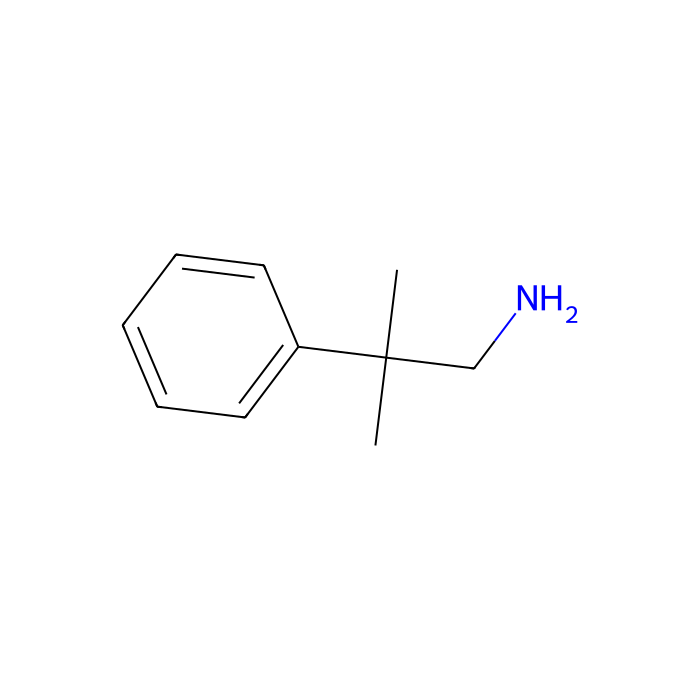
This compound belongs to the class of organic compounds known as phenylpropanes. These are organic compounds containing a phenylpropane moiety.
External Descriptors
Not available
1. Djoumbou Feunang Y, Eisner R, Knox C, Chepelev L, Hastings J, Owen G, Fahy E, Steinbeck C, Subramanian S, Bolton E, Greiner R, and Wishart DS. ClassyFire: Automated Chemical Classification With A Comprehensive, Computable Taxonomy. Journal of Cheminformatics, 2016, 8:61.
Certificats (CoA, COO, BSE/TSE et tableau d'analyse)
C of A & Other Certificates(BSE/TSE, COO):
Analytical Chart:
Propriétés chimiques et physiques
Poids moléculaire
149.230 g/mol
XLogP3
2.600
Hydrogen Bond Donor Count
1
Hydrogen Bond Acceptor Count
1
Rotatable Bond Count
2
Exact Mass
149.12 Da
Monoisotopic Mass
149.12 Da
Topological Polar Surface Area
26.000 Ų
Heavy Atom Count
11
Formal Charge
0
Complexity
112.000
Isotope Atom Count
0
Defined Atom Stereocenter Count
0
Undefined Atom Stereocenter Count
0
Defined Bond Stereocenter Count
0
Undefined Bond Stereocenter Count
0
The total count of all stereochemical bonds
0
Covalently-Bonded Unit Count
1
Calculateurs de solution
Molarity Calculator
Determine the necessary mass, volume, or concentration for preparing a solution.
Dilution Calculator
Determine the dilution needed to prepare a stock solution.
Reconstitution Calculator
Avis
Avis des clients
Application Protocols
No tested biological application protocols (e.g., WB, IHC, IF, FC) are provided for this small-molecule building block. Usage is highly context-specific to the intended chemical transformation.
Practical protocols relevant to small-molecule handling (general guidance):
Acid–base extraction for purification of amines:
Dissolve crude in an organic solvent (e.g., EtOAc). Wash with 1–2 M HCl to transfer the amine to the aqueous phase. Back-extract organics with acid if needed. Basify combined aqueous layers to pH >11 with NaOH, then extract with EtOAc or DCM. Dry over Na2SO4, concentrate.
Preparation of HCl salt for storage:
Dissolve free base in anhydrous Et2O/MTBE; add 4 M HCl in dioxane dropwise at 0–5 °C until pH of a test aliquot is acidic or precipitation completes. Collect, wash with cold ether, and dry in vacuo.
NMR sample prep:
Use CDCl3 or DMSO-d6; add a drop of AcOH-d4 if line broadening from exchange is problematic. For salts, D2O or DMSO-d6 often gives sharper NH2 signals.
These are generic methods for primary amines and must be adapted/validated for your specific substrates and scales.
Biological Roles
This catalog item is an organic building block intended for chemical synthesis. No biological role data are provided in the Product Data.
General considerations for aryl–alkyl primary amines (informational, not item-specific):
Biogenic relevance: Primary amines are common motifs in biogenic amines and neurotransmitters; benzylic amines often interact with monoamine oxidases in metabolic contexts. However, specific biochemical activity depends on full molecular structure and substitution pattern.
Metabolic fate: In biological systems, primary amines are typically protonated at physiological pH and may undergo oxidative deamination, N-acetylation, or conjugation (e.g., glucuronidation) depending on structure (literature, general).
Protein interaction: Protonated amines can engage in ionic interactions with acidic residues and form hydrogen bonds; this underlies their frequent use as pharmacophore elements in medicinal chemistry libraries.
No organismal pathways, receptor interactions, or enzyme targets are specified for this item. Any use in biological experiments should be preceded by appropriate safety and compatibility testing and remains strictly for research use only.
Buffer Applications
This compound is a hydrophobic aryl–alkyl primary amine and is not a standard buffering agent. It lacks a defined, narrow pKa/pH window and salt composition typically required for classical biochemical buffers.
If pH manipulation or solubilization is needed during handling, form a corresponding ammonium salt (e.g., hydrochloride) to improve aqueous solubility; this is a formulation tactic rather than a buffering system.
For true buffering capacity, use established buffers (e.g., phosphate, Tris, HEPES) and add this amine only as a reactant or additive if scientifically justified.
Refer instead to the sections on Reaction & Applications and Synthetic Utility for relevant uses of this product.
Green Alternatives
While this product is a reactive building block (not a process solvent), greener choices can be made in the solvents and reagents used with it.
Greener solvent swaps (general guidance):
Replace DCM/CHCl3 with toluene, ethyl acetate, or 2-MeTHF where feasible for acylations and reductive aminations.
Prefer 2-MeTHF or CPME instead of THF/diethyl ether to reduce peroxide risk and improve safety metrics.
Use ethanol or isopropanol as protic media for imine formation/hydrogenation when compatible with selectivity.
Reagent choices:
Couple with green coupling systems (e.g., CDI, EDC/Oxyma) in greener solvents instead of HATU/DMF when the substrate tolerates it.
For reductions, consider catalytic hydrogenation (H2, Pd/C or Raney Ni) under controlled conditions in EtOH/iPrOH as alternatives to borohydride cyanides.
Waste minimization and isolation:
Favor salt precipitation and solvent switching over chromatographic purification when possible (e.g., isolate as HCl salt from EtOH/Et2O, then free-base).
Apply aqueous micellar catalysis (e.g., TPGS-750-M) for some amide couplings or alkylations to reduce organic solvent volumes.
Comparison snapshot (general, not item-specific):
THF vs 2-MeTHF: Similar solvating power; 2-MeTHF derives from renewable sources and enables easier phase separations.
DCM vs EtOAc: EtOAc is biodegradable, lower toxicity; may require temperature/stoichiometry adjustments to match rates.
NaBH3CN vs catalytic H2: Avoids cyanide but requires pressure equipment and careful catalyst handling; selectivity profiles may differ.
Note: Verify solubility/reactivity for this specific amine prior to adopting greener swaps.
Pharmaceutical Uses
No pharmacopeial grade or excipient designation is provided in the Product Data. This item is offered for research use only.
General considerations (not item-specific, no therapeutic claims):
Role in discovery: Aryl–alkyl primary amines are common intermediates in medicinal chemistry campaigns, serving as cores for amide/urea libraries, heterocycle formation, and salt screening.
Salt screening: Conversion to various pharmaceutically acceptable salts (e.g., HCl, sulfate, fumarate) is routinely explored to tune solubility and solid-state properties during pre-formulation studies.
Impurity control: Residual amines can cause discoloration or catalyze degradation in formulations; rigorous removal or conversion to stable derivatives is typical before later-stage development.
Analytical handling: Assays may include LC–MS with positive ESI, derivatization for GC methods, and potentiometric titration to determine assay and amine content.
Any application in drug product manufacture would require explicit grade, impurity profile, and regulatory documentation not provided here.
Physical Properties
Item-specific specifications are not provided in the Product Data and should be confirmed on the CoA/Spec Sheet. The following notes are general/literature-style guidance for primary aryl–alkyl amines of comparable structure and are NOT item specifications.
Appearance: Not specified for this item; refer to CoA/Spec Sheet.
Boiling point: Typical primary aryl–alkyl amines with one phenyl and C3–C4 side chains boil roughly in the 190–230 °C range at 1 atm (literature, compound-class guidance).
Melting point: Often liquid at room temperature; salts (e.g., hydrochloride) have markedly higher MPs (literature, general).
Density: Approximately 0.90–0.98 g/mL at 20–25 °C for similar aryl–alkyl primary amines (literature, general).
Refractive index: Commonly n20 D ~1.49–1.53 for comparable benzylic amines (literature, general).
Solubility:
Organic: Miscible with many polar organic solvents (alcohols, ethers, chlorinated solvents); soluble in aromatic and aliphatic hydrocarbons (general chemistry).
Aqueous: Limited solubility as free base; readily water-soluble upon protonation with mineral/organic acids (general chemistry).
LogP: Aryl–alkyl amines of similar size often show logP ~1.5–2.5 as free bases; salts are far more hydrophilic (literature, general).
Important: Do not treat the above as product specifications. For precise values (including water content, UV cutoffs, impurity limits), consult the CoA/Spec Sheet.
Quality and Grades
Grade/purity: Not specified for this item; refer to CoA/Spec Sheet.
Stabilizers/inhibitors: Not specified for this item; refer to CoA/Spec Sheet.
Guidance on interpreting common grades for amines (general, not item-specific):
Analytical/AR grade: Tight control of inorganic/organic impurities suitable for routine analytical use; may not control UV-active trace impurities to chromatographic standards.
HPLC grade (for amines used as solvents/modifiers): Low UV absorbance and low non-volatile residue. For a reactive amine building block, this designation is uncommon unless aimed at LC modifiers.
Reagent grade (synthetic use): Assures typical synthetic reliability; trace metal levels may not be minimized unless specified.
Trace metals screened or low-peroxide specifications: More common for ethers and some solvents; for amines, water content and UV absorbance may be relevant to catalysis/photoredox chemistry.
Best practices for quality control (applicable to primary amines):
Verify identity by 1H/13C NMR; look for benzylic and NH2 resonances. IR should show N–H stretches (~3300–3500 cm−1). GC/LC purity profiling is often straightforward.
Water content (Karl Fischer) and residual solvents can impact moisture-sensitive couplings (e.g., isocyanate/acid chloride derivatizations); check CoA where available.
If optical purity is relevant (chiral variants/salts), confirm enantiomeric ratio via chiral HPLC; this item is not described as chiral in the Product Data.
Reaction and Applications
As a benzylic, sterically encumbered primary amine, 2-methyl-2-phenylpropylamine serves as a versatile nitrogen nucleophile and building block in small-molecule synthesis.
Amide formation: Reaction with acid chlorides/anhydrides or coupling reagents (EDC/HOBt, HATU) to give secondary amides; steric profile can modulate acylation rates and selectivity.
Carbamate/urea synthesis: Carbonylation with chloroformates or isocyanates to form tert-alkyl benzylic carbamates/ureas.
Reductive amination: Condensation with ketones/aldehydes (especially aryl aldehydes) followed by NaBH3CN, NaBH(OAc)3, or catalytic hydrogenation.
Alkylation (SN1/SN2): Primary amines can undergo N-alkylation; benzylic stabilization may allow unique substitution patterns via iminium intermediates under acid catalysis.
Protection strategies: Formation of Boc-, Cbz-, or sulfonamide-protected derivatives to mask basicity for cross-coupling or orthogonal multistep synthesis.
Salt formation: Crystalline hydrochloride or sulfate salts for isolation, handling, and improved stability.
Ligand/auxiliary uses:
Precursors to Schiff bases and chiral ligands upon condensation with aldehydes/ketones (if chiral auxiliary introduced separately), enabling metal coordination chemistry.
Practical tips:
Drying: Free bases absorb CO2 and moisture; dry over KOH pellets or CaH2 and distill under reduced pressure when compatible.
Avoid over-alkylation: Use protected-amine strategies or employ reductive amination conditions to limit formation of tertiary amine byproducts.
Workup: Acid–base toggling enables clean phase separations; convert to aqueous salt to remove nonbasic organics, then basify to recover the free base.
Reaction Conditions
The following are general, literature-style conditions for typical reactions of benzylic primary amines and should be optimized for your substrate. They are not item specifications.
Amide coupling:
Solvent: DMF, MeCN, 2-MeTHF, DCM.
Reagents: EDC·HCl/Oxyma or HATU; base DIPEA (2–3 eq).
Temperature/time: 0–25 °C, 1–12 h.
Notes: Control exotherm on addition; monitor by LC–MS. For greener choices, use EtOAc/2-MeTHF and EDC/Oxyma.
Reductive amination:
Solvent: MeOH, EtOH, iPrOH, or MeCN with AcOH (0.5–1.0 eq).
Reductant: NaBH3CN (pH 5–6), NaBH(OAc)3 (AcOH present), or H2 (1–5 bar) with Pd/C.
Temperature/time: 20–50 °C, 2–16 h.
Notes: Avoid excess aldehyde to limit bis-alkylation; benzylic stabilization can accelerate iminium formation.
Carbamate (Boc-protection):
Reagents: (Boc)2O (1.1–1.3 eq), base NaHCO3 or Et3N.
Solvent: THF, DCM, or 2-MeTHF.
Temperature: 0–25 °C, 1–4 h.
Sulfonamide formation:
Reagents: Aryl/alkyl sulfonyl chloride (1.05–1.2 eq), base (pyridine, Et3N).
Solvent: DCM or MeCN; 0–25 °C.
Salt formation (HCl):
Solvent: Et2O/MTBE or EtOAc; dry HCl in dioxane or gaseous HCl.
Temperature: 0–25 °C; precipitate, filter, and dry under vacuum.
Distillation/drying (free base):
Drying agents: KOH pellets or CaH2.
Technique: Short-path or Kugelrohr under reduced pressure to minimize oxidation; exclude air/moisture.
Always confirm compatibility with sensitive functional groups on your coupling partner and consult SDS before scale-up.
Safety and Handling
Research use: For research use only (per Product Data). Not for human or veterinary use.
GHS classification, signal word, pictograms, H-statements: Not specified for this item; refer to SDS for authoritative hazard classification.
General safety considerations for primary aryl–alkyl amines (informational, not item-specific):
Likely hazards: Skin/eye irritation, respiratory irritation, and potential sensitization are common for low-MW amines. Many amines are harmful if swallowed and may be corrosive to some materials in concentrated form.
PPE: Wear lab coat, chemical-resistant gloves (e.g., nitrile), and splash goggles. Use in a fume hood to control vapors/odors.
Handling: Avoid inhalation and contact with skin or eyes. Keep containers tightly closed to limit oxidation and absorption of CO2/acids. Use inert gas blanket for long-term storage of the free base where practical.
Incompatibilities: Strong oxidizers, acylating and alkylating agents (uncontrolled reaction), acid chlorides/anhydrides (exothermic acylation), strong acids (forms salts with heat release). Copper/brass can discolor due to complexation with amines.
First aid (overview):
Inhalation: Move to fresh air; seek medical attention if symptoms persist.
Skin/eye contact: Rinse with water for several minutes; remove contaminated clothing; seek medical attention for persistent irritation.
Ingestion: Rinse mouth; do not induce vomiting; obtain medical attention.
Fire safety: Many amines are combustible; use CO2, dry chemical, or foam. Vapors may form irritating nitrogen oxides upon combustion.
Always consult the product SDS for definitive hazards, response measures, and transport classification.
Solvent Selection
This product is a primary amine building block rather than a bulk solvent. Solvent selection here refers to choosing reaction and workup solvents compatible with a benzylic primary amine.
Polarity/miscibility profile (general behavior for aryl–alkyl primary amines):
Soluble in ethers (THF, MTBE), alcohols (MeOH, EtOH, iPrOH), chlorinated solvents (DCM, CHCl3), and aromatics (toluene). Variable solubility in alkanes; often improved upon warming.
Limited aqueous solubility as free base; fully water-soluble as salts (e.g., HCl, H2SO4, TFA). This toggle is useful for acid–base extraction and product isolation.
Choosing solvents by task:
N-acylation/urea/carbamate formation: Use anhydrous DCM, THF, or toluene with a base (e.g., Et3N, DIPEA) to control HCl/HBr byproducts.
Reductive amination/alkylation: Protic (MeOH, EtOH) or mixed (MeOH/THF) media often enhance imine formation and hydrogenation compatibility.
Metal-catalyzed steps: Amines can poison catalysts; consider protecting the amine (Boc, Cbz) or using polar aprotic solvents (DMF, MeCN) with appropriate ligands.
Salt formation/purification: Use ether/hexane antisolvents to precipitate amine salts (e.g., HCl salt) from alcoholic or ethereal solutions.
Comparison pointers:
THF vs 2-MeTHF: 2-MeTHF offers greener metrics and broader biphasic extraction options with similar solvation for amines.
DCM vs toluene/EtOAc: Prefer toluene/EtOAc where feasible to reduce chlorinated solvent use; monitor reactivity and selectivity impacts.
Storage and Reconstitution
Storage conditions (from Product Data): Store at 2–8 °C, protected from light. Shipped on wet ice.
Appearance: Not specified for this item; refer to CoA/Spec Sheet.
Formulation: Not specified for this item; refer to CoA/Spec Sheet.
General handling guidance for primary aryl–alkyl amines (informational):
Container: Store in amber glass with PTFE-lined cap to minimize light exposure and interaction with closures. Consider an inert gas headspace (N2/Ar) for the free base.
Moisture/air: Keep tightly closed; primary amines can absorb CO2 and moisture, forming ammonium species and promoting discoloration over time.
Freeze–thaw: If supplied as a solution, minimize freeze–thaw cycles; aliquot upon receipt. If a neat liquid/solid, equilibrate to room temperature before opening to prevent condensation.
Stability: Free bases can slowly oxidize; preparing and storing as a crystalline salt (e.g., HCl) often improves shelf-life. Verify compatibility with your intended use.
Reconstitution: If provided as a solid salt, dissolve in suitable solvent (MeOH, EtOH, DCM, THF, or water for salts) to the desired concentration under inert atmosphere if moisture-sensitive steps follow. Filter if necessary through PTFE (0.2 µm) before use.
Always consult the product’s CoA/Spec Sheet and SDS for definitive storage, stability, and handling instructions.
Structure and Identity
Brief overview: 2-Methyl-2-phenylpropylamine is an aryl–alkyl primary amine useful as a chiral-agnostic nitrogenous building block and organocatalyst/ligand precursor in synthesis.
Item-specific identifiers (from Product Data)
SKU: M192041
Product name: 2-Methyl-2-phenylpropylamine
CAS: 21404-88-6
PubChem CID: 210602
InChIKey: 55712 (as provided)
SMILES: Not specified for this item; refer to CoA/Spec Sheet.
Molecular formula: Not specified for this item; refer to CoA/Spec Sheet.
Molecular weight: Not specified for this item; refer to CoA/Spec Sheet.
Structural features (general chemistry description)
Functional group: primary aliphatic amine (–CH2–NH2 or –CH–NH2 motif attached to a substituted benzylic center).
Aryl substituent: one phenyl ring attached at the benzylic/quaternary-adjacent carbon; expects benzylic reactivity enhancements (e.g., in oxidation or alkylation under certain conditions).
Alkyl substituent: one additional methyl substituent on the same carbon bearing the benzylic linkage, increasing steric demand relative to benzylamine.
Stereochemistry: no defined stereocenters in the IUPAC name as given; typical commercial material is racemic/achiral unless specified otherwise.
2D structure in words (general)
A benzene ring bonded to a tertiary carbon that also bears a methyl group and a propylamine chain terminating in a primary amine. The amine nitrogen is primary and nucleophilic; the adjacent benzylic carbon is tertiary/benzylic, conferring increased stability of carbocationic intermediates under certain conditions.
Note: Exact line notation (SMILES/InChI) and elemental composition should be confirmed on the CoA/Spec Sheet for this catalog item.
Synthetic Utility
2-Methyl-2-phenylpropylamine functions as a nucleophilic, basic coupling partner and as a handle for downstream diversification around a benzylic center.
Key functional elements (general chemistry):
Primary amine (nucleophile/base): Undergoes acylation, sulfonylation, carbamoylation, and imine formation. Basicity supports roles as an organocatalyst or ligand precursor after derivatization.
Benzylic activation: The adjacent phenyl stabilizes cationic/radical intermediates, enabling transformations such as benzylic oxidation (to imines/amides) or selective N-alkylations under SN1-like conditions.
Sterics: The extra methyl at the benzylic carbon increases steric hindrance versus benzylamine, often slowing over-acylation/over-alkylation and sometimes improving selectivity for mono-functionalization.
Amide libraries: Couple with diverse carboxylic acids via HATU or EDC/Oxyma in DMF/MeCN or greener alternatives (2-MeTHF, EtOAc) to access SAR sets.
Reductive amination cascades: Condense with aldehydes/ketones; reduce with NaBH(OAc)3 in AcOH/MeCN or catalytic H2 in alcohols to form secondary amines.
Heterocycle assembly: Convert to imines/oximes, then perform cyclizations (e.g., Pictet–Spengler analogs if an aryl tether exists, or form benzimidazoles via o-phenylenediamine coupling after appropriate functionalization).
Protection strategies: Temporary Boc or Cbz protection to mask basicity in cross-coupling or metal-catalyzed steps; deprotect under standard acidic or hydrogenolysis conditions respectively.
Practical: Utilize acid–base extraction for purification; isolate as an HCl salt to enhance stability and facilitate crystallization where applicable.
Target Specificity
Not applicable. This product is a small-molecule primary amine building block, not a biological targeting reagent (e.g., antibody, ligand with defined biomolecular target) in this catalog entry.
Antigen/epitope/clone/isotype: Not applicable.
Species reactivity: Not applicable.
Refer to Reaction & Applications and Synthetic Utility for relevant chemical uses.
Nous utilisons des cookies pour garantir le bon fonctionnement du site et, lorsque cela est autorisé, pour améliorer votre expérience. Vous pouvez gérer vos préférences à tout moment dans les Paramètres. Pour en savoir plus, consultez notre Politique relative aux cookies.
Souhaitez-vous que nous vous envoyions un message lorsque des réductions seront disponibles?
Me rappeler plus tard
Merci ! Veuillez vérifier votre boîte de réception e-mail pour confirmer.
Products are supplied to verified businesses, institutions, and qualified professionals for research and development use only. Not for use in humans, animals, diagnosis, or therapy.