Certificats (CoA, COO, BSE/TSE et tableau d'analyse)
C of A & Other Certificates(BSE/TSE, COO):
Analytical Chart:
Calculateurs de solution
Molarity Calculator
Determine the necessary mass, volume, or concentration for preparing a solution.
Dilution Calculator
Determine the dilution needed to prepare a stock solution.
Reconstitution Calculator
Avis
Avis des clients
Application Protocols
No validated application protocols are provided for this item. The following are general, non–item-specific practices for small-molecule screening compounds:
Stock solution preparation: Dissolve the compound in high-purity anhydrous DMSO to a convenient concentration (e.g., 10–50 mM). Vortex and, if needed, sonicate briefly. Centrifuge to pellet any insoluble particulates.
Aliquoting: Dispense single-use aliquots (e.g., 10–50 µL) to minimize freeze–thaw and moisture exposure. Store at the recommended temperature.
Working solutions: Dilute stocks into assay buffer or media with vigorous mixing to reach desired final concentrations, keeping DMSO ≤0.5–1% v/v unless your assay tolerates more. Prepare matching vehicle controls.
Plate handling: For HTS, use acoustic or pin-tool transfer to improve dosing precision at low volumes. For cell assays, pre-equilibrate media and avoid prolonged exposure of cells to neat DMSO.
Quality checks: Verify concentration by UV (if chromophore known) or quantitative LC where possible. Inspect for precipitation or color change after dilution and over assay time.
These are general suggestions; adapt to your assay requirements and confirm compatibility empirically.
Biological Roles
No biological target annotation or mechanism is provided for AZD5248 in this listing.
What this means for researchers:
Target/mechanism: Not specified for this item; consult external databases, primary literature, or internal screening data to establish a hypothesized target and pathway associations before mechanistic studies.
Off-target risk: As with any screening compound, off-target activity and assay interference are possible. Employ orthogonal assays and appropriate counterscreens (e.g., redox cycling, PAINS filters, detergent-sensitive aggregation tests) to confirm specificity.
ADME/stability considerations: Without item-specific data, assume unknown cell permeability, microsomal stability, and plasma protein binding. If biological studies are intended, generate basic in-house profiles (solubility across pH, stability in buffer/media, and chemical stability by LC–MS) to inform assay design.
Note: All uses are for laboratory research only. No medical, diagnostic, or therapeutic use is intended or implied by this catalog entry.
Buffer Applications
This product is not a buffering agent and no buffer-related properties are provided. For biological assays, prepare the compound in an appropriate organic stock solvent (commonly DMSO) and dilute into your assay buffer system (e.g., phosphate-, HEPES-, or Tris-based) ensuring solvent compatibility and compound solubility. Optimize pH and ionic strength for your target biology as needed.
Green Alternatives
Green-chemistry considerations for this product primarily relate to solvent selection and assay design, since the compound itself is a fixed entity and is used at small scale in research.
Practical, greener choices (general guidance):
Stock solvents: Prefer anhydrous DMSO for small-volume stocks. If synthetic handling is required, consider greener dipolar aprotics such as Cyrene or propylene carbonate where chemically compatible, recognizing their different miscibility/biological compatibility profiles versus DMSO/DMF.
Assay buffers: Use aqueous buffers with minimal organic co-solvent (≤0.5% DMSO) to reduce solvent burden. Opt for volatile buffers (ammonium-based) when LC–MS analytics are planned to minimize waste from non-volatile salts.
Miniaturization: Employ microplate formats (384–1536 well) and acoustic dispensing to reduce solvent and compound consumption.
Tradeoffs to note:
Greener dipolar aprotic solvents may have higher viscosity, lower volatility, and limited biocompatibility; confirm assay tolerance.
Switching solvents can change compound solubility and biological potency readouts; re-validate dose–response curves after any solvent change.
Because item-specific solubility and stability are not disclosed, pilot experiments should benchmark performance in the greener system against a DMSO baseline.
Pharmaceutical Uses
No pharmacopeial status or excipient role is provided for this item, and it is supplied strictly for research use only.
Context (general, not item-specific):
Screening compounds may be evaluated in discovery settings for target engagement and SAR, but this listing includes no formulation guidance, dosage form information, or clinical development status for AZD5248.
If preformulation studies are undertaken in research, assess solubility (kinetic/thermodynamic), solid form (salt/solvate/polymorph), and stability under light, heat, and humidity—guided by your internal protocols. Such activities are outside the scope of the present catalog information.
Physical Properties
Item-specific physical property data are not disclosed in this listing.
Item-specific values (from Product Data):
Appearance: Not specified for this item; refer to CoA/Spec Sheet.
Molecular weight: Not specified for this item; refer to CoA/Spec Sheet.
Melting point: Not specified for this item; refer to CoA/Spec Sheet.
Boiling point: Not specified for this item; refer to CoA/Spec Sheet.
Density: Not specified for this item; refer to CoA/Spec Sheet.
Refractive index: Not specified for this item; refer to CoA/Spec Sheet.
Solubility: Not specified for this item; refer to CoA/Spec Sheet.
LogP, pKa: Not specified for this item; refer to CoA/Spec Sheet.
General laboratory guidance (literature/practice, not item-specific):
Many screening compounds are supplied as solids and are typically dissolved first in anhydrous DMSO to prepare concentrated stocks (e.g., 10–50 mM), then diluted into aqueous assay buffers immediately before use to minimize precipitation.
Solubility and stability can vary widely; if precipitation occurs on aqueous dilution, consider co-solvents (≤0.5–1% DMSO in final assay), surfactants (e.g., 0.01% Tween-20 where compatible), or pH adjustments when chemically appropriate. Confirm compatibility with your assay system.
Always consult the item’s CoA/Spec Sheet for definitive, lot-specific physical data before planning formulation or screening logistics.
Quality and Grades
Item-specific quality attributes are not stated in this listing.
Grade/Purity: Not specified for this item; refer to CoA/Spec Sheet.
Context and expectations (general guidance for screening compounds):
Screening-library compounds are commonly supplied at high chemical purity (often ≥95% by HPLC/UPLC) to minimize assay artifacts; however, because no purity value is listed here, rely on the lot-specific CoA/Spec Sheet for the definitive specification and analytical data (chromatogram, identity confirmation).
Identity confirmation for such materials typically includes LC–MS and/or NMR. If you require orthogonal identity confirmation (e.g., HRMS, 1H/13C NMR, purity by qNMR), request these before use in critical studies.
If an internal stabilizer or salt form is used to enhance stability/handling, it will be declared on the CoA. No stabilizer or salt information is provided in this listing.
For analytical applications (e.g., reference standard use), verify UV profile and impurity thresholds from the CoA; if low-UV impurities or residual solvents affect your method, consider additional purification or in-house qualification.
Reaction and Applications
This product is cataloged as a bioactive screening compound rather than a synthetic reagent. No manufacturer application notes are provided for this specific item.
Applicable research uses (general, not item-specific):
Tool compound screening: Use in high-throughput screening (HTS), hit validation, or mechanism-of-action studies once the molecular target and mechanism are established by the end user or literature. As no target annotation is provided here, users should consult external references or generate de novo profiling data.
Assay modalities: Biochemical enzyme assays, receptor/ion-channel binding or functional assays, and cell-based phenotypic assays. Rigorous counter-screens (e.g., aggregate interference, redox activity, luciferase quenching) are recommended to rule out assay artifacts.
Orthogonal characterization: Where appropriate, confirm activity using label-free biophysics (SPR, MST, DSF) and cellular readouts (e.g., target engagement assays) after establishing solubility and stability in the assay matrix.
Not intended as a general synthetic reagent; if chemical transformations are planned (derivatization, SAR expansion), confirm full structural identity and functional group compatibility from the CoA or primary literature before use.
Reaction Conditions
Not applicable to this item as a screening compound. No synthetic reaction conditions are supplied or implied for AZD5248 in this listing.
If chemical modification is planned in research settings (general guidance):
Establish solvent and temperature windows only after confirming the structure and functional groups from authoritative sources.
Track reaction progress and stability by LC–MS to monitor degradation or rearrangements, especially if basic or acidic conditions are explored.
Safety and Handling
Safety details specific to this item are not provided in the listing; consult the SDS for authoritative information.
Item-specific hazard data (from Product Data):
GHS classification: Not specified for this item; refer to SDS.
Signal word: Not specified for this item; refer to SDS.
H-statements: Not specified for this item; refer to SDS.
Pictograms: Not specified for this item; refer to SDS.
General handling guidance for research small molecules (practice-level guidance):
Use in a fume hood with standard laboratory PPE: lab coat, nitrile gloves, and safety glasses. Avoid inhalation of dust or aerosols and prevent skin/eye contact.
Storage incompatibilities: Keep separate from strong oxidizers and strong acids/bases unless verified compatible for this specific molecule. Avoid moisture ingress for hygroscopic or hydrolysis-prone compounds; keep containers tightly closed.
First-aid overview: In case of skin contact, wash with soap and water; for eye contact, rinse cautiously with water for several minutes and seek medical attention; if inhaled, move to fresh air; if ingested, rinse mouth and seek medical advice. Follow institutional EHS procedures and the SDS.
Waste: Dispose according to local regulations for organic laboratory chemicals; segregate halogenated from non-halogenated waste as appropriate.
Transport: Shipped on cold packs as indicated; do not refreeze gel packs for storage decisions—follow the Storage Conditions below.
Solvent Selection
Item-specific solubility data are not available; choose solvents empirically while following best practices for bioactive small molecules.
General approach (not item-specific):
Stock preparation: Begin with anhydrous DMSO due to its broad solubilizing power and assay compatibility at low final percentages (typically ≤0.5–1%). If insoluble, try DMF or NMP. For protic alternatives, ethanol or isopropanol may help, balancing assay tolerability (≤1–2% v/v typically).
Aqueous dilution: After preparing a clear DMSO stock, dilute into pre-warmed assay buffer with vigorous mixing to minimize precipitation. Consider co-solvent carryover control in negative controls.
pH and cosolvents: If the compound is ionizable (unknown here), pH-adjusted buffers can enhance solubility of basic or acidic compounds. Use volatile buffers if LC–MS will be part of readouts.
Comparison snapshot (general):
DMSO: Highest solvency; excellent for stocks; cytotoxic above ~1–2% v/v in many cell assays.
DMF/NMP: Strong solvency, but more cytotoxic; reserve for challenging cases or synthetic use.
Ethanol/IPA: Moderate solvency; better biocompatibility than DMF/NMP; volatility may complicate dosing accuracy.
Practical tips:
Filter or centrifuge stock if particulates persist; avoid filtering if adsorption losses are suspected.
Document solvent lot/water content when reproducibility is critical, and verify concentration by UV/LC when needed.
Storage and Reconstitution
Item-specific storage and shipping:
Storage conditions: Store at -20°C (from Product Data).
Shipped in: Ice chest + ice pads (from Product Data) to maintain a cold chain during transit.
Reconstitution (general, not item-specific):
Solvent: Use anhydrous DMSO to prepare concentrated stock solutions unless the CoA/Spec Sheet recommends otherwise. Start at 10–50 mM and adjust based on observed solubility.
Technique: Allow the container to equilibrate to room temperature in a desiccator before opening to avoid moisture condensation. Add solvent incrementally with vortexing. If needed, warm gently (e.g., 25–37°C) and/or sonicate briefly to aid dissolution. Avoid prolonged heating.
Aliquoting and storage: Dispense single-use aliquots in inert vials or microtubes. Store tightly sealed at -20°C. Protect from moisture and, if the compound is light-sensitive (unknown here), from light (amber vials, foil wrap). Minimize freeze–thaw cycles.
Stability: Lot-specific stability, hygroscopicity, and light sensitivity are not provided; consult the CoA/Spec Sheet and SDS. For working solutions in aqueous media, prepare fresh on the day of use where feasible, and verify absence of precipitation throughout the assay window.
Research use only: Not for human or veterinary use.
Structure and Identity
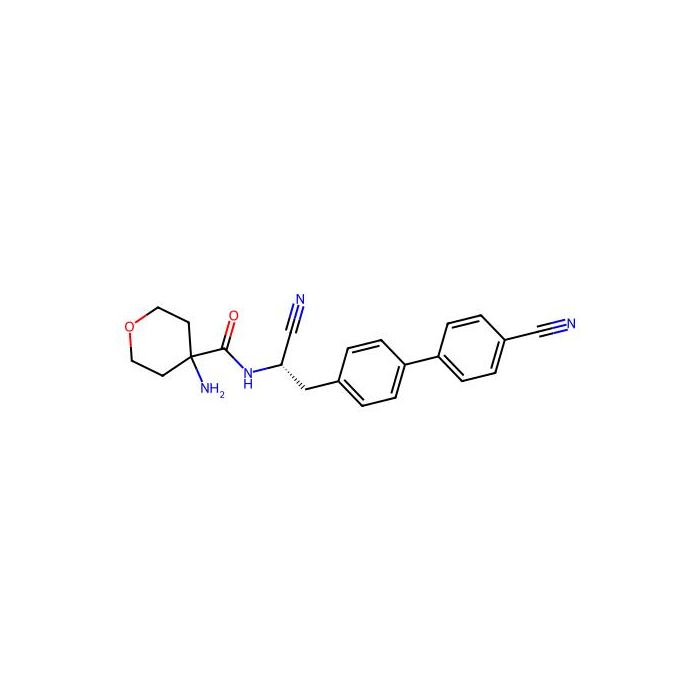
AZD5248 is listed as a small-molecule research compound in our screening library. Structural identifiers are not provided in this listing.
SKU: A1441766
Product name: AZD5248
CAS: 1254318-44-9
Category: Small molecules and compound libraries (screening compound)
Item-specific identifiers (from Product Data):
Molecular formula: Not specified for this item; refer to CoA/Spec Sheet.
Molecular weight: Not specified for this item; refer to CoA/Spec Sheet.
SMILES: Not specified for this item; refer to CoA/Spec Sheet.
InChIKey: Not specified for this item; refer to CoA/Spec Sheet.
General structural notes (applicability):
Without a provided structure, specific functional groups, ring systems, and stereochemistry cannot be annotated for this catalog entry.
Typical members of bioactive screening libraries are drug-like small molecules that may include heteroaromatic scaffolds, hydrogen-bond donors/acceptors, and lipophilic domains; however, no structure is disclosed here for AZD5248, so no assumptions are made for this specific item.
Synthetic Utility
This catalog item is intended as a bioactive small-molecule research tool rather than a synthetic intermediate. No functional group information is provided, so synthetic reactivity or derivatization opportunities cannot be described for this specific compound.
General notes (not item-specific):
If derivatization or SAR exploration is desired, obtain full structural information (including stereochemistry) from the CoA or primary literature and evaluate protecting-group strategies, heteroatom compatibility, and late-stage diversification tactics.
For analytical support of any transformations, establish a reference profile (LC–MS, 1H/13C NMR, purity assay) for the parent material prior to modification.
Target Specificity
No target, pathway, or selectivity profile is provided for this item.
Target/epitope/clone/isotype: Not applicable; this is not an antibody or biologic.
For users seeking target information: Consult primary literature and cheminformatics databases using the CAS number (1254318-44-9) or compound name to identify any reported targets, and confirm activity in-house with appropriate positive/negative controls.
We use cookies to ensure the website functions properly and, where permitted, to improve your experience. You can manage your preferences at any time in Settings. Learn more in our Cookie Policy.
Shall we send you a message when we have discounts available?
Remind me later
Thank you! Please check your email inbox to confirm.
Products are supplied to verified businesses, institutions, and qualified professionals for research and development use only. Not for use in humans, animals, diagnosis, or therapy.