GRADE & PURITYMoligand™?Moligand™ — Aladdin's line of ligands and bioactive small molecules. Use for receptor, pathway, and binding studies needing defined small-molecule tools.10 mM in DMSO
Moligand™, 10 mM in DMSO Moligand™ for sensitive chromatographic and analytical workflows requiring minimal baseline interference.
🌡
Storage & shipping
Store at -80°C Ships Dry ice packs + Cold packs Check lot-specific COA for exact specifications.
📋
Quality documents
SDS, COA, datasheet, and spec sheet available for download. Lot-specific COA accessible via lot number lookup.
📚
Literature proof
Cited in 0 peer-reviewed publications across chromatography, organic synthesis, and cross-coupling reactions.
Vue d’ensemble
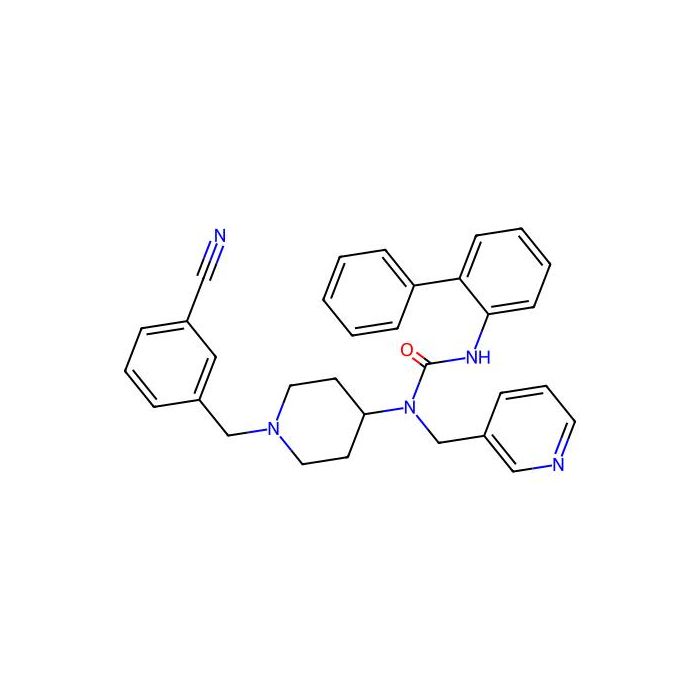
BPU-11 is a hyperpolarization-activated cyclic nucleotide-gated (HCN) C-linker pocket (CLP) HCN4 CLP ligand. BPU-11 can be used for the research of congenital immune disease.
Specifications
Spécifications et pureté
Moligand™, 10 mM in DMSO
Conditions de stockage de stockage
Store at -80°C
Expédié en
Dry ice packs + Cold packs
Ce produit nécessite l'expédition en chaîne froide. Les services terrestres et autres services économiques ne sont pas disponibles.
Certificats (CoA, COO, BSE/TSE et tableau d'analyse)
C of A & Other Certificates(BSE/TSE, COO):
Analytical Chart:
Calculateurs de solution
Molarity Calculator
Determine the necessary mass, volume, or concentration for preparing a solution.
Dilution Calculator
Determine the dilution needed to prepare a stock solution.
Reconstitution Calculator
Avis
Avis des clients
Application Protocols
No tested application protocols are provided for this item in the catalog entry. The following general, non–item-specific guidance applies to small-molecule screening compounds:
Stock preparation: Dissolve in anhydrous DMSO to a convenient concentration (e.g., 10 mM). Vortex and, if needed, sonicate briefly. Filter through 0.22 µm PTFE for analytical work.
Aliquoting: Dispense single-use aliquots (e.g., 10–50 µL) into inert tubes or 96-well plates under dry conditions to avoid repeated freeze–thaw.
Assay setup: Keep final DMSO constant across wells (≤0.5–1% v/v). Include vehicle controls and, where feasible, reference standards for benchmarking.
Stability check: Inspect for precipitation or discoloration after dilution. For longer incubations, verify concentration by LC–MS at start and end of assay.
Note: Replace these general steps with any item-specific instructions from the CoA/Spec Sheet if they differ.
Biological Roles
No biological function, target, or pathway information is provided for BPU-11 in this catalog entry. As a Moligand™ small-molecule library member, it is intended for in vitro research and discovery assays only.
General guidance for researchers:
Do not ascribe a biological role without confirmatory data. Any observed activity in your assays should be treated as preliminary until orthogonally validated and free of assay interference (e.g., aggregation, redox cycling, fluorescence quenching).
Implement controls to detect pan-assay interference compounds (PAINS) behavior: detergent-sensitivity tests, redox counterscreens, and UV–Vis inspection for inner-filter effects.
If proteome or pathway engagement is explored, use chemoproteomic or thermal-proteome profiling methods with appropriate negative controls and replicate statistics.
Important: No medical, diagnostic, or therapeutic use is implied. All uses are limited to laboratory research by qualified professionals.
Buffer Applications
This product is not a buffering reagent, and no acid/base pKa information is provided. Therefore, conventional buffer preparation guidance (e.g., phosphate, HEPES, Tris) is not applicable.
Practical notes for assay buffers (general):
When diluting DMSO stocks into assay buffers, maintain a constant final DMSO fraction across all wells/samples (commonly ≤0.5–1% v/v) to avoid solvent effects.
Include low levels of nonionic surfactant (e.g., 0.01–0.05% Tween-20) if aggregation is suspected, provided your assay tolerates it.
Filter buffers (0.22 µm) and degas when performing sensitive spectroscopic or biophysical measurements to reduce noise and bubble artifacts.
Green Alternatives
With structure and specific solubility unknown, the environmental footprint is dominated by solvent handling and cold-chain storage. Consider greener practices around dissolution, analysis, and cleaning.
Greener solvent choices (general guidance):
Preferred where feasible: Ethanol, isopropanol, and water-based co-solvent systems for sample prep and cleaning, provided the compound is sufficiently soluble and assay-compatible.
Use DMSO efficiently: While DMSO is relatively low-toxicity, minimize volumes and avoid halogenated solvent use unless analytically necessary.
Replace DMF/DMAC/NMP: If these are contemplated for solubility, attempt EtOH/IPA/DMSO first due to lower hazard profiles.
Small comparison (general):
DMSO: Broad solubility; low volatility; favorable vs DMF/NMP for operator exposure.
Ethanol/IPA: Renewable feedstocks available; higher volatility reduces persistence; may affect biomolecules at higher %.
Acetonitrile: Common in LC; consider water-rich gradients to reduce ACN consumption and adopt solvent-recycling where possible.
Operational improvements:
Micro-aliquoting stocks to reduce waste and repeated thawing.
UPLC methods to cut solvent usage and analysis time versus HPLC.
Use aqueous cleaners and enzymatic detergents for glassware; reserve acetone/ACN/THF only for stubborn residues.
Note: Specific “green-by-design” alternatives for the compound itself cannot be proposed without structural information. Prioritize solvent substitution and process intensification to improve sustainability.
Pharmaceutical Uses
No pharmacopeial status, excipient role, or formulation use is specified for BPU-11. The product is supplied strictly for research use only.
Context for formulation scientists (general):
If evaluating preformulation properties in a research setting (solubility, stability, polymorph screening), obtain full structural information and purity profile from the CoA before initiating studies.
For solution studies, DMSO stocks are common for discovery-phase screening; subsequent solubility profiling can explore ethanol/PEG 400/cyclodextrins as research tools where appropriate. Confirm compatibility with your biological system and avoid any in vivo use.
Physical Properties
Item-specific physicochemical specifications are not provided in this catalog entry and should be confirmed against the CoA/Spec Sheet.
Appearance: Not specified for this item; refer to CoA/Spec Sheet.
Molecular weight (item-specific): Not specified for this item; refer to CoA/Spec Sheet.
Melting point (literature/computed): Not available here; consult CoA or measure via DSC/MP.
Boiling point (literature): Not typically applicable for screening solids; if needed, estimate via thermogravimetry.
Density: Not specified for this item; refer to CoA/Spec Sheet.
Refractive index: Not applicable for solids; for oils, verify on CoA.
LogP/logD, pKa (literature/computed): Not specified for this item; may be computed once the structure is disclosed (e.g., ALOGPS, ChemAxon).
Aqueous solubility: Not specified for this item; common practice is to prepare a DMSO stock (e.g., 10–20 mM) then dilute into assay buffer with ≤1% final DMSO.
UV–Vis characteristics (literature): Not specified for this item. If needed for HPLC/UPLC method development, collect a scan (200–400 nm) to identify λmax for detection.
Notes for experimental planning (general):
For unknown thermal history compounds, use a small-scale differential scanning calorimetry/thermogravimetric analysis (DSC/TGA) to determine stability windows before lyophilization or vacuum drying.
If hygroscopicity is suspected, handle under dry atmosphere and record mass vs time to assess water uptake.
Quality and Grades
Grade/Purity: Moligand™ (per item data). This designation indicates inclusion in Aladdin’s curated small-molecule/compound library suitable for research screening and ligand discovery workflows.
What Moligand™ typically entails (general description; not item-specific specs):
Curated identity: Structure and identity are established during library assembly; confirmatory documentation is available via the CoA/Spec Sheet.
Suitability for screening: Provided for in vitro research (biochemical/biophysical assays, cell-free target engagement) and method development. No clinical or diagnostic use.
Documentation: CoA typically details identity verification (e.g., LC–MS, MS, NMR), purity assessment methodology, and handling notes. Request the latest revision for your lot.
What is not stated here (must be verified on the CoA):
Numerical purity (%), water or residual solvent content, counterions/salt form, additive/stabilizer presence, metal content, and UV cutoff. Not specified for this item; refer to CoA/Spec Sheet.
Practical QA recommendations:
On receipt, record lot/expiry, inspect packaging integrity, and reconcile with purchase order.
For critical screens, perform an incoming identity check (e.g., LC–HRMS) against reference spectra where available, and document retention time windows for your LC method.
If you plan quantitative biology/biophysics, determine exact assay concentration by back-calculating from weighed mass corrected for purity and residual solvent (Karl Fischer/GC if applicable).
Reaction and Applications
Primary use case: BPU-11 is supplied as a research screening compound within a small-molecule library. In the absence of a disclosed structure or reactivity profile, its principal applications are in discovery workflows rather than synthetic transformations.
Discovery and screening applications (general):
Biochemical/biophysical assays: Evaluate target engagement using thermal shift (DSF), SPR, MST, TSA, or enzyme inhibition formats. Maintain consistent DMSO levels across controls.
Cell-free systems: Probe binding or modulation in reconstituted pathways, avoiding biological claims and ensuring proper negative/positive controls.
Analytical method development: Establish LC–MS/UPLC retention, ionization behavior (ESI±), and detector response factors for quantitative tracking in complex matrices.
Hit validation: Orthogonal confirmation with dose–response curves, solubility checks (nephelometry), and selectivity panels as appropriate for your research.
Not typically applicable without structure:
Named organic reactions or reagent roles cannot be assigned without functional-group knowledge. If you intend to derivatize or immobilize the compound, obtain the full structural information and assess reactive handles.
Practical tips:
Prepare fresh DMSO stocks and aliquot to minimize freeze–thaw cycles.
Record exact stock concentration adjusted for measured purity (from CoA) to ensure reproducible IC50/EC50 determinations.
For stability, run a short forced-degradation screen (light, heat, oxidative, pH) to inform assay and storage conditions.
Reaction Conditions
Not applicable to this product as listed. No functional-group or reactivity profile is provided, so recommended reaction conditions cannot be responsibly specified.
General research guidance:
If using BPU-11 as an analyte in analytical chemistry, develop LC–MS methods starting with water/acetonitrile (0.1% formic acid) gradients and evaluate ionization in ESI+ and ESI−.
For any chemical modification studies, first establish stability windows via small-scale stress testing (thermal, oxidative, photolytic, and pH 2–10) before attempting coupling or protection–deprotection sequences.
Safety and Handling
Safety details specific to BPU-11 are not listed in this entry. Always consult the product SDS and CoA before use.
GHS classification: Not specified for this item; refer to SDS.
Signal word / Hazard statements / Pictograms: Not specified for this item; refer to SDS.
General hazards (unknowns): Treat as a potentially harmful research chemical. Avoid inhalation, ingestion, and skin/eye contact.
Recommended PPE and controls:
Wear lab coat, safety glasses, and suitable gloves (e.g., nitrile). Use in a certified chemical fume hood.
Implement containment for powders: weigh boats with antistatic measures; minimize dust generation.
First-aid overview (general):
Skin/eye contact: Rinse with water for ≥15 min; remove contaminated clothing; seek medical advice.
Inhalation: Move to fresh air; monitor respiration; seek medical attention as needed.
Ingestion: Rinse mouth; do not induce vomiting; seek medical help immediately.
Storage incompatibilities and precautions:
Storage condition: Store at −80°C (per item data). Keep tightly closed, desiccated, protected from light as applicable.
Avoid strong oxidizers/reductants and extreme pH until compatibility is known. For solutions in DMSO, avoid moisture ingress and repeated freeze–thaw.
Special risks (general for discovery compounds):
Unknown sensitization or cytotoxicity profiles—prevent exposure.
Potential dust explosivity for fine organic powders—avoid suspended dust and ignition sources.
Always defer to the SDS for authoritative safety guidance.
Solvent Selection
Because item-specific solubility data are not provided, default to broadly compatible screening practices and confirm experimentally on a small scale.
Primary stock solvent (general best practice): Anhydrous DMSO due to its broad solubilizing power and assay compatibility at ≤0.5–1% v/v in many biochemical/cell-free systems.
Alternative solvents: DMF or ethanol (anhydrous) may be used where DMSO is contraindicated; acetonitrile or isopropanol for HPLC sample prep. Validate with a quick solubility screen (e.g., 1–20 mM target concentrations).
Aqueous buffers: Many discovery compounds have low intrinsic water solubility. If aqueous use is required, employ co-solvent systems (DMSO 2–10% v/v) or inclusion of nonionic surfactants (e.g., 0.01–0.1% Tween-20) as assay-permissible.
Polarity and miscibility (general guidance):
DMSO: highly polar aprotic; miscible with water and most organics; strong hydrogen bond acceptor.
Ethanol/IPA: protic, water-miscible; may affect protein targets—validate assay tolerance.
ACN: polar aprotic, low viscosity; good for LC but can precipitate hydrophobic analytes upon aqueous mixing.
Comparison notes (general):
DMSO vs DMF: DMSO is more commonly accepted in bioassays; DMF may pose higher background/reactivity.
DMSO vs EtOH: Ethanol is more volatile and can perturb biomolecules; use lower final percentages.
Tip: Sonication and gentle warming (≤37°C) can aid dissolution; avoid prolonged heating or strong base/acid until stability is confirmed.
Storage and Reconstitution
Storage conditions (item-specific): Store at −80°C (per Product Data). Keep container tightly closed, desiccated, and protected from light as applicable. Record freezer location and temperature logs.
Shipping: Shipped on dry ice packs + cold packs (per Product Data). Inspect immediately upon receipt and re-freeze without delay.
Reconstitution guidance (general for screening compounds):
Preferred solvent: Anhydrous DMSO. Prepare a concentrated stock (e.g., 10–20 mM) based on weighed mass and the purity reported on the CoA. If purity is not provided, request it or perform an in-house assay (e.g., LC–UV/MS) and correct the concentration accordingly.
Technique: Warm to room temperature in a desiccator before opening to avoid condensation. Weigh rapidly, cap promptly, and purge headspace with inert gas if long-term storage is planned.
Aliquoting and storage of solutions: Dispense single-use aliquots in low-bind tubes or plate wells; store at −80°C. Avoid repeated freeze–thaw; limit to ≤2 thaw cycles. For light-sensitive compounds, use amber vials/foil wrap.
Stability monitoring: Periodically assess by LC–MS for degradation products, especially after 3–6 months. Document any changes in color, clarity, or LC profile.
Unspecified parameters:
Appearance, stabilizers, water content, and exact salt form: Not specified for this item; refer to CoA/Spec Sheet.
Research use only: For laboratory use by qualified personnel; not for human or veterinary use.
Structure and Identity
Brief overview: BPU-11 (SKU B1495175) is supplied as part of Aladdin’s Moligand small-molecule collection for research screening and discovery. Item-specific structural identifiers are not disclosed in this catalog entry.
CAS: 909664-41-1
PubChem CID: 24730758
InChIKey: Not specified for this item; refer to CoA/Spec Sheet.
SMILES: Not specified for this item; refer to CoA/Spec Sheet.
Molecular formula: Not specified for this item; refer to CoA/Spec Sheet.
Molecular weight: Not specified for this item; refer to CoA/Spec Sheet.
Structural features (general guidance):
This product is provided as a defined small molecule; functional groups, ring systems, and stereochemistry details are not listed here. For precise structural assignment (2D/3D depiction, chiral centers, heteroatoms), consult the item’s CoA/Spec Sheet or the associated supplier dossier.
If integrating into cheminformatics or screening databases, we recommend pulling canonical SMILES/InChI from the CoA to avoid ambiguity and ensure deduplication across libraries.
2D structure in words (general):
Not specified for this item; refer to CoA/Spec Sheet. If required for experimental planning (e.g., solubility prediction, pKa/logP estimation), request structure-disclosure documentation under your organization’s confidentiality framework.
Synthetic Utility
Without disclosed structure or functional-group information, BPU-11 should not be treated as a general synthetic reagent or building block.
General considerations if derivatization is contemplated:
Obtain the exact structure, stereochemistry, and salt form from the CoA/Spec Sheet.
Assess reactive handles (e.g., amines, phenols, halides) via NMR/LC–MS and small functional-group tests before planning coupling/derivatization.
For affinity or imaging probe development in research, design linkers away from known pharmacophore elements once SAR is established, and re-validate activity post-derivatization.
Retrosynthetic planning cannot be provided here without structural details. Proceed only after structure disclosure and verification.
Target Specificity
No target, selectivity, or binding specificity information is provided for BPU-11 in this listing.
Antigen/epitope, species reactivity, clone/isotype: Not applicable—this is a small molecule, not an antibody or protein reagent.
For researchers exploring target engagement, employ unbiased approaches (thermal shift assays, CETSA, DARTS, chemoproteomics) and validate with orthogonal biochemical assays. Document solvent controls and potential assay interference.
Need help choosing the grade?
Our grade selection guide covers purity, stabilizer status, and application suitability for all variants in our catalog.
We use cookies to ensure the website functions properly and, where permitted, to improve your experience. You can manage your preferences at any time in Settings. Learn more in our Cookie Policy.
Shall we send you a message when we have discounts available?
Remind me later
Thank you! Please check your email inbox to confirm.
Products are supplied to verified businesses, institutions, and qualified professionals for research and development use only. Not for use in humans, animals, diagnosis, or therapy.