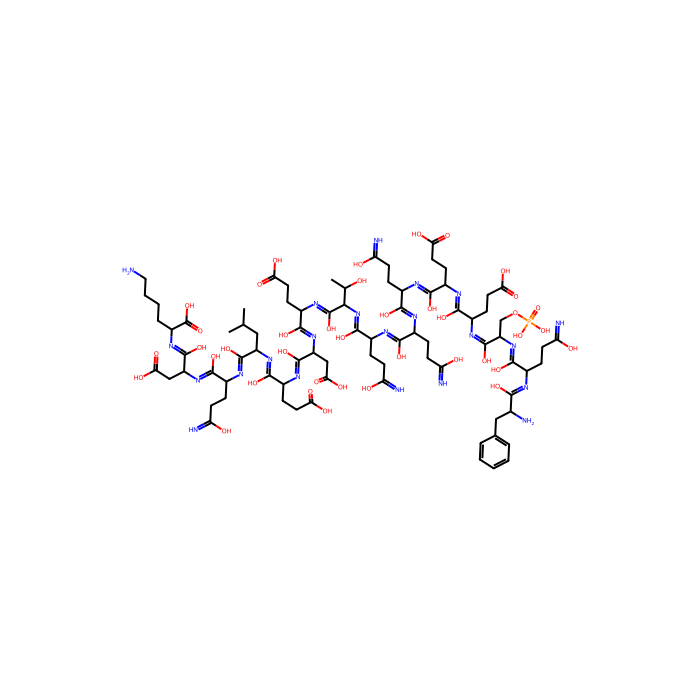
Casein - for insect cell culture , CAS No.9000-71-9

CAS: 9000-71-9 Cat. No.: C139524 Numéro CE: 232-555-1 PubChem CID: 73995022
DISPONIBLE À COMMANDE
QUALITÉ & PURETÉ Suitable for insect cell culture ? Insect cell-culture grade — suited to insect cell systems (e.g. Sf9, baculovirus). Use for protein expression and culture in insect cell lines.
Synonyms
Casein|Bovine beta-casein monophosphopeptide|Caseins
Storage
Protected from light,Desiccated,Room temperature
Shipped In
Normal
★
Taille
USA
Allemagne (EU)*
Prix
Qté
100g
C139524-100g
6 En stock
—

41,90$US

48,90$US
Enregistrer 7,00 $US (14.31%)
500g
C139524-500g
En stock ≥10
3 En stock

126,90$US

147,90$US
Enregistrer 21,00 $US (14.20%)
Enter a quantity for the sizes you want to add.

Vue d’ensemble

Product Describtion:

Casein from bovine milk is a phosphoprotein. There are four main types of Casein which make up approximately 80% of the total protein in bovine milk: α-s1 Casein, α-s2 Casein, β-Casein, and κ-Casein. Casein is proposed to be the main protective constituent in milk.


Product Application:

Natural protein source, typically isolated from bovine milk.Casein is widely used as a food additive. It is useful in tooth remineralization products to stabilize amorphous calcium phosphate. It is also used as a type of organic adhesive and a binder for safety matches. It supplies amino acids and carbohydrates and two inorganic elements such as calcium and phosphorus. Further, it is also used in the production of transformer board due to its oil permeability.


Spécifications

Synonymes
Casein | Bovine beta-casein monophosphopeptide | Caseins
Spécifications et pureté
for insect cell culture
Mécanismes biochimiques et physiologiques
Numerous experimental applications including use as a blocking agent in immunochemistry, recovery of enzyme activity from SDS extracted samples, and as a substrate for protease and kinase assays.
Conditions de stockage de stockage
Protected from light,Desiccated,Room temperature
Expédié en
Normal
Grade
Suitable for insect cell culture
Noms et identifiants
Pubchem Sid
Pubchem Sid Url
https://pubchem.ncbi.nlm.nih.gov/substance/504772354
Sourires canoniques
CC(C)CC(C(=NC(CCC(=N)O)C(=NC(CC(=O)O)C(=NC(CCCCN)C(=O)O)O)O)O)N=C(C(CCC(=O)O)N=C(C(CC(=O)O)N=C(C(CCC(=O)O)N=C(C(C(C)O)N=C(C(CCC(=N)O)N=C(C(CCC(=N)O)N=C(C(CCC(=N)O)N=C(C(CCC(=O)O)N=C(C(CCC(=O)O)N=C(C(COP(=O)(O)O)N=C(C(CCC(=N)O)N=C(C(CC1=CC=CC=C1)N)O)O)O)O)O)O)O)O)O)O)O)O
IUPAC Name
6-amino-2-[[2-[[2-[[2-[[2-[[2-[[2-[[2-[[2-[[2-[[2-[[2-[[2-[[2-[[2-[(2-amino-1-hydroxy-3-phenylpropylidene)amino]-1,5-dihydroxy-5-iminopentylidene]amino]-1-hydroxy-3-phosphonooxypropylidene]amino]-4-carboxy-1-hydroxybutylidene]amino]-4-carboxy-1-hydroxybutylidene]amino]-1,5-dihydroxy-5-iminopentylidene]amino]-1,5-dihydroxy-5-iminopentylidene]amino]-1,5-dihydroxy-5-iminopentylidene]amino]-1,3-dihydroxybutylidene]amino]-4-carboxy-1-hydroxybutylidene]amino]-3-carboxy-1-hydroxypropylidene]amino]-4-carboxy-1-hydroxybutylidene]amino]-1-hydroxy-4-methylpentylidene]amino]-1,5-dihydroxy-5-iminopentylidene]amino]-3-carboxy-1-hydroxypropylidene]amino]hexanoic acid
InChIKey
BECPQYXYKAMYBN-UHFFFAOYSA-N
INCHI
1S/C81H125N22O39P/c1-36(2)31-50(76(132)94-43(15-24-57(87)108)71(127)101-52(34-64(120)121)78(134)98-49(81(137)138)11-7-8-30-82)99-72(128)47(19-28-61(114)115)95-77(133)51(33-63(118)119)100-73(129)48(20-29-62(116)117)97-80(136)65(37(3)104)103-75(131)44(16-25-58(88)109)92-68(124)42(14-23-56(86)107)90-67(123)41(13-22-55(85)106)91-69(125)45(17-26-59(110)111)93-70(126)46(18-27-60(112)113)96-79(135)53(35-142-143(139,140)141)102-74(130)40(12-21-54(84)105)89-66(122)39(83)32-38-9-5-4-6-10-38/h4-6,9-10,36-37,39-53,65,104H,7-8,11-35,82-83H2,1-3H3,(H2,84,105)(H2,85,106)(H2,86,107)(H2,87,108)(H2,88,109)(H,89,122)(H,90,123)(H,91,125)(H,92,124)(H,93,126)(H,94,132)(H,95,133)(H,96,135)(H,97,136)(H,98,134)(H,99,128)(H,100,129)(H,101,127)(H,102,130)(H,103,131)(H,110,111)(H,112,113)(H,114,115)(H,116,117)(H,118,119)(H,120,121)(H,137,138)(H2,139,140,141)
Isomères SMILES
CC(C)CC(C(=NC(CCC(=N)O)C(=NC(CC(=O)O)C(=NC(CCCCN)C(=O)O)O)O)O)N=C(C(CCC(=O)O)N=C(C(CC(=O)O)N=C(C(CCC(=O)O)N=C(C(C(C)O)N=C(C(CCC(=N)O)N=C(C(CCC(=N)O)N=C(C(CCC(=N)O)N=C(C(CCC(=O)O)N=C(C(CCC(=O)O)N=C(C(COP(=O)(O)O)N=C(C(CCC(=N)O)N=C(C(CC1=CC=CC=C1)N)O)O)O)O)O)O)O)O)O)O)O)O
WGK Allemagne
3
PubChem CID
73995022

Données avancées

Taxonomic Classification

Taxonomy Tree

KingdomOrganic compounds
SuperclassOrganic acids and derivatives
ClassePeptidomimetics
SubclassHybrid peptides
Intermediate Tree Nodes Not available
Direct ParentHybrid peptides
Alternative Parents N-acyl-alpha amino acids  Amphetamines and derivatives  Amino fatty acids  Monoalkyl phosphates  Hydroxy fatty acids  Aralkylamines  Secondary alcohols  Amino acids  Propargyl-type 1,3-dipolar organic compounds  Carboxylic acids  Carboximidic acids  Carbonyl compounds  Hydrocarbon derivatives  Monoalkylamines  Organic oxides  Organopnictogen compounds  
Molecular FrameworkAromatic homomonocyclic compounds
Substituents Hybrid peptide - N-acyl-alpha amino acid or derivatives - N-acyl-alpha-amino acid - Alpha-amino acid or derivatives - Amphetamine or derivatives - Amino fatty acid - Aralkylamine - Hydroxy fatty acid - Monoalkyl phosphate - Organic phosphoric acid derivative - Monocyclic benzene moiety - Fatty acyl - Benzenoid - Alkyl phosphate - Phosphoric acid ester - Secondary alcohol - Amino acid - Amino acid or derivatives - Carboximidic acid - Carboximidic acid derivative - Carboxylic acid derivative - Carboxylic acid - Organic 1,3-dipolar compound - Propargyl-type 1,3-dipolar organic compound - Organic oxygen compound - Amine - Organic nitrogen compound - Alcohol - Carbonyl group - Hydrocarbon derivative - Organopnictogen compound - Organic oxide - Primary aliphatic amine - Primary amine - Organooxygen compound - Organonitrogen compound - Aromatic homomonocyclic compound
DescriptionThis compound belongs to the class of organic compounds known as hybrid peptides. These are compounds containing at least two different types of amino acids (alpha, beta, gamma, delta) linked to each other through a peptide bond.
External Descriptors Not available
Certificats (CoA, COO, BSE/TSE et tableau d'analyse)
C of A & Other Certificates(BSE/TSE, COO):
Analytical Chart:

Find and download the COA for your product by matching the lot number on the packaging.

12 results found

Lot NumberCertificate TypeDateArticle
J2221020J2221020Certificate of AnalysisJul 30, 2026 C139524
A2212383A2212383Certificate of AnalysisOct 13, 2025 C139524
H2511021H2511021Certificate of AnalysisAug 20, 2025 C139524
D2613017D2613017Certificate of AnalysisAug 12, 2022 C139524
J2221016J2221016Certificate of AnalysisAug 12, 2022 C139524
G2225023G2225023Certificate of AnalysisJul 28, 2022 C139524
A2418059A2418059Certificate of AnalysisMar 12, 2022 C139524
C2517144C2517144Certificate of AnalysisMar 12, 2022 C139524
D2324099D2324099Certificate of AnalysisMar 12, 2022 C139524
F2202050F2202050Certificate of AnalysisMar 12, 2022 C139524
F2202070F2202070Certificate of AnalysisMar 12, 2022 C139524
I2424051I2424051Certificate of AnalysisMar 12, 2022 C139524
Propriétés chimiques et physiques
SensibilitéHygroscopic
Point de fusion (°C)280℃
Poids moléculaire2062.000 g/mol
XLogP3-7.100
Hydrogen Bond Donor Count37
Hydrogen Bond Acceptor Count61
Rotatable Bond Count74
Exact Mass2060.82 Da
Monoisotopic Mass2060.82 Da
Topological Polar Surface Area1110.000 Ų
Heavy Atom Count143
Formal Charge0
Complexity4830.000
Isotope Atom Count0
Defined Atom Stereocenter Count0
Undefined Atom Stereocenter Count17
Defined Bond Stereocenter Count0
Undefined Bond Stereocenter Count0
The total count of all stereochemical bonds0
Covalently-Bonded Unit Count1
FAQ et articles
Suitable for Insect Cell Culture
For Cell Culture
Professional Guide to Streptavidin-Modified Proteins
Selection Criteria for Proteinase K
Common Protectants and Formulations for Protein Storage
Why Acridine Can Turn “Trace Molecules” into a Measurable Light Signal: A Mechanistic, Selection, and Troubleshooting Guide to Acridinium Ester Chemiluminescent Immunoassays (Including Product Tables 1–4)
Bromelain: Enzymological Properties and Key Points for Food, Pharmaceutical, and Industrial Applications
Research Applications of Pancreatin: An Overview
Applications of Enzymatic Protein Crosslinking Systems in Gel Construction and Functional Evaluation
The Role of Tannins in Astringency, Precipitation, and Antioxidant Activity of Plant Extracts
Signal Transduction Mechanism of Graphene Biosensors: From Molecular Recognition to Electrical/Optical Signal Readout and Materials Selection
Performance Sources and Formulation Applications of Enzyme-Based Ingredients in Daily Chemical Products: Fermentation Transformation, Enzymatic Reactions, and Application Principles
Citations of This Product
Calculateurs de solution
Avis

Avis des clients

Souhaitez-vous que nous vous envoyions un message lorsque des réductions seront disponibles?

Me rappeler plus tard

Merci ! Veuillez vérifier votre boîte de réception e-mail pour confirmer.

Oups ! Les notifications sont désactivées.