Certificats (CoA, COO, BSE/TSE et tableau d'analyse)
C of A & Other Certificates(BSE/TSE, COO):
Analytical Chart:
Propriétés chimiques et physiques
Solubilité
DMSO : 50 mg/mL (128.39 mM; Need ultrasonic)
Calculateurs de solution
Molarity Calculator
Determine the necessary mass, volume, or concentration for preparing a solution.
Dilution Calculator
Determine the dilution needed to prepare a stock solution.
Reconstitution Calculator
Avis
Avis des clients
Application Protocols
No tested application protocols are provided in the Product Data for this item. The following are general, non-item-specific considerations for small-molecule probes in biochemical and cellular assays.
General biochemical assay setup
Prepare a primary DMSO stock at a verified concentration.
Perform serial dilutions in DMSO to maintain constant vehicle percentage upon transfer to assay buffer.
Include positive/negative controls and, when relevant, ATP/substrate titrations.
Cell-based assay considerations
Confirm solubility in complete media at the intended dosing concentration with the planned DMSO percentage (commonly ≤0.1–0.5%).
Assess time dependence (acute vs. extended exposure) and washout to evaluate reversibility.
Monitor for cytotoxicity or nonspecific effects using orthogonal viability assays.
Data quality practices
Run technical and biological replicates; include inter-day repeats to verify robustness.
Apply curve-fitting best practices (four-parameter logistic) and report 95% confidence intervals.
Not specified for this item; refer to CoA/Spec Sheet.
Biological Roles
Context (general; not item-specific claims)
CDK8 (Cyclin-Dependent Kinase 8) is a serine/threonine kinase functioning within the Mediator complex and plays a role in transcriptional regulation. Together with its paralog CDK19, it modulates gene expression programs via phosphorylation of transcription-related substrates.
Small-molecule tools targeting CDK8/CDK19 are used to interrogate signal-dependent transcription, enhancer function, and context-specific regulatory nodes in development and stress responses.
Use of chemical probes
Bioactive small molecules such as CDK8-focused inhibitors can help dissect pathway dependencies, uncover feedback regulation, and distinguish kinase-dependent vs scaffold-dependent functions within Mediator.
When paired with genetic perturbations (e.g., CRISPR knockouts of CDK8/CDK19 or cyclin C), chemical probes provide convergent evidence for mechanism-of-action and help identify off-target liabilities.
Experimental considerations
Confirm on-target effects with biochemical assays, phospho-substrate markers, and rescue experiments where possible.
Control for DMSO vehicle effects and assess cell-line dependent responses.
Utilize time-course and washout studies to evaluate reversibility and transcriptional dynamics.
Note
No biological potency, selectivity, or cellular phenotype data are provided for this specific item in the Product Data. Consult the literature or CoA/Spec Sheet for any available characterization.
Buffer Applications
This product is a small-molecule research compound and is not a buffering agent. Therefore, classical buffer system recipes (e.g., phosphate, HEPES, Tris) are not directly applicable.
Practical notes for assay buffers (general guidance)
Prepare working solutions by diluting DMSO stocks into the desired assay buffer (e.g., HEPES or Tris-based) while keeping final DMSO concentration constant across all wells and controls.
Include surfactant (e.g., 0.01–0.05% Tween-20) if nonspecific adsorption or precipitation is observed; verify biological compatibility.
Maintain pH stability in the physiologically relevant range (approximately 7.2–7.6) unless a specific biochemical assay requires otherwise.
Use low-binding plastics or silanized glass if adsorption is suspected.
Item-specific buffer compatibility data are not provided; consult the CoA/Spec Sheet and validate empirically.
Green Alternatives
As a finished small-molecule probe, CDK8-IN-3 is not primarily used as a solvent or process reagent; hence, "green alternative" considerations apply mainly to its handling and any synthetic replication routes rather than its direct use.
Greener handling choices (general)
Prefer aqueous assay formats with minimal DMSO (≤0.5–1% v/v) where compatible.
For analytical work, use water–acetonitrile or water–ethanol gradients rather than halogenated solvents when method performance allows.
If synthesizing analogous compounds (contextual guidance)
Consider flow-enabled steps to improve mass and energy efficiency for heteroaryl couplings.
Replace classical polar aprotic solvents (DMF, NMP) with green-ish alternatives (e.g., Cyrene, propylene carbonate) where proven feasible.
Use microwave or photoredox methods to shorten reaction times and lower temperatures, reducing energy consumption.
Compact comparison (general solvent choices during handling)
DMSO vs. DMF: DMSO offers lower toxicity and better assay compatibility; DMF sometimes needed for solubility but is less desirable environmentally.
MeCN vs. CH2Cl2: Acetonitrile is preferred over dichloromethane for lower environmental persistence and better waste streams in analytical workflows.
Waste and stewardship
Segregate halogenated vs non-halogenated waste; collect DMSO/MeCN fractions separately.
Minimize single-use plastics by employing glass vials and reusable syringes/filters when compatible with the compound.
Pharmaceutical Uses
No clinical or therapeutic claims are made for this product. It is supplied strictly for research use only.
Contextual roles in pharmaceutical R&D (general)
Utilized as a chemical probe/reference in target validation, hit triage, and medicinal chemistry exploration related to CDK8/CDK19 biology.
May serve as an analytical standard for method development (e.g., LC–MS quantitation) in preclinical discovery settings if sufficient purity and stability are confirmed.
Supports structure–activity relationship (SAR) comparisons when evaluated alongside analogs within a compound library.
Formulation considerations for research systems (not item-specific)
For in vitro work, DMSO stock solutions are commonly diluted into aqueous media; ensure vehicle controls and solubility throughout the dosing range.
For nonclinical exploratory studies, attention to salt form, particle size, and polymorphism can impact apparent potency and exposure; verify on the CoA/Spec Sheet.
Regulatory status
No pharmacopeial monograph or GMP status is indicated or implied for this item. Any potential use beyond discovery research would require independent qualification and compliance assessments.
Physical Properties
Item-specific physical constants
Appearance: Not specified for this item; refer to CoA/Spec Sheet.
Molecular Weight: Not specified for this item; refer to CoA/Spec Sheet.
Molecular Formula: Not specified for this item; refer to CoA/Spec Sheet.
Melting Point (MP): Not specified for this item; refer to CoA/Spec Sheet.
Boiling Point (BP): Not applicable/rarely reported for complex bioactive solids; Not specified for this item; refer to CoA/Spec Sheet.
Density/Refractive Index: Not specified for this item; refer to CoA/Spec Sheet.
Solubility: Not specified for this item; refer to CoA/Spec Sheet.
logP/logD, pKa: Not specified for this item; refer to CoA/Spec Sheet.
General expectations for small-molecule kinase probes (literature/context; not specific to this item)
Often isolated as crystalline or amorphous solids with moderate aromatic content.
Frequently sparingly soluble in water; soluble in polar aprotic solvents (e.g., DMSO) and mixed aqueous systems with cosolvent.
pKa values for hinge-binding heterocycles commonly fall in ranges that afford partial ionization near physiological pH, but exact values are scaffold-dependent.
Practical handling notes
When solubility is unknown, begin with DMSO stock solutions (e.g., 10–50 mM), then dilute into assay buffers with appropriate cosolvent percentages while monitoring for precipitation.
For analytical work (HPLC/LC–MS), choose eluents that minimize compound adsorption and avoid pH extremes until ionization behavior is known.
Quality and Grades
Item-specific quality attributes
Grade/Purity: Not specified for this item; refer to CoA/Spec Sheet.
Appearance: Not specified for this item; refer to CoA/Spec Sheet.
Interpreting common research grades (general guidance)
Research-grade small molecules typically emphasize identity confirmation (NMR/HRMS), purity by HPLC/UPLC (often >95% for screening-grade; exact value must be confirmed on CoA), and residual solvent/volatile content by GC.
Where relevant, chiral purity may be reported as enantiomeric excess or diastereomeric ratio; consult CoA for stereochemical control.
Salt form/hydrate state can materially affect solubility and assay performance; the CoA should list the exact form.
Stabilizers and additives
No stabilizers or additives are specified for this item. If present in a given lot, they will be indicated on the CoA/SDS. Stabilizers can influence analytical baselines and bioassays.
What to verify upon receipt
Confirm catalog number/lot, physical appearance, and storage (2–8°C, desiccated, light-protected as specified).
Review HPLC trace, identity data, and any water content (KF) and residual solvents if reported.
For sensitive assays, perform an independent purity check (orthogonal HPLC method) and a dose–response pilot to validate stock concentration and activity.
Reaction and Applications
Scope for this item
CDK8-IN-3 is provided as a research chemical probe candidate; no synthetic reagent role is specified for this item. It is not typically employed as a reactant or catalyst.
Research applications (general context for CDK8-focused tools; not item-specific claims)
Used to explore CDK8/CDK19 biology in cellular and biochemical systems, including modulation of Mediator kinase activity and transcriptional regulation pathways.
Supports target validation, pathway mapping, and chemogenomic studies when used alongside orthogonal tools (e.g., genetic knockdown/knockout, inactive analogs, or alternative chemotypes).
Assay types commonly employed
Biochemical kinase assays (e.g., radiometric, ADP-Glo, TR-FRET) to observe ATP-site engagement or substrate phosphorylation levels.
Cellular readouts linked to transcriptional programs (e.g., reporter genes, phospho-protein levels) with rigorous controls for off-target effects.
Good practices
Use serial dilution from a validated DMSO stock; maintain constant vehicle across conditions.
Evaluate time-dependence and reversibility if mechanism-of-action is under study.
Note
For any quantitative parameters (IC50, Ki, selectivity), consult peer-reviewed literature or the CoA if provided. No potency/selectivity values are specified for this item.
Reaction Conditions
This product is not supplied as a reagent for performing chemical reactions; therefore, standardized reaction conditions are not applicable.
General guidance for handling in experimental workflows
For biochemical/cellular assays: prepare concentrated DMSO stocks (e.g., 10–50 mM, as solubility permits), followed by serial dilutions into assay media maintaining a constant final DMSO percentage.
For analytical characterization: use LC–MS-compatible eluents (e.g., water/acetonitrile with 0.1% formic acid) unless the compound’s ionization behavior suggests alternative modifiers.
If one were to synthesize related scaffolds (context, literature)
Typical conditions for assembling kinase-inhibitor-like cores involve:
Suzuki–Miyaura coupling: Pd(0/II) catalysts (e.g., Pd(PPh3)4, Pd-PEPPSI), bases such as K2CO3/Cs2CO3, solvents like 2-MeTHF/EtOH/H2O, 40–90°C.
Buchwald–Hartwig amination: Pd2(dba)3 or Pd(OAc)2 with dialkylbiaryl phosphines, NaOtBu or K3PO4, toluene/dioxane, 60–110°C.
Amide couplings: HATU/EDC or green alternatives (CDI, T3P) in DMF/DMSO or greener solvents where validated.
These are general literature conditions and not specific to CDK8-IN-3.
Note
No reaction condition specifications or roles are provided for this item in the Product Data.
Safety and Handling
Authoritative safety information for this item is not specified in the supplied product data. Always review the SDS for the exact lot before use.
Item-specific (from Product Data)
Signal Word: Not specified for this item; refer to SDS.
H-Statements: Not specified for this item; refer to SDS.
GHS Classification: Not specified for this item; refer to SDS.
GHS Pictograms: Not specified for this item; refer to SDS.
General laboratory precautions (good practice; not item-specific)
Work in a chemical fume hood; avoid inhalation of dust or aerosols.
Wear appropriate PPE: lab coat, safety glasses, and chemical-resistant gloves (e.g., nitrile). Change gloves frequently when handling DMSO solutions.
Avoid contact with skin and eyes; prevent ingestion. Wash thoroughly after handling.
Use dedicated tools to weigh small quantities; minimize static and airborne particulate.
Storage incompatibilities and stability (contextual)
Store desiccated, protected from light, 2–8°C as specified for this item; keep container tightly closed.
Avoid strong oxidizers and strong acids/bases unless stability is documented.
For solutions, prefer anhydrous, oxygen-poor conditions when feasible; assess freeze–thaw stability empirically.
First aid (overview; defer to SDS)
Eyes/skin: Immediate rinse with water for at least 15 minutes; remove contaminated clothing.
Inhalation: Move to fresh air; seek medical attention if symptoms occur.
Ingestion: Rinse mouth; seek medical attention; do not induce vomiting unless directed by medical personnel.
Solvent Selection
Item-specific solubility data are not supplied. The following guidance is general for small-molecule kinase research compounds and should be confirmed empirically for this item.
General solvent hierarchy for stock preparation
DMSO: Primary choice for concentrated stocks (e.g., 10–50 mM). High solvating power for heteroaromatic compounds.
DMF or NMP: Alternatives when DMSO solubility is insufficient; consider toxicity and assay compatibility.
Acetonitrile (MeCN): Useful for analytical injections and lower-concentration stocks; moderate solvating power.
Aqueous buffers: Often require a small fraction of cosolvent (e.g., 0.1–2% DMSO or MeCN) to maintain solubility during dilutions.
Polarity and miscibility (context)
Many CDK-targeted scaffolds are moderately polar and benefit from polar aprotic solvents. Avoid high-pH or high-ionic-strength buffers until pKa/ionization are known.
Practical tips
Prepare a solubility ladder: attempt 1, 5, 10, 25, 50 mM in DMSO with vortex/brief sonication; inspect for clarity and stability over 24 hours.
During aqueous dilution, add compound-in-DMSO to buffer (not vice versa) to minimize local supersaturation; keep final DMSO consistent across samples.
Filter solutions with 0.22 µm PTFE syringe filters if particulate persists; avoid adsorption-prone membranes (e.g., nylon) unless validated.
Comparison snapshot (general)
DMSO: highest solvency; excellent assay compatibility at ≤0.5–1% v/v.
MeCN: good for LC; lower solvency than DMSO.
EtOH/MeOH: occasionally suitable but may affect cells/enzymes at modest % v/v.
Storage and Reconstitution
Item-specific storage and shipping (from Product Data)
Storage Conditions: Store at 2–8°C, protected from light, desiccated.
Shipped In: Wet ice.
Reconstitution guidance (general; not item-specific specifications)
For small-molecule probes, prepare a concentrated stock in anhydrous DMSO (e.g., 10–50 mM) if compatible. Solubility for this specific item is not specified; verify empirically.
Vortex and, if necessary, briefly sonicate to aid dissolution. Avoid prolonged heating or exposure to moisture.
Aliquot stocks into amber vials or foil-wrapped tubes to limit light exposure; store tightly capped with minimal headspace.
Storage of solutions (general)
Keep DMSO stocks at –20°C or below for long-term storage when compatible; avoid repeated freeze–thaw by using single-use aliquots.
Record preparation date, concentration, and solvent on each aliquot. Inspect periodically for precipitation or color change.
Notices
No stabilizers, salt form, or hydrate information are specified for this item; refer to CoA/Spec Sheet for lot-specific details.
Before critical experiments, confirm identity and purity against the CoA and verify working concentration by UV or LC–MS where applicable.
Research use only
For laboratory research use only. Not for human or veterinary use.
Structure and Identity
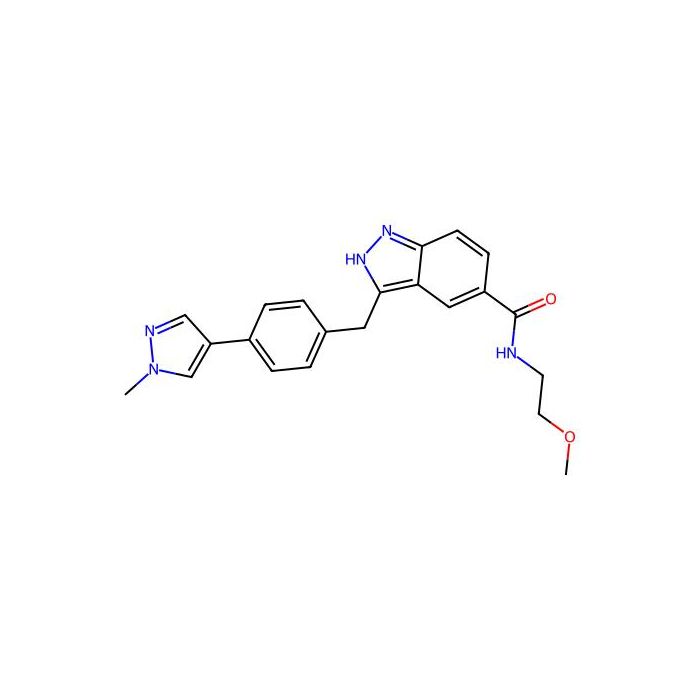
Overview: CDK8-IN-3 is listed as a small-molecule research compound nominally associated with cyclin-dependent kinase (CDK) 8 research. Item-specific identifiers are provided below; detailed structural descriptors are not supplied in the product data.
Item-specific (from Product Data)
SKU: C650717
Product Name: CDK8-IN-3
CAS: 1884500-15-5
PubChem CID: 118959920
InChIKey: 231931 (as provided)
SMILES: Not specified for this item; refer to CoA/Spec Sheet.
Molecular Formula: Not specified for this item; refer to CoA/Spec Sheet.
Molecular Weight: Not specified for this item; refer to CoA/Spec Sheet.
Structural features (general context, literature)
CDK8-targeted small molecules in the literature commonly feature:
Hydrogen-bond donors/acceptors positioned for ATP-pocket engagement.
Solubilizing substituents to balance polarity and permeability.
Without a supplied structure (SMILES/InChI), specific functional groups, stereochemistry, and ring systems of CDK8-IN-3 cannot be asserted for this item.
2D structure description
Not specified for this item; refer to CoA/Spec Sheet.
Notes
For definitive identity confirmation (NMR, HRMS, HPLC purity, exact structure), please consult the Certificate of Analysis (CoA) or Specification Sheet for this specific lot.
Synthetic Utility
CDK8-IN-3 is provided as a final small-molecule research compound and is not positioned as a general synthetic reagent or building block.
When relevant (general context)
Similar heteroaromatic kinase-directed scaffolds are commonly assembled via cross-coupling (e.g., Suzuki–Miyaura, Buchwald–Hartwig), nucleophilic aromatic substitution, or amide/urea formations connecting hinge-binding motifs to substituent vectors.
Late-stage diversification may include heterocycle annulations, SNAr of activated aryl halides, or sulfonamide/carbamate capping groups to tune ADME properties.
Applications not typical for this item
Not used as a catalyst, ligand, or stoichiometric reagent in standard synthetic methodologies.
Practical note
If derivatization of CDK8-IN-3 were intended (e.g., for probe development with tags or linkers), the feasibility depends entirely on its specific functional groups, which are not provided here. Consult the structural data on the CoA/Spec Sheet to identify modifiable positions and compatibility with bioconjugation strategies.
Target Specificity
Only product-data-derived information may be listed here. The supplied Product Data do not specify biochemical targets, potency, or selectivity for CDK8-IN-3.
Item-specific
Target, selectivity, binding mode, and kinetic parameters: Not specified for this item; refer to CoA/Spec Sheet and primary literature.
General context (not item-specific claims)
The name suggests relevance to CDK8 research; however, without verified data, no claims about inhibition constants, selectivity versus CDK19 or other kinases, or binding site can be made.
Recommendation
Consult peer-reviewed publications and the lot-specific CoA for any validated target profiling results if available.
Foire aux questions
What is the purity of this product?
This product is supplied at ≥99% purity (chemical assay). Lot-specific values are stated on the Certificate of Analysis.
How should this product be stored?
Store at 2–8 °C, protected from light, desiccated. Keep the container tightly closed with desiccant — the material is moisture-sensitive.
How is this product shipped?
This product ships chilled on wet ice. Unpack on arrival and transfer it to the storage condition stated above.
What are the CAS number, molecular formula and molecular weight?
The CAS Number is 1884500-15-5, the molecular formula is C22H23N5O2, and the molecular weight is 389.45 g/mol. InChIKey MYODQBLYOKTZML-UHFFFAOYSA-N.
What documentation is provided?
Available product documentation, including Certificates of Analysis (COA), Safety Data Sheets (SDS), and specification sheets, is shown in the product document area. Document availability and access follow the current site policy.
We use cookies to ensure the website functions properly and, where permitted, to improve your experience. You can manage your preferences at any time in Settings. Learn more in our Cookie Policy.
Shall we send you a message when we have discounts available?
Remind me later
Thank you! Please check your email inbox to confirm.
Products are supplied to verified businesses, institutions, and qualified professionals for research and development use only. Not for use in humans, animals, diagnosis, or therapy.