Determine the necessary mass, volume, or concentration for preparing a solution.
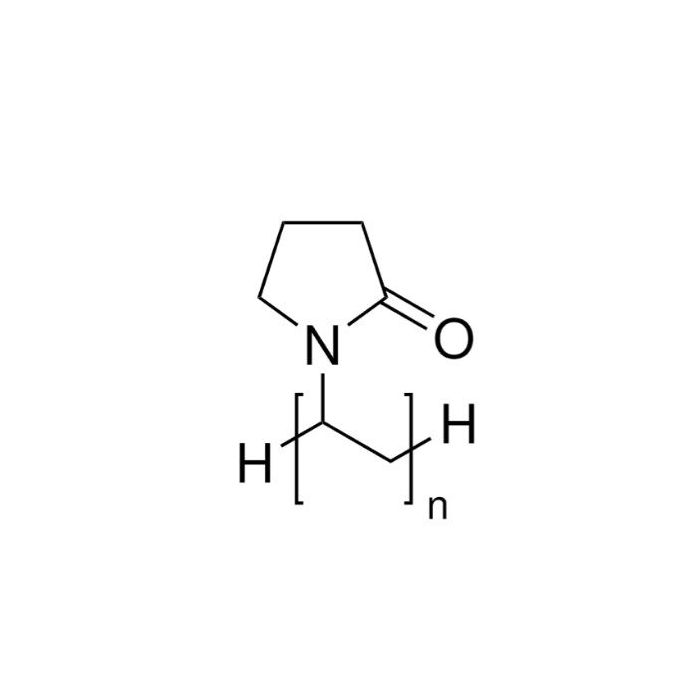
C494178, Crospovidone, is unsurpassed in its performance and versatility as a superdisintegrant in formulations.
It combines different mechanisms to achieve rapid tablet disintegration at low concentrations (1-5%). Due to its viscoelasticity, C494178 is highly compactable, resulting in robust tablets with increased tensile strength and reduced friability. Scanning electron microscope images of C494178 show a granular and porous structure with a large surface area. It enhances the dissolution of poorly soluble drug actives and due to its non-ionic property, it does not bear any risk of interaction with cationic APIs.
C494178 is available in two particle sizes to serve different application requirements.
Benefits:
1.Rapid disintegration at low concentrations (1-5%)
2.Functions via a combination of disintegration mechanisms (wicking, shape recovery, and swelling), thus imparting its unsurpassed versatility as a 3.superdisintegrant in formulations
4.Suitability for use in direct compression, wet granulation, and dry granulation
5.Increased tablet tensile strength and reduced friability due to high compressibility
6.No gel formation even at higher concentrations (10%) – ideal for ODTs
Product specifications and parameters:
|
Taxonomy Tree
| Kingdom | Organic compounds |
|---|---|
| Superclass | Organoheterocyclic compounds |
| Classe | Pyrrolidines |
| Subclass | Pyrrolidones |
| Intermediate Tree Nodes | Not available |
| Direct Parent | Pyrrolidine-2-ones |
| Alternative Parents | Tertiary carboxylic acid amides Lactams Azacyclic compounds Organopnictogen compounds Organonitrogen compounds Organic oxides Hydrocarbon derivatives Carbonyl compounds |
| Molecular Framework | Aliphatic heteromonocyclic compounds |
| Substituents | 2-pyrrolidone - Tertiary carboxylic acid amide - Lactam - Carboxamide group - Azacycle - Carboxylic acid derivative - Organic nitrogen compound - Organic oxygen compound - Organopnictogen compound - Organic oxide - Hydrocarbon derivative - Organooxygen compound - Organonitrogen compound - Carbonyl group - Aliphatic heteromonocyclic compound |
| Description | This compound belongs to the class of organic compounds known as pyrrolidine-2-ones. These are pyrrolidines which bear a C=O group at position 2 of the pyrrolidine ring. |
| External Descriptors | pyrrolidin-2-ones |
Find and download the COA for your product by matching the lot number on the packaging.
| Lot Number | Certificate Type | Date | Article |
|---|---|---|---|
| Certificate of Analysis | May 17, 2024 | C494178 | |
| Certificate of Analysis | May 17, 2024 | C494178 | |
| Certificate of Analysis | May 17, 2024 | C494178 | |
| Certificate of Analysis | Jan 24, 2024 | C494178 | |
| Certificate of Analysis | Jan 24, 2024 | C494178 | |
| Certificate of Analysis | Jan 24, 2024 | C494178 |
| Sensibilité | Moisture sensitive;Heat sensitive |
|---|---|
| Point de fusion (°C) | >300℃ |
| Poids moléculaire | 111.14 |
| XLogP3 | 0.400 |
| Hydrogen Bond Donor Count | 0 |
| Hydrogen Bond Acceptor Count | 1 |
| Rotatable Bond Count | 1 |
| Exact Mass | 111.068 Da |
| Monoisotopic Mass | 111.068 Da |
| Topological Polar Surface Area | 20.300 Ų |
| Heavy Atom Count | 8 |
| Formal Charge | 0 |
| Complexity | 120.000 |
| Isotope Atom Count | 0 |
| Defined Atom Stereocenter Count | 0 |
| Undefined Atom Stereocenter Count | 0 |
| Defined Bond Stereocenter Count | 0 |
| Undefined Bond Stereocenter Count | 0 |
| The total count of all stereochemical bonds | 0 |
| Covalently-Bonded Unit Count | 1 |
H302:Harmful if swallowed
H312:Harmful in contact with skin
H318:Causes serious eye damage
H332:Harmful if inhaled
H335:May cause respiratory irritation
H351:Suspected of causing cancer
H373:May causes damage to organs through prolonged or repeated exposure
P260:Do not breathe dust/fume/gas/mist/vapors/spray.
P261:Avoid breathing dust/fume/gas/mist/vapors/spray.
P264:Wash hands [and …] thoroughly after handling.
P270:Do not eat, drink or smoke when using this product.
P271:Use only outdoors or in a well-ventilated area.
P280:Wear protective gloves/protective clothing/eye protection/face protection.
P321:Specific treatment (see ... on this label).
P330:Rinse mouth.
P302+P352:IF ON SKIN: wash with plenty of water.
P304+P340:IF INHALED: Remove person to fresh air and keep comfortable for breathing.
P362+P364:Take off contaminated clothing and wash it before reuse.
P405:Store locked up.
P403+P233:Store in a well-ventilated place. Keep container tightly closed.
P501:Dispose of contents/container to an approved waste disposal plant.
P203:Obtain, read and follow all safety instructions before use.
P264+P265:Wash hands [and …] thoroughly after handling. Do not touch eyes.
P301+P317:IF SWALLOWED: Get medical help.
P305+P354+P338:IF IN EYES: Immediately rinse with water for several minutes. Remove contact lenses if present and easy to do. Continue rinsing.
P318:if exposed or concerned, get medical advice.
P317:Get emergency medical help.
P319:Get medical help if you feel unwell.