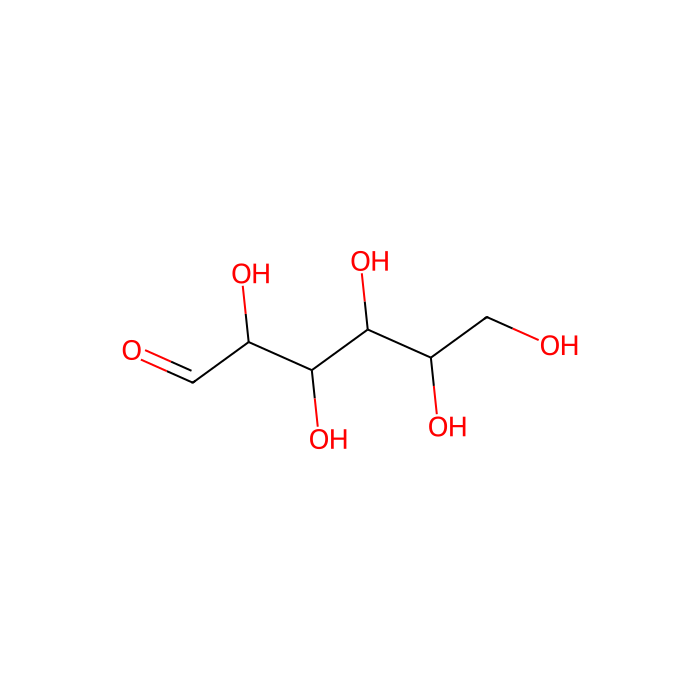
D-(+)-Glucose - Moligand™, 10mM in DMSO , CAS No.50-99-7

CAS: 50-99-7 Cat. No.: D424385 Formule: C6H12O6 Poids moléculaire: 180.16 Beilstein Registry Number: 1724615 Numéro CE: 200-075-1
DISPONIBLE À COMMANDE
QUALITÉ & PURETÉ Moligand™ ? Moligand™ — Aladdin's line of ligands and bioactive small molecules. Use for receptor, pathway, and binding studies needing defined small-molecule tools. 10mM in DMSO
Synonyms
50-99-7|D(+)-Glucose|(2R,3S,4R,5R)-2,3,4,5,6-pentahydroxyhexanal|Dextrose Anhydrous|aldehydo-D-glucose|Glucose Anhydrous|DL-Glucose|Glucose, anhydrous|Dextrose, anhydrous|58367-01-4|Glucose [JAN]|5SL0G7R0OK|Sirup|Glucose liquid|DTXSID4048729|DTXSID7022910
Storage
Store at -80°C
Shipped In
Dry ice packs + Cold packs
★
Taille
USA
Allemagne (EU)*
Prix
Qté
1ml
D424385-1ml
Sur commande · 8–12 semaines

24,90$US

37,90$US
Enregistrer 13,00 $US (34.30%)
Enter a quantity for the sizes you want to add.

Vue d’ensemble

D(+)Glucose, Anhydrous is a granular monosaccharide.
A primary source of energy for living organisms

Spécifications

Synonymes
50-99-7 | D(+)-Glucose | (2R,3S,4R,5R)-2,3,4,5,6-pentahydroxyhexanal | Dextrose Anhydrous | aldehydo-D-glucose | Glucose Anhydrous | DL-Glucose | Glucose, anhydrous | Dextrose, anhydrous | 58367-01-4 | Glucose [JAN] | 5SL0G7R0OK | Sirup | Glucose liquid | DTXSID4048729 | DTXSID7022910
Spécifications et pureté
Moligand™, 10mM in DMSO
Mécanismes biochimiques et physiologiques
Glucose is a universal energy source for all human cells and an important precursor for the production and transformation of various downstream carbohydrates. Glucose intake is a key indicator of cellular energy metabolism. Glucose infusion can prevent th
Conditions de stockage de stockage
Store at -80°C
Expédié en
Dry ice packs + Cold packs
Ce produit nécessite l'expédition en chaîne froide. Les services terrestres et autres services économiques ne sont pas disponibles.
Grade
Moligand™
Noms et identifiants
Sourires canoniques
OC[C@H]1O[C@H](O)[C@H](O)[C@@H](O)[C@@H]1O
IUPAC Name
(2R,3S,4R,5R)-2,3,4,5,6-pentahydroxyhexanal
InChIKey
GZCGUPFRVQAUEE-SLPGGIOYSA-N
INCHI
1S/C6H12O6/c7-1-3(9)5(11)6(12)4(10)2-8/h1,3-6,8-12H,2H2/t3-,4+,5+,6+/m0/s1
Isomères SMILES
C([C@H]([C@H]([C@@H]([C@H](C=O)O)O)O)O)O
WGK Allemagne
1
RTECS
LZ6600000
Poids moléculaire
180.16
Beilstein
1724615
Reaxy-Rn
1281608
Reaxys-RN_link_address
https://www.reaxys.com/reaxys/secured/hopinto.do?context=S&query=IDE.XRN=1281608&ln=

Données avancées

Taxonomic Classification

Taxonomy Tree

KingdomOrganic compounds
SuperclassOrganic oxygen compounds
ClasseOrganooxygen compounds
SubclassCarbohydrates and carbohydrate conjugates
Intermediate Tree Nodes Monosaccharides
Direct ParentHexoses
Alternative Parents Medium-chain aldehydes  Beta-hydroxy aldehydes  Alpha-hydroxyaldehydes  Secondary alcohols  Polyols  Primary alcohols  Organic oxides  Hydrocarbon derivatives  
Molecular FrameworkAliphatic acyclic compounds
Substituents Hexose monosaccharide - Medium-chain aldehyde - Beta-hydroxy aldehyde - Alpha-hydroxyaldehyde - Secondary alcohol - Polyol - Organic oxide - Hydrocarbon derivative - Primary alcohol - Carbonyl group - Aldehyde - Alcohol - Aliphatic acyclic compound
DescriptionThis compound belongs to the class of organic compounds known as hexoses. These are monosaccharides in which the sugar unit is a is a six-carbon containing moeity.
External Descriptors aldehydo-glucose - D-glucose
Structure 3D
Modèle de structure chimique interactif


Cibles associées (non humaines)
Hdac6 Histone deacetylase 6 (222 Activities)
Activity TypeRelationActivity valueUnitsAction TypeJournalPubMed IddoiAssay Aladdin ID
rep Replicase polyprotein 1ab (378 Activities)
Activity TypeRelationActivity valueUnitsAction TypeJournalPubMed IddoiAssay Aladdin ID
Mécanismes d'action
Certificats (CoA, COO, BSE/TSE et tableau d'analyse)
C of A & Other Certificates(BSE/TSE, COO):
Analytical Chart:

Find and download the COA for your product by matching the lot number on the packaging.

1 results found

Lot NumberCertificate TypeDateArticle
I2206007I2206007Certificate of AnalysisMay 11, 2026 D424385
Propriétés chimiques et physiques
SensibilitéMoisture sensitive.
Rotation spécifique [α]53 ° (C=10, H2O)
Point de fusion (°C)146°C
Poids moléculaire180.160 g/mol
XLogP3-2.900
Hydrogen Bond Donor Count5
Hydrogen Bond Acceptor Count6
Rotatable Bond Count5
Exact Mass180.063 Da
Monoisotopic Mass180.063 Da
Topological Polar Surface Area118.000 Ų
Heavy Atom Count12
Formal Charge0
Complexity138.000
Isotope Atom Count0
Defined Atom Stereocenter Count4
Undefined Atom Stereocenter Count0
Defined Bond Stereocenter Count0
Undefined Bond Stereocenter Count0
The total count of all stereochemical bonds0
Covalently-Bonded Unit Count1
FAQ et articles
Mag-Fluo-4 AM Magnesium/Calcium Ion Fluorescent Probe: Properties, Experimental Use, and Aladdin Metal Ion Fluorescent Probe Selection Guide
Functional Sweetener Maltitol: Physicochemical Properties, Application Practices, and Aladdin Product Selection Guide
Technical Analysis and Clinical Applications of Lactate Dehydrogenase
Molecular Characteristics and Technological Applications of Hexokinase
An Introduction to Research-Grade Carbohydrates: Decoding the “Glycan Language” and a Product-Selection Guide (with Tables 1–3)
Trehalose: Physicochemical Characteristics, Manufacturing Processes, and Application Guidelines
Isomerases: Overview and Recommended Application Technical Guide
Recent Advances in Methods for Measuring Plant Fiber-Related Indices and Application-Oriented Selection
Functions and Significance of Common Physiological and Biochemical Indices in Animals and Plants
Recent Advances in Methods for Measuring Starch-Related Indices in Plants and Their Application-Oriented Selection
Glucose Content Determination: A Systematic Review of Detection Principles, Method Validation, and Research Application Frameworks
Physicochemical Properties of Diphenylamine, Analytical Applications, and a Review of Its DNA Colorimetric Reaction
Functional Properties, Application Scenarios, and Manufacturing Processes of Maltotetraose (G4): A Review
Pyran and the “Pyran Family” Research Selection Guide: Key Structural Points, a Classification Roadmap, and Experimental Selection Navigation
What a Disagreement in Specific Rotation Results Reveals About Method Control: Why Specific Rotation Values for Chiral Samples Cannot Be Discussed Apart from Measurement Conditions
From Sucrose to Monosaccharides: Key Enzymatic Nodes and Regulatory Logic in Sugar Conversion
Galactose-Related Precursor Conversion and Redox Regulation in Plant Ascorbate Biosynthesis
Structural Characteristics, Operational Methods, and Separation Applications of Dextran Gels
Effects of Cell Sample Preservation Systems on Morphological Integrity, Anticoagulant Stability, and Analytical Results
Significance of CK, CK-MB, and CK-MM Testing in the Interpretation of Tissue Injury
Why Do Cancer Cells Synthesize Their Own Fatty Acids? From the De Novo Fatty Acid Synthesis Pathway to Experimental Assessment
Experimental Research on Candidate Probiotics: From Strain Identification and Mechanistic Evaluation to Product Selection
Porous Graphitic Carbon (PGC) Chromatography Columns: Creating New Selectivity for Challenging Separations through Molecular Shape and the π-Electron Cloud on the Graphitic Surface
How Alkyl Polyglucosides (APG) Differ from Cocamidopropyl Betaine (CAPB): Structure, Foam Performance, and Applications in Personal Care and Household-Care Formulations
Role of Alkyl Glucosides APG in Cleaning Formulations: Structural Features, Core Performance, and Selection Considerations
Signal Transduction Mechanism of Graphene Biosensors: From Molecular Recognition to Electrical/Optical Signal Readout and Materials Selection
What Is Synthetic Biology? The Industrialization Pathway from Upstream Reagent Toolchains to Biomanufacturing Applications
Performance Sources and Formulation Applications of Enzyme-Based Ingredients in Daily Chemical Products: Fermentation Transformation, Enzymatic Reactions, and Application Principles
Establishment and Evaluation Methods of Diabetic Animal Models
Experimental Evaluation of the Synergistic Actions of Endoglucanase, CBH I, and β-Glucosidase in Lignocellulosic Saccharification
β-Galactosidase: Mechanism, Structural Basis, and Application Guide
β-Hydroxybutyrate Detection Methods and Metabolic Significance: Comparative Applications of Enzymatic Assays, Blood Ketone Meters, and LC-MS
Comparison of Reducing Sugar Detection Methods: Selection of Fehling’s Reagent, Benedict’s Method, DNS Method, and HPLC
Experimental Applications of Carboxymethyl Cellulose (CMC) Solution in Enzyme Assays, Suspension Systems, and Functional Materials
Enzymatic Preparation of D-Mannose: Isomerization Conversion, Polysaccharide Hydrolysis, and Process Control
The Skin Anti-Aging Mechanisms of α-Lipoic Acid: ALA/DHLA Redox Cycling, the Antioxidant Network, and Regulation of Collagen AGE Formation
Skin Anti-Aging Mechanisms of Carnosine and Decarboxy Carnosine: Active Carbonyl Scavenging, Oxidative-Stress Buffering, and Inhibition of Collagen Glycation Cross-Linking
The Moisturizing and Low-Moisture Protective Mechanisms of Trehalose: From Its α,α-1,1 Structure and Hydration Dynamics to In Vitro Skin Barrier Research
β-Galactosidase: Mechanism, Structural Basis, and Application Guide
Moisturizing Mechanisms of Tremella fuciformis Polysaccharides: From Polysaccharide Structure and Hydration Rheology to Dynamic Film Formation on the Skin Surface
Mechanisms by Which Fructan-Rich Ophiopogon japonicus Tuberous Root Extract Supports Skin Moisturization and Barrier Function
How Does Collagen Tripeptide Act on the Skin: Stratum Corneum Delivery, Matrix Protection, and Regulation of Collagen Homeostasis
What Determines Collagen Function: From Triple-Helix Formation to Hierarchical Assembly, Crosslink Maturation, and Dynamic Remodeling
1,8-Naphthyridine-Based Aldose Reductase Inhibitors: Scaffold Construction, In Vitro Inhibitory Activity, and Directions for Structural Optimization
How Arbutin Regulates Melanin Production: α/β Anomeric Configuration and Tyrosinase Action
What Is Direct Compression? Process Characteristics, Suitability Criteria, and Excipient Selection
Effect of Glycosylation on the Hydrophilic–Lipophilic Partitioning and Solubility Behavior of Natural Products—Quercetin, Isoquercitrin, and Rutin as Examples
Glycosidic Bond Structure and Cleavage Mechanisms—Chemical and Enzymatic Cleavage of O-, N-, S-, and C-Glycosides
Effects of Sample Processing on Natural Glycoside Composition—Tissue Disruption, Endogenous Enzymatic Transformation, Drying, and Pre-Extraction Treatment
Structural Elucidation of Unknown Flavonoid O-Glycosides—Molecular Formula, Aglycone and Sugar Composition, Linkage Positions, and Anomeric Configurations
Citations of This Product
Calculateurs de solution
Avis

Avis des clients

Souhaitez-vous que nous vous envoyions un message lorsque des réductions seront disponibles?

Me rappeler plus tard

Merci ! Veuillez vérifier votre boîte de réception e-mail pour confirmer.

Oups ! Les notifications sont désactivées.