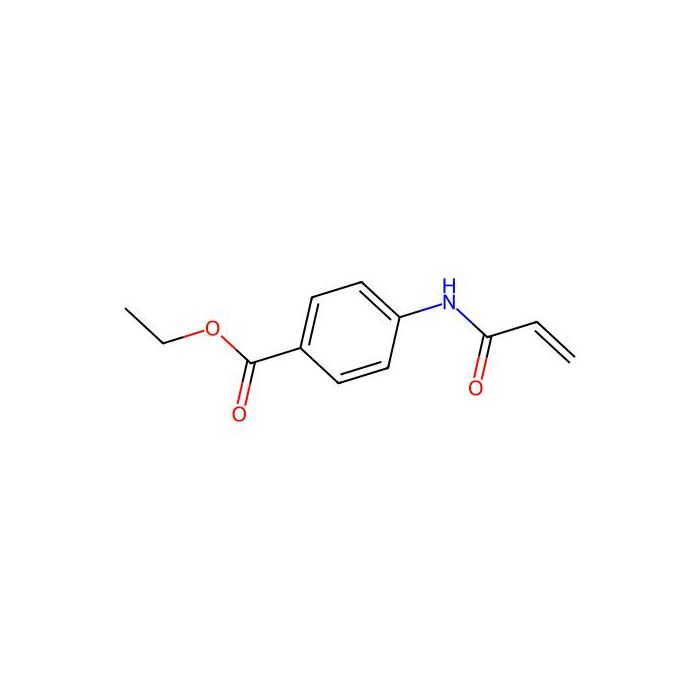
This compound belongs to the class of organic compounds known as acylaminobenzoic acid and derivatives. These are derivatives of amino benzoic acid derivatives where the amine group is N-acylated.
External Descriptors
Not available
1. Djoumbou Feunang Y, Eisner R, Knox C, Chepelev L, Hastings J, Owen G, Fahy E, Steinbeck C, Subramanian S, Bolton E, Greiner R, and Wishart DS. ClassyFire: Automated Chemical Classification With A Comprehensive, Computable Taxonomy. Journal of Cheminformatics, 2016, 8:61.
Certificats (CoA, COO, BSE/TSE et tableau d'analyse)
C of A & Other Certificates(BSE/TSE, COO):
Analytical Chart:
Propriétés chimiques et physiques
Poids moléculaire
219.240 g/mol
XLogP3
2.600
Hydrogen Bond Donor Count
1
Hydrogen Bond Acceptor Count
3
Rotatable Bond Count
5
Exact Mass
219.09 Da
Monoisotopic Mass
219.09 Da
Topological Polar Surface Area
55.400 Ų
Heavy Atom Count
16
Formal Charge
0
Complexity
267.000
Isotope Atom Count
0
Defined Atom Stereocenter Count
0
Undefined Atom Stereocenter Count
0
Defined Bond Stereocenter Count
0
Undefined Bond Stereocenter Count
0
The total count of all stereochemical bonds
0
Covalently-Bonded Unit Count
1
Calculateurs de solution
Molarity Calculator
Determine the necessary mass, volume, or concentration for preparing a solution.
Dilution Calculator
Determine the dilution needed to prepare a stock solution.
Reconstitution Calculator
Avis
Avis des clients
Application Protocols
Not applicable. No validated antibody or bioassay protocols are associated with this small-molecule monomer.
General lab usage notes (literature/general):
For polymerizations, dry and degas solvents and charge initiator last; verify absence of inhibitors if high activity is required.
For conjugation workflows, consider generating the 4-(acrylamido)benzoic acid by saponification, then perform EDC/NHS coupling under standard conditions.
Biological Roles
This compound is a synthetic aromatic acrylamide–benzoate and does not have known endogenous biological roles.
General context (literature/general):
Acrylamide-bearing monomers are widely used to construct functional polymers and hydrogels that can interact with biomolecules via hydrogen bonding and π–π interactions; the pendant ester enables further derivatization to ligands or anchors.
The aryl amide motif can engage in noncovalent binding in materials interfacing with proteins or nucleic acids; such interactions are context-dependent and not intrinsic “biological activity.”
The activated vinyl group is a Michael acceptor; in biological milieus, such groups can, in principle, react with thiols or amines, underscoring the need for controlled experimental design and appropriate containment.
Item-specific notes:
No biological function, target, or biochemical pathway association is specified for this item. Use is limited to research and laboratory applications.
Buffer Applications
This product is not a buffering reagent and is not typically used to prepare pH buffer systems.
Practical guidance:
If dissolution in aqueous buffers is required for a specific protocol, pre-dissolve in a miscible organic co-solvent (e.g., DMSO or DMF), then dilute into the buffer while monitoring for precipitation.
For hydrolysis or coupling workflows, dedicated buffer systems (e.g., phosphate, HEPES, bicarbonate) may be used with the derived acid or conjugates; optimize pH to balance reactivity and stability.
Green Alternatives
Greener choices focus on solvent selection and process design, as the monomer’s core functionality (acrylamide) is inherently electrophilic.
Solvent substitutions (literature/general):
Replace chlorinated solvents with ethyl acetate, 2-MeTHF, or dimethyl carbonate where solubility permits.
For radical polymerizations, consider bio-derived 2-MeTHF or CPME as replacements for toluene/THF; oxygen solubility and polymerization kinetics may differ—optimize initiator loadings.
For ester hydrolysis, favor aqueous ethanol or methanol/water over purely aprotic systems; minimize strong base excess via continuous pH-stat control.
Process improvements:
Use photopolymerization with LED (365–405 nm) initiators to reduce thermal energy input and improve safety profile.
Employ solvent recycling and low-VOC media (supercritical CO2 dispersion polymerization is reported for acrylates; assess compatibility).
Comparison snapshot (general):
DCM vs EtOAc: EtOAc offers lower toxicity and better environmental profile; drying is straightforward; evaporation is easy.
DMF/DMSO vs propylene carbonate: propylene carbonate can be a greener high-permittivity alternative but may slow radical rates; evaluate case-by-case.
Caveat: No item-specific green certification or solvent recommendation is provided for SKU E768649; tailor choices to your EHS framework.
Pharmaceutical Uses
No pharmacopeial status or excipient designation is provided for this item; it is offered for research use only.
General formulation/manufacturing context (literature/general):
Acrylate/acrylamide monomers can serve as building blocks for functional polymers used in drug delivery systems, coatings, and device surfaces. Ethyl 4-acrylamidobenzoate could be incorporated into copolymers to modulate hydrogen bonding and polarity.
The ethyl ester can be hydrolyzed post-polymerization to the corresponding acid to introduce carboxylate functionality for conjugation (e.g., to amines via carbodiimide chemistry) in research formulations.
Compliance note:
No clinical or therapeutic claims are made. For any GMP-related use, specification alignment and change control would be required; this product is not supplied with such certifications unless explicitly stated in the CoA/Spec Sheet.
Physical Properties
Item-specific specs are not provided in the Product Data. Do not treat the following as specifications for this lot; consult the CoA/Spec Sheet for authoritative values.
Item-specific (Product Data):
Appearance: Not specified for this item; refer to CoA/Spec Sheet.
Molecular formula: Not specified for this item; refer to CoA/Spec Sheet.
Molecular weight: Not specified for this item; refer to CoA/Spec Sheet.
Computed/Literature (general guidance, not item specifications):
Phase at ambient: typically a solid or low-melting solid for analogous para-acrylamidobenzoate esters (literature/general observation)
Polarity/functional profile: polar protic amide + polar aprotic ester within an overall moderately polar aromatic framework
Solubility (qualitative, literature/general):
Good solubility in polar aprotic organics (DMF, DMSO, NMP)
Moderate in ethyl acetate, acetone, acetonitrile, dichloromethane
Low in alkanes and water
UV/Vis: aromatic amide/benzoate chromophores absorb in the UV; specific λmax and cutoff: Not specified for this item; refer to CoA/Spec Sheet.
LogP, pKa, refractive index, melting/boiling points: Not specified for this item; refer to CoA/Spec Sheet.
Practical notes (general): minimize moisture to limit ester hydrolysis and radical inhibitors are not indicated for this item (no stabilizer specified).
Quality and Grades
Item-specific (Product Data):
Grade/Purity: Not specified for this item; refer to CoA/Spec Sheet.
Stabilizers/Inhibitors: Not specified for this item; refer to CoA/Spec Sheet.
Guidance on grade meanings (general):
Research grade chemicals are suitable for synthetic, analytical, and materials R&D where tight control of trace impurities is not pharmacopeial by default.
If offered in “HPLC” or “Chromatography” grades (not specified here), such grades emphasize low UV background and minimal nonvolatile residues. For polymerizable monomers, some suppliers add radical inhibitors (e.g., MEHQ, BHT); absence/presence materially affects polymerization behavior.
Practical quality considerations for this compound type (general):
Residual acids/bases or water promote ester hydrolysis; low water content is preferred for reproducible reactivity.
Trace radical inhibitors (if present) can be removed prior to polymerization by alumina or inhibitor-removal cartridges; verify by test polymerization or analytical HPLC/UV.
Monitor identity/purity by 1H NMR (vinyl protons ~5.5–6.5 ppm, amide NH ~9–10 ppm, literature), LC–MS, and HPLC.
Action point: For specific assay, impurity profile, metals, and stabilizer content for SKU E768649, consult the lot CoA/Specification Sheet.
Reaction and Applications
This molecule integrates a polymerizable acrylamide with a benzoate ester, enabling both materials fabrication and small-molecule derivatization.
Free-radical copolymerization (AIBN, peroxides, or photoinitiators) to introduce aromatic amide–ester functionality into acrylic backbones for adhesion, H-bonding, and ligand display.
Surface grafting and thin-film formation via thiol–ene or UV radical routes; pendant aromatic amide can foster intermolecular interactions.
Post-polymer modification: hydrolyze ethyl ester in the monomer or polymer to the corresponding acid for further coupling to amines/ols (EDC/NHS, DCC).
Organic synthesis utility (literature/general):
The terminal double bond is a competent Michael acceptor for soft nucleophiles (thiols > amines) under base or photobase catalysis.
The ethyl ester serves as a protecting/activating group for carboxylic acid at the para position; saponification affords 4-(acrylamido)benzoic acid for amide/ester coupling.
The aryl–amide motif can engage in directed metalation or serve as a handle in cross-coupling when appropriately halogenated precursors are used (for analog development).
Practical considerations:
Degas and exclude light during storage and handling to prevent premature polymerization.
Verify monomer purity (vinyl content) by NMR prior to polymerization to ensure reproducible conversion and molecular weight control.
Reaction Conditions
The following conditions are representative literature guidance for acrylamide-containing monomers and are not product specifications.
Free-radical polymerization (solution):
Initiator: AIBN (0.5–2 mol%)
Solvent: toluene, dioxane, ethyl acetate, DMF (choose by comonomer solubility)
Temperature: 60–80°C (reflux for toluene/dioxane); 2–24 h under N2/Ar
Oxygen exclusion: degas (freeze–pump–thaw or N2 sparge); O2 inhibits polymerization
Photopolymerization (thin films/hydrogels):
Photoinitiator: Irgacure 2959 (0.1–1 wt%) or TPO; 365–405 nm LED/UV
Solvent/vehicle: EtOH/Water or DMF; ambient temperature; minutes to tens of minutes exposure
Thiol–ene Michael addition:
Base: triethylamine or DBU (1–10 mol%); solvent: MeCN/DMF; rt to 40°C; 1–6 h
Alternatively, photobase generators or nucleophilic catalysts (e.g., TBD) under mild conditions
Ester hydrolysis to the acid:
Conditions: NaOH or K2CO3 in MeOH/H2O (1–2 M base), 0–25°C, 1–4 h; acidic workup to isolate acid
Coupling (from the acid):
EDC·HCl/NHS in DMF/MeCN, rt, 1–3 h activation; then amine addition, rt to 40°C
Monitoring: NMR for vinyl consumption, GPC for polymer Mn/Mw, HPLC for monomer conversion.
Note: Protect the monomer from prolonged heat/UV during setup to minimize premature polymerization.
Safety and Handling
Always consult the SDS for authoritative, product-specific safety information. The following points are general laboratory guidance for acrylamide-bearing aromatics and benzoate esters.
Item-specific (Product Data):
GHS classification: Not specified for this item; refer to SDS.
Signal word / H-statements / pictograms: Not specified for this item; refer to SDS.
Storage conditions: Store at 2-8°C, desiccated; ship on wet ice.
General hazards (literature/general):
Acrylamide moiety is an electrophilic Michael acceptor and may cause skin/eye irritation and sensitization; avoid skin contact and inhalation of dust.
May polymerize upon prolonged exposure to heat, light, or radical initiators; avoid sources of free radicals and UV during storage.
Hydrolytic sensitivity of the ethyl ester under strong acid/base; avoid contact with strong bases/acids unless intended.
Incompatibilities (general): strong oxidizers, strong bases/acids (for stability), radical initiators, peroxides, and amines/thiols in basic media (can undergo Michael addition).
Recommended PPE/practices:
Use gloves (nitrile or equivalent), lab coat, eye protection; handle in a fume hood to avoid dust/inhalation.
Avoid heat/UV; keep container tightly closed with desiccant.
First aid (general): rinse affected skin/eyes with water for ≥15 min; remove contaminated clothing; if inhaled, move to fresh air; seek medical attention as needed.
Fire safety: treat as an organic combustible solid; use CO2, dry chemical, or foam. Decomposition may emit CO/CO2 and nitrogen oxides.
Solvent Selection
Ethyl 4-acrylamidobenzoate is a moderately polar aromatic amide–ester. Solvent choice is driven by solubility, polymerization method, and downstream processing.
Radical polymerization: use ethyl acetate, DMF, dioxane, or toluene depending on comonomer solubility; degas solvents to minimize inhibition by oxygen.
Michael additions (thiol–ene): perform in polar aprotic solvents (DMF/DMSO/MeCN) with base/photobase; maintain anhydrous conditions to limit ester hydrolysis.
Ester transformations (hydrolysis/coupling): mixtures of MeOH/H2O or THF/H2O for saponolysis; dry chlorinated solvents or DMF for coupling of the derived acid.
Quick comparison (general):
DMF vs DMSO: DMF lowers viscosity for polymerizations but is higher VOC concern; DMSO offers greener profile yet can slow radical rates.
EtOAc vs DCM: EtOAc is greener and sufficiently polar for many operations; DCM offers faster evaporation and higher solubility for hydrophobic comonomers.
Practical tips:
Dry solvents (3A/4A molecular sieves) are recommended.
Avoid prolonged storage of solutions; prepare fresh to reduce premature polymerization/hydrolysis.
Storage and Reconstitution
Item-specific (Product Data):
Storage: Store at 2-8°C, desiccated.
Shipping: Shipped on wet ice.
General handling guidance for this compound class:
Protect from moisture, heat, and light to minimize ester hydrolysis and premature polymerization of the acrylamide moiety.
If supplied as a solid, prepare solutions immediately before use in anhydrous solvents (e.g., DMSO, DMF, ethyl acetate, acetonitrile). If long-term solutions are unavoidable, store at 2–8°C under inert gas and protect from light, but note increased risk of polymerization over time.
Do not freeze–thaw solid repeatedly; if repackaging, use small, inert-atmosphere aliquots with desiccant.
Stability notes:
No stabilizer is specified for this item; absence/presence of inhibitors will influence shelf life in solution.
For maximal stability, store tightly closed under inert gas (N2/Ar) and avoid contact with bases/acids unless intended for reaction.
Reconstitution: Not required for the neat material. For solution preparation, dissolve in dry solvent at desired concentration with gentle warming if needed; filter through PTFE syringe filter for particulates. Always label date and solvent on prepared solutions.
Structure and Identity
Ethyl 4-acrylamidobenzoate is an aromatic amide–ester bearing a para-acrylamido substituent on an ethyl benzoate scaffold; the pendant acrylamide provides a polymerizable vinyl handle.
Item-specific (Product Data):
SKU: E768649
Product Name: ethyl 4-acrylamidobenzoate
CAS: 14745-58-5
PubChem CID: 84618
InChIKey: 404639 (as provided)
Storage: Store at 2-8°C, desiccated; shipped on wet ice
Research Use: For research use only
Computed/Literature identity (structure-based):
Preferred IUPAC-style name (literature): ethyl 4-(acrylamido)benzoate
2D structure description: A benzene ring bearing an ethyl ester at C-1 and a para (C-4) –NH–C(=O)–CH=CH2 substituent. The acrylamide’s double bond is conjugated with the amide carbonyl and is terminal (vinyl). No stereocenters.
Notes:
The InChIKey provided in the Product Data appears abbreviated; consult CoA/SDS for the definitive identifier.
Synthetic Utility
Functional elements that drive reactivity:
Activated alkene (acrylamide):
Undergoes free-radical (co)polymerization with styrenics, (meth)acrylates, and acrylamides.
Accepts nucleophiles via Michael addition; thiol–ene reactions proceed efficiently under base or photoinitiation.
Benzoate ethyl ester (para to amide):
Hydrolyzable to the corresponding acid for amide/ester coupling (EDC/NHS, DIC/HOBt, DCC).
Provides a handle for orthogonal derivatization while retaining the vinyl functionality, enabling sequence: polymerization → hydrolysis → conjugation.
Aromatic amide:
Enhances noncovalent interactions in materials; can direct regioselectivity in further aryl functionalization when used as a template in analogue synthesis (via prefunctionalized precursors).
Retrosynthetic value:
Accessible from 4-aminobenzoate esters via acryloylation (acryloyl chloride or mixed anhydride); this informs scale-up routes and impurity control (e.g., residual acryloyl chloride, diacrylamide).
LC–MS: [M+H]+ expected at m/z ~220.3 for C12H14NO3 (literature/computed).
Target Specificity
Not applicable. This product is a small-molecule monomer, not a biological targeting reagent. No antigen, epitope, species reactivity, clone, or isotype information applies.
We use cookies to ensure the website functions properly and, where permitted, to improve your experience. You can manage your preferences at any time in Settings. Learn more in our Cookie Policy.
Shall we send you a message when we have discounts available?
Remind me later
Thank you! Please check your email inbox to confirm.
Products are supplied to verified businesses, institutions, and qualified professionals for research and development use only. Not for use in humans, animals, diagnosis, or therapy.