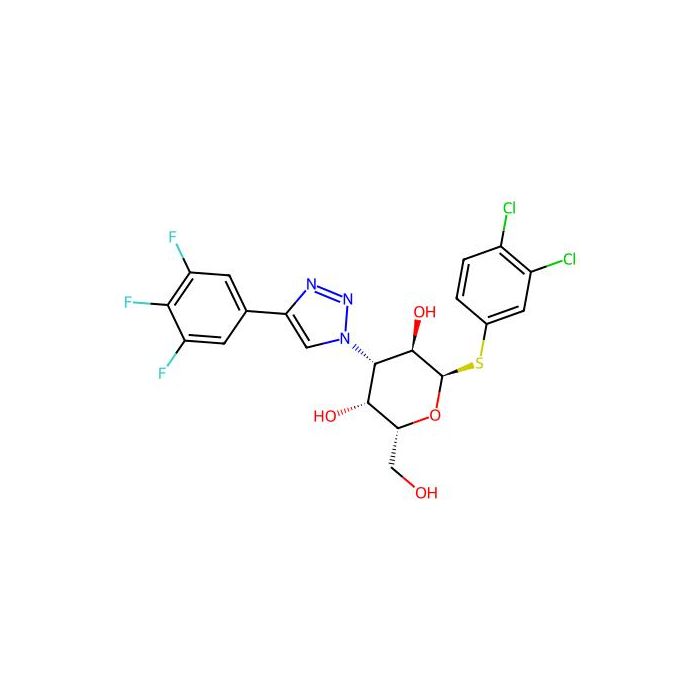
GB1107 - ≥99% , CAS No.1978336-61-6

CAS: 1978336-61-6 Cat. No.: G650676 Formule: C20H16Cl2F3N3O4S Poids moléculaire: 522.32 PubChem CID: 122443390
DISPONIBLE À COMMANDE
QUALITÉ & PURETÉ ≥99%
Storage
Store at -20°C,Argon charged
Shipped In
Ice chest + Ice pads
★
Taille
USA
Allemagne (EU)*
Prix
Qté
5mg
G650676-5mg
Sur commande · 8–12 semaines
596,90$US
10mg
G650676-10mg
Sur commande · 8–12 semaines
950,90$US
25mg
G650676-25mg
Sur commande · 8–12 semaines
2 050,90$US
Enter a quantity for the sizes you want to add.
🧪
Pourquoi cette qualité

≥99% pour les flux de travail chromatographiques et analytiques sensibles nécessitant une interférence de ligne de base minimale.

🌡

Stockage & expédition

Store at -20°C,Argon charged Expédition Ice chest + Ice pads. Consultez le COA spécifique au lot pour les spécifications exactes.

📋

Documents qualité

SDS, COA, fiche technique et fiche de spécifications disponibles au téléchargement. COA spécifique au lot accessible via la recherche par numéro de lot.

📚

Preuve documentaire

Cité dans 0 publications à comité de lecture couvrant la chromatographie, la synthèse organique et les réactions de couplage croisé.

Vue d’ensemble

GB1107 is a potent, selective, orally active inhibitor of Galectin-3 (Gal-3) with a K d of 37 nM for human Galectin-3. GB1107 reduces human and mouse lung adenocarcinoma growth and blocks metastasis in the syngeneic model

In Vitro

Treatment with GB1107 (0-1 μM) increases tumor M1 macrophage polarization and CD8+ T cell infiltration in LLC cells by flow cytometric analysis. GB1107 potentiates the effects of a PD-L1 immune checkpoint inhibitor to increase expression of cytotoxic (IFN-γ, granzyme B, perforin-1, Fas ligand) and apoptotic (cleaved caspase-3) effector molecules. MCE has not independently confirmed the accuracy of these methods. They are for reference only.

In Vivo

GB1107 (10 mg/kg, p.o., once daily from day 18-30 post implantation) treatment results in significantly reduced tumor growth and final tumor weights . MCE has not independently confirmed the accuracy of these methods. They are for reference only. Animal Model: CD-1 nude female mice received 3x10 6 human lung adenocarcinoma cells (A549) . Dosage: 10 mg/kg Administration: Oral once daily from day 18-30 post implantation. Result: Resulted in significantly reduced tumor growth and final tumor weights.

Form:Solid

IC50& Target:Kd: 37 nM (human Gal-3)

Spécifications

Spécifications et pureté
≥99%
Mécanismes biochimiques et physiologiques
GB1107 is a potent, selective, orally active inhibitor of Galectin-3 (Gal-3) with a K d of 37 nM for human Galectin-3. GB1107 reduces human and mouse lung adenocarcinoma growth and blocks metastasis in the syngeneic model.
Conditions de stockage de stockage
Store at -20°C,Argon charged
Expédié en
Ice chest + Ice pads
Ce produit nécessite l'expédition en chaîne froide. Les services terrestres et autres services économiques ne sont pas disponibles.
Type d'action
INHIBITOR
Pureté
≥99%
Noms et identifiants
Sourires canoniques
C1=CC(=C(C=C1SC2C(C(C(C(O2)CO)O)N3C=C(N=N3)C4=CC(=C(C(=C4)F)F)F)O)Cl)Cl
IUPAC Name
(2R,3R,4S,5R,6R)-2-(3,4-dichlorophenyl)sulfanyl-6-(hydroxymethyl)-4-[4-(3,4,5-trifluorophenyl)triazol-1-yl]oxane-3,5-diol
InChIKey
CSGJIUAIYDKFPC-DABHTEOTSA-N
INCHI
1S/C20H16Cl2F3N3O4S/c21-10-2-1-9(5-11(10)22)33-20-19(31)17(18(30)15(7-29)32-20)28-6-14(26-27-28)8-3-12(23)16(25)13(24)4-8/h1-6,15,17-20,29-31H,7H2/t15-,17+,18+,19-,20-/m1/s1
Isomères SMILES
C1=CC(=C(C=C1S[C@@H]2[C@@H]([C@H]([C@H]([C@H](O2)CO)O)N3C=C(N=N3)C4=CC(=C(C(=C4)F)F)F)O)Cl)Cl
PubChem CID
122443390
Poids moléculaire
522.32

Documentation

📋 Fiche de données de sécurité (FDS)

Document complet couvrant les dangers, la manipulation, le stockage et la conformité réglementaire.

<<<<<<< HEAD Télécharger la SDS → ======= Télécharger la SDS → >>>>>>> release248-p3

✅ Certificat d'analyse (COA)

Données qualité spécifiques au lot. Saisissez votre numéro de lot pour récupérer le COA exact.

Rechercher le COA →

📊 Fiche technique

Résumé de référence rapide des spécifications et applications du produit.

Voir la fiche technique →

🔬 Fiche de spécifications

Attributs de qualité complets et critères d'acceptation pour cette qualité.

Voir la fiche de spécifications →

Données avancées

Taxonomic Classification

Taxonomy Tree

KingdomOrganic compounds
SuperclassOrganoheterocyclic compounds
ClasseAzoles
SubclassTriazoles
Intermediate Tree Nodes Phenyltriazoles
Direct ParentPhenyl-1,2,3-triazoles
Alternative Parents Dichlorobenzenes  Aryl thioethers  Fluorobenzenes  Oxanes  Monosaccharides  Aryl fluorides  Aryl chlorides  Monothioacetals  Heteroaromatic compounds  Secondary alcohols  Sulfenyl compounds  Oxacyclic compounds  Azacyclic compounds  Primary alcohols  Organopnictogen compounds  Organonitrogen compounds  Organofluorides  Organochlorides  Hydrocarbon derivatives  
Molecular FrameworkAromatic heteromonocyclic compounds
Substituents Phenyl-1,2,3-triazole - Aryl thioether - 1,2-dichlorobenzene - Halobenzene - Fluorobenzene - Chlorobenzene - Benzenoid - Oxane - Monosaccharide - Monocyclic benzene moiety - Aryl halide - Aryl fluoride - Aryl chloride - Heteroaromatic compound - Monothioacetal - Secondary alcohol - Oxacycle - Azacycle - Sulfenyl compound - Organic nitrogen compound - Organic oxygen compound - Organopnictogen compound - Hydrocarbon derivative - Primary alcohol - Organosulfur compound - Organooxygen compound - Organonitrogen compound - Organofluoride - Organochloride - Organohalogen compound - Alcohol - Aromatic heteromonocyclic compound
DescriptionThis compound belongs to the class of organic compounds known as phenyl-1,2,3-triazoles. These are organic compounds containing a 1,2,3-triazole substituted by a phenyl group.
External Descriptors Not available
Structure 3D
Modèle de structure chimique interactif


Cibles associées (humaines)
SLC6A3 Tclin Dopamine transporter (10535 Activities)
Activity TypeRelationActivity valueUnitsAction TypeJournalPubMed IddoiAssay Aladdin ID
KCNH2 Tclin HERG (29587 Activities)
Activity TypeRelationActivity valueUnitsAction TypeJournalPubMed IddoiAssay Aladdin ID
CYP2C8 Tchem Cytochrome P450 2C8 (1492 Activities)
Activity TypeRelationActivity valueUnitsAction TypeJournalPubMed IddoiAssay Aladdin ID
CYP2D6 Tclin Cytochrome P450 2D6 (33882 Activities)
Activity TypeRelationActivity valueUnitsAction TypeJournalPubMed IddoiAssay Aladdin ID
CYP2C9 Tchem Cytochrome P450 2C9 (32119 Activities)
Activity TypeRelationActivity valueUnitsAction TypeJournalPubMed IddoiAssay Aladdin ID
LGALS1 Tchem Galectin-1 (387 Activities)
Activity TypeRelationActivity valueUnitsAction TypeJournalPubMed IddoiAssay Aladdin ID
LGALS9 Tchem Galectin-9 (186 Activities)
Activity TypeRelationActivity valueUnitsAction TypeJournalPubMed IddoiAssay Aladdin ID
LGALS8 Tchem Galectin-8 (303 Activities)
Activity TypeRelationActivity valueUnitsAction TypeJournalPubMed IddoiAssay Aladdin ID
LGALS4 Tchem Galectin-4 (139 Activities)
Activity TypeRelationActivity valueUnitsAction TypeJournalPubMed IddoiAssay Aladdin ID
Cibles associées (non humaines)
Lgals3 Galectin-3 (98 Activities)
Activity TypeRelationActivity valueUnitsAction TypeJournalPubMed IddoiAssay Aladdin ID
Mécanismes d'action
Certificats (CoA, COO, BSE/TSE et tableau d'analyse)
C of A & Other Certificates(BSE/TSE, COO):
Analytical Chart:
Propriétés chimiques et physiques
SolubilitéDMSO : 50 mg/mL (95.73 mM; Need ultrasonic)
Poids moléculaire522.299 g/mol
XLogP33.600
Hydrogen Bond Donor Count3
Hydrogen Bond Acceptor Count10
Rotatable Bond Count5
Exact Mass521.019 Da
Monoisotopic Mass521.019 Da
Topological Polar Surface Area126.000 Ų
Heavy Atom Count33
Formal Charge0
Complexity656.000
Isotope Atom Count0
Defined Atom Stereocenter Count5
Undefined Atom Stereocenter Count0
Defined Bond Stereocenter Count0
Undefined Bond Stereocenter Count0
The total count of all stereochemical bonds0
Covalently-Bonded Unit Count1
Calculateurs de solution
Avis

Avis des clients

Application Protocols

No tested applications or recommended protocols are provided in the Product Data for this item.

General starting points (not item-specific):

  • Biochemical assays: Prepare a 10 mM DMSO stock; perform serial dilutions to generate 10-point concentration–response curves (e.g., 1:3 dilution series). Maintain constant vehicle across wells.
  • Cell-based assays: Start with ≤0.1–0.5% DMSO final. Include cytotoxicity/viability counterscreens to separate target effects from nonspecific toxicity.
  • Biophysical assays: For SPR/BLI/thermal shift, confirm solubility in running buffer with minimal surfactant (e.g., 0.005–0.05% Tween-20) if compatible; pre-clear solutions by centrifugation.

These are generic guidelines; adapt to your specific assay and validate performance with positive/negative controls. For item-specific instructions, refer to the CoA/Spec Sheet.

Biological Roles

Item-specific biological targets, modes of action, or pathway roles are not provided in the Product Data for GB1107.

General context for small-molecule library members (not item-specific):

  • Chemical probes can modulate or report on protein function, enabling dissection of signaling pathways, protein–protein interactions, and post-translational regulation.
  • In chemical genetics, phenotypic screening with annotated libraries can reveal pathway liabilities and suggest target hypotheses for follow-up deconvolution.
  • ADME-relevant attributes (lipophilicity, ionization state, polar surface area) influence cell permeability and intracellular distribution; these properties are not specified here and should be measured or computed for your lot.
  • Off-target liabilities (e.g., hERG, CYP inhibition, PAINS motifs) should be evaluated as appropriate; apply orthogonal counterscreens and cheminformatic filters during hit triage.

Note: No therapeutic or clinical claims are made. This material is supplied strictly for research use only (from Product Data). For any biological conclusions, corroborate activity with orthogonal assays and confirm compound identity/purity by analytical methods.

Buffer Applications

This product is a discrete small molecule rather than a buffering agent. As such, it is not typically used to prepare or control pH in buffer systems.

Practical notes (general):

  • When dosing into aqueous buffers, maintain consistent vehicle concentration (e.g., DMSO %), and add compound stocks under vigorous mixing to reduce local supersaturation.
  • Common biological buffers (e.g., PBS, HEPES, Tris) may be used as assay media depending on the system; validate solubility and stability of the compound in your chosen buffer.

No item-specific buffer recipes or pH ranges are provided for GB1107.

Green Alternatives

While GB1107 itself is a discrete small molecule (not a solvent or reagent to be substituted), the sustainability footprint of its use can be improved by optimizing solvent choices and workflows.

Greener handling strategies (general guidance):

  • Stock preparation: If solubility permits, favor ethanol or water/ethanol cosolvent systems over high-boiling polar aprotics. Validate assay tolerance first.
  • Assay vehicles: Minimize DMSO content (e.g., ≤0.1–0.5% v/v) without compromising solubility. Use microplate lids/seals to reduce evaporation and emissions.
  • Workup/cleanup: For analytical sample prep, consider ACN:water mobile phases over chlorinated solvents; use smaller volumes and microelution SPE.
  • Cold-chain efficiency: Consolidate shipments and use validated, reusable cold packs where possible.

Comparison of common vehicles (general, non-item-specific):

| Solvent | Greenness notes | Pros | Considerations | |---|---|---|---| | Ethanol | Renewable, low toxicity | Good miscibility; assay-friendly | Solubility limits for hydrophobic compounds | | Water + minimal DMSO | Best EHS profile | Widely compatible | Risk of precipitation; requires optimization | | 2-MeTHF (prep only) | Bio-based, lower VOC impact vs THF | Useful for workup/recrystallization | Not typical for assay stocks; limited water miscibility | | ACN:Water | Chromatography-friendly | Volatile, low residue | ACN toxicity; ensure ventilation |

Always confirm compound stability and assay performance after any solvent substitution.

Pharmaceutical Uses

No pharmacopeial status, excipient role, or formulation specifications are provided for this item. GB1107 is supplied for research use only and is not intended for human or veterinary use.

General considerations (not item-specific):

  • In preformulation research, small molecules may be evaluated in prototype vehicles (e.g., PEG400, captisol, lipid-based systems) for in vivo studies after appropriate approvals; such uses require comprehensive safety documentation and are outside the scope of this catalog entry.
  • For in vitro work, maintain low vehicle percentages (e.g., ≤0.5–1% DMSO) to limit solvent-related artifacts; confirm compound solubility and stability in the selected medium.

If you require GMP-grade material, DMF/CEP support, or ICH Q-complaint documentation, contact us for custom sourcing. None of these are specified for this SKU.

Physical Properties

Item-specific physicochemical specifications are not provided in the current listing.

  • Appearance: Not specified for this item; refer to CoA/Spec Sheet.
  • Melting point: Not specified for this item; refer to CoA/Spec Sheet.
  • Boiling point: Not specified for this item; refer to CoA/Spec Sheet.
  • Density: Not specified for this item; refer to CoA/Spec Sheet.
  • Solubility: Not specified for this item; refer to CoA/Spec Sheet. (General practice for screening compounds is to prepare concentrated stocks in anhydrous DMSO; see Solvent Selection.)
  • LogP/logD: Not specified for this item; refer to CoA/Spec Sheet.
  • pKa: Not specified for this item; refer to CoA/Spec Sheet.
  • Refractive index: Not applicable for typical solid screening compounds.

General guidance (not item-specific):

  • Many library compounds are crystalline solids with limited aqueous solubility and are commonly handled as 10–50 mM DMSO stocks for biochemical/cell-based assays.
  • Hygroscopicity and polymorphism can affect apparent melting behavior and solubility; verify with lot-specific data when preparing assay solutions.

Please consult the CoA or request technical data for literature/computed property values (if available) tied to the specific lot you receive.

Quality and Grades
  • Grade/Purity: Not specified for this item; refer to CoA/Spec Sheet.

Interpretation and expectations (general guidance for screening-library compounds):

  • Library-grade small molecules are typically supplied with an accompanying CoA documenting identity (LC–MS, MS, sometimes NMR) and purity (often area% by HPLC/UPLC). When UV cutoffs, residual solvents, or metal contents are critical, confirm lot-specific values on the CoA.
  • If an inhibitor/reference compound, additional characterization (e.g., optical rotation for chiral items) may be provided—verify with the lot documents.
  • Stabilizers: None are listed in the Product Data. If stabilizers/antioxidants are present in a lot, they will be declared on the CoA/label.

Recommendations:

  • For quantitative biology/HTS, confirm purity meets internal thresholds (commonly ≥95% area by HPLC) and verify salt form/stoichiometry.
  • If you require analytical-grade or QC-released specifications (e.g., water content by Karl Fischer, residual solvents by GC, metal limits), contact us to source a qualified lot or custom manufacture.

Documentation:

  • Always defer to the item’s SDS and CoA for authoritative quality information.
Reaction and Applications

This product is cataloged under “small molecules and compound libraries,” indicating its primary use as a screening/tool compound rather than a synthetic reagent.

Typical applications (general; not item-specific claims):

  • Primary/secondary screening: Evaluate concentration–response relationships across biochemical, biophysical, or cell-based assays.
  • Mechanism-of-action studies: Use alongside orthogonal readouts (e.g., thermal shift, SPR, BLI) to support target engagement hypotheses (if applicable to your research design).
  • Selectivity profiling: Panel assays to assess off-target interactions and build structure–activity relationships (SAR).
  • Chemical biology: Probe-driven interrogation of pathways; derivatize or immobilize analogs for pull-downs or chemoproteomics, if synthetic handles are available (structure not provided—verify feasibility).

Practical tips:

  • Prepare fresh DMSO stocks and aliquot to single-use portions to minimize freeze–thaw cycles and moisture uptake.
  • Include vehicle controls (matching DMSO %) and, where available, positive/negative reference compounds.
  • Confirm compound integrity by LC–MS prior to extended studies; monitor for oxidative/hydrolytic degradation if the item is oxygen/moisture sensitive (Product Data indicates argon storage).

Note: No manufacturer-supplied application notes are provided for this SKU; adapt general screening best practices to your assay platform.

Reaction Conditions

Not applicable in the typical sense: GB1107 is sold as a discrete small molecule for screening rather than as a reagent or catalyst used to run chemical reactions.

General handling conditions for assay preparation (not item-specific):

  • Stock solutions: Prepare 10–50 mM in anhydrous DMSO; vortex/sonicate as needed. Filter (0.22 µm PTFE) if particulate persists and filtration is compatible.
  • Working solutions: Dilute into assay buffer to the desired final concentration while maintaining constant vehicle (% DMSO). Mix thoroughly to avoid precipitation.
  • Stability checks: Verify integrity by LC–MS or UPLC at study endpoints, especially if exposed to light, moisture, or elevated temperature.

No literature reaction conditions are provided or applicable for this SKU as a catalyst/reagent.

Safety and Handling

Safety classification for this item is not specified in the Product Data. Handle as a research chemical of unknown hazards.

  • GHS/CLP: Not specified for this item; refer to SDS.
  • Signal word / H-statements / Pictograms: Not specified for this item; refer to SDS.

Good laboratory practices (general, not item-specific):

  • Engineering controls: Work in a chemical fume hood; avoid aerosol/dust formation.
  • PPE: Lab coat, safety glasses or chemical splash goggles, and appropriate chemical-resistant gloves (e.g., nitrile). Consider double-gloving for DMSO handling.
  • Avoid: Inhalation of dust, skin/eye contact, ingestion. Do not pipette by mouth. Prevent environmental release.
  • Storage incompatibilities: Segregate from strong oxidizers and strong acids/bases unless compatibility is confirmed. Keep desiccated; moisture/oxygen-sensitive compounds may degrade.
  • First aid (overview; defer to SDS): If inhaled—fresh air; seek medical advice. Skin/eye—rinse with water for ≥15 min; remove contaminated clothing. If swallowed—rinse mouth; do not induce vomiting; seek medical advice.
  • Spill response: Avoid dust; gently cover with inert absorbent, collect mechanically, and dispose per institutional and local regulations.

Special notes from Product Data:

  • Storage: Store at −20°C, argon charged (from Product Data). Maintain under inert atmosphere to limit oxidative/hydrolytic degradation.
  • Shipment: Ice chest + ice pads (from Product Data). Allow to reach handling temperature in a desiccator before opening to minimize condensation.
Solvent Selection

Practical guidance for dissolving small-molecule library compounds (general, not item-specific):

  • Primary stock solvent: Anhydrous DMSO is commonly used to prepare 10–50 mM master stocks for screening and biology workflows.
  • Cosolvents and vehicles: For working dilutions, aqueous buffers with 0.1–1% DMSO (v/v) are typical. If precipitation occurs, consider DMF or ethanol as intermediate solvents before buffer dilution.
  • Polarity/miscibility context:
    • DMSO and DMF: Polar aprotic; miscible with water; strong solvators for heteroaromatic and moderately lipophilic compounds.
    • Ethanol/IPA: Protic; miscible with water; useful when DMSO intolerance is a concern.
    • 2-MeTHF/EtOAc: Less polar; good for nonpolar solids and for preparative workup or recrystallization (not typical for aqueous assay stocks).

Selection tips:

  • Begin with dry DMSO. Vortex and, if needed, sonicate mildly at room temperature. Avoid heating above 40 °C unless confirmed stable by CoA.
  • For aqueous assays, pre-wet the vessel with the final buffer/vehicle to minimize compound adsorption. Add DMSO stock into vigorously stirred buffer to reduce local supersaturation.
  • Adsorption and carryover: Use low-bind plastics or glass vials. Verify plating compatibility with DMSO.

Note: Item-specific solubility and stability are not provided for GB1107; confirm empirically and consult the CoA for any recommended solvents or limits.

Storage and Reconstitution

From Product Data:

  • Storage conditions: Store at −20°C, argon charged.
  • Shipping: Ice chest + ice pads.

Best practices (general; not item-specific):

  • Upon receipt: Allow container to equilibrate to room temperature in a desiccator before opening to minimize condensation. Open under inert gas if possible.
  • Inert atmosphere: Maintain argon or nitrogen blanket during handling and after resealing, as oxygen/moisture can degrade sensitive functionalities.
  • Desiccation: Store with a fresh desiccant pack; avoid repeated vial openings. Prepare single-use aliquots if frequent access is expected.
  • Light protection: If structure suggests photosensitivity (unknown here), use amber vials or foil wrapping.

Reconstitution and stock preparation:

  • Solvent: Use anhydrous DMSO for initial stocks unless the CoA recommends otherwise. Record exact concentration and date of preparation on the vial.
  • Concentration: Commonly 10–50 mM for screening workflows, limited by solubility. Filter through a 0.22 µm PTFE membrane if particulates remain.
  • Storage of solutions: Keep aliquots at −20°C or −80°C, sealed under inert gas, and avoid repeated freeze–thaw cycles. Thaw on ice and vortex to ensure homogeneity.

Stability/shelf life:

  • Not specified for this item; refer to CoA/Spec Sheet. Periodically reconfirm purity by LC–MS or HPLC for long-term studies.
Structure and Identity

Brief overview: GB1107 (SKU: G650676) is listed in our small-molecule/compound library category. Limited structure-identifying data are provided in the current product record.

  • CAS: 1978336-61-6 (from Product Data)
  • CID: 122443390 (from Product Data)
  • InChIKey: 52332 (from Product Data; format appears abbreviated; consult CoA/SDS for the full key)
  • SMILES: Not specified for this item; refer to CoA/Spec Sheet.
  • Molecular formula: Not specified for this item; refer to CoA/Spec Sheet.
  • Molecular weight: Not specified for this item; refer to CoA/Spec Sheet.

Structural features (general guidance):

  • The specific ring systems, functional groups, and stereochemistry are not provided in the Product Data. For detailed 2D structure depiction (heteroatoms, substitution pattern, stereocenters), please consult the Certificate of Analysis (CoA) or request the structure file (SDF/Mol) from our technical support.

Notes on identity assurance:

  • For screening-library compounds, identity is typically supported by vendor CoA with orthogonal data (e.g., LC-MS purity/retention time, HRMS, 1H NMR). Please verify the lot-specific documentation packaged with the item or request the latest CoA prior to regulated use.
Synthetic Utility

GB1107 is listed as a finished small molecule in a screening library rather than a synthetic building block or reagent.

  • Item-specific functional groups and reactivity are not provided in the Product Data; therefore, no specific transformations can be recommended.

General notes (not item-specific):

  • Library compounds are occasionally repurposed as reference standards or internal standards in analytical methods, provided purity and stability are confirmed.
  • If analog synthesis is desired for SAR, obtain the full structure and consider late-stage diversification handles (e.g., aryl halides for cross-coupling, amines/acids for amide coupling). Absent the structure, feasibility cannot be assessed.

Conclusion: Treat GB1107 as a tool compound for screening rather than a reagent for bond-forming chemistry. Refer to the CoA/structure file if you intend to use it as a synthetic intermediate.

Target Specificity

No target specificity, binding data, or selectivity profile are provided in the Product Data for this item.

  • Target name/epitope: Not specified for this item; refer to CoA/Spec Sheet.
  • Species selectivity: Not specified for this item; refer to CoA/Spec Sheet.
  • Mechanism of action: Not specified for this item; refer to CoA/Spec Sheet.

For research planning, please consult the SDS/CoA or contact technical support to obtain any available literature references or internal validation data.

Foire aux questions

How is this product shipped?
This product ships in an insulated container with ice pads. Unpack on arrival and transfer it to the storage condition stated above.
What is the purity of this product?
This product is supplied at ≥99% purity (chemical assay). Lot-specific values are stated on the Certificate of Analysis.
How should this product be stored?
Store at ?20 °C under argon. It is supplied under an argon blanket; reseal under inert gas after each use.
What are the CAS number, molecular formula and molecular weight?
The CAS Number is 1978336-61-6, the molecular formula is C20H16Cl2F3N3O4S, and the molecular weight is 522.32 g/mol. InChIKey CSGJIUAIYDKFPC-DABHTEOTSA-N.
What documentation is provided?
Available product documentation, including Certificates of Analysis (COA), Safety Data Sheets (SDS), and specification sheets, is shown in the product document area. Document availability and access follow the current site policy.

Souhaitez-vous que nous vous envoyions un message lorsque des réductions seront disponibles?

Me rappeler plus tard

Merci ! Veuillez vérifier votre boîte de réception e-mail pour confirmer.

Oups ! Les notifications sont désactivées.