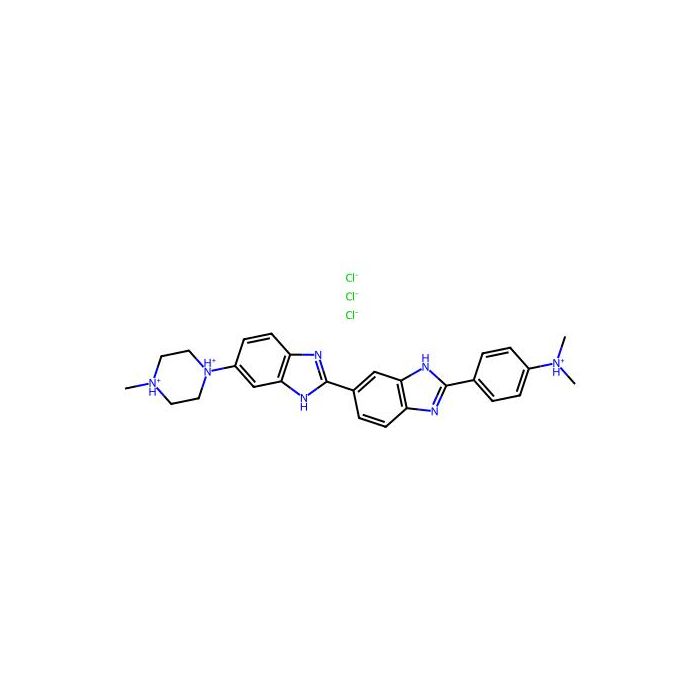
≥98%(HPLC), Trihydrochloride salt pour les flux de travail chromatographiques et analytiques sensibles nécessitant une interférence de ligne de base minimale.
🌡
Stockage & expédition
Store at -20°C Expédition Ice chest + Ice pads. Consultez le COA spécifique au lot pour les spécifications exactes.
📋
Documents qualité
SDS, COA, fiche technique et fiche de spécifications disponibles au téléchargement. COA spécifique au lot accessible via la recherche par numéro de lot.
📚
Preuve documentaire
Cité dans 0 publications à comité de lecture couvrant la chromatographie, la synthèse organique et les réactions de couplage croisé.
Spécifications
Spécifications et pureté
≥98%(HPLC), Trihydrochloride salt
Conditions de stockage de stockage
Store at -20°C
Expédié en
Ice chest + Ice pads
Ce produit nécessite l'expédition en chaîne froide. Les services terrestres et autres services économiques ne sont pas disponibles.
This compound belongs to the class of organic compounds known as phenylbenzimidazoles. These are compounds containing a phenylbenzimidazole skeleton, which consists of a benzimidazole moiety where its imidazole ring is attached to a phenyl group.
External Descriptors
Not available
1. Djoumbou Feunang Y, Eisner R, Knox C, Chepelev L, Hastings J, Owen G, Fahy E, Steinbeck C, Subramanian S, Bolton E, Greiner R, and Wishart DS. ClassyFire: Automated Chemical Classification With A Comprehensive, Computable Taxonomy. Journal of Cheminformatics, 2016, 8:61.
Certificats (CoA, COO, BSE/TSE et tableau d'analyse)
C of A & Other Certificates(BSE/TSE, COO):
Analytical Chart:
Propriétés chimiques et physiques
Solubilité
H 2 O: 1 mg/mL, clear, slightly yellow to deep greenish-yellow
Calculateurs de solution
Molarity Calculator
Determine the necessary mass, volume, or concentration for preparing a solution.
Dilution Calculator
Determine the dilution needed to prepare a stock solution.
Reconstitution Calculator
Avis
Avis des clients
Application Protocols
Item-specific, validated application protocols: Not specified for this item; refer to CoA/Spec Sheet.
General protocols (literature-based guidance for Hoechst-type DNA stains; adjust for Hoechst 34580 and your system):
A) Live-cell nuclear staining (microscopy)
Prepare a fresh working solution from a concentrated stock (e.g., DMSO stock diluted into pre-warmed culture medium) under low light.
Replace culture medium with dye-containing medium and incubate 5–20 minutes at 20–37°C.
Optionally wash once with dye-free medium or PBS to reduce background.
Image promptly with compatible excitation/emission filters; minimize exposure to limit phototoxicity.
B) Fixed-cell nuclear counterstain (IF/ICC)
Following fixation (e.g., 4% PFA) and permeabilization/blocking as required for your primary assay, dilute the dye into PBS or antibody buffer.
Incubate 5–10 minutes at room temperature protected from light.
Wash 1–3× with PBS and proceed to mounting; verify mounting medium compatibility.
C) Flow cytometry (DNA content)
Prepare cells according to assay (live or fixed/permeabilized). Include controls for voltage/compensation.
Stain with an empirically optimized dye concentration; incubate 10–30 minutes protected from light.
Analyze using an appropriate UV/violet laser and blue emission detection; confirm spectral settings for Hoechst 34580.
Always perform a small pilot titration to determine optimal concentration and incubation for your specific cells and instrument.
Biological Roles
Note: Hoechst 34580 is a synthetic fluorescent probe with no endogenous biological role. The following describes its experimental utility and interaction modality (literature/general).
Functional interaction (general for Hoechst-class dyes):
Nucleic acid binding: Binds to the minor groove of double-stranded DNA with a preference for AT-rich sequences. Binding restricts molecular motion and enhances fluorescence.
Cellular permeability: Many Hoechst analogs permeate intact plasma membranes, enabling live-cell nuclear staining. Permeability and efflux susceptibility vary across analogs and cell types; specific characteristics for Hoechst 34580 should be validated empirically.
Biological readouts: Used to visualize nuclei, quantify DNA content, identify multinucleation, and assess cell cycle stages in conjunction with flow cytometry or imaging-based DNA quantification.
Interference considerations: DNA-binding dyes can affect DNA-dependent processes at higher concentrations or prolonged exposures; minimize exposure in live-cell assays and confirm absence of functional perturbation.
Assay integration (general):
Compatible as a nuclear counterstain in immunofluorescence, live-cell time-lapse (with low illumination and dye levels), and fixed-cell imaging.
For flow cytometry, ensure laser/filter compatibility (commonly UV/violet excitation and blue emission for Hoechst dyes); verify specific spectral data for Hoechst 34580 in your instrument.
Item-specific biological performance data (permeability, affinity, excitation/emission maxima): Not specified for this item; refer to CoA/Spec Sheet and primary literature.
Buffer Applications
This product is a fluorescent DNA stain rather than a buffering agent. However, buffer selection is important for staining performance (literature/general guidance).
General buffer guidance for Hoechst-type DNA stains:
Common buffers: PBS (pH ~7.2–7.4), HBSS, or serum-free culture medium for live-cell staining; PBS or TBS for fixed-cell staining. Avoid strong detergents (e.g., high Triton X-100) during live-cell staining.
pH dependence: Maintain near-neutral pH to preserve dye protonation state and DNA binding. Extreme pH can reduce fluorescence or damage cells.
Additives: 1–2% BSA can reduce nonspecific binding in fixed-cell protocols. For live cells, use phenol red–free media to reduce background in the blue channel.
Filtration: 0.22 µm filtration of working solutions improves image quality by removing particulates.
Typical working ranges (literature/general; verify for Hoechst 34580):
Stock solutions: often 1–10 mM in DMSO or water prepared under low light.
Working concentrations: commonly in the range of ~0.1–10 µg/mL or low micromolar for Hoechst dyes, depending on cell type and application. Optimize empirically to balance signal and viability.
Item-specific buffer compatibility or recommended formulations: Not specified for this item; refer to CoA/Spec Sheet.
Green Alternatives
Context: While "green chemistry" frameworks apply primarily to reagents and solvents, selection of fluorescent DNA stains can consider user safety, waste profile, and phototoxicity (general guidance).
Alternative dyes (literature/general comparison; select based on assay needs):
DAPI: A widely used blue-emitting DNA dye with similar nuclear specificity. Pros: strong signal in fixed cells, low cost. Cons: primarily UV excitation; limited live-cell permeability compared to some Hoechst analogs; potential DNA interaction hazards remain.
SYBR Safe/Nucleic acid–safe stains: Engineered for reduced mutagenicity in gel staining; Pros: vendor-claimed improved safety and visible-light excitation in some formats. Cons: Spectral properties and binding modes differ; microscopy performance may be lower; still handle as hazardous.
NucBlue (Hoechst 33342 formulations) or other pre-formulated, stabilized solutions: Reduce handling of powdered dyes and minimize user exposure and waste.
Use minimal effective concentrations and small-volume, high-concentration stocks to reduce solvent and dye waste.
Prefer aqueous working solutions when performance allows; limit DMSO carryover in live-cell experiments.
Implement closed, labeled waste streams for dye-containing solutions to avoid dispersal.
Item-specific eco/safety certifications or solvent-free formulations: Not specified for this item; refer to CoA/Spec Sheet.
Pharmaceutical Uses
This product is a research-use fluorescent dye and is not intended for pharmaceutical formulation or clinical use.
General, non-clinical context:
Process analytics and QC (research/manufacturing labs): Fluorescent DNA dyes are sometimes used in cell-based bioassays, viability checks for production cell lines, or nucleic acid quantification in R&D settings. Such use remains strictly non-therapeutic and outside regulated drug product composition.
Excipient status: Hoechst dyes are not recognized pharmaceutical excipients in major pharmacopeias and are not used in therapeutic formulations.
Regulatory note:
For research use only (per Product Data). Not for use in humans or diagnostic procedures. Laboratories operating under GLP/GMP should qualify the material and method if a dye is incorporated into in-process tests.
Item-specific pharmacopeial/compendial listings, residual solvent data, and extractables/leachables: Not specified for this item; refer to CoA/Spec Sheet.
Physical Properties
Item-specific specifications:
Appearance: Not specified for this item; refer to CoA/Spec Sheet.
Molecular weight: Not specified for this item; refer to CoA/Spec Sheet.
Molecular formula: Not specified for this item; refer to CoA/Spec Sheet.
Melting/boiling points, density, refractive index, pKa, logP/logD: Not specified for this item; refer to CoA/Spec Sheet.
Literature/general properties for Hoechst-type bisbenzimidazole DNA dyes (for context only; not item-specific specifications):
Physical state: Usually supplied as a solid dye or as a concentrated solution; readily forms aqueous or DMSO stock solutions protected from light.
Solubility: Typically soluble in water, aqueous buffers (e.g., PBS), and polar aprotic solvents like DMSO; solubility enhanced by cationic amines.
Spectroscopic behavior: Exhibits strong fluorescence enhancement upon binding to double-stranded DNA; absorption in UV–violet and emission in blue region; exact λmax values are analog-dependent and should be confirmed for Hoechst 34580 from primary data.
Acid/base: Multiple basic nitrogens with pKa values in the physiological range (general for bisbenzimidazoles), leading to cationic forms in neutral aqueous media.
Practical notes (general):
Photolabile to intense UV; minimize light exposure during preparation and staining.
Fluorescence and binding affinity depend on ionic strength, pH, and DNA base composition (AT content).
Quality and Grades
Item-specific grade/purity: Not specified for this item; refer to CoA/Spec Sheet.
Context (general for research-grade fluorescent DNA dyes):
Research grade: Intended for laboratory research use only (as noted in Product Data). Typically quality-controlled for identity and performance in standard fluorescence assays (e.g., spectral profile, staining performance), but may not include pharmacopeial testing.
Performance attributes often evaluated (general):
Identity verification (NMR/MS/HRMS) and dye content.
Spectral conformity (absorption/emission profile vs reference).
Fluorescence enhancement upon binding to calf thymus DNA or similar test substrate.
Low particulate/insoluble matter for microscopy.
Stabilizers: Some fluorescent dyes are supplied with stabilizers or as counterion-defined salts to enhance stability; any such additives for this SKU are Not specified for this item; refer to CoA/Spec Sheet.
What this means for users:
Without a specified grade, confirm fitness-for-use via small-scale pilot staining, particularly for sensitive imaging or flow cytometry workflows.
For quantitative applications, verify lot-to-lot performance (e.g., titration curve, signal-to-background, photostability) and retain CoA/SDS for records.
If your application requires specific attributes (e.g., low background in live-cell imaging, defined counterion), request documentation or testing results prior to use.
Reaction and Applications
This compound is a fluorescent probe rather than a synthetic reagent. It is not typically used as a reactant, catalyst, or solvent in chemical transformations.
Applications (literature/general for Hoechst-type DNA dyes):
Nuclear staining in fixed or live cells for fluorescence microscopy (widefield, confocal, spinning disk) and high-content imaging.
Cell cycle/dead cell discrimination in flow cytometry via DNA content or membrane integrity, depending on permeability and protocol.
Quantification of double-stranded DNA in solution assays through fluorescence enhancement upon binding.
Counterstain for multicolor imaging panels with blue channel detection; compatible with GFP/RFP imaging due to spectral separation (verify crosstalk with your specific filter sets).
Mechanistic notes (general):
Binds preferentially to the minor groove of AT-rich double-stranded DNA; binding restricts intramolecular rotations and increases quantum yield.
Binding and fluorescence depend on ionic strength, pH, and the presence of competing groove binders or intercalators.
Practical considerations (general):
Optimize concentration and incubation time to balance nuclear intensity and cytoplasmic background; excessive dye can increase nonspecific binding and phototoxicity.
For live-cell work, minimize illumination dose and exposure time; verify that the specific Hoechst analog and concentration are compatible with cell viability in your system.
Include unstained and single-stain controls for instrument setup and compensation.
Reaction Conditions
Not typically applicable. Hoechst 34580 is used as a fluorescent stain rather than as a reactant in chemical syntheses.
Assay “reaction” conditions (literature/general for Hoechst-type staining):
Solvent: Aqueous buffers (PBS, HBSS) or culture media; stocks often in DMSO.
Temperature: Room temperature for fixed-cell staining; 20–37°C for live-cell staining depending on cell tolerance and protocol duration.
Time: Incubations commonly range from 5–30 minutes for cell and tissue staining; optimize empirically.
Light: Minimize exposure during incubation; protect samples from ambient light to reduce photobleaching.
Concentration: Working solutions typically at low micromolar or µg/mL levels for Hoechst dyes; titrate for your system.
Performance expectations (general):
Strong nuclear fluorescence with low background in cytoplasm when concentration and washing are optimized.
Compatible with many fixatives; post-fixation staining often yields high contrast.
Item-specific assay conditions and verified yields/signals: Not specified for this item; refer to CoA/Spec Sheet and SDS.
Safety and Handling
Item-specific hazard information:
GHS classification, signal word, pictograms, H-statements: Not specified for this item; refer to SDS.
General safety guidance for Hoechst-type DNA-binding dyes (literature/general):
Potential hazards: DNA-interactive dyes may pose mutagenic or reproductive risks; handle as potentially harmful. Avoid inhalation, ingestion, and skin/eye contact. Use in a chemical fume hood when weighing powders or preparing stocks.
PPE: Wear lab coat, nitrile gloves (double-gloving recommended when handling concentrates), and appropriate eye protection. Change gloves frequently; dyes can readily stain skin and lab surfaces.
Light sensitivity: Protect stock solutions and working solutions from light (amber vials, foil wrap) to limit photodegradation.
Incompatibilities: Avoid strong oxidizers and strong acids/bases that can degrade the chromophore; avoid reactive bleaching agents in the same container.
First aid (overview; defer to SDS):
Skin/eye contact: Rinse with copious water for at least 15 minutes; remove contaminated clothing; seek medical attention if irritation persists.
Inhalation: Move to fresh air; seek medical attention if symptoms develop.
Ingestion: Rinse mouth; do not induce vomiting; seek medical attention.
Spill response: Absorb with inert material; avoid raising dust/aerosols; clean stained surfaces promptly with detergent/ethanol.
Waste: Collect dye-containing liquids and solids as hazardous chemical waste; dispose per institutional and regulatory requirements.
Always consult the product-specific SDS for authoritative and legally binding safety information.
Solvent Selection
Context and guidance (literature/general for Hoechst dyes):
Polarity/charge: Cationic, polyaromatic dye with multiple basic nitrogens; exhibits good solubility in polar media.
Recommended stock solvents:
DMSO: Common for preparing concentrated, long-term stocks (e.g., 1–10 mM); excellent solvating power and compatibility with small-volume additions to aqueous buffers.
Water or PBS: Suitable for immediate-use stocks when DMSO is undesirable; stability may be lower than in DMSO.
Miscibility and compatibility:
Fully miscible with aqueous buffers; avoid high concentrations of detergents that can alter binding or fluorescence.
Compatible with standard imaging buffers (HBSS, PBS) and many fixatives (e.g., paraformaldehyde) when used post-fixation. Verify compatibility with mounting media; some antifade agents shift spectra or quench signal.
Dielectric environment effects: Fluorescence intensity and spectral position can shift with solvent polarity and upon DNA binding; design controls accordingly.
Selection tips:
Choose DMSO for long-term, concentrated master stocks and to minimize microbial growth; aliquot to avoid freeze–thaw.
Choose aqueous buffers for immediate use in sensitive live-cell experiments where minimizing DMSO content is critical; maintain final DMSO ≤0.1–0.2% v/v when possible.
Filter working solutions (0.22 µm) to remove particulates for high-resolution microscopy.
Item-specific solvent recommendations: Not specified for this item; refer to CoA/Spec Sheet.
Storage and Reconstitution
Item-specific conditions (from Product Data):
Storage: Store at -20°C.
Shipping: Ice chest + ice pads.
General handling and reconstitution guidance for Hoechst-type dyes (literature/general; implement alongside item-specific instructions):
Light protection: Store in amber vials or wrap containers in foil to protect from light.
Stock preparation: Dissolve the dye in an appropriate solvent (commonly DMSO or water) to prepare a concentrated stock. Filter if necessary (0.22 µm PTFE for DMSO stocks; PES for aqueous) to remove particulates.
Aliquoting: Divide stock into single-use aliquots to avoid repeated freeze–thaw cycles that can degrade fluorescence.
Storage of stocks: Keep at -20°C (consistent with item-specific guidance). For short-term use, 2–8°C storage of diluted working solutions for hours to a day may be acceptable; prepare fresh when possible.
Handling: Thaw on ice or at room temperature protected from light; mix gently to avoid foaming/aerosols. Record preparation date and concentration on each aliquot.
Stability: Photobleaching and hydrolysis can occur over time; discard stocks that show reduced staining performance or precipitate formation.
Item-specific details such as exact solvent, concentration of supplied solution (if any), counterion, and recommended shelf-life: Not specified for this item; refer to CoA/Spec Sheet.
Research use only: As stated in Product Data.
Structure and Identity
Brief overview: Hoechst 34580 is a member of the Hoechst family of cationic bisbenzimidazole DNA dyes commonly used as AT-selective minor-groove binders for fluorescence staining of nuclei in fixed or live cells (literature/general).
Item-specific (from Product Data):
SKU: H755423
Product name: Hoechst 34580
CAS: 911004-45-0
PubChem CID: 122174003
InChIKey: 147115 (as provided)
SMILES: Not specified for this item; refer to CoA/Spec Sheet.
Molecular formula: Not specified for this item; refer to CoA/Spec Sheet.
Molecular weight: Not specified for this item; refer to CoA/Spec Sheet.
Structural features (literature/general description of Hoechst-class dyes):
Contains two benzimidazole/benzimidazolium-type motifs connected via a flexible linker, typically bearing tertiary amines that are protonated at physiological pH, imparting a net positive charge.
Binds in the minor groove of duplex DNA with preference for AT-rich sequences; fluorescence quantum yield increases markedly upon binding to DNA.
Conjugated aromatic system responsible for UV–blue absorption and blue emission; often excited using near-UV (e.g., ~350–405 nm) light sources (exact maxima vary by analog; consult primary references for Hoechst 34580 specifically).
2D description: two heteroaromatic rings (benzimidazole-like) linked by an aliphatic/amine-containing spacer; multiple protonatable nitrogen atoms enhance aqueous solubility and DNA affinity.
Synthetic Utility
Hoechst 34580 is a finished fluorescent probe and is not typically used as a synthetic building block or reagent.
General chemistry perspective (literature/general):
Functional groups: Bisbenzimidazole/benzimidazolium-type aromatic cores and tertiary amines. While these motifs can, in principle, undergo further derivatization (e.g., N-alkylation, acylation), such transformations are not standard end-user practices and may alter optical properties.
Conjugation strategy: For specialized applications, some Hoechst analogs have been derivatized with linkers or reporters to create sensors or conjugates. Any modification requires careful characterization of DNA affinity and spectral shifts.
Retrosynthetic note: The dye’s structure arises from coupling benzimidazole derivatives with amine-containing linkers under dehydrating/condensing conditions, followed by counterion selection—information useful only for synthetic chemists replicating or modifying scaffolds.
Item-specific reactivity data or building-block applications: Not specified for this item; refer to CoA/Spec Sheet.
Bottom line: Treat this material as an analytical/spectroscopic probe rather than a reagent for chemical synthesis.
Target Specificity
Item-specific target data (e.g., antigen/epitope, clone, species reactivity) are not applicable—this product is a small-molecule fluorescent dye, not an antibody or affinity reagent.
Literature/general note:
Functional specificity: Hoechst-class dyes preferentially bind the minor groove of AT-rich regions in double-stranded DNA, resulting in enhanced blue fluorescence upon binding. This is a physicochemical binding preference rather than immunological specificity.
Any tested biological targets or selectivity metrics for Hoechst 34580: Not specified for this item; refer to CoA/Spec Sheet and primary literature.
Foire aux questions
How is this product shipped?
This product ships in an insulated container with ice pads. Unpack on arrival and transfer it to the storage condition stated above.
What is the purity of this product, and how is it determined?
This product is supplied at ≥98% purity, determined by HPLC. Lot-specific values are stated on the Certificate of Analysis.
How should this product be stored?
Store at ?20 °C. Freezer storage is required to maintain the specified shelf life.
What are the CAS number, molecular formula and molecular weight?
The CAS Number is 911004-45-0, the molecular formula is C24H23NO5, and the molecular weight is 405.44 g/mol. InChIKey IPMZLKUUQSFUTA-UHFFFAOYSA-N.
What documentation is provided?
Available product documentation, including Certificates of Analysis (COA), Safety Data Sheets (SDS), and specification sheets, is shown in the product document area. Document availability and access follow the current site policy.
Nous utilisons des cookies pour garantir le bon fonctionnement du site et, lorsque cela est autorisé, pour améliorer votre expérience. Vous pouvez gérer vos préférences à tout moment dans les Paramètres. Pour en savoir plus, consultez notre Politique relative aux cookies.
Souhaitez-vous que nous vous envoyions un message lorsque des réductions seront disponibles?
Me rappeler plus tard
Merci ! Veuillez vérifier votre boîte de réception e-mail pour confirmer.
Products are supplied to verified businesses, institutions, and qualified professionals for research and development use only. Not for use in humans, animals, diagnosis, or therapy.