≥98% for sensitive chromatographic and analytical workflows requiring minimal baseline interference.
🌡
Storage & shipping
Store at -20°C Ships Ice chest + Ice pads Check lot-specific COA for exact specifications.
📋
Quality documents
SDS, COA, datasheet, and spec sheet available for download. Lot-specific COA accessible via lot number lookup.
📚
Literature proof
Cited in 0 peer-reviewed publications across chromatography, organic synthesis, and cross-coupling reactions.
Vue d’ensemble
Information
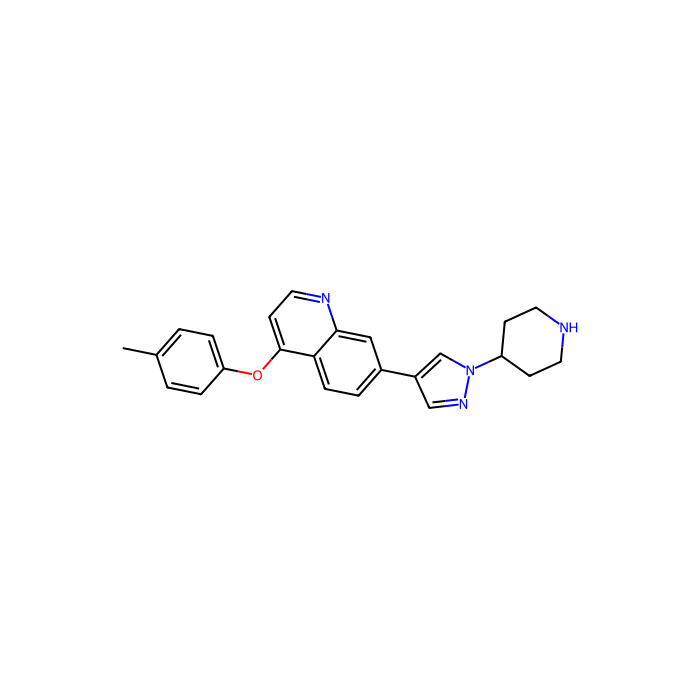
HS-1371 HS-1371 is a potent RIP3 kinase inhibitor with an IC50 of 20.8 nM. It binds to the ATP binding pocket of RIP3 and inhibits ATP binding to prevent RIP3 enzymatic activity in vitro.
Targets
RIP3 kinase 20.8 nM
In vitro
HS-1371 shows an inhibitory effect on S227 auto-phosphorylation of RIP3 at the basal level. It displays a complete inhibitory effect on TNF-induced necroptosis signaling, showing no phosphorylation of RIP3 and MLKL in HT-29 cells. Inhibition of RIP3 kinase activity by HS-1371 blocks necrosome complex formation, showing disruption of MLKL recruitment. HS-1371 rescues cells from TNF-induced necroptosis. It rescues cells from RIP3-dependent necroptotic cell death but not apoptotic cell death.
HS-1371 is a potent RIP3 kinase inhibitor with an IC50 of 20.8 nM. It binds to the ATP binding pocket of RIP3 and inhibits ATP binding to prevent RIP3 enzymatic activity in vitro.
Conditions de stockage de stockage
Store at -20°C
Expédié en
Ice chest + Ice pads
Ce produit nécessite l'expédition en chaîne froide. Les services terrestres et autres services économiques ne sont pas disponibles.
This compound belongs to the class of organic compounds known as diarylethers. These are organic compounds containing the dialkyl ether functional group, with the formula ROR', where R and R' are aryl groups.
External Descriptors
Not available
1. Djoumbou Feunang Y, Eisner R, Knox C, Chepelev L, Hastings J, Owen G, Fahy E, Steinbeck C, Subramanian S, Bolton E, Greiner R, and Wishart DS. ClassyFire: Automated Chemical Classification With A Comprehensive, Computable Taxonomy. Journal of Cheminformatics, 2016, 8:61.
Determine the necessary mass, volume, or concentration for preparing a solution.
Dilution Calculator
Determine the dilution needed to prepare a stock solution.
Reconstitution Calculator
Avis
Avis des clients
Application Protocols
No item-specific validated applications or protocols are provided for HS-1371.
General screening workflow (literature/generic)
Prepare a DMSO stock (e.g., 10 mM). Serially dilute in DMSO to create a titration series (e.g., half-log steps).
Add to assay plates to achieve constant final DMSO (commonly 0.1–1% v/v). Include vehicle and positive/negative controls.
Monitor for precipitation or interference and confirm hits with orthogonal assays.
For definitive, product-specific instructions, consult the CoA/Spec Sheet or internal SOPs tailored to your assay platform.
Biological Roles
Item-specific biological function, target engagement, and pathway roles for HS-1371 are not provided and cannot be inferred without a disclosed structure or experimental data.
General context (literature/generic)
As a member of a small-molecule library, HS-1371 would typically be evaluated as a putative chemical probe candidate in exploratory studies. Such compounds may modulate enzymes, receptors, transporters, or protein–protein interactions, but any such activity is strictly assay- and structure-dependent.
Early characterization often includes in vitro potency, selectivity panels, cytotoxicity counterscreens, and physicochemical profiling (solubility, stability, permeability).
Important notes
No claims are made regarding biological activity, mechanism, or suitability in vivo. This product is for research use only.
Any observed effects should be corroborated with orthogonal assays and matched inactive analogs or chemical negatives to exclude artifacts (e.g., aggregation, redox cycling, colloidal interference).
Buffer Applications
Not typically applicable.
HS-1371 is a small-molecule library member rather than a buffering reagent. No buffer capacity, pKa sets, or formulation recipes are provided for this item.
For aqueous assay work, use established biological buffers (e.g., PBS, HEPES, MOPS) appropriate to your system and dissolve HS-1371 using a compatible co-solvent strategy as described in Solvent Selection.
Green Alternatives
Greener practice considerations (literature/generic), since item-specific solvent and process data for HS-1371 are not provided:
Stock solutions and assay dilution
Prefer DMSO over DMF/NMP when feasible due to lower worker exposure concerns and better assay compatibility.
For preparative dissolutions, consider bio-based or low-toxicity solvents where effective (e.g., ethanol or 2-propanol), acknowledging their limited solvency for highly lipophilic compounds.
Synthetic processing (if HS-1371 is used or modified)
Replace chlorinated solvents with 2-MeTHF, CPME, or EtOAc where chemistry allows; these often offer favorable safety and life-cycle profiles.
Aqueous or micellar catalysis (e.g., TPGS-750-M systems) can reduce solvent burden in cross-couplings and substitutions.
Comparison (generic)
DMF/NMP vs DMSO: DMF/NMP excel at difficult solvation but are reproductive hazards; DMSO is generally safer and easier to manage in assays.
Dichloromethane vs EtOAc/MTBE: EtOAc or MTBE lower halogenated waste but may alter extraction selectivity and volatility.
Operational tips
Minimize DMSO volumes in assays (≤1% v/v) to reduce solvent effects.
Use miniaturized screening formats (384/1536-well) to cut solvent consumption and waste generation.
Always validate solvent substitutions for compatibility and data integrity.
Pharmaceutical Uses
No pharmaceutical or clinical uses are claimed for HS-1371. Item-specific excipient status or pharmacopeial listings are not provided.
General considerations (literature/generic)
In early discovery, library compounds may serve as hit/lead candidates for medicinal chemistry campaigns; however, they are not manufactured or qualified as drug substances/excipients.
Any use beyond laboratory research (e.g., formulation development for preclinical studies) would require comprehensive characterization (identity, purity, polymorph, stability, residual solvents), safety data, and appropriate regulatory oversight.
Research Use Only
Per Product Data, this material is for research use only and is not intended for human or veterinary use, diagnostics, or therapeutic applications.
Physical Properties
Item-specific properties
Appearance: Not specified for this item; refer to CoA/Spec Sheet.
Melting point: Not specified for this item; refer to CoA/Spec Sheet.
Boiling point: Not specified for this item; refer to CoA/Spec Sheet.
Density: Not specified for this item; refer to CoA/Spec Sheet.
Refractive index: Not specified for this item; refer to CoA/Spec Sheet.
Solubility: Not specified for this item; refer to CoA/Spec Sheet.
LogP/logD: Not specified for this item; refer to CoA/Spec Sheet.
pKa: Not specified for this item; refer to CoA/Spec Sheet.
General guidance (literature/generic)
Small-molecule library members are commonly supplied as solids or film-coated powders intended for DMSO stock preparation (e.g., 10–50 mM). Aqueous solubility varies widely with structure; co-solvents (DMSO, DMF, ethanol) are frequently employed.
If hygroscopicity or photolability is unknown, handle under low humidity, limit light exposure, and minimize repeated warming cycles during weighing.
Verification tips
Before preparing assay stocks, confirm solubility in your selected solvent at target concentration; inspect for haze/precipitate after vortex and temperature equilibration.
Determine empirical solubility and stability via small-scale tests (e.g., DMSO stock, then dilute into assay buffer with ≤1% DMSO) and monitor for precipitation over time using plate reader absorbance at 600–700 nm or visual inspection.
Authoritative data
For definitive physical constants specific to HS-1371, rely on the item’s CoA/Specification Sheet and SDS.
Quality and Grades
Item-specific quality
Grade/Purity: Not specified for this item; refer to CoA/Spec Sheet.
Interpreting common grades (general guidance)
Screening/compound library grade typically emphasizes structural identity (NMR/LC–MS) and sufficient purity for biochemical or cell-based screening (often ≥90–95% by HPLC, literature/generic). UV impurities may or may not be controlled unless stated.
Analytical grades (e.g., HPLC grade solvents, AR reagents) are not implied here unless explicitly stated on the CoA.
What to verify for HS-1371
Request the CoA to confirm: assay/purity method and value, residual solvents, water content (if determined), identity data (NMR, MS, HRMS), and elemental or chromatographic profiles if available.
If working in structure–activity relationship (SAR) campaigns, obtain lot-specific purity and identity documentation suitable for regulatory recordkeeping.
Stabilizers and additives
No stabilizer information is provided for this item; refer to CoA/Spec Sheet if antioxidants, acid scavengers, or salt forms are used.
Release testing and acceptance
For sensitive assays, consider in-house verification (orthogonal purity check, LC–MS retention time match) upon receipt to align with internal acceptance criteria.
Reaction and Applications
Item-specific reaction roles are not specified for HS-1371. With no disclosed structure, definitive synthetic or reactivity profiles cannot be assigned. The following are general contexts for small-molecule library members in research (literature/generic):
Primary use case: As test articles in biochemical, biophysical, and cell-based screening assays to identify hits affecting a target, pathway, or phenotype.
Follow-up characterization: Orthogonal assays (thermal shift, SPR/BLI, enzymatic kinetics) to confirm activity and minimize artifacts (aggregation, redox cycling, fluorescence interference).
Counter-screening: Test against off-targets or assay reporters to identify PAINS-like behavior and nuisance mechanisms.
Physicochemical optimization: Solubility and permeability assessments (shake-flask logD, PAMPA, Caco-2) to guide SAR if HS-1371 becomes a seed compound.
Assay setup tips (generic)
Maintain constant final DMSO across test and control wells.
Include detergent (e.g., 0.01–0.05% Tween-20) for aggregation-prone chemotypes; monitor with DLS or AMP assays if available.
Implement redox/fluorescence interference controls, especially in reporter assays.
Until structural and purity data are available for HS-1371, treat all observed activities as preliminary and confirm with resupplied lot or repurified material.
Reaction Conditions
No item-specific reaction conditions can be provided for HS-1371 in the absence of structural information.
General discovery chemistry guidance (literature/generic)
Stock preparation: Dissolve in anhydrous DMSO at 10–50 mM, vortex, and, if needed, mildly warm (≤40°C) to aid dissolution; avoid prolonged heating.
Assay dilution: Add DMSO stocks to buffered media to achieve desired final concentrations with constant solvent percentage across wells/replicates.
Stability checks: Use LC–MS to verify integrity after storage and post-assay to detect hydrolysis or oxidation.
If HS-1371 is to undergo synthetic transformation, select conditions based on the functional groups present once structure is known; reference standard conditions for the specific reaction class and validate on milligram scale first.
Safety and Handling
GHS and hazard information (item-specific)
Signal word: Not specified for this item; refer to SDS.
H-statements: Not specified for this item; refer to SDS.
GHS classification and pictograms: Not specified for this item; refer to SDS.
General laboratory precautions (literature/generic)
Handle in a chemical fume hood wearing appropriate PPE: lab coat, safety glasses, and chemically resistant gloves (e.g., nitrile). Avoid inhalation of dusts/aerosols and skin or eye contact.
Avoid ingestion and environmental release; collect waste in accordance with institutional and regulatory requirements.
First-aid overview (generic; defer to SDS)
Inhalation: Move to fresh air. Seek medical attention if symptoms occur.
Skin contact: Wash with soap and water. Remove contaminated clothing.
Eye contact: Rinse cautiously with water for several minutes; remove contact lenses if present and easy to do; continue rinsing and seek medical advice if irritation persists.
Ingestion: Rinse mouth; do not induce vomiting; seek medical advice.
Storage incompatibilities and stability
Store at −20°C (per Product Data). Keep container tightly closed, desiccated if possible, and protected from light until use. Minimize freeze–thaw cycles by aliquoting.
Without a disclosed structure, assume typical incompatibilities for organic compounds: strong oxidizers, strong acids/bases, and reactive reducing agents. Verify specifics in the SDS once available.
Authoritative source
Always consult the product-specific SDS for definitive hazard classification, exposure limits, spill response, and firefighting measures.
Solvent Selection
Item-specific solubility data are not provided for HS-1371. The following are general best practices for small-molecule library compounds (literature/generic):
Primary stock solvent: DMSO is the default for discovery libraries due to broad solvency and assay compatibility up to ~0.1–1% v/v in many in vitro systems.
Secondary options: DMF and NMP can dissolve more recalcitrant compounds but carry higher toxicity and may interfere in assays; use sparingly and validate compatibility.
Aqueous compatibility: For kinetic or biophysical assays, prepare concentrated DMSO stocks and dilute into buffer with surfactant (e.g., 0.01–0.05% Tween-20) to mitigate precipitation; keep final DMSO constant across wells.
Volatile cosolvents: Ethanol, isopropanol, or acetonitrile can be used for short exposures but may evaporate rapidly from plates; control for edge effects.
Comparison (generic)
DMSO vs ethanol: DMSO affords higher solubility and stability; ethanol often enables faster drying but lower solubility for polar/ionic species.
Aqueous buffers: Only suitable if compound is sufficiently ionizable or inherently water-soluble; otherwise risk of precipitation on dilution.
Practical tips
Verify solubility at target concentration visually and via LC–UV or nephelometry.
Filter stocks (0.22 µm PTFE) only if chemically compatible and if particulate is observed; many discovery teams avoid filtration to prevent analyte loss and instead centrifuge and decant supernatant.
Storage and Reconstitution
Item-specific conditions
Storage temperature: Store at −20°C (per Product Data).
Shipping: Ice chest with ice pads (per Product Data), maintain cold chain upon receipt.
General handling and reconstitution (literature/generic)
Allow the container to equilibrate to room temperature in a desiccator before opening to minimize condensation.
If supplied as a solid or film: Prepare concentrated DMSO stocks (e.g., 10–50 mM) in amber vials when light sensitivity is unknown. Vortex/sonicate briefly to dissolve.
Aliquot stocks to single-use portions to avoid repeated freeze–thaw cycles; store aliquots at −20°C or below. Record lot number, concentration, and preparation date.
For aqueous work: Dilute DMSO stocks into buffer immediately before use; maintain constant final DMSO content across samples.
Stability notes
Without structure-specific data, avoid prolonged exposure to light, heat, and moisture. Periodically verify integrity by LC–MS or HPLC prior to critical experiments.
Authoritative guidance
For exact stability, solubility, and reconstitution specifics for HS-1371, refer to the product’s CoA/Spec Sheet and SDS.
Structure and Identity
SKU: H414172 (HS-1371)
CAS: 2158197-70-5
PubChem CID: 134817449
InChIKey: 385287 (as provided)
Molecular formula: Not specified for this item; refer to CoA/Spec Sheet.
Molecular weight: Not specified for this item; refer to CoA/Spec Sheet.
SMILES: Not specified for this item; refer to CoA/Spec Sheet.
Structural description
Item-specific structure has not been disclosed in the provided Product Data. No 2D/SMILES or functional group information is available here.
Without a disclosed structure, ring systems, heteroatoms, stereocenters, and other functional motifs cannot be described for this item.
General notes (literature/generic)
HS-1371 is listed within a small-molecule/compound library category, which typically includes drug-like or probe-like organic molecules offered for screening and discovery workflows.
If a structure becomes available (SMILES or molfile), typical identity confirmation includes 1H/13C NMR, LC–MS, exact mass/HRMS, and HPLC purity traces. Ensure your internal project ID links to the correct CAS (2158197-70-5) and CID (134817449) before use.
Documentation
For definitive identifiers (full IUPAC name, exact InChI/InChIKey, stereochemistry), consult the product CoA/Specification Sheet or SDS. These are the authoritative sources for this item.
Synthetic Utility
Item-specific synthetic roles of HS-1371 cannot be described without a disclosed structure (functional groups, handles, or reactive motifs are unknown).
General guidance (literature/generic)
If HS-1371 contains modifiable handles (e.g., aryl halide, nitrile, amide, carboxylate, aniline), typical derivatizations for SAR include:
Cross-couplings (Suzuki–Miyaura, Buchwald–Hartwig, Sonogashira) on aryl/vinyl halides/triflates.
Amide coupling (EDC/HATU) and urea/carbamate formation to probe polarity and H-bonding.
Reductive transformations (hydrogenation, borohydrides) to adjust saturation and 3D shape.
Late-stage C–H functionalization to diversify scaffolds with minimal protecting groups.
Absent structure, treat any synthesis planning as hypothetical and confirm compatibility experimentally.
For concrete synthetic utility, consult the CoA or structural disclosure for HS-1371.
Target Specificity
Not specified for this item; refer to CoA/Spec Sheet.
No antigen, epitope, or biological target details are provided for HS-1371. As a small-molecule library compound, it is not an antibody or biologic; thus, clone, isotype, and species reactivity do not apply.
Any target engagement must be experimentally established within the user’s assay system.
We use cookies to ensure the website functions properly and, where permitted, to improve your experience. You can manage your preferences at any time in Settings. Learn more in our Cookie Policy.
Shall we send you a message when we have discounts available?
Remind me later
Thank you! Please check your email inbox to confirm.
Products are supplied to verified businesses, institutions, and qualified professionals for research and development use only. Not for use in humans, animals, diagnosis, or therapy.
 I2615089