The store will not work correctly when cookies are disabled.
Javascript est désactivé dans votre navigateur. Pour une meilleure expérience sur notre site, assurez-vous d’activer JavaScript dans votre navigateur.
· · COA & SDS disponible pour chaque produit · Expédition le jour même sur les articles en stock Hydroprotopine - ≥98% , CAS No.128397-41-1
Synonyms
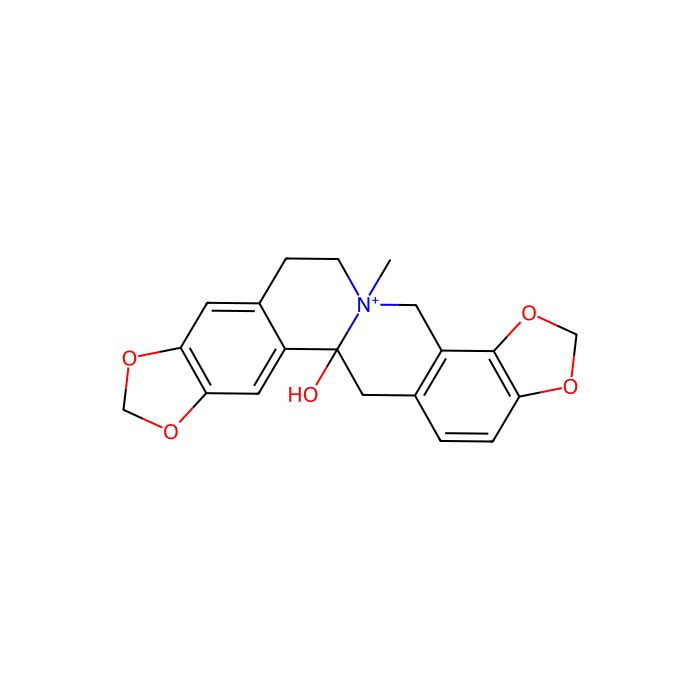
W11714H-Bis[1,3]benzodioxolo[5,6-a:4',5'-g]quinolizinium,6,7,12b,13-tetrahydro-12b-hydroxy-5-methyl-
Shipped In
Ice chest + Ice pads
🧪
Why this grade ≥98% for sensitive chromatographic and analytical workflows requiring minimal baseline interference.
🌡
Storage & shipping Store at -20°C Ships Ice chest + Ice pads Check lot-specific COA for exact specifications.
📋
Quality documents SDS, COA, datasheet, and spec sheet available for download. Lot-specific COA accessible via lot number lookup.
📚
Literature proof Cited in 0 peer-reviewed publications across chromatography, organic synthesis, and cross-coupling reactions.
Vue d’ensemble Information
Hydroprotopine (W1171) is a kind of natural herbal extract.
Specifications Synonymes
W11714H-Bis[1,3]benzodioxolo[5,6-a:4',5'-g]quinolizinium,6,7,12b,13-tetrahydro-12b-hydroxy-5-methyl-
Spécifications et pureté
≥98%
Mécanismes biochimiques et physiologiques
Hydroprotopine (W1171) is a kind of natural herbal extract.
Conditions de stockage de stockage
Store at -20°C
Expédié en
Ice chest + Ice pads
Ce produit nécessite l'expédition en chaîne froide. Les services terrestres et autres services économiques ne sont pas disponibles.
Propriétés du produit Noms et identifiants Pubchem Sid Url
https://pubchem.ncbi.nlm.nih.gov/substance/504767581
Sourires canoniques
C[N+]12CCC3=CC4=C(C=C3C1(CC5=C(C2)C6=C(C=C5)OCO6)O)OCO4
IUPAC Name
13-methyl-5,7,17,19-tetraoxa-13-azoniahexacyclo[11.11.0.02,10.04,8.015,23.016,20]tetracosa-2,4(8),9,15(23),16(20),21-hexaen-1-ol
InChIKey
SZMZXQWCICMUFH-UHFFFAOYSA-N
INCHI
1S/C20H20NO5/c1-21-5-4-12-6-17-18(25-10-24-17)7-15(12)20(21,22)8-13-2-3-16-19(14(13)9-21)26-11-23-16/h2-3,6-7,22H,4-5,8-11H2,1H3/q+1
Isomères SMILES
C[N+]12CCC3=CC4=C(C=C3C1(CC5=C(C2)C6=C(C=C5)OCO6)O)OCO4
Reaxys-RN_link_address
https://www.reaxys.com/reaxys/secured/hopinto.do?context=S&query=IDE.XRN=4933742&ln=
Documentation 📋 Safety Data Sheet (SDS) Comprehensive hazard, handling, storage, and regulatory compliance document.
Download SDS → ✅ Certificate of Analysis (COA) Lot-specific quality data. Enter your lot number to retrieve the exact COA.
Look up COA → 📊 Datasheet Quick-reference summary of product specifications and applications.
View datasheet → 🔬 Specification Sheet Full quality attributes and acceptance criteria for this grade.
View spec sheet →
Advanced Data Taxonomic Classification Kingdom Organic compounds Superclass Alkaloids and derivatives Classe Protoberberine alkaloids and derivatives Subclass Not available Intermediate Tree Nodes Not available Direct Parent Protoberberine alkaloids and derivatives Alternative Parents Tetrahydroisoquinolines Benzodioxoles Benzenoids Tetraalkylammonium salts Oxacyclic compounds Azacyclic compounds Alkanolamines Acetals Organopnictogen compounds Organic salts Hydrocarbon derivatives Organic cations Molecular Framework Aromatic heteropolycyclic compounds Substituents Protoberberine skeleton - Tetrahydroprotoberberine skeleton - Tetrahydroisoquinoline - Benzodioxole - Benzenoid - Tetraalkylammonium salt - Acetal - Alkanolamine - Oxacycle - Azacycle - Organoheterocyclic compound - Organic nitrogen compound - Organic oxygen compound - Organic salt - Hydrocarbon derivative - Organooxygen compound - Organonitrogen compound - Organopnictogen compound - Organic cation - Aromatic heteropolycyclic compound Description This compound belongs to the class of organic compounds known as protoberberine alkaloids and derivatives. These are alkaloids with a structure based on a protoberberine moiety, which consists of a 5,6-dihydrodibenzene moiety fused to a quinolizinium and forming 5,6-Dihydrodibenzo(a,g)quinolizinium skeleton. External Descriptors Not available Data sources 1. Djoumbou Feunang Y, Eisner R, Knox C, Chepelev L, Hastings J, Owen G, Fahy E, Steinbeck C, Subramanian S, Bolton E, Greiner R, and Wishart DS. ClassyFire: Automated Chemical Classification With A Comprehensive, Computable Taxonomy. Journal of Cheminformatics, 2016, 8:61.
Structure 3D Certificats (CoA, COO, BSE/TSE et tableau d'analyse) Propriétés chimiques et physiques Solubilité Solubility (25°C) In vitro DMSO: 53.7 mg/mL (151.53 mM); DMSO (mg/mL) Solubilité maximale 53.7 DMSO (mM) Solubilité maximale 151.533750121693 Poids moléculaire 354.400 g/mol XLogP3 2.200 Hydrogen Bond Donor Count 1 Hydrogen Bond Acceptor Count 5 Rotatable Bond Count 0 Exact Mass 354.134 Da Monoisotopic Mass 354.134 Da Topological Polar Surface Area 57.200 Ų Heavy Atom Count 26 Formal Charge 1 Complexity 589.000 Isotope Atom Count 0 Defined Atom Stereocenter Count 0 Undefined Atom Stereocenter Count 2 Defined Bond Stereocenter Count 0 Undefined Bond Stereocenter Count 0 The total count of all stereochemical bonds 0 Covalently-Bonded Unit Count 1
Calculateurs de solution Molarity Calculator Determine the necessary mass, volume, or concentration for preparing a solution.
Dilution Calculator Determine the dilution needed to prepare a stock solution.
Reconstitution Calculator Avis
We use cookies to ensure the website functions properly and, where permitted, to improve your experience. You can manage your preferences at any time in Settings. Learn more in our
Cookie Policy. Paramètres Accepter tout Refuser
Shall we send you a message when we have discounts available?
Remind me later Autoriser
Thank you! Please check your email inbox to confirm.
Oops! Notifications are disabled.
Products are supplied to verified businesses, institutions, and qualified professionals for research and development use only. Not for use in humans, animals, diagnosis, or therapy.
Copyright © 2023–present Aladdin Scientific Corp. All rights reserved.

 K2218484