InstantAgarose™ Tablet , CAS No.9012-36-6

CAS: 9012-36-6 Cat. No.: I292865 Numéro CE: 232-731-8 PubChem CID: 11966311
DISPONIBLE À COMMANDE
Synonyms
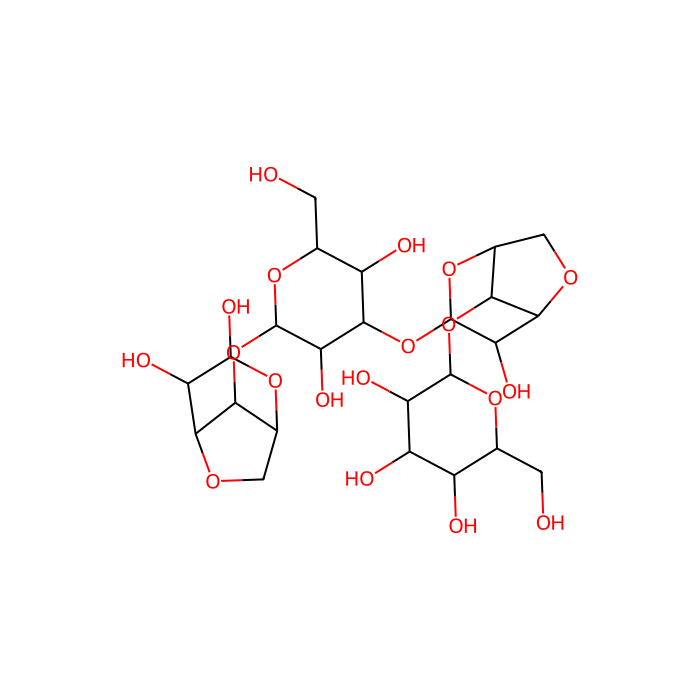
Agarose gel beads|Agarose|agarotetraose|[4)-3,6-An-alpha-L-Galp-(1->3)-beta-D-Galp-(1->]n|(2S,3R,4S,5R,6R)-2-[[(1S,3S,4S,5S,8R)-3-[(2S,3R,4S,5S,6R)-2-[[(1S,3R,4S,5S,8R)-3,4-dihydroxy-2,6-dioxabicyclo[3.2.1]octan-8-yl]oxy]-3,5-dihydroxy-6-(hydroxymethyl)oxan-4-yl]oxy-4-hydroxy-2,6-dioxabicyclo[3.2.1]octan-8-yl]oxy]-6-(hydroxymethyl)oxane-3,4,5-|SEPHAROSE|(1->4)-3,6-anhydro-alpha-L-galactopyranosyl-(1->3)-beta-D-galactopyranan|2-[[3-[2-[(3,4-dihydroxy-2,6-dioxabicyclo[3.2.1]octan-8-yl)oxy]-3,5-dihydroxy-6-(hydroxymethyl)oxan-4-yl]oxy-4-hydroxy-2,6-dioxabicyclo[3.2.1]octan-8-yl]oxy]-6-(hydroxymethyl)oxane-3,4,5-triol
Storage
Room temperature
★
Taille
USA
Allemagne (EU)*
Prix
Qté
100g
I292865-100g
Sur commande · 8–12 semaines

185,90$US

242,90$US
Enregistrer 57,00 $US (23.47%)
Enter a quantity for the sizes you want to add.

Vue d’ensemble

Description

InstantAgarose™ Tablet, low EEO (LE), multi-purpose agarose in tablet form and delivered in blister convenient pack.  Made of standard melting point agarose yields high resolution sharp DNA bands with high clarity and low background. Its optimized gel strenghth enhances ease of gel processing and handling.  Manufactured using innovative Organic Solvent Free Manufacturing process that is greener and more environment friendly. 


Application

Ideal for routine DNA and RNA gel electrophoresis, cloning, and blotting.


Spécifications

Synonymes
Agarose gel beads | Agarose | agarotetraose | [4)-3,6-An-alpha-L-Galp-(1->3)-beta-D-Galp-(1->]n | (2S,3R,4S,5R,6R)-2-[[(1S,3S,4S,5S,8R)-3-[(2S,3R,4S,5S,6R)-2-[[(1S,3R,4S,5S,8R)-3,4-dihydroxy-2,6-dioxabicyclo[3.2.1]octan-8-yl]oxy]-3,5-dihydroxy-6-(hydroxymethyl)oxan-4-yl]oxy-4-hydroxy-2,6-dioxabicyclo[3.2.1]octan-8-yl]oxy]-6-(hydroxymethyl Afficher plus
Conditions de stockage de stockage
Room temperature
Noms et identifiants
Sourires canoniques
C1[C@H]2[C@H]([C@@H](O1)[C@@H]([C@@H](O2)O)O)O[C@H]3[C@@H]([C@H]([C@H]([C@H](O3)CO)O)O[C@H]4[C@H]([C@H]5[C@@H]([C@@H](O4)CO5)O[C@H]6[C@@H]([C@H]([C@H]([C@H](O6)CO)O)O)O)O)O
IUPAC Name
(2S,3R,4S,5R,6R)-2-[[(1S,3S,4S,5S,8R)-3-[(2S,3R,4S,5S,6R)-2-[[(1S,3R,4S,5S,8R)-3,4-dihydroxy-2,6-dioxabicyclo[3.2.1]octan-8-yl]oxy]-3,5-dihydroxy-6-(hydroxymethyl)oxan-4-yl]oxy-4-hydroxy-2,6-dioxabicyclo[3.2.1]octan-8-yl]oxy]-6-(hydroxymethyl)oxane-3,4,5-triol
InChIKey
MJQHZNBUODTQTK-WKGBVCLCSA-N
INCHI
1S/C24H38O19/c25-1-5-9(27)11(29)12(30)22(38-5)41-17-8-4-36-20(17)15(33)24(40-8)43-18-10(28)6(2-26)39-23(14(18)32)42-16-7-3-35-19(16)13(31)21(34)37-7/h5-34H,1-4H2/t5-,6-,7+,8+,9+,10+,11+,12-,13+,14-,15+,16-,17-,18+,19+,20+,21-,22+,23+,24+/m1/s1
Isomères SMILES
C1[C@H]2[C@H]([C@@H](O1)[C@@H]([C@@H](O2)O)O)O[C@H]3[C@@H]([C@H]([C@H]([C@H](O3)CO)O)O[C@H]4[C@H]([C@H]5[C@@H]([C@@H](O4)CO5)O[C@H]6[C@@H]([C@H]([C@H]([C@H](O6)CO)O)O)O)O)O
CAS alternatif
39346-81-1
PubChem CID
11966311

Données avancées

Taxonomic Classification

Taxonomy Tree

KingdomOrganic compounds
SuperclassOrganic oxygen compounds
ClasseOrganooxygen compounds
SubclassCarbohydrates and carbohydrate conjugates
Intermediate Tree Nodes Not available
Direct ParentOligosaccharides
Alternative Parents O-glycosyl compounds  1,4-dioxepanes  Oxanes  Oxolanes  Secondary alcohols  Hemiacetals  Polyols  Oxacyclic compounds  Dialkyl ethers  Acetals  Primary alcohols  Hydrocarbon derivatives  
Molecular FrameworkAliphatic heteropolycyclic compounds
Substituents Oligosaccharide - Glycosyl compound - O-glycosyl compound - 1,4-dioxepane - Dioxepane - Oxane - Oxolane - Secondary alcohol - Hemiacetal - Acetal - Dialkyl ether - Oxacycle - Ether - Polyol - Organoheterocyclic compound - Hydrocarbon derivative - Primary alcohol - Alcohol - Aliphatic heteropolycyclic compound
DescriptionThis compound belongs to the class of organic compounds known as oligosaccharides. These are carbohydrates made up of 3 to 10 monosaccharide units linked to each other through glycosidic bonds.
External Descriptors Not available
Structure 3D
Modèle de structure chimique interactif


Certificats (CoA, COO, BSE/TSE et tableau d'analyse)
C of A & Other Certificates(BSE/TSE, COO):
Analytical Chart:

Find and download the COA for your product by matching the lot number on the packaging.

1 results found

Lot NumberCertificate TypeDateArticle
K2204553K2204553Certificate of AnalysisAug 04, 2026 I292865
Propriétés chimiques et physiques
Point de fusion (°C)62-68℃
Poids moléculaire630.500 g/mol
XLogP3-6.500
Hydrogen Bond Donor Count10
Hydrogen Bond Acceptor Count19
Rotatable Bond Count8
Exact Mass630.201 Da
Monoisotopic Mass630.201 Da
Topological Polar Surface Area285.000 Ų
Heavy Atom Count43
Formal Charge0
Complexity946.000
Isotope Atom Count0
Defined Atom Stereocenter Count20
Undefined Atom Stereocenter Count0
Defined Bond Stereocenter Count0
Undefined Bond Stereocenter Count0
The total count of all stereochemical bonds0
Covalently-Bonded Unit Count1
FAQ et articles
Nucleic Acid Electrophoresis Workflow—5 Main Steps
Five Key Strategies to Optimize Agarose Gel Electrophoresis with GelRed
Five Key Structural Features of Plasmids
Immobilized Enzyme Technology and Its Applications in Biocatalysis
An Introduction to Research-Grade Carbohydrates: Decoding the “Glycan Language” and a Product-Selection Guide (with Tables 1–3)
A Review of Ten Commonly Used Techniques for Detection, Quantification, and Interaction Analysis in Nucleic Acid Research
Understanding Hydrophilic Polymers in Aqueous Systems: Hydration Mechanisms, Structural Knobs, and Task-Oriented Selection Guide (Including Tables 1–3)
16 Frequently Asked Questions About Nourseothricin
GelRed Nucleic Acid Stain: Frequently Asked Questions
Deoxyribonuclease (DNase): DNA Hydrolytic Cleavage Properties, Methodological Value, and Multi-Context Applications
Micrococcal Nuclease (MNase): A Technical Review of Enzymatic Properties, Reaction Control, and Research and Biomanufacturing Applications
dsDNase-Mediated Hydrolysis of Double-Stranded DNA: Enzymatic Characteristics, Methodological Strategies, and Bioanalytical Applications
Key Judgments in Medical Hydrogel R&D: From Polymer Source and Crosslinking Strategy to Sterilization Planning, Scale-Up Feasibility, and Quality Control
Applications of Enzymatic Protein Crosslinking Systems in Gel Construction and Functional Evaluation
What Is Synthetic Biology? The Industrialization Pathway from Upstream Reagent Toolchains to Biomanufacturing Applications
Citations of This Product
Calculateurs de solution
Avis

Avis des clients

Foire aux questions

How should this product be stored?
Store at room temperature.
What are the CAS number, molecular formula and molecular weight?
The CAS Number is 9012-36-6. InChIKey MJQHZNBUODTQTK-WKGBVCLCSA-N.
What documentation is provided?
Available product documentation, including Certificates of Analysis (COA), Safety Data Sheets (SDS), and specification sheets, is shown in the product document area. Document availability and access follow the current site policy.

Souhaitez-vous que nous vous envoyions un message lorsque des réductions seront disponibles?

Me rappeler plus tard

Merci ! Veuillez vérifier votre boîte de réception e-mail pour confirmer.

Oups ! Les notifications sont désactivées.