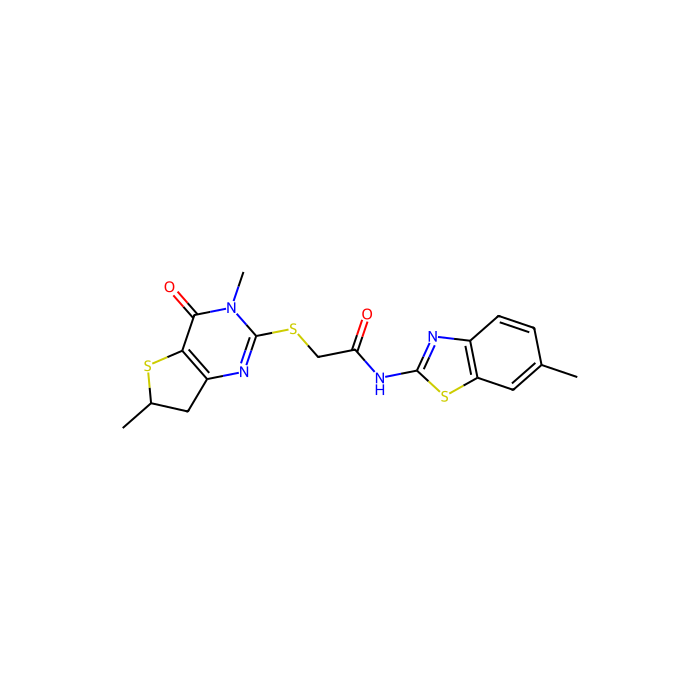
IWP 12 - ≥98%(HPLC) , CAS No.688353-45-9

CAS: 688353-45-9 Cat. No.: I288087 Formule: C18H18N4O2S3 Poids moléculaire: 418.56
DISPONIBLE À COMMANDE
QUALITÉ & PURETÉ ≥98%(HPLC)
Synonyms
IWP-12|2-((3,6-dimethyl-4-oxo-3,4,6,7-tetrahydrothieno[3,2-d]pyrimidin-2-yl)thio)-N-(5-methylbenzo[d]thiazol-2-yl)acetamide|N-(6-Methyl-2-benzothiazolyl)-2-[(3,4,6,7-tetrahydro-3,6-dimethyl-4-oxothieno[3,2-d]pyrimidin-2-yl)thio]acetamide
Storage
Store at -20°C
Shipped In
Ice chest + Ice pads
★
Taille
USA
Allemagne (EU)*
Prix
Qté
5mg
I288087-5mg
Sur commande · 8–12 semaines
444,90$US
10mg
I288087-10mg
Sur commande · 8–12 semaines
801,90$US
25mg
I288087-25mg
Sur commande · 8–12 semaines
1 802,90$US
50mg
I288087-50mg
Sur commande · 8–12 semaines
3 244,90$US
Enter a quantity for the sizes you want to add.

Vue d’ensemble

Product Describtion:

IWP-12 is a potent inhibitor of porcupine (PORCN) and inhibits cell-autono mous Wnt signaling with an IC50 of 15 nM.

Spécifications

Synonymes
IWP-12 | 2-((3,6-dimethyl-4-oxo-3,4,6,7-tetrahydrothieno[3,2-d]pyrimidin-2-yl)thio)-N-(5-methylbenzo[d]thiazol-2-yl)acetamide | N-(6-Methyl-2-benzothiazolyl)-2-[(3,4,6,7-tetrahydro-3,6-dimethyl-4-oxothieno[3,2-d]pyrimidin-2-yl)thio]acetamide
Spécifications et pureté
≥98%(HPLC)
Mécanismes biochimiques et physiologiques
Potent inhibitor of Porcupine (PORCN), a membrane-bound O-acyltransferase (MBOAT) (IC50= 15 nM). Inhibits Wnt/β-catenin and Wnt/planar cell polarity (PCP) signaling pathways. Blocks zebrafish tailfin regenerationin vivo.
Conditions de stockage de stockage
Store at -20°C
Expédié en
Ice chest + Ice pads
Ce produit nécessite l'expédition en chaîne froide. Les services terrestres et autres services économiques ne sont pas disponibles.
Type d'action
INHIBITOR
Pureté
≥98%(HPLC)
Noms et identifiants
SMILES
CC1CC2=C(S1)C(=O)N(C(=N2)SCC(=O)NC3=NC4=C(S3)C=C(C=C4)C)C
IUPAC Name
2-[(3,6-dimethyl-4-oxo-6,7-dihydrothieno[3,2-d]pyrimidin-2-yl)sulfanyl]-N-(6-methyl-1,3-benzothiazol-2-yl)acetamide
InChIKey
RBFDSBJDWZOTGR-UHFFFAOYSA-N
InChI
1S/C18H18N4O2S3/c1-9-4-5-11-13(6-9)27-17(19-11)21-14(23)8-25-18-20-12-7-10(2)26-15(12)16(24)22(18)3/h4-6,10H,7-8H2,1-3H3,(H,19,21,23)
Isomères SMILES
CC1CC2=C(S1)C(=O)N(C(=N2)SCC(=O)NC3=NC4=C(S3)C=C(C=C4)C)C
WGK Allemagne
3
Poids moléculaire
418.56
Reaxy-Rn
24643261
Reaxys-RN_link_address
https://www.reaxys.com/reaxys/secured/hopinto.do?context=S&query=IDE.XRN=24643261&ln=

Données avancées

Taxonomic Classification

Taxonomy Tree

KingdomOrganic compounds
SuperclassOrganoheterocyclic compounds
ClasseThienopyrimidines
SubclassNot available
Intermediate Tree Nodes Not available
Direct ParentThienopyrimidines
Alternative Parents Benzothiazoles  N-arylamides  Pyrimidones  Alkylarylthioethers  Benzenoids  Thiazoles  Heteroaromatic compounds  Secondary carboxylic acid amides  Lactams  Sulfenyl compounds  Azacyclic compounds  Organic oxides  Hydrocarbon derivatives  Carbonyl compounds  
Molecular FrameworkAromatic heteropolycyclic compounds
Substituents 1,3-benzothiazole - Thienopyrimidine - Aryl thioether - N-arylamide - Pyrimidone - Alkylarylthioether - Pyrimidine - Benzenoid - Azole - Thiazole - Heteroaromatic compound - Secondary carboxylic acid amide - Lactam - Carboxamide group - Thioether - Carboxylic acid derivative - Sulfenyl compound - Azacycle - Hydrocarbon derivative - Organic oxide - Organic oxygen compound - Organosulfur compound - Organooxygen compound - Organonitrogen compound - Carbonyl group - Organic nitrogen compound - Aromatic heteropolycyclic compound
DescriptionThis compound belongs to the class of organic compounds known as thienopyrimidines. These are heterocyclic compounds containing a thiophene ring fused to a pyrimidine ring. Thiophene is 5-membered ring consisting of four carbon atoms and one sulfur atom. Pyrimidine is a 6-membered ring consisting of four carbon atoms and two nitrogen centers at the 1- and 3- ring positions.
External Descriptors Not available
Structure 3D
Modèle de structure chimique interactif


Cibles associées (humaines)
PLK1 Tchem Serine/threonine-protein kinase PLK1 (28605 Activities)
Activity TypeRelationActivity valueUnitsAction TypeJournalPubMed IddoiAssay Aladdin ID
ALDH1A1 Tchem Aldehyde dehydrogenase 1A1 (77053 Activities)
Activity TypeRelationActivity valueUnitsAction TypeJournalPubMed IddoiAssay Aladdin ID
CYP2D6 Tclin Cytochrome P450 2D6 (33882 Activities)
Activity TypeRelationActivity valueUnitsAction TypeJournalPubMed IddoiAssay Aladdin ID
GLP1R Tclin Glucagon-like peptide 1 receptor (111429 Activities)
Activity TypeRelationActivity valueUnitsAction TypeJournalPubMed IddoiAssay Aladdin ID
CYP1A2 Tchem Cytochrome P450 1A2 (26471 Activities)
Activity TypeRelationActivity valueUnitsAction TypeJournalPubMed IddoiAssay Aladdin ID
PIN1 Tchem Peptidyl-prolyl cis-trans isomerase NIMA-interacting 1 (36611 Activities)
Activity TypeRelationActivity valueUnitsAction TypeJournalPubMed IddoiAssay Aladdin ID
CYP2C9 Tchem Cytochrome P450 2C9 (32119 Activities)
Activity TypeRelationActivity valueUnitsAction TypeJournalPubMed IddoiAssay Aladdin ID
CYP2C19 Tchem Cytochrome P450 2C19 (29246 Activities)
Activity TypeRelationActivity valueUnitsAction TypeJournalPubMed IddoiAssay Aladdin ID
CYP3A4 Tclin Cytochrome P450 3A4 (53859 Activities)
Activity TypeRelationActivity valueUnitsAction TypeJournalPubMed IddoiAssay Aladdin ID
POLH Tchem DNA polymerase eta (21678 Activities)
Activity TypeRelationActivity valueUnitsAction TypeJournalPubMed IddoiAssay Aladdin ID
HTT Tchem Huntingtin (19182 Activities)
Activity TypeRelationActivity valueUnitsAction TypeJournalPubMed IddoiAssay Aladdin ID
TDP1 Tchem Tyrosyl-DNA phosphodiesterase 1 (345557 Activities)
Activity TypeRelationActivity valueUnitsAction TypeJournalPubMed IddoiAssay Aladdin ID
PORCN Tchem Probable protein-cysteine N-palmitoyltransferase porcupine (135 Activities)
Activity TypeRelationActivity valueUnitsAction TypeJournalPubMed IddoiAssay Aladdin ID
USP2 Tbio Ubiquitin carboxyl-terminal hydrolase 2 (8818 Activities)
Activity TypeRelationActivity valueUnitsAction TypeJournalPubMed IddoiAssay Aladdin ID
HPGD Tchem 15-hydroxyprostaglandin dehydrogenase [NAD+] (24926 Activities)
Activity TypeRelationActivity valueUnitsAction TypeJournalPubMed IddoiAssay Aladdin ID
Cibles associées (non humaines)
Plasmodium falciparum (966862 Activities)
Activity TypeRelationActivity valueUnitsAction TypeJournalPubMed IddoiAssay Aladdin ID
ddn Putative uncharacterized protein (49 Activities)
Activity TypeRelationActivity valueUnitsAction TypeJournalPubMed IddoiAssay Aladdin ID
Nfe2l2 Nuclear factor erythroid 2-related factor 2 (214 Activities)
Activity TypeRelationActivity valueUnitsAction TypeJournalPubMed IddoiAssay Aladdin ID
Mécanismes d'action
Certificats (CoA, COO, BSE/TSE et tableau d'analyse)
C of A & Other Certificates(BSE/TSE, COO):
Analytical Chart:
Propriétés chimiques et physiques
SolubilitéSolvent:DMSO, Max Conc. mg/mL: 41.86, Max Conc. mM: 100
Poids moléculaire418.600 g/mol
XLogP33.700
Hydrogen Bond Donor Count1
Hydrogen Bond Acceptor Count7
Rotatable Bond Count4
Exact Mass418.059 Da
Monoisotopic Mass418.059 Da
Topological Polar Surface Area154.000 Ų
Heavy Atom Count27
Formal Charge0
Complexity711.000
Isotope Atom Count0
Defined Atom Stereocenter Count0
Undefined Atom Stereocenter Count1
Defined Bond Stereocenter Count0
Undefined Bond Stereocenter Count0
The total count of all stereochemical bonds0
Covalently-Bonded Unit Count1
Calculateurs de solution
Avis

Avis des clients

Application Protocols
  • General cell-based assay workflow (literature/general; adapt to your system)

    1. Prepare a sterile DMSO stock (e.g., 10–50 mM) of IWP 12. Aliquot and store at −20°C protected from light.
    2. Immediately before use, dilute the stock into pre-warmed culture medium to the desired final concentration, ensuring the final DMSO content is within the tolerance of your cell model (often ≤0.1–0.5%).
    3. Include matched vehicle controls and positive/negative pathway controls (e.g., Wnt3A-conditioned medium as positive; a downstream activator like a GSK3 inhibitor to test rescue bypass of PORCN blockade).
    4. Incubate under standard culture conditions and measure endpoints such as TCF/LEF reporter activity, Axin2 mRNA, or secretion of Wnt proteins (e.g., immunoblot/ELISA).
    5. For time-course studies, sample at multiple time points (e.g., 4, 8, 24, 48 h) to capture pathway dynamics and potential adaptation.
  • Biochemical assays

    • If used in in vitro PORCN activity assays or Wnt palmitoleoylation assays, optimize detergent, lipid donor, and membrane fractions carefully; maintain consistent DMSO across wells.

Note: No manufacturer-validated protocols were provided; treat the above as starting guidance only.

Biological Roles
  • Context (literature/general; not a medical claim)

    • Wnt signaling: Wnt ligands require O-palmitoleoylation by the membrane-bound O-acyltransferase PORCN in the endoplasmic reticulum to be secreted and function. Inhibitors of PORCN (IWP series) block this lipid modification, preventing Wnt secretion and downstream pathway activation (e.g., β-catenin stabilization).
    • Research utility: IWP 12 is used as a chemical probe for temporal control of Wnt output in cell lines, organoids, and primary cultures. Typical readouts include TCF/LEF reporter assays, Axin2 expression, and changes in differentiation markers.
    • Pathway placement: Because PORCN acts upstream of Wnt secretion, IWP-type inhibitors reduce responses to endogenous Wnts but can be bypassed by downstream activators (e.g., GSK3 inhibitors), a common control to validate site-of-action.
  • Experimental considerations

    • Verify on-target effects by assessing Wnt ligand secretion (e.g., Wnt3A levels in media) or palmitoleoylation status when possible.
    • Consider cell-type differences in Wnt dependency and PORCN expression; titrate concentrations to balance efficacy and cell viability.

All roles described are for basic research use only. No clinical or diagnostic applications are implied.

Buffer Applications

Not typically applicable. IWP 12 is not a buffering reagent. For biological assays, it is commonly dissolved in DMSO and then diluted into existing buffers or cell culture media. Ensure the final vehicle percentage is compatible with your system and include matched vehicle controls.

Green Alternatives

This section typically addresses greener choices for solvents or bulk reagents. IWP 12 is a specialized bioactive small molecule used at micromolar concentrations in exploratory research; green-alternative considerations are generally not applicable.

  • Practical sustainability notes (general)

    • Minimize waste by preparing small aliquots to extend shelf life and reduce discard volumes.
    • Use the lowest effective concentration and minimal DMSO content compatible with your assay.
    • Dispose of unused solutions as hazardous organic waste; avoid unnecessary dilution into large aqueous volumes.
  • If your workflow involves solvent-intensive steps (e.g., purification or formulation development for this compound), consider greener solvents where feasible (e.g., ethanol or 2-MeTHF instead of chlorinated solvents) while ensuring compound stability and solubility.

No specific “green alternative” chemical substitutes apply to this item.

Pharmaceutical Uses

Not applicable to this catalog item. IWP 12 is supplied strictly for research use only (per Product Data). It is not formulated as a pharmaceutical ingredient, excipient, or for any clinical application. If formulation-like studies are conducted in a research context (e.g., improving solubility for in vitro dosing), document solvent systems, vehicle tolerability, and stability, but do not extrapolate to clinical use.

Physical Properties
  • Item-specific (Product Data)

    • Appearance: Not specified for this item; refer to CoA/Spec Sheet.
    • Molecular Weight: Not specified for this item; refer to CoA/Spec Sheet.
    • Any BP/MP/density/solubility/logP/pKa/refractive index: Not specified for this item; refer to CoA/Spec Sheet.
  • Literature/general (context, not specifications)

    • State: IWP-series inhibitors are commonly supplied as off-white to light-colored crystalline solids or lyophilized powders; confirm for this lot via CoA.
    • Solubility practice: bioactive small molecules of this class are typically prepared as concentrated DMSO stocks (e.g., 10–50 mM) and diluted into aqueous media; actual solubility limits must be verified experimentally for IWP 12.
    • Stability: Many Wnt-pathway inhibitors are light-sensitive and can degrade in aqueous buffers over time; minimize light exposure and repeated warming cycles. Store working aliquots at ≤−20°C in dry, inert conditions.
  • Practical notes

    • Prepare small aliquots to avoid freeze–thaw.
    • If low aqueous solubility is observed, consider co-solvent strategies (DMSO, ethanol) within acceptable limits for the biological system; filter-sterilize final working solutions if needed (0.22 µm PTFE or PES).

All numerical property values not listed above are not specified for this item and should be confirmed via the item’s CoA/SDS or primary literature (e.g., PubChem CID 3244448).

Quality and Grades
  • Item-specific (Product Data)

    • Grade/Purity: Not specified for this item; refer to CoA/Spec Sheet.
  • Interpreting grade (general guidance)

    • Bioactive small molecules are often supplied at research grade with an assay purity stated by HPLC/UPLC or NMR. If “HPLC grade” or “≥98% (HPLC)” is specified on the CoA, it indicates low levels of organic impurities and is generally suitable for cell-based assays and most biochemical experiments.
    • Low residual solvents, tight identity confirmation (1H NMR, MS, occasionally 13C NMR), and a verified water content (Karl Fischer) are common quality attributes. For this item, the exact specifications are Not specified; consult the CoA.
  • Stabilizers and formulation

    • Unless listed, IWP 12 is typically provided neat (no excipients). If a stabilizer (e.g., ascorbate, antioxidant, inert filler) is present, it will be declared on the CoA; none are specified here.
  • Release documentation

    • CoA will list lot-specific data (appearance, purity assay, identity methods, residual solvents, water, storage). Use the CoA to set your assay acceptance criteria and to qualify the material for regulated workflows.
Reaction and Applications
  • Applicability to chemical synthesis: IWP 12 is a finished bioactive small molecule, not commonly employed as a reagent, catalyst, or solvent in organic synthesis. If used in synthetic studies, it is typically as an analytical standard or comparator, not as a reaction participant.

  • Research applications (literature/general, non-clinical)

    • Wnt pathway interrogation: Employed as a chemical probe to inhibit PORCN, thereby blocking Wnt ligand palmitoleoylation, secretion, and downstream signaling in cultured cells and biochemical assays.
    • Developmental biology and stem cell research: Used to modulate Wnt-dependent differentiation cues in vitro to study lineage specification and pathway timing.
    • Pathway mapping: Combined with genetic tools (siRNA/CRISPR of PORCN or WNTs) to dissect upstream vs downstream Wnt events; paired with β-catenin activators/inhibitors to establish site-of-action controls.
  • Experimental considerations

    • Establish vehicle controls (matching DMSO content) and include positive/negative pathway controls (e.g., Wnt3A-conditioned media, CHIR99021) to benchmark effects.
    • Titrate concentration ranges and exposure times; monitor cytotoxicity independently of pathway readouts (e.g., CellTiter-type assays) to distinguish on-target from nonspecific effects.

Note: No manufacturer-specific application notes were provided. The above are general, literature-style uses; consult primary papers for IWP 12 before designing critical experiments.

Reaction Conditions

Not typically applicable. IWP 12 is not used as a reagent or solvent in chemical reactions. For biological experiments, typical handling conditions are as follows (literature/general guidance):

  • Stock preparation: dissolve in anhydrous DMSO to a convenient concentration (e.g., 10–50 mM), vortex to clarity; filter-sterilize if required.
  • Working concentration: dilute into pre-warmed medium or assay buffer; common final DMSO levels are ≤0.1–0.5% v/v to minimize vehicle effects. Effective concentrations for pathway modulation are assay- and cell-type dependent and must be determined empirically.
  • Temperature/time: incubate cells at standard culture conditions (e.g., 37°C, 5% CO2) and monitor pathway readouts over hours to days depending on the endpoint (reporter activity vs. gene expression vs. phenotypic change).
  • Controls: include vehicle controls and pathway controls (e.g., Wnt3A-CM; downstream activators) to verify on-target action.

All numerical “conditions” above are generic literature-style practices and not specifications for this item.

Safety and Handling
  • Item-specific (Product Data)

    • GHS Classification: Not specified for this item; refer to SDS.
    • Signal Word: Not specified for this item; refer to SDS.
    • Hazard (H) Statements: Not specified for this item; refer to SDS.
    • Pictograms: Not specified for this item; refer to SDS.
    • Storage: Store at −20°C (per Product Data). Shipments are supplied in an ice chest with ice pads.
  • General laboratory precautions (literature/general guidance)

    • Handle in a chemical fume hood; avoid inhalation, ingestion, and skin/eye contact. Bioactive small molecules may have potent cellular effects at low concentrations.
    • PPE: laboratory coat, safety glasses, and appropriate chemical-resistant gloves (e.g., nitrile). Avoid aerosol generation when weighing powders.
    • Incompatibilities: avoid strong oxidizers and strong acids/bases unless compatibility is known; protect from light and moisture to limit degradation.
    • First aid (overview — defer to SDS for authoritative procedures):
      • Skin/eye contact: rinse with water for ≥15 min; remove contaminated clothing; seek medical advice.
      • Inhalation: move to fresh air; seek medical attention if symptoms persist.
      • Ingestion: rinse mouth; do not induce vomiting; seek medical attention.
  • Waste & spill response

    • Collect spills with inert absorbent; dispose as hazardous chemical waste per institutional and local regulations.
    • Decontaminate surfaces with suitable solvent/detergent; avoid release to drains.

Always consult the product-specific SDS before use; the SDS supersedes any general guidance above.

Solvent Selection
  • Applicability: IWP 12 is a bioactive small molecule used primarily in biological assays rather than as a bulk reaction solvent.

  • Practical solvent choices for preparation (general guidance)

    • Stock solutions: DMSO is the most common solvent for hydrophobic pathway inhibitors; typical laboratory stocks are 10–50 mM. Verify solubility for IWP 12 experimentally.
    • Co-solvents for assay media: after preparing a DMSO stock, dilute into cell culture media, PBS, or assay buffer to achieve the desired final concentration while keeping total DMSO ≤0.1–0.5% v/v (system dependent) to minimize vehicle effects.
    • Alternative solvents: ethanol or DMF may be used to prepare intermediate stocks when compatible; confirm cytotoxicity and solvent tolerance for your system.
  • Polarity and miscibility (literature/general)

    • As a drug-like small molecule, IWP 12 is expected to be poorly water-soluble but freely soluble in polar aprotic organics (e.g., DMSO, DMF) and moderately soluble in alcohols. Exact values are Not specified for this item and should be determined empirically.
  • Tips to improve handling

    • Warm gently to room temperature before opening to avoid moisture condensation.
    • Vortex and brief sonication can aid dissolution. Filter sterilize (0.22 µm) if solutions will be used in sterile applications.
Storage and Reconstitution
  • Item-specific (Product Data)

    • Storage Conditions: Store at −20°C.
    • Shipped In: Ice chest + ice pads.
  • General handling tips (literature/general)

    • Keep container tightly closed, protected from light and moisture. Allow to equilibrate to room temperature in a desiccator before opening to minimize condensation.
    • Prepare single-use aliquots of concentrated DMSO stock (e.g., 10–50 mM). Avoid repeated freeze–thaw cycles; thaw only once immediately before use.
    • For long-term storage, maintain at −20°C or lower; consider −80°C for extended stability of solutions. Document stability of both solid and solution by periodic re-testing (HPLC or activity assay) if used over many months.
    • If precipitation occurs upon dilution into aqueous buffers, gently warm and vortex, or reduce working concentration/adjust vehicle percentage within biologically acceptable limits.
  • Reconstitution

    • Solvent choice: anhydrous DMSO is generally preferred for initial dissolution. Exact solubility for this item is Not specified; confirm experimentally.
    • Post-dilution use: prepare fresh working solutions and use promptly; discard unused portions according to institutional chemical waste procedures.

For lot-specific instructions (including any stabilizers or confirmed solubility), refer to the CoA/Spec Sheet.

Structure and Identity

Brief overview: IWP 12 is a small-molecule research tool widely used as a Wnt/Porcupine (PORCN) pathway inhibitor in cell biology studies.

  • Item-specific (Product Data)

    • Product Name: IWP 12
    • CAS: 688353-45-9
    • PubChem CID: 3244448
    • InChIKey: 311830 (as provided; note: format appears truncated vs. standard InChIKey)
    • SMILES: Not specified for this item; refer to CoA/Spec Sheet.
    • Molecular Formula: Not specified for this item; refer to CoA/Spec Sheet.
    • Molecular Weight: Not specified for this item; refer to CoA/Spec Sheet.
  • Literature/general (for contextual understanding; verify against primary sources before critical use)

    • Compound class: bioactive small molecule; reported as an inhibitor of the membrane-bound O-acyltransferase PORCN, blocking Wnt palmitoleoylation and secretion.
    • Structural features (general): typical PORCN inhibitors are drug-like, heteroatom-containing aromatics with H-bond donor/acceptor motifs enabling interaction with the catalytic pocket of PORCN. The exact 2D structure and stereochemistry for IWP 12 should be confirmed from a trusted database (e.g., PubChem CID 3244448) or the CoA.
  • 2D structure description

    • Not provided in the Product Data. Consult the SDS/CoA or authoritative databases (e.g., PubChem) for a definitive 2D depiction and atom connectivity before quantitative work or analytical method development.
Synthetic Utility

IWP 12 is a finalized bioactive small molecule rather than a general synthetic building block. As such, it is not routinely used as a substrate, reagent, or ligand in organic synthesis.

  • Potential niche uses (general)

    • Analytical standard: may serve as a reference material for LC–MS or bioassay benchmarking in Wnt-pathway studies.
    • SAR context: chemists engaged in medicinal chemistry around PORCN inhibition may use IWP 12 as a comparator compound during structure–activity relationship (SAR) campaigns.
  • If derivatization is contemplated for probe development

    • Confirm the exact structure (from CoA/primary literature) to identify positions amenable to tagging (e.g., biotinylation/fluorophore linkers) while retaining activity.
    • Validate activity post-modification with established Wnt secretion or reporter assays, using IWP 12 as a control.

No generalized named reactions or retrosynthetic patterns are provided here because the precise structure and functional handles are not specified in the Product Data.

Target Specificity

This section (antigen/epitope/clone/isotype) applies to antibodies and related affinity reagents and is not applicable to a small-molecule inhibitor. For IWP 12, literature commonly describes functional inhibition of the enzyme PORCN (Porcupine), thereby modulating Wnt ligand secretion, but no antibody-style specificity parameters apply here.

Foire aux questions

What is the purity of this product, and how is it determined?
This product is supplied at ≥98% purity, determined by HPLC. Lot-specific values are stated on the Certificate of Analysis.
How should this product be stored?
Store at ?20 °C. Freezer storage is required to maintain the specified shelf life.
How is this product shipped?
This product ships in an insulated container with ice pads. Unpack on arrival and transfer it to the storage condition stated above.
What are the CAS number, molecular formula and molecular weight?
The CAS Number is 688353-45-9, the molecular formula is C??H??N?O?S?, and the molecular weight is 418.56 g/mol. InChIKey RBFDSBJDWZOTGR-UHFFFAOYSA-N.
What documentation is provided?
Available product documentation, including Certificates of Analysis (COA), Safety Data Sheets (SDS), and specification sheets, is shown in the product document area. Document availability and access follow the current site policy.

Souhaitez-vous que nous vous envoyions un message lorsque des réductions seront disponibles?

Me rappeler plus tard

Merci ! Veuillez vérifier votre boîte de réception e-mail pour confirmer.

Oups ! Les notifications sont désactivées.