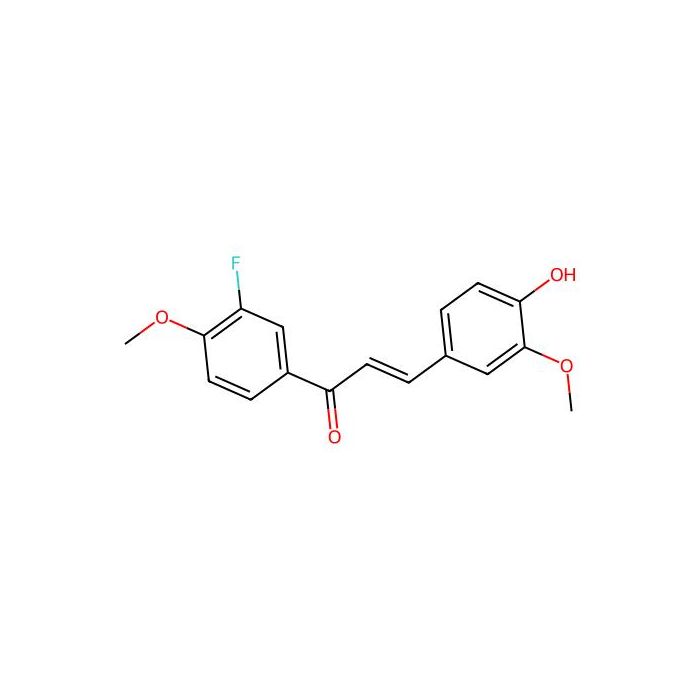
≥98% pour les flux de travail chromatographiques et analytiques sensibles nécessitant une interférence de ligne de base minimale.
🌡
Stockage & expédition
Store at 2-8°C,Protected from light,Desiccated Expédition Wet ice. Consultez le COA spécifique au lot pour les spécifications exactes.
📋
Documents qualité
SDS, COA, fiche technique et fiche de spécifications disponibles au téléchargement. COA spécifique au lot accessible via la recherche par numéro de lot.
📚
Preuve documentaire
Cité dans 0 publications à comité de lecture couvrant la chromatographie, la synthèse organique et les réactions de couplage croisé.
Vue d’ensemble
JC2-11 is an inhibitor of inflammatory corpuscles. JC2-11 inhibits domain-containing protein NLRC 4 , absent in melanoma 2 ( AIM 2 ) and non-canonical ( NC ) inflammatory corpuscles. JC2-11 reduces the secretion of caspase-1 ( p20 ), the cleavage of gasdermin D ( GSDMD ), and the releases of IL-1β and lactate dehydrogenases ( LDH ) in inflammatory bodies. JC2-11 inhibits the activation of inflammatory bodies by destroying the production of reactive oxygen species and the activity of caspase-1
In Vivo
JC2-11 (250 μg/mouse; i.p.; single dose) significantly inhibits the release of caspase-1 (p20) and IL-1β in non-canonical (NC) inflammatory bodies, and weakens the activation of NC inflammatory bodies of C57BL/6 mice model . MCE has not independently confirmed the accuracy of these methods. They are for reference only. Animal Model: C57BL/6 mice (8 weeks, female) . Dosage: 250 μg/mouse. Administration: Intraperitoneal injection; single dose. Result: Exhibited inhibitory effect on NC inflammatory body.
Form:Solid
IC50& Target:NLRP3 inflammasome
Spécifications
Spécifications et pureté
≥98%
Mécanismes biochimiques et physiologiques
JC2-11 is an inhibitor of inflammatory corpuscles. JC2-11 inhibits domain-containing protein NLRC 4 , absent in melanoma 2 ( AIM 2 ) and non-canonical ( NC ) inflammatory corpuscles. JC2-11 reduces the secretion of caspase-1 ( p20 ), the cleavage of gasd
Conditions de stockage de stockage
Store at 2-8°C,Protected from light,Desiccated
Expédié en
Wet ice
Ce produit nécessite l'expédition en chaîne froide. Les services terrestres et autres services économiques ne sont pas disponibles.
Type d'action
INHIBITOR
Pureté
≥98%
Noms et identifiants
Poids moléculaire
302.30
Documentation
📋 Fiche de données de sécurité (FDS)
Document complet couvrant les dangers, la manipulation, le stockage et la conformité réglementaire.
Certificats (CoA, COO, BSE/TSE et tableau d'analyse)
C of A & Other Certificates(BSE/TSE, COO):
Analytical Chart:
Propriétés chimiques et physiques
Solubilité
DMSO : ≥ 100 mg/mL (330.80 mM)
Calculateurs de solution
Molarity Calculator
Determine the necessary mass, volume, or concentration for preparing a solution.
Dilution Calculator
Determine the dilution needed to prepare a stock solution.
Reconstitution Calculator
Avis
Avis des clients
Application Protocols
No item-specific application protocols are provided for JC2-11 in the Product Data.
Not provided:
Assay formats, recommended concentrations, or dilution schemes.
Positive controls, vehicle controls, or plate-layout guidance specific to this compound.
Action:
Refer to the CoA/Spec Sheet and SDS for any handling notes. Develop and validate protocols appropriate to your assay platform (biochemical, biophysical, or cell-based), including vehicle controls and orthogonal confirmation assays.
Biological Roles
Item-specific biological function, target class, and pathway interactions for JC2-11 are not provided in the Product Data.
What can be stated:
JC2-11 is offered as a research small molecule within a compound library category. No biological mechanism, target specificity, or activity profile is supplied here.
General considerations for screening compounds (not item-specific):
Compounds may exhibit on- or off-target interactions depending on assay context, concentration, and physicochemical properties (e.g., aggregation, redox activity, fluorescence interference). Employ counterscreens for fluorescence quenching/auto-fluorescence, redox cycling, and PAINS-like behaviors where appropriate.
Evaluate cytotoxicity baselines (e.g., resazurin/ATP viability assays) in cell-based studies to set non-toxic concentration ranges.
Consider protein binding and membrane permeability when interpreting potency shifts between biochemical and cellular assays.
Strict limitation:
No claims are made regarding the biological roles or therapeutic relevance of JC2-11. All use is for research purposes only and must be validated independently by the end user.
Next steps:
Consult the lot-specific CoA/Spec Sheet and any available vendor/application notes for emerging data. If no data are available, design an orthogonal assay plan to confirm any preliminary hits and rule out assay artifacts.
Buffer Applications
JC2-11 is a small-molecule library member; it is not a buffering reagent and is not used to prepare buffer systems.
Practical notes (general; not item-specific):
When dosing JC2-11 into biological buffers (e.g., PBS, HEPES, Tris) from DMSO stocks, keep final DMSO content as low as the assay permits (often ≤0.1–1% v/v). Mix thoroughly to avoid local supersaturation and potential precipitation.
If precipitation is observed upon dilution, consider adding a small fraction of a miscible organic co-solvent (e.g., ACN or MeOH at ≤2–5% v/v) provided it is compatible with the assay, or reduce the dosing concentration.
Verify that the compound does not interfere with buffer-based readouts (e.g., UV/fluorescence overlap, redox interactions in peroxidase assays). Include vehicle controls.
Buffers (item-specific data):
No buffer capacity, pKa, or formulation roles are provided for JC2-11; none should be inferred. Refer to CoA/Spec Sheet for any solubility/stability comments that could impact buffer choice.
Green Alternatives
Because the structure and intended experimental role of JC2-11 are not provided, green chemistry guidance focuses on solvent and process choices during dissolution, handling, and screening rather than transformations.
Greener handling strategies (general; not item-specific):
Prefer low-toxicity, biodegradable solvents where feasible for cleaning and dilution (e.g., ethanol, isopropanol) instead of chlorinated solvents.
For assay dilution from DMSO stocks, minimize DMSO percentage in final media (≤0.1–0.5% v/v when compatible) to reduce solvent burden and potential cytotoxicity.
Use microscale formats (96/384/1536-well) to cut solvent consumption and waste.
Implement solvent recovery for preparative tasks; employ closed-top sonicators and capped vials to limit VOC emissions.
Illustrative solvent comparison (general; selection must be validated experimentally):
DMSO: Excellent solvating power for diverse chemotypes; not “green” but highly efficient—use minimal quantities and aliquot to reduce waste.
Ethanol: Preferable for cleaning and some dilutions; limited solubility for nonpolar compounds.
Acetonitrile vs methanol (for LC sample prep): ACN often provides sharper peaks and lower backpressure; MeOH is less toxic but may change selectivity—choose based on method performance.
Avoid dichloromethane/chloroform unless strictly necessary; consider ethyl acetate or 2-MeTHF for workups/cleaning where compatible.
Documentation and compliance:
Track solvent usage and waste streams; align with institutional green-chemistry initiatives and EHS guidance.
Pharmaceutical Uses
No pharmacopeial status, excipient role, or formulation use is provided for JC2-11 in the Product Data.
Scope and limitations:
JC2-11 is supplied strictly for research use only. It is not approved as a drug substance, drug product, or pharmaceutical excipient.
Context for discovery research (general; not item-specific):
Small-molecule library members may be evaluated in early discovery (target-based or phenotypic screening) to identify chemical matter of interest. Any progression toward formulation development would require comprehensive nonclinical safety, CMC, and regulatory assessments far beyond the scope of this reagent listing.
Analytical/formulation considerations for early research (general):
If solubility is limited, consider salt screening (acid/base pairing) or enabling formulations (e.g., cyclodextrins, micelles) at the research stage solely to support in vitro assays; do not extrapolate to clinical settings.
Evaluate chemical and photostability (this item requires protection from light), and avoid moisture exposure (desiccated storage is specified) to preserve integrity.
Conclusion:
No pharmaceutical-use claims are made or implied for JC2-11. For any work beyond basic research, perform full due diligence, including regulatory and safety evaluations.
Physical Properties
Item-specific physical constants have not been provided for JC2-11.
Item-specific data (from Product Data):
Appearance: Not specified for this item; refer to CoA/Spec Sheet.
Molecular weight: Not specified for this item; refer to CoA/Spec Sheet.
Molecular formula: Not specified for this item; refer to CoA/Spec Sheet.
Melting point (MP): Not specified for this item; refer to CoA/Spec Sheet.
Boiling point (BP): Not specified for this item; refer to CoA/Spec Sheet.
Density: Not specified for this item; refer to CoA/Spec Sheet.
Solubility: Not specified for this item; refer to CoA/Spec Sheet.
LogP / cLogP: Not specified for this item; refer to CoA/Spec Sheet.
pKa: Not specified for this item; refer to CoA/Spec Sheet.
Refractive index: Not applicable for solids and not specified here if liquid; refer to CoA/Spec Sheet.
General guidance for library compounds (literature/common practice; not item-specific):
Many screening compounds are provided as dry powders or films, often soluble in high-boiling polar aprotic solvents such as DMSO. Secondary solvents (e.g., DMF, methanol, ethanol, acetonitrile, or buffered aqueous media with limited DMSO cosolvent) are commonly employed for assay dilution.
Hygroscopicity, polymorphism, and amorphous content can influence apparent solubility and melting behavior. If crystallinity or hydrate/solvate form is relevant, it will be stated on the CoA.
Action items:
For precise handling (stock solution preparation, solubility limits, and stability), consult the lot-specific CoA/Spec Sheet and any accompanying solubility/stability notes.
Quality and Grades
Item-specific grade and purity were not provided in the Product Data for JC2-11.
Item-specific statements:
Grade/Purity: Not specified for this item; refer to CoA/Spec Sheet.
Context for small-molecule library compounds (general information; not item-specific):
Library compounds for screening are commonly supplied with analytical confirmation of identity and purity, typically by LC–MS and HPLC/UPLC, and often 1H NMR. Acceptance criteria can vary (e.g., >90–98% by HPLC), depending on the library’s design and intended use. UV-trace impurities, residual solvents, and water content may also be reported.
If a stabilizer, salt form, or counterion is used, it will be disclosed on the CoA/Spec Sheet; such details can affect solubility, hygroscopicity, and storage.
For chromatography-dependent workflows (e.g., bioassay QC by LC–MS), low background and well-resolved principal peaks are advantageous; however, “HPLC grade” and similar solvent grades do not apply to solid small molecules.
Recommendations:
Consult the lot-specific CoA for: assay purity (% area by HPLC), identity confirmation (MS m/z, NMR), residual solvent levels, water content (e.g., Karl Fischer), and any impurity profile.
If your application demands a particular specification (e.g., metal content, enantiopurity, salt form), communicate these requirements at order placement so the supplied lot can be matched appropriately, if available.
Reaction and Applications
Item-specific reactivity and synthetic application details for JC2-11 are not provided. Without structural information, targeted reaction guidance cannot be offered.
General research applications for library compounds (not item-specific):
High-throughput screening (HTS) and fragment/lead identification in biochemical or cell-based assays.
Phenotypic screens to uncover pathway modulators, followed by orthogonal assays and target deconvolution where appropriate.
Preliminary structure–activity relationship (SAR) exploration by testing analogs or derivatives (if available in the supplier’s collection).
Practical considerations:
Establish verified identity and purity (per lot CoA) before deployment in screening cascades.
Assess compound stability under assay conditions: light sensitivity (item requires protection from light), hydrolytic stability (desiccated storage suggests moisture sensitivity risk), and adsorption losses (use low-bind plastics or silanized glass if stickiness is suspected).
Prepare DMSO stocks at concentrations compatible with assay windows; evaluate freeze–thaw robustness using small aliquots.
If synthetic derivatization is contemplated:
Obtain structural data and any IP restrictions first. Reaction planning should be based on known functional groups, protecting-group compatibility, and safety data particular to JC2-11.
Note: No named-reaction or mechanistic roles can be assigned to JC2-11 without structural disclosure.
Reaction Conditions
Reaction conditions specific to JC2-11 are not provided and cannot be inferred without structural information.
General guidance if derivatization is later pursued (not item-specific):
Solvents: Select based on functional groups (e.g., anhydrous DMF/DMSO/MeCN for polar couplings; toluene/1,4-dioxane/2-MeTHF for less polar systems). Validate compatibility with any moisture- or light-sensitive features (suggested by the storage requirements).
Temperature: Start at ambient and titrate upward only as needed; monitor for decomposition by TLC/LC–MS. Photolabile compounds should be handled under reduced light or with amberware.
Catalysts/bases: Choose according to the functional handles (e.g., Pd catalysts for cross-coupling; carbodiimides or uronium salts for amidation). Additives and bases must be matched to substrate stability.
Workup and purification: Minimize exposure to aqueous conditions for hydrolytically labile compounds. Shield from light during chromatography if photolabile; use amber solvents or foil-wrapped glassware.
What remains item-specific and unknown:
Functional groups, protecting-group needs, optimal solvent/base/catalyst, and typical yields are not specified for JC2-11. Refer to the CoA/Spec Sheet and any shared synthetic notes if they become available.
Safety and Handling
Authoritative safety information must be taken from the product’s SDS. The Product Data provided do not include GHS classification details for JC2-11.
GHS data (item-specific):
Signal word: Not specified for this item; refer to SDS.
Hazard statements (H-phrases): Not specified for this item; refer to SDS.
Pictograms: Not specified for this item; refer to SDS.
Storage guidance (item-specific):
Store at 2–8 °C, protected from light, desiccated.
Shipped on wet ice.
General laboratory precautions (good practice; not item-specific):
Handle inside a fume hood or other well-ventilated area to avoid inhalation of dust or aerosols.
Wear appropriate PPE: lab coat, safety glasses, and suitable chemical-resistant gloves (e.g., nitrile). Avoid skin and eye contact; wash thoroughly after handling.
Avoid exposure to heat, humidity, and direct light to minimize degradation. Keep container tightly closed under dry, inert conditions if feasible.
Until incompatibilities are known, segregate from strong oxidizers, strong acids/bases, and reducing agents. Avoid contact with reactive metals if the compound is halogenated or strongly chelating (verify via CoA/SDS).
First-aid overview (general; consult SDS for specifics):
Inhalation: Move to fresh air; seek medical attention if symptoms persist.
Skin/eye contact: Rinse with water for at least 15 minutes; remove contaminated clothing; obtain medical advice.
Ingestion: Rinse mouth; do not induce vomiting unless directed by medical personnel; seek medical attention.
Waste and spills:
Absorb small spills with inert material; collect in a properly labeled hazardous waste container. Dispose according to institutional and local regulations.
Solvent Selection
Item-specific solubility data for JC2-11 are not provided. Selection should be guided by the CoA/Spec Sheet and small-scale screening.
General approach for small-molecule dissolution (not item-specific):
Primary stock solvent: Anhydrous DMSO is commonly used for screening compounds (10–50 mM typical). Confirm stability in DMSO before preparing bulk stocks.
Secondary solvents: Depending on polarity and functionality, consider DMF, methanol, ethanol, isopropanol, or acetonitrile. For aqueous assays, dilute DMSO stocks into buffers, keeping final DMSO at ≤0.1–1% v/v (as assay-tolerated).
Solvent ladder strategy:
Try DMSO at room temperature; if insoluble, warm gently (≤40 °C) or sonicate briefly.
Evaluate ACN or MeOH co-solvent blends (e.g., 1:1 DMSO:ACN) before aqueous dilution.
For basic/acidic species (if applicable per CoA), adjust pH of aqueous media or use counterion-forming additives (e.g., small % triethylamine or acetic acid) in organic mobile phases for LC sample prep.
Avoid: High water activity during stock preparation if the compound is moisture-sensitive; prolonged heating; strong acids/bases unless supported by stability data.
Polarity class and dielectric (item-specific):
Not specified for this item; refer to CoA/Spec Sheet.
Documentation:
Record solvent, concentration, lot, and preparation date in your ELN. Retain an aliquot for LC–MS recheck if long-term screening campaigns are planned.
Container and handling recommendations (general; not item-specific):
Upon receipt, allow container to equilibrate to room temperature in a desiccator before opening to prevent moisture condensation. Open under low-humidity conditions. Reseal promptly after use.
Use amber vials or foil-wrap to minimize light exposure. For frequent access, prepare working aliquots to limit repeated freeze–thaw and headspace humidity.
Reconstitution (item-specific data not provided):
Solvent, concentration limits, and stability-in-solution are not specified for this item; refer to CoA/Spec Sheet.
General research practice: prepare initial test solutions in anhydrous DMSO (e.g., 10–50 mM), verify complete dissolution visually and by LC–MS if critical, then dilute into assay media keeping final DMSO low (≤0.1–1% v/v as tolerated by the assay). Avoid prolonged exposure to light during preparation.
Stability monitoring (general):
Periodically check for discoloration, precipitation, or changes in chromatographic profile. If instability is suspected, prepare fresh solutions and compare activity/LC–MS profiles against the original lot.
Structure and Identity
Brief overview: JC2-11 is a small-molecule screening compound supplied for research use in discovery applications. Structural identifiers for this specific item are not disclosed in the provided Product Data.
SKU: J648147 (Aladdin Scientific)
Product name: JC2-11
CAS: 937820-89-8
Molecular formula: Not specified for this item; refer to CoA/Spec Sheet.
Molecular weight: Not specified for this item; refer to CoA/Spec Sheet.
SMILES: Not specified for this item; refer to CoA/Spec Sheet.
InChI / InChIKey: Not specified for this item; refer to CoA/Spec Sheet.
Structural features (general note):
The functional groups, ring systems, and any stereochemical elements for JC2-11 are not provided in the Product Data. Consult the Certificate of Analysis (CoA) or Specification Sheet for the definitive structural representation and identifiers.
2D structure (descriptive):
Not provided. Without a structure (SMILES/InChI or depiction), a text description of connectivity and functional motifs cannot be furnished for this item.
Traceability and identity confirmation (general guidance):
For small-molecule library members, identity is typically supported by LC–MS and 1H NMR data and, where relevant, purity chromatograms. Please refer to the lot-specific CoA for identity confirmation data and acceptance criteria.
Regulatory note:
For research use only; not for diagnostic, clinical, or therapeutic applications.
Synthetic Utility
Synthetic roles for JC2-11 cannot be assigned without structural information. The Product Data do not disclose functional groups, reactive handles, or stereochemical elements that would guide transformations.
General notes for potential use in synthesis (not item-specific):
If the structure becomes available and contains derivatizable motifs (e.g., aryl halides, boronates, amines, acids, alcohols), common cross-couplings (Suzuki–Miyaura, Buchwald–Hartwig), acylations, alkylations, or amide couplings could be envisioned to generate analogs for SAR.
Prior to any synthetic manipulation, confirm identity, purity, and salt form via CoA and independent analytical verification (LC–MS, NMR). Understand protection/deprotection needs and potential chemoselectivity issues.
Be mindful of stability flags indicated by storage instructions here: protection from light and desiccation may imply photolability and/or moisture sensitivity. Plan inert, dry conditions where appropriate.
What is not provided or inferred:
No named reactions, reagent behaviors, or selectivity patterns are attributed to JC2-11 in the absence of a disclosed structure.
Recommendation:
Obtain structural data (SMILES/InChI, spectral package) and any IP restrictions before planning synthetic elaboration or analog campaigns.
Target Specificity
No target specificity information is provided for JC2-11.
Item-specific data required but absent:
Target/antigen name, pathway, or enzyme class.
Binding constants (Kd, Ki), potency (IC50/EC50), or selectivity panels.
Species reactivity or cellular context.
Conclusion:
JC2-11 is supplied as a research small molecule without disclosed target specificity in the present Product Data. Any target-related use must be established by the end user through experimental validation.
Foire aux questions
What is the purity of this product?
This product is supplied at ≥98% purity (chemical assay). Lot-specific values are stated on the Certificate of Analysis.
How should this product be stored?
Store at 2–8 °C, protected from light, desiccated. Keep the container tightly closed with desiccant — the material is moisture-sensitive.
How is this product shipped?
This product ships chilled on wet ice. Unpack on arrival and transfer it to the storage condition stated above.
What are the CAS number, molecular formula and molecular weight?
The CAS Number is 937820-89-8, the molecular formula is C17H15FO4, and the molecular weight is 302.30 g/mol.
What documentation is provided?
Available product documentation, including Certificates of Analysis (COA), Safety Data Sheets (SDS), and specification sheets, is shown in the product document area. Document availability and access follow the current site policy.
Nous utilisons des cookies pour garantir le bon fonctionnement du site et, lorsque cela est autorisé, pour améliorer votre expérience. Vous pouvez gérer vos préférences à tout moment dans les Paramètres. Pour en savoir plus, consultez notre Politique relative aux cookies.
Souhaitez-vous que nous vous envoyions un message lorsque des réductions seront disponibles?
Me rappeler plus tard
Merci ! Veuillez vérifier votre boîte de réception e-mail pour confirmer.
Products are supplied to verified businesses, institutions, and qualified professionals for research and development use only. Not for use in humans, animals, diagnosis, or therapy.