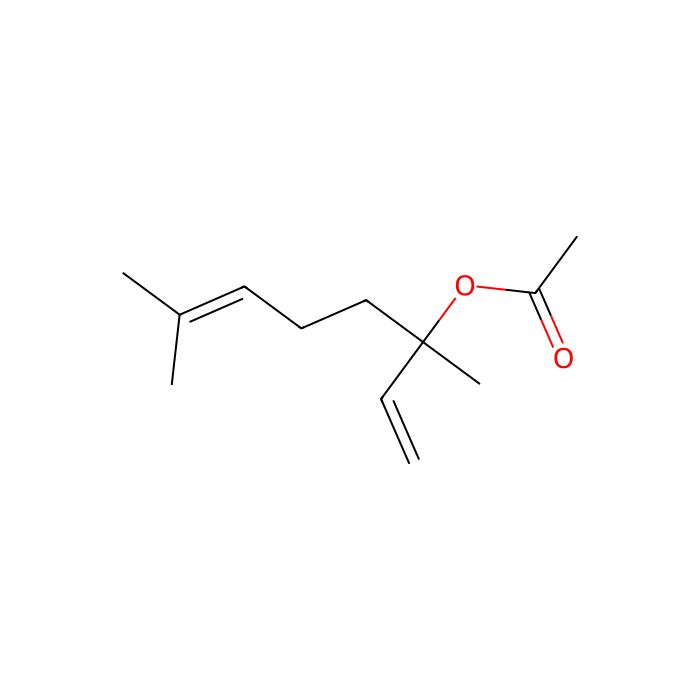
Acétate de linalyle - ≥96% , CAS No.115-95-7

CAS: 115-95-7 Cat. No.: L101415 Formule: C12H20O2 Poids moléculaire: 196.29 Beilstein Registry Number: 1724500 Numéro CE: 204-116-4
DISPONIBLE À COMMANDE
QUALITÉ & PURETÉ ≥96%
Synonyms
Lynalyl acetate|LINALYL ACETATE [MI]|1, 3,7-dimethyl-, acetate|LINALYL ACETATE [HSDB]|1,6-Octadien-3-ol, 3,7-dimethyl-, acetate|3,7-Dimethyl-1,6-octadien-3-yl acetate|Salvia desoleana Atzei & Picci essential oil.|LINALYL ACETATE, (+/-)-|(1)-1,5-Dimethyl-1-vinylhex-4-enyl acetate|1,6-Octadien-3-ol, 3,7-dimethyl-, 3-acetate|Acetic acid linalool ester|UNII: 5K47SSQ51G|LINALOYL ACETATE, (+/-)-|LINALYL ACETATE|Ex bois de rose (synthetic)|1,5-dimethyl-1-vinylhex-4-en-1-yl acetate|3,6-octadien-3-ol acetate|3,7-Dimethyl-1,6-ctadien-3-ol acetate|Acetic acid-linalyl ester|Dehydrolinalool, acetate|(+/-)-linalyl acetate|3,6-octadien-3-yl acetate|1,6-Octadien-3-ol, 3, 7-dimethyl-, acetate|3,7-Dimethyl-acetate(3R)-1,6-Octadien-3-ol|(+-)-3,7-dimethylocta-1,6-dien-3-yl acetate|Phanteine|(.+/-.)-Linalyl acetate|LINALYL ACETATE [FHFI]|LINALYL ACETATE [USP-RS]|Flavor and Extract Manufacturers' Association No. 2636|LINALYL ACETATER|3,7-dimethylocta-1,6-dien-3-yl acetate|Linalool acetate|3,7-dimethyl-1,6octadien-3-yl acetate|LINALYL ACETATE SYNTHETIC|1,5-Dimethyl-1-vinyl-4-hexenyl acetate|linaloyl acetate|Aetic Acid Linalool Ester|LINALOOL ACETATE, DL-|3,7-Dimethyl-1,6-octadien-3-ol acetate|3,7-Dimethyl-3-acetate(3R)-1,6-Octadien-3-ol|Linalyl acetate (natural)|Bergamiol|Licareol acetate|LINALYL ACETATE [INCI]|LINALYL ACETATE [FCC]|1,5-Dimethyl-1-vinylhex-4-enyl acetate|Bergamol
Storage
Room temperature
Shipped In
Normal
★
Taille
USA
Allemagne (EU)*
Prix
Qté
25ml
L101415-25ml
6 En stock
—
9,90$US
100ml
L101415-100ml
3 En stock
—
27,90$US
500ml
L101415-500ml
—
1 En stock
81,90$US
Enter a quantity for the sizes you want to add.

Vue d’ensemble

L'acétate de linalyle est le principal composant de nombreuses huiles essentielles végétales, comme l'huile de lavande, et peut être utilisé comme agent aromatique et ingrédient de parfum.

Spécifications

Synonymes
Lynalyl acetate | LINALYL ACETATE [MI] | 1, 3,7-dimethyl-, acetate | LINALYL ACETATE [HSDB] | 1,6-Octadien-3-ol, 3,7-dimethyl-, acetate | 3,7-Dimethyl-1,6-octadien-3-yl acetate | Salvia desoleana Atzei & Picci essential oil. | LINALYL ACETATE, (+/-)- | (1)-1,5-Dimethyl-1-vinylhex-4-enyl acetate | 1,6-Octadien-3-ol, 3,7-dimethyl-, 3-acetat Afficher plus
Spécifications et pureté
≥96%
Conditions de stockage de stockage
Room temperature
Expédié en
Normal
Pureté
≥96%
Noms et identifiants
Pubchem Sid
Pubchem Sid Url
https://pubchem.ncbi.nlm.nih.gov/substance/488180745
SMILES
CC(=CCCC(C)(C=C)OC(=O)C)C
IUPAC Name
3,7-dimethylocta-1,6-dien-3-yl acetate
InChIKey
UWKAYLJWKGQEPM-UHFFFAOYSA-N
InChI
1S/C12H20O2/c1-6-12(5,14-11(4)13)9-7-8-10(2)3/h6,8H,1,7,9H2,2-5H3
Isomères SMILES
CC(=CCCC(C)(C=C)OC(=O)C)C
WGK Allemagne
1
RTECS
RG5910000
Poids moléculaire
196.29
Beilstein
1724500
Reaxys
1724497
Reaxys-RN_link_address
https://www.reaxys.com/reaxys/secured/hopinto.do?context=S&query=IDE.XRN=1724497&ln=

Données avancées

Taxonomic Classification

Taxonomy Tree

KingdomOrganic compounds
SuperclassLipids and lipid-like molecules
ClassePrenol lipids
SubclassMonoterpenoids
Intermediate Tree Nodes Not available
Direct ParentAcyclic monoterpenoids
Alternative Parents Carboxylic acid esters  Monocarboxylic acids and derivatives  Organic oxides  Hydrocarbon derivatives  Carbonyl compounds  
Molecular FrameworkAliphatic acyclic compounds
Substituents Acyclic monoterpenoid - Carboxylic acid ester - Monocarboxylic acid or derivatives - Carboxylic acid derivative - Organic oxygen compound - Organic oxide - Hydrocarbon derivative - Organooxygen compound - Carbonyl group - Aliphatic acyclic compound
DescriptionThis compound belongs to the class of organic compounds known as acyclic monoterpenoids. These are monoterpenes that do not contain a cycle.
External Descriptors acetate ester - monoterpenoid
Structure 3D
Modèle de structure chimique interactif


Cibles associées (humaines)
NR3C1 Tclin Glucocorticoid receptor (14987 Activities)
Activity TypeRelationActivity valueUnitsAction TypeJournalPubMed IddoiAssay Aladdin ID
Cibles associées (non humaines)
Aspergillus flavus (8875 Activities)
Activity TypeRelationActivity valueUnitsAction TypeJournalPubMed IddoiAssay Aladdin ID
Mycoplasmoides pneumoniae (351 Activities)
Activity TypeRelationActivity valueUnitsAction TypeJournalPubMed IddoiAssay Aladdin ID
Leptinotarsa decemlineata (1161 Activities)
Activity TypeRelationActivity valueUnitsAction TypeJournalPubMed IddoiAssay Aladdin ID
Psoroptes ovis (78 Activities)
Activity TypeRelationActivity valueUnitsAction TypeJournalPubMed IddoiAssay Aladdin ID
Sclerotinia sclerotiorum (877 Activities)
Activity TypeRelationActivity valueUnitsAction TypeJournalPubMed IddoiAssay Aladdin ID
Metamycoplasma hominis (88 Activities)
Activity TypeRelationActivity valueUnitsAction TypeJournalPubMed IddoiAssay Aladdin ID
Fusarium oxysporum f. sp. dianthi (4 Activities)
Activity TypeRelationActivity valueUnitsAction TypeJournalPubMed IddoiAssay Aladdin ID
Mécanismes d'action
Certificats (CoA, COO, BSE/TSE et tableau d'analyse)
C of A & Other Certificates(BSE/TSE, COO):
Analytical Chart:

Find and download the COA for your product by matching the lot number on the packaging.

18 results found

Lot NumberCertificate TypeDateArticle
F2609569F2609569Certificate of AnalysisMay 29, 2026 L101415
F2609383F2609383Certificate of AnalysisMay 29, 2026 L101415
F2609601F2609601Certificate of AnalysisMay 29, 2026 L101415
F2609570F2609570Certificate of AnalysisMay 29, 2026 L101415
F2609384F2609384Certificate of AnalysisMay 29, 2026 L101415
F2609382F2609382Certificate of AnalysisMay 29, 2026 L101415
A1709031A1709031Certificate of AnalysisAug 05, 2024 L101415
C1918154C1918154Certificate of AnalysisJan 11, 2023 L101415
F2309007F2309007Certificate of AnalysisDec 14, 2022 L101415
E2512017E2512017Certificate of AnalysisDec 14, 2022 L101415
D2621092D2621092Certificate of AnalysisDec 14, 2022 L101415
C2328848C2328848Certificate of AnalysisDec 14, 2022 L101415
C2328815C2328815Certificate of AnalysisDec 14, 2022 L101415
C2328748C2328748Certificate of AnalysisDec 14, 2022 L101415
C2328727C2328727Certificate of AnalysisDec 14, 2022 L101415
H2512033H2512033Certificate of AnalysisDec 14, 2022 L101415
H2217403H2217403Certificate of AnalysisAug 04, 2022 L101415
H2217404H2217404Certificate of AnalysisAug 04, 2022 L101415
Propriétés chimiques et physiques
Indice de réfraction1.453
Point d'éclair (°F)201.2 °F
Point d'éclair (°C)94 °C
Point d'ébullition (°C)220°C
Poids moléculaire196.29
XLogP33.300
Hydrogen Bond Donor Count0
Hydrogen Bond Acceptor Count2
Rotatable Bond Count6
Exact Mass196.146 Da
Monoisotopic Mass196.146 Da
Topological Polar Surface Area26.300 Ų
Heavy Atom Count14
Formal Charge0
Complexity237.000
Isotope Atom Count0
Defined Atom Stereocenter Count0
Undefined Atom Stereocenter Count1
Defined Bond Stereocenter Count0
Undefined Bond Stereocenter Count0
The total count of all stereochemical bonds0
Covalently-Bonded Unit Count1
Sécurité et dangers (GHS)
Pictogramme(s)
Signal
Warning
Mentions de danger

H315:Causes skin irritation

H319:Causes serious eye irritation

H335:May cause respiratory irritation

Conseils de prudence

P261:Avoid breathing dust/fume/gas/mist/vapors/spray.

P264:Wash hands [and …] thoroughly after handling.

P272:Contaminated work clothing should not be allowed out of the workplace.

P280:Wear protective gloves/protective clothing/eye protection/face protection.

P321:Specific treatment (see ... on this label).

P302+P352:IF ON SKIN: wash with plenty of water.

P305+P351+P338:IF IN EYES: Rinse cautiously with water for several minutes. Remove contact lenses if present and easy to do - continue rinsing.

P333+P313:IF SKIN irritation or rash occurs: Get medical advice/attention.

P362+P364:Take off contaminated clothing and wash it before reuse.

P501:Dispose of contents/container to an approved waste disposal plant.

P264+P265:Wash hands [and …] thoroughly after handling. Do not touch eyes.

P337+P317:If eye irritation persists: Get medical help.

P332+P317:If skin irritation occurs: Get medical help.

WGK Allemagne
1
RTECS
RG5910000
Reaxys
1724497
Reaxys-RN_link_address
https://www.reaxys.com/reaxys/secured/hopinto.do?context=S&query=IDE.XRN=1724497&ln=
Index Merck
5496
FAQ et articles
Citations of This Product
Calculateurs de solution
Avis

Avis des clients

Application Protocols

No assay-specific, item-validated protocols are provided in the Product Data. The following general laboratory protocols are offered as literature-style guidance for working with hydrophobic volatile esters; adapt to your needs.

  • GC-FID/GC–MS reference standard preparation:
    • Prepare a 1.00 mg/mL stock in isooctane or hexane. Store in crimped vials at 4–8 °C under N2 to minimize oxidation/evaporation. Prepare calibration levels by serial dilution (e.g., 0.05–2.0 mg/mL). Inject 0.5–1 µL with split 20:1; 30 m × 0.25 mm × 0.25 µm 5% phenyl column; oven 50 °C (2 min) → 220 °C at 10 °C/min → 5 min.
  • NMR sample prep:
    • Dissolve 10–30 mg in 0.6 mL CDCl3 with TMS; acquire 1H (400–600 MHz) and 13C spectra promptly to limit air oxidation. Add a trace of BHT if long acquisitions are needed.
  • Hydrolysis test (quick check for linalool formation):
    • Stir 50 mg with 1 mL MeOH + 0.1 mL 0.5 M NaOH at RT for 10–20 min; quench with sat. NH4Cl, extract with Et2O, dry, and analyze by GC/NMR.

Note: These are generic examples, not validated for this SKU. For regulated/quantitative work, generate in-house validation and consult the product’s CoA/SDS.

Biological Roles

General biochemistry background (literature; not specific to this SKU):

  • Natural occurrence: Linalyl acetate is a major constituent of several essential oils (e.g., Lavandula spp.), formed biosynthetically by acetylation of linalool, itself derived from geranyl pyrophosphate via monoterpene synthases.
  • Biogenic function: In plants, monoterpene esters serve roles in defense, pollinator attraction, and inter-plant signaling. Their volatility enables emission from glandular trichomes.
  • Metabolism and fate: In biological systems and the environment, linalyl acetate undergoes hydrolysis to linalool and acetic acid (via esterases or aqueous hydrolysis), followed by oxidation (e.g., to linalool oxides, hydroperoxides, or carbonyls) and eventual mineralization. The ester is more hydrophobic and less reactive as a nucleophile than linalool, altering partitioning into membranes and organic phases.
  • Analytical biology: Used as a calibrant/analyte in metabolomics and volatilome studies (e.g., HS-SPME/GC–MS) for profiling plant emissions or characterizing essential oil chemotypes.
  • Protein/biomacromolecule interactions: As a hydrophobic small molecule with two C=C bonds and an ester, interactions are predominantly via van der Waals forces with lipid bilayers and hydrophobic pockets; no specific binding targets are established under typical research conditions.

No medical or clinical claims are made. Use is restricted to research and laboratory studies as indicated by the Research Use Note.

Buffer Applications

This compound is a hydrophobic monoterpene ester and is not used as a buffering agent or pH standard.

  • Not typically applicable: Linalyl acetate does not possess acid/base functionalities within a pKa range suitable for aqueous buffering, and it is poorly soluble in water.
  • Practical note: If you must introduce it into aqueous systems (e.g., biological assays), use suitable co-solvents (ethanol, DMSO at low % v/v) or emulsifiers/surfactants, and verify that vehicle controls do not impact assay outcomes.

For pH control, select established buffer systems (e.g., phosphate, HEPES, acetate) appropriate to your application.

Green Alternatives

Although linalyl acetate itself is the substrate, many workflows employ solvents and reagents with varying environmental profiles. Consider greener choices surrounding its use.

Greener solvent swaps (literature-guided; choose based on your chemistry):

  • Replace DCM with:
    • Ethyl acetate (EtOAc): bio-derived options available; good solubility for terpenes; higher boiling than DCM but easy to remove.
    • Cyclopentyl methyl ether (CPME) or 2-methyltetrahydrofuran (2-MeTHF): water-tolerant ethers, good for extractions and many catalytic reactions.
  • Replace hexanes with:
    • Heptane or isooctane (reduced neurotoxicity concerns relative to n-hexane), or bio-based alkanes where available.
  • For oxidations/epoxidations:
    • Consider aqueous H2O2-based systems with suitable catalysts (e.g., phosphotungstate or enzymes) instead of peracids when compatible with the substrate.

Comparison highlights (general):

  • DCM vs EtOAc: DCM offers low boiling point and high volatility but has higher toxicity and environmental concerns; EtOAc is less hazardous and often performs adequately for extractions and chromatography.
  • THF vs 2-MeTHF/CPME: greener ethers have improved stability to peroxide formation and can be sourced renewably; they often allow easy phase separations.

Trade-offs:

  • Greener solvents may change reaction rates/selectivity or workup; minor re-optimization (temperature, catalyst loading) may be required.

Note: Always validate alternatives on small scale and verify that any green choice does not promote unwanted hydrolysis/isomerization of this allylic ester.

Pharmaceutical Uses

No therapeutic or clinical claims are made for this product. The following describes general formulation roles for monoterpene esters in research and development contexts (literature-based, not item-specific specifications):

  • Potential excipient roles: fragrance/flavor component in topical, oral-care, or cosmetic-like research formulations to study sensory attributes or volatility profiles. It may also serve as a hydrophobic co-solvent or permeation-modulating component in exploratory formulations, subject to regulatory constraints.
  • Standards and analytics: employed as a reference compound for developing and validating analytical methods (GC-FID/GC–MS) pertinent to flavor/fragrance quality control.
  • Pharmacopeial status: Any compendial listings (e.g., FCC, ISO essential oil standards) vary by region and are not specified for this item.

Formulators should confirm suitability, residual limits, and impurity specifications via the item’s CoA and relevant regulatory guidance. For any product intended beyond laboratory research, obtain appropriate regulatory-grade materials and documentation.

Physical Properties

Item-specific physicochemical specifications are not provided in the Product Data. Do not treat the following as specifications for this lot; they are typical literature values for linalyl acetate (CAS 115-95-7) to assist with method planning.

  • Physical state/appearance (literature): colorless to pale-yellow liquid with characteristic odor.
  • Boiling point (literature): ~220–224 °C at 760 mmHg; lower under vacuum (e.g., ~110–120 °C at ~5–10 mmHg).
  • Melting point (literature): typically liquid well below room temperature.
  • Density (literature): ~0.900–0.910 g/mL at 20–25 °C.
  • Refractive index n20/D (literature): ~1.456–1.459.
  • Flash point (literature): ~95–100 °C (closed cup); combustible.
  • LogP (literature): ~3.8–4.0 (highly hydrophobic).
  • Water solubility (literature): very low (insoluble to sparingly soluble); readily soluble in organic solvents (ethanol, isopropanol, diethyl ether, ethyl acetate, hydrocarbons) and in fixed/essential oils.
  • Vapor pressure (literature): low at ambient temperature (consistent with high boiling monoterpene ester).
  • UV/Vis (literature): lacks strong chromophores; weak end-absorbance in near-UV; no defined UV cutoff reported.

Item-specific values (this SKU):

  • Molecular formula: Not specified for this item; refer to CoA/Spec Sheet.
  • Molecular weight: Not specified for this item; refer to CoA/Spec Sheet.
  • Any additional specifications (water, peroxide, residuals, UV cutoff): Not specified for this item; refer to CoA/Spec Sheet.
Quality and Grades
  • Grade/Purity (item-specific): Not specified for this item; refer to CoA/Spec Sheet for assay, impurities profile, and any stabilizers.

Context for professional users (general guidance):

  • Common research grades you may encounter for fragrance/terpene esters include technical grade, laboratory reagent grade, and high-purity (>98–99%) grades tailored for analytical or synthetic use. Higher grades typically exhibit narrower GC purity windows, lower peroxide/acid values, and better lot-to-lot odor consistency (if relevant to your work), but these attributes are NOT specified for this item unless on the CoA.
  • UV/Chromatography considerations: "GC grade" or "HPLC grade" designations (when available) imply low non-volatile residue and low UV background for analytical methods. No such designation is provided here.
  • Stabilizers/inhibitors: Terpenes are sometimes supplied with trace antioxidants to mitigate autoxidation. Presence/absence and identity of any stabilizer for this SKU are Not specified for this item; refer to CoA/Spec Sheet.
  • Identity/assay verification: For sensitive syntheses, confirm identity/purity by GC-FID/GC–MS and 1H/13C NMR prior to use. Monitor acid number if hydrolysis could impact your process.

Bottom line: Use the CoA to set acceptance criteria for your workflow. If your application is oxidation- or hydrolysis-sensitive, consider blanketing with inert gas and performing a quick GC or NMR check upon receipt.

Reaction and Applications

This allylic acetate is a versatile substrate for studying terpenoid chemistry and for synthetic method development (research use only).

  • Hydrolysis and transesterification (literature):
    • Base-catalyzed saponification in MeOH/H2O or EtOH/H2O gives linalool and acetate; acid-catalyzed transesterification with ROH affords the corresponding linalyl esters (R = Me, Et, Bn, etc.). Control water content to avoid over-hydrolysis.
  • Allylic substitution (Tsuji–Trost, literature):
    • As an allylic acetate, it can undergo Pd(0)-catalyzed allylic substitution with soft nucleophiles (malonates, amines, sulfur/carbon nucleophiles) to form functionalized isoprenoids. Care is needed to manage regioselectivity and prevent isomerization.
  • Electrophilic additions/oxidations (literature):
    • Epoxidation (mCPBA, peracids) on the isolated C=C bonds; subsequent ring opening can diversify functionality.
    • Hydroboration–oxidation or halohydrin formation at the alkenes expands access to polyfunctional derivatives.
    • Ozonolysis or Lemieux–Johnson cleavage to dissect the terpene backbone for structural studies.
  • Hydrogenation/isomerization (literature):
    • Catalytic hydrogenation yields partially or fully saturated acetate derivatives; acidic conditions can cause allylic rearrangements (e.g., formation of terpinyl/geranyl/nerol-derived acetates).
  • Analytical/standard uses:
    • Common as a reference standard in essential oil profiling (GC-FID/GC–MS), method validation for fragrance analysis, and as a probe for oxidation/hydrolysis kinetics.

Practical tips:

  • Dry conditions minimize hydrolysis; avoid strong acids to prevent rearrangement.
  • For Pd-catalyzed reactions, degas solvents, use mild bases (e.g., K2CO3) and 0–25 °C to favor clean substitution.
  • Monitor by GC to distinguish isomerization vs desired transformation.
Reaction Conditions

General literature-guided conditions for common transformations of linalyl acetate (for planning only; optimize for your system):

  • Saponification (to linalool):
    • Solvent: MeOH/H2O (4:1 to 9:1) or EtOH/H2O.
    • Base: NaOH or K2CO3 (0.5–1.5 equiv).
    • Temperature/time: 0–25 °C for mild, up to reflux for faster rates; minutes to hours. Work up with acid quench, extract into organic solvent.
  • Transesterification (to alternate linalyl esters):
    • Acid-catalyzed: catalytic p-TsOH or H2SO4 in anhydrous ROH under Dean–Stark or molecular sieves; 25–80 °C.
    • Base-catalyzed: sodium alkoxide (0.05–0.2 equiv) in the corresponding alcohol at 0–25 °C; monitor to avoid over-saponification.
  • Pd-catalyzed allylic substitution (Tsuji–Trost):
    • Catalyst: Pd(PPh3)4 (1–5 mol%) or Pd2(dba)3/PPh3; base: K2CO3 or Hunig’s base; solvent: THF, toluene, 2-MeTHF, or DMF.
    • Nucleophiles: malonates, amines, thiols, stabilized carbanions.
    • Temperature: 0–25 °C; atmosphere: N2/Ar; time: 1–12 h. Control regioselectivity with ligand choice and temperature.
  • Epoxidation of C=C bonds:
    • Reagent: mCPBA (1.1–1.5 equiv) in DCM or EtOAc at 0–5 °C, then 25 °C.
    • Alternatively, H2O2 with catalytic tungstate or peracetic acid in AcOEt.
  • Hydrogenation:
    • Catalyst: Pd/C or PtO2 (1–10 wt% relative to substrate) in EtOH, EtOAc, or heptane.
    • Conditions: 1–3 bar H2, 20–25 °C; monitor to avoid over-reduction.

Monitoring and analysis:

  • Track reactions by GC-FID/GC–MS; 1H/13C NMR to confirm retention/loss of acetate and alkene pattern. Beware acid-catalyzed isomerization during silica chromatography; neutralize or use basic/neutral alumina if needed.
Safety and Handling

Safety information specific to this item is not provided in the Product Data. Always consult the product SDS for authoritative, item-specific guidance.

General laboratory safety considerations for linalyl acetate (literature/typical for monoterpene esters):

  • GHS classification and H-statements: Not specified for this item; refer to SDS. Similar esters may cause skin/eye irritation and may be harmful to aquatic life; treat as a combustible liquid.
  • Pictograms: Not specified for this item; refer to SDS.
  • PPE: Use lab coat, safety glasses or splash goggles, and appropriate chemical-resistant gloves (e.g., nitrile). Avoid skin contact due to potential sensitization/irritation.
  • Ventilation: Handle in a fume hood to minimize inhalation of vapors and to control odor.
  • Incompatibilities: Avoid strong acids (can promote isomerization and hydrolysis), strong bases (saponification), and strong oxidizers (risk of exothermic reaction and oxidative degradation). Avoid prolonged exposure to air/light which can lead to oxidation and odor changes.
  • Stability notes: Allylic esters can slowly hydrolyze to linalool and acetic acid in moist conditions and can oxidize at allylic positions; minimize moisture and oxygen exposure.
  • Fire safety: Treat as a combustible organic liquid; keep away from ignition sources. Use CO2, dry chemical, or foam to extinguish small fires; water spray to cool containers.
  • First aid (overview; defer to SDS): If on skin, wash with soap and water; remove contaminated clothing. If in eyes, rinse cautiously with water for several minutes. If inhaled, move to fresh air. If ingested, rinse mouth; do not induce vomiting; seek medical attention.

Disposal: Follow local regulations for organic solvent/organic waste; avoid release to the environment.

Solvent Selection

Linalyl acetate is not typically used as a solvent; it is a hydrophobic reactant/standard. However, selecting an appropriate solvent for handling, analysis, or reaction is important.

  • Polarity/miscibility (literature): Nonpolar to weakly polar ester; immiscible with water; miscible with hydrocarbons (hexanes, toluene), ethers (MTBE, THF, CPME), chlorinated solvents (DCM), and polar aprotic esters (EtOAc). Limited solubility in highly polar protic media unless cosolvents are used.
  • Dielectric profile (inferred from class): behaves like other medium-boiling terpenoid esters; suitable for nonpolar and moderately polar organic solvents.
  • Typical choices by task:
    • GC/analytical sample prep: n-hexane, isooctane, or DCM for GC-FID/GC–MS; ethanol or acetonitrile for LC if needed (note weak UV absorbance).
    • Synthetic transformations sensitive to hydrolysis: anhydrous toluene, heptane, or CPME under inert atmosphere.
    • Oxidations/epoxidations: DCM or EtOAc at 0–25 °C; consider greener alternatives like EtOAc or CPME where feasible.
    • Hydrolysis/transesterification: alcoholic solvents (MeOH, EtOH) with catalytic base/acid as appropriate.
  • When to choose alternatives:
    • If odor control is critical, prefer low-odor solvents (isooctane, heptane) and maintain good ventilation.
    • For greener processing, 2-MeTHF or CPME can replace DCM/THF in many cases, providing similar solubilization of hydrophobes.

Note: Solvent choice should also consider downstream purification (e.g., ease of removal under reduced pressure vs potential co-distillation with a 220+ °C ester).

Storage and Reconstitution
  • Storage conditions (item-specific from Product Data): Store at room temperature.
  • Shipping (item-specific from Product Data): Shipped under normal conditions.
  • State: Neat liquid; no reconstitution required.

Good-practice handling (general recommendations for allylic esters; not item-specific requirements):

  • Keep container tightly closed in a well-ventilated place. Minimize headspace oxygen and moisture to limit oxidation/hydrolysis; optional inert gas blanket (N2/Ar) after each use improves longevity.
  • Protect from strong light and heat sources; store away from acids, bases, and oxidizers.
  • If using over extended periods, consider aliquoting into amber glass vials to reduce repeated air exposure.
  • Before critical experiments, verify integrity by GC or 1H NMR (check for linalool or acetic acid as hydrolysis markers and for peroxide/oxidation byproducts).
  • Freeze–thaw: Not applicable; avoid freezing unless stability data support it, as viscosity and crystallization are not typical concerns but repeated thermal cycling can accelerate degradation.

Reconstitution guidance: If needed for analytical stocks, prepare solutions in suitable organic solvents (e.g., hexane, isooctane, EtOH) under dry, inert conditions. Label with preparation date and solvent; store cold and protected from light if stability is critical.

Research Use Note (item-specific): For research use only.

Structure and Identity

Linalyl acetate is a monoterpene allylic acetate widely encountered in plant essential oils (research/lab use only here).

  • Item identifiers (from Product Data):
    • SKU: L101415
    • CAS: 115-95-7
    • PubChem CID: 8294
    • InChIKey (catalog entry): 370919 (as provided)
  • Literature identity (for reference; not item-specific specifications):
    • Molecular formula (literature): C12H20O2
    • Molecular weight (literature): ~196.29 g/mol
    • SMILES (literature): CC(C)=CCC=C(C)COC(=O)C
    • InChIKey (literature): Not specified here; consult PubChem CID 8294
  • Structural features (general chemistry description):
    • Functional groups: one secondary/tertiary allylic acetate ester (–O–C(=O)–CH3), two isolated alkenes along an isoprenoid (C10) backbone.
    • Isoprenoid motif: derived from linalool (a monoterpene alcohol) via acetylation; retains the 3,7-dimethyl-1,6-octadienyl skeleton.
    • Stereochemistry: commercial/lab material is commonly racemic at C-3 (the carbon bearing the acetate substituent). The C=C bonds are typically a mixture of geometrical conformers/isomers under acidic conditions due to allylic rearrangements.
    • 2D structure in words: an eight-carbon chain bearing methyl branches at C-3 and C-7, with double bonds around C-1–C-2 and C-6–C-7 (allylic to the acetate). The terminal alcohol of linalool is replaced by an acetate ester, giving a more hydrophobic, less nucleophilic functionality.

Note: Where precise identifiers are required for regulatory documentation, consult the item’s CoA/Spec Sheet and SDS.

Synthetic Utility

From a synthetic perspective, linalyl acetate is an allylic acetate embedded in a monoterpene scaffold, enabling several valuable transformations (literature context):

  • Allylic leaving group: The acetate serves as a leaving group for Pd(0)-catalyzed allylic substitution (Tsuji–Trost) with C-, N-, S-, and O-nucleophiles, facilitating formation of substituted isoprenoids with control over regio- and stereochemistry when conditions are tuned.
  • Protecting-group logic: Compared to linalool, the acetate masks the alcohol, reducing nucleophilicity and coordinating ability during reactions on the alkene sites (e.g., selective epoxidations or hydroborations), and can later be hydrolyzed to unveil the alcohol.
  • Platform for oxidative diversification: The two isolated double bonds allow sequential or selective epoxidation, dihydroxylation, or oxidative cleavage, offering access to terpene-derived polyols, carbonyls, and acids.
  • Hydrogenation/isomerization manifold: Catalytic hydrogenation can set defined saturation patterns, while Brønsted or Lewis acids can rearrange the allylic cation to alternative terpene skeletons (e.g., terpinyl/geranyl derivatives), useful in biomimetic studies.
  • Fragmentation/assembly: Ozonolysis followed by Wittig/olefination can remodel the carbon framework, supporting synthesis of analogs and labeled standards.

Practical considerations:

  • Avoid strong acids if retention of the native skeleton is needed; allylic rearrangements are facile.
  • Conduct moisture-sensitive steps under inert atmosphere to minimize hydrolysis.
  • Use rapid GC monitoring to track isomer ratios and minimize over-oxidation during electrophilic additions.
Target Specificity

Not applicable. This product is a small-molecule monoterpene ester, not an affinity reagent or antibody. No antigen/epitope specificity, clone, isotype, or species reactivity applies.

Souhaitez-vous que nous vous envoyions un message lorsque des réductions seront disponibles?

Me rappeler plus tard

Merci ! Veuillez vérifier votre boîte de réception e-mail pour confirmer.

Oups ! Les notifications sont désactivées.