GRADE & PURITYMoligand™?Moligand™ — Aladdin's line of ligands and bioactive small molecules. Use for receptor, pathway, and binding studies needing defined small-molecule tools.10 mM in DMSO
Moligand™, 10 mM in DMSO Moligand™ for sensitive chromatographic and analytical workflows requiring minimal baseline interference.
🌡
Storage & shipping
Store at -80°C Ships Dry ice packs + Cold packs Check lot-specific COA for exact specifications.
📋
Quality documents
SDS, COA, datasheet, and spec sheet available for download. Lot-specific COA accessible via lot number lookup.
📚
Literature proof
Cited in 1 peer-reviewed publications across chromatography, organic synthesis, and cross-coupling reactions.
Vue d’ensemble
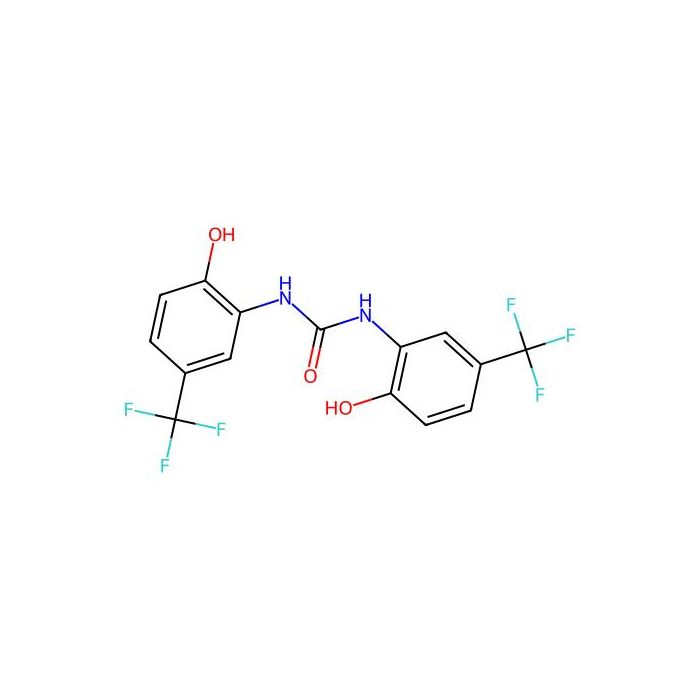
NS1643 is a partial agonist of human ether-a-go-go-related gene ( hERG ) K + channels with an EC 50 of 10.5 μM. NS1643 inhibits the growth of breast cancer tumors in TNBC mouse models. NS1643 inhibits cell migration and invasion of breast cancer cells .
Specifications
Spécifications et pureté
Moligand™, 10 mM in DMSO
Conditions de stockage de stockage
Store at -80°C
Expédié en
Dry ice packs + Cold packs
Ce produit nécessite l'expédition en chaîne froide. Les services terrestres et autres services économiques ne sont pas disponibles.
Determine the necessary mass, volume, or concentration for preparing a solution.
Dilution Calculator
Determine the dilution needed to prepare a stock solution.
Reconstitution Calculator
Avis
Avis des clients
Application Protocols
No tested applications or validated protocols are provided in the Product Data for NS1643. The following outlines general good practices for small-molecule ligands in screening and assay workflows.
Stock preparation (general)
Prepare a concentrated stock (e.g., 10–50 mM) in anhydrous DMSO. Vortex and, if needed, brief sonication to ensure dissolution. Record solvent lot, exact concentration, and date.
Working solutions
Perform serial dilutions to reach target concentrations with a final solvent content typically ≤1% v/v in biological assays, unless otherwise validated. Include matched vehicle controls.
Plate handling
Use low-binding plates/tubes to reduce adsorption; pre-equilibrate plates to assay temperature to minimize edge effects.
Data quality
Run duplicates/triplicates and include positive/negative controls suited to your assay. Track freeze–thaw cycles and discard stocks after exceeding your lab’s threshold.
Documentation
Capture lot number (SKU: N1498641), CAS, and CID in electronic records to ensure traceability and reproducibility.
Note: For any target-specific operating instructions, consult peer-reviewed literature or your internal SOPs.
Biological Roles
Note: No target, pathway, or mode-of-action details are provided in the Product Data for NS1643. The following remarks are general to small-molecule research ligands and are not specific claims for this item.
General role of small-molecule ligands
Serve as chemical tools to modulate biological systems in vitro, enabling hypothesis testing about protein function, signaling, or transport processes.
Facilitate structure–activity relationship (SAR) exploration when combined with analogs and derivatives.
Typical experimental uses (general)
Concentration–response studies to quantify effects on cellular phenotypes or biochemical readouts.
Target deconvolution workflows via orthogonal assays, counterscreens, and chemical proteomics when appropriate.
Practical considerations
Verify compound identity and purity before critical experiments; impurities and degradation products may exhibit distinct bioactivity.
Evaluate compound stability in assay buffer and in the presence of cells or enzymes (time-course potency drift is a warning sign of instability or adsorption).
Control for solvent effects and plastic adsorption; consider low-binding labware and matched vehicle controls.
Data stewardship
Record batch/lot, solvent, stock concentration, freeze–thaw cycles, and assay metadata to ensure reproducibility.
Compliance
Research use only. Not for human or veterinary use; not for diagnostic or therapeutic applications.
Buffer Applications
NS1643 is not a buffering agent and does not constitute a conventional component of biochemical buffer systems. Accordingly, buffer recipes and pH ranges are not applicable.
Practical note (general)
When preparing working solutions, choose a buffer system that suits the biological assay (e.g., HEPES, PBS, Tris), and confirm that the final percentage of organic co-solvent (e.g., DMSO or ethanol) is tolerated by the buffer and the assay system.
Avoid exceeding the co-solvent threshold known to perturb the biology or detection chemistry; include vehicle controls to account for any solvent contribution.
Green Alternatives
Context: As a bioactive research ligand used at low concentrations, NS1643 does not typically present high-volume solvent or reagent consumption. Greener choices mainly concern solvent selection and waste minimization during solution preparation and assay execution.
Solvent choices (general guidance)
Prefer aqueous buffers whenever intrinsic solubility permits. If an organic co-solvent is needed, minimize its final concentration.
Among common solvents, ethanol has a more favorable environmental profile than DMF and DMSO but may be less effective at dissolving hydrophobic ligands.
Process recommendations
Use micro-scale stocks and on-demand dilutions to reduce expired material and waste.
Employ 96/384-well miniaturization to limit solvent usage per data point.
Consolidate compatible waste streams and use solvent recovery where facilities exist.
Comparative considerations (general; not product-specific)
Ethanol: Renewable feedstocks available; higher volatility may increase evaporative losses.
Aqueous buffer + minimal co-solvent: Lowest environmental impact when feasible.
Trade-offs
Greener solvent choices can affect solubility and assay performance. Validate potency, stability, and background signal when changing solvent systems to ensure data integrity.
Pharmaceutical Uses
No pharmaceutical excipient role, compendial status, or manufacturing application is provided for NS1643 in the Product Data. This product is supplied strictly for research use only.
General clarification
Not intended for human or veterinary use, clinical diagnostics, or therapeutic administration.
Not listed here with any pharmacopeial (USP/EP/JP) monograph or GMP status.
Research-context handling
Suitable for discovery research such as in vitro assays and non-clinical studies where small-molecule ligands are used to probe biological mechanisms.
If pursuing translational work, separate sourcing and qualification under appropriate GMP/GLP frameworks would be required; this product is not represented for such use.
Physical Properties
Summary: Item-specific physicochemical data are not disclosed in the Product Data. The following guidance is general to small-molecule screening ligands of similar class and should be verified experimentally.
Item-specific (from Product Data)
Appearance: Not specified for this item; refer to CoA/Spec Sheet.
Molecular weight: Not specified for this item; refer to CoA/Spec Sheet.
Molecular formula: Not specified for this item; refer to CoA/Spec Sheet.
Typical/literature-style properties for small-molecule research ligands (general guidance; not product specifications)
Melting/boiling points: Often solid with a defined melting point; BP typically not applicable for solids before decomposition. Exact values: Not specified for this item; refer to CoA/Spec Sheet.
Solubility: Frequently prepared as concentrated stocks in anhydrous DMSO; aqueous solubility can vary widely and may require co-solvents or surfactants. Exact solubility: Not specified for this item; refer to CoA/Spec Sheet.
LogP/logD, pKa, refractive index: Not specified for this item; consult literature or perform experimental determination.
Hygroscopicity/photostability: Not specified; protect from moisture and light as a precaution for sensitive ligands.
Practical implications
For assay use, verify solubility at intended concentrations in the actual assay matrix (buffer components, serum, plasticware). Perform a solvent-titration pretest (e.g., 0.1–1% DMSO) to ensure compatibility with biological readouts.
Filter sterilization of working solutions is often feasible through 0.22 μm PVDF/PTFE filters if chemically compatible.
Quality and Grades
Overview: This item is supplied as Moligand™ grade, indicating suitability for use as a small-molecule research ligand in screening, pharmacology, and related discovery workflows.
Item-specific (from Product Data)
Grade: Moligand™
Appearance: Not specified for this item; refer to CoA/Spec Sheet.
What Moligand™ typically implies (general description; not a specification)
Emphasis on identity confirmation (e.g., LC–MS/HRMS and/or NMR) and purity consistent with research-ligand use.
Formulation optimized for stability in frozen storage (−80 °C) and compatibility with standard stock-solution practices (e.g., DMSO).
Batch documentation (CoA) generally includes test methods and acceptance criteria relevant to small-molecule screening.
Analytical considerations
UV/Vis cutoff, residual solvents, water/peroxide content, and trace metals: Not specified for this item; refer to CoA/Spec Sheet.
If employing sensitive bioassays or photometric readouts, consider running a vehicle control with the same solvent lot and verify background absorbance/fluorescence.
Practical advice
Request the CoA for the exact lot to confirm identity, purity basis (e.g., AUC or NMR), residual solvent limits, and any stabilizers. Re-verify purity after long-term storage with quick LC–MS or HPLC if critical to your workflow.
Reaction and Applications
Scope: NS1643 is primarily a bioactive small-molecule research ligand rather than a general-purpose synthetic reagent. Consequently, its most relevant applications are in discovery biology and screening rather than in stoichiometric or catalytic organic reactions.
Not a typical reagent for named reactions
No manufacturer guidance is provided for use in cross-couplings, condensations, or functional-group transformations. If derivatization is intended (e.g., for SAR or probe development), establish structure, reactive handles, and stability using the CoA/spectral data.
Discovery/application contexts (general to research ligands)
Use in assay development, target engagement studies, and concentration–response profiling.
Compatibility with biochemical, biophysical, or cellular assays contingent on solvent percentage and exposure time.
Practical tips for biological testing
Prepare a master 10–50 mM DMSO stock; perform serial dilutions to achieve a 0.1–1% final solvent in assay.
Include matched vehicle controls and, when possible, orthogonal readouts (e.g., biochemical vs cell-based) to deconvolute off-target or solvent effects.
Confirm identity and purity by in-house LC–MS if data quality is critical; impurities at even a few percent can confound potency estimates.
Intellectual property and referencing
Cite the CAS (448895-37-2) or CID (10177784) in internal records to streamline cross-referencing with literature and databases.
Reaction Conditions
This section is generally not applicable. NS1643 is not offered as a reagent for carrying out named organic reactions, and no manufacturer-supplied reaction conditions pertain to its use.
If conducting chemical modifications (general guidance)
Choose conditions compatible with the compound’s functional groups (information not provided here—consult structural data).
Employ inert-atmosphere techniques and anhydrous solvents where moisture/oxygen sensitivity is suspected.
Monitor reactions by LC–MS/HPLC to avoid over-reaction or degradation.
For biological testing rather than synthesis
Focus on solvent selection, dosing accuracy, and plate handling as described under Solvent Selection and Application Protocols (vehicle controls, serial dilutions, and assay-specific tolerances).
Safety and Handling
Safety overview: The listing does not include detailed GHS information for NS1643. Treat as a laboratory research chemical with unknown hazards and handle conservatively.
Item-specific (from Product Data)
GHS classification, signal word, H-statements, pictograms: Not specified for this item; refer to SDS.
Storage: Store at −80 °C. Shipped on dry ice packs + cold packs.
General laboratory precautions (not product-specific; defer to SDS)
PPE: Lab coat, safety glasses, and appropriate chemical-resistant gloves (e.g., nitrile). Use in a fume hood to avoid inhalation and minimize exposure.
Avoid contact with skin and eyes; prevent aerosol formation. Do not ingest or inject. For research use only.
Incompatibilities: Until specific data are known, avoid strong oxidizers/reducers and reactive bases/acids. Keep away from heat and light.
First aid (general): In case of eye/skin contact, rinse with water for at least 15 minutes; remove contaminated clothing. If inhaled, move to fresh air. If swallowed, rinse mouth; do not induce vomiting; seek medical attention. Always consult the SDS for authoritative instructions.
Waste disposal
Dispose according to institutional and local regulations for organic laboratory chemicals. Segregate halogenated vs non-halogenated organic waste as appropriate for the solvent used in formulations.
Solvent Selection
Guidance: NS1643 is used as a research ligand; definitive solubility data are not provided. The following are general guidelines for small-molecule tool compounds.
Primary solvent for stocks (general practice)
Anhydrous DMSO is the default for 10–50 mM stocks due to broad solvating power and assay compatibility at low final percentages.
Alternative solvents/co-solvents (verify compatibility)
DMF or ethanol can be used if DMSO is unsuitable; aqueous working solutions may require co-solvents (e.g., 0.1–1% DMSO) and surfactants (e.g., 0.01% Tween-20) depending on assay tolerance.
Polarity and miscibility (general)
DMSO, DMF, and ethanol are fully miscible with water and facilitate serial dilutions; always validate that the final solvent percentage does not perturb the biological system or detection method.
Practical tips
Warm gently (room temperature) and vortex/sonicate to aid dissolution; avoid elevated temperatures that could induce degradation.
Pre-wet plasticware with solvent or use low-binding tubes/plates to minimize adsorption losses for hydrophobic ligands.
Filter working solutions through compatible 0.22 μm membranes if particulate appears; avoid cellulose-ester filters with strong organic solvents.
Comparison (general)
DMSO: Best overall solvency; potential assay interference at >1–2% v/v.
Ethanol: Volatile; higher permissible % in some assays but can affect cell physiology.
Aqueous buffers: Lowest interference but require sufficient intrinsic solubility or co-solvent.
Storage and Reconstitution
Item-specific storage from Product Data and general reconstitution practices are summarized below.
Item-specific (from Product Data)
Storage conditions: Store at −80 °C.
Shipping: Dry ice packs + cold packs.
General handling
Keep tightly closed in original container. Allow to equilibrate to room temperature in a desiccator before opening to minimize moisture condensation.
Protect from light if the compound is photosensitive (status not specified; take precautionary measures until confirmed).
Reconstitution (general guidance; not a product specification)
Prepare a concentrated stock in anhydrous DMSO (e.g., 10–50 mM). If alternative solvents are needed (DMF, ethanol), verify stability and assay compatibility.
Filter sterilization of working solutions (0.22 μm PVDF/PTFE) may be performed if required by the application, after confirming chemical compatibility.
Aliquoting and stability
Aliquot stocks into single-use portions to avoid repeated freeze–thaw cycles. Record the number of thaw cycles; discard aliquots showing precipitation, discoloration, or potency drift.
Store frozen stocks at −80 °C; avoid frost-free freezers. Short-term handling on cold packs is acceptable during setup; return promptly to −80 °C after use.
Documentation
Maintain records of preparation date, solvent, concentration, and lot/CoA reference. For exact shelf-life and stability, consult the CoA/Spec Sheet.
Structure and Identity
Brief overview: NS1643 is a cataloged small-molecule research ligand (Moligand grade) supplied for screening and assay development. Item-specific identifiers are limited in the present listing.
Item-specific (from Product Data)
Product name: NS1643 (SKU: N1498641)
CAS: 448895-37-2
PubChem CID: 10177784
Grade: Moligand™
InChIKey: Not specified for this item; refer to CoA/Spec Sheet.
SMILES: Not specified for this item; refer to CoA/Spec Sheet.
Molecular formula: Not specified for this item; refer to CoA/Spec Sheet.
Molecular weight: Not specified for this item; refer to CoA/Spec Sheet.
Structural features (general note)
Functional-group and ring-system details are not provided in this listing. For precise 2D structure (including heterocycles, substituent pattern, and any stereochemical elements), please consult the CoA/Spec Sheet or authoritative databases using the provided CAS or CID.
2D structure description (general)
Without the definitive SMILES/InChI, a reliable textual description of rings, linkers, and functional groups cannot be given here. Obtain structural diagrams from the CoA or trusted cheminformatics sources to support computational modeling, docking, or SAR comparisons.
Synthetic Utility
NS1643 is supplied as a finished research ligand rather than a synthetic building block. Without disclosed structural handles in the Product Data, specific reactivity cannot be detailed.
General comments on potential derivatization (non-product-specific)
If functional groups are present (e.g., amines, phenols, halides), they could enable analog synthesis, prodrug design, or attachment to reporter tags/biotin for target-ID workflows.
Prior to derivatization, confirm structural identity and purity (NMR, LC–MS) and assess stability under planned reaction conditions.
Workflow considerations
Map potential liabilities (oxidation, hydrolysis, photolysis) with small-scale stress tests.
Use orthogonal analytics (HPLC, HRMS) to ensure modifications do not introduce isomeric or oxidative byproducts that confound bioassays.
Retrosynthetic planning
Leverage known scaffolds (from literature associated with the CAS/CID) to design route modifications; however, the present listing does not provide route or intermediate details—consult primary literature for synthetic pathways.
Target Specificity
Target, pathway, or selectivity information is not provided in the Product Data for NS1643.
Item-specific
Assayed targets, binding constants, and selectivity profiles: Not specified for this item; refer to CoA/Spec Sheet or primary literature associated with the CAS/CID.
General recommendation
If target specificity is critical, perform or consult orthogonal assays and counterscreens across relevant target families to establish selectivity and off-target risk under your conditions.
Foire aux questions
What is Moligand??
Moligand? is one of Aladdin Scientific's premium product lines, formulated for high-purity applications across multiple workflows. Compared to standard grades in the same workflow, Moligand? products typically offer tighter specifications, more rigorous QC, and stronger lot-to-lot consistency.
How should this product be stored?
Store at ?80 °C. Ultra-low temperature storage is required to maintain the specified shelf life.
How is this product shipped?
This product ships frozen with dry ice and cold packs. Unpack on arrival and transfer it to the storage condition stated above; handle dry ice with insulated gloves in a ventilated area.
What are the CAS number, molecular formula and molecular weight?
The CAS Number is 448895-37-2, the molecular formula is C15H10F6N2O3, and the molecular weight is 380.24 g/mol.
What documentation is provided?
Available product documentation, including Certificates of Analysis (COA), Safety Data Sheets (SDS), and specification sheets, is shown in the product document area. Document availability and access follow the current site policy.
Nous utilisons des cookies pour garantir le bon fonctionnement du site et, lorsque cela est autorisé, pour améliorer votre expérience. Vous pouvez gérer vos préférences à tout moment dans les Paramètres. Pour en savoir plus, consultez notre Politique relative aux cookies.
Souhaitez-vous que nous vous envoyions un message lorsque des réductions seront disponibles?
Me rappeler plus tard
Merci ! Veuillez vérifier votre boîte de réception e-mail pour confirmer.
Products are supplied to verified businesses, institutions, and qualified professionals for research and development use only. Not for use in humans, animals, diagnosis, or therapy.