QUALITÉ & PURETÉMoligand™?Moligand™ — Aladdin's line of ligands and bioactive small molecules. Use for receptor, pathway, and binding studies needing defined small-molecule tools.10 mM in DMSO
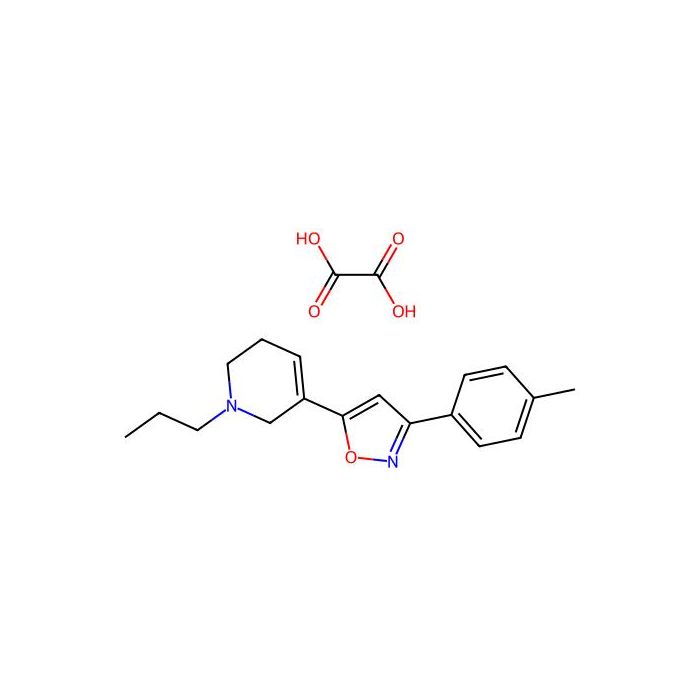
PD 144418 is a highly affinity, potent and selective sigma 1 (σ1) receptor ligand ( K i values of 0.08 nM and 1377 nM for σ1 and σ2 respectively). PD 144418 devoids of any significant affinity for other receptors, ion channels and enzymes .PD 144418 shows potential antipsychotic activity .
Spécifications
Spécifications et pureté
Moligand™, 10 mM in DMSO
Conditions de stockage de stockage
Store at -80°C
Expédié en
Dry ice packs + Cold packs
Ce produit nécessite l'expédition en chaîne froide. Les services terrestres et autres services économiques ne sont pas disponibles.
Certificats (CoA, COO, BSE/TSE et tableau d'analyse)
C of A & Other Certificates(BSE/TSE, COO):
Analytical Chart:
Propriétés chimiques et physiques
Indice de réfraction
n20D1.55 (Predicted)
Calculateurs de solution
Molarity Calculator
Determine the necessary mass, volume, or concentration for preparing a solution.
Dilution Calculator
Determine the dilution needed to prepare a stock solution.
Reconstitution Calculator
Avis
Avis des clients
Application Protocols
Only product-data-derived details may appear here. No tested applications or protocols are provided in the Product Data for this item.
Recommended dilutions, assay types (WB, IHC, IF, FC), or positive controls: Not specified for this item; refer to CoA/Spec Sheet and relevant literature for PD 144418.
General suggestion (not product specification): Prepare a DMSO stock (e.g., 10 mM), include vehicle controls, and titrate across a suitable concentration range determined by your assay design. Validate solubility and stability empirically.
Biological Roles
Biological context below reflects general literature about PD 144418 class usage and should not be taken as item-specific claims. Verify target and activity details from primary sources for your application.
Reported literature role: PD 144418 is widely cited as a high-affinity, selective sigma-1 receptor ligand used as a chemical tool in neuropharmacology and cell signaling studies. It has been employed to probe sigma-1 mediated modulation of ion channels, ER–mitochondria signaling, and chaperone-like functions.
Utility in chemical biology:
Serves as a reference compound in binding assays to quantify sigma-1 receptor occupancy and selectivity relative to sigma-2 and other off-targets.
Supports structure–activity relationship (SAR) exploration around sigma-1 pharmacophores.
Assay modalities (examples from literature):
Radioligand displacement using [3H]- or [125I]-labeled sigma-1 tracers.
Cell-based functional assays (e.g., calcium flux, ER stress readouts) to assess downstream signaling modulation.
Important: No therapeutic or diagnostic use is implied. This product is for research use only. For exact potency, selectivity, and mode-of-action parameters, consult peer-reviewed publications and confirm with your own assays.
Buffer Applications
This item is a small-molecule research ligand and is not a buffering agent. Buffer selection is typically driven by the biological assay rather than by the compound itself.
Practical guidance:
Use standard assay buffers (e.g., HEPES, PBS, Tris) matched to your target biology and detection modality.
Maintain low final DMSO (≤0.5–1% v/v) to minimize effects on protein stability and cell viability.
Include vehicle controls to account for any solvent effects.
For formulation details (pH, salts, cofactors), follow the requirements of your specific target or assay system.
Green Alternatives
For screening ligands such as PD 144418, “green alternatives” most impact solvent and process choices rather than replacement of the compound itself.
Solvent strategy (general, literature-based):
Prefer water-buffered systems with minimal DMSO (≤0.5–1% v/v) where assay tolerance allows.
When organic co-solvent is necessary, consider relatively greener choices such as ethanol or propylene carbonate instead of DMF/DMF-heavy mixtures, subject to solubility and biological compatibility.
Sample handling:
Use miniaturized assay formats (384/1536-well) to reduce solvent volumes and waste.
Implement closed, cold-chain logistics to minimize freeze–thaw cycles and material loss.
Workup and waste:
Segregate halogenated vs non-halogenated waste; choose greener cleaning solvents (e.g., ethanol/water) for equipment where compatible.
Note: There is no practical “greener substitute” for the identity of PD 144418 itself in target-validation studies; instead, optimize assay design, solvent selection, and scale to reduce environmental impact while maintaining data quality.
Pharmaceutical Uses
This product is supplied strictly for research use and is not intended for human or veterinary applications, diagnostics, or clinical use.
Excipient/formulation status: Not applicable—this compound is a research ligand and is not an approved pharmaceutical excipient.
Pharmacopeial status: None reported for this item.
Relevant to early discovery only:
Can serve as a reference compound in medicinal chemistry and pharmacology studies (binding, selectivity, mechanism) after confirming the exact target profile from literature.
If used in preclinical research, ensure appropriate in-house qualification (identity, purity, stability) and adhere to institutional IACUC/IRB and regulatory requirements where applicable.
No claims are made regarding efficacy, safety, dosing, or clinical utility.
Physical Properties
Item-specific physicochemical specifications have not been provided in the Product Data. Do not assume values for screening compounds; confirm on the CoA/Spec Sheet for your lot.
Appearance: Not specified for this item; refer to CoA/Spec Sheet.
Melting point: Not specified for this item; refer to CoA/Spec Sheet.
Boiling point: Not applicable/rarely specified for solid screening ligands; refer to CoA/Spec Sheet if provided.
Density: Not specified for this item; refer to CoA/Spec Sheet.
Refractive index: Not applicable for solids.
LogP/logD, pKa: Not specified for this item; refer to CoA/Spec Sheet or calculate from the confirmed structure (literature/computed values only).
Many drug-like ligands are prepared as 10–50 mM DMSO stocks for screening.
If needed, co-solvents (DMF, ethanol) or aqueous vehicles containing 0.5–2% DMSO and surfactant (e.g., 0.01% Tween-80) are often used in biochemical assays.
Hygroscopicity/peroxide formation: Not typically applicable; check CoA/SDS for any stabilizers or special notes.
Always verify exact physical parameters and handling notes on the lot-specific CoA and SDS before experimental use.
Quality and Grades
Grade: Moligand™
Moligand™ designates compounds curated for small-molecule screening, target engagement studies, and medicinal chemistry workflows. Emphasis is placed on structural identity and fitness for discovery applications.
Typical expectations for Moligand™ items (general description, not item-specific specs):
Verified identity (e.g., LC-MS/HRMS and/or NMR) and purity suitable for biochemical/cellular assays.
Packaged to minimize moisture/oxidation where relevant; lot-specific details appear on the CoA.
Purity for this specific item: Not specified for this item; refer to CoA/Spec Sheet.
What this means for your work:
Material is intended for SAR, chemical biology, and screening—not for clinical use.
If your application demands narrow impurity profiles (e.g., for probe characterization or PK studies), perform in-house orthogonal QC (HPLC area%, 1H/13C NMR, water/residual solvent by KF/GC) and consult the CoA for limits.
Stabilizers/antioxidants: Not specified for this item; refer to CoA/Spec Sheet.
UV/fluorescence background: Not specified; if using optical assays, empirically determine baseline absorbance/fluorescence to avoid interference.
For definitive grade attributes, impurity thresholds, and assay-relevant performance metrics, rely on the item’s CoA/Spec Sheet.
Reaction and Applications
This product is primarily intended as a research ligand for discovery workflows rather than as a synthetic reagent. Accordingly, the most relevant applications are in chemical biology and screening.
Discovery and screening (literature/generic use-cases):
Tool compound for target engagement assays (e.g., radioligand displacement, fluorescence polarization, CETSA/thermal shift) after verifying the exact target profile from your references.
Reference ligand in SAR benchmarking, orthogonal assay validation, and selectivity panels.
Positive/negative control in receptor-binding or functional assays, subject to verified target specificity.
Formulation for assays:
Prepare DMSO stocks (10–50 mM), dilute into assay buffer to sub-micromolar working concentrations as dictated by the assay design.
Include vehicle controls and solubility checks (LC/UV or light scattering) to confirm homogeneous solutions.
Analytical considerations:
Track stability by LC-MS/UPLC over time and under assay conditions (pH, temperature, light).
Evaluate potential assay interference (fluorescence/absorbance, redox activity) using counter-screens.
If your use-case is synthetic chemistry, this compound is not typically used as a reagent or building block; see the Synthetic Utility section for limited guidance.
Reaction Conditions
Not typically applicable. PD 144418 is supplied as a screening ligand and is not generally used as a reagent or catalyst in synthetic transformations.
If using this compound as a starting point for analog synthesis (general guidance only):
Amide/urea couplings: 0–25°C in polar aprotics (DCM, DMF), with carbodiimides (EDC/HOBt), CDI, or isocyanate routes.
Aryl cross-couplings (when analogs contain aryl halides/boronates): Pd-catalyzed Suzuki–Miyaura or Buchwald–Hartwig under standard conditions (THF/dioxane/DMF, bases like K2CO3/NaOtBu, 50–100°C).
Hydrogenation/deprotection: Pd/C or PtO2 under H2 as needed for protecting group removal.
Stability checks (assay context):
Verify stability in the chosen assay buffer across the experimental temperature and time window by LC-MS/UPLC.
These are literature-style generalities for related scaffolds, not product-specific recommendations. Always confirm compatibility with the actual structure documented on the CoA.
Safety and Handling
GHS classification: Not specified for this item; refer to SDS.
Signal word / H-statements / pictograms: Not specified for this item; refer to SDS.
General laboratory precautions (good practice):
Handle in a fume hood; avoid inhalation and contact with skin/eyes.
Prevent dust/aerosol formation when weighing dry solids.
Incompatibilities: Without a confirmed structure, assume standard precautions—avoid strong oxidizers and strong acids/bases until compatibility is known. Consult SDS.
First-aid overview (consult SDS for details):
Skin/eye contact: Rinse with water for at least 15 minutes; remove contaminated clothing; seek medical attention as needed.
Inhalation: Move to fresh air; monitor for symptoms; obtain medical advice.
Ingestion: Rinse mouth; do not induce vomiting; seek medical assistance.
Spill/cleanup: Avoid dust; collect with inert absorbent; dispose according to institutional and local regulations.
Waste: Treat as organic laboratory chemical waste; segregate halogenated from non-halogenated solvents when applicable.
Special note: This product is for research use only. Defer to the lot-specific SDS for authoritative hazard, toxicological, and regulatory guidance.
Solvent Selection
Because PD 144418 is supplied as a research screening ligand and no item-specific solubility is provided, choose solvents based on general small-molecule practice and your confirmed structure (from the CoA):
DMSO at 10–50 mM is typically used for screening collections due to broad solvating power and biological compatibility in assays at ≤1–2% v/v.
DMF or ethanol can be used as alternatives when DMSO interference is a concern.
Aqueous assay media:
Dilute DMSO stocks into assay buffer or culture media, keeping final DMSO ≤0.5–1% v/v where possible.
If precipitation occurs, adjust with co-solvent micro-aliquots or mild surfactant (e.g., 0.01% Tween-80), as appropriate for the assay.
Polarity/miscibility (general):
Drug-like ligands often show higher solubility in polar aprotic solvents (DMSO, DMF) than in water or nonpolar solvents. Confirm experimentally.
Practical tips:
Warm and vortex to aid dissolution; avoid prolonged heating that may induce degradation.
Filter 0.2 µm if particulate is observed (verify compound stability to filtration media).
Record exact solvent lot and water content; some ligands are moisture sensitive.
Validate solvent selection and concentration ranges with small-scale tests before full assays.
Storage and Reconstitution
Storage conditions (from Product Data): Store at -80°C.
Shipping conditions (from Product Data): Shipped on dry ice packs + cold packs. Maintain cold chain upon receipt.
Appearance: Not specified for this item; refer to CoA/Spec Sheet.
Reconstitution (general practice for screening ligands; not a product specification):
Allow vial to equilibrate to room temperature in a desiccator before opening to prevent condensation.
Prepare concentrated stock solutions in dry DMSO (typ. 10–50 mM). Vortex and, if needed, sonicate briefly to ensure dissolution.
If particulate persists, consider sterile filtration (0.2 µm) after confirming compound stability.
Aliquoting and stability:
Dispense single-use aliquots to avoid repeated freeze–thaw cycles.
Store aliquots at -80°C in tightly sealed, inert-atmosphere containers when possible.
Track time out of freezer and limit cumulative thaw time.
Light/moisture sensitivity: Not specified for this item; refer to CoA/SDS. As a precaution, protect from light and moisture during handling.
Always consult the lot-specific CoA and SDS for definitive guidance on stability, solubility, and safe handling. Research use only.
Structure and Identity
Product name: PD 144418 (SKU: P1494126)
CAS: 154130-99-1
Molecular formula: Not specified for this item; refer to CoA/Spec Sheet.
Molecular weight: Not specified for this item; refer to CoA/Spec Sheet.
SMILES: Not specified for this item; refer to CoA/Spec Sheet.
InChIKey: Not specified for this item; refer to CoA/Spec Sheet.
Structural features (general literature context, not product spec): PD 144418 is widely cited in the medicinal chemistry literature as a small-molecule amine/urea-class ligand designed for high-affinity interaction with the sigma-1 receptor; ring-substituted aromatic motifs are commonly present in reported structures. Confirm exact structure from the CoA/Spec Sheet for this item.
2D structural description (general): Typically depicted as an aromatic core bearing electron-donating/withdrawing substituents linked to a polar pharmacophore (e.g., urea/amine). The precise substitution pattern and stereochemistry, if any, must be verified in the provided documentation for this lot.
Identity verification best practices:
Confirm by matching CAS, exact chemical name, and structural identifiers (SMILES/InChI) on the CoA.
Use orthogonal analytical methods (HRMS, 1H/13C NMR, HPLC/UPLC purity) for in-house qualification when needed.
Synthetic Utility
PD 144418 is typically used as a finished reference ligand rather than as a synthetic building block. Consequently, its direct use in synthesis is limited. However, chemists may find the following general guidance useful when working with related scaffolds for SAR:
Functional group considerations (general):
Many sigma-1 ligands feature basic amine or urea/amide pharmacophores appended to substituted aromatic systems. These motifs support late-stage diversification via acylation, carbamoylation, alkylation, or cross-coupling (if aryl halides are present in analogs).
Retrosynthetic strategies (generic to the class):
Assemble the polar headgroup (e.g., urea/amide) from isocyanates or carbamoyl chlorides coupled to an aniline/benzylamine fragment.
Construct substituted aryl/heteroaryl fragments via electrophilic aromatic substitution or Pd-catalyzed cross-couplings (Suzuki, Buchwald–Hartwig, Sonogashira), followed by convergent coupling to the amine/urea handle.
Purification/analytics:
Ligands in this class are commonly purified by flash chromatography or preparative HPLC and characterized by 1H/13C NMR and HRMS, with assay-grade purity verified by analytical HPLC/UPLC.
For PD 144418 itself, treat it as a terminal compound for assays rather than a reagent; confirm exact functional groups from the CoA before planning any derivatizations.
Target Specificity
Only product-data-derived details may appear here. No target specificity information is provided in the Product Data for this item.
Target, epitope, clone/isotype, or species reactivity: Not specified for this item; refer to CoA/Spec Sheet and primary literature.
Note: While PD 144418 is discussed in the literature as a sigma-1 receptor ligand, this section reports only catalog-provided specifics. Please consult your references and perform in-house validation for your assay.
Besoin d'aide pour choisir la qualité ?
Notre guide de sélection des qualités couvre la pureté, le statut du stabilisant et l'adéquation à l'application pour toutes les variantes de notre catalogue.
Nous utilisons des cookies pour garantir le bon fonctionnement du site et, lorsque cela est autorisé, pour améliorer votre expérience. Vous pouvez gérer vos préférences à tout moment dans les Paramètres. Pour en savoir plus, consultez notre Politique relative aux cookies.
Souhaitez-vous que nous vous envoyions un message lorsque des réductions seront disponibles?
Me rappeler plus tard
Merci ! Veuillez vérifier votre boîte de réception e-mail pour confirmer.
Products are supplied to verified businesses, institutions, and qualified professionals for research and development use only. Not for use in humans, animals, diagnosis, or therapy.