Recombinant D-Dimer Antibody - Primary antibody, for ELISA,CLIA,LF,GICA,Capture antibody,FIA various applications, from Human, generated in Mouse, specific to FGA, IgG2b
Recombinant D-Dimer Antibody - Primary antibody, for ELISA,CLIA,LF,GICA,Capture antibody,FIA various applications, from Human, generated in Mouse, specific to FGA, IgG2b
GRADE & PURITYCarrier Free?Carrier-free — supplied without added carrier protein/stabilizer. Use when carriers (e.g. BSA) would interfere with conjugation or sensitive assays.Recombinant?Recombinant — produced via recombinant expression for defined sequence and consistency. Use for reproducible, animal-free proteins of known origin.ExactAb™?ExactAb™ — Aladdin's antibody line emphasizing precision and validated quality. Use for reliable, specificity-validated antibody applications.Azide Free?Azide-free — without sodium azide preservative. Use in conjugations, cell work, or assays where azide is toxic or inhibitory.Validated?Validated grade — performance confirmed in defined applications before release. Use when you want documented assurance the reagent works as stated.See COA
Carrier Free, Recombinant, ExactAb™, Azide Free, Validated, See COA Azide Free,Carrier Free,ExactAb™,Recombinant,Validated for sensitive chromatographic and analytical workflows requiring minimal baseline interference.
🌡
Storage & shipping
Store at -20°C,Avoid repeated freezing and thawing Ships Ice chest + Ice pads Check lot-specific COA for exact specifications.
📋
Quality documents
SDS, COA, datasheet, and spec sheet available for download. Lot-specific COA accessible via lot number lookup.
📚
Literature proof
Cited in 0 peer-reviewed publications across chromatography, organic synthesis, and cross-coupling reactions.
Vue d’ensemble
Recombinant D-Dimer Antibody, 32D2, is a Capture antibody could be used for ELISA, CLIA at 1.0µg/mL; LF, GICA, FIA at 1mg/mL.
Specifications
Product Name
Recombinant D-Dimer Antibody - Primary antibody, for ELISA,CLIA,LF,GICA,Capture antibody,FIA various applications, from Human, generated in Mouse, specific to FGA, IgG2b
Synonymes
D Dimer | Ddimer | D-dimer | FDP | D Dimer antibody | Ddimer antibody | D-dimer antibody | FDP antibody
Spécifications et pureté
Carrier Free, Recombinant, ExactAb™, Azide Free, Validated, See COA
[Ab008172] Recombinant D-Dimer Antibody as Detection antibody in ELISA, CLIA, LF, GICA, FIA
Source
CHO supernatant
Concentration
See COA
Product Line
Produits biologiques
Stockage et expédition
Forme
Liquid
Conditions de stockage de stockage
Store at -20°C,Avoid repeated freezing and thawing
Expédié en
Ice chest + Ice pads
Stabilité et stockage
Store at -20±5℃ for three years. Avoid freeze/thaw
Images
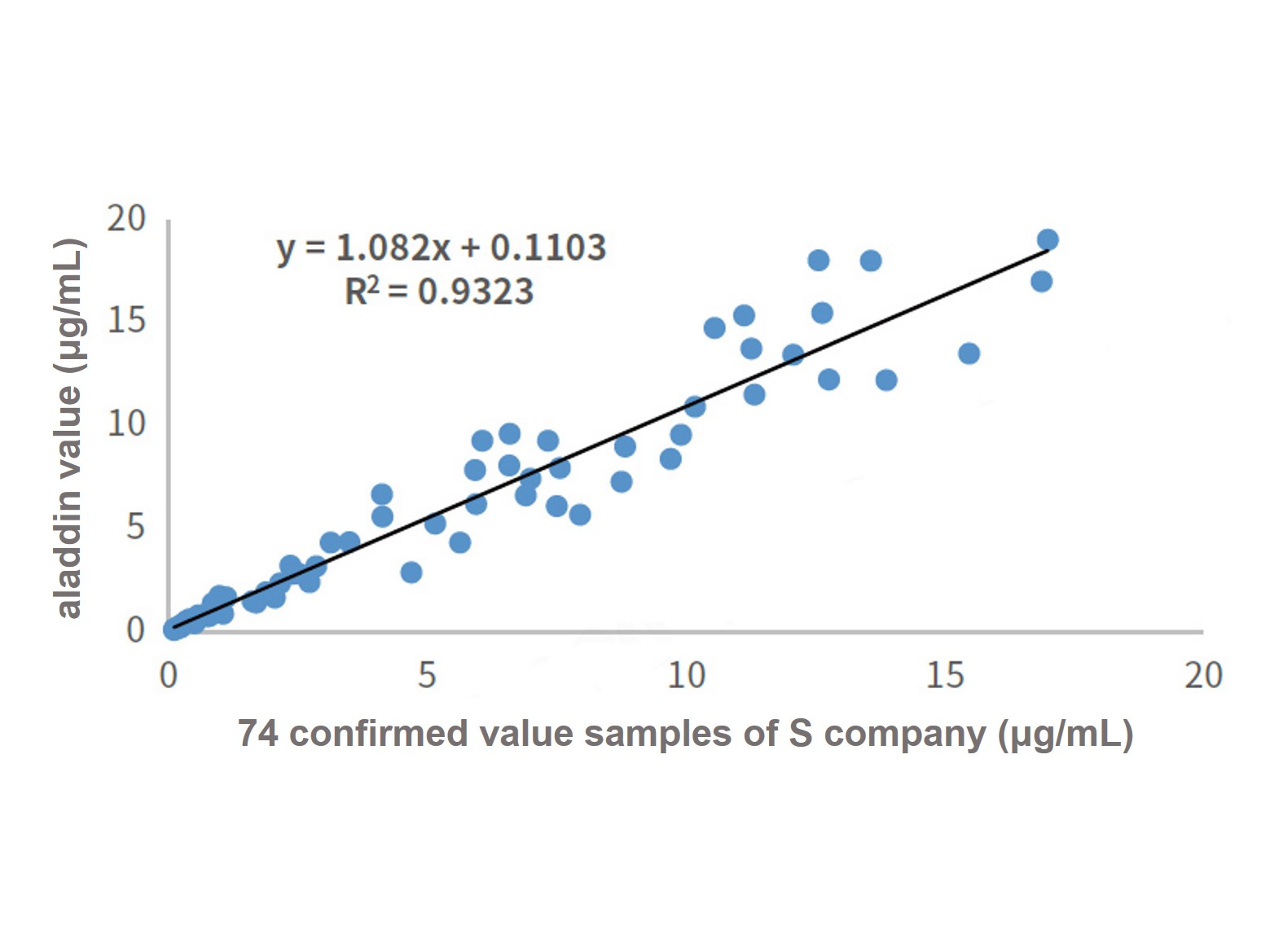
Relevance of detection results between aladdin Antibody Pair (Ab008121 & Ab008172) and S company in CLIA · Capture antibody: Recombinant D-Dimer Antibody (Ab008121) at 1.0 μg/mL. · Detection antibody: Recombinant D-Dimer Antibody (Ab008172) at 1.0 μg/mL. · Linear Range: 0-18 μg/mL, R ≥ 0.9.
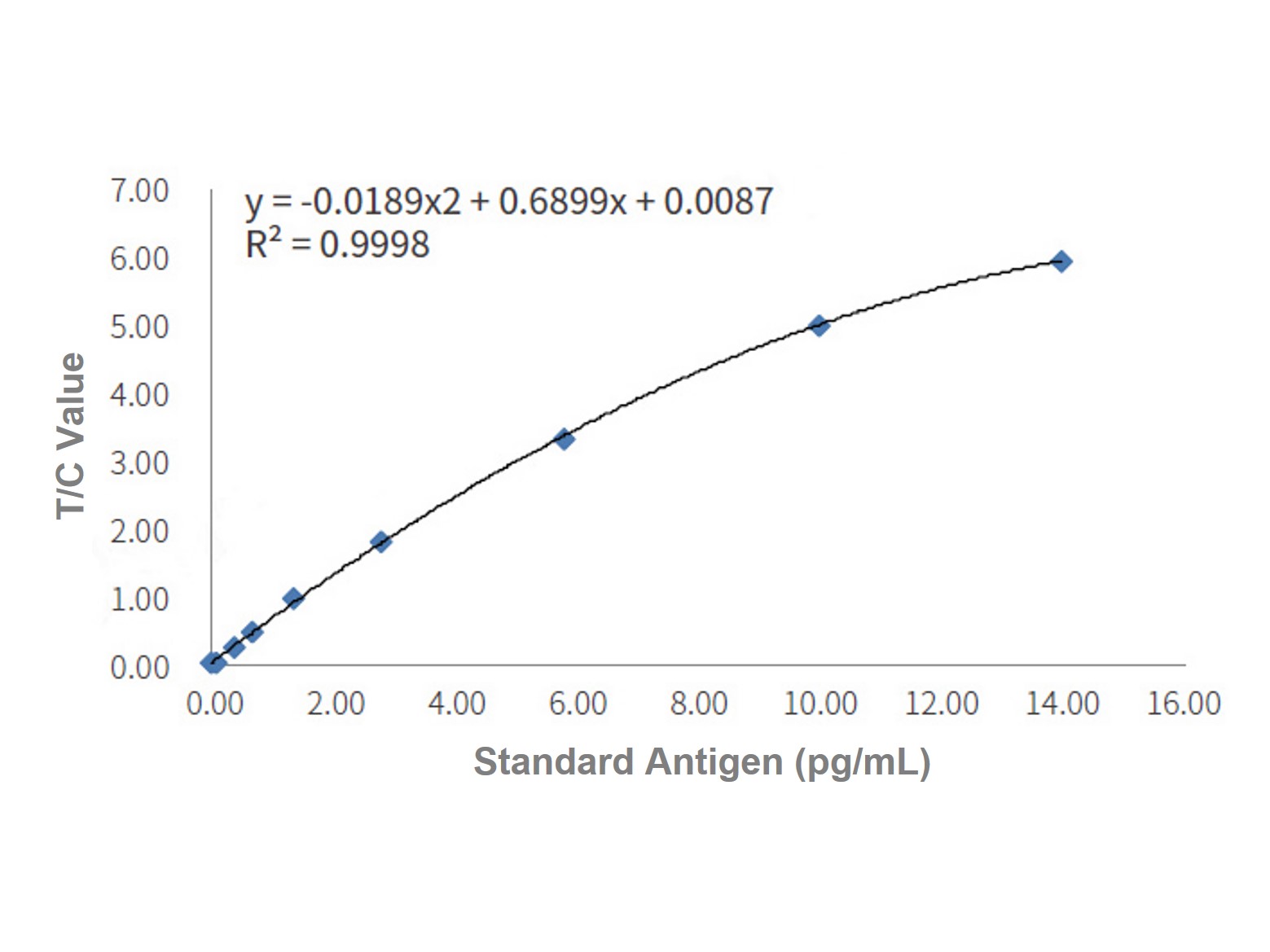
D-Dimer Standard Curve with Antibody Pair (Ab008121 & Ab008172) in GICA · Capture antibody: Recombinant D-Dimer Antibody (Ab008121) at 1.0 mg/mL. · Detection antibody: Recombinant D-Dimer Antibody (Ab008172) at 1.0 mg/mL. · Linear Range: 0-15 pg/mL, LLOD: 0.06 pg/mL.
Application
Application
Dilution info
FIA
1 mg/mL
CLIA
1 μg/mL
GICA
1.0 mg/mL
LF
1mg/mL
Documentation
📋 Safety Data Sheet (SDS)
Comprehensive hazard, handling, storage, and regulatory compliance document.
Determine the necessary mass, volume, or concentration for preparing a solution.
Dilution Calculator
Determine the dilution needed to prepare a stock solution.
Reconstitution Calculator
Avis
Avis des clients
Application Protocols
Item‑specific tested applications, recommended dilutions, and positive controls are Not specified for this item; refer to CoA/Spec Sheet. The following outlines general workflow considerations to aid in in‑house validation:
Assay selection: Decide on ELISA, BLI/SPR, LFA, or immunocapture‑MS based on required sensitivity and matrix.
Controls: Include a D‑dimer calibrator panel and negative controls (e.g., fibrinogen, non‑crosslinked fragments) to assess specificity.
Titration: Perform checkerboard titrations of capture vs detection reagents in ELISA to maximize signal‑to‑noise.
Matrix effects: Validate in the intended matrix (e.g., citrate plasma) with spike‑and‑recovery and dilution linearity.
Conjugation: If labeling is required, re‑titrate post‑conjugation to account for potential affinity changes.
Documentation: Record lot numbers, storage history, and freeze–thaw cycles for traceability.
For any protocol parameters required for regulated workflows or kit development, rely on empirical optimization and the item’s CoA where available.
Biological Roles
Target context (literature/general):
D‑dimer is a cross‑linked fibrin degradation product generated by plasmin‑mediated fibrinolysis. It contains two D domains from fibrin monomers joined by E–D crosslinks and stabilized by factor XIIIa‑mediated covalent bonds.
Its presence reflects activation of both the coagulation cascade (fibrin formation) and the fibrinolytic system (fibrin breakdown). In research, D‑dimer is used as a biochemical marker of fibrin turnover in hemostasis studies, thrombosis models, and inflammation‑coagulation crosstalk.
Structural diversity: Circulating D‑dimer exists as a heterogeneous mixture of sizes and epitopes depending on the degree of crosslinking and degradation; antibody epitope selection influences specificity for native vs denatured forms.
Implications for antibody use (general guidance):
Epitope sensitivity: Some anti‑D‑dimer clones prefer neo‑epitopes formed by crosslinking; others recognize linear sequences. Determine compatibility with sample treatment (e.g., chaotropes, urea, detergents).
Matrix effects: Plasma proteins and anticoagulants can affect binding. Employ matched matrices and spike‑recovery experiments to assess interference.
Item‑specific biological data (species cross‑reactivity, epitope mapping) are Not specified for this item; refer to CoA/Spec Sheet.
Buffer Applications
While this antibody is not itself a buffer component, buffer selection critically affects performance in immunoassays targeting D‑dimer.
General buffer guidance (literature/practice):
Coating/capture (ELISA): Carbonate–bicarbonate buffer pH 9.4–9.6 or PBS pH 7.4 for passive adsorption to polystyrene. Optimize concentration and incubation.
Blocking: 1–5% BSA, casein, fish gelatin, or commercial blockers in PBS/TBS; select to minimize cross‑reactivity with fibrinogen/fibrin fragments.
Wash: PBS‑T or TBS‑T with 0.05–0.1% Tween‑20; adjust salt to reduce non‑specific binding.
Sample diluent: Protein‑containing buffers (1% BSA), matched to sample matrix ionic strength; include heterophilic antibody blockers if matrix interference is suspected.
Storage/dilution: For working aliquots, low protein‑binding tubes, pH 7.2–7.6, optional trehalose/glycerol. Item‑specific formulation is Not specified; refer to CoA/Spec Sheet.
Electrophoresis/Western blot (general):
Denaturing SDS‑PAGE can disrupt conformational epitopes of D‑dimer; confirm whether the antibody recognizes denatured targets before attempting WB.
All buffer recipes and compatibility should be verified empirically for this specific clone; item‑specific recommendations are Not specified for this item.
Green Alternatives
Green chemistry considerations for antibodies focus on cold‑chain efficiency, preservative choices, and minimizing single‑use plastics rather than solvent substitution.
Preservative policy: Azide‑free format avoids disposal issues associated with sodium azide, a toxic biocide. Trade‑off: greater emphasis on aseptic technique and sterile consumables to control bioburden.
Shipping/storage: Consolidate shipments and use reusable cold packs where possible. Validate stability to short ambient excursions to reduce dry ice usage if allowed by product specs (this item ships on ice pads; do not alter conditions without stability data).
Process choices: Prefer aqueous buffers, avoid excessive organic solvents during conjugation (use aqueous‑friendly chemistries like NHS‑ester or maleimide with minimal co‑solvent).
Small comparison (general):
Sodium azide vs aseptic handling: Azide provides microbial control but adds toxicity/hazard; azide‑free reduces hazard but demands sterility. Select based on downstream use (e.g., live‑cell compatibility demands azide‑free).
Protein stabilization: Non‑animal stabilizers (trehalose, plant‑derived HSA alternatives) can reduce animal‑derived inputs.
Waste minimization: Use high‑recovery low‑bind plastics, pool washes, and right‑size assay formats (e.g., half‑area plates) to reduce reagent consumption.
Pharmaceutical Uses
This product is supplied strictly for research use only and is not intended for diagnostic or clinical applications.
General roles of antibodies in manufacturing/research (context, not item‑specific):
Analytical reagent: Calibration and QC of in‑process samples in biomanufacturing where coagulation biomarkers are studied.
Affinity ligands: Immobilized antibodies can be used to enrich fibrin degradation products from complex matrices for characterization by LC‑MS.
Companion assay development: Development of research‑grade immunoassays for studying coagulation and fibrinolysis pathways.
Regulatory notes:
No pharmacopeial monograph is implied; GMP suitability, validation status, and traceability for regulated use are Not specified for this item; refer to CoA/Spec Sheet.
Azide‑free, carrier‑free, recombinant attributes may be desirable for downstream conjugation and minimize extraneous components in assay kits, but do not constitute clinical approval.
Users should conduct their own qualification for any process‑adjacent use and adhere to institutional quality systems.
Physical Properties
Item‑specific physicochemical constants are not provided.
Appearance: Not specified for this item; refer to CoA/Spec Sheet.
Molecular weight: Not specified for this item; refer to CoA/Spec Sheet. (Literature: intact IgG typically ~150 kDa; recombinant fragments such as Fab ~50 kDa.)
Isoelectric point (pI): Not specified for this item; refer to CoA/Spec Sheet. (Literature: IgG pI often ~6–9 depending on sequence/glycoform.)
Solubility: Antibodies are generally soluble in aqueous buffers (PBS, TBS) with added stabilizers (e.g., proteins, sugars) as appropriate; specific buffer composition for this item is Not specified for this item; refer to CoA/Spec Sheet.
Extinction coefficient: Not specified for this item; refer to CoA/Spec Sheet. (Literature: many IgGs are quantified at A280 using 1.4–1.5 OD per mg/mL as a rule‑of‑thumb; sequence‑specific values vary.)
Aggregation/oligomer state: Not specified for this item; refer to CoA/Spec Sheet. (General: assess by SEC or DLS if critical.)
Practical notes (general):
For accurate concentration, use A280 with an item‑specific ε if provided; otherwise determine by BCA/Bradford.
Avoid vigorous vortexing or repeated freeze‑thaw, which can induce aggregation; see Storage & Reconstitution.
Filter sterilization (0.22 µm) may be applied if compatible; low protein‑binding filters are recommended.
Quality and Grades
This listing includes several grade/attribute designations. Item‑specific definitions follow, with general implications for experimental use:
Carrier Free (item‑specific): Supplied without added carrier proteins (e.g., BSA, gelatin). Advantages: precise mass‑based dosing, compatibility with conjugation chemistry, lower background in assays. Consider adding your own stabilizers if long‑term storage at working dilution is required.
Recombinant (item‑specific): Produced via recombinant expression, improving lot‑to‑lot consistency and allowing defined sequence/format. Typical benefits include reduced batch variability compared to hybridoma‑derived materials.
ExactAb™ (item‑specific): Vendor‑branded designation indicating a defined recombinant antibody format and quality system. For exact specifications (isotype, sequence, Fc engineering), Not specified for this item; refer to CoA/Spec Sheet.
Azide Free (item‑specific): No sodium azide added. Suitable for live‑cell compatible workflows, enzyme‑based detection, and conjugation. Use sterile technique to mitigate bioburden.
Validated (item‑specific): Indicates internal performance verification. Specific validated applications, species reactivity, and dilutions are Not specified for this item; refer to CoA/Spec Sheet.
Quality control recommendations (general):
Verify integrity by SDS‑PAGE (reducing/non‑reducing) and size‑exclusion SEC for aggregates.
Confirm binding to D‑dimer by ELISA or SPR/BLI using defined D‑dimer standards.
Document lot number and include in‑house positive/negative controls for critical assays.
Reaction and Applications
This is an immunoreagent, not a chemical reactant or solvent. Classical synthetic reactions (e.g., Grignard, cross‑coupling) are not applicable.
Relevant applications (general guidance, not item‑specific):
Sandwich ELISA capture or detection of D‑dimer using orthogonal anti‑D‑dimer pairs. Validate epitope non‑overlap empirically.
Lateral flow assay (LFA) conjugation to colloidal gold or latex for D‑dimer detection; optimize conjugation pH and surfactant to maintain activity.
Affinity capture/enrichment of fibrin degradation products from plasma for research use. Coupling to NHS‑activated supports as needed.
Item‑specific application claims are Not specified for this item; refer to CoA/Spec Sheet and perform in‑house optimization with appropriate positive/negative controls.
Reaction Conditions
Classical chemical reaction conditions do not apply to antibody use. For bioconjugation or assay setup, conditions are highly method‑dependent and should be optimized empirically.
General conditions (literature/practice; not item‑specific):
ELISA coating: 0.5–5 µg/mL in carbonate buffer pH ~9.6, incubate 2–18 h at 4–25°C; block and wash thoroughly. Verify activity against D‑dimer standards.
Conjugation (NHS‑ester dyes/biotin): pH 7.5–8.5, molar excess 3–10× label, 30–60 min at RT; quench and desalt. Assess DP via A280/Amax and verify binding by ELISA/BLI.
Gold nanoparticle conjugation (LFA): Adjust pH to antibody isoelectric region for passive adsorption; confirm lateral flow performance with appropriate controls.
These are literature‑style starting points. Item‑specific validated conditions are Not specified for this item; refer to CoA/Spec Sheet.
Safety and Handling
Safety information specific to this item is not provided in the listing; consult the product SDS for authoritative guidance.
GHS classification / pictograms / H‑statements: Not specified for this item; refer to SDS.
Signal word: Not specified for this item; refer to SDS.
Preservatives: Azide Free (item‑specific). Note: absence of sodium azide removes common azide‑related acute toxicity and metal‑azide incompatibility concerns, but also reduces antimicrobial protection; handle aseptically to prevent contamination.
General hazards (proteins): Low acute toxicity anticipated; potential allergenicity exists with proteinaceous materials; avoid inhalation of aerosols and skin contact.
PPE: Laboratory coat, nitrile gloves, safety glasses. Use biological safety cabinet when preparing sterile solutions or handling aerosols.
Incompatibilities: Avoid strong oxidizers; prevent microbial contamination. Do not store with reactive metals in the presence of azide (not applicable here since azide‑free).
First aid (general): If inhaled—move to fresh air. Skin/eye contact—rinse with water for several minutes, remove contaminated clothing. Ingestion—rinse mouth, seek medical advice. Always follow institutional biosafety procedures.
Spill response: Absorb with inert material, wash area with appropriate disinfectant. Dispose in accordance with local regulations for biological materials.
Shipping: Shipped in ice chest + ice pads (item‑specific) to maintain cold chain.
Solvent Selection
This product is an aqueous protein reagent rather than a small‑molecule solute; conventional solvent selection is not typically applicable. Instead, focus on buffer and excipient selection for stability and assay performance.
General buffer considerations (literature/guidance):
Base buffers: PBS (pH 7.2–7.4) or TBS (pH 7.4–8.0) are common. Avoid primary amine buffers if performing NHS‑ester conjugations.
Ionic strength: 100–300 mM total salt often improves colloidal stability; optimize to minimize non‑specific interactions with D‑dimer matrices.
Additives: For working stocks, stabilize with 0.1–1% HSA/BSA or 5–10% trehalose/glycerol as compatible with your assay. For this item, specific formulation is Not specified; refer to CoA/Spec Sheet.
Surfactant: 0.01–0.05% polysorbate can reduce adsorption to plastics; verify no assay interference.
Comparison (general):
PBS vs TBS: TBS can reduce charge‑mediated binding in some immunoassays; PBS is more physiological. Choose based on background signal with your D‑dimer standard curve.
Azide‑free requirement: Use sterile filtration and aseptic handling in lieu of biocides.
Storage and Reconstitution
Item‑specific storage and logistics:
Storage conditions: Store at −20°C (item‑specific). Avoid repeated freezing and thawing (item‑specific). Aliquot upon first receipt to minimize freeze–thaw cycles.
Shipping: Shipped in ice chest + ice pads (item‑specific) to maintain cold chain.
General guidance (not item‑specific; adjust per CoA):
Short‑term handling: Keep on ice during use. If supplied lyophilized or at high concentration, thaw/bring to 4°C before opening to reduce condensation ingress.
Reconstitution (if lyophilized; status Not specified for this item): Reconstitute with sterile, neutral pH buffer (e.g., PBS) to the desired concentration. Mix gently by slow inversion; avoid foaming.
Working aliquots: Prepare single‑use aliquots in low protein‑binding tubes. For added stability, consider 0.1–1% protein stabilizer or 5–10% trehalose/glycerol if compatible with downstream assays.
Storage temperatures: For days–weeks, 2–8°C may suffice if sterile and stabilized; for months, −20°C or below is typical. Do not store frost‑free freezers that cycle temperatures.
Freeze–thaw: Minimize cycles; each thaw can promote aggregation. Record number of thaws per aliquot.
Any specific buffer composition, concentration, or lyophilization status for this item is Not specified for this item; refer to CoA/Spec Sheet.
Structure and Identity
This product is a recombinant antibody engineered to recognize D‑dimer, a fibrin degradation product. As a biologic macromolecule, conventional small‑molecule identifiers (SMILES, InChI) do not apply.
SKU: Ab008121
Product name: Recombinant D‑Dimer Antibody
Category: Antibody (research use)
Molecular formula: Not specified for this item; refer to CoA/Spec Sheet.
Molecular weight: Not specified for this item; refer to CoA/Spec Sheet.
SMILES / InChIKey: Not applicable for proteins.
ExactAb™, Carrier‑Free, Azide‑Free, Recombinant; Validated (see Quality & Grades for meaning)
Structural features (general, literature):
Typical IgG class antibodies are Y‑shaped glycoproteins composed of two heavy and two light chains linked by disulfide bonds, with antigen recognition via complementary‑determining regions (CDRs) in the Fab domains.
The antigen here is D‑dimer (cross‑linked fibrin fragment); epitope details, isotype, and clonality are Not specified for this item; refer to CoA/Spec Sheet.
2D description (general):
Two Fab arms provide bivalent binding to epitopes on D‑dimer; the Fc region mediates effector interactions in biological systems (not typically relevant for in‑vitro assays unless Fc‑capture formats are used).
Synthetic Utility
Not applicable. This product is a recombinant antibody used as a binding reagent, not a synthetic building block or reagent.
For users performing bioconjugation (general guidance):
NHS‑ester labeling targets Lys residues; maintain pH 7.5–8.5 and minimize over‑labeling to preserve affinity.
Maleimide labeling targets reduced Cys residues; keep pH 6.5–7.2 to limit maleimide hydrolysis and avoid disulfide scrambling.
Site‑specific strategies (enzymatic tags, Fc glycans, click handles) may provide more uniform conjugates. Item‑specific sequence/format enabling such strategies is Not specified for this item; refer to CoA/Spec Sheet.
Target Specificity
Item‑specific targeting information provided by the product name only:
Epitope: Not specified for this item; refer to CoA/Spec Sheet.
Clone/format/isotype: Not specified for this item; refer to CoA/Spec Sheet.
Species reactivity: Not specified for this item; refer to CoA/Spec Sheet.
Cross‑reactivity: Not specified for this item; refer to CoA/Spec Sheet.
General notes (literature):
Anti‑D‑dimer antibodies may vary in preference for conformational neo‑epitopes created by factor XIIIa crosslinking versus linear fibrin sequences. Verify compatibility with native plasma samples versus denatured or reduced preparations.
For sandwich assays, select non‑competing epitope pairs to ensure cooperative binding.
Foire aux questions
How should this product be stored?
Store at ?20 °C. Avoid repeated freeze–thaw cycles. Aliquot into single-use volumes before freezing.
What does Carrier Free mean?
Carrier Free indicates that the material has been processed and tested for specialty industrial processing. Specifications focus on the impurities that affect performance in that application — for example, metal content for electronics, particle size for batteries, refractive index for optics, or moisture content for moisture-sensitive processes.
What does Recombinant mean?
Recombinant is a defined analytical purity tier suitable for workflows requiring a specific validated property. It specifies a minimum assay percentage, controlled limits on common impurities (water, heavy metals, residue on ignition), and lot-to-lot consistency. Recombinant is one of several purity tiers — choose based on the sensitivity and regulatory requirements of your method.
How is this product shipped?
This product ships in an insulated container with ice pads. Unpack on arrival and transfer it to the storage condition stated above.
What documentation is provided?
Available product documentation, including Certificates of Analysis (COA), Safety Data Sheets (SDS), and specification sheets, is shown in the product document area. Document availability and access follow the current site policy.
Which species reactivity has this antibody been validated against?
Validated reactivity is listed on the PDP and on each lot's datasheet. We validate against the most commonly tested species for the target (Recombinant D-Dimer Antibody); cross-reactivity in untested species may exist but is not guaranteed. Contact technical support for specific species inquiries.
Need help choosing the grade?
Our grade selection guide covers purity, stabilizer status, and application suitability for all variants in our catalog.
Nous utilisons des cookies pour garantir le bon fonctionnement du site et, lorsque cela est autorisé, pour améliorer votre expérience. Vous pouvez gérer vos préférences à tout moment dans les Paramètres. Pour en savoir plus, consultez notre Politique relative aux cookies.
Souhaitez-vous que nous vous envoyions un message lorsque des réductions seront disponibles?
Me rappeler plus tard
Merci ! Veuillez vérifier votre boîte de réception e-mail pour confirmer.
Products are supplied to verified businesses, institutions, and qualified professionals for research and development use only. Not for use in humans, animals, diagnosis, or therapy.


 ZJ23F0500225