GRADE & PURITYMoligand™?Moligand™ — Aladdin's line of ligands and bioactive small molecules. Use for receptor, pathway, and binding studies needing defined small-molecule tools.≥98%
Moligand™, ≥98% Moligand™ for sensitive chromatographic and analytical workflows requiring minimal baseline interference.
🌡
Storage & shipping
Protected from light,Store at -20°C Ships Ice chest + Ice pads Check lot-specific COA for exact specifications.
📋
Quality documents
SDS, COA, datasheet, and spec sheet available for download. Lot-specific COA accessible via lot number lookup.
📚
Literature proof
Cited in 0 peer-reviewed publications across chromatography, organic synthesis, and cross-coupling reactions.
Vue d’ensemble
application:
SR-12813 was used as control in pregnane X receptor (PXR) binding assay performed in HepG2 liver carcinoma cells and PXR-activation assay mediated by dehydroepiandrosterone in human hepatocytes.
Potent, selective PXR agonist. (EC 50 = 200 nM for human PXR). Inhibits cholesterol biosynthesis. Cell permeable. Active in vivo .
Conditions de stockage de stockage
Protected from light,Store at -20°C
Expédié en
Ice chest + Ice pads
Ce produit nécessite l'expédition en chaîne froide. Les services terrestres et autres services économiques ne sont pas disponibles.
Grade
Moligand™
Type d'action
AGONIST
Mécanisme d'action
Agonist of Pregnane X receptor
Note
Wherever possible, you should prepare and use solutions on the same day. However, if you need to make up stock solutions in advance, we recommend that you store the solution as aliquots in tightly sealed vials at -20°C. Generally, these will be useable for up to one month. Before use, and prior to opening the vial we recommend that you allow your product to equilibrate to room temperature for at least 1 hour. Need more advice on solubility, usage and handling? Please visit our frequently asked questions (FAQ) page for more details.
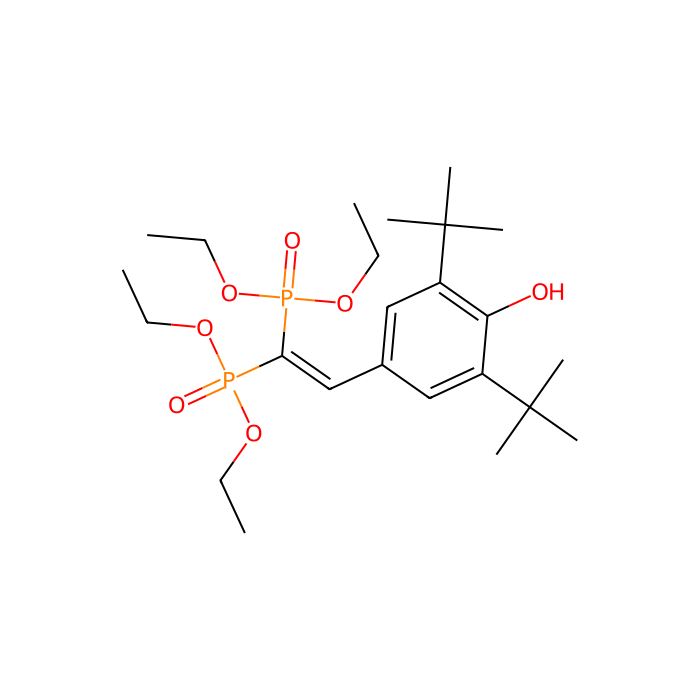
This compound belongs to the class of organic compounds known as bisphosphonates. These are organic compounds containing two phosphonate groups linked together through a carbon atoms.
External Descriptors
phenols - organic phosphonate
1. Djoumbou Feunang Y, Eisner R, Knox C, Chepelev L, Hastings J, Owen G, Fahy E, Steinbeck C, Subramanian S, Bolton E, Greiner R, and Wishart DS. ClassyFire: Automated Chemical Classification With A Comprehensive, Computable Taxonomy. Journal of Cheminformatics, 2016, 8:61.
Determine the necessary mass, volume, or concentration for preparing a solution.
Dilution Calculator
Determine the dilution needed to prepare a stock solution.
Reconstitution Calculator
Avis
Avis des clients
Application Protocols
No tested or validated application protocols are provided in the Product Data for SR-12813. The following generic protocols are offered as starting points and must be optimized by the end user.
Preparation of DMSO stock (general):
Warm the vial to ambient temperature inside a desiccator and low light. Weigh the required amount quickly.
Add anhydrous DMSO to achieve 10–50 mM. Vortex until dissolved; sonicate briefly if needed. Filter (0.2 μm PTFE) if appropriate.
Aliquot into amber, low-bind microtubes; store at −20 °C, protected from light.
Cell-based assay dosing (example framework):
Prepare a 10-point, 1:3 serial dilution in assay medium ensuring constant final DMSO (e.g., 0.1% v/v across all wells, including vehicle controls).
Incubate per assay design (e.g., 6–24 h for transcriptional readouts); measure endpoints (reporter activity, qPCR, or protein levels) per SOP.
Biochemical assay setup (example framework):
Titrate ligand into buffered system containing target protein/cofactors. Include detergent or carrier protein as needed to mitigate nonspecific adsorption.
Monitor activity via appropriate readout (fluorescence, absorbance, MS-based turnover).
Analytical QC check:
Prior to critical experiments, verify identity/purity by LC–MS and HPLC. Record retention time and m/z for traceability.
Always cross-check with your institutional SOPs and adapt conditions to your assay format.
Biological Roles
No manufacturer-verified biological annotations are provided in the Product Data for SR-12813. The notes below summarize general literature context for compounds of this name; verify against primary sources and your internal controls before experimental use.
Literature context (general, for reference only):
SR-12813 is widely cited in the chemical biology literature as a bioactive small molecule employed in pathway interrogation and transcriptional regulation studies. Reported uses include modulation of nuclear receptor signaling and regulation of metabolic enzyme expression in cellular systems. Users should confirm the precise target(s), potency range, and selectivity using peer-reviewed sources matching the exact structure and lot.
Experimental considerations:
Establish concentration–response behavior in your assay system, as potencies can vary with cell line, cofactor expression, and assay format.
Include orthogonal readouts (e.g., qPCR, reporter assays, proteomics) to confirm pathway engagement rather than relying on a single phenotypic effect.
Evaluate off-target liabilities (e.g., broad transcriptional activators may impact xenobiotic response elements) using counter-screens.
Controls and benchmarking:
Use a set of structurally unrelated tool compounds that converge on the same pathway to validate on-target biology.
Maintain solvent-matched controls and cytotoxicity counterscreens to ensure functional effects are not confounded by vehicle or general stress responses.
Reminder: For research use only; not for diagnostic, clinical, or therapeutic applications.
Buffer Applications
SR-12813 is a small-molecule ligand and is not itself a buffering agent. Therefore, conventional buffer formulation guidance (e.g., pH ranges for phosphate, Tris, HEPES) does not directly apply to this product.
Practical guidance for assay buffers (general best practice):
Prepare concentrated compound stocks in a suitable organic solvent (commonly DMSO) and dilute into your assay buffer immediately before use.
Maintain consistent final cosolvent percentages across all wells/samples (typical 0.1–1% v/v) to avoid solvent-driven artifacts.
When working with protein targets, consider adding 0.01–0.1% nonionic detergent (e.g., Tween-20) or carrier proteins (e.g., 0.1% BSA) to reduce nonspecific adsorption, if compatible with the assay.
For pH-sensitive readouts, select buffers with minimal temperature and dilution-dependent pKa drift (e.g., HEPES for near-neutral conditions), and validate that the compound does not interfere with indicator dyes or enzymatic reporters.
If buffer–compound interactions are suspected (precipitation, color change, strong UV absorbance overlap), consult the compound’s CoA and run small-scale compatibility tests prior to full experiments.
Green Alternatives
As SR-12813 is supplied as a screening ligand (not a bulk solvent or stoichiometric reagent), the concept of a “green alternative” centers on how you formulate, deliver, and dispose of solutions rather than substituting the molecule itself.
Greener handling strategies (general best practice):
Use minimal DMSO content consistent with assay performance; evaluate ethanol or aqueous co-solvent systems when compatible to reduce high-boiling polar aprotic solvent usage.
Implement microvolume dispensing (e.g., acoustic or positive-displacement picoliter systems) to reduce solvent consumption and waste.
Choose solvent recycling for organic analytical workflows (HPLC/LC–MS) where regulations and instrument compatibility permit.
Optimize plate formats (384/1536-well) to reduce per-experiment solvent and compound mass.
Comparison of common stock solvents (general guidance):
DMSO: Broad solubility; higher boiling point increases energy for solvent removal; low volatility reduces emissions.
Ethanol: Biorenewable routes available; higher volatility may increase lab VOCs; often more benign toxicologically.
Acetonitrile: Efficient chromatographic solvent but derived from petrochemical sources; manage waste streams responsibly.
Waste minimization:
Segregate halogenated vs non-halogenated waste as per institutional EHS.
Where feasible, design assays that require smaller dose ranges or utilize pre-plated libraries to minimize fresh solvent preparation.
For compound substitution at the biology level (alternative tool compounds), assess literature-reported selectivity profiles and environmental footprints, but ensure your alternative meets the same mechanistic needs.
Pharmaceutical Uses
This product is supplied strictly for research use only. No clinical, diagnostic, or therapeutic uses are supported or implied.
Formulation-related considerations in research settings (general guidance):
As a bioactive small molecule, SR-12813 may be used in preclinical discovery workflows (e.g., in vitro ADME profiling, permeability assays, plasma protein binding studies) where permitted by your institution. Such studies require confirmation of identity/purity from the CoA.
For in vivo exploratory research (where institutionally permitted), typical vehicles may include sterile-filtered mixtures of DMSO/PEG 300/saline or DMSO/Cremophor EL/saline; however, no item-specific vehicle has been validated by the manufacturer. Users must develop and validate their own formulations.
No pharmacopeial monographs or excipient designations are provided in the Product Data for this item.
Compliance reminder:
Adhere to institutional IACUC/IBC and EHS requirements; ensure proper approvals for any in vivo/ex vivo use.
Do not use in humans or for any clinical application.
For definitive guidance on suitability for specific pharmaceutical development tasks, consult your quality system and the product’s CoA/SDS.
Physical Properties
Item-specific physicochemical constants were not included in the Product Data. The following fields are therefore left unspecified for this catalog item:
Appearance: Not specified for this item; refer to CoA/Spec Sheet.
Molecular formula: Not specified for this item; refer to CoA/Spec Sheet.
Molecular weight: Not specified for this item; refer to CoA/Spec Sheet.
Melting point: Not specified for this item; refer to CoA/Spec Sheet.
Boiling point: Not specified for this item; refer to CoA/Spec Sheet.
Density: Not specified for this item; refer to CoA/Spec Sheet.
Refractive index: Not specified for this item; refer to CoA/Spec Sheet.
LogP/LogD: Not specified for this item; refer to CoA/Spec Sheet.
pKa(s): Not specified for this item; refer to CoA/Spec Sheet.
UV/Vis absorbance (λmax, cutoff): Not specified for this item; refer to CoA/Spec Sheet.
Solubility: Not specified for this item; refer to CoA/Spec Sheet.
General guidance (literature/best practice for small-molecule ligands; not item-specific):
Many screening ligands are hydrophobic and commonly formulated as concentrated DMSO stocks (e.g., 10–50 mM) and subsequently diluted into aqueous assay buffers containing 0.1–1% DMSO.
If LC–MS characterization is required, begin with ESI± method scouting and 0.1% formic acid (positive mode) or 5–10 mM ammonium acetate (negative mode) in water/acetonitrile gradients; optimize based on actual structure once confirmed.
Verify hygroscopicity and thermal behavior (DSC/TGA) from the CoA prior to long-term storage or solid dispensing.
Quality and Grades
Grade/Purity (Product Data): Moligand™.
Interpretation of Moligand™ (general description):
Moligand™ indicates the product is curated for use as a research ligand/chemical probe within small-molecule libraries and screening collections. Such materials are typically selected for suitability in biochemical/cell-based assays, cheminformatic profiling, and SAR exploration.
Emphasis is usually placed on identity verification (e.g., LC–MS, NMR) and impurity control appropriate for screening contexts, rather than ultra-trace inorganic or spectrophotometric specifications demanded by, e.g., HPLC-grade solvents.
What this means for method development:
Expect analytical data available on the CoA/Spec Sheet supporting identity and batch quality; consult these documents for lot-specific purity, residual solvent content, and chromatographic behavior.
If your application requires enhanced specifications (e.g., elemental impurities per ICH Q3D, enantiopurity, or sub-ppm residuals), contact Technical Support to discuss feasibility or to request an additional CoA/analytical package.
Stabilizers/ additives:
None are specified in the Product Data. If stabilizers or counterions are critical to your work (e.g., salt form, antioxidant), verify on the CoA.
Regulatory/use note (Product Data):
For research use only. Not for human or veterinary use, clinical applications, or household purposes.
Reaction and Applications
This product is offered as a research ligand for screening and chemical biology rather than as a general-purpose synthetic reagent. No manufacturer reaction-application notes are provided for SR-12813 in the Product Data.
Applicable research uses (general, non-item-specific):
Chemical probe in target-based or phenotypic assays to interrogate signaling or metabolic pathways, contingent on verified literature for SR-12813 and aligned with your model system.
Reference control in transporter/enzyme induction studies or transcriptional reporter assays, if supported by peer-reviewed sources and internal validation in your lab.
Tool compound for SAR benchmarking within a chemical series, docking validation, or QSAR model calibration.
Not typically applicable:
Named-synthesis roles (e.g., cross-coupling partners, stoichiometric reagents) are not typical for screening ligands like SR-12813.
Practical tips (best practice):
Verify identity/purity via LC–MS and 1H NMR upon receipt when the work requires stringent controls (upload spectra to ELN for traceability).
Prepare single-use aliquots to avoid potency drift from adsorption, evaporation, or hydrolysis.
In plate-based assays, include solvent-only controls matched to final DMSO/EtOH content and perform concentration-response experiments (e.g., 10-point, 1:3 serial dilutions) to capture full activity windows.
Please consult primary literature and the product’s CoA for item-specific application context before use.
Reaction Conditions
No manufacturer-provided reaction or processing conditions are specified for SR-12813, and it is not positioned as a synthetic reagent.
General guidance for solution handling and assay preparation (not item-specific):
Stock solutions: Prepare in anhydrous DMSO under subdued light if the compound is light-sensitive (Product Data instruct protection from light). Typical concentrations: 10–50 mM.
Filtration: For analytical injections or cell-based assays, 0.2 μm PTFE filtration can reduce particulates; assess compound binding to filters beforehand.
Temperature: Keep solutions chilled or at room temperature as compatible with stability; avoid prolonged exposure to elevated temperatures or direct light.
Stability checks: Track potency or purity over time by periodic LC–MS/HPLC analysis; use amber vials for light protection.
Assay dosing: Use serial dilutions (e.g., 1:3 or 1:2) prepared freshly on the day of use to minimize adsorption or hydrolysis artifacts.
If you intend to subject SR-12813 to chemical transformation, determine the exact structure and reactive functional groups via CoA/literature and then consult standard reaction condition references appropriate to that scaffold.
Safety and Handling
The Product Data do not include item-specific GHS classifications or hazard statements for SR-12813.
GHS/CLP information (item-specific):
Signal word: Not specified for this item; refer to SDS.
Hazard statements (H-phrases): Not specified for this item; refer to SDS.
Pictograms: Not specified for this item; refer to SDS.
Storage conditions (Product Data):
Store at −20 °C.
Protect from light.
Shipped in an ice chest with ice pads to maintain a low-temperature chain.
General laboratory precautions (best practice):
Handle in a fume hood with appropriate PPE: lab coat, nitrile gloves, and safety glasses or face shield.
Avoid inhalation of dust/aerosols and contact with skin/eyes. Prevent environmental release.
Use clean, dry tools for weighing; cap containers promptly to minimize moisture/light exposure.
Incompatibilities and stability (general guidance for small organic ligands):
Avoid strong oxidizers and strong acids/bases unless usage conditions are defined by a validated protocol.
Minimize repeated freeze–thaw; aliquot solid or solutions.
First-aid overview (consult SDS for authoritative guidance):
Inhalation: Move to fresh air; seek medical attention if symptoms persist.
Skin/eye contact: Rinse with water for several minutes; remove contaminated clothing; obtain medical advice if irritation persists.
Ingestion: Rinse mouth; do not induce vomiting; seek medical attention.
Always consult the official Safety Data Sheet (SDS) for definitive hazard, response, transport, and disposal information before use.
Solvent Selection
Item-specific solubility data are not provided in the Product Data for SR-12813. The following guidance reflects common practice for small-molecule ligands and should be verified empirically with this item.
Primary stock preparation (general best practice):
Start with an anhydrous DMSO stock (e.g., 10–50 mM) due to DMSO’s broad solvating power for hydrophobic ligands; vortex and sonicate gently if needed.
Alternatively, prepare intermediate stocks in ethanol or acetonitrile for assays that limit DMSO.
Aqueous assay compatibility:
Dilute DMSO stocks into buffer immediately before use; keep final DMSO at or below assay-tolerated levels (commonly 0.1–1% v/v; confirm with your system).
Polarity and miscibility (general context):
DMSO and DMF: high dielectric, miscible with water; strong solvating power for diverse chemotypes.
Ethanol/MeOH: protic, miscible with water; may affect protein stability—optimize.
Acetonitrile: aprotic, polar; excellent for LC–MS sample prep and plate-based dispensing; miscible with water.
Practical tips:
Filter solutions (0.2 μm PTFE) when compatible to remove particulates before HPLC/biological assays.
Record exact solvent composition for reproducibility and to aid troubleshooting (e.g., compound precipitation upon dilution).
Selection comparison (general):
DMSO: highest likelihood of dissolving; may modulate cell membranes at >1%.
EtOH: useful where DMSO is restricted; evaporation losses can shift concentration.
ACN: favored in analytical workflows; may be less tolerated in live-cell assays.
Always confirm solubility and stability for your specific lot using the CoA and pilot tests.
Storage and Reconstitution
Storage conditions (Product Data):
Store at −20 °C.
Protect from light (use amber vials, foil wrapping, and minimize light exposure during handling).
Shipped in an ice chest with ice pads to maintain cold-chain integrity.
Reconstitution (general guidance for small-molecule ligands; verify with your lot):
Allow the sealed container to equilibrate to room temperature before opening to avoid condensation.
Prepare concentrated stocks in anhydrous DMSO (typical 10–50 mM) unless the CoA specifies otherwise.
Mix thoroughly by vortexing; brief sonication may help dissolve stubborn solids. Avoid prolonged heating.
Aliquoting and freeze–thaw management:
Dispense single-use aliquots into amber, low-bind tubes to minimize adsorption and repeated freeze–thaw.
Record preparation date, solvent, and concentration on each aliquot.
Solution stability (item-specific data not provided):
Not specified for this item; refer to CoA/Spec Sheet.
As a precaution, store solutions at −20 °C protected from light and use within a defined window established by your internal stability checks (e.g., periodic LC–MS/HPLC).
Handling notes:
Work quickly under low light. Keep containers tightly closed. Avoid moisture ingress.
For definitive stability windows, solubility limits, and compatible vehicles for your application, consult the product’s CoA and SDS.
Structure and Identity
Brief: SR-12813 is a cataloged small-molecule ligand (Moligand™ grade) supplied for research screening and chemical biology.
Item identifiers (Product Data):
SKU: S274978
Product Name: SR-12813
CAS: 126411-39-0
PubChem CID: 446313
InChIKey: 444210 (as provided in Product Data)
Structure descriptors:
Molecular formula: Not specified for this item; refer to CoA/Spec Sheet.
Molecular weight: Not specified for this item; refer to CoA/Spec Sheet.
SMILES: Not specified for this item; refer to CoA/Spec Sheet.
Structural features (general description):
The precise 2D structure, functional groups, and stereochemical information are not provided in the Product Data for this listing. Please consult the product’s CoA/SDS or authoritative chemical databases using the CAS or CID above to retrieve the definitive connectivity, ring systems (if any), and functional group annotations.
Notes for users:
When preparing analytical methods (HPLC/LC–MS, NMR), confirm the exact structure and isotopic patterns from the CoA/Spec Sheet to select appropriate detection wavelengths, ionization polarity, and reference standards.
If using for target-based screening, align the structure from a verified source (e.g., CoA or primary database record linked to CAS 126411-39-0) to ensure correct computational docking or SAR contextualization.
Synthetic Utility
SR-12813 is offered as a research ligand/chemical probe. It is not positioned as a general synthetic building block or reagent in the Product Data.
Implications for synthetic chemistry:
Without item-specific functional group disclosure, no reliable synthetic transformations (e.g., coupling sites, protective-group handles) can be recommended.
If derivatization is desired for probe development (e.g., biotinylation, fluorophore tagging, photoaffinity labels), first confirm the structure and functional handles from the CoA or primary literature, then plan convergent routes that leave the pharmacophore intact.
For SAR exploration, computational enumeration followed by parallel synthesis may be informed by verified substitution patterns if available from authoritative sources linked to CAS 126411-39-0.
Best practices:
Perform a thorough analytical characterization (1H/13C NMR, HRMS, HPLC purity) of both starting material (SR-12813) and any derivatives.
If scaling any transformation, establish stability studies (light, temperature, pH) to avoid degradation of the parent scaffold and derived analogs.
If you require a building-block form or a functionalized analog of SR-12813, contact Technical Support with your target specification for potential sourcing or custom synthesis options.
Target Specificity
No target, pathway, or binding specificity information is provided in the Product Data for SR-12813. Accordingly, no item-validated targets, Kd/EC50 values, or selectivity profiles are presented here.
Manufacturer-validated target(s): Not specified for this item; refer to CoA/Spec Sheet.
Species reactivity or assay context: Not specified for this item; refer to CoA/Spec Sheet.
User guidance:
If your work requires confirmed target engagement, consult peer-reviewed literature associated with the exact CAS (126411-39-0) and verify that the reported structure, salt form, and assay conditions match your material and intended application.
Independently validate target modulation in your system using orthogonal assays and appropriate positive/negative controls.
Note: This section intentionally avoids literature-only assertions in the absence of manufacturer-provided specificity data for this catalog item.
Need help choosing the grade?
Our grade selection guide covers purity, stabilizer status, and application suitability for all variants in our catalog.
We use cookies to ensure the website functions properly and, where permitted, to improve your experience. You can manage your preferences at any time in Settings. Learn more in our Cookie Policy.
Shall we send you a message when we have discounts available?
Remind me later
Thank you! Please check your email inbox to confirm.
Products are supplied to verified businesses, institutions, and qualified professionals for research and development use only. Not for use in humans, animals, diagnosis, or therapy.

 C2511309